The Smell of Molten Projects in the Morning

Ed Nisley's Blog: Shop notes, electronics, firmware, machinery, 3D printing, laser cuttery, and curiosities. Contents: 100% human thinking, 0% AI slop.

Author: Ed

  • Fitbit VO2Max Estimation

    Fitbit VO2Max Estimation

    My Fitbit Charge 5 exercise tracker estimates my VO2Max as somewhere between 51 and 55. That seems absurd for a guy of my age, where “Excellent” is a bit under 40. I am most certainly not a highly trained athlete at the top of my form, so I wondered what the real value might be.

    Fitbit calculates VO2Max from the ratio of my maximum to resting pulse rates, probably according to the Uth formula using a coefficient applicable to a much younger man.

    It also computes my maximum heart rate from my age as 220 – 72 = 148, much lower than the values I routinely see while biking around the area. Reviewing a few months of data suggests an actual value around 170, although I did see 185 on one occasion.

    Forcing a maximum heart rate of 170 changed the VO2Max estimate to 50-54, which still seemed absurdly high. At least that change made the Fitbit’s “heart rate zones” a little more reasonable, as ordinary bike rides no longer have me in the Peak zone nearly as often.

    The Rockport walking test calculates VO2Max from a timed walk over a one mile “track” course, so I laid out a half-mile out-and-back route on Zack’s Way, which is a quarter mile from home.

    Maintaining a brisk pace covered the mile in 15:49 and left me with a 110 pulse; it’s obvious I’m not a trained athete. Feeding those numbers and a few other vital details into the Rockport formula gives me a much more realistic VO2Max of 28.5, putting me somewhere between the 50th and 75th percentile.

    Which is good, but not extraordinary.

    Bottom line: don’t believe the hype.

    An obligatory picture and link for enhanced SEO:

    FitBit Charge 5 stand - installed
    FitBit Charge 5 stand – installed
  • Worm Bin Fly Trap

    Worm Bin Fly Trap

    Despite freezing the kitchen scraps going into the worm bin since the previous fruit fly infestation, a zillion flies are now in residence. Lacking the peppermint-stick tube of yesteryear, I conjured another fly trap from common household items:

    Worm Bin Fly Trap - overview
    Worm Bin Fly Trap – overview

    The gap around the top got a strip of tape after I took the picture.

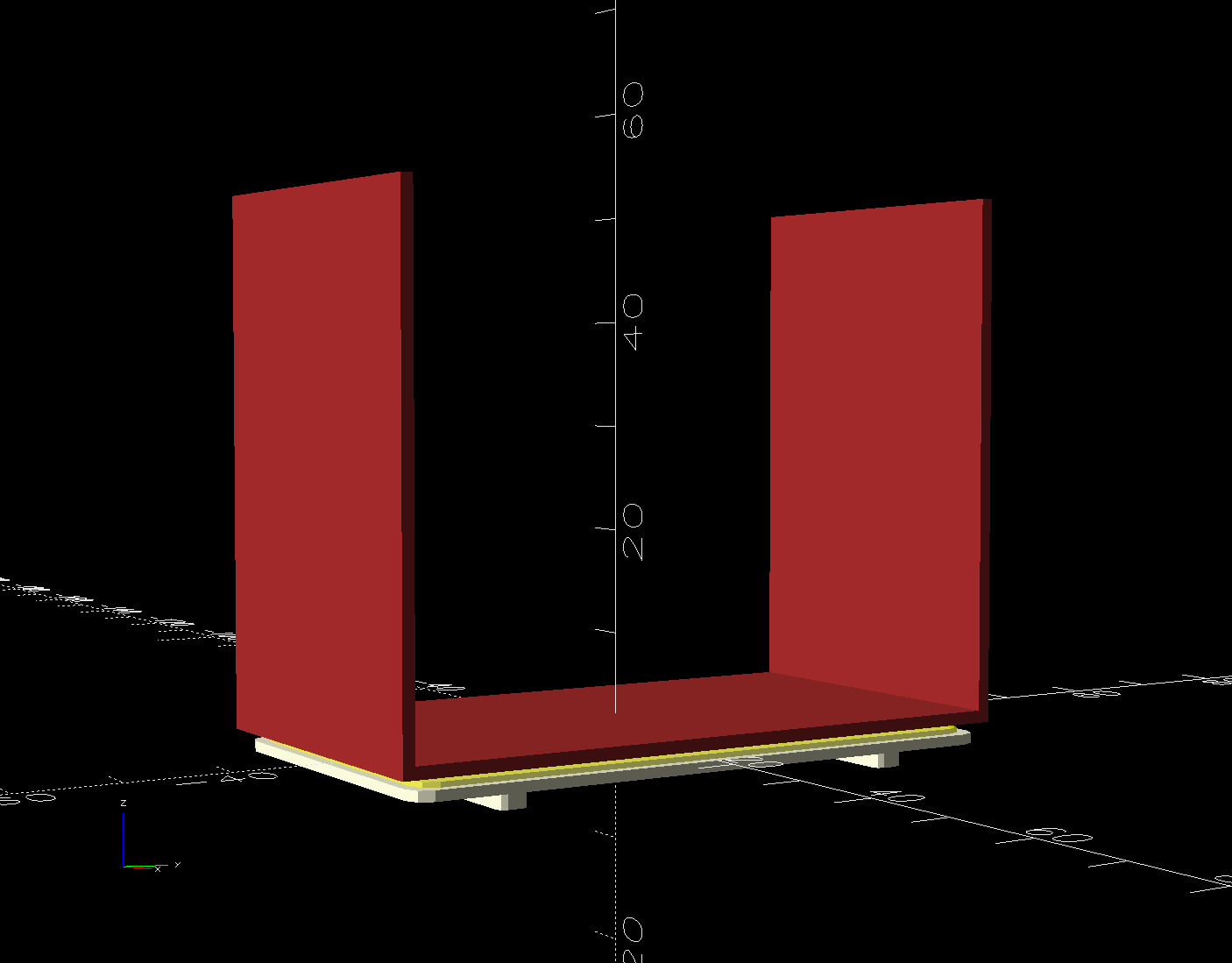
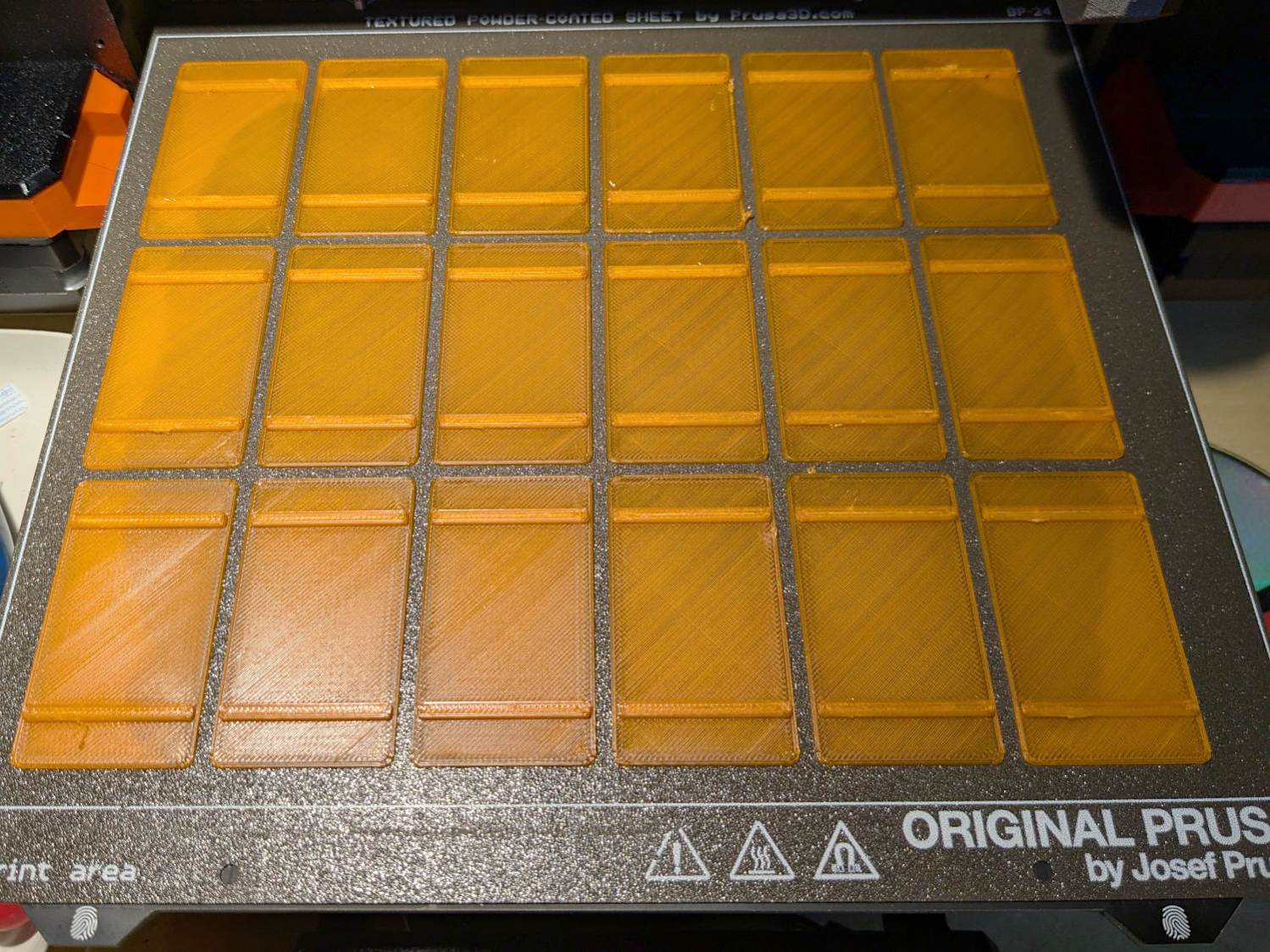
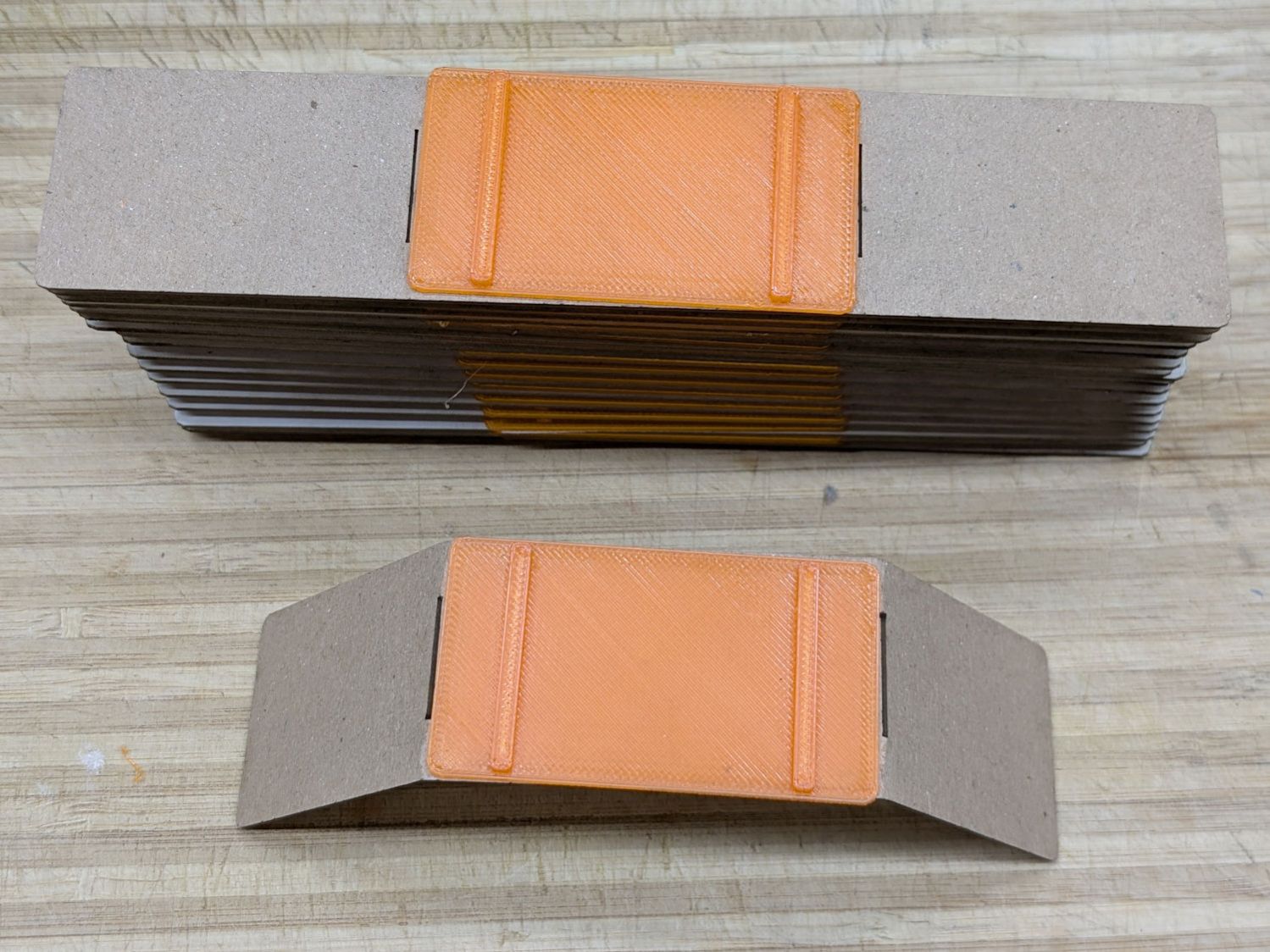
    The gallon jug has cardboard stiffeners supporting a sheet of the sticky paper I used for the onion fly traps:

    Worm Bin Fly Trap - sticky paper holder
    Worm Bin Fly Trap – sticky paper holder

    I was all set to 3D print a threaded adapter to join the two bottles when I realized they already had lids. A few minutes of lathe work added a passageway:

    Worm Bin Fly Trap - Bottle caps
    Worm Bin Fly Trap – Bottle caps

    They’re held together by a generous ring of hot melt glue:

    Worm Bin Fly Trap - lighting detail
    Worm Bin Fly Trap – lighting detail

    The LED strip provides enough light to simultaneously attract the flies and repel the worms.

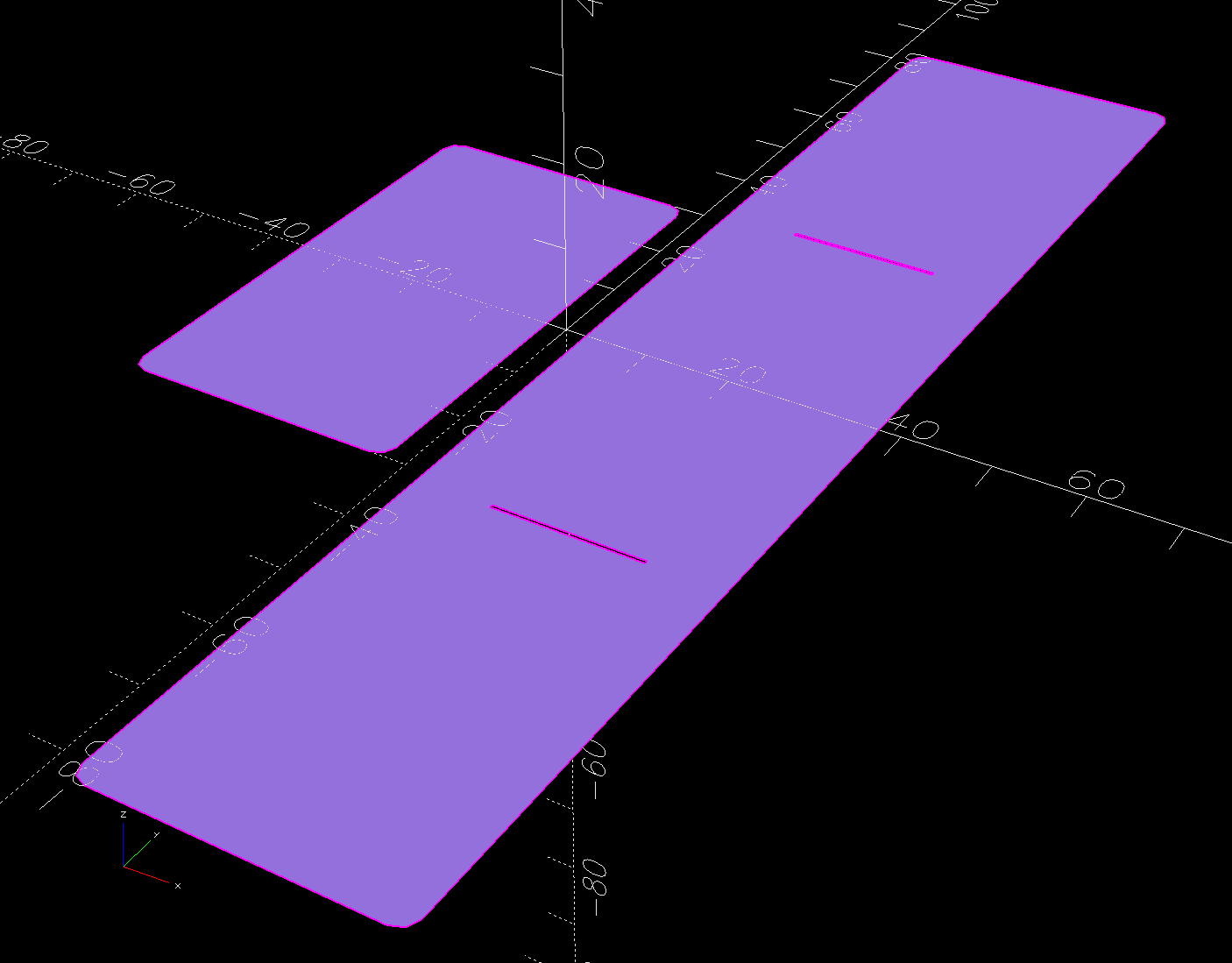
    The laser cuttery looks like this:

    Worm Bin Fly Trap - LightBurn parts
    Worm Bin Fly Trap – LightBurn parts

    The white shape in the black block is a scan of the cut-open jug, with the other shapes in that row being rectangularized versions. The two tiny notches in the Top and Bottom shapes hold the sticky paper.

    The two rings at the top adapt the LED-wrapped bottle to the existing fitting on the worm bin from the previous episode. They’re visible as shadows near the bottom of the bottle.

    The circle is a laser-cut hole in the gallon jug bottom for the screened plug made for the pepermint-stick tube; the less said about that operation the better.

    So far, so good, although previous experience suggests the flies will be breeding ahead of their (considerable) losses for the next few weeks.

  • HOKA Shoe: FAIL

    HOKA Shoe: FAIL

    Mary got a pair of HOKA shoes in the spring and, after a few months of what we consider light usage, had the upper detach from the sole:

    HOKA shoe - failed joint
    HOKA shoe – failed joint

    The oddly shaped holes in the rubberized area are a stylin’ thing, not defects.

    The wet-looking stuff is E6000+ adhesive, which then got clamped overnight:

    HOKA shoe - clamping
    HOKA shoe – clamping

    It cured and seems to be holding the pieces together:

    HOKA shoe - glued
    HOKA shoe – glued

    HOKA shoes came highly recommended by a friend and carry a corresponding price tag. Mary felt expensive shoes should hold together better than that, so (before I undertook the repair) she returned them under warranty. Some weeks later, the shoes reappeared with a note describing the failure as “normal wear and tear” which is not covered by the warranty.

    Whereupon I was given permission to have my way with them.

    For whatever it’s worth, this also happened:

    HOKA site blocking
    HOKA site blocking

    Mary’s conclusion was they’re nice shoes and fit well, but they’re definitely not worth three times the price of the shoes she’d been wearing.

  • Polydryer Humidity: Another Month of Data

    Polydryer Humidity: Another Month of Data

    The 25 g of silica gel in each Polydryer box produced these results after a month:

    8 Sept 202511 Sept23 Sept
    Filament%RHWt – gWt gain – g%RH%RH
    PETG White2527.62.61521
    PETG Black2227.32.31520
    PETG Orange2127.22.22123
    PETG Blue1927.32.31415
    PETG-CF Blue2427.42.42122
    PETG-CF Black2127.32.31519
    PETG-CF Gray2727.12.12426
    TPU2527.42.42224
    Empty 151no geln/a2730
    Empty 23527.92.91928

    The humidity levels seem higher than before, with a bit under 10% weight gain.

    The two “Empty” boxes show the difference between ambient basement humidity and letting 25 g of silica gel work on the box for a month. Comparing the latter’s weight gain with the other boxes shows occupying (much of) the interior with (relatively) dry filament reduces the desiccant’s workload.

    The beads in the “Empty 2” box were definitely darker after soaking up an entire box full of 50 %RH air:

    Polydryer - 37%RH meter - empty
    Polydryer – 37%RH meter – empty

    The meter reads 37%, rather than 35%, due to being out of the box for a few minutes.

    They’re the darker swirl in the pan of beads:

    Silica Gel regeneration - starting bead colors
    Silica Gel regeneration – starting bead colors

    That’s an accumulation of beads from a few months, not just what you see in the table.

    I used an induction cooktop to heat the cast-iron pan. Some fiddling with the cooktop’s constant-temperature mode got the beads to 200 °F with a 460 °F setting in about an hour. Setting the cooktop to 50% in constant-power mode worked better, as the beads reached 220 °F in an hour and 230 °F after another hour.

    The bead weights at various stages:

    • Start = 531 g
    • +1 hr at constant temperature = 491 g
    • + 1 hr at 50% constant power = 483 g
    • + 1 hr ditto = 480 g

    The 41 g weight loss is 8.5% of the dry weight, roughly what you’d expect from the humidity readings.

    After reloading the meters with 25 g of alumina beads, the 11 Sept humidity readings are slightly lower and the 23 Sept readings are roughly comparable.

  • USB Charger: Safety FAIL

    USB Charger: Safety FAIL

    Mary reported a problem unplugging the USB charger powering the light pad (the successor to the pad I repaired) she uses for quilting layouts:

    USB Charger - as found
    USB Charger – as found

    Yes, that blade is sticking out of the hot (“Line”) side of the outlet.

    The only way into the charger was through its other end:

    USB charger - interior top
    USB charger – interior top

    Because I had no intention of returning it to service, I tried pushing the errant blade back in place, only to have it overshoot the mark and bulldoze various parts aside:

    USB charger - PCB blade contacts
    USB charger – PCB blade contacts

    The two upright shapes contact the blades, but do not lock them in place. The PCB pulled easily out of the case, with no objection from the remaining (“Neutral”) blade.

    The blades are simple steel bars press-fit into the plastic case, without holes / dimples / notches to lock them into the plastic. As far as I could tell, they were not molded in place.

    I tossed the corpse into the e-waste box, extracted another USB charger from the Box o’ USB Chargers and returned the light pad to service.

    I do have a few Genuine UL Listed USB chargers, but these are not among them.

  • Fitbit Charge 5 Charging Stand

    Fitbit Charge 5 Charging Stand

    My Fitbit Charge 5 has become fussy about its exact position while snapped to its magnetic charger, so I thought elevating it above the usual clutter might improve its disposition:

    FitBit Charge 5 stand - installed
    FitBit Charge 5 stand – installed

    The Charge 5 now snaps firmly onto its charger, the two power pins make solid contact, and it charges just like it used to.

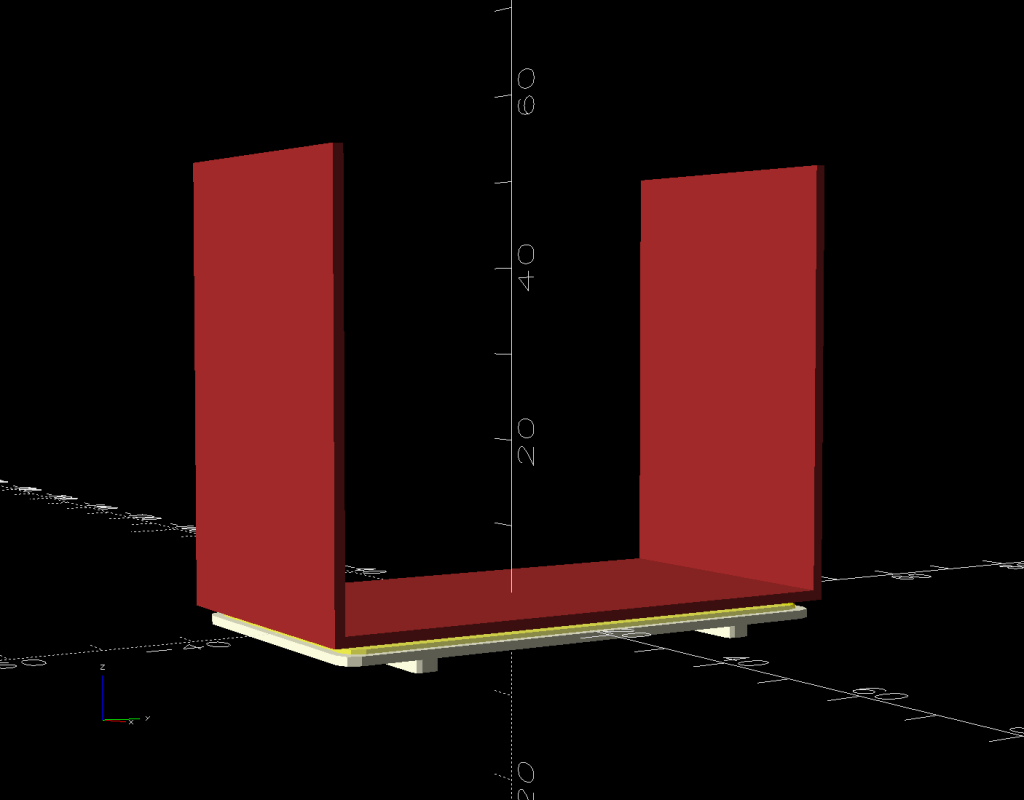
    The solid model comes from Printables, modified to have a neodymium ring magnet screwed into its base:

    Fitbit Charge 5 stand - solid model section
    Fitbit Charge 5 stand – solid model section

    Which looks about like you’d expect;

    FitBit Charge 5 stand - added magnet
    FitBit Charge 5 stand – added magnet

    A layer of cork covers the bottom and it sits neatly atop the USB charger.

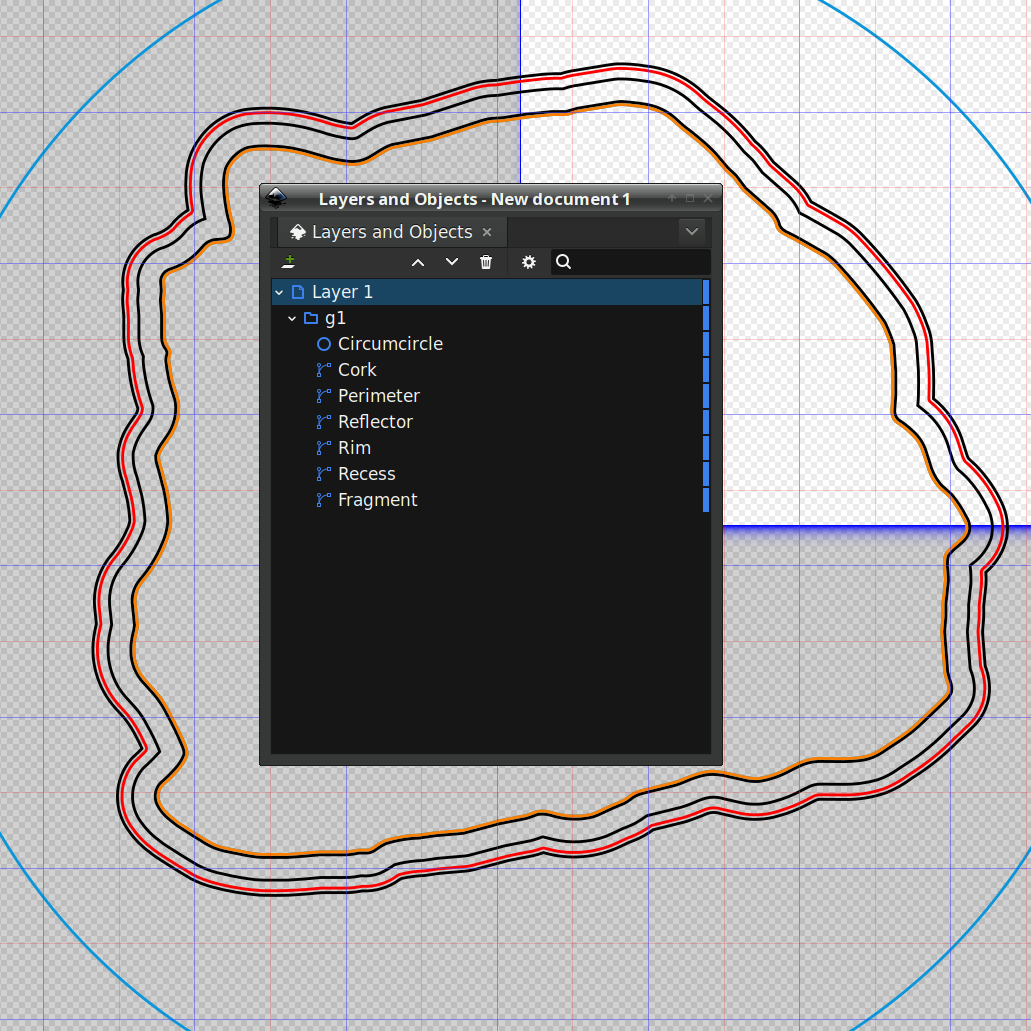
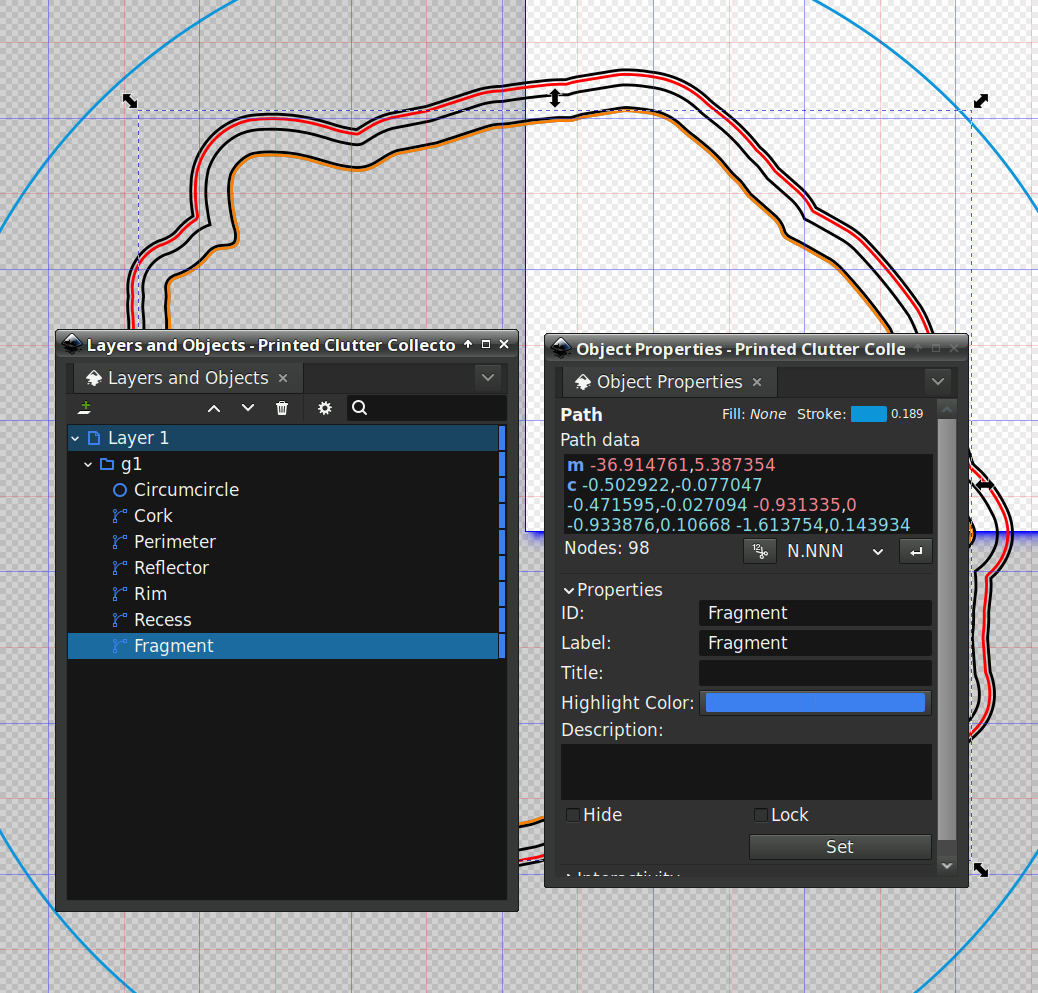
    The OpenSCAD source code punches the recesses and produces the bottom outline so LightBurn can cut the cork:

    // FitBit Charge 5 Stand - base magnet
    // Ed Nisley - KE4ZNU
    // 2025-09-05
    
    include <BOSL2/std.scad>
    
    Layout = "Build";       // [Build, Base, Section]
    
    module Stand() {
      difference() {
        left(38/2) back(65/2)
          import("Fitbit Charge 5 Stand.stl",convexity=10);
    
          down(0.05)
            cylinder(d=12.5,h=5.05,$fn=12);
          up(5.2)
            cylinder(d=3.0,h=10.0,$fn=6);
      }
    }
    
    //-----
    // Build things
    
    if (Layout == "Build")
      Stand();
    
    if (Layout == "Base")
      projection(cut = false)
        Stand();
    
    if (Layout == "Section")
      difference() {
        Stand();
        down(0.05) fwd(50)
          cube(100,center=false);
    }


  • All’s Well Who Ends Well

    All’s Well Who Ends Well

    Eventually this happened:

    Negative COVID tests
    Negative COVID tests

    Three weeks, more or less, from my exposure to clearing the hurdle. Mary, being tougher than I, got it done in two.

    For the better part of the first two weeks I was in bed ten hours every night, plus an hour or two of afternoon nap (no milk & cookies, drat), plus dragging around the house getting nothing done.

    No major health problems, good blood oxygen levels throughout, no loss of smell apart from what you’d expect during three days of complete nasal blockage, and we’re both feeling OK-ish now.

    However, we are making more than the usual number of stupid mistakes, which is one way we know we’re not really OK yet.

    Back to the Basement Shop, with considerable caution …

    Memo to Self: That was the first time in four years you didn’t wear a mask in close quarters. Don’t ever do that again.