The Smell of Molten Projects in the Morning

Ed Nisley's Blog: Shop notes, electronics, firmware, machinery, 3D printing, laser cuttery, and curiosities. Contents: 100% human thinking, 0% AI slop.

Author: Ed

  • Garden Rake Cross Bolt

    Garden Rake Cross Bolt

    Mary’s long-suffering garden rake pulled apart while we were flattening a section of what will become something like a lawn next to the garden:

    Garden rake - shank and ferrule
    Garden rake – shank and ferrule

    For whatever reason, there’s no cross bolt holding the shank into the ferrule, like there should be on any tool subject to pulling force.

    After marking the wide spot on the shank, a couple of good shots with a two pound hammer flattened the ferrule around it well enough to start a hole with a 3/16 step drill:
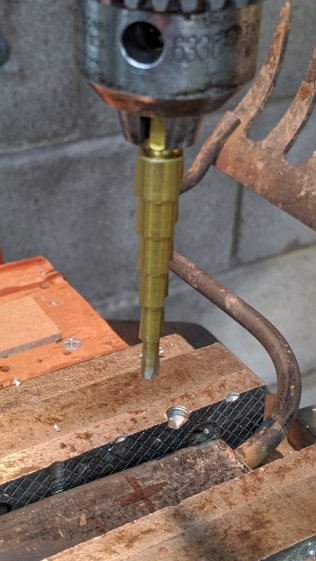
    Garden rake - cross drilling
    Garden rake – cross drilling

    Go through the far side with a 13/16 inch drill for a generous 5 mm fit, drop a bolt into the hole while it can’t get away, tighten the nyloc nut, and it’s all good:

    Garden rake - cross bolt
    Garden rake – cross bolt

    In fact, it’s better than it ever was, because now the shank can’t pull out until the ferrule falls off the handle. Which could happen, but I’m not averse to another bolt.

    Admittedly, it’s not a stainless steel socket head cap screw, because that’d just about double the value of the rake. The handle is in such bad shape that the bolt will probably outlast the wood …

    Done!

    Update: The consensus says I totally missed the Ritual Invocation of the Epoxy, so:
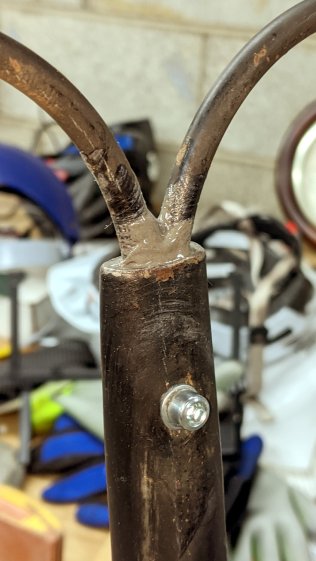
    Garden rake - epoxy fill
    Garden rake – epoxy fill

    Now all is right with the world …

  • Gosling Time

    Gosling Time

    The Dutchess Rail Trail has gotten far more use in recent months than ever before, with entire families walking along the path:

    Canada Geese Families on the Rail Trail - 2020-05-08
    Canada Geese Families on the Rail Trail – 2020-05-08

    Almost by definition, though, goslings don’t practice social distancing …

  • Floor Lamp Height vs. Reach: Plumbing Fitting

    Floor Lamp Height vs. Reach: Plumbing Fitting

    Update: Welcome Adafruit! The reshaped elbow shown here eventually got threaded adapters for the tubing and an awful paint job.

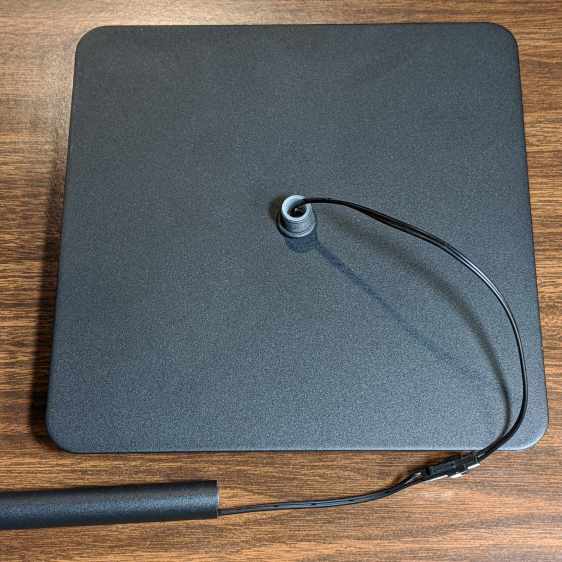
    The floor lamp with the invisible / non-tactile controls moved to a different chair, where it didn’t have quite enough reach and too much height. Knowing what was about to happen, I spliced a JST-SM connector into the wire inside the tube:

    Floor Lamp - base wiring JST-SM connector
    Floor Lamp – base wiring JST-SM connector

    After trimming off all the extraneous bits, the larger half of the connector (male pins) fits through the tubing and the smaller half (female sockets) barely fits through the bottom bushings.

    It turns out half-inch copper pipe fittings (ID = 15.9 mm) almost exactly fit the tubing (OD = 15.7 mm):

    Floor Lamp - copper 45° elbow
    Floor Lamp – copper 45° elbow

    A quick test showed the 45° (actually, it’s 135°, but we’re deep into plumbing nomenclature) positioned the lamp head too high and with too much reach:

    Floor Lamp - gooseneck exercise
    Floor Lamp – gooseneck exercise

    So shorten the tube attached to the head and deburr the cut:

    Floor Lamp - tube deburring
    Floor Lamp – tube deburring

    The 45° fitting is too high and a 90° fitting is obviously too low, so cut a 20° slice out of a 90° fitting:

    Floor Lamp - copper 90° elbow - 20° cutout
    Floor Lamp – copper 90° elbow – 20° cutout

    Cut a snippet of brass tubing to fit, bash to fit, file to hide, buff everything to a high shine, silver-solder it in place, and buff everything again:

    Floor Lamp - copper 90° elbow - 20° fill strip
    Floor Lamp – copper 90° elbow – 20° fill strip

    The 5/8 inch aluminum rods serve to stiffen the fitting, smooth out the torch heating, and generally keep things under control.

    Wrap the obligatory Kapton tape around the butt ends of the tubes to fill the fitting’s oversize hole, put everything together, and it’s just about perfect:

    Floor Lamp - copper 70° elbow - installed
    Floor Lamp – copper 70° elbow – installed

    I immobilized the fitting with black Gorilla tape, but it really needs something a bit more permanent. One of these days, maybe, a pair of setscrews will happen.

    The additional reach required a little more counterweight on the far side for security, so I added the broken stub of a truck leaf spring. It should be secured firmly to the base plate, but no tool I own can put a dent in those three pounds of spring steel. Maybe it’ll merit a fancy enclosure wrapped around the base?

  • Reversible Belt Buckle: Setscrew

    Reversible Belt Buckle: Setscrew

    The post in my reversible belt buckle popped out again, a year after punching it back in place, so it’s time to do a better job.

    Grab the buckle in the Sherline vise, center on the post hole, and drill a #38 = 2.58 mm hole:

    Reversible Belt Buckle - cross drilling
    Reversible Belt Buckle – cross drilling

    Tap it M3×0.5, clean out the hole, tap the post + spring back in place, dab threadlocker on the shortest M3 setscrew from the assortment, snug down on the post, and reinstall the belt:

    Reversible Belt Buckle - M3 setscrew installed
    Reversible Belt Buckle – M3 setscrew installed

    Looks like it grew there, doesn’t it?

    Now, as my buddy dBm will remind me, the real problem is too much weight in the saddle, but this fix should move the symptoms elsewhere …

  • Glass Tiles

    Glass Tiles

    A sheet of cheap-on-closeout glass tiles emerged from the back of the Basement Laboratory workbench:

    Glass Tiles - as sold
    Glass Tiles – as sold

    They’re intended for bathroom / kitchen backsplash panels and suchlike, rather than floors. Surprisingly, the white frit backing is diffuse, translucent, and lights up nicely with a backlight, although I lack sufficient hands for a convincing picture.

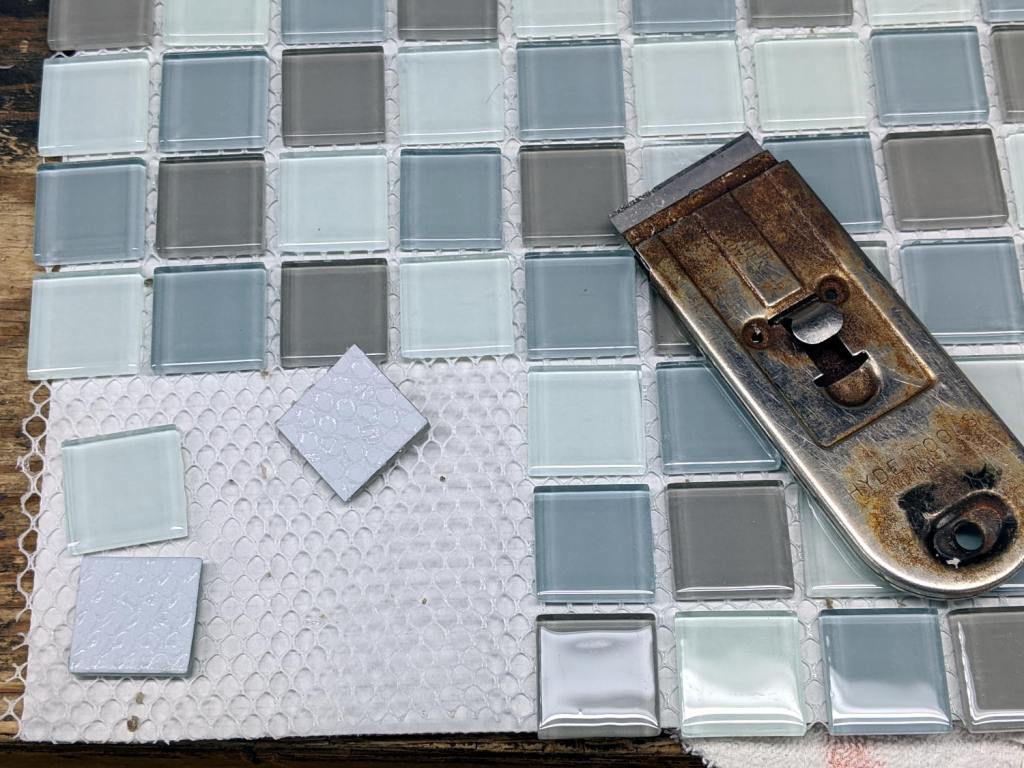
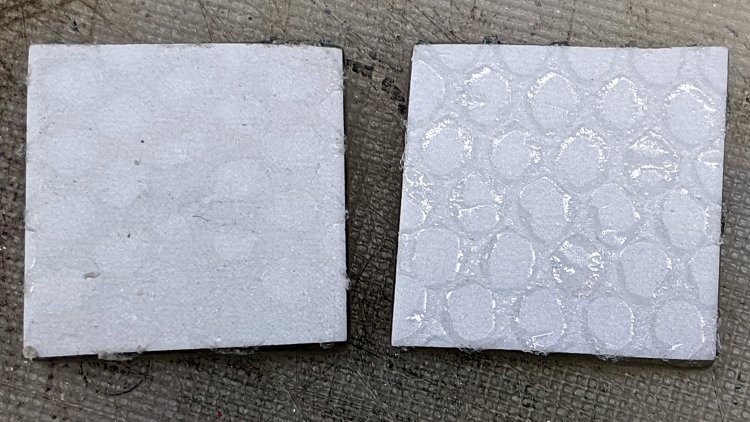
    One can, with some effort, peel the tiles from their foot-square backing mesh, which leaves them covered with the resolutely sticky adhesive:

    Glass Tiles - adhesive mesh
    Glass Tiles – adhesive mesh

    Applying the razor scraper removes most of the gum, xylene removes most of the remainder, and what’s left isn’t visible through the frit.

    They’re 25 mm square and 4 mm thick, with sufficient edge imperfections to require half a millimeter of clearance on all sides

    Sixteen pixels would make an adequate display:

    Glass Tiles - sample layout
    Glass Tiles – sample layout

    Perhaps something random:

    Random LED Dots - circuit board
    Random LED Dots – circuit board

    Now, if only I could find the matching Round Tuit™ on the bench.

  • Tek Circuit Computer: Cursor Hairline Scraping

    Tek Circuit Computer: Cursor Hairline Scraping

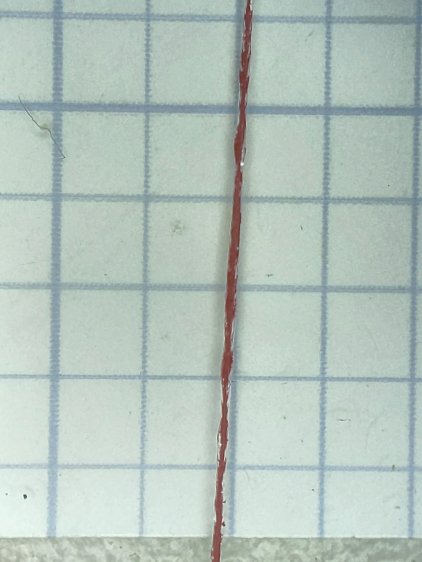
    Engraving a PETG sheet with a diamond drag engraver on the Sherline and filling the scratch produces a good-looking hairline, but there’s a tradeoff between having the protective sheet pull the paint out of the scratch and having the crayon scuff the unprotected surface. This time around, I scribbled the crayon through the protective film, let it cure for a few days, then scraped the surface to level the paint and see what happens.

    First, an unscraped cursor:

    Tek CC - Cursor red lacquer - plain - overview
    Tek CC – Cursor red lacquer – plain – overview

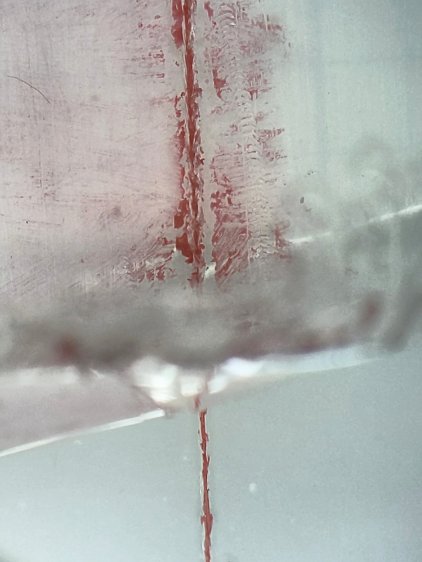
    Peeling the transparent protective film:

    Tek CC - Cursor red lacquer - plain - partial peel
    Tek CC – Cursor red lacquer – plain – partial peel

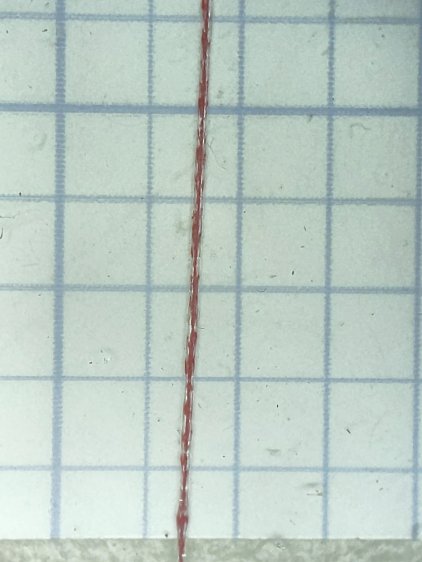
    The hairline is solidly filled:

    Tek CC - Cursor red lacquer - plain - peeled
    Tek CC – Cursor red lacquer – plain – peeled

    Scribbling another cursor the same way, then scraping the protective film to flatten the shredded edges:

    Tek CC - Cursor red lacquer - scraped - overview
    Tek CC – Cursor red lacquer – scraped – overview

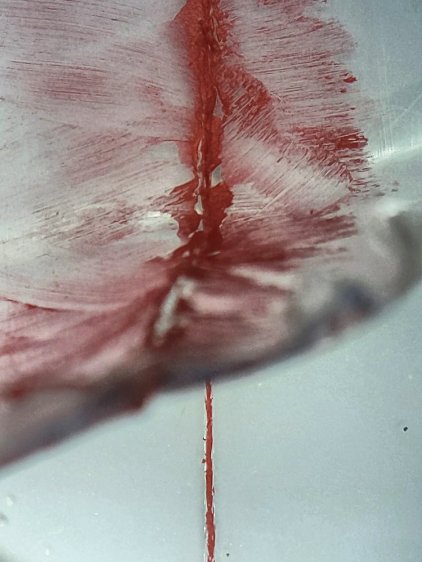
    The hairline remains filled, but not as completely:

    Tek CC - Cursor red lacquer - scraped - partial peel
    Tek CC – Cursor red lacquer – scraped – partial peel

    A closer look:

    Tek CC - Cursor red lacquer - scraped - peeled
    Tek CC – Cursor red lacquer – scraped – peeled

    Scraping the crayon off the film removes a substantial amount of paint from the hairline, but, on the upside, the protective film does exactly what it says on the box and the PETG surface remains pristine.

    Both hairlines are, at least eyeballometrically, Just Fine™ for their intended purpose.

  • Fiskars Small Detail Scissors: Pivot Restaking

    Fiskars Small Detail Scissors: Pivot Restaking

    The pivot on the Fiskars Small Detail Scissors (the name is larger than the hardware!) in the bathroom gradually worked loose to the point where I hauled it to the Basement Shop and whacked the rivet with a concave punch:

    Fiskars Small Detail Scissors - pivot restaking
    Fiskars Small Detail Scissors – pivot restaking

    Setting the rim of the rivet down a smidge tightened the joint wonderfully well and two oil dots smoothed the action.

    I grew up using these concave punches (I have several sizes) to set finish(ing) nails, but apparently real nail punches have a nubbin in the middle to engage the little recess in the nail head which used to be common, back when finish nails arrived well-finished from the factory.

    They’re not roll pin punches, either, because those have a different nubbin to support the inside of the pin.