Although adding table shims / leveling blocks dramatically improved the HQ Sixteen’s travel along the table, it still had a tendency to roll away when parked at some locations. The padded shims had compressed enough to throw off the alignment between adjacent sections, so returning to the original rigid blocks seemed prudent.
I removed all the shims to let the middle three sections of the tabletop droop as it did when we got it, put a ten foot saw guide across the entire table, and added 5 mm (!) plates to the stacks already under the high (!) end of the table feet to level the two ends. The floor is not that far out of level, so the table structure itself must be mismatched from one end to the other.
Adding 3 mm (!) plates under the front pair of legs put the table far enough out of level to prevent the machine from rolling front-to-back on its carriage. I think the carriage is slightly bowed downward in the middle, but now the machine is more inclined (so to speak) to remain in one place.
The saw guide showed the table sections on each end, despite being screwed firmly to the table structure, were slightly sloped downward toward the center. Shimming the sections with thin cardboard atop their steel mounting brackets leveled them so the machine no longer wanted to roll away when parked at either end, which was a good start.
Adjoining table sections have peg-in-hole alignment, with their accuracy leaving something to be desired. Shims under the machine tracks level it across the mismatched joints:
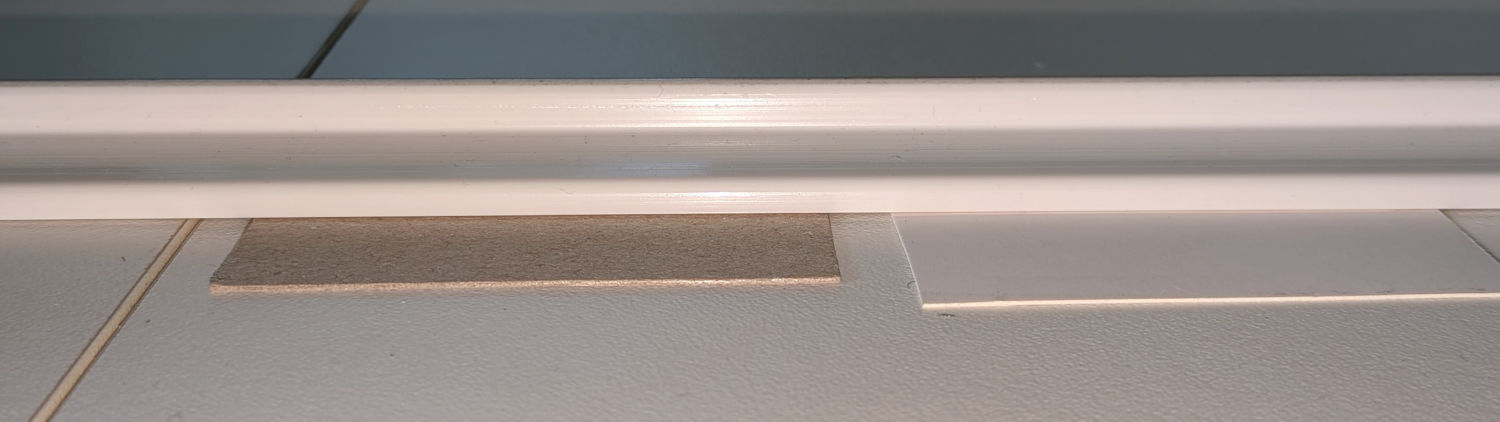
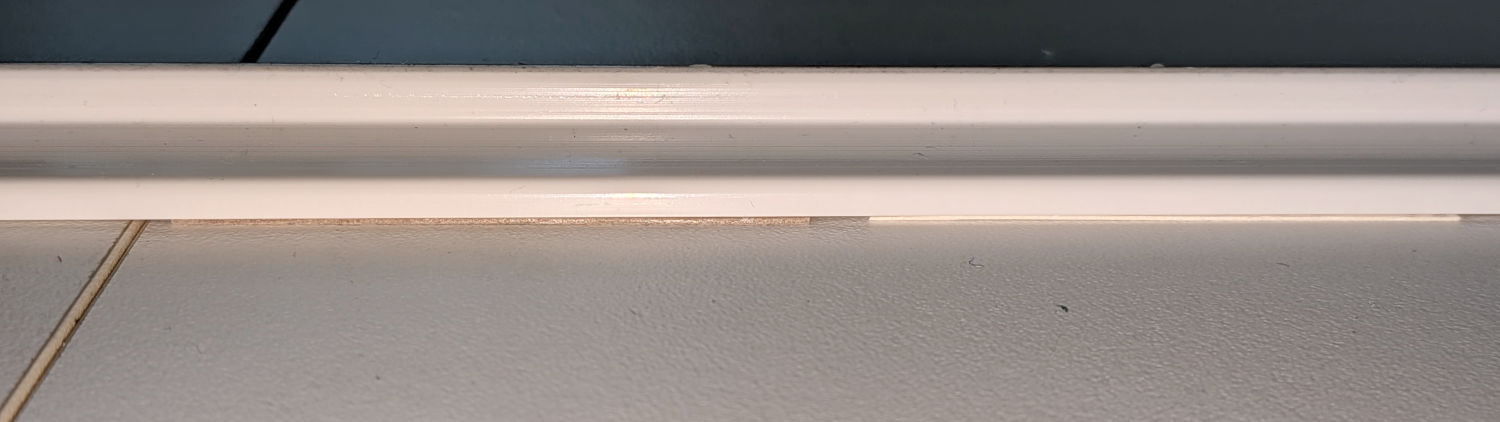
The brown chipboard is 0.7 mm thick and the white cardboard is 0.4 mm, with lengths eyeballometrically matching the misaligned part of the table section. They’re not quite so conspicuous in action:
I then inserted wood shims under the tabletop to level the three middle sections. Unlike my previous efforts, each section got four shims to level it both front-to-back and side-to-side. After considerable iteration, the HQ Sixteen would remain where it was parked at (almost) every location across the entire table span.
Then I used a set of small hole gauges to measure the distance between the table’s metal structure and the bottom of the tabletop section near each wood shim. I had previously used a taper gauge that measured the clearance on only the near side and it turns out the metal has plenty of irregularities across its bent shapes.
Then feed the measured values into the OpenSCAD shim block generator mentioned earlier to get more shims:
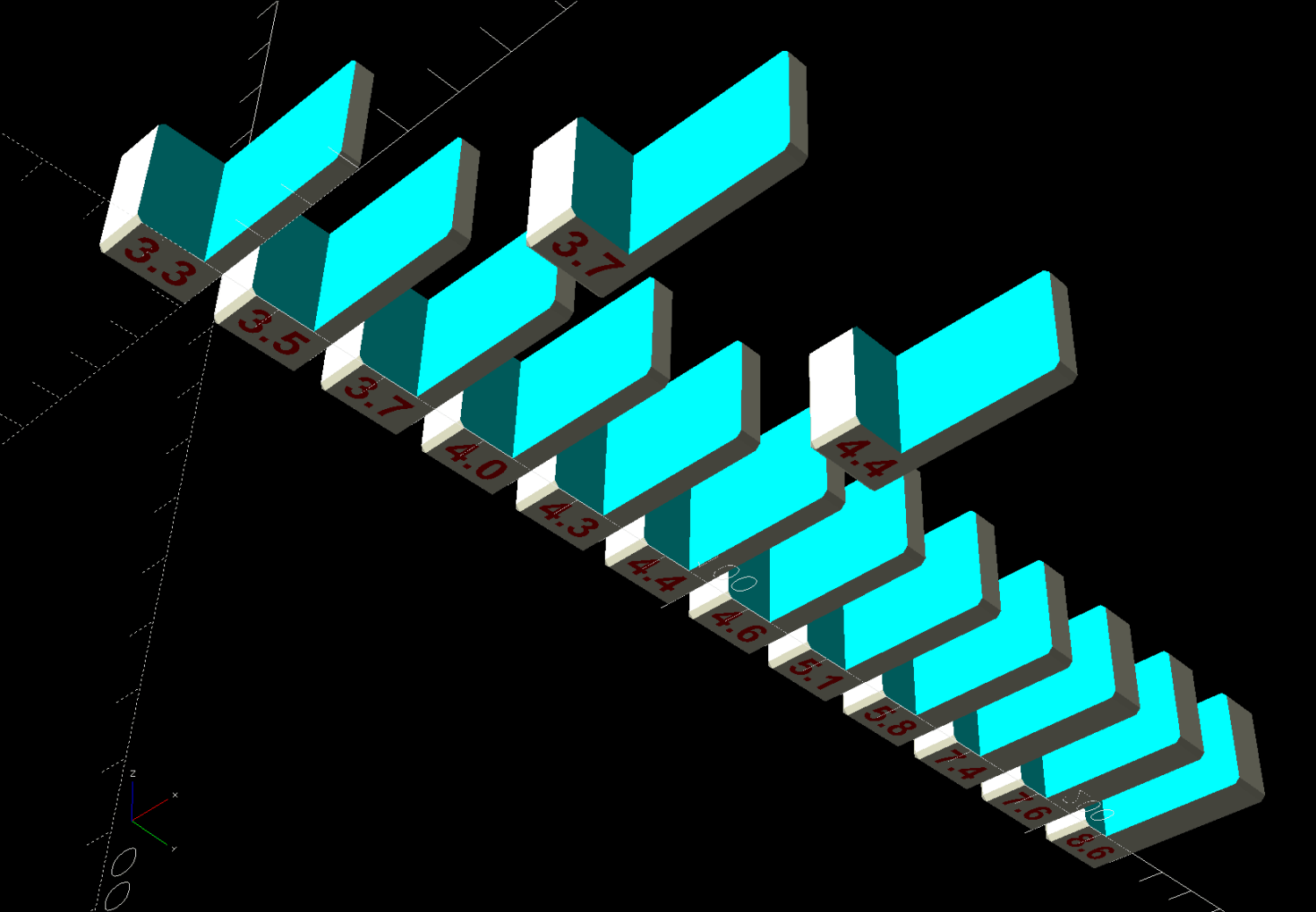
Slide them in place and remove the wood shims:
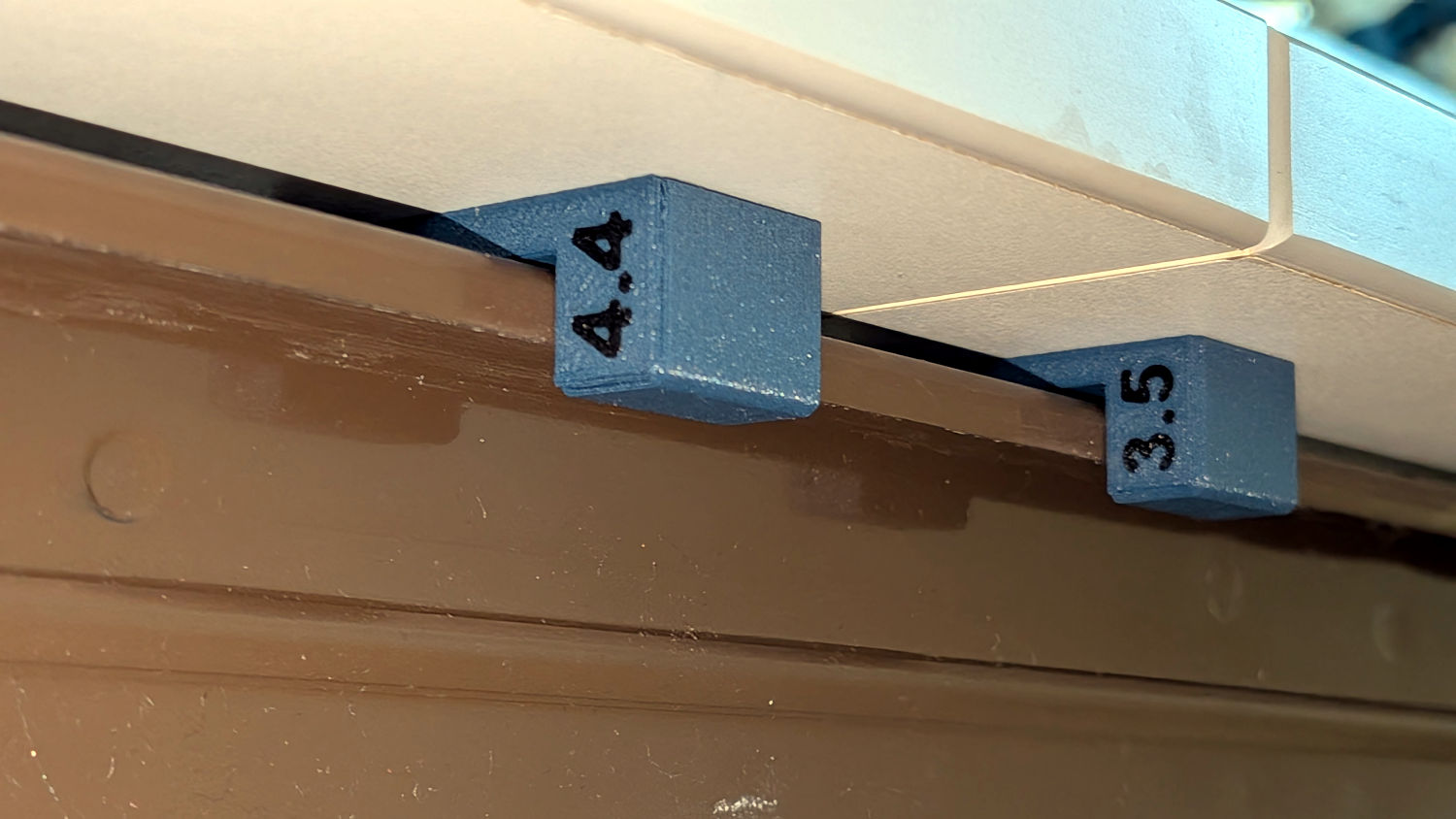
Yes, that’s nearly a 1 mm difference, despite the bottoms of the two table sections being obviously aligned.
Each block now has a narrow strip of craft adhesive sheet holding it to the table top, in the expectation hope the machine’s normal vibration won’t shake them loose.
Initial user response is positive: the improved anchor may remain on the shelf.


Spam comments get trashed, so don’t bother; you’re not as clever as you think. Comment moderation may cause a delay.