The Smell of Molten Projects in the Morning

Ed Nisley's Blog: Shop notes, electronics, firmware, machinery, 3D printing, laser cuttery, and curiosities. Contents: 100% human thinking, 0% AI slop.

Auto Parking Light LED Bulbs: FAIL

After about eight years and a similar failure last year, this came as no surprise:
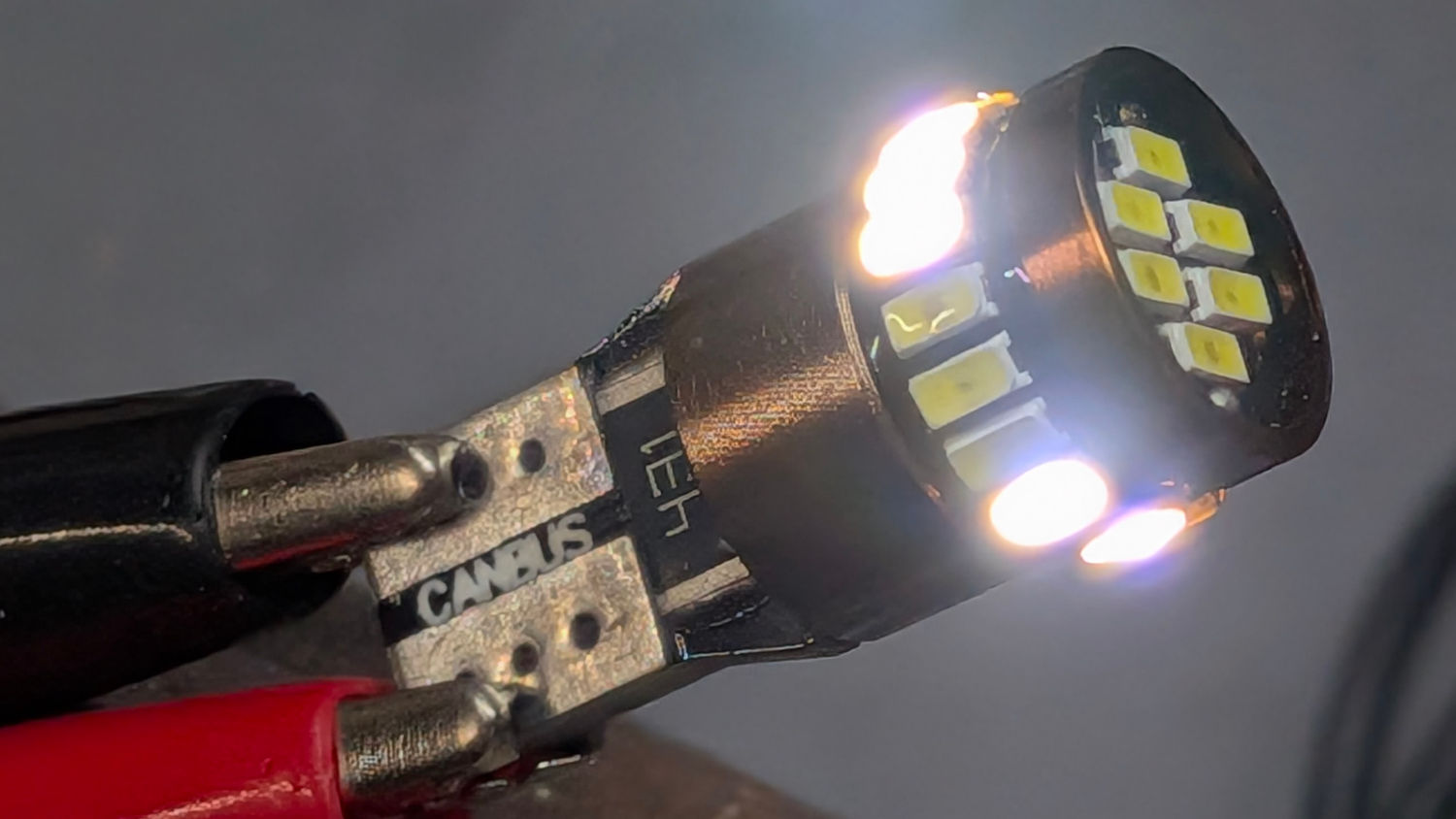
White W5W Parking Light - failed chips
White W5W Parking Light – failed chips

It’s a W5W “parking light” in the same fixture as the melty halogen high-beam bulbs (used as daytime running lights at half power), so it gets toasted on those occasions when we drive somewhere.

The adhesive holding the LED strip to the aluminum shell fossilized and came loose:
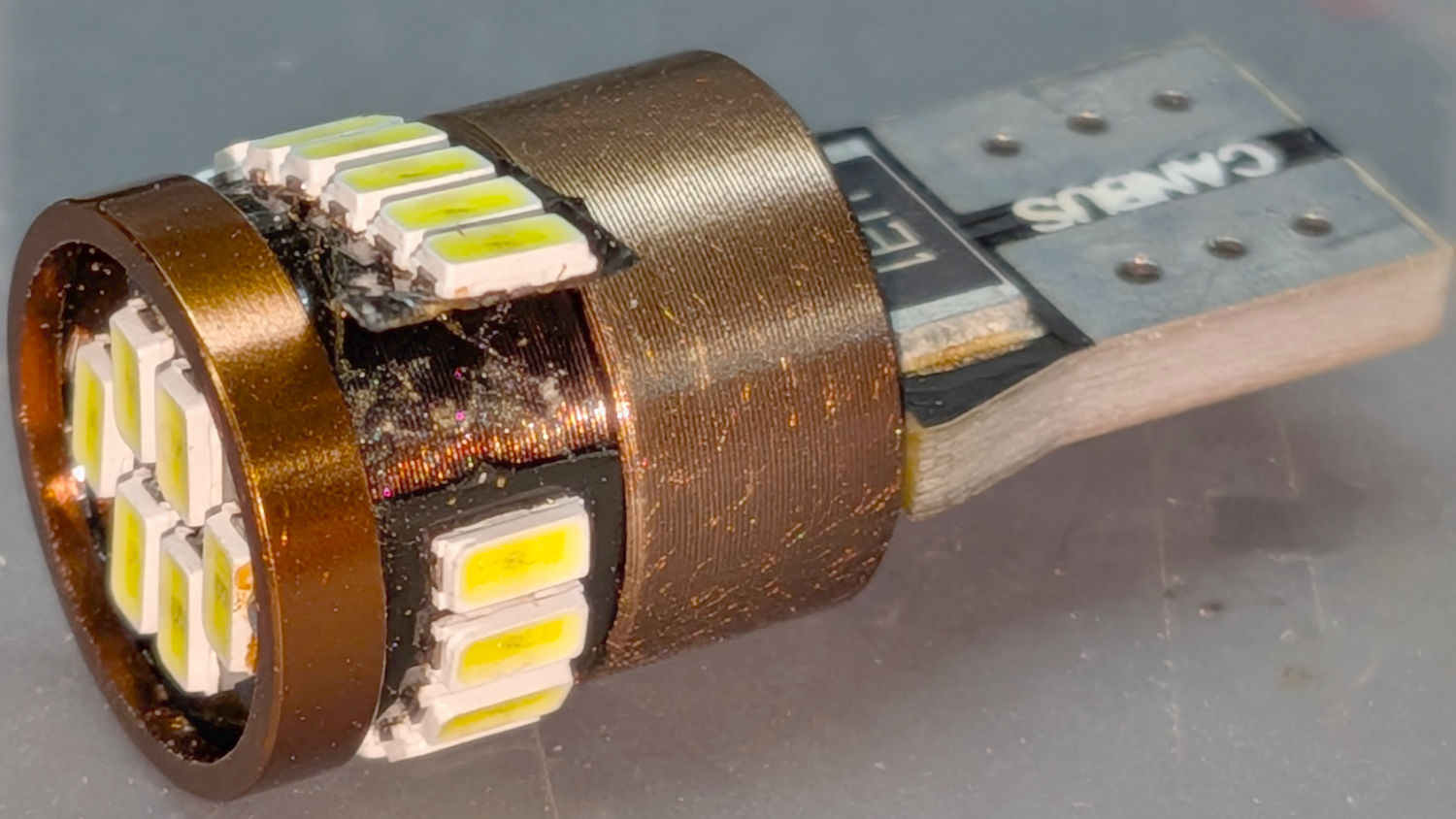
White W5W Parking Light - failed adhesive
White W5W Parking Light – failed adhesive

Now that I know what to look for, I’d get LED bulbs with chips soldered directly to the PCB, although it’s not obvious what holds the PCB to the aluminum frame.

I reinstalled the original incandescent bulbs.

Comments

4 responses to “Auto Parking Light LED Bulbs: FAIL”

  1. Mick King Avatar
    Mick King

    but but but LED will last forever! will save the world!

    1. Ed Avatar

      That pesky glue keeps getting in the way of World Domination!

      My box of CFL bulbs, many of which probably still work, goes to the next hazmat collection event. :sigh:

  2. brentatedsblog Avatar
    brentatedsblog

    The design of the LEDs for automotive bulb replacement is like it was all done by a college sophomore.

    Most make every mistake there is. A few get it right.

    I have started to look for ones that are rated 6v~30v those must have a switcher on them, right?

    Example: Ruiandsion LED Turn Signal Lights AC 6-30V Non Polarity

    I needed the 6v for my old 1946 truck, but I think they might be better bulbs in general. Time will tell.

    1. Ed Avatar

      Sort of like all the handy little PCBs have circuits taken directly from the IC’s App Note.

      The 194-style bulbs tout their “intelligent IC” circuitry, which AFAICT amounts to a diode bridge, so they may run the LEDs at four or five times the 6 V current at the high end of the voltage range. :sigh:

Leave a reply to brentatedsblog Cancel reply