Ed Nisley's Blog: Shop notes, electronics, firmware, machinery, 3D printing, laser cuttery, and curiosities. Contents: 100% human thinking, 0% AI slop.
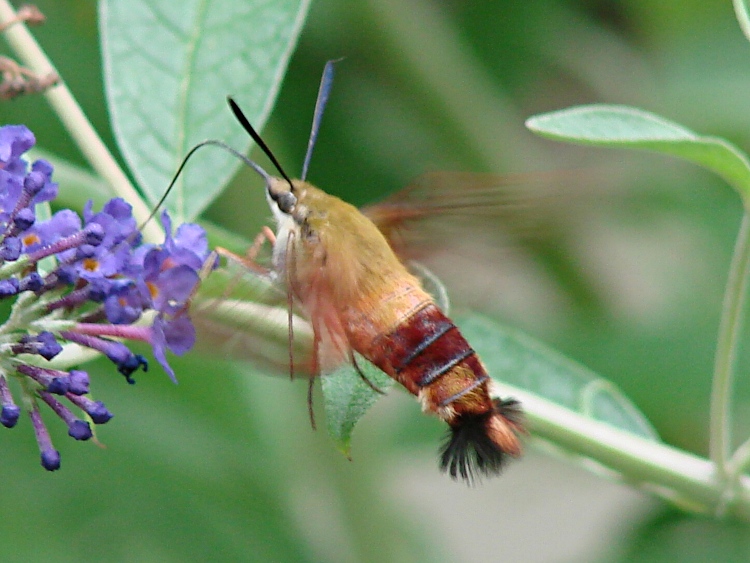
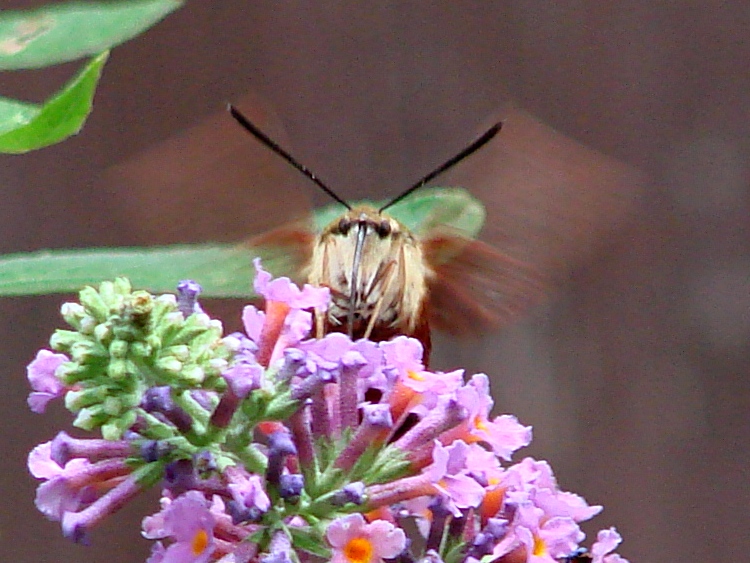
They’re heavy-bodied moths and, unlike those butterflies, never alight on the flowers to dine. Their wings are clear and never stop moving:
Hummingbird Moth – wing
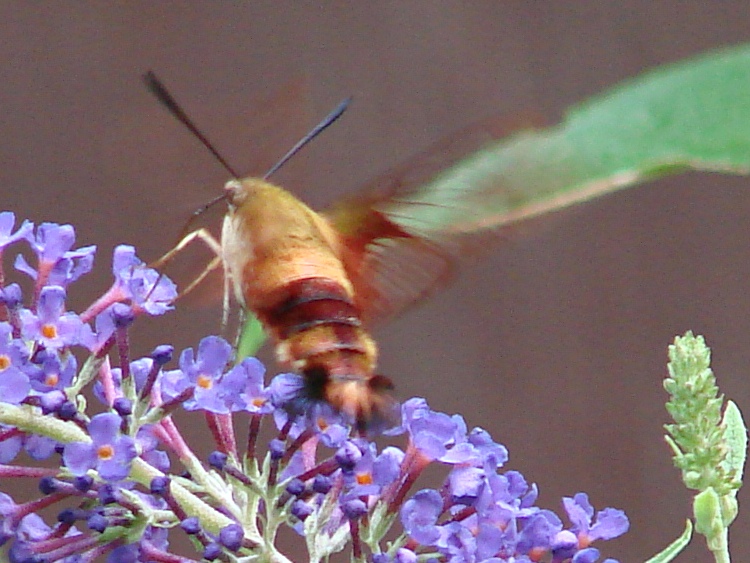
It’s impossible to not see a face looking back at you, even though that’s a proboscis down the middle:
Hummingbird Moth – front
They don’t stay very long and are extremely flighty, so the picture are catch-as-catch-can: hand-held with the DSC-H5, roughly dot-for-dot crops, and only the last one got any color correction. I didn’t have time to set the usual one-stop underexposure, so the colors washed out a bit. I really like the first picture; almost all my mistakes canceled out.
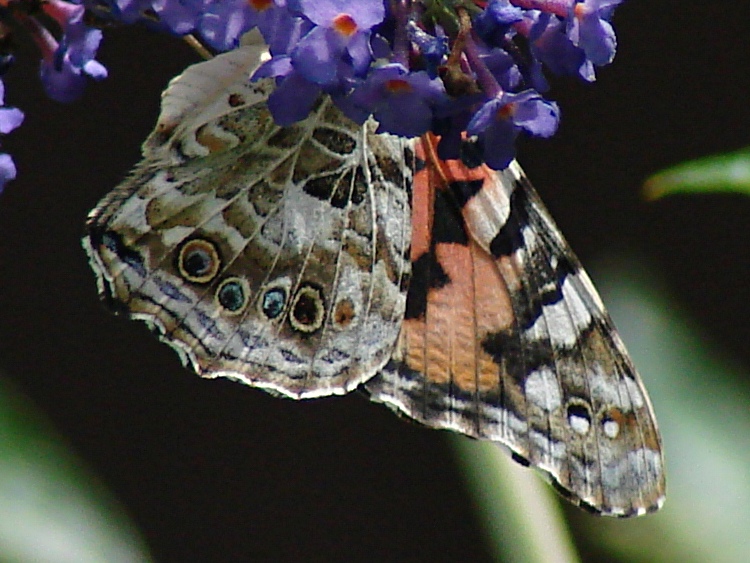
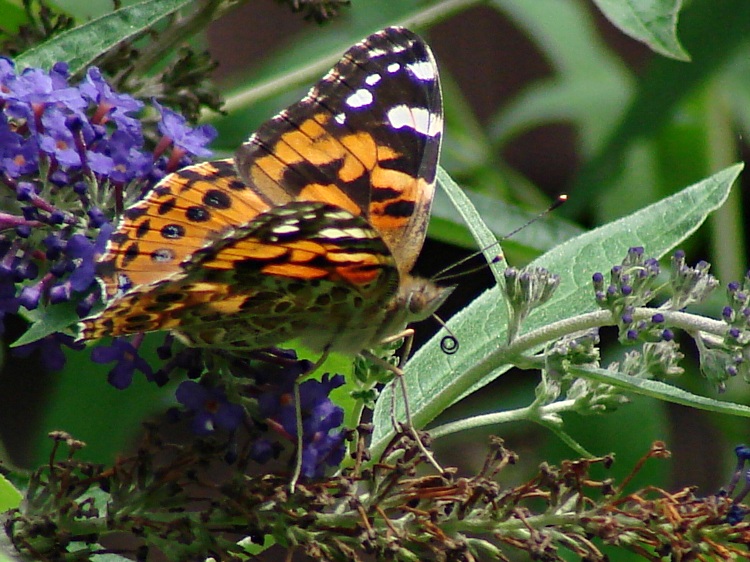
The underwing shows four eye spots as distinguishing features:
Painted Lady – underwing
Painted Ladies have odd-looking “faces” on their front end:
Painted Lady – front
The proboscis works wonderfully well on deeper flowers than these, but they’re not passing anything up:
Painted Lady – proboscis
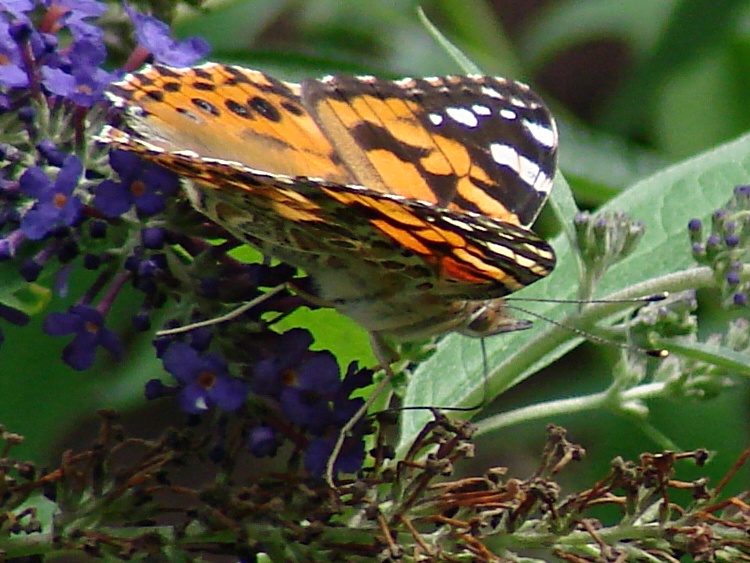
Another view:
Painted Lady – right side
The refueling tube stows neatly for flight:
Painted Lady – proboscis curled
One had a few notches taken from a wing:
Painted Lady – left rear
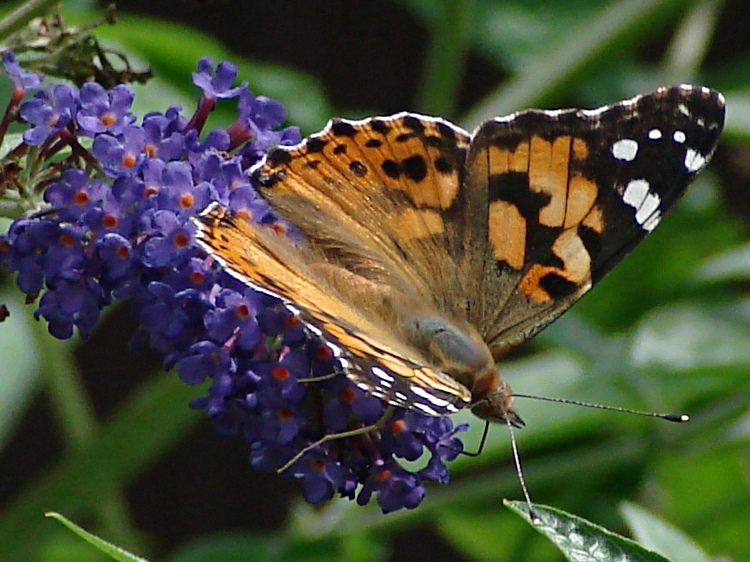
You can’t ask for prettier colors:
Painted Lady – right front
These are all hand-held with the DSC-H5 wearing the 1.7 teleadapter, underexposed by 1 stop to keep the dark background from burning out the butterfly colors. The images are very close to dot-for-dot crops from much larger pictures, with a touch of unsharp mask, and no color fiddling at all; bright daylight and a gorgeous subject come out beautifully!
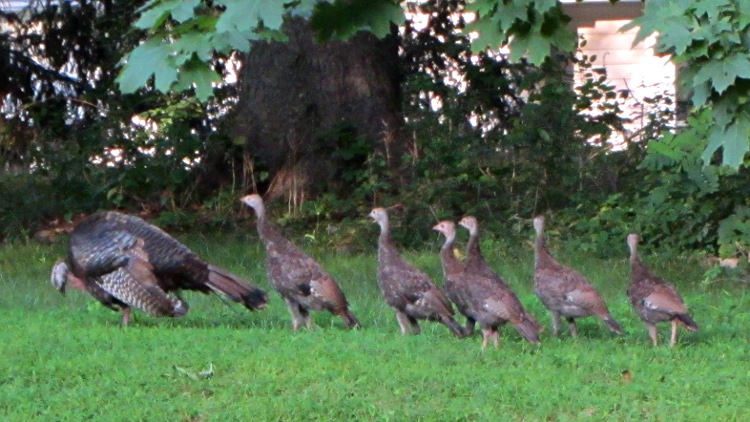
Two turkey hens have formed a creche with seven chicks; if that seems a low number compared with the five in that clutch, we may have just seen the reason.
The turkey flock came foraging across the back yard one evening while we were eating supper on the patio:
Turkey Chicks – foraging
The hens began behaving oddly and the chicks went into periscope mode while looking in all directions at once:
Turkey Chicks – high alert
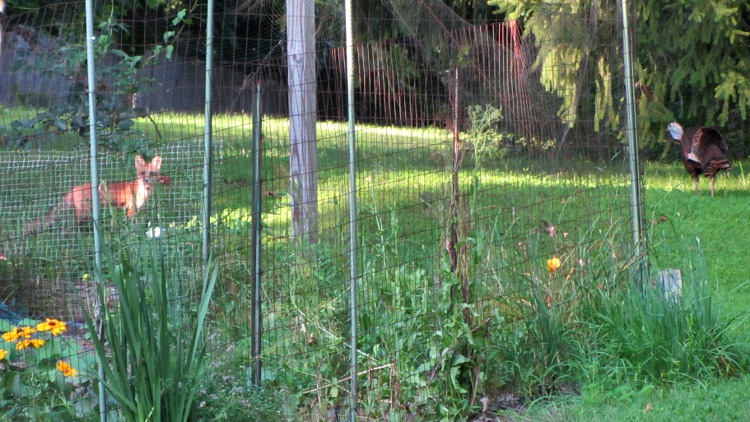
After a moment, we saw this tableau:
Red Fox and Turkey Hen
The red fox entered from the left, then made a great show of ignoring the turkeys while scratching an ear, licking its nuts, and examining the ground as the hens postured and threatened. The fox eventually trotted off to the right, through the grove in the rear, and away.
The flock required a few minutes to stand down from the alert:
Turkey Hen and Chicks – standing down
And then they moved on, searching for yummy things in the grass as usual…
The pictures are crap from the Canon SX230HS, hand-held at long telephoto, and ruthlessly cropped; the high-res originals aren’t much better than these. I’d expect better results in shaded sunlight, but for obvious reasons I couldn’t move any closer or pause to fetch a tripod. The fox tableau seems perfectly focused on the garden netting, which is what you’d expect from contrast-based autofocus; even if using manual focus would help, the bad picture you get is better than the good picture you didn’t.
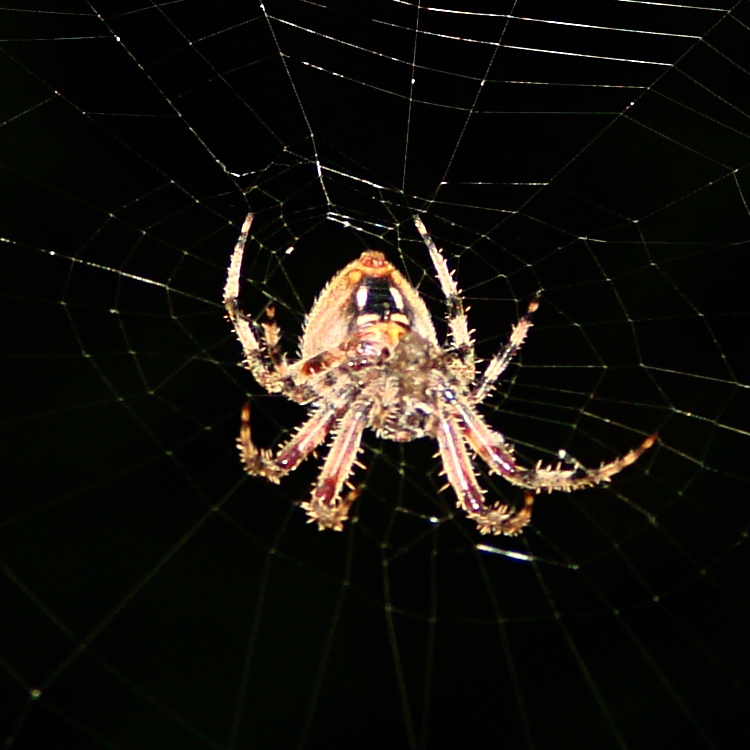
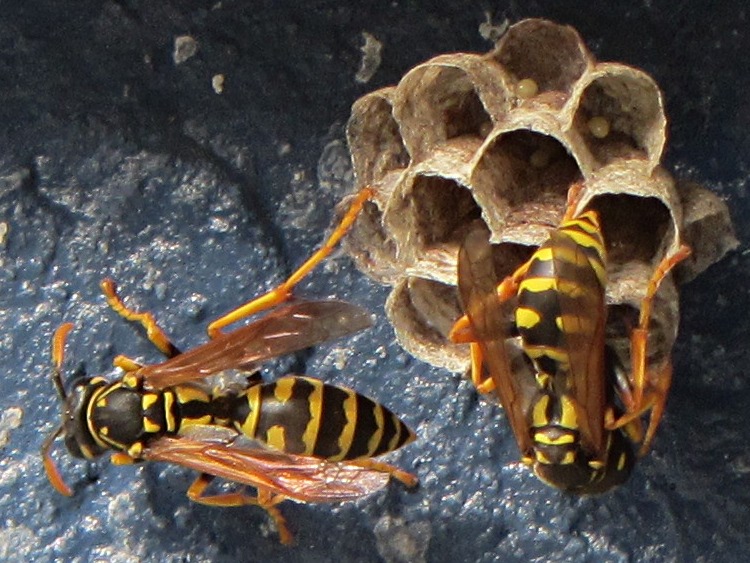
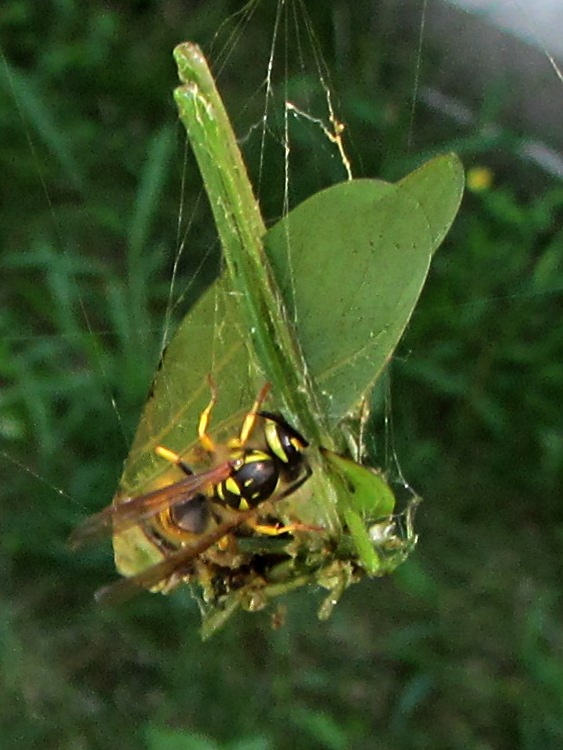
This is the season for orb-weaving spiders, one of which laid a great web between a pole and the grass in the front yard. It worked wonderfully well to capture a flying katydid, but wasps got to the victim first:
Webbed katydid with wasps
Maybe a bird took out the spider? We’ll never know, but that katydid won’t go to waste.
This is a dot-for-dot crop from a handheld shot with the Canon SX230HS, macro setting, plus a dash of unsharp mask and gentle contrast stretching to knock the background down. It’s surprisingly hard to get perfect focus on a wind-blown object; this is the least awful of the group.
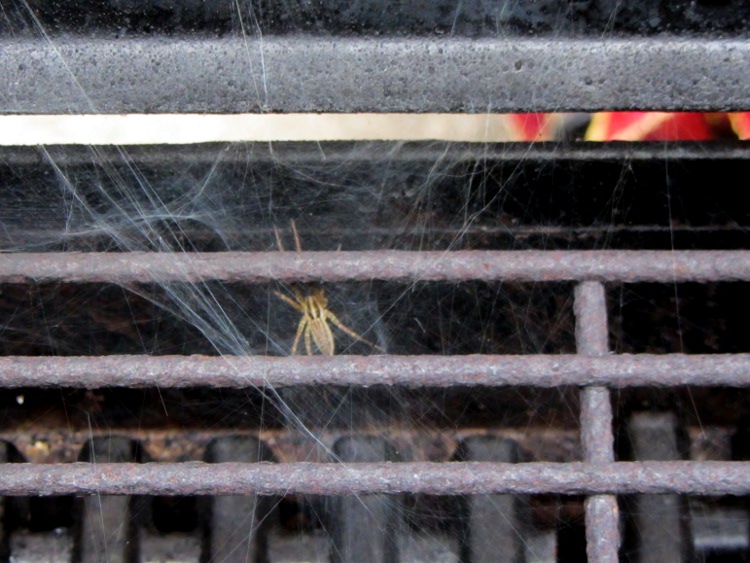
I opened the grill cover before lighting it and this critter ran out of the depths:
Spider in propane grill
It eventually crawled up to the gap at the lid, from whence it could bail out over the edge. I fired the barby and, alas, it scuttled in exactly the wrong direction: down its web and directly into the burners.
We have a fine patch of milkweed in the back yard that attracts & nourishes the Monarch butterfly fleet. One of the plants also attracted a dense aphid population:
Aphids on milkweed
They’re pretty much featureless orange blobs, although the one on the edge of the leaf at the upper right does show off its legs & antennae: