The Smell of Molten Projects in the Morning

Ed Nisley's Blog: Shop notes, electronics, firmware, machinery, 3D printing, laser cuttery, and curiosities. Contents: 100% human thinking, 0% AI slop.

Tag: Repairs

If it used to work, it can work again

  • Sunglass Repair

    Making the fixture
    Making the fixture

    One of the screws on Mary’s sunglasses came apart. Wonder of wonders, the nut fell off in the kitchen, made a click when it hit the floor, and we managed to collect all the pieces.

    The temples attach to the lens frame with two tiny screws apiece. The screw heads are slightly embedded in the temples, but you can see why this didn’t work nearly as well in practice as it did in the design studio.

    The trick is to align the screw properly so it fits through the lens and frame after the adhesive sets up. The holes are 6 mm on center and more-or-less 55 mils in diameter (obviously, they’re metric screws, but this is the US and we do the best we can with antique units).

    Clamping and curing
    Clamping and curing

    That’s what CNC is all about: making it trivial to poke holes exactly 6 mm apart on center. I drilled two holes in some scrap acrylic sheet using Manual mode on my Sherline / EMC2 mill:

    g83 z-7 r1 q0.5 f100
    g0 x6
    g83 z-7 r1 q0.5 f100
    g0 z100

    I have it set to start up in metric units, which still seems to be legal here.

    cimg2858-sunglass-repair-success
    Success!

    Add a teeny dab of JB Weld, hold everything together overnight with a clothespin, and it’s all good in the morning.

    The trick is to check the leftover epoxy first to see if it’s fully cured before you move the actual piece.

    Memo to self: epoxy takes forever to cure at 55 F.

    Update: Pretty much as expected, that little dot of epoxy didn’t hold nearly as well as the original brazing. I tried a somewhat larger dot, but Mary was unhappy with the glasses anyway and we finally tossed ’em out.

    Of course I salvaged the screws & nuts & suchlike: you gotta have stuff!

  • Park MTB-7 Rescue Tool Repair

    Too-short Stud
    Too-short Stud
    Goobered Screw Threads
    Goobered Screw Threads

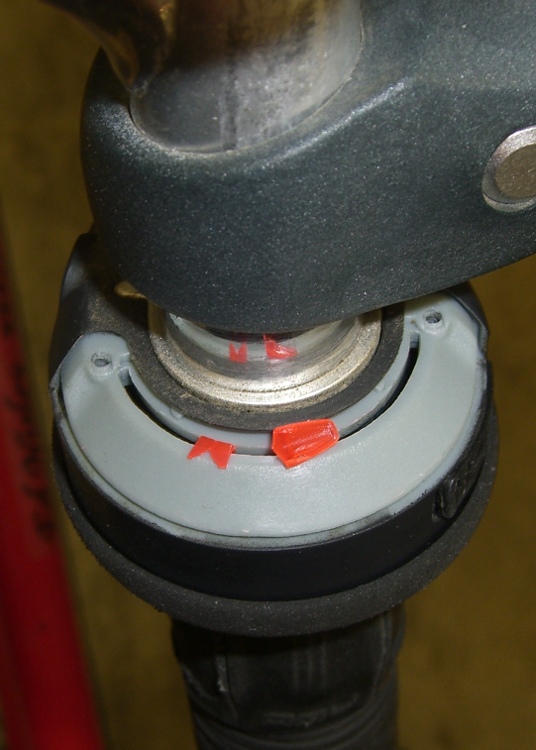
    Once upon a time I deployed the 6 mm hex wrench on my trusty Park MTB-7 Rescue Tool, applied some torque to a handebar stem bolt, and crunch something broke inside the tool.

    [Update: Fixed a dead link; Park evidently reshuffled their website.]

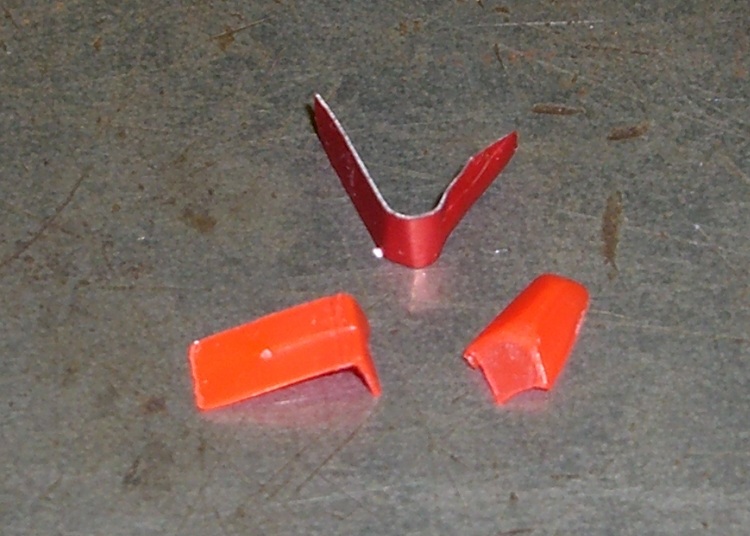
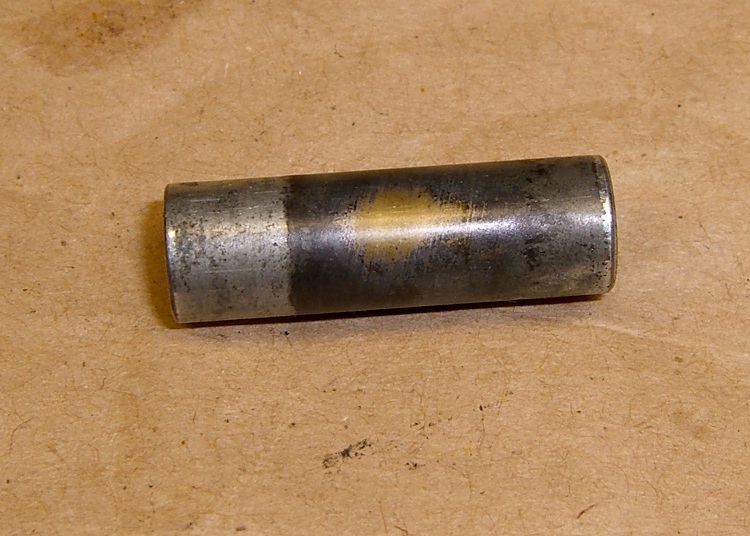
    The essential problem is that the studs holding the tools in place are too short: they don’t seat fully into the plastic housing at the far end, because they’re 2 mm too short. The photo showing the stud at an angle gives an idea of the situation I saw when I took the tool apart.

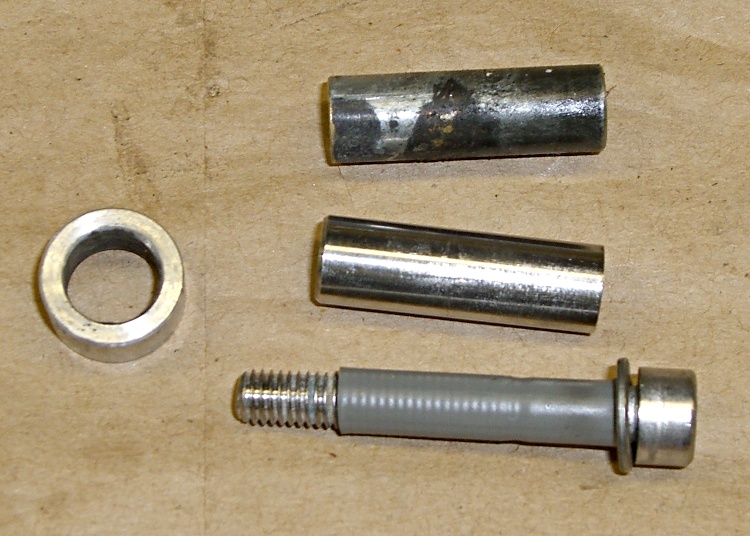
    The crunching sound I heard was the screw tearing out as the stud shifted in the housing. The studs seem to be swaged into shape in one operation, but without quite enough material: the threaded end isn’t flat and the internal threads are crap. The photo showing the studs and screws can’t really show how off-center and feeble the internal threads really are, but you can see the junk lodged in the external screw’s threads where it tore out. Note the poor fit between the other stud’s end and its screw: it’s firmly seated against the stud, so that’s how far off square the end is!

    Better Screw and Sleeve
    Better Screw and Sleeve

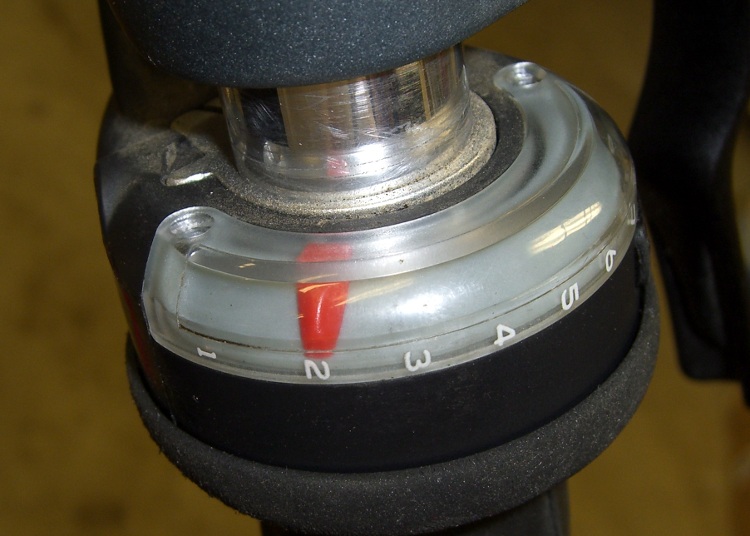
    The fix was easy enough. I cut some brass tubing to the proper length, trimmed stainless-steel 10-32 screws to fit, and put everything together with red Loctite. The photo showing the all the parts indicates how much longer my sleeves are than the original studs: basically, that’s the thickness of the plastic housing on one side.

    But, sheesh, you’d expect a Park tool to be better than that. I sent ’em a note with pictures and maybe they’ll smack the factor who shorted ’em on the Quality bullet item upside the head.

    I got to spend some time playing with my toys, so it wasn’t a dead loss.

  • Spoke Wrenching

    I recently rebuilt the back wheel on my bike, which had been breaking the odd spoke and getting more & more out of true.

    Spoke wrenches are so tedious when one’s fingers don’t fit in between the spokes like they should. I figured, hey, if the pros can use power drivers, so can I…

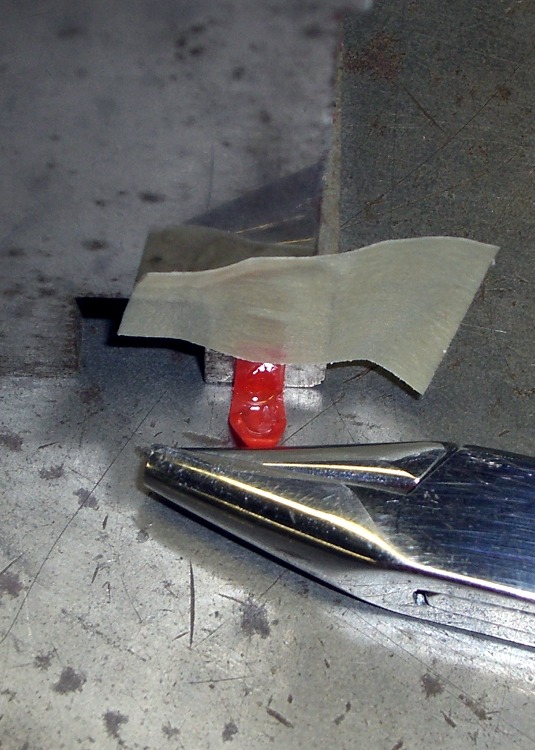
    Dug a goobered #2 Philips bit out of the ziplock baggie labeled “NFG Bits” and applied it to the bench grinder. The strip of tape on one flat makes turn-counting easy enough that I can actually get it right. It’s not hardened, so it probably won’t last for more than a few wheels, but this is the first scratch-built wheel I’ve done in decades and that baggie is nowhere near empty.

    Homebrew Spoke Wrench Bit
    Homebrew Spoke Wrench Bit

    I read through Jobst Brandt’s The Bicycle Wheel to get prepped for the job, removed the old spokes, laced up the new ones, lubed the threads & rim washers, and the wheel trued up almost perfectly just by counting turns.

    Did the spoke aligning & stress-relieving tricks, applied some final tweaking, and it’s perfect!

  • STP: The Miracle Lubricant

    Every PC I’ve ever owned with a fan-cooled video card has had a fan failure. It used to take years, now it takes months. The obvious conclusion: cheapnified fans.

    The “business class” Dell I’d been using as a file server started groaning a year ago. I swapped out the video card fan for a similar (used) one from my heap, which failed after half a year. I just replaced the whole box with a newer one that has on-board graphics with no fan…

    A while ago I stuck a pair of nVidia cards in my always-on desktop box so I could get a portrait-mode page display. One of the cards had a bizarre cooler with a fan stuck inside a fingered aluminum cup clamped atop the video chip: definitely not a FRU, at least from my parts heap.

    Months later: groaning & whining. So I used the same trick as I did for the fan in the refrigerator: a drop of STP soaked into the sintered bronze sleeve bearing. Worked like a champ (the freezer fan is still silent) and the PC is now nearly silent once more.

    While I have the STP out, I’m going to blob some on the bathroom fan that’s starting to groan. Certainly cheaper than replacing the fan and, as I found out with the refrigerator, even a new fan can have crappy bearings.

    I now officially loathe fans…

    Yes, I’m perfectly aware that STP is not a real lubricant, but it’s close enough for these bearings. Mostly, it’s slippery and gooey and works perfectly to damp out shaft vibrations and wobbulations.

  • Oven Tube Burnout

    Burned Oven Tube Overview
    Burned Oven Tube Overview
    Burned Oven Tube
    Burned Oven Tube

    So the oven made a weird whooshing noise every now & again, but nothing we could pin down or duplicate to debug. Then it sort of stopped heating, even though the ignitor was glowing, and the kitchen smelled of unburned propane and hot plastic.

    Emergency stop, shut off the gas valve, finish the chili and cornbread in the ‘waver and toaster oven, let ‘er cool down, dig out the repair parts manual from the file cabinet.

    Dismantled the oven and found a weird encrustation on the burner tube. I wasn’t sure if the tube was supposed to have a dingus that meters the ignition gas at some known rate, but scratching at the lump made it look as though the tube simply burned through and corroded. The size of that hole would certainly make the gas whoosh a bit.

    Note the soot lines. The heat shield over the tube had a soot smudge, too, which I think caused the “plastic” smell.

    The replacement part from Sears is $80. It’s $50 from RepairClinic.com and they throw in the ignitor module that’s $70 from Sears. Judging from their picture the burner tube has three little holes that blow gas over the ignitor, no metal dingus. You can see the holes in the second picture.

    So a new burner tube (and ignitor, which I’ll zip-tie to the back of the oven) is on order.

    Update: of course the new ignitor doesn’t fit on the old tube, nor does the old ignitor fit on the new tube. And the connectors are completely different. Had to dig some ceramic wire nuts out of the parts stash; I knew I’d been saving them for some good reason.

    Grrrr & similar remarks…

  • Steel Preservation, The Good Old Days of

    Cadmium plated hangers
    Cadmium plated hangers

    Last year I geared up for scraping the soffits and figured I should put a piece of plywood across the windows so I couldn’t possibly have the ladder fall into a window. The storm windows are big, awkward inserts that hang from hooks atop the frames, so I planned to cut a plywood blank to match the opening.

    Gene left us a cigar box of “Storm Window Hdwr” containing this card of hooks-and-eyes that looked just like the ones on the windows. Alas, they’re not quite the same and don’t quite fit, a fact I discovered after mounting them and manhandling the sheet out the window. So much for “standard size”.

    But I’m sure the hardware on the side of the house looks as good as it does because it’s cadmium-plated, too! None of the hooks & eyes have a hint of rust, other than where the edges scrape together, after half a century.

    I heroically refrained from sucking my thumb afterward…

  • Rehabilitating an Old Variac

    Variac Rotor Before Fixup
    Variac Rotor Before Fixup
    Variac Brush Holder and Staking
    Variac Brush Holder and Staking
    Variac Rotor After Fixup
    Variac Rotor After Fixup

    So I’ve had this ancient 5 A Variac on the heap for far too long, finally came up with an actual application, and discovered that not only was the line cord shot, it basically didn’t work.

    Of course, I had to replace the cord & outlet before I discovered that it didn’t work…

    The classic Variac failure happens when the carbon brush wears down to nothing, at which point the holder scrapes on the windings and the whole thing burns out. In this case, the brush still had 3/16″ left, but the sliding holder was firmly corroded in place.

    I soaked it in PB’laster, rapped it all over with a small drift punch, and managed to drive the holder out. In the process, the brass sleeve around the brush holder came out, putting the entire problem on the bench.

    The rotor had two brass rivets securing the brush contact bar (the part that’s connected to the actual brush holder by a length of copper braid) that would not come out, nohow. After I broke one off (the first picture), I found that they were swaged over on the bottom, so I broke the other one off and punched both stubs out.

    I spent a few hours wearing a headband magnifier and gently filing everything to a pair of slip fits: brush holder into sleeve, sleeve into rotor. The rotor is aluminum, so I applied a liberal dose of oxidation inhibitor, slipped the sleeve in place, and staked that sucker down.

    Which meant I spent another half hour filing the brush holder to restore the slip fit…

    Turned out that the rivets were 40 mils, the holes were 43, and 00-90 machine screws are 43.5. I don’t have a 00-90 tap (mostly because I know I’d break it by looking hard at it), so I just ran a screw into the hole and formed the threads. They must have 10% engagement, tops, but this isn’t a high-stress application.

    This is, I think, the first time I’ve ever used those 00-90 screws and nuts. The washers are 0-80 so they reach over the brush contact bar far enough to hold it in place. Dang, those things are small!

    The main conduction path seems to be through a brass slip contact, into the aluminum rotor, through the brass sleeve, and into the carbon brush. I’m not convinced the rivets / screws conduct any appreciable amount of current to the contact bar and through the braid, but I shined up the contact patches anyway.

    Put it all back together, fired it up, and it worked!

    Ought to be good for the next half-century, at least…