Ed Nisley's Blog: Shop notes, electronics, firmware, machinery, 3D printing, laser cuttery, and curiosities. Contents: 100% human thinking, 0% AI slop.
The X10 RF Remote Control in the kitchen stopped working, which could mean only one thing: a set of dead AAA cells.
A negative terminal in the battery compartment showed the expected corrosion:
X10 Remote battery terminals
The corrosion evidently pushed the cell away from the terminal just enough to starve the remote.
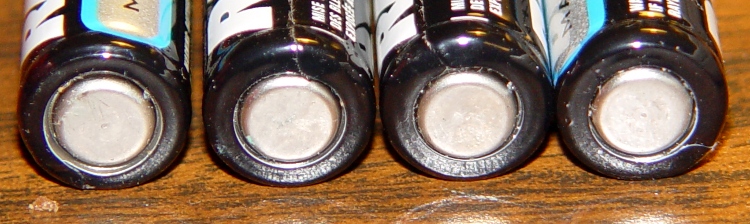
The cells, on the other paw, looked just fine:
Battery negative terminals
They’d been in there a year, sported a date code that’s still a few years in the future, and had a 1.3 V loaded output. Looks like that little bit of corrosion gave me enough of a heads-up to get the cells out before they rotted.
Just fixed a flat on my bike which, like that one, came from the tire liner chewing through the tube. The holes are above the raised 28″ molded into the tube, at the upper-left corner of the tire liner impression.
Schwalbe tube with tire liner abrasion
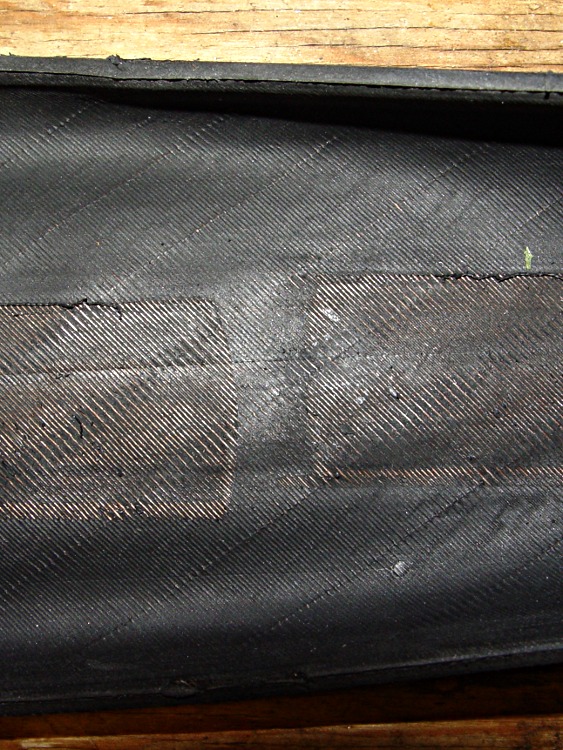
In this case, the tire liner (which, judging from the color, was a Slime) was too short by maybe 50 mm. This view inside the tire shows a 10 mm gap where the ends didn’t overlap as they should:
Schwalbe Maration tire with liner abrasion
I don’t trim the rear-tire liners, but comparing a handful in the drawer shows that the as-sold lengths differ by a few tens of millimeters. The Marathons are husky tires, but the tread OD isn’t all that much different from stock tires: that’s the definition of a 700-series tire.
That we’re getting repeated flats from tire liners intended to eliminate flats is, mmmm, disturbing. Looking at the condition of the tire treads, however, shows we’re not getting an order of magnitude more flats from road debris, so it’s a net win. I doubt we could get through a month of riding without a flat; I replace tires when the carcasses accumulate enough gashes that the tire liners begin extruding through the tread.
Also, remember that these samples come from three bikes that travel upwards of 2000 miles a year (each!), not just one bike ridden along a nice rail trail on weekends…
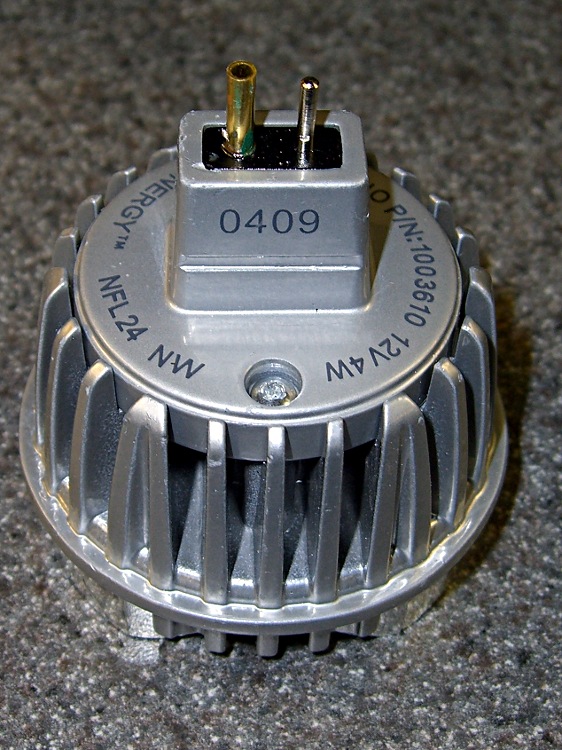
I picked up a pair of 12 V 4 W 3-LED floodlights (datasheet, newer datasheet, and catalog) with 34 degree and 24 degree beams from All Electronics, with the intent of making some task lighting fixtures for the shop. Somebody decommissioned the lamps by snipping off a pin, so they’re not immediately useful.
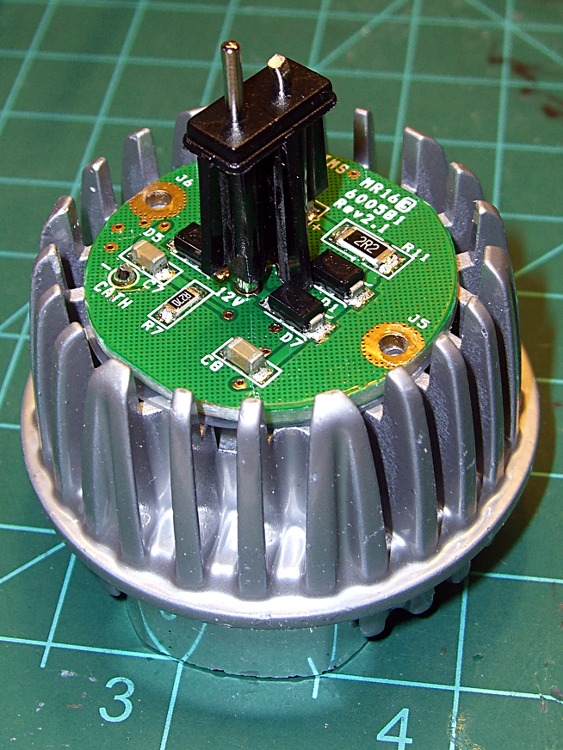
The back pulls off with a bit of difficulty, after removing the two obvious screws and holding the connector body in place while pulling. I didn’t try to remove the circuit board, which would require unsoldering the clearly marked Anode and Cathode LED wires that enter from the bottom of the board.
LED Floodlight – interior
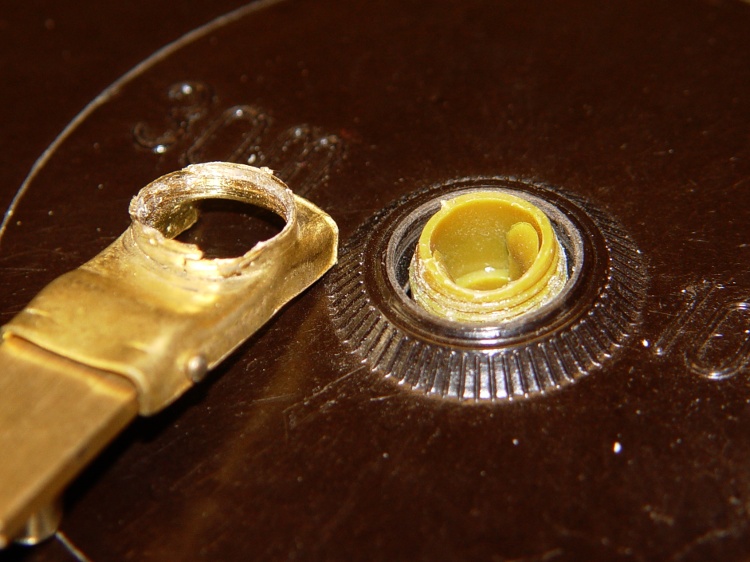
I plan to build these lamps right into the fixtures, so soldering a wire directly onto the pin makes sense; I expect they’ll outlast my usage and a socket won’t add any value. As an intermediate step, I soldered a short brass tube onto the pin stump:
LED Floodlight – repaired pin
In new condition, these retail somewhere beyond $60, so cutting 6 mm from one pin shaved about fifty bucks off the price. I suspect they were extracted from somebody’s shiny new, recently abandoned, and probably foreclosed, office complex and were ruined to prevent resale-as-new. The fact that the reflectors got a bit scuffed up along the way wouldn’t help their value any, either.
They draw 330-odd mA from a 12 V supply, run from AC or DC (either polarity), and seem to have a constant-current driver inside. I wouldn’t buy ’em new, but for eight bucks a pop they’re a pretty good deal.
This didn’t work out, but it came close. Eventually I’ll figure out what material can replace the boot, at which point I’ll need to remember these steps…
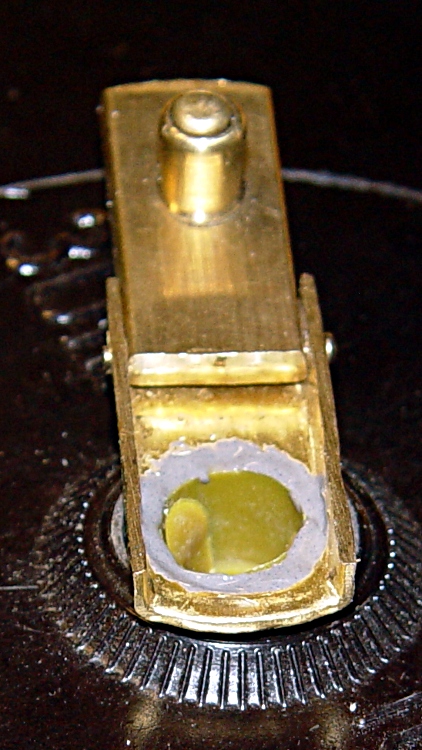
That LED flashlight + laser pointer has a rubber boot over the push-on / push-off switch stem that makes it sorta-kinda waterproof. Although I wouldn’t trust it in more than a sprinkle, it’s my pocket flashlight and tends not to get soaked very often.
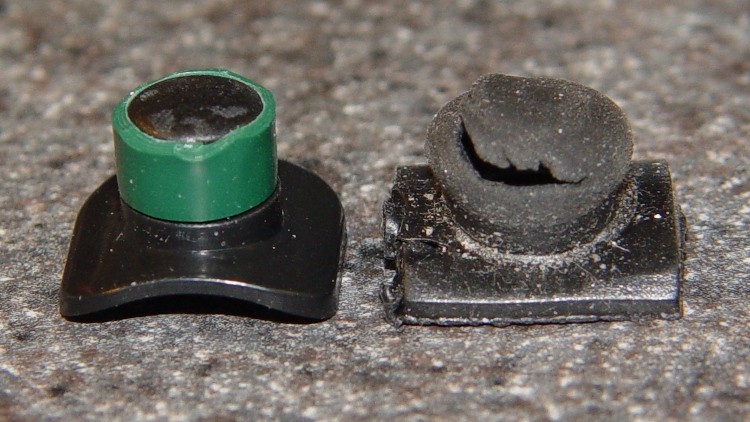
Anyhow, the rubber boot wore through:
Broken switch boot
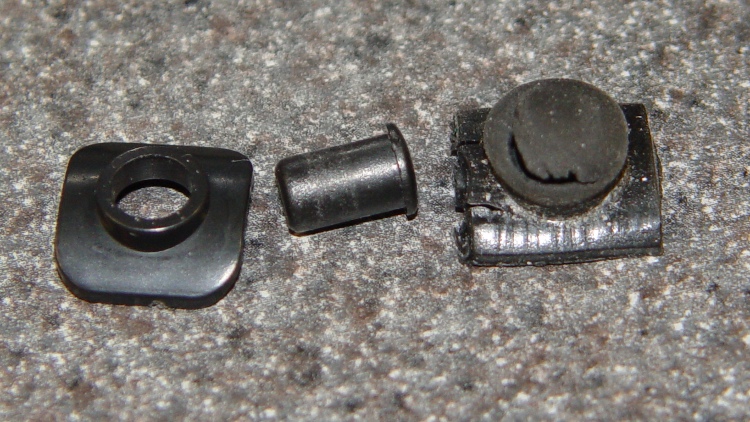
Taking it apart, now that I know how, was easy enough:
Switch button parts
Note that the mushroom part goes on the outside, which means the stem will vanish if the boot rips apart.
I planned to mold a boot from acrylic caulk, so I wrapped narrow strips of electrical tape to match the stem to the mushroom head, then wrapped a bit around that to make the final boot fit loosely:
Wrapped switch stem
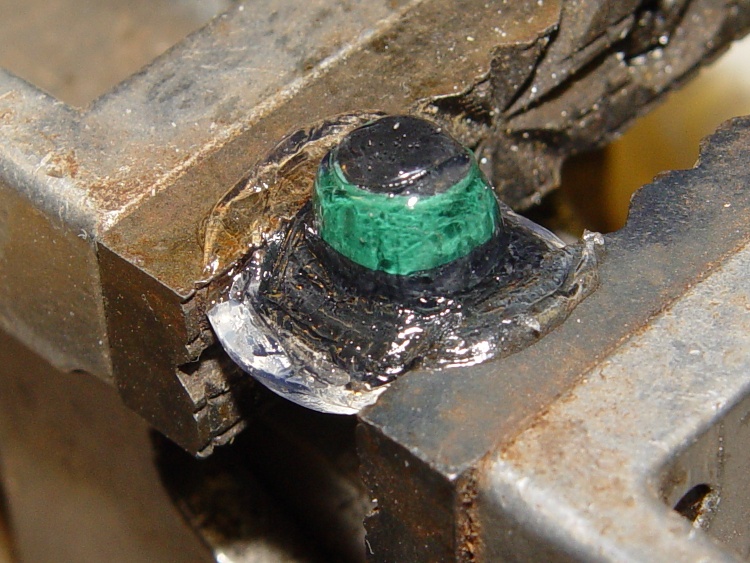
A thin layer of oil served as mold release, over which I smoothed a blob of caulk. This looks awful, but the majority of the blob at the bottom will get trimmed off:
Switch stem covered with acrylic caulk
Unfortunately, the cured caulk turned out to be remarkably fragile. Each individual blob felt tough, but it’s really not designed to form thin membranes; I got about what I expected.
Pourable silicone rubber seems like the right hammer for the job: make an outer mold to surround this thing (or a 3D printed replica) and pour it on. I must get some of that, one of these days.
So I put the flashlight back together with the mushroom on the inside to keep the stem in place… and I generally avoid getting more than knee-deep in liquids, so not having a good seal won’t matter too much.
A friend mutters that every time something goes wrong with her house, which (to be fair) isn’t all that often.
However, if you’ve got the itch to fix things, a house will certainly keep you scratching: nearly everything we own has a part or patch from the Basement Laboratory Repair Division!
She has similar sayings about cars, cats, bicycles …
My Shop Assistant (who now merits a Proper Name) returned a fairly new measuring tape to the Basement Laboratory, reporting that the retracting crank handle fell off in “normal use”.
Stripped handle threads
Admittedly, this was a surplus find, but you’d think the build quality would be a bit higher. I’m sure I paid a minute fraction of list price: you could have bought it for much more in a reputable store.
Maybe this is why the whole lot got scrapped out:
Handle detail
I applied a bit of JB Industro Weld to the plastic (?) threads on the spool, twisted the handle in place, squared it up, then eased more epoxy around the top of the threads and let it cure flat on the bench.
Remounted handle
I’d say the original design wasn’t particularly good and the implementation left a lot to be desired. If the interior fittings have similar flaws, I’ll eventually regret applying JB Weld in such a cavalier manner…
So I finally noticed that the water wasn’t nearly as soft as it used to be, which usually means I forgot to dump a bag of salt in the tank. This time, the water was halfway up the tank, which usually means something’s broken.
The usual cause: crud clogging the filter screen upstream of the venturi that sucks brine out of the tank. The usual fix: rinse the screen.
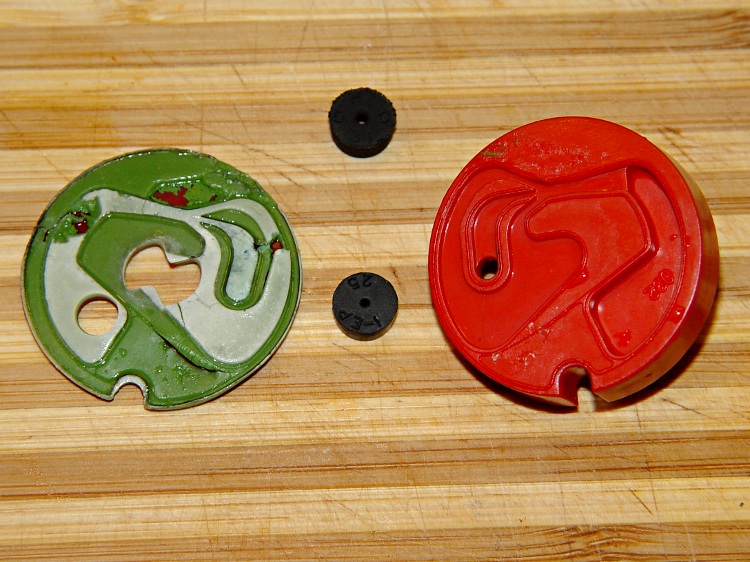
This time, however, the screen was clean. Pulling the gasket off the nozzle assembly revealed a collection of particles and chunks inside the fluidic channels; this is what the gasket looked like after I sorted everything out.
Original gasket and venturi
The gasket has at least three layers: a stiff red backing, a compliant green middle layer, and a white surface layer with molded channels matching the red nozzle. The two black cylinders are metering plugs with precisely shaped orifices that control the 0.1 and 0.3 gallon/minute brine and rinse flows.
The green and white layers evidently disintegrated into chunks that blocked the nozzle. With no flow through the venturi, the tank could fill until the float valve limited the flow, but the brining step had a very, very low flow and the resin bed eventually ran out of capacity.
I ordered a replacement nozzle and gasket assembly, figuring that Sears (actually, its OEM supplier) might have changed things in a non-compatible way. The old part numbers, which will get you the new equivalents:
Gasket: 7163663
Nozzle + gasket: 7187772
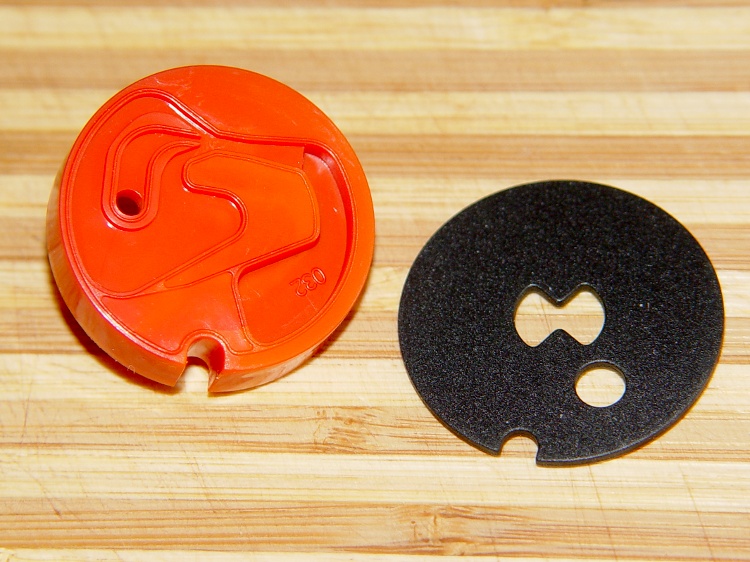
The new parts looked like this:
Replacement venturi and gasket
Surprise! The fancy molded gasket is no more; the replacement is a flat rubber sheet with the appropriate alignment notches and holes. The nozzle assembly might have come out of the same molding machine on the same shift.
I reassembled all the fiddly parts, manually set the softener to its Brine stage, let it suck a few inches of salt water out of the tank, and then returned it to automatic operation. At this point, the water heater is full of hard water and it’ll take a few repetitions of that cycle to get back to normal.
Given the limits of the gasket’s resolution, I’m sure the Batman icon is completely coincidental and sincerely regretted…