Ed Nisley's Blog: Shop notes, electronics, firmware, machinery, 3D printing, laser cuttery, and curiosities. Contents: 100% human thinking, 0% AI slop.
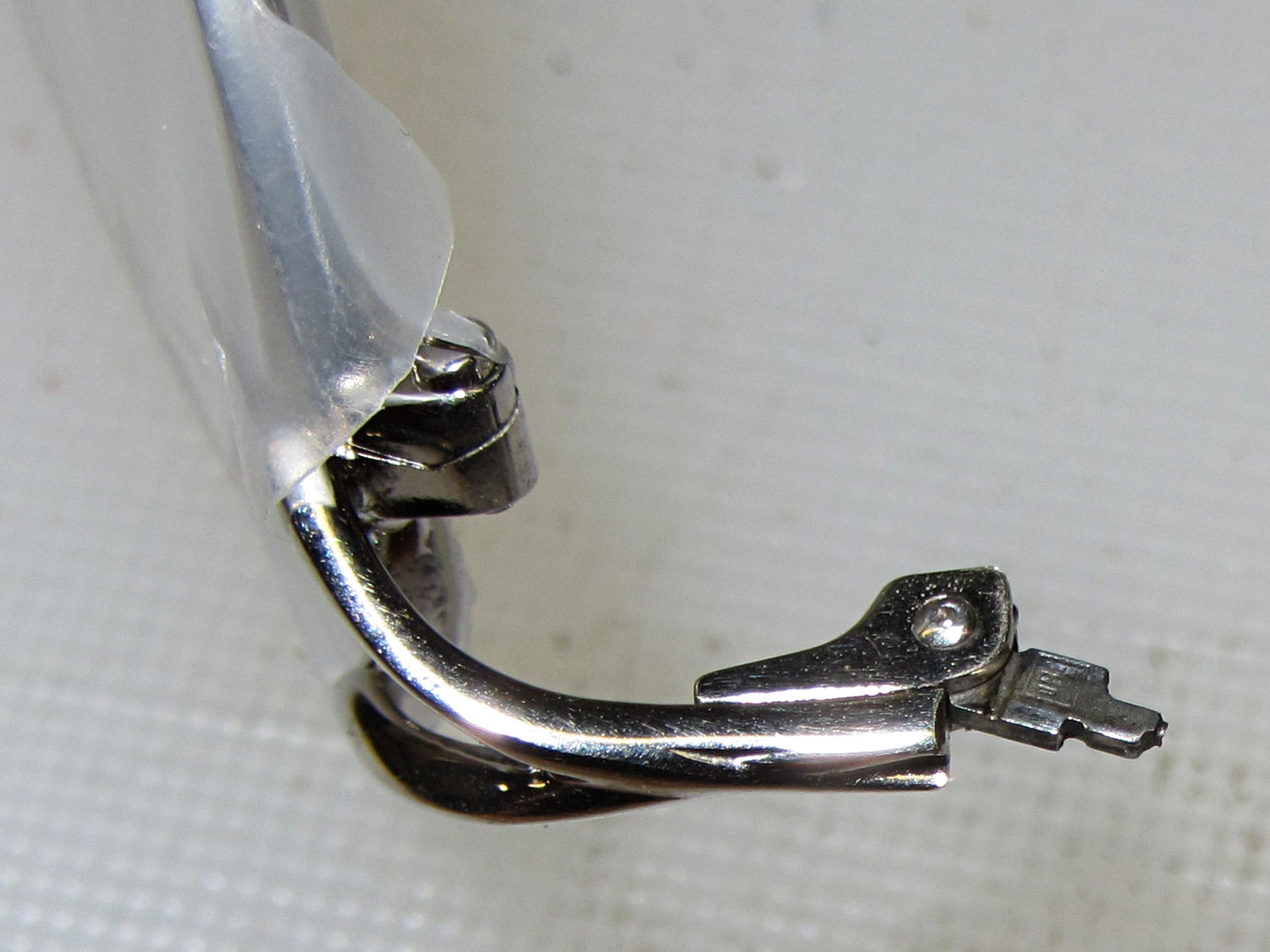
Another of Mary’s glasses snapped at the temple joint:
Broken eyeglass temple spring
This one has a spring inside the joint that latches the temple on either side of that square inner corner. Obviously, there’s no way to reconnect the broken stub with the spring retracted inside the brazed temple box, so:
File off the corner
Fill the socket with epoxy
Ease the stub in place
Wipe off the excess epoxy
Align on the workbench
Let it cure overnight
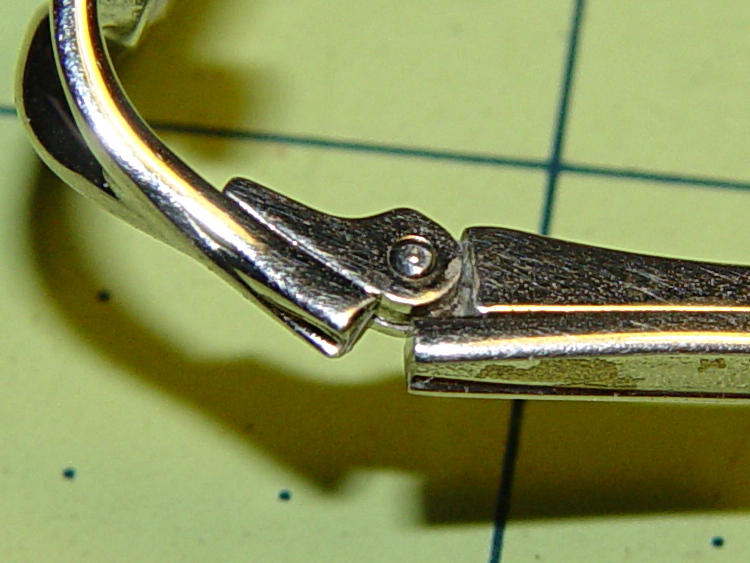
At least the hinge folds again, even if the spring doesn’t work:
Broken eyeglass temple spring – epoxied
She promises to scrap out her oldest glasses after the next eye exam…
A friend reported that three of the four heating blankets he’s bought over the last several years have failed, so he sent the lot to me for teardown and maybe repair.
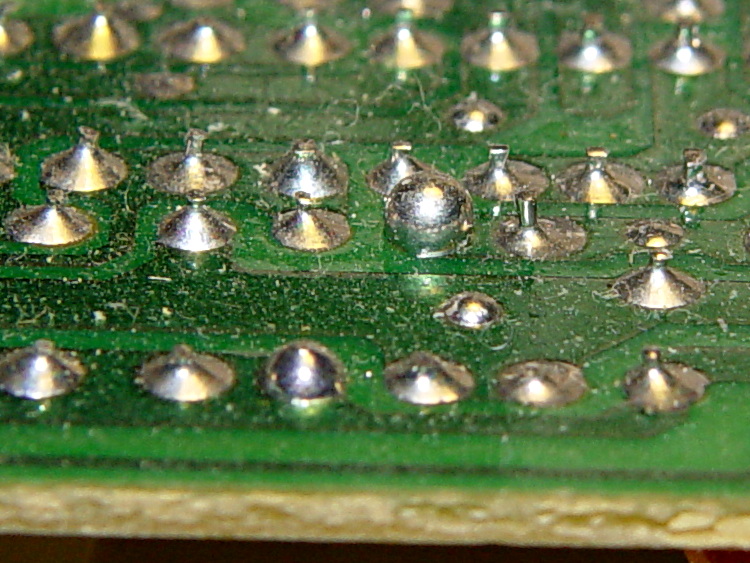
Looking inside one controller showed some obviously bad solder joints:
Blanket controller – bad joints
Hitting the joints with the soldering iron improved their outlook on life, but the controller remained dead; they weren’t really bad joints, they just looked that way.
If the “lot number” labels on the controllers mean anything, they’ve tried three different triac mounts over the years:
A through-hole triac screwed to the board with no heatsink
An SMD triac using the PCB copper as a heatsink
A through-hole triac with a big aluminum heatsink
That’s in order of ascending lot number, suggesting the triac caused some reliability problems.
I’m still trying to figure out how to probe the circuitry without killing myself. An isolation transformer comes to mind, because the blanket dissipates only 85 W.
With the shaft position sensor mounted in this position:
Kenmore 158 Shaft position sensor – overview
There’s no way to get a screwdriver into the trimpot that adjusts the sensor’s trip point.
A few minutes with tin snips, nibbling tool, and square file produced a small wrench:
Trimpot Wrench
One side of the wrench has a 45° bend that made tweaking the pot just slightly easier.
The proper trip point turned out to be about 90° away from where the trimpot started, with the level midway between the detection points for shiny metal tape and the cutout side of the counterweight.
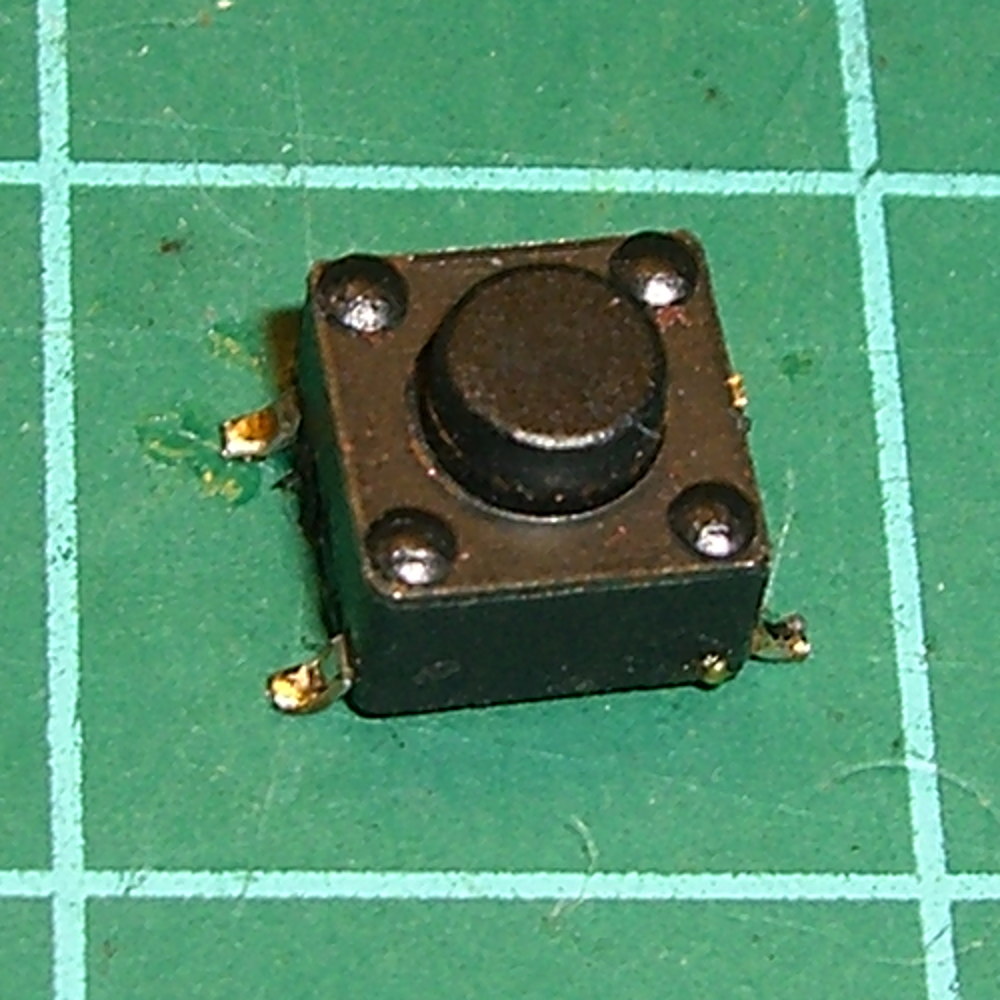
A friend, anticipating a stream of visitors for their freshly hatched baby, asked for help with a defunct remote doorbell. A bit of probing showed that shorting across the pushbutton switch contacts reliably triggered the bell, so I unsoldered it:
Doorbell switch – intact
A similar switch from the heap had a longer stem that was easy enough to shorten, so the repair didn’t take very long at all: ya gotta have stuff!
An autopsy reveals the expected contact corrosion:
Doorbell switch – parts
Underexposing the image by about two stops retained some texture on the contact dome.
The IC date codes suggest the box is over a decade old, which is as much life as one can expect from cheap consumer electronics, particularly with an unsealed switch placed outdoors.
After years of neglect, an NYS DOT crew started a really nice repair job on the inside edge of the curve just north of our house. They milled out the deteriorated road surface, cleaned out the debris, and laid in a patch flush with the road surface. That’s quite unlike their usual shovel-some-cold-patch / hand-tamp / drive-over-it process, made familiareverywhere elsearound here.
Unfortunately, for unknown reasons, they didn’t fill in the last two feet of the milled-out trench, leaving a tooth-shattering pair of perpendicular edges exactly where you’d least expect them:
Rt 376 north of Heathbrook – unfinished patch
Ran out of asphalt? Lunch break? Called off to another emergency? We’ll never know.
I sent a note, with that picture, to the NYS DOT Bicycle & Pedestrian Coordinator, asking what happened; perhaps they planned another layer atop the whole curve to seal the rest of the cracked pavement?
The next day a crew filled in the hole, which I find far more than coincidental.
Although it’s better than it was, there’s now a joint that will deteriorate more rapidly than the uniform asphalt layer they should have created.
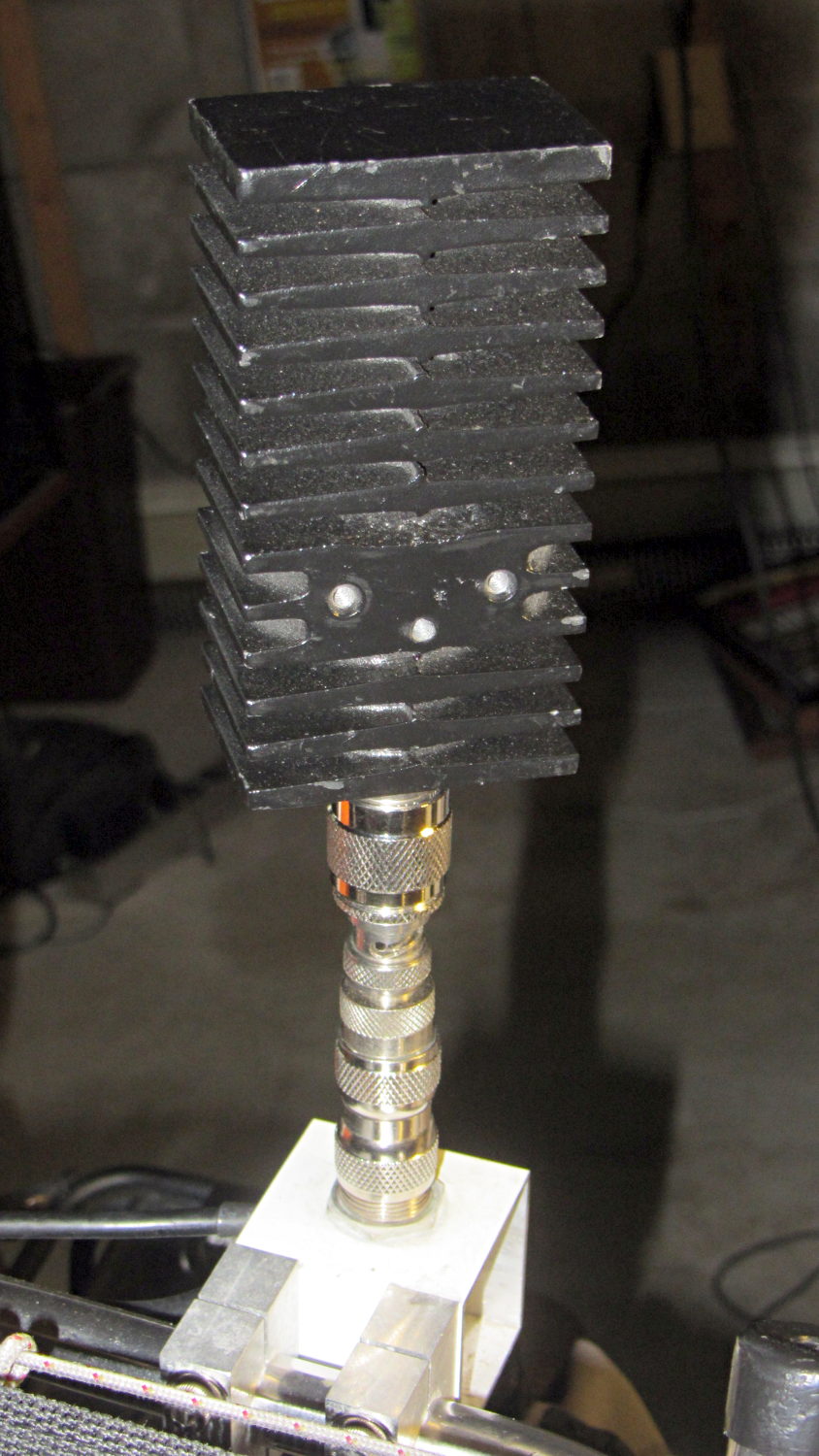
Obviously, I don’t have enough adapters: I need one with N male to UHF male.
I actually spent money to get from the reverse-polarity SMA connector on the Wouxun radios directly to UHF female, matching the cable to the antenna mount in one step.
Sometimes an unsteady ziggurat of adapters isn’t appropriate.
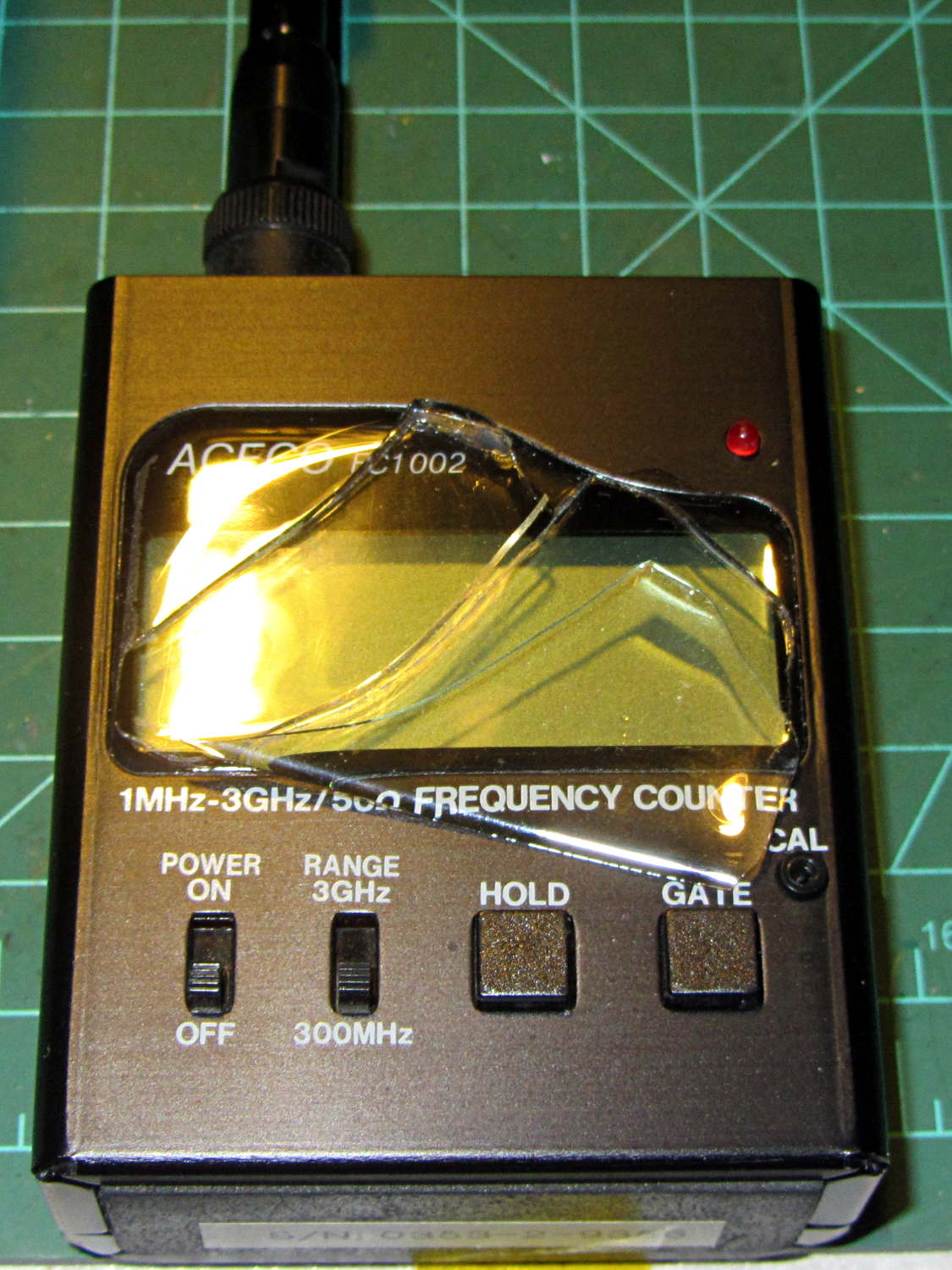
So I picked up the frequency counter and found this:
FC1002 Frequency Counter – split shattered faceplate
The outer, previously cracked pieces of the faceplate split parallel to the front panel, separating into two layers, and popped free of their mount. The layer closest to the panel remains intact.
The fragments were flexible and the bottom layer was rigid, suggesting the faceplate consisted of two parts, perhaps an acrylic (?) base with a soft silicone (?) poured atop it for armor and scratch protection.
It still works fine and the acrylic (?) layer will suffice for my simple needs, despite being slightly marred by the cyanoacrylate glue I slobbered into the cracks.