Ed Nisley's Blog: Shop notes, electronics, firmware, machinery, 3D printing, laser cuttery, and curiosities. Contents: 100% human thinking, 0% AI slop.
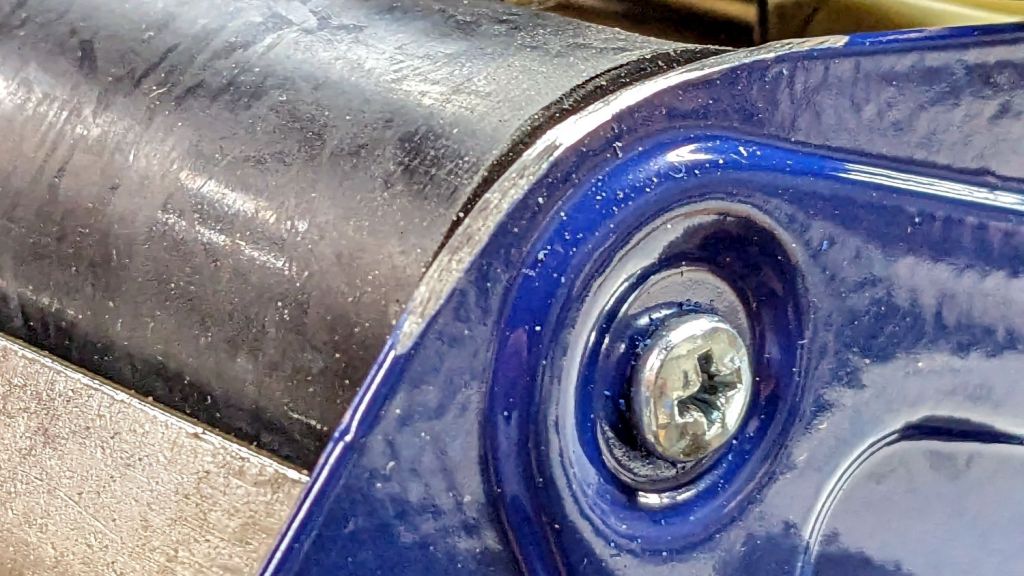
So I bought a packing tape dispenser (“gun”) for the 4 inch wide clear tape over the box labels, only to find the frame projected beyond the rubber roller on one side:
Packing tape dispenser – projecting edge
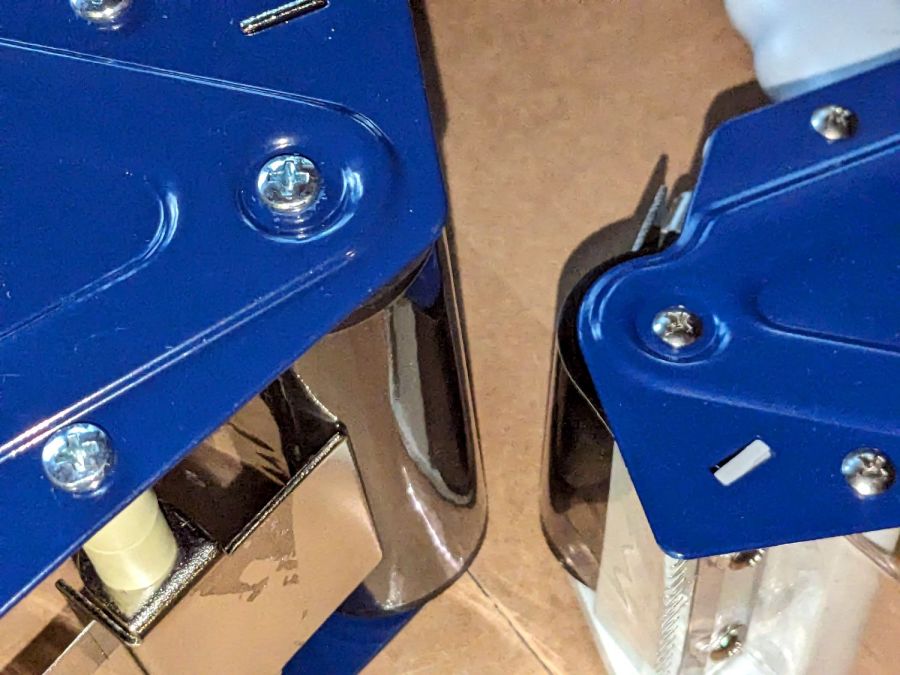
That steel flange prevented the roller from making firm contact with the box and pressing the tape into place. I’d never seen such a thing on any of the other tape guns I’d used, including a similar one (for 2 inch tape) on loan from the good folks at archive.org:
Packing tape dispensers
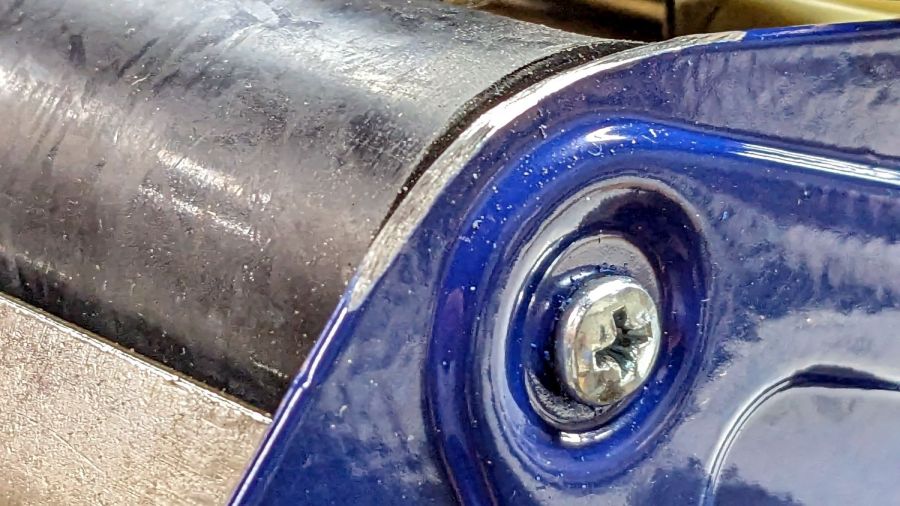
Well, even with the shop in disarray, I can fix that:
Packing tape dispenser – filed edge
Filing that bump down definitely improved my disposition over the next few hundred boxes …
Nuheara predicts two to three years of battery lifetime for their IQbuds² MAX not-really-hearing-aids and, indeed, after 2-½ years of more-or-less steady use, the right bud developed a bad case of not charging fully and discharging quickly. The batteries are not, of course, customer-replaceable, so one can:
Buy a single bud
Buy a complete new pair + case + accessories
Ask about their repair service
Unsurprisingly, a single bud costs more than half the cost of the full set and the repair service is a complete mystery. Given that the left bud’s battery will likely fail in short order, let’s find out what’s inside.
Your ear sees this side:
Nuheara IQbud – bottom view
The dark oval is a (probably IR) sensor telling the bud when it’s jammed in your ear.
Everybody else sees this side:
Nuheara IQbud – top view
The small slit over on the right and the two holes around the top seem to be for various microphones.
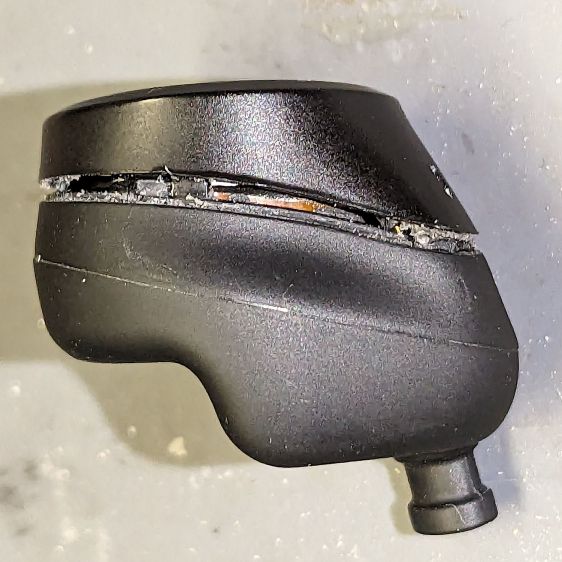
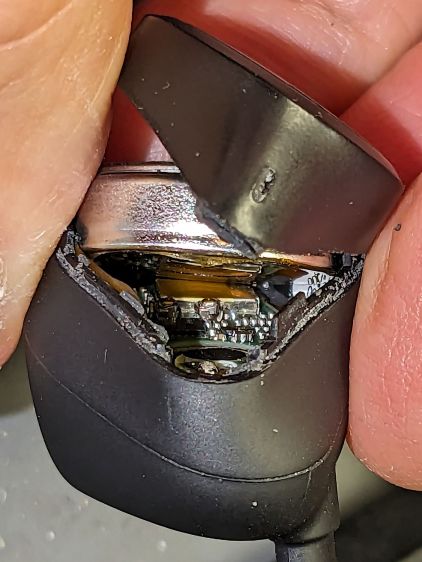
Jamming a plastic razor blade into the junction between the two parts of the case, just under the mic slit, and gently prying around the perimeter eventually forces the adhesive apart:
Nuheara IQbud – case splitting
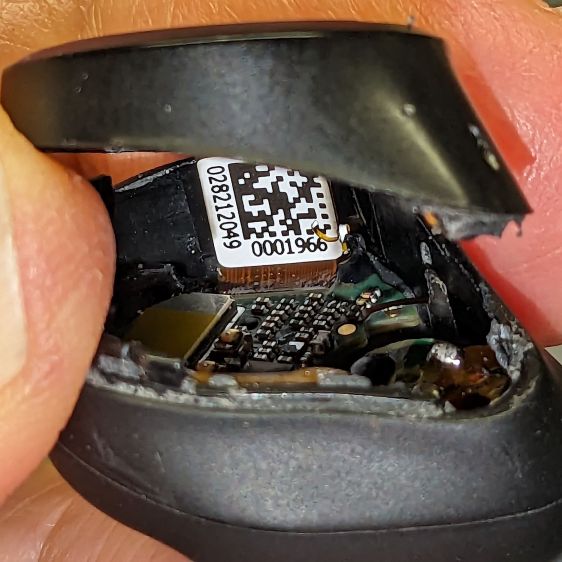
Do not attempt to yank the two pieces apart, because a ribbon cable joins the lower and upper PCBs:
Nuheara IQbud – ribbon cable
The metallic disk in the lower part is the lithium battery.
Ease the upper part away, being very careful about not tugging on the ribbon cable:
Nuheara IQbud – raising battery
The battery has moved upward, revealing the lower PCB.
Rolling the upper part toward the ribbon cable eventually produces enough space to extract the battery:
Nuheara IQbud – battery freed
Note the orientation:
The rebated end is the negative terminal and faces outward
The wider end is the positive terminal and faces inward
With the battery out, you can admire the PCBs and ribbon cable:
Nuheara IQbud – interior view
What is not obvious from the picture: two pairs of spring-loaded pogo pins contacting the battery. There is no actual battery holder, as it’s just tucked into the structure of the bud, with the perimeter adhesive providing the restraining force for the pogo pins.
The 1654 cells I got came with wire leads welded to the cell and a complete Kapton enclosure; apparently other devices use soldered connections rather than pins. They proudly proclaim their “Varta” heritage, but I have no way to prove they actually came from Germany.
I snipped off the wires, carved a pair of holes through their Kapton for the contact pins, tucked the cell in the bud, pressed the halves together, applied a clamp, then wrapped a strip of Kapton tape around the perimeter:
Nuheara IQbud – reassembled
It seems remarkably easy to wrap the tape over the front microphone, but don’t do that. Conversely, sealing the entire perimeter is the only way to prevent acoustic feedback, so I added a snippet of tape just under the front mic opening.
Do that for the other bud and declare victory.
That is, fer shure, not the most stylin’ repair you’ve ever seen, but I was (for what should be obvious reasons) reluctant to glue the halves together. I expect the tape to peel off / lose traction after a while, but I have plenty of tape at the ready. Worst case, I can glop some adhesive in there and hope for the best.
Because the buds lost power during their adventure, they required a trip through their charging case to wake them up again. After that, they work as well as they did before, with consistently longer run time from both buds.
While pondering what to do with the shattered kitchen scale, I got a bottom-dollar replacement touting its rechargeable lithium battery. After giving it the obligatory charge-before-using, I put it in service. Five days later, its battery was dead flat discharged.
So I gutted it to extract the battery:
Cheap digital scale – lithium cell
It’s a cute little thing, isn’t it?
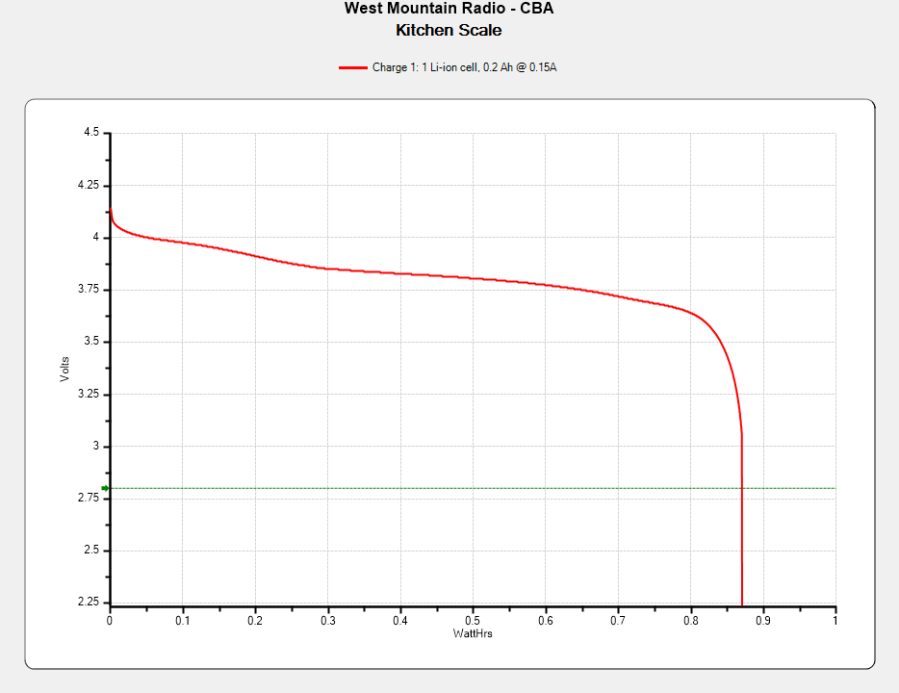
Much to my surprise, the obligatory battery rundown test showed it matches its 0.74 W·hr label:
Kitchen Scale – Charge1
We all know where this is going, right?
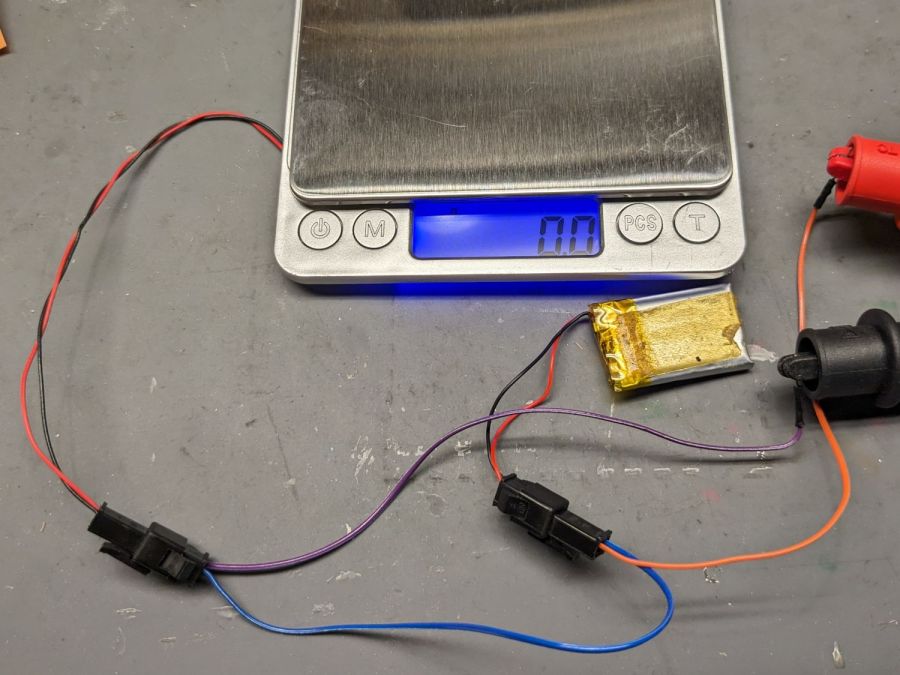
Crunche a connector on the battery, another on the scale, and make up a suitable current tap for a meter:
Cheap digital scale – current measurement setup
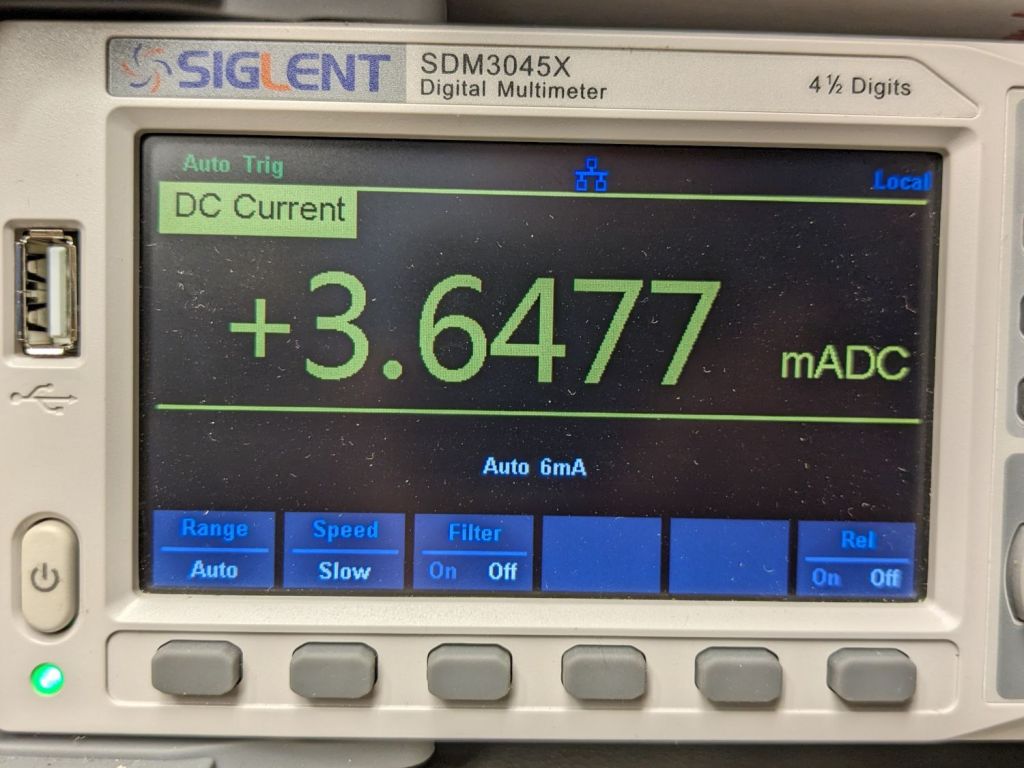
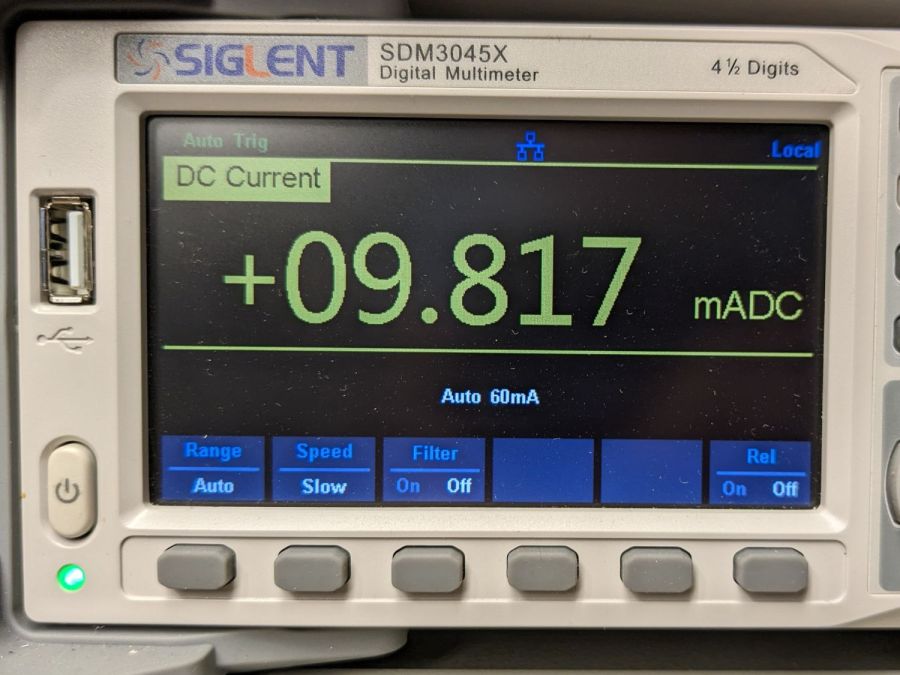
Which looked like this:
Cheap digital scale – active current
That’s about what I found for the craptastic scale running from a pair of CR2032 primary cells, so it’s not out of line.
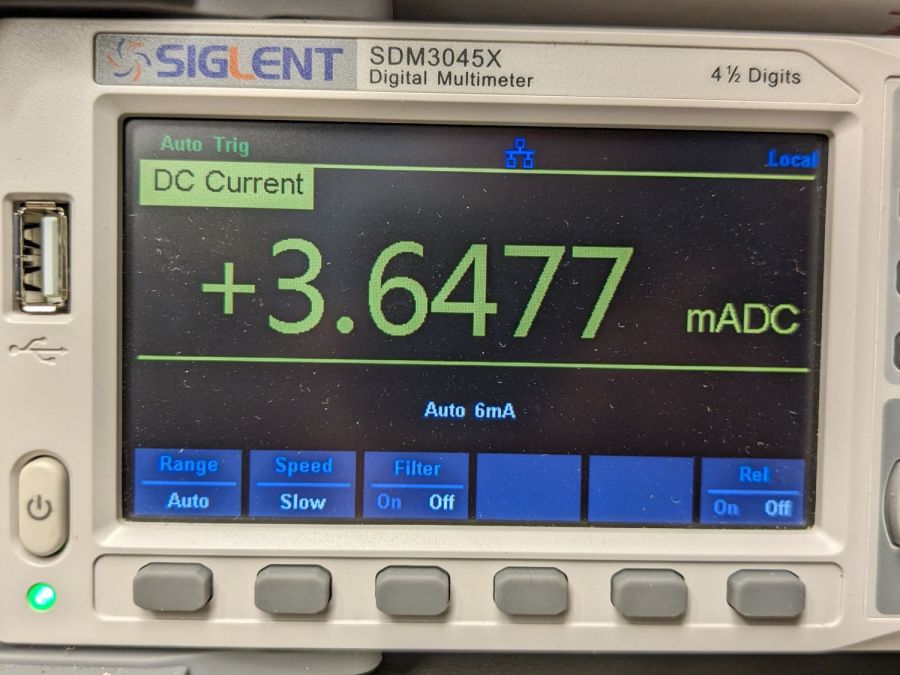
Turn off the scale and measure the idle current:
Cheap digital scale – inactive current
Do you think I got a dud?
For all I know, the little microcontroller under the epoxy blob is running a continuous attack on my WiFi network, with the intent of siphoning off all my sensitive bits. Ya never know.
Dividing the battery’s 200 mA·hr rating by 4 mA says it really should be dead in 50 hours, which is close enough to five days: diagnosis confirmed!
Rather than fight, I switched to a battery with more capacity:
Cheap digital scale – NP-BX1 replacement
It’s long past its prime, but ought to last for a month, which is about as long as the shattered scale survived on a similar battery.
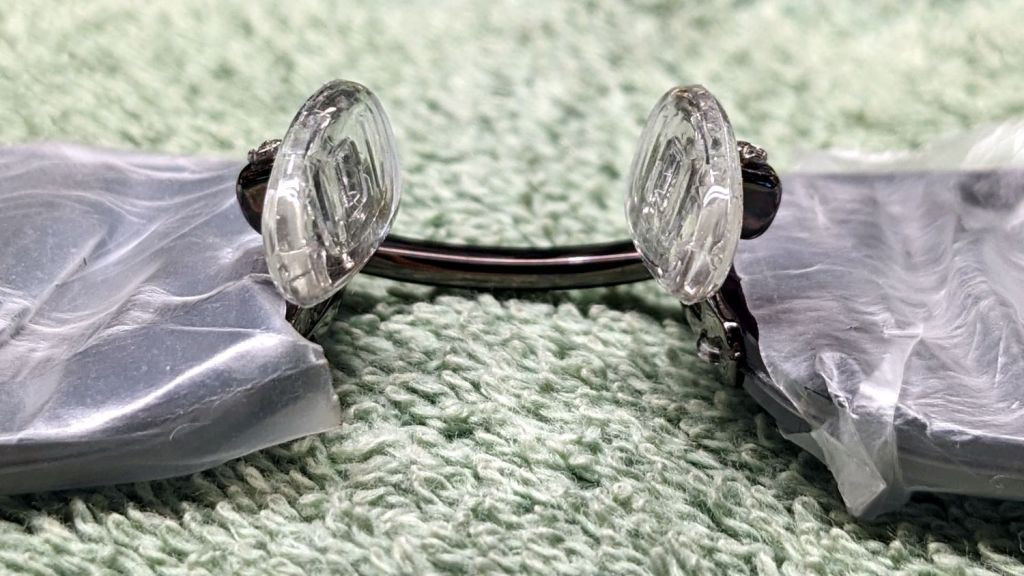
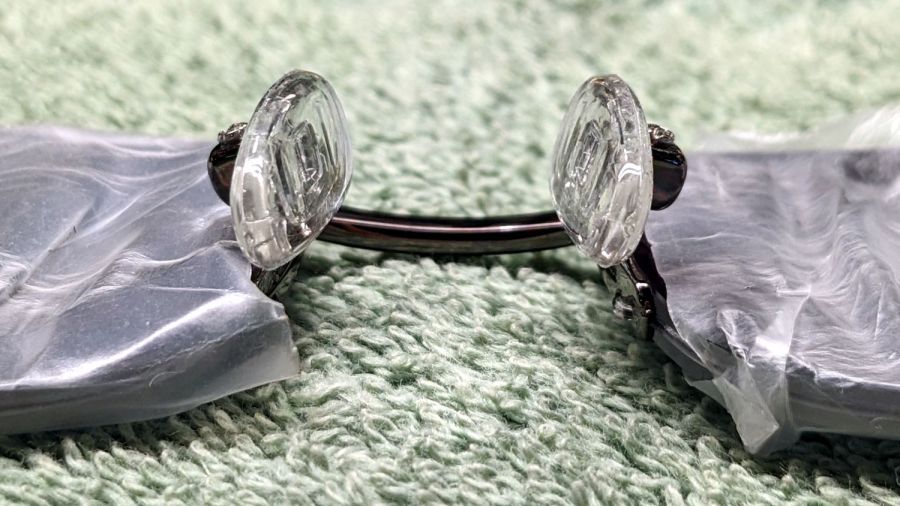
I suppose this is a consequence of being able to get two eyeglasses + two sunglasses in three different frame styles and two different prescriptions, each with progressive lenses and antireflective coating, for about $350 delivered halfway around the planet.
Clearing off the Electronics Bench unearthed the probes for my fancy Siglent SDM-3045 bench meter, which had been producing erratic readings. I isolated the problem to the red probe, which had an irregularly variable resistance ranging upward from a few ohms.
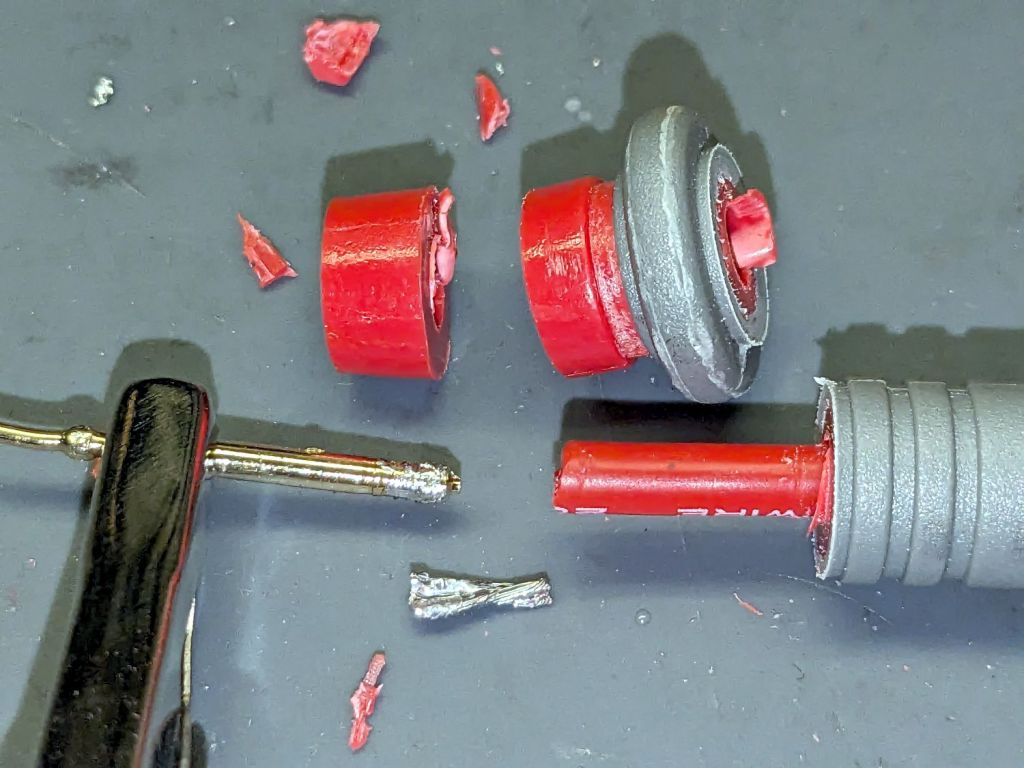
The probe being a non-repairable thing, I used the lathe to cut it apart and eventually found the problem:
Failed Siglent DMM probe
The probe tip on the right originally had no solder on it at all (*), with the curved part of the soldered wire fragment resting around it. The plastic pieces originally molded around the tip and wire applied enough force to hold them together, but the wire fragment fell out as I dismantled the probe.
Apparently the assembler didn’t get enough heat on the wire-to-tip joint to melt the solder on the probe tip, but the plastic shell got it past whatever QC might have happened between assembly and the shipping department.
A few years back, I refurbished all my failing alligator clips (using the Siglent meter and its test probes!) and no longer believe increasing my spend for such things will increase their quality. I’d love to be proven wrong, but the evidence is definitely stacking up the other way.
This year’s MVP health plan has a different “OTC Benefit” than last year, even though MVP is contracting with the same company to provide what seems to be essentially the same benefit.
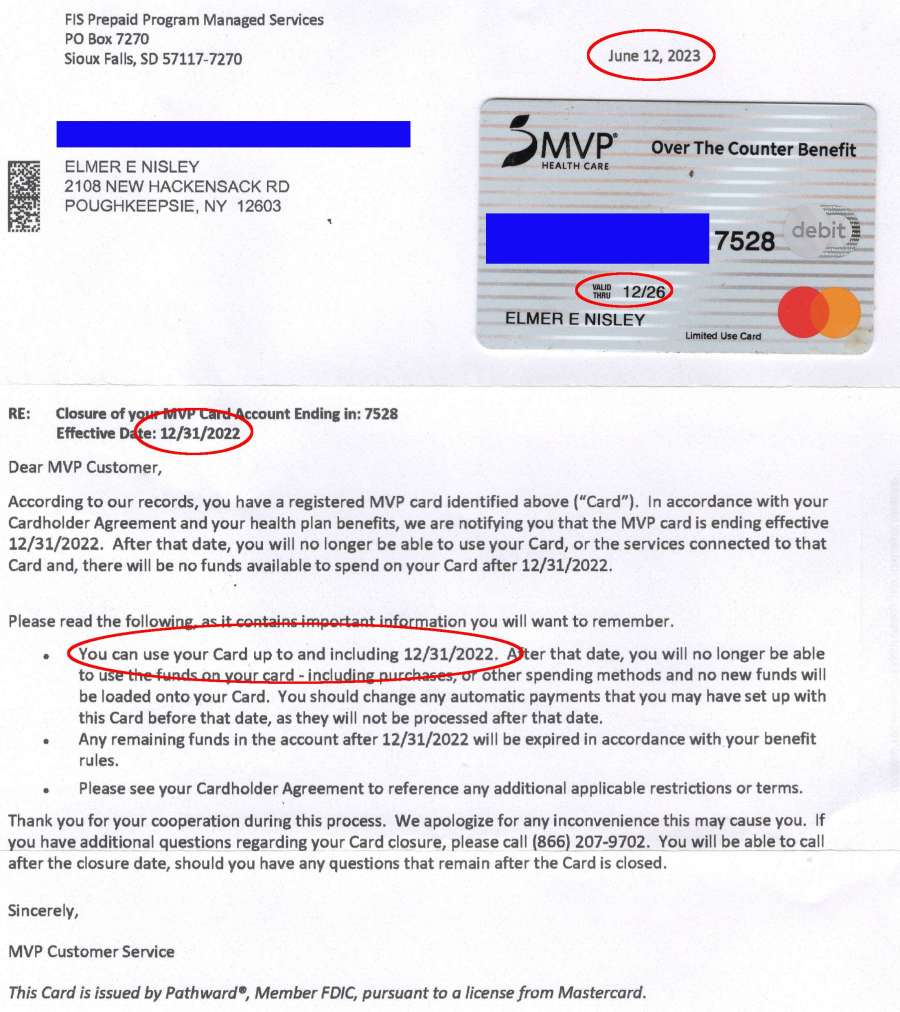
This arrived half a year after the new OTC benefit card showed up:
MVP OTC Card Expiry
I suppose somebody noticed MVP hadn’t gotten around to telling us they were cancelling the old card, despite its Valid Thru 12/26 notation. Well, the card isn’t exactly cancelled, it just stopped working when all the money evaporated.
This not being my first ride in this particular rodeo, I spent all those sweet OTC benny bucks days after they become valid on the first day of every quarter-year, buying up my stock of overpriced OTC stuff.
In theory, you could buy the stuff elsewhere, but you had to scan each item in the retail store using the worst app imaginable to determine its eligibility and coverage. If the store was in a no-wireless-data phone zone: too bad, so sad.
This year’s program is simpler: you must buy everything from the sole-source supplier, even though it costs four times more than the comparable item at, say, Walmart or even Amazon.
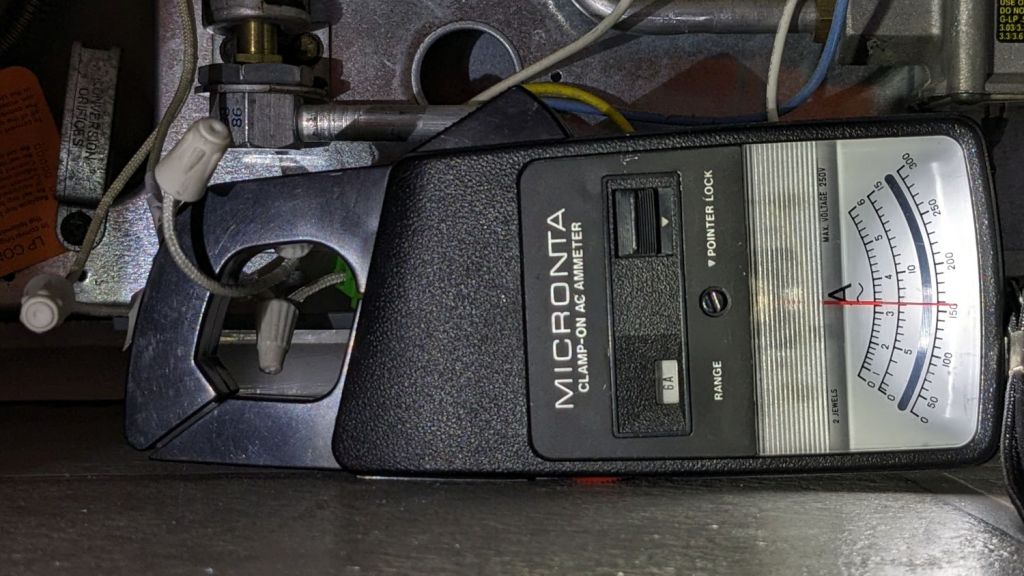
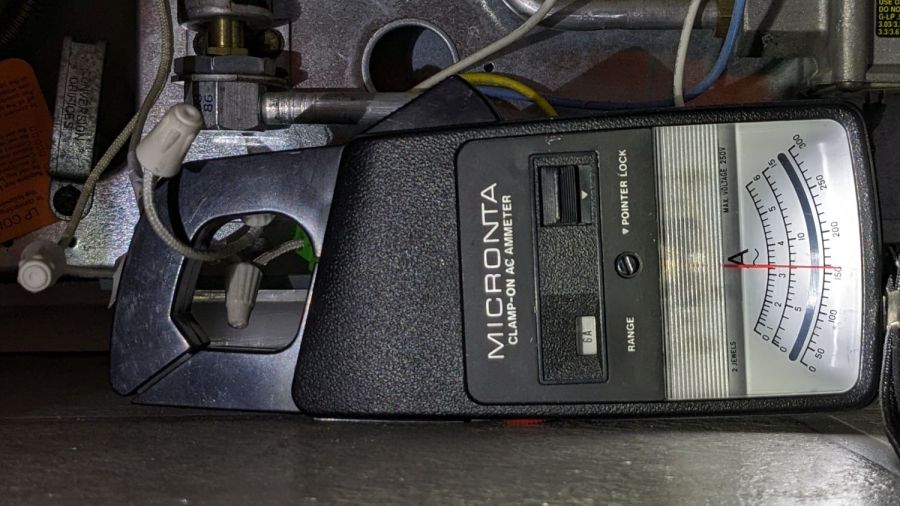
Although the oven igniter I just installed worked, its 3.0 A current fell below the gas valve’s minimum 3.3 A, which, based on past experience, suggested it would fail in short order. Just to see what happened, I sent a note to the seller, who offered a warranty swap and, after a bit of fiddling, the replacement arrived:
Oven Igniter B – 3.3 A initial current
This one draws exactly 3.3 A, so it just barely meets both its product description and the gas valve’s minimum current.










 The Smell of Molten Projects in the Morning