The Smell of Molten Projects in the Morning

Ed Nisley's Blog: Shop notes, electronics, firmware, machinery, 3D printing, laser cuttery, and curiosities. Contents: 100% human thinking, 0% AI slop.

Category: Science

If you measure something often enough, it becomes science

  • Red Oaks Mill Dam: Flood Stage

    Red Oaks Mill Dam: Flood Stage

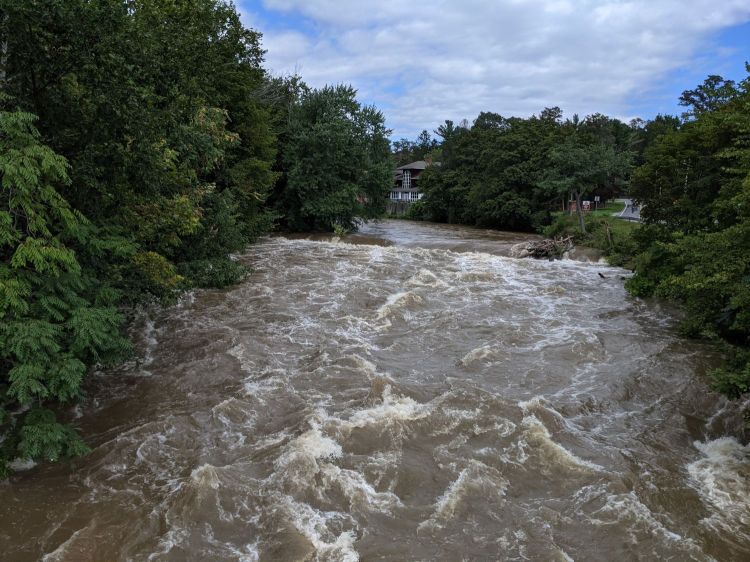
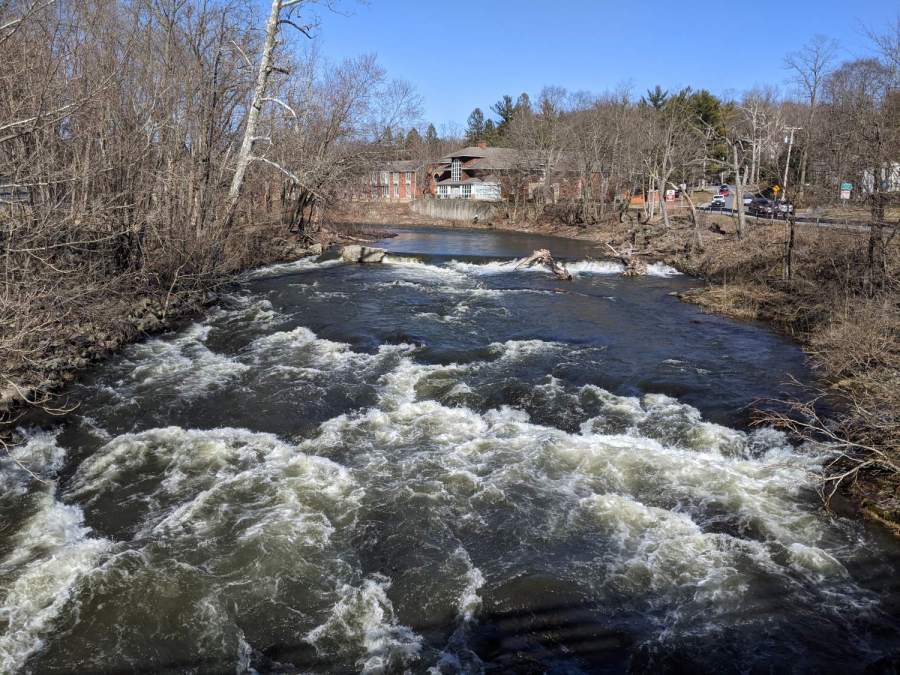
    The remnants of Hurricane Ida dropped half a foot of rain in our area, so we walked to the remains of the Red Oaks Mill Dam to see the water:

    Red Oaks Mill Dam - 2021-09-02
    Red Oaks Mill Dam – 2021-09-02

    The white water crests stand in place over rocks in the stream bed, with hypnotic flowlines.

    The concrete abutment over on the left is now completely submerged. It was more conspicuous in May:

    Red Oaks Mill Dam - 2021-05-17
    Red Oaks Mill Dam – 2021-05-17

    Surprisingly, most of the tree trunks and debris collecting over on the right remain jammed in place, as seen in March:

    Red Oaks Mill Dam - 2021-03-19
    Red Oaks Mill Dam – 2021-03-19

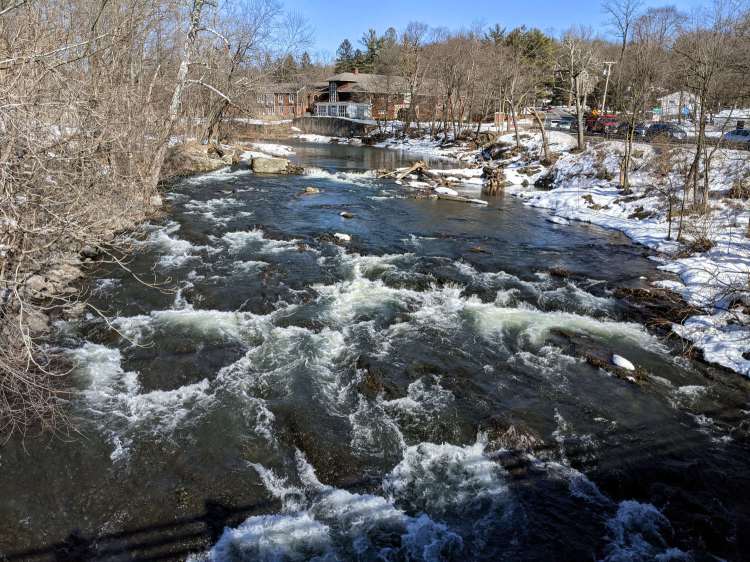
    For completeness, the scene in February:

    Red Oaks Mill Dam - 2021-02-25
    Red Oaks Mill Dam – 2021-02-25

    The USGS has a hydrology station just downstream that reported about 10 feet of water, the “moderate” flood stage, around the time I took the first picture. The normal level is 3 feet.

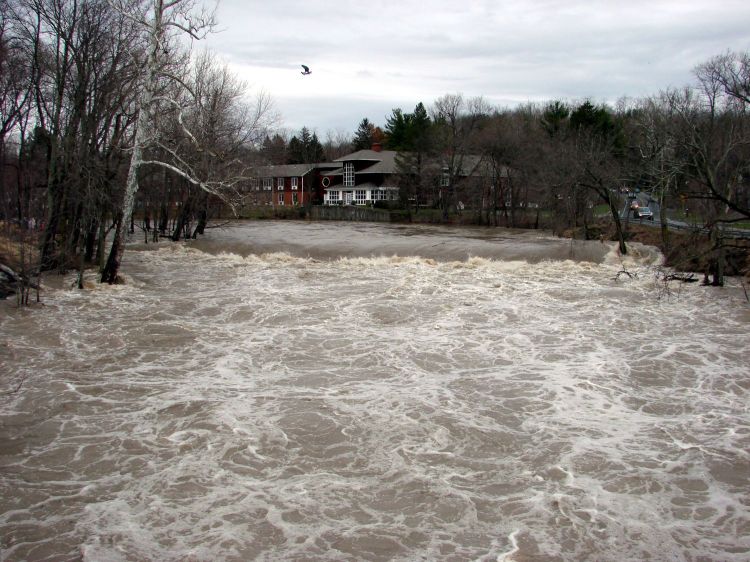
    The “major” flood stage is 14 feet and, back in 2007, this is what it looked like at 15 feet:

    Red Oaks Mill Dam - 2007-04-17
    Red Oaks Mill Dam – 2007-04-17

    Our reference point is a drain pipe on the retaining wall behind the hotel: when the Mighty Wappingers Creek covers the pipe, it’s well and truly flooding.

    Searching for “red oaks mill dam” will surface more pix and stories.

  • Sticky Trap Results

    Sticky Trap Results

    In late May we deployed six sticky traps in and around the onion bed, attempting to reduce the number of Onion Fly maggots. By mid-June the sheets were covered with the shredded leaves Mary uses to mulch the onions, but half a dozen flies were out of action:

    Sticky trap - 2021-06
    Sticky trap – 2021-06

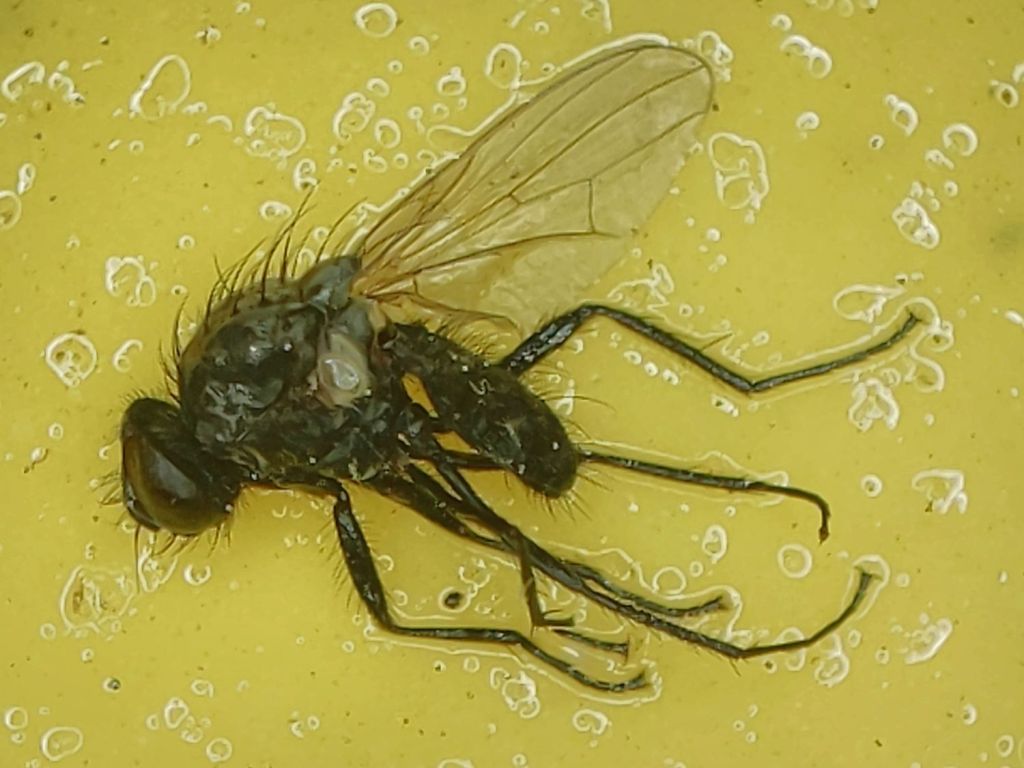
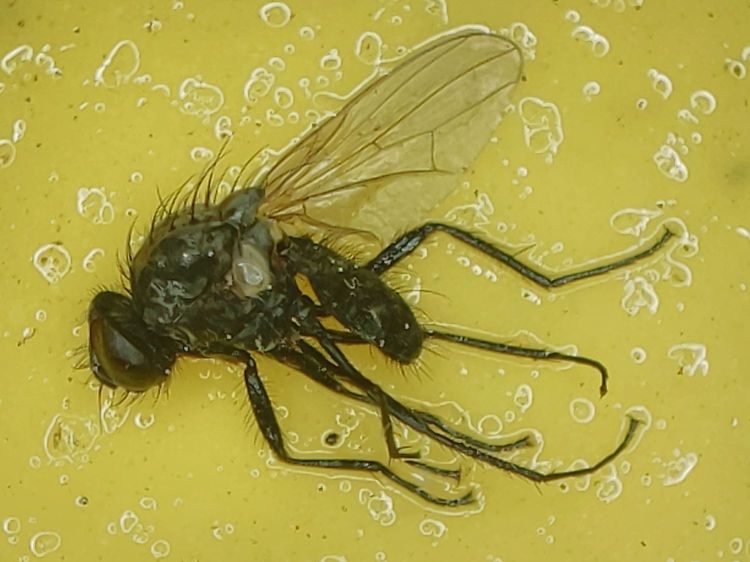
    We’re pretty sure that’s what these things are:

    Sticky trap - Onion Fly - 2021-06
    Sticky trap – Onion Fly – 2021-06

    They’re supposed to have red eyes, but being affixed to a sheet of snot for a few weeks doesn’t do the least bit of good for your eyes.

    We replaced the sheets and left them in place until the end of July:

    Sticky trap - 2021-07
    Sticky trap – 2021-07

    The sheets took another half-dozen flies out of circulation, Mary began harvesting the onions, and observed it was the healthiest onion harvest she’s ever had.

    We declared victory, removed the traps, and the remaining onions suffered considerable maggot damage over the next few weeks.

    Anecdotally, it seems reducing the Onion Fly population by (what seems to be) a small amount and maintaining pressure on the population dramatically reduces the number of maggots available to damage the onion crop. At least for a single bed in a non-commercial setting.

    The plural of anecdote is not anecdata, but we’ll try it again next year, leave the traps in place while the onions are in the ground, and see what happens.

  • Tree Frog Redux

    Tree Frog Redux

    Mary found another tree frog while picking Savoy lettuce for breakfast:

    Tree frog on Savoy cabbage
    Tree frog on Savoy cabbage

    They’re much better camouflaged in their (more or less) natural surroundings, so I didn’t spot it at first, either.

    They really are cute little gadgets:

    Tree frog on Savoy cabbage - detail
    Tree frog on Savoy cabbage – detail

    This is only the fourth tree frog she’s seen in the last two decades, but the second one in a month. It may be the same frog as before, although the garden now has a rather husky resident snake who seems to be eating well.

  • Tour Easy: Bafang 11.6 A·h Range

    Tour Easy: Bafang 11.6 A·h Range

    After a few days of riding, the Bafang 500C display on Mary’s bike gives the battery status:

    Bafang 500C display - 48 mi 30 pct
    Bafang 500C display – 48 mi 30 pct

    The thermometer scale on the right shows 30% remaining battery capacity after 48.3 miles of riding, with the 11.6 A·h battery at 47.3 V.

    For our type of riding, each 10% increment of battery charge delivers about 7 miles of range. Although we could probably get 70 miles between charges, recharging the battery at 20 to 30% makes more sense; the bike is in the garage, so why not?

    Our typical 10 to 15 mile rides now average 12+ mph, with some level sections ticking along at 18 mph (giving me some serious exercise), which isn’t much by pro rider standards.

    Computing the lithium battery charge state by measuring its voltage isn’t particularly accurate, but it’s about as good as you’re going to get.

  • Goose Parade

    Goose Parade

    Canada Geese seem primed to travel in a straight line, whether in the air, on water, along a rail trail, or even on a sidewalk:

    Canada Goose parade - A
    Canada Goose parade – A

    They proceed around corners in an orderly manner:

    Canada Goose parade - B
    Canada Goose parade – B

    But they completely ignore crosswalk markings:

    Canada Goose parade - C
    Canada Goose parade – C

    We think two goose families joined forces for this outing: four large geese and seven goslings by our count.

    The sidewalks sport a rich assortment of goose poop, so the geese obviously enjoy their hikes.

  • Side Marker Beam Patterns: FAIL

    Side Marker Beam Patterns: FAIL

    The truck side marker lights I’m thinking of using as daytime running lights have a pentagonal lens, so they should have a pattern with a bright central beam surrounded by five lobes. The one on Mary’s Tour Easy produced an oddly shaped blotch on the garage wall, so I ran the others though a simple test setup:

    Side Marker - beam test setup
    Side Marker – beam test setup

    The lights sit horizontally in a small vise to keep them level and in the same position, although in no particular rotational orientation, and 100 mm from the graph paper. It’s running at 6 v to keep the brightness down enough to avoid blowing out the image. All of the images were exposed based on the central spot, so the surrounding paper gives some idea of the relative brightness: darker paper = brighter LED spot.

    The front view of the lights comes from the stereo zoom microscope, with the wires gripped in a Third Hand and rotated to put the (inverted) TOP label where you’d expect it. They’re all roughly at the same position and pretty nearly lined up with the lens axis. The bubble-looking thing behind the central pentagon is the lens on the Piranha LED package, which should be centered but rarely is. You can see the dark orange square of the amber LED chip in some of the pictures.

    Without further ado, the nine truck side marker lights that aren’t on her bike:

    Side Marker E has a blob that looks like a cataract atop the LED lens, but it might be a mold imperfection.

    Obviously, paying a buck a light doesn’t get you much in the way of build quality these days.

  • Tour Easy: Amber DRL Internal Resistor

    Tour Easy: Amber DRL Internal Resistor

    Plotting current against voltage for the amber truck side marker lights produces the expected straight-ish line:

    Side Marker I vs V plot - with fuse
    Side Marker I vs V plot – with fuse

    The slope suggests a 330 Ω resistor, but the internal PCB sports a pair of 150 Ω SMD resistors.

    I don’t believe the X-axis intercept for a moment, but 1.5 V seems about right for an amber LED.

    Oh, and the DMM fuse doesn’t have a ceramic body. You’re seeing the vaporized remains of a 315 mA fuse neatly deposited over the inside of the glass tube after being shorted across a 3 A bench supply.

    I hate it when that happens. Replacing it emptied the little bag of those meter fuses; next time it’ll get a half amp fuse.