The Smell of Molten Projects in the Morning

Ed Nisley's Blog: Shop notes, electronics, firmware, machinery, 3D printing, laser cuttery, and curiosities. Contents: 100% human thinking, 0% AI slop.

Category: Recumbent Bicycling

Cruisin’ the streets

  • SRAM Twist Grip Shifter Pointer Repair

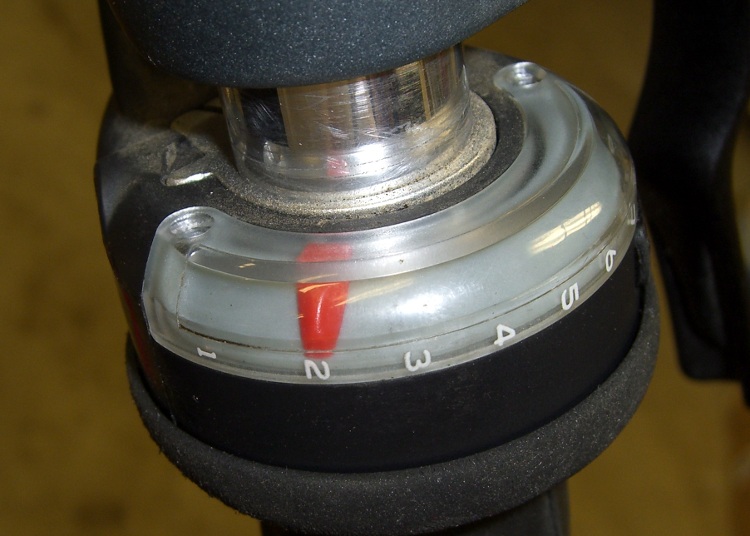
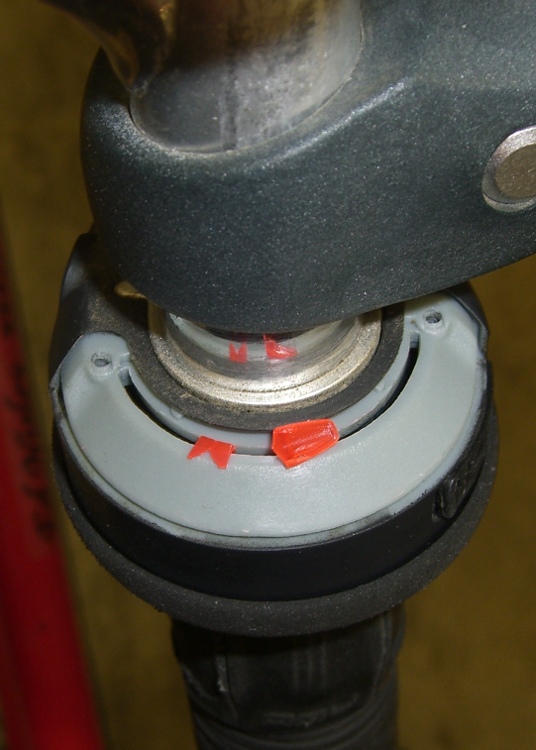
    The little red pointer inside my Tour Easy’s rear SRAM Grip-Shift broke. Back in the old days, this wouldn’t be a problem, as we used friction shifters on the downtube (as we rode to school, uphill, in the snow, both ways) and knew by feel which gear was engaged. But that was then, this is now, and fixing things is what I do anyway.

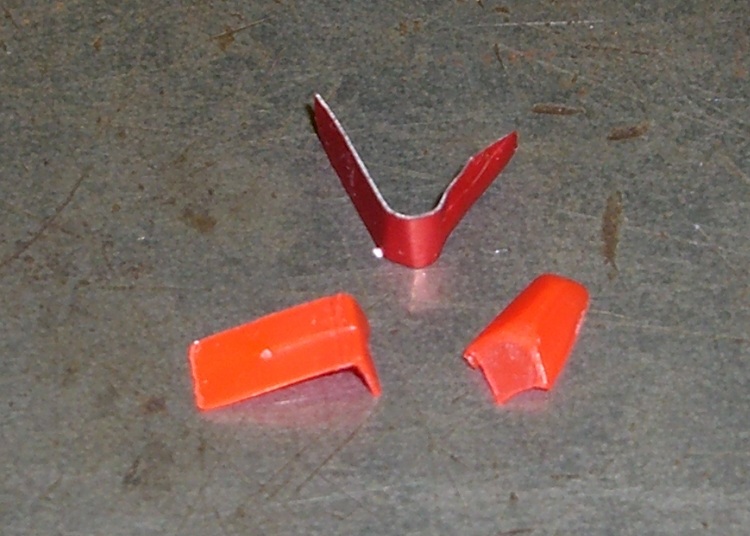
    The pointer turned out to be a thin plastic strip, molded into an L with a domed arch over the pointy end. It simply rests in a slot in the shifter mechanism, held in place by the transparent cover (which, mercifully, came off without dismantling the bike or even removing the cable).

    I made a similar replacement from thin red-anodized aluminum, but that didn’t work out at all. The mechanism snaps from one gear to the next at roughly the speed of heat, accelerating the pointer so rapidly that the aluminum deformed. Score one for plastic!

    Actually, I made two aluminum pointers. Prototype One vanished into the Sargasso heap in front of the Solvents & Lubricants Shelves at the first upshift; that’s when I discovered just how much snap that shifter applies to the pointer. Made another one, installed the cover, and then discovered it wasn’t going to work.

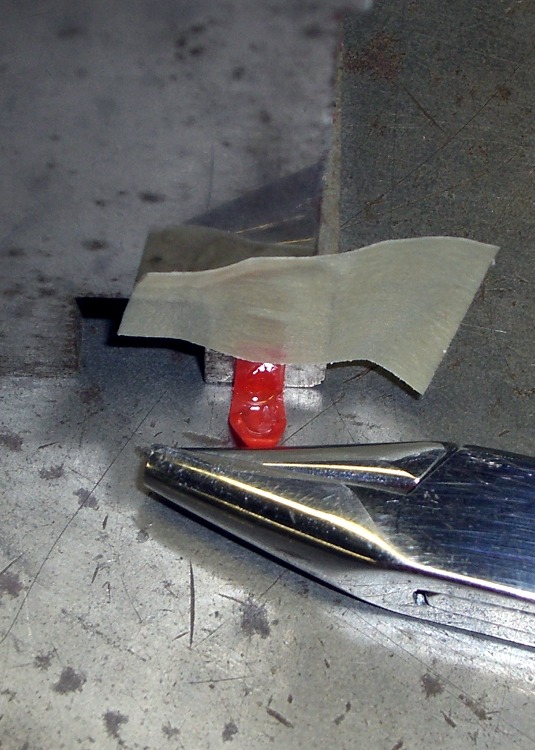
    So I applied some Plastruct solvent adhesive to the broken plastic bits, lined the parts up on my crusty surface plate, applied a bit of gentle pressure overnight, and in the morning had a like-new pointer. It installed just fine and works like the original.

    Solvent-bonded plastic is supposed to be just about as strong as the original material. We’ll see just how long this repair lasts…
    Pop Quiz: Do you know the first four derivatives of position w.r.t. time?

    Answer: Velocity, acceleration, jerk, and snap. You could look it up…

    Update: Alas, the repair lasted only about two weeks before failing at the same spot. Some deep rummaging produced a similar (but more thoroughly dead) SRAM shifter. Turns out the pointers are similar, so I salvaged the older one. Ya gotta have stuff… and remember it, too, which is becoming something of a challenge.
  • Tour Easy Rear Brake Noodle Extension

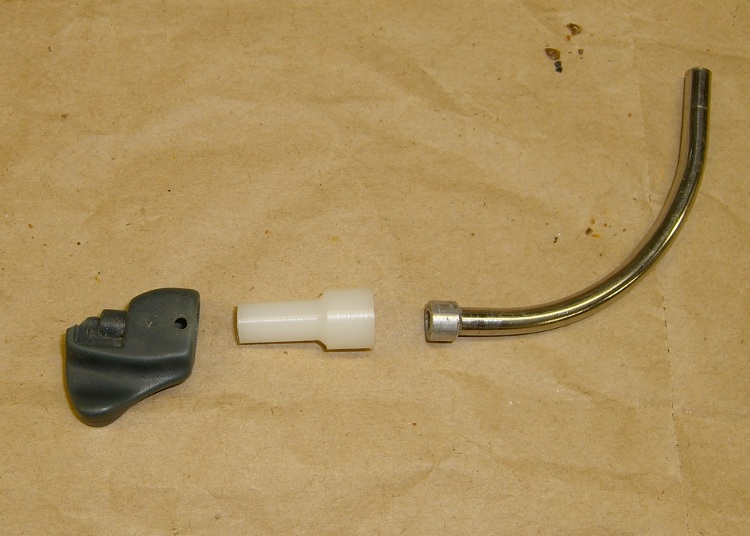
    Noodle Extension and Parts
    Noodle Extension and Parts

    Our Tour Easy recumbents have linear-pull brakes on the rear and, for some reason, the noodle on Mary’s bike didn’t quite clear the frame: the cable bent slightly around the frame when the brake was active.

    That made the brake difficult to adjust, as linear-pull brakes depend on an exact balance between the restoring springs on each side. With the cable pulling to the right, the left-side pad would contact the rim first and give the brake lever a mushy pull until the right-side pad clamped down.

    A quick lathe session applied to some nylon scrap turned out an extension tube that fit between the steel noodle and the (slightly broken) plastic hoodickie that engages the brake arm. I used nylon (or something slippery like that) to make sure the cable wasn’t going to bind on it.

    Epoxy Potting
    Epoxy Potting

    The noodle originally fastened into the plastic hoodickie with a small collar that snapped into a pair of holes, but I took a shortcut: JB Kwik Epoxy. The shank end of a small drill slip-fit into the hoodickie’s cable passage kept the extension aligned while the epoxy set up. The masking tape prevented the epoxy from drooling out through the two small holes: the cured epoxy plug will have a pair of retaining posts in exactly the right places. The smears on the plastic parts chipped right off, not that anybody will ever notice.

    I’m depending on spring force to hold the noodle in the extension, which seems to be working just fine. This is one of those jobs where everything’s under compression all the time and the cable tension ensures good alignment.

    The socket on the extension’s fat end is a snug fit to the collar swaged on the noodle; other noodle varieties seem to have other sorts of ends, so check to make sure this will work for you.

    Noodle Extension Installed
    Noodle Extension Installed
    Added Brake Cable Clearance
    Added Brake Cable Clearance

    These pix show the brake assembly from below (the paint failed on the frame cross-member early on and I’ve been meaning to slather some rust converter on that spot for years. Sigh.) and the now-positive clearance between the brake cable and the frame with the brake applied.

    And, for future reference, the dimensions…

    Noodle and Extension Dimensions
    Noodle and Extension Dimensions
  • Avid Rollamajig Repair

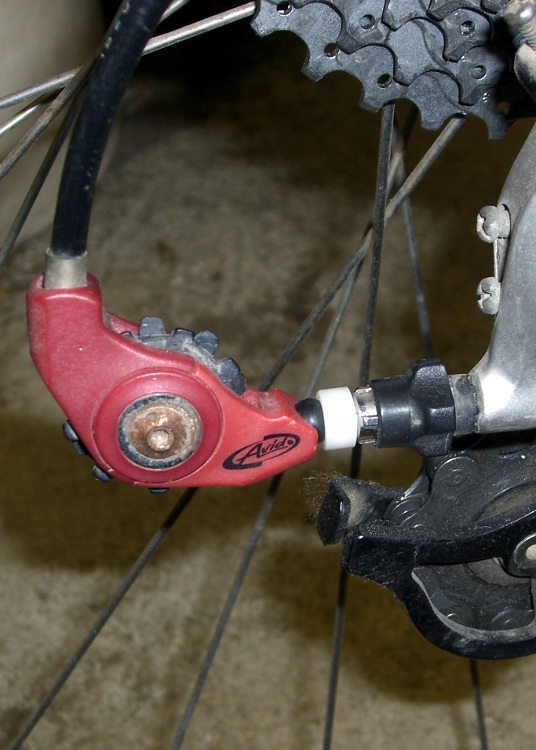
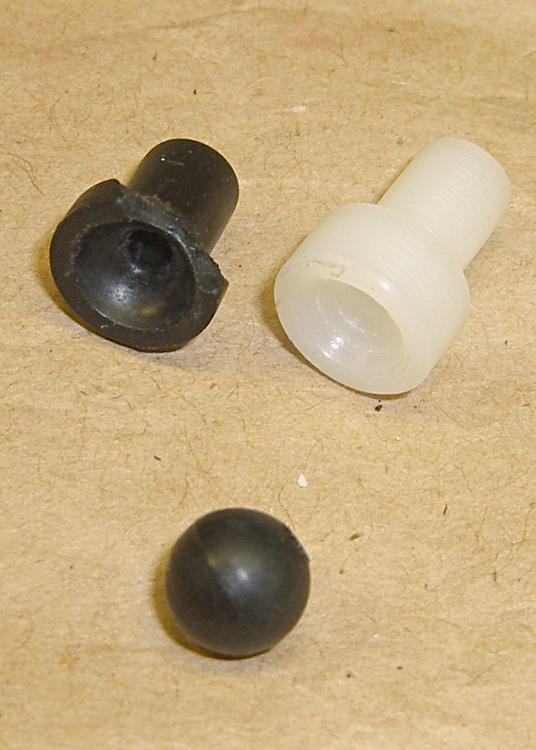
    Avid Rollamajig with new ball socket
    Avid Rollamajig with new ball socket

    Mary’s shifter cable broke at the rear derailleur, causing the Avid Rollamajig to undergo spontaneous auto-disassembly. The only part we couldn’t find was the socket between the ball and the derailleur’s adjusting thimble.

    Good news: my parts heap had the Rollamajig from my bike, which I’d replaced because the most recent derailleur has an integrated gadget that serves much the same purpose.

    Bad news: the socket had a chunk broken out of it and I didn’t want to put a broken part on Mary’s bike.

    Good news: at least I could measure the dimensions to build a new socket.

    Bad news: it needs a spherical socket for what measures out to be a 6.8 mm (0.268 inch) plastic ball and that’s not one of the three ball-end mills I have in the tooling cabinet.

    Good news: this isn’t a really critical high-speed / high-stress rotating joint. Pretty good will be close enough.

    Sherline chuck in lathe chuck
    Sherline chuck in lathe chuck

    Turning the part was a quick lathe job on a random hunk of what’s probably nylon.

    Bad news: the nylon was a rectangular cutoff from a slab and the three-jaw chuck on my lathe has been firmly stuck for the last year. It’s resisted all the non-Armageddeon-scale techniques; I fear I must machine the damn thing off.

    So I…

    • mounted the nylon in the Sherline 4-jaw chuck
    • grabbed that teeny little chuck in the lathe’s much bigger 3-jaw
    • converted one end of the square hunk into a cylinder
    • removed the small chuck
    • mounted the cylinder end in the 3-jaw
    • completed the mission
    Offset roughing mill
    Offset roughing mill

    Lacking the appropriate ball-end mill, I offset a ball-end roughing mill in the tailstock chuck so the near side was at the right radius from the lathe axis, then poked it into the end of the socket-to-be.

    Which, of course, produced a not-quite-spherical dent that was a bit too shallow, so I chucked up a too-small ball mill (on the centerline) and carved out the bottom of the socket. The result was a more-or-less spherical socket of about the right depth, pretty much.

    The right way to do this, and what I was going to do before I came to my senses, was turn the part on the lathe, drill the axial cable hole, then chuck it up on the Sherline CNC mill. Getting a spherical socket of exactly the right radius and depth using a too-small ball-end mill is then a simple matter of G-Code. Maybe I should write that up for my Digital Machinist column…

    Yeah, you could use a ball-turning attachment, if you should happen to have one. Sue me.

    Broken and new sockets
    Broken and new sockets

    Anyhow, it all worked out OK. The new socket is slightly longer than the old one, as it’s made to fit the derailleur thimble at hand. The end around the socket is slightly thicker, too, as it seemed more meat would add more durability where it was most needed.

    The Rollamajig seems to be discontinued, although some of the smaller online sources still offer it. Building one looks like a straightforward shop project to me.

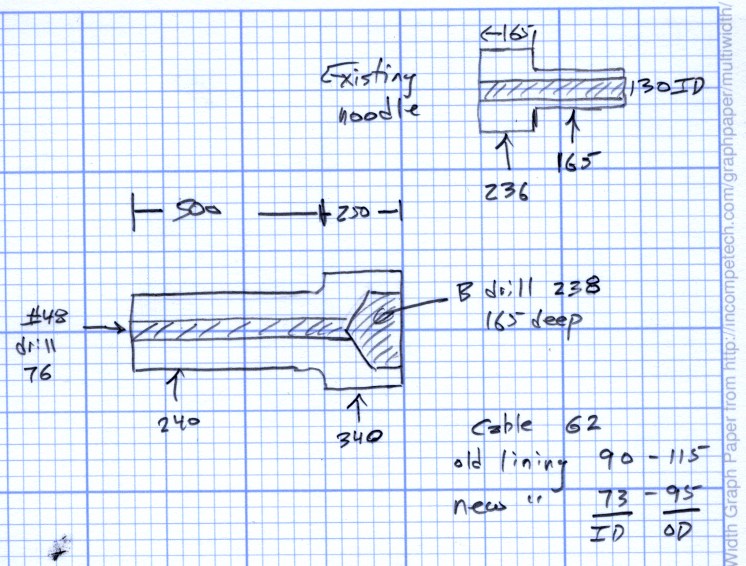
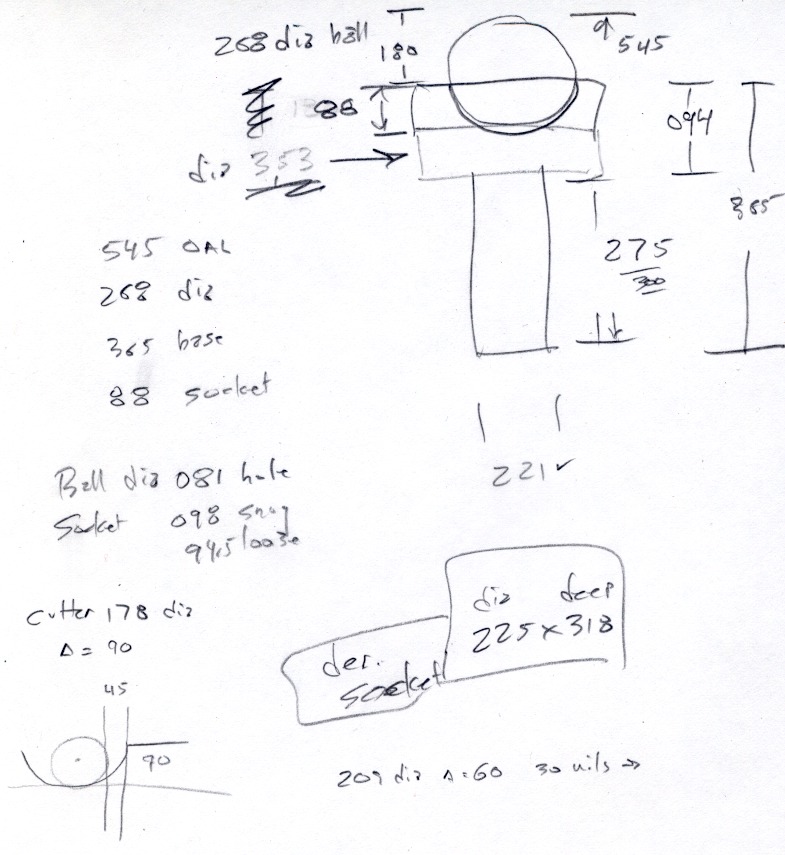
    Ball socket dimensions
    Ball socket dimensions

    The sketch has dimensions in inches, because I was doing this on the lathe. Our daughter measured it in metric and came out with much the same answers, so it’s all good.

  • Terracycle Idler Shaft Cleanup

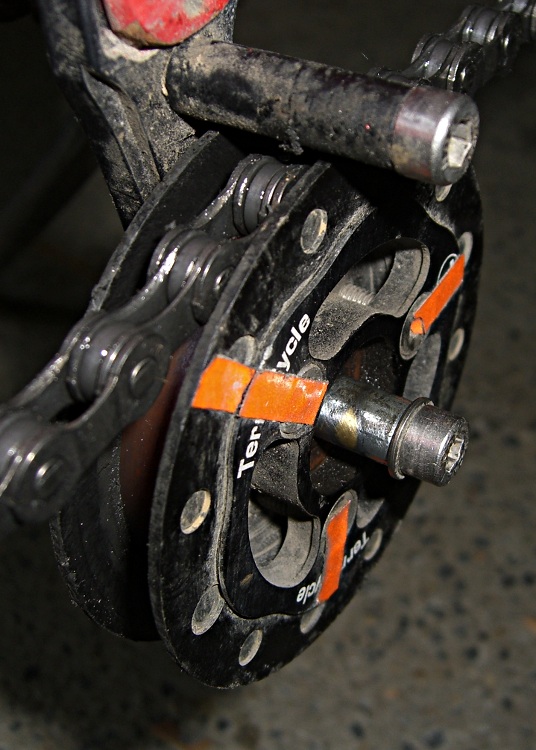
    Crusty Sliding Shaft
    Crusty Sliding Shaft

    I installed a Terracycle Idler on Mary’s Tour Easy when the old chain tensioner wore out. It’s significantly quieter than a double-idler tensioner, but the rear derailleur can barely handle the 11-34 sprocket / 30-42-52 chainring combination.

    She likes it, that’s what counts.

    Anyhow, while poking around under the bike, I noticed that the idler no longer slid left-to-right on the shaft through the bearing. The bearing itself spun fine, but the shaft… ugh, they should have used stainless steel.

    The sliding motion is important, as the idler should self-adjust to the chainline during shifting. I don’t know how long this one has been jammed, but it could contribute to the noises she’s been mentioning of late and that have prompted me to embark on a major maintenance project.

    Cleaned Shaft Installed
    Cleaned Shaft Installed

    It shined up nicely with a Scotchbrite wheel in the drill press and now looks merely horrible; you can see the copper plating (wrong: see Update below) showing through. I had to hit one end of it with a medium diamond file to knock off an invisible high spot.

    I added a bit of lube and reinstalled it; the bearing slides back & forth like it used to, but I have my doubts as to how long this will last. Fairly obviously, the plating is shot.

    The next time it fails, I’m sure I’ll wind up trying to turn an exact 0.3125-inch diameter stainless-steel shaft with a polished surface…

    Oh, and the three orange retro-reflective strips? The idler turns backwards because it’s on the return side of the chain: it’s rather disconcerting and I figured it’d be fun to highlight it.

    Update: The folks at Terracycle say it’s plated zinc over a brass bushing… which (Ah-ha!) explains the corrosion.

    The zinc forms an anode against everything else on the bike; nothing is more anodic than zinc. Because the plating has no volume, it turns into a Fizzy at the merest sight of the usual road salt around here.

    Unplated brass would be better: more volume, cathodic against steel, anodic but pretty close to stainless, just as slippery. Might tend to wear against the inner bearing race, but I’d expect it to be at least as durable as the plating.

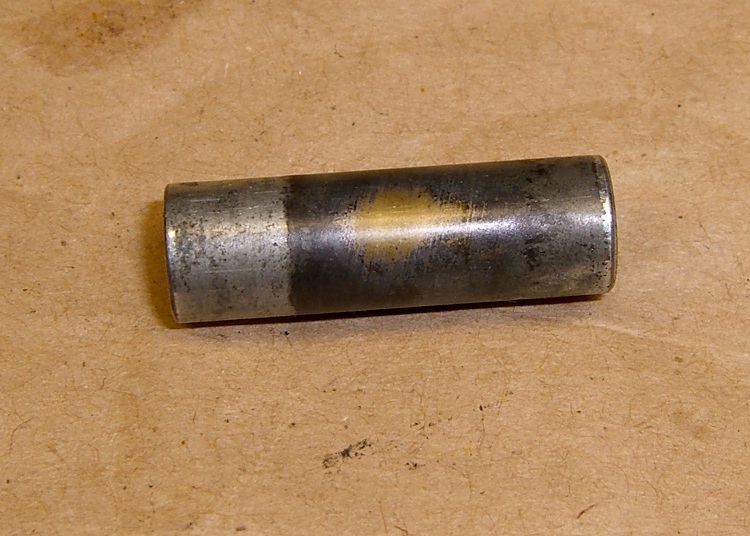
    Worn Terracycle Idler shaft
    Worn Terracycle Idler shaft

    Here’s a pic of the shaft from another Terracycle Idler I had on my TE for a while. While it’s not corroded, it’s worn through to the brass underneath. So maybe the plating isn’t buying much, anyway.

    I spent some quality one-on-one shop time with a random hunk o’ stainless hex rod, came up with a good-looking 0.304-inch OD (a nasty bit of overshoot, but I haven’t done any lathe filing in recent memory and forgot how fast it removes metal), and verified that the race will cock-and-jam rather than sliding nicely.

    The Terracycle folks will send a replacement shaft; they’re good folks who build quality stuff and stand by their products. I’m obviously abusing the poor thing…

    Update: The stainless shaft arrived and is sized for the 6 mm bolt they’re using in new production. When we discussed this, I said it’d be no big deal for me to adapt it to the existing 5 mm bolt. A length of heat-shrink tubing does the deed, as it’s rigidly held on both ends. A dab of Loctite, a dot of oil, and it’s back in service. We’ll see what happens after a few months of riding under my regime of benign neglect.

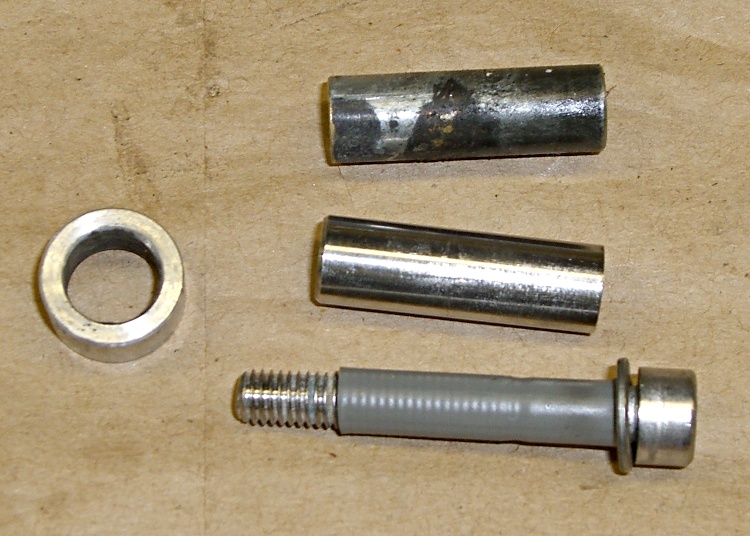
    Old brass shaft, new stainless steel shaft, 5 mm bolt with heatshrink
    Old brass shaft, new stainless steel shaft, 5 mm bolt with heatshrink

    A tip o’ the cycling helmet to Terracycle!

  • Tour Easy + BOB Yak = Useful Cargo Capacity

    Tour Easy + BOB Yak Leaf Hauling
    Tour Easy + BOB Yak Leaf Hauling

    As mentioned there, I use a BOB Yak trailer to tote stuff that doesn’t fit into the panniers on my Tour Easy recumbent bike.

    We shred dry autumn leaves, bag up the chips, store the bags under a tarp beside the garage, and then Mary mulches the weeds to death in her gardens in the spring. I usually haul a pair of bags to the garden when we ride out for groceries: never waste a trip.

    The Yak’s rear fender is a nice stiff aluminum arch with stout steel stays, built to take exactly this sort of abuse. The trailer is utterly reliable and tracks perfectly: highly recommended.

    It does turn the ‘bent into a 12-foot-long vehicle, so urban assault riding is pretty much out of the question. On the other hand, nobody begrudges me a parking space of my very own. Which is a good thing, as puny little bike racks quake at my approach.

    This looks scarier than it really is, although having the center of gravity up that high does tend to make the trailer shimmy a bit over 20 mph… which speeds I reach only going downhill.

    Update: I have a pair of Nashbar cargo nets (their deep links rot quickly, so site-search for net) to hold bulky stuff in place. One normally does the deed, but some loads demand both!

  • Tone Encoding/Squelch vs. APRS Packet Reception Reliability

    We’ve been using ham radios on our bikes for years, but last year I put together an interface that connects a TinyTrak3+ GPS encoder to the helmet mic amp. This year I’m building two more, about which I’ll write later.

    The problem is that listening to APRS data bursts isn’t all that pleasant, although it’s bearable, but it’ll get much worse when we use 144.39 MHz as our intercom frequency so we can both talk and be tracked: we’d hear all the APRS traffic within digipeater range.

    Now, admittedly, talking on 144.39 isn’t standard. The local APRS wizards have given tentative approval, as we can’t figure out a better way to talk, give position reports, and not carry two radio / battery / antenna / electronics packages on each bike. As long as we don’t do a lot of yakking, we shouldn’t interfere with the digital traffic very much… and we don’t do a lot of talking while riding.

    So I figured I’d send a 100 Hz tone under the audio and enable tone squelch, so we wouldn’t hear packets from anybody else. We’d still hear each other blatting away, but if I set the TT3+ encoders to send a position report every 10 minutes, it ought to be bearable.

    The catch with this is that some receivers / APRS decoders can’t handle subaudible tones. I considered Digital Coded Squelch, but one of our radios doesn’t include that feature, alas.

    To get some idea of how tone would work with the APRS setup around here (which is where we do most of our riding), I set up an HT on the bench with the TT3+ and my interface. The antenna is an HF/VHF discone, indoors, on the basement floor, beside a window. The GPS receiver can see a slice of sky from its perch just outside the basement window under an awning. That’s about as terrible a setup as we have on our bikes: low power, bad antenna, obscured line-of-sight.

    Each test ran 10-14 hours, the TT3+ sent a packet every 5 minutes, and I checked the raw packet results on aprs.fi.

    With tone off and the TT3+ waiting for 3 seconds of audio silence before transmitting, 39% of the packets got through to the APRS-IS backbone.

    With tone on and, thus, the TT3+ unable to hear / avoid other traffic, 47% of the packets got through on one test and 42% on another. The higher rate was overnight, when (I think) there’s less traffic on 144.39.

    Putting the gadgetry back on the bike, parking it beside the garage, and letting it run for 5 hours on a Saturday afternoon showed that 81% of the packets made it to the backbone. Some of the packets were received by stations over 30 miles away, which probably coincided with the the closer receivers hearing transmitters hidden from the more distant ones.

    The only conclusion I can come to is that tone squelch isn’t going to hurt anything around here, where the APRS wizards have done a great job of getting the decoders to cope with subaudible tones. How it’ll work elsewhere is up for grabs, but we’ll burn that bridge when we come to it.

    And it turns out that the radios take about half a second to wake up and activate the audio output with tone squelch enabled, so we don’t actually hear the data bursts: they’re almost always finished and we may hear dead air for a fraction of a second. Because the TT3+ can’t do collision avoidance, we sometimes hear other packets from other transmitters before the squelch closes again, but it’s not objectionable. Whew!

    Update: with the TT3+ set to transmit every 3 minutes, it works fine!

  • BOB Yak Trailer: Storage Thereof

    Grocery Hauling Setup
    Grocery Hauling Setup

    Bicycles, in general, aren’t set up for heavy load carrying, so I use a BOB Yak trailer for groceries, garden goodies, recycling, dead PCs, and this and that and the other thing. It works surprisingly well, tracks nicely, and tends to push cars another half-lane to the left.

    Word: if you want plenty of clearance in traffic, haul a 20-pound propane cylinder in your bike trailer!

    Anyhow, storing the trailer is a bit of a nuisance, as it’s not particularly stable on its own and takes up a remarkable amount of floor space.

    BOB Yak on garage door rail
    BOB Yak on garage door rail
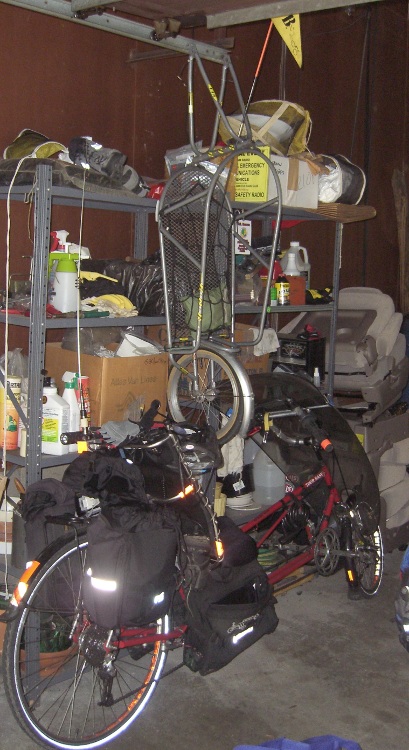
    BOB Yak hanging against shelves
    BOB Yak hanging against shelves

    I finally figured out that it would hang neatly from the garage door tracks, just beyond where the door stops at the top of its travel. There’s a set of shelves against the wall, filled with the usual crap found on garage shelves (well, maybe you don’t have beekeeping supplies, but you get the idea), so the trailer isn’t blocking anything really important.

    I lean my bike against those same shelves and the trailer hangs neatly between the seat and the fairing. The ladies’ bikes are just out of sight to the right.

    We have a two-car garage that’s the right size for one minivan and three Tour Easy recumbents…