The Smell of Molten Projects in the Morning

Ed Nisley's Blog: Shop notes, electronics, firmware, machinery, 3D printing, laser cuttery, and curiosities. Contents: 100% human thinking, 0% AI slop.

Category: Recumbent Bicycling

Cruisin’ the streets

  • KG-UV3D GPS+Voice: Quasi-Extruded Case

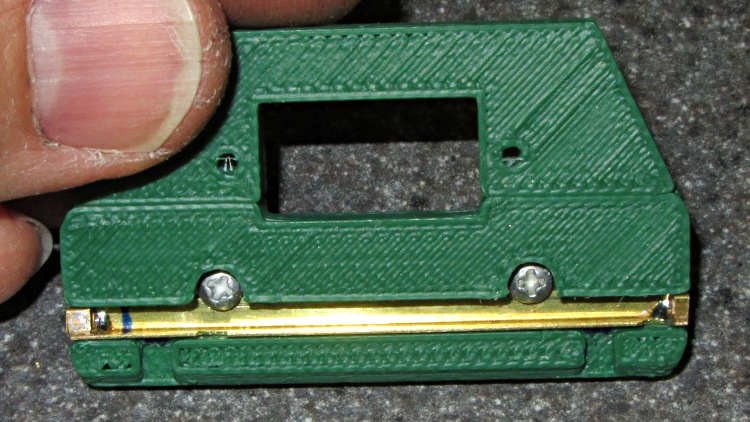
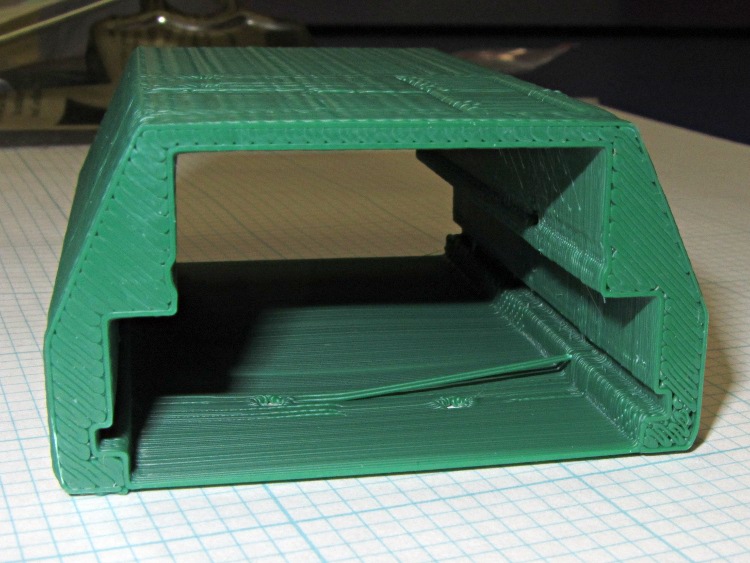
    Unlike the previous kludge, this GPS interface case resembles an extrusion with the PCBs sliding into place, held by setscrews along the edges of the slots:
    HT-GPS Adapter Case - end view
    HT-GPS Adapter Case – end view

    Those errant threads seem to arise from not quite bonding to the corner. The battery side of the case (bottom in this view) is one thread wide, which isn’t quite enough. Adding another thread makes it 1 mm wide, which seems excessive.

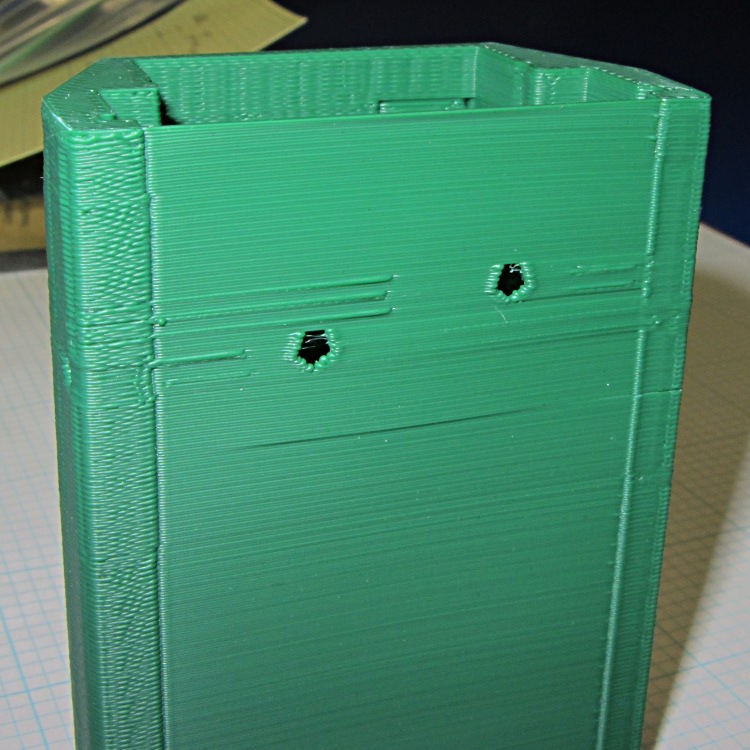
    The idea was to glue the battery interface plate on that side, but printing the case vertically puts various flaws along that surface:
    HT-GPS Adapter Case - bottom view
    HT-GPS Adapter Case – bottom view

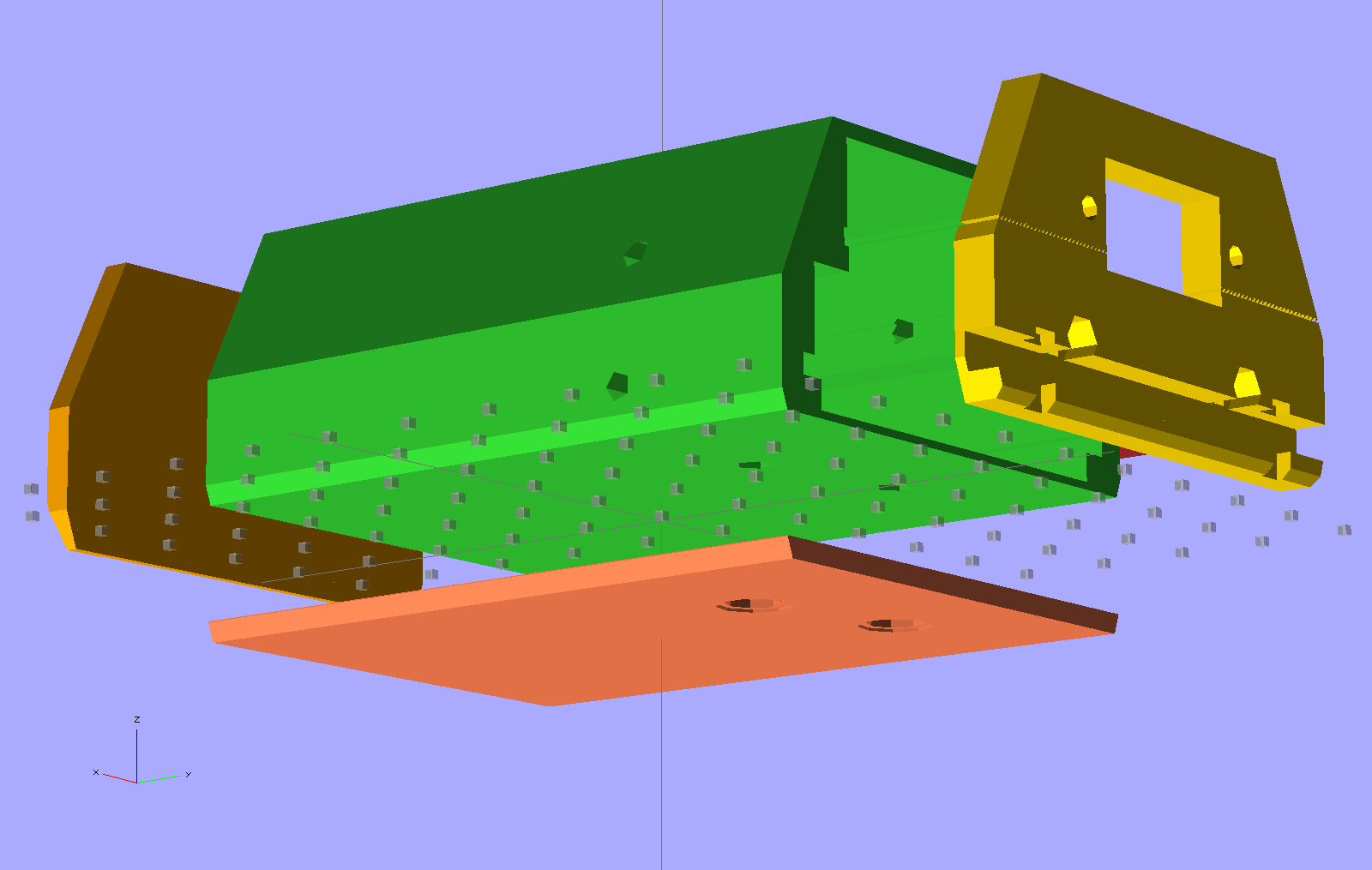
    So the next iteration will merge the battery plate with the case and print the whole affair in one shot. This view shows all the parts separately:
    HT-GPS Adapter Case - exploded bottom view
    HT-GPS Adapter Case – exploded bottom view

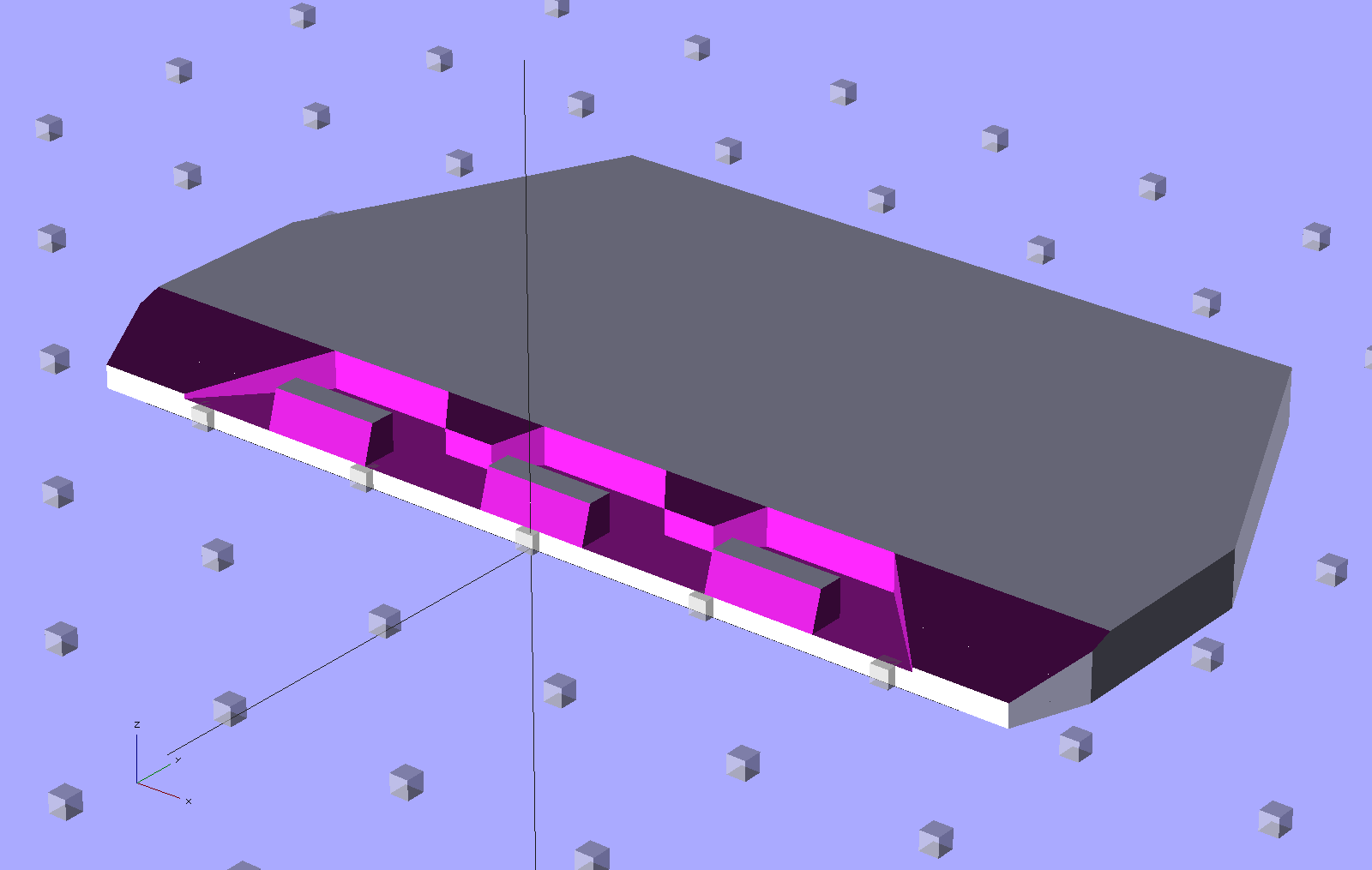
    This shows the case joined with the battery plate, neatly aligned for printing:
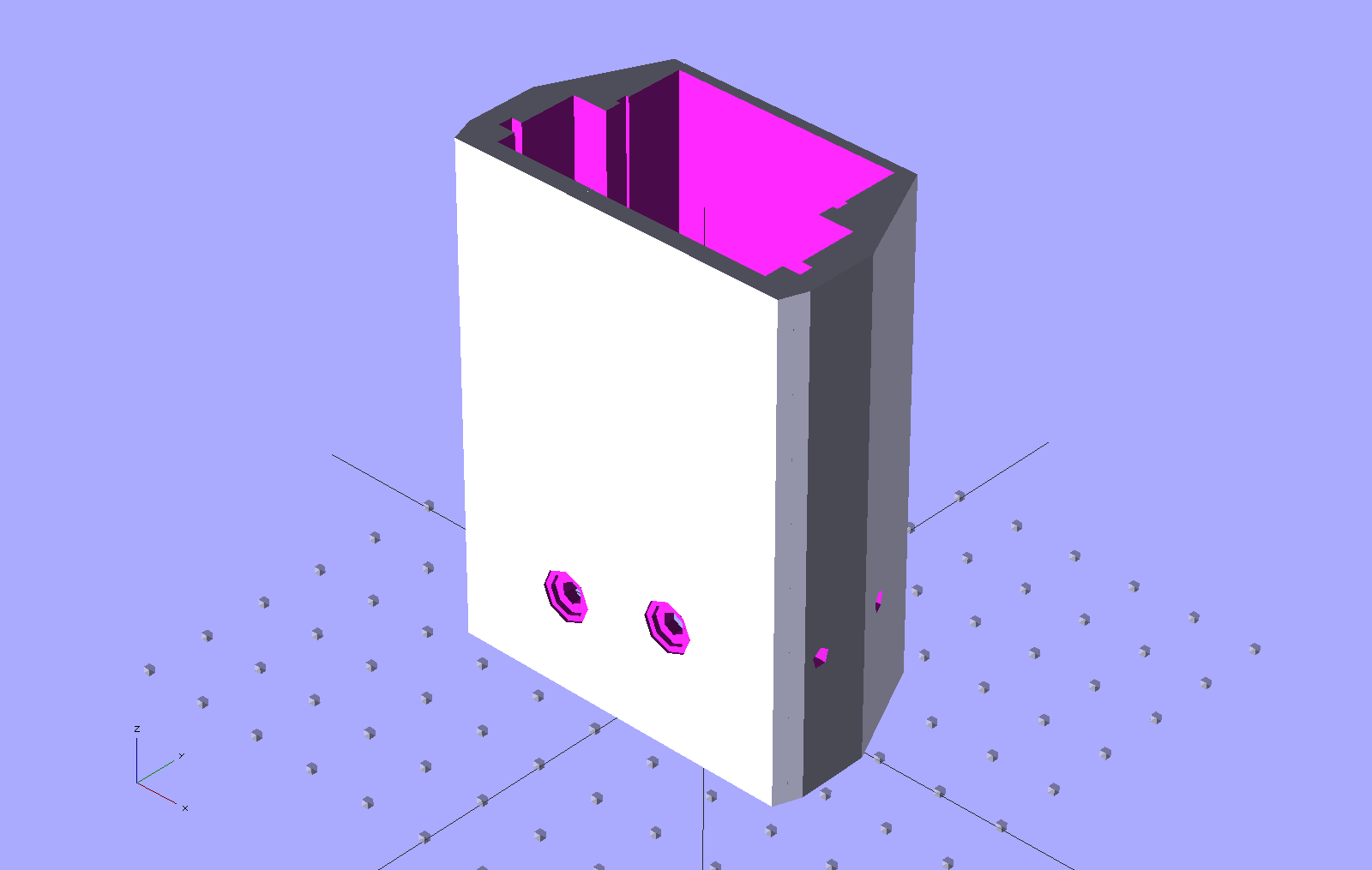
    HT-GPS Adapter Case - combined battery interface
    HT-GPS Adapter Case – combined battery interface

    The battery plate has a 0.1 mm extension into the case to avoid problems from objects with coincident planes. Unfortunately, however, that means the intersection between the base plate and the shell forms a line with three planes extending from it: the two outside walls (which are co-planar) and the plate extension inside the case. Skeinforge sometimes complains mightily about that, despite my having applied a union() to fuse the plate with the case: obviously I don’t quite understand how union() works.

    I think the battery contact holes will come out close enough to being right; they all have points on the top edge to reduce the overhang problem.

    One gotcha: the actual metallic contact studs for the battery. The contacts for the ICOM IC-Z1A case came from carefully shaped brass screws secured by nuts above the PCB and that’s what I’ve been designing around for this case. Unfortunately, the PCB must slide in before installing the studs, which means reaching into the depths of the case, with all the wiring in the way, to turn those nuts. Fortunately, the PCB has plenty of clearance in that direction, but … it’ll be awkward at best.

    The studs also need a slot / socket / dingus to prevent rotation while tightening the nuts; right now the contact plate is circular-ish, but maybe I should rethink that.
  • KG-UV3D GPS+Voice: Battery Pack Alignment Lugs

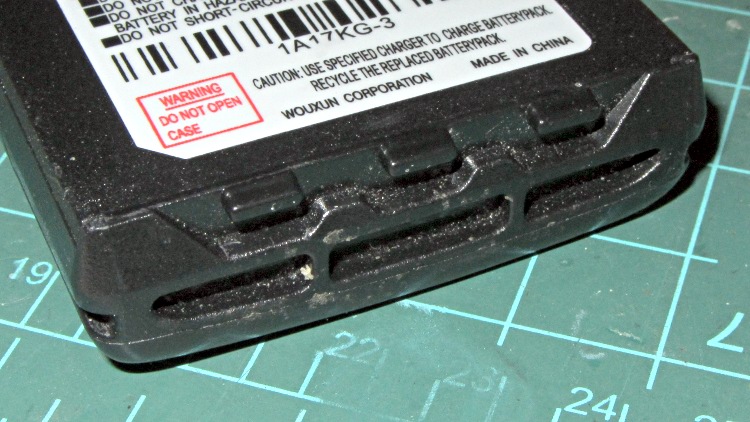
    The bottom end of Wouxun KG-UV3D battery packs have an intricate set of lugs and ramps:

    Wouxun KG-UV3D - battery base
    Wouxun KG-UV3D – battery base

    Those features mate with this set of holes and planes on the bottom of the radio:

    Wouxun KB-UV3D - base features
    Wouxun KB-UV3D – base features

    Which requires making something like this:

    HT-GPS Case - base plate
    HT-GPS Case – base plate

    Which attaches to the base of the GPS+Voice case:

    HT-GPS Adapter Case - Base view
    HT-GPS Adapter Case – Base view

    Which came out quite nicely:

    HT-GPS Case - base plate
    HT-GPS Case – base plate

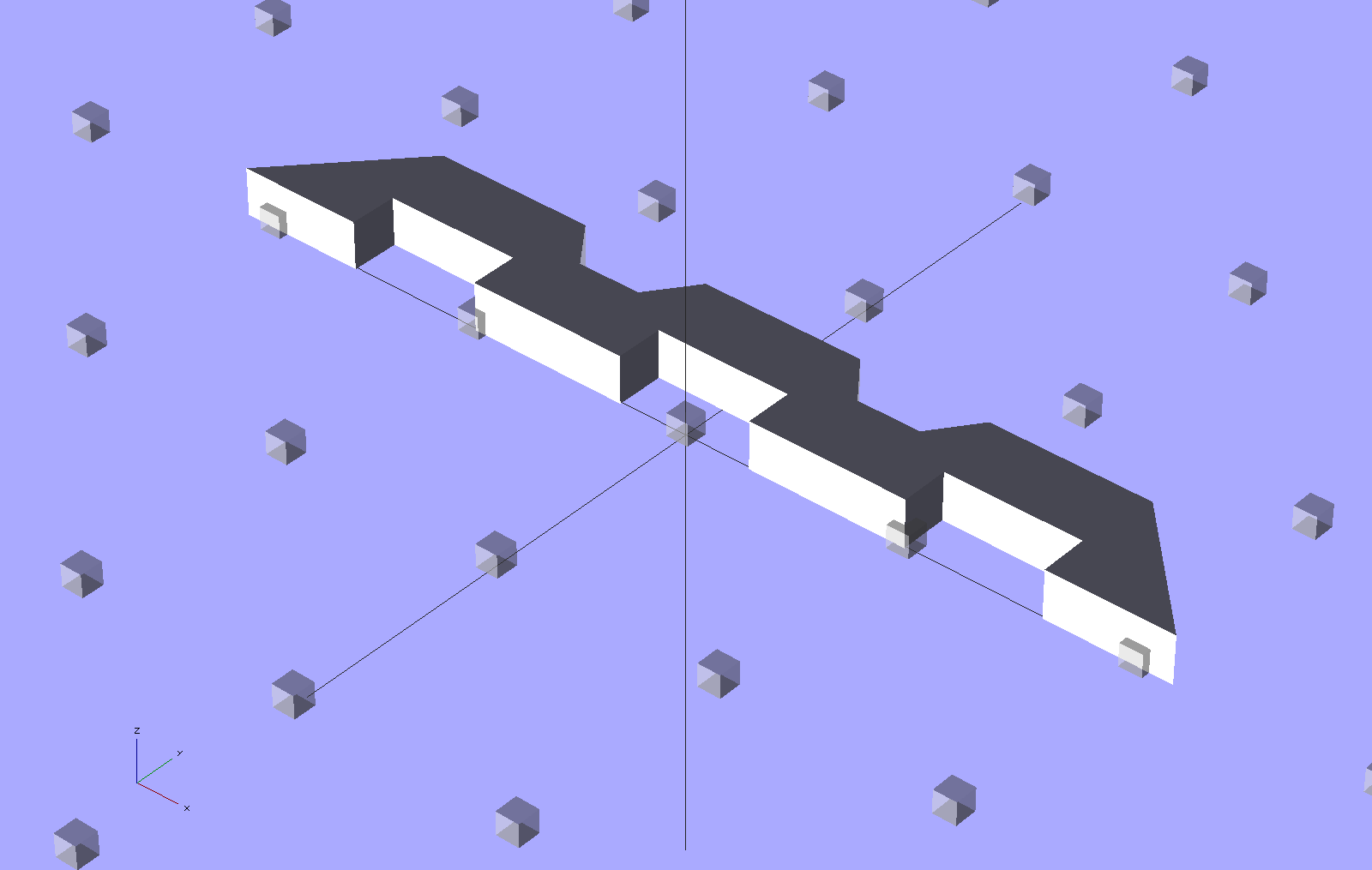
    The trick is to extrude a chunk of the main case shape, then subtract this angular doodad:

    HT-GPS Case - radio base shape
    HT-GPS Case – radio base shape

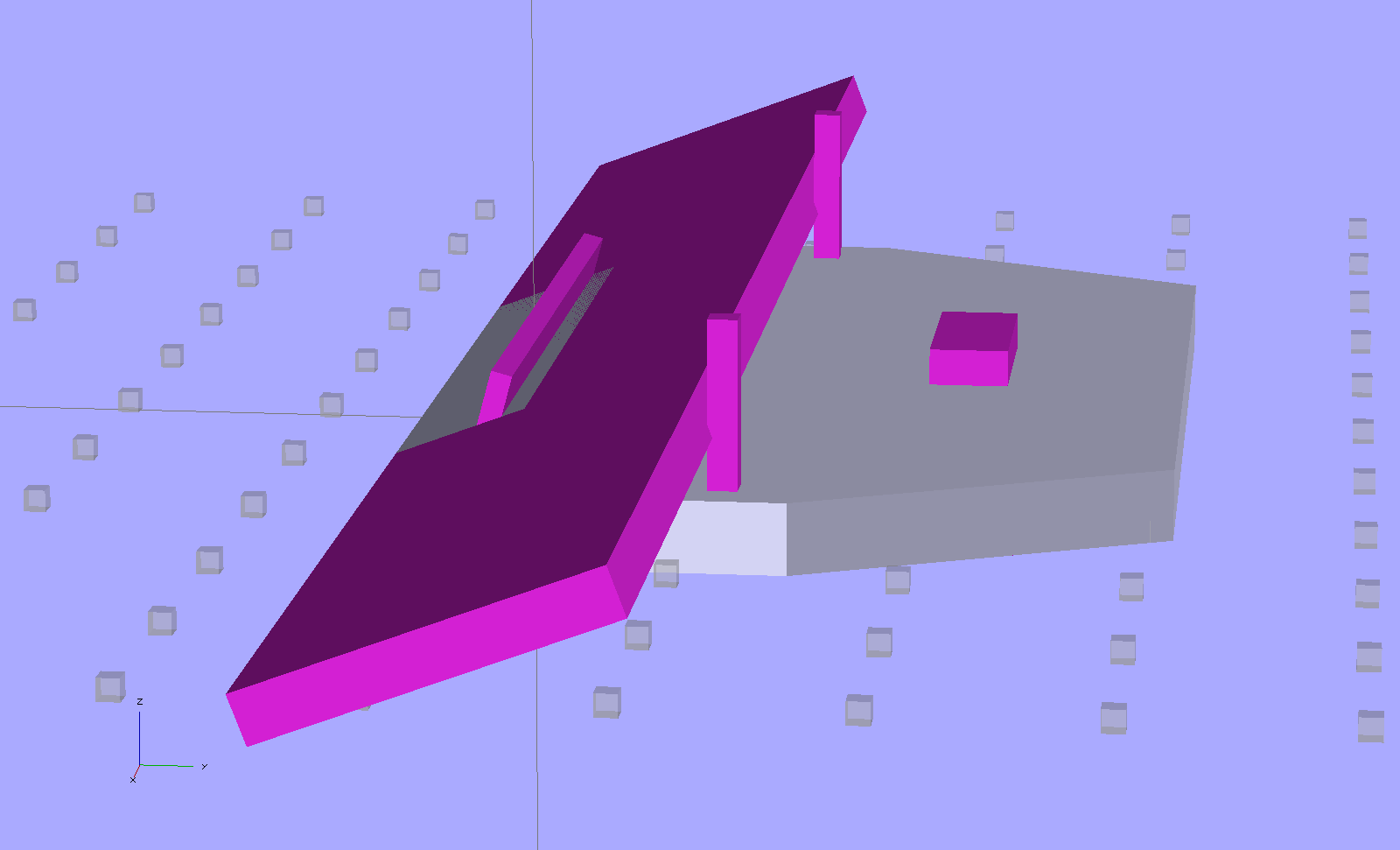
    Then slice off the angular parts to suit (the purple objects represent volumes that will be subtracted from the gray part):

    HT-GPS Case - base plate - construction
    HT-GPS Case – base plate – construction

    Most of the heavy lifting happened with that version, but this one fits better…

  • KG-UV3D GPS+Voice Interface: Battery Case Latch

    The Wouxun KG-UV3D radio has two lugs inside the battery compartment:

    Wouxun KG-UV3D - battery lugs
    Wouxun KG-UV3D – battery lugs

    The battery packs and DC adapters all have clever spring-steel latches that engage those lugs, with a pair of sliding buttons that depress the ends of the spring to release the pack:

    Wouxun KG-UV3D - battery pack latch
    Wouxun KG-UV3D – battery pack latch

    That mechanism may be cheap, straightforward, and easy to build in mass production, but I can’t figure out how to duplicate it for a case to house the GPS+Voice interface circuitry. That box had the dual disadvantages of being plug-ugly and not locking to the radio, but it did help establish some key dimensions, which is not to be sniffed at.

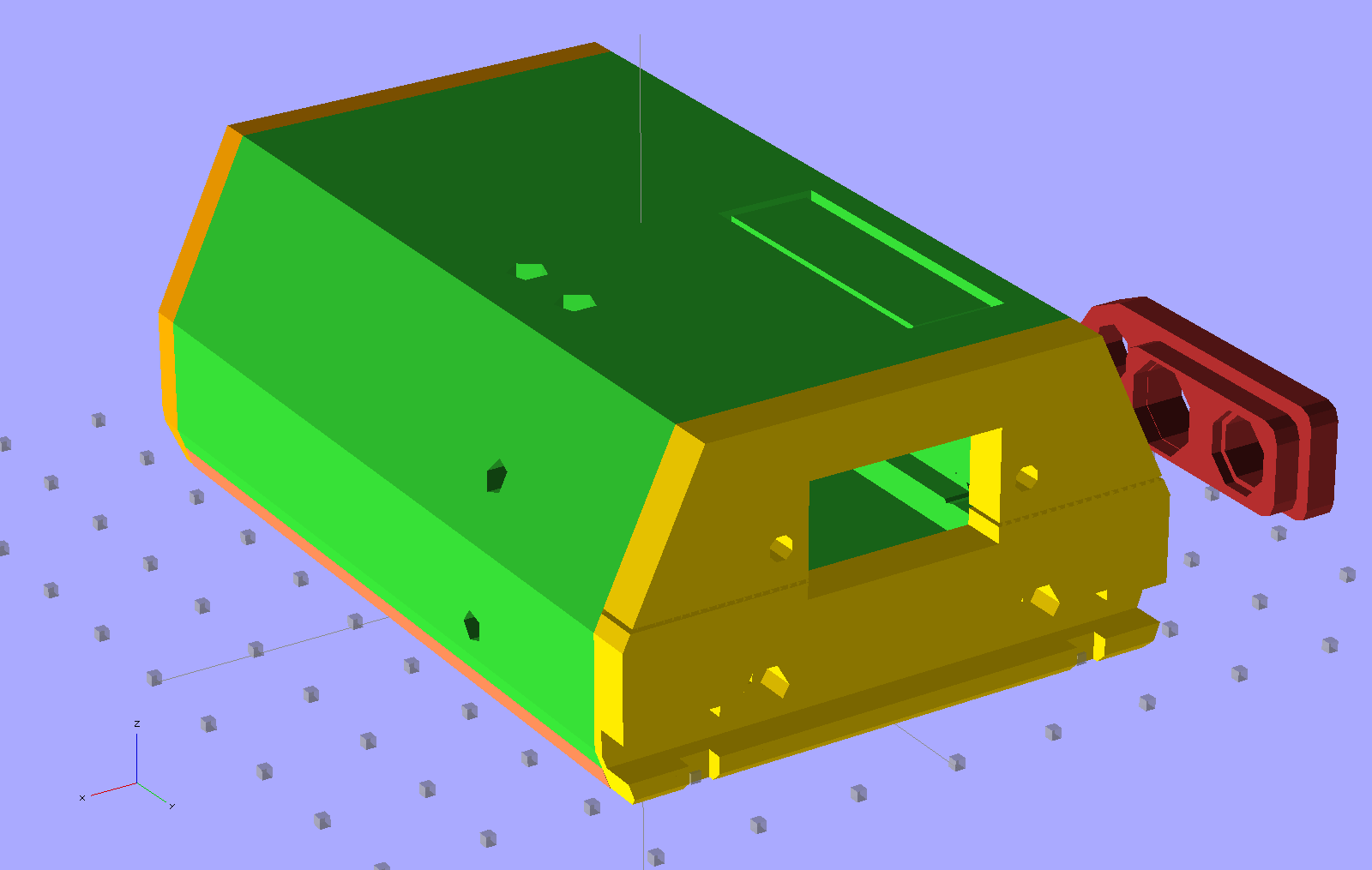
    A bit of heads-down effort produced this not-so-hideous printable case:

    HT-GPS Adapter Case - Overview
    HT-GPS Adapter Case – Overview

    The rectangle on the top is a built-in support structure for what will be a window over the four LEDs on the Byonics TinyTrak3+ board. The two holes on the top allow screwdriver access to the TT3 trimpots, although they might not be necessary. The four holes (two visible) along the sides fit 4-40 setscrews that lock the PCBs into slots along the inside of the main case body. The red doodad off to the far side is that plug alignment block for the radio.

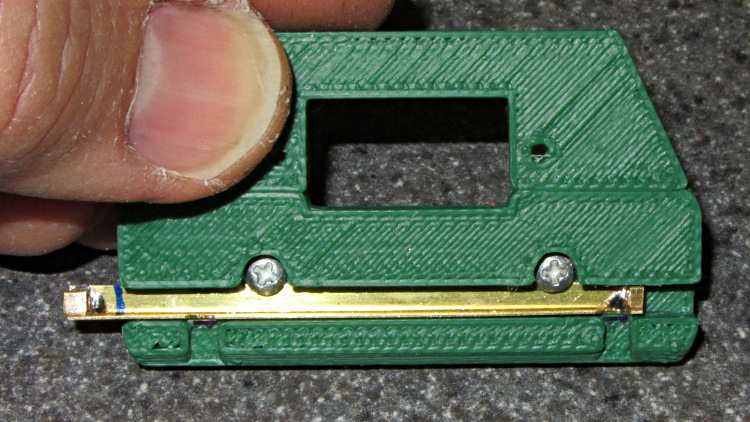
    The yellow latch plate on the end engages the lugs with a bar sliding in a slot, which looks like this when it’s locked:

    HT-GPS Case Latch - locked
    HT-GPS Case Latch – locked

    A view from the top side shows the notches that release the lugs:

    HT-GPS Case Latch - detail
    HT-GPS Case Latch – detail

    In the unlocked position the notches and lug slots line up:

    HT-GPS Case Latch - open
    HT-GPS Case Latch – open

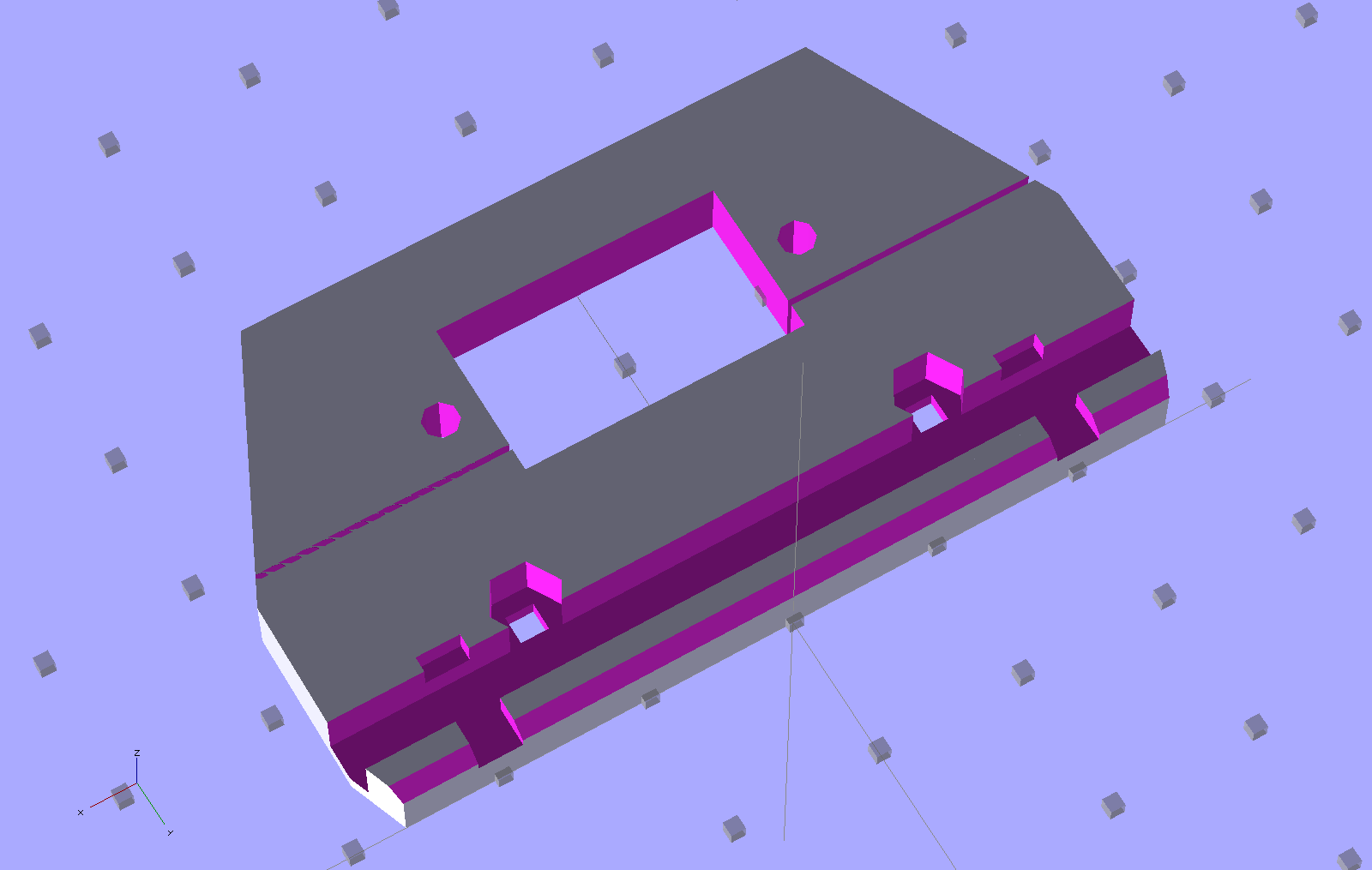
    The solid model shows the plastic structure, which is slightly improved from the pictures:

    HT-GPS Case - latch and connector plate
    HT-GPS Case – latch and connector plate

    The big hole fits around the TinyTrak3+ serial connector to the GPS receiver. The slot across the hole splits the plate so it can fit around the already-soldered connector.

    The latch bar consists of a L-shaped brass angle (from the Big Bag o’ Cutoffs) with two snippets of square brass tube soldered to the ends:

    HT-GPS Case Latch - bar detail
    HT-GPS Case Latch – bar detail

    I cut the angle to length with a Dremel abrasive wheel, soldered two brass tubes, sliced them off with a Dremel cutoff saw, roughed out the slots with the abrasive wheel, and applied some tool-and-die maker’s (aka needle) files to smooth things out. Yup, had to clamp each soldered joint in a toolmaker’s vise to keep from melting it during the nastier parts of that process. A pair of 2-56 screws, with nuts behind the plate, hold the bar in place and provide some friction.

    Moving the latch bar requires poking the end with a sharp object (captured by the brass tubing), because I couldn’t figure out how to put finger-friendly buttons on it. This would be completely unusable for an actual battery, but should work OK for a permanently mounted GPS interface.

    Conspicuous by their absence:

    • Holes in the case for the cables (may need more surface area on the ends)
    • Any way to fasten the latch plate to the main case (I may just drill holes for small pins)
    • Provision for the TT3 mode switch
    • A cover for the exposed radio chassis above the latch lugs (may be a separate shell glued to the latch plate)

    The whole thing needs a full-up test to verify the serial connector clears the back of the case…

  • Schwalbe Marathon vs. Brown Glass: Flat Tire

    Having suffered flat tires due to the tire liner chafing the tube, I’ve been running the Tour Easy without a rear tire liner since last year. Worked fine, up until the steering went mushy on a recent ride:

    Brown glass chip - in tire
    Brown glass chip – in tire

    Ever notice how a rear flat means you can’t steer and a front flat means you can’t pedal? Works that way on our recumbents, too. Weird.

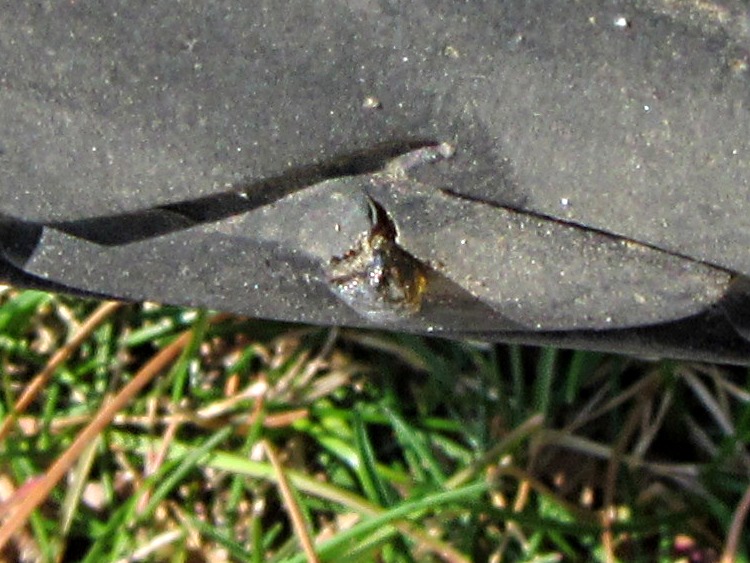
    The chip probably came from a beer bottle tossed out a car window, those being the canonical source of brown glass on the road. That razor edge punched right through the Kevlar belt in the Schwalbe Marathon tire and just barely penetrated the tube:

    Brown glass chip - detail
    Brown glass chip – detail

    Fortunately, I discovered all that in a nice grassy area, patched the tube, fired a pair of CO2 capsules into the thing, and rode another 20 miles around the block on a lovely day. Unfortunately, I managed to pinch the tube while installing it, producing a very slow leak that flatted the tire by the next morning.

    While repairing that flat in the comfort & convenience of the Basement Laboratory Repair Wing, I installed a tire liner with two strips of silicone tape over the ends to see if that reduces the abrasion:

    Silicone tape on tire liner
    Silicone tape on tire liner

    Silicone tape doesn’t adhere to anything other than itself, so I added two duct tape snippets to hold them in position while I buttoned up the tire. And, yes, I left the transparent plastic cover tape in place, in the hope that it can’t do any harm.

    Perhaps the inevitable slow leak will produce a flat in the garage, not on the road…

  • GPS+Voice Interface for Wouxun KG-UV3D: Brassboard

    After measuring & fiddling around with all those capacitors, the rest of the board went together fairly easily:

    GPS-HT Wouxun interface - brassboard
    GPS-HT Wouxun interface – brassboard

    It’s difficult to test from the Basement Laboratory, although the tones and audio levels sound about right.

    The next step: conjure up a box. That shape has nothing to recommend it, so I’m doodling an extrusion-like shell with endcaps that should work better and look nicer… but that’s behind some other stuff that must happen first.

  • BOB Yak Trailer: Replacement Pin Straps

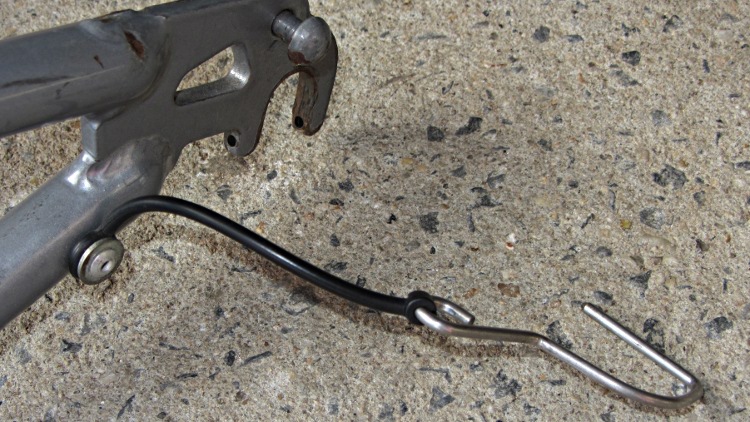
    My old BOB Yak trailer mounts to the bike axle with stainless steel grenade pins, which works fine. After all these years, alas, the rubber straps securing the pins to the frame have rotted away. The original straps are nicely molded affairs:

    BOB Yak - original pin strap
    BOB Yak – original pin strap

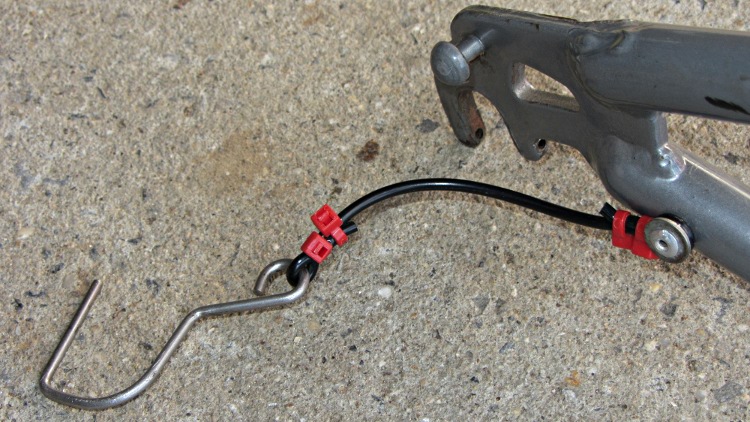
    I snipped a large O-ring, deployed four small cable ties, and this ought to last for another decade:

    BOB Yak - new pin strap
    BOB Yak – new pin strap

    The strap in the first picture hadn’t quite broken, but the rubber was cracked and ready to snap. So I made a preemptive strike…

    And, yes, one can buy replacement pins and straps, but where’s the fun in that?

  • APRS Packet Routing

    This might be another personal best in a different category:

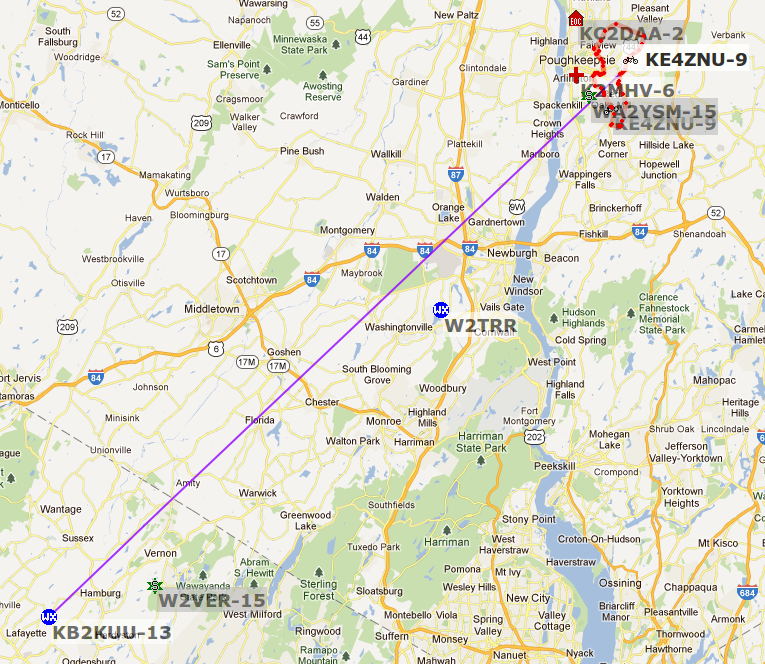
    KE4ZNU-9 APRS to KB2KUU-13 - Lafayette NJ
    KE4ZNU-9 APRS to KB2KUU-13 – Lafayette NJ

    The path from KE4ZNU-9 (on my bike in Pleasant Valley) to KB2KUU-13 near Lafayette, NJ, spans a bit over 90 km / 55 miles, which isn’t bad for a 5 W (that’s optimistic) hand-held radio through a dual-band mobile antenna bolted to the seat frame with my head much too close to the base. The topography lay in my favor, though: Pleasant Valley sits near the top of the Wappingers Creek watershed (admittedly, barely 200 feet above sea level) and the valleys run southwest-to-northeast all along this part of the East Coast. The KB2KUU-13 antenna may be only 20 feet above average terrain, but that puts it 600 feet above sea level with a commanding view to the northeast.

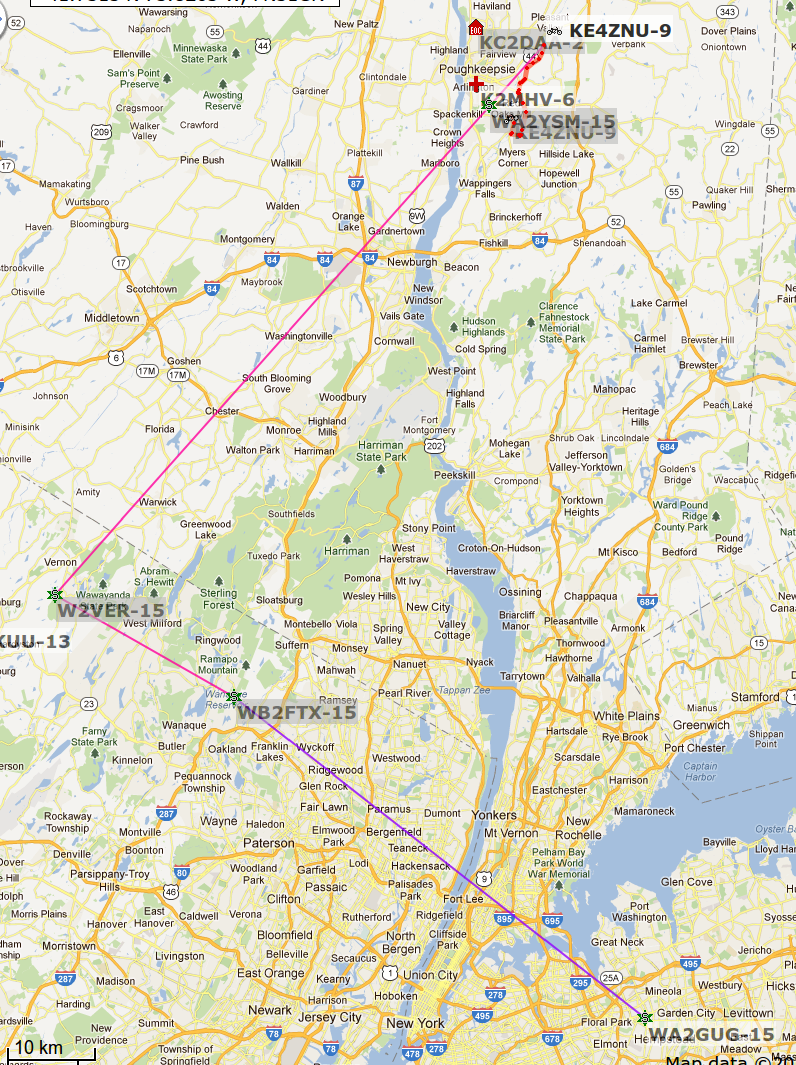
    Another packet sent a few minutes later took a much longer path to an APRS iGate:

    KE4ZNU-9 APRS to WA2GUG-15 - Long Island - 2012-02-01
    KE4ZNU-9 APRS to WA2GUG-15 – Long Island – 2012-02-01

    The first hop covered about 80 km / 50 miles to W2VER-15. That antenna is 320 feet above average terrain, but that’s with a 1400 foot base: a ridge near Hamburg Mountain. The next hop is about 20 miles to WB2FTZ-15, then 60 km / 40 miles across the plains and out to WA2GUG-15 near Hempstead on Long Island.

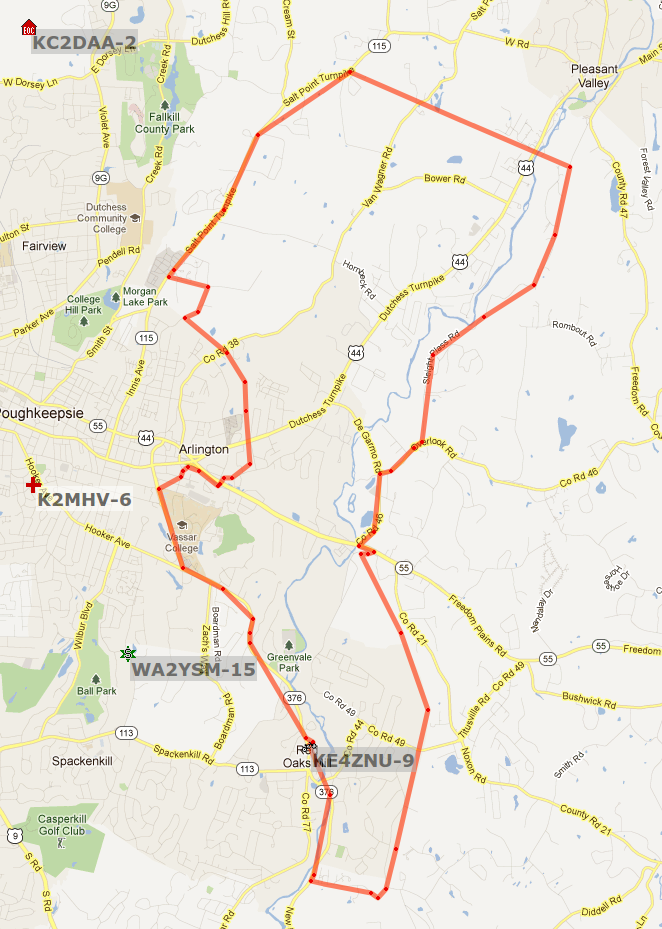
    Normally, of course, a closer digipeater snags packets from my bike; most go through WA2YSM-15 or KC2DAA-2 to K2MHV-6 and probably don’t clog up the entire eastern seaboard. It’s hard to tell, though, because the APRS database records only the first successful capture of a given packet.

    The whole bike ride looked like this:

    KE4ZNU-9 trip - 2012-02-01
    KE4ZNU-9 trip – 2012-02-01

    The APRS spots missed the sprint along West Road into Pleasant Valley, but you get the general idea: 22 miles, 15 mph average speed, temperature around 58 °F, a fine day for a ride!