The Smell of Molten Projects in the Morning

Ed Nisley's Blog: Shop notes, electronics, firmware, machinery, 3D printing, laser cuttery, and curiosities. Contents: 100% human thinking, 0% AI slop.

Category: Recumbent Bicycling

Cruisin’ the streets

  • Another CatEye Cadence Sensor Magnet Mount

    Another CatEye Cadence Sensor Magnet Mount

    The stock Bafang pedal cranks measure 170 mm on centers between the bottom bracket shaft and the pedal spindle. Having grown accustomed to the 165 mm cranks from Mary’s bike, I got a set of cheap 160 mm cranks to feel if there was any difference:

    Bafang vs ProWheel crank forging
    Bafang vs ProWheel crank forging

    The bottom crank has a quick-and-dirty adaptation of the magnet mount for the Lekkie Buzz Bar offset cranks, but, of course, the 160 mm cranks have an entirely different profile. They are also heavier and more crudely forged, which is about what you’d (well, I’d) expect.

    Also unlike the Lekkie cranks, neither the Bafang nor the Prowheel cranks correct the Bafang motor’s offset, so I’m using the left-side Kneesaver from the old cranks, which turns out to be close enough.

    Modeling the profile started with an infrequently used contour gauge:

    CatEye Magnet holder - ProWheel crank profile tests
    CatEye Magnet holder – ProWheel crank profile tests

    The black 3D printed mount in the upper right fit the Bafang crank and appears in the top photo.

    Transferring the new contour to paper and applying the Chord Equation got the radius of the not-quite circle:
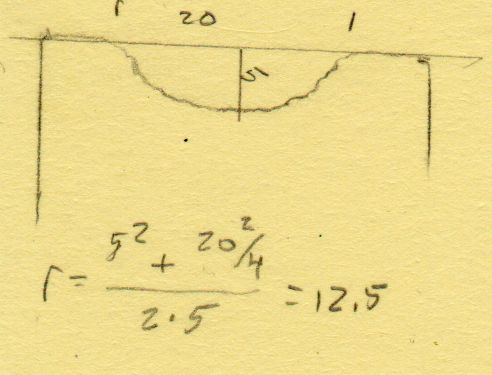
    CatEye magnet crank adapter - chord radius
    CatEye magnet crank adapter – chord radius

    Knowing the size of the magnet and the radius of the circle, drawing the profile in LightBurn was straightforward:

    CatEye magnet crank adapter - framed
    CatEye magnet crank adapter – framed

    Applying the laser cutter to MDF produced the two successive test-fit pieces in the picture while figuring out how much stickout the magnet needed beyond the inner crank face to reach the sensor. LightBurn’s Node Editor simplified adjusting the size: drag-select a group of nodes, then move them in precise increments with the arrow keys.

    Export the profile from LightBurn as an SVG file, import it into OpenSCAD, and extrude it to the proper length:

    module CatEyeMagnet() {
    
    Magnet = [19.0,14.0,8.5];
    
    translate([0,75,0])
        linear_extrude(height=Magnet.y)
            import("CatEye magnet crank adapter.svg");
    
    }
    

    The translate puts the profile approximately at the XY origin. The center = true option moves the profile elsewhere on the XY plane, but does not center it, which may have something to do with the viewport used by LightBurn, the OpenSCAD version I’m using, or something else entirely.

    In any event, the 3D printed mount fits the crank and puts the magnet where it will do the most good:

    CatEye Magnet holder - ProWheel crank - installed
    CatEye Magnet holder – ProWheel crank – installed

    What looks like an obvious curvature mismatch comes from having the tape edge not quite squashed against the crank.

    I should poke a channel through it for a cable tie around the crank, but that 3M foam tape is really good stuff and hasn’t failed me yet.
  • Bafang DPC-18 Button Mollyguard

    Bafang DPC-18 Button Mollyguard

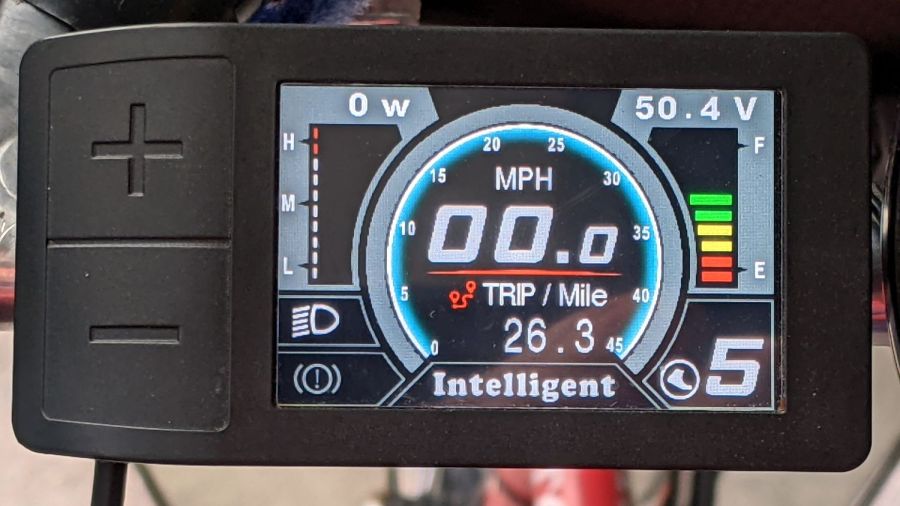
    I got the Bafang DPC-18 display for my Tour Easy specifically to put the control buttons on the handgrip, rather than the buttons on the left of the 500C display on Mary’s bike:

    Tour Easy Bafang - display 26 mi
    Tour Easy Bafang – display 26 mi

    The first pass put them on the left handgrip, just behind the thumb throttle:

    Bafang DPC-18 control buttons - initial mount
    Bafang DPC-18 control buttons – initial mount

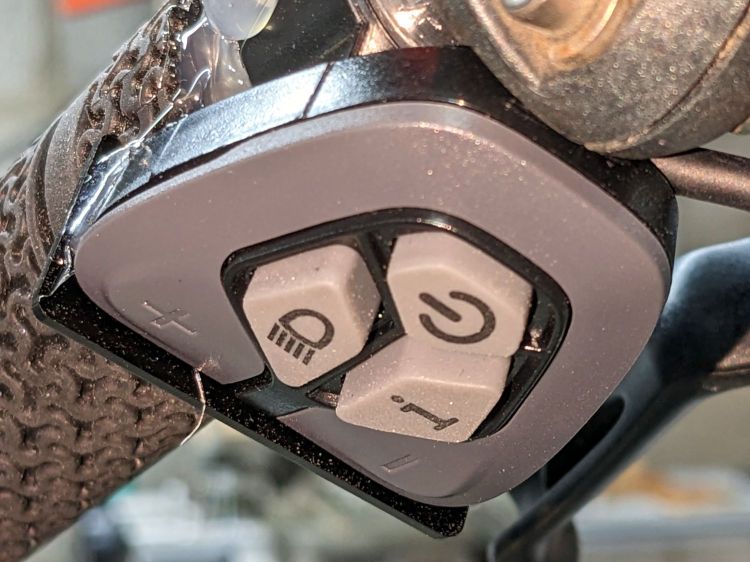
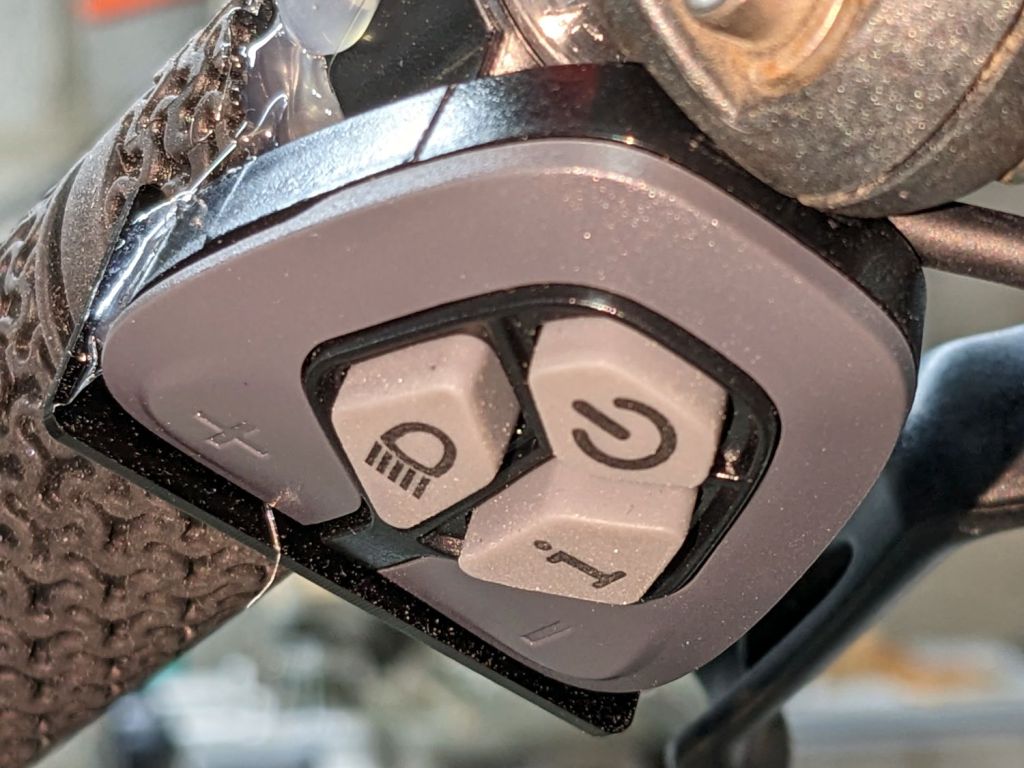
    This turned out to be a catastrophically bad position, because the “buttons” extend all the way to the edge of the mount and trigger when pressed a fraction of a millimeter: the dark line visible under the light gray top is the entire range of motion.

    My resting hand position on the grip put the edge of my gloved index finger along the buttons, where it would inexorably nudge the + button until I was riding in assist level 9 (Rocket Sled) mode.

    One ride was enough to convince me those buttons needed a Mollyguard:

    PXL_20230321_233854755 - Bafang DPC-18 button Mollyguard - rear view
    PXL_20230321_233854755 – Bafang DPC-18 button Mollyguard – rear view

    It is, of course, a laser-cut piece of 1.5 mil black acrylic, held in place with hot-melt glue. Because the button housing isn’t mounted symmetrically on the handlebar, I cut a few paper templates before getting the position and size right.
    A view from the front shows the lip sticking up over the buttons:

    Bafang DPC-18 button Mollyguard - front view
    Bafang DPC-18 button Mollyguard – front view

    FWIW, the asymmetric mount put the buttons on the rider’s side of the flat handlebars found on contemporary upright city-rider style bikes. It makes perfect sense in that context, but didn’t help me in the least.
    With the Mollyguard in place, I rotated the whole button assembly around the handgrip to allow pushing the buttons with my thumb in its natural position.

    Now the assist level changes only when I want it to!

  • Bafang Motor Connector Gasket Replacement

    Bafang Motor Connector Gasket Replacement

    Reasonable people disagree as to the cause of the failure, but a replacement controller for the (new) Bafang motor I’m installing on my bike just arrived in the mail.

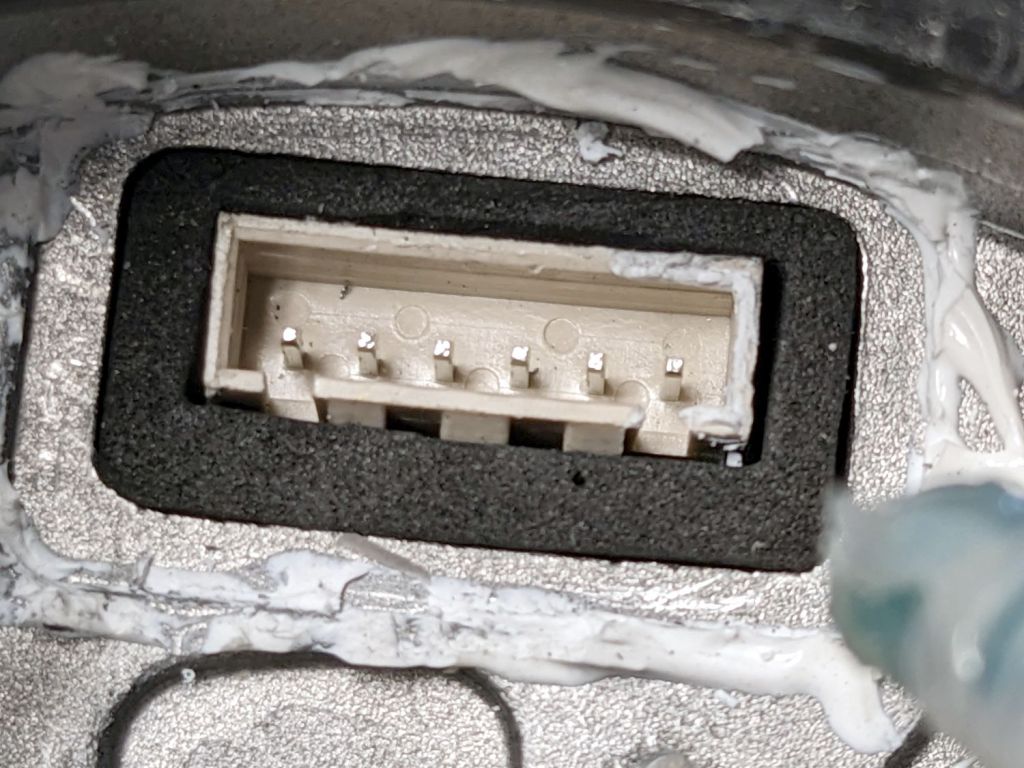
    Disassembling the motor is straightforward, except for the part where you must excavate an internal plug from the silicone snot gluing it into place, eventually revealing its socket:

    Bafang motor - interior gasket - connector
    Bafang motor – interior gasket – connector

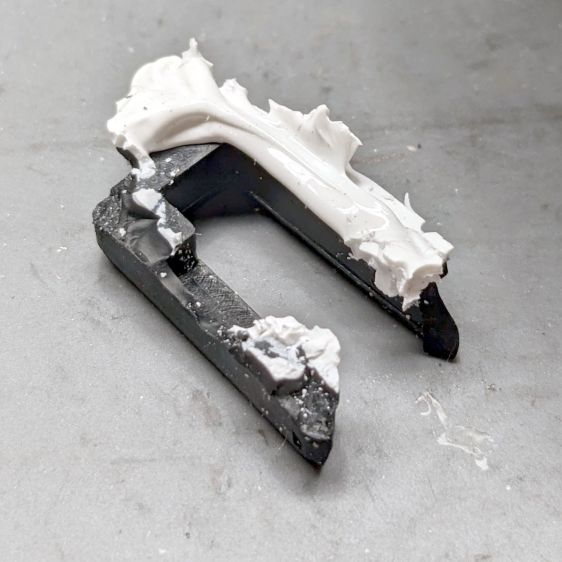
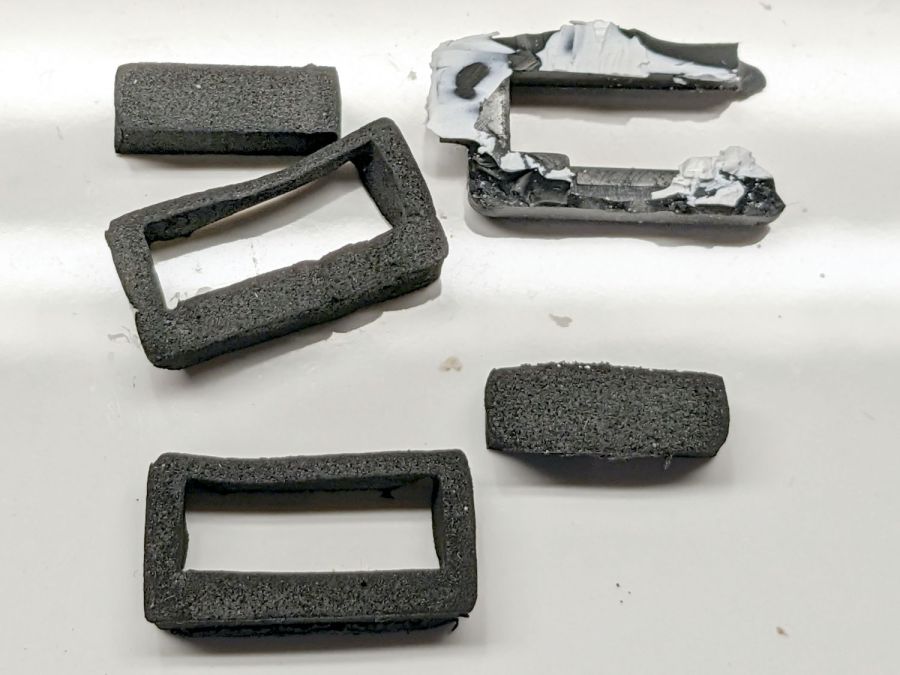
    Regrettably, there seems no way to do that without destroying the dense closed-cell gasket around the connector:

    Bafang motor - interior gasket - damaged original
    Bafang motor – interior gasket – damaged original

    Equally regrettable: a replacement gasket wasn’t included with the replacement controller. Although I don’t have any of the specific foam, some marginally less dense foam from the Big Box o’ Padding seemed suitable for laser cuttery:

    Bafang motor - interior gasket - iterations
    Bafang motor – interior gasket – iterations

    The upper left prototype suggested a slightly larger rear bar that produced the gasket in front, which fit snugly:

    Bafang motor - interior gasket - test fit
    Bafang motor – interior gasket – test fit

    It lacks the latch cutout, but the foam is squishy and I expect to never touch it again.

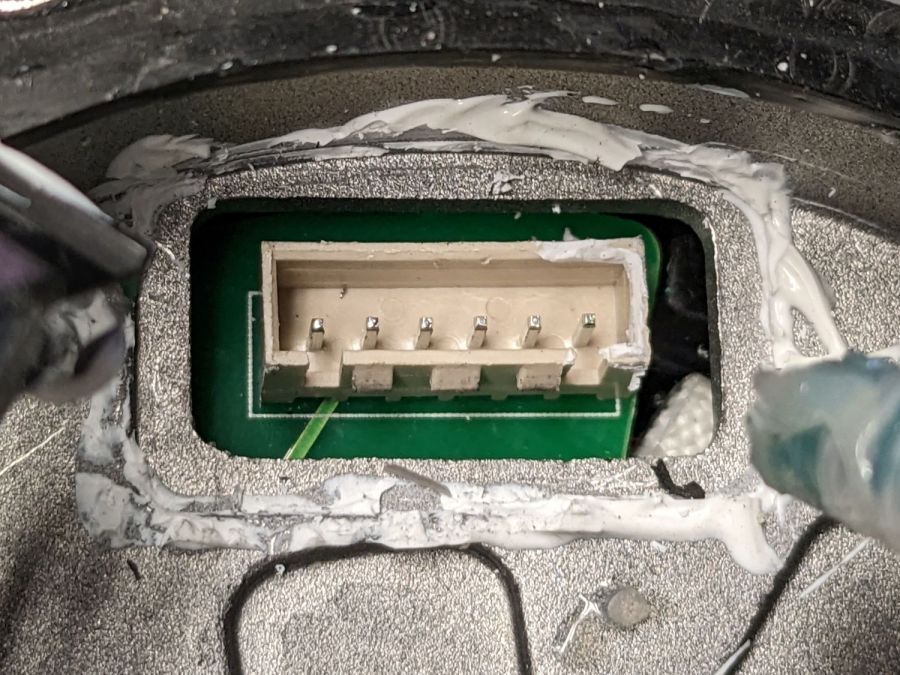
    A generous glob of hot melt glue holds everything in place:

    Bafang motor - interior gasket - replacement glued
    Bafang motor – interior gasket – replacement glued

    Although the usual Youtube videos show folks slathering RTV silicone caulk on these connectors, that’s a Very Bad Idea™, because RTV caulk releases acetic acid as it cures. That’s not a problem in the open-air siding-and-lumber environment the caulk was intended for, but sealing a glob of the stuff inside an enclosure will eventually corrode all of the electronics therein.

    Cutting intricate doodads has become trivially easy: if you can draw it, you can pretty much cut it, just like that:

    Bafang motor connector gasket - LB layout
    Bafang motor connector gasket – LB layout

    That was the easy part, anyway.

  • Bafang Triangle Plate Rework

    Bafang Triangle Plate Rework

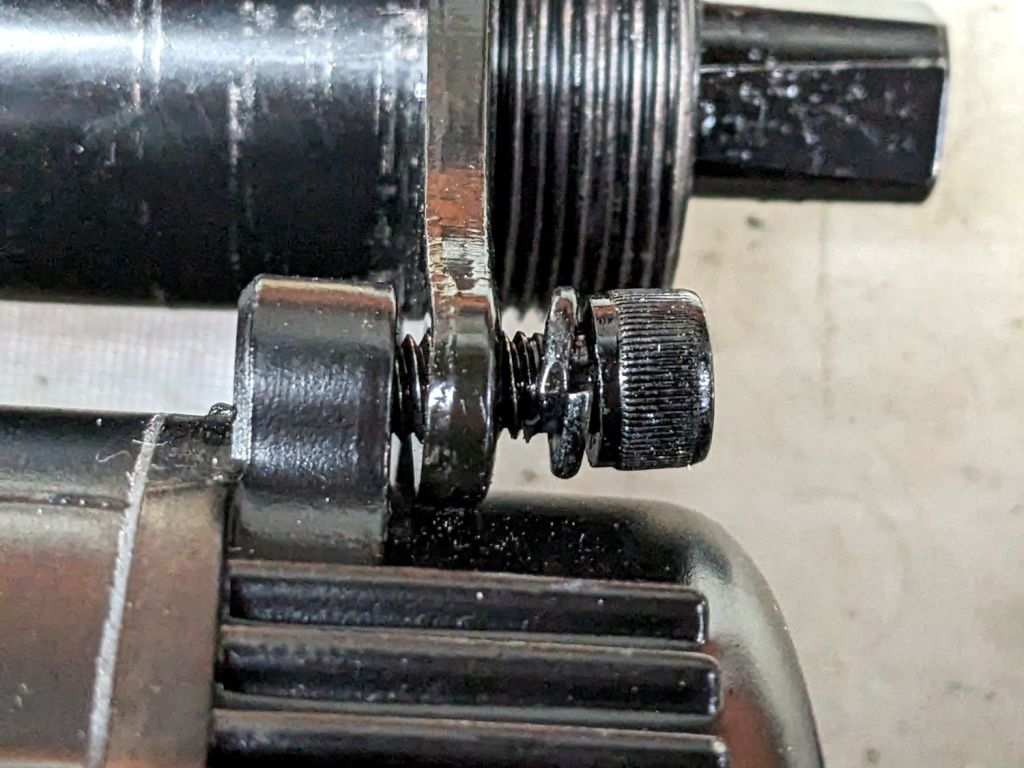
    The time has come to add a Bafang mid-drive motor to my Tour Easy recumbent, much like the one Mary has been using for the last two years. When I got to the point of installing the motor in the bottom bracket shell, this happened:

    Bafang Triangle Plate - jammed screw
    Bafang Triangle Plate – jammed screw

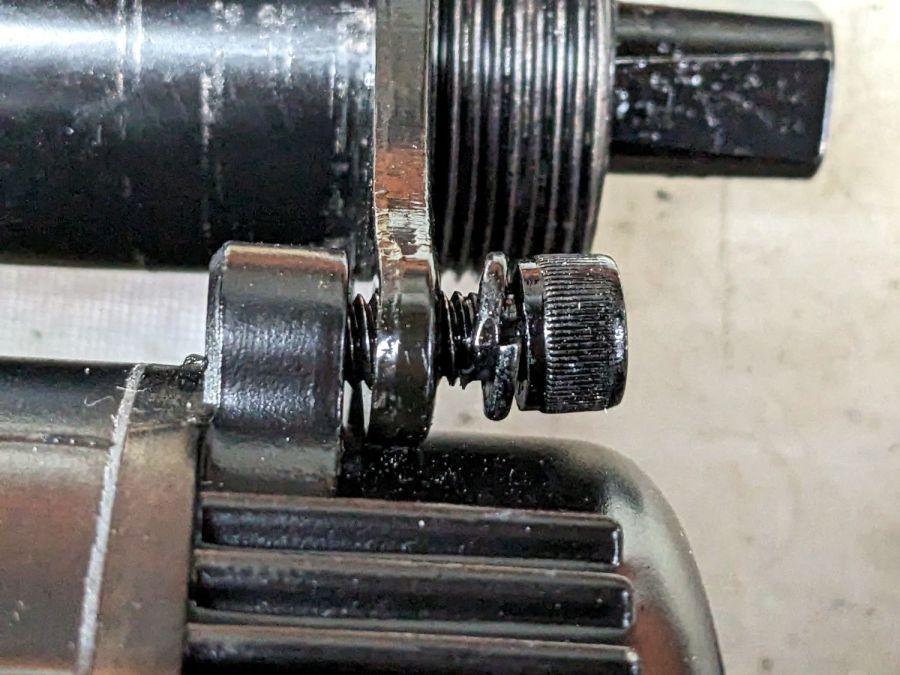
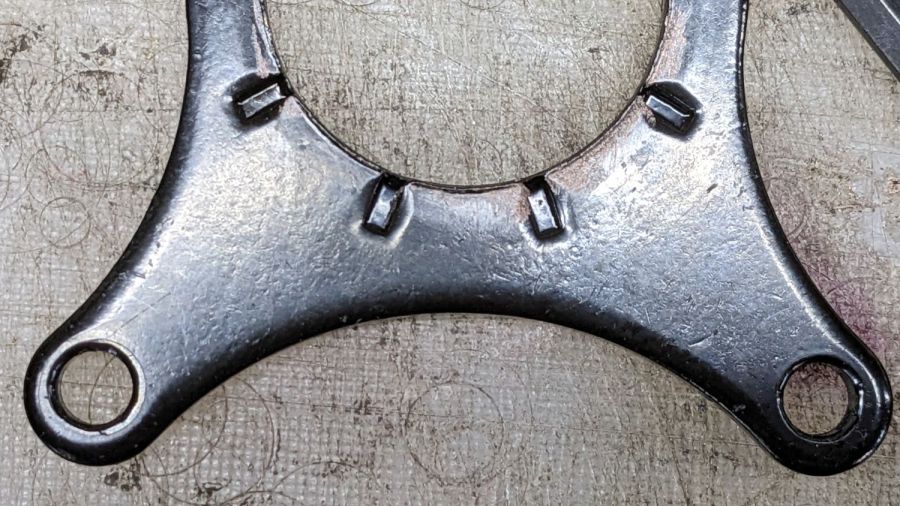
    It turns out the triangle plate has slightly misplaced bolt holes:

    Bafang Triangle Plate - misplaced bolt holes
    Bafang Triangle Plate – misplaced bolt holes

    If you look very carefully, you’ll see the holes sit just slightly above the midline of those ears. The additional fractional millimeter below the holes touches the motor end bell and prevents them from lining up with the tapped holes.

    Normally, you’d just hit the plate with a file and be done with it, but it’s ferociously hardened steel: a file bounces right off.

    I deployed a Dremel sanding drum above the ShopVac’s snout to catch the abrasive dust, eroded just enough steel to line up the holes, and everything now fits the way it should.

    Done!

  • The Stone

    The Stone

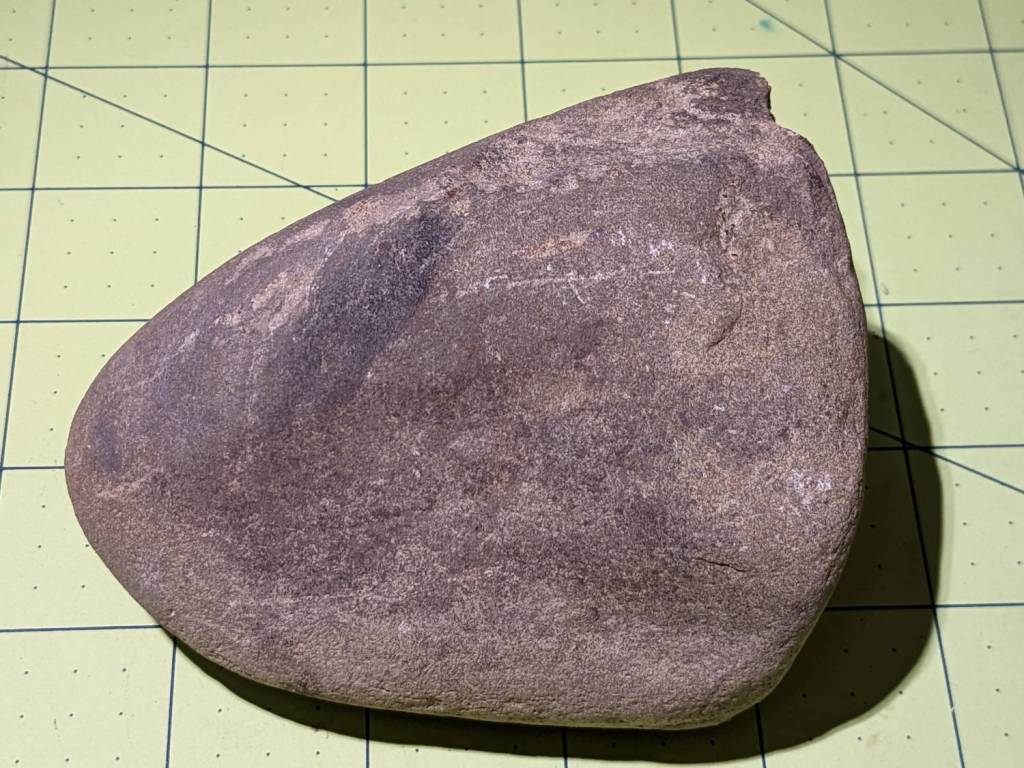
    Yeah, this is enough to knock your bike completely off course:

    The Stone - A
    The Stone – A

    The black smudge matches a scuff on the right sidewall of the front tire. I think I hit it in that orientation and it pivoted clockwise while lifting the bike and shoving the tire to the left.

    Another look from what was likely the right side of the shoulder:

    The Stone - B
    The Stone – B

    I’ll give it a decent burial out back … and be glad our roles aren’t reversed!

  • Stone Cold Swerve

    Stone Cold Swerve

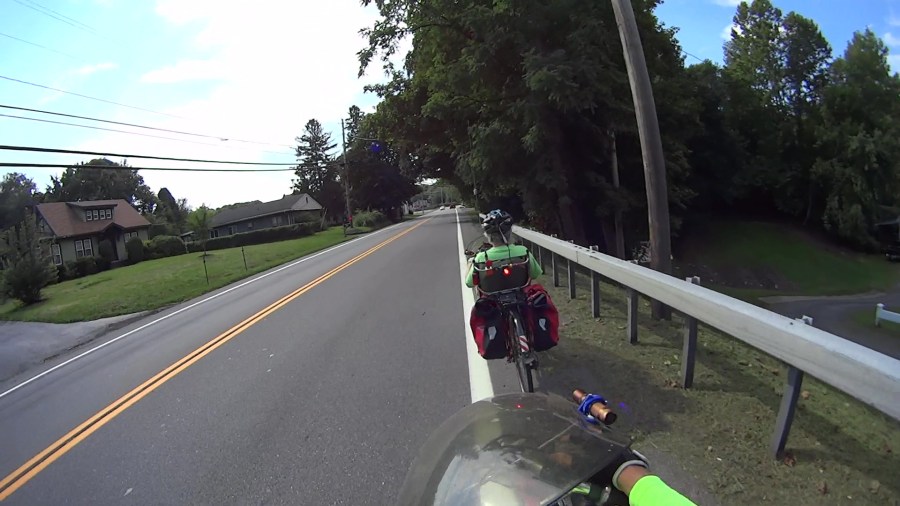
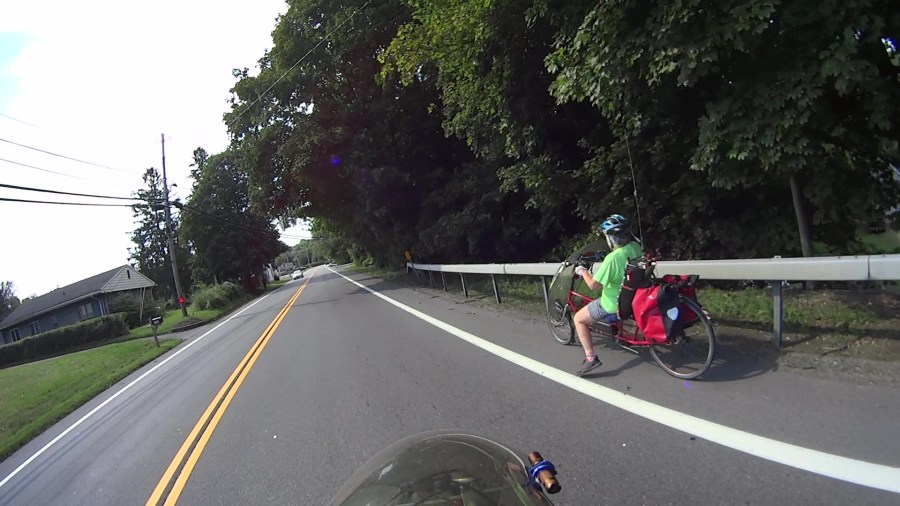
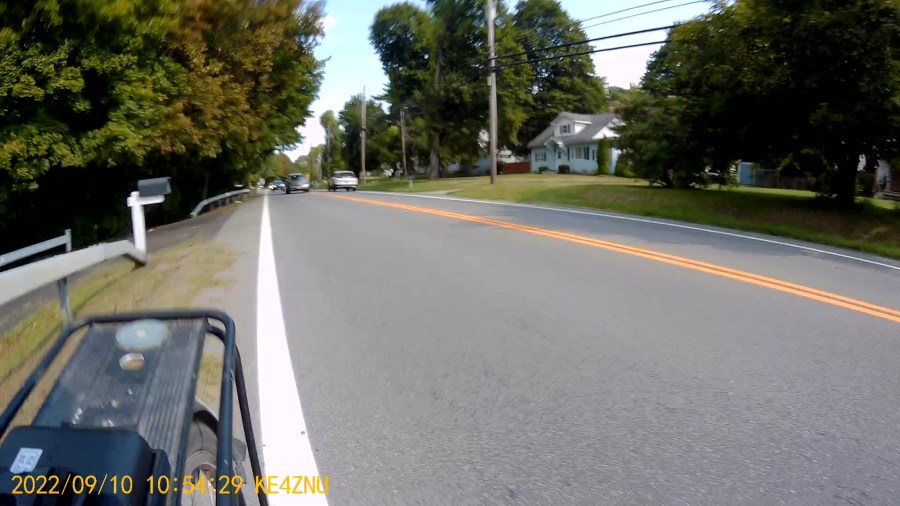
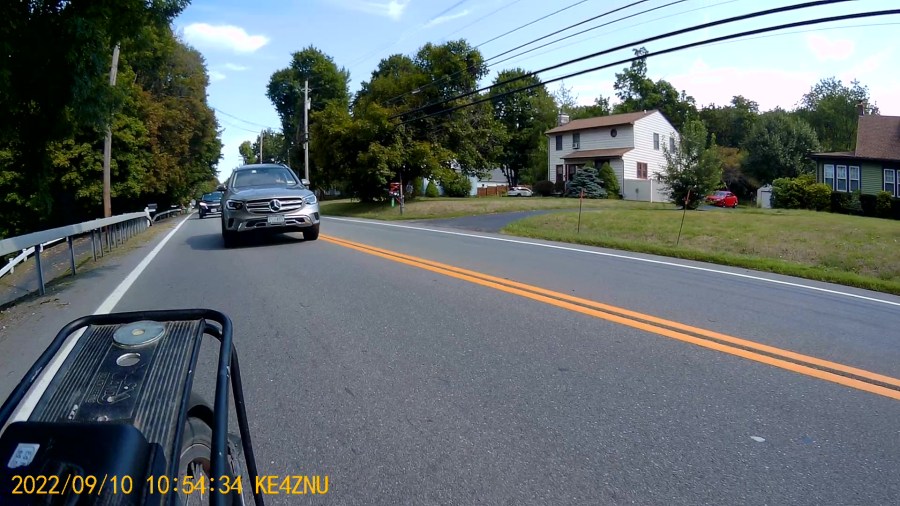
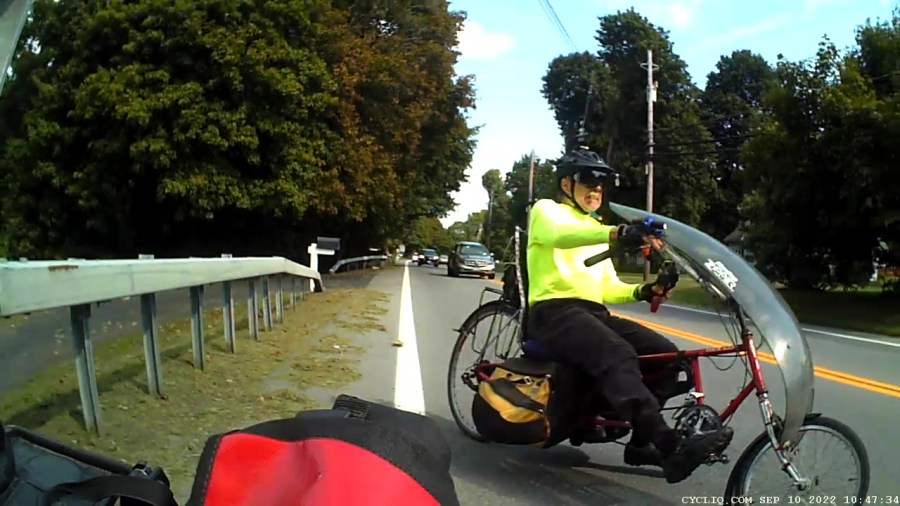
    We’re southbound on Rt 376, ticking along at about 15 mph, with fresh string-trimmer debris littering the shoulder:

    T – 50 ms

    Did you notice the rock? I didn’t.

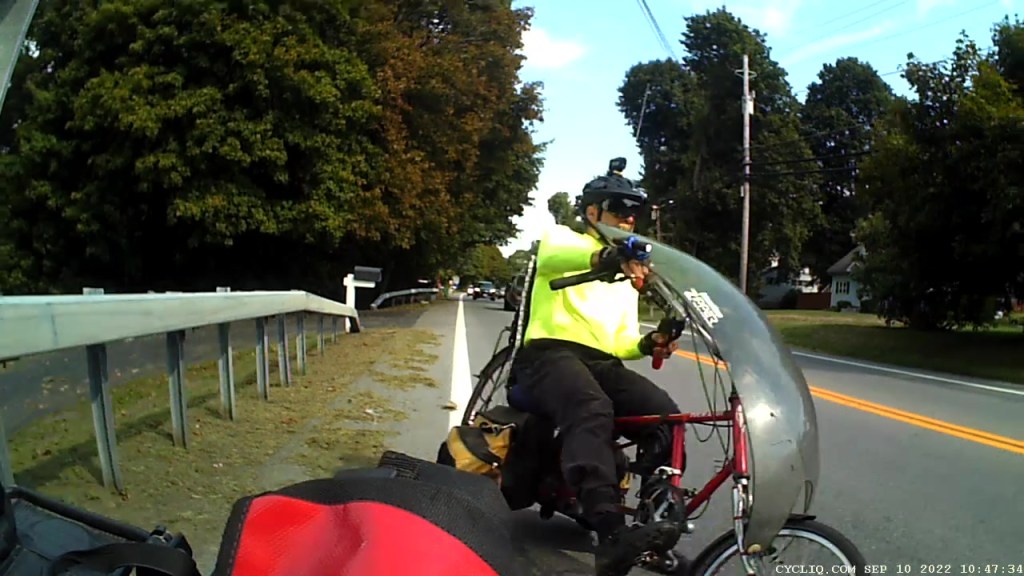
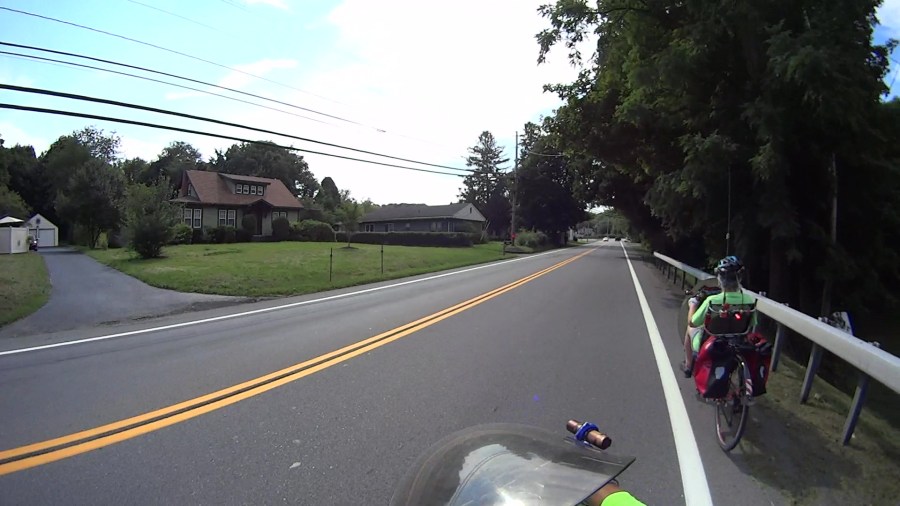
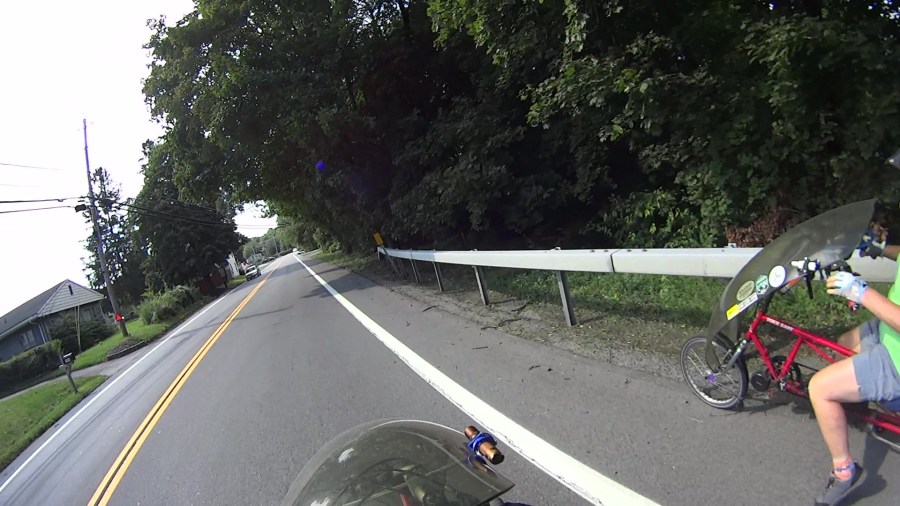
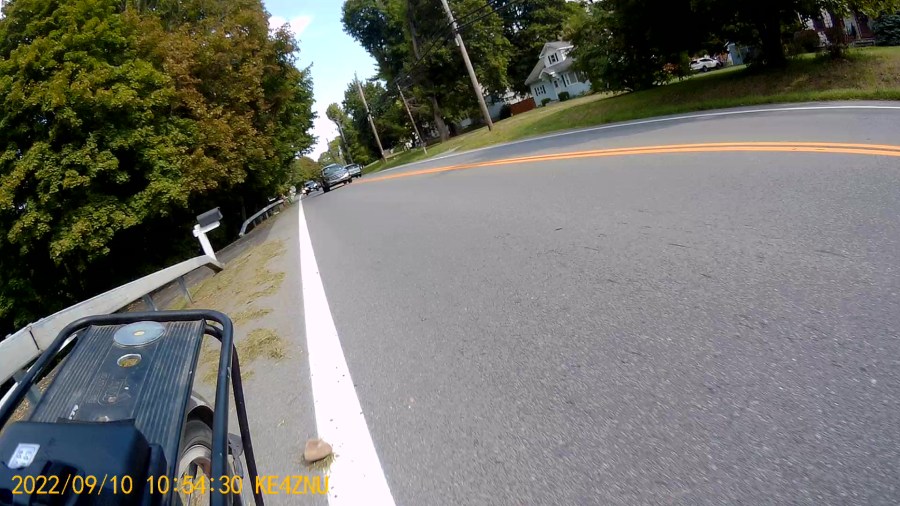
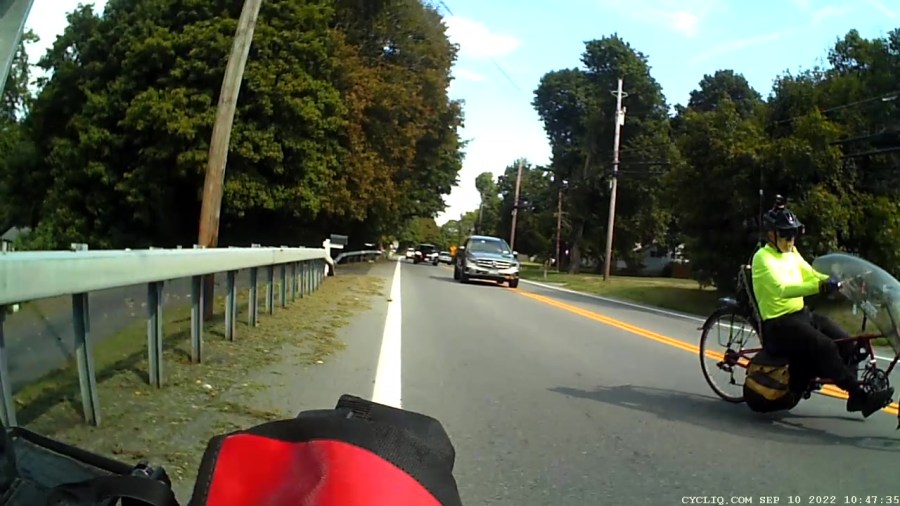
    The fairing ripples as my front tire hits the left side of the rock:

    T = 0

    I have no memory of the next two seconds.

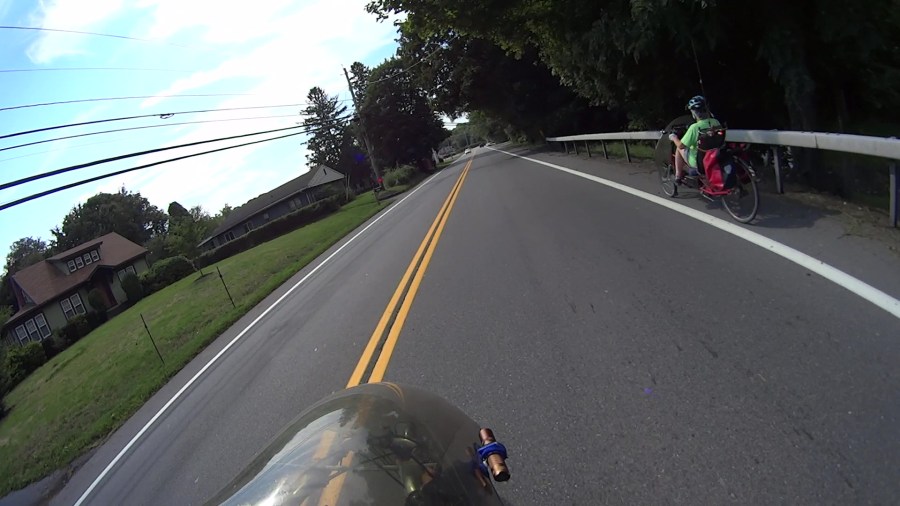
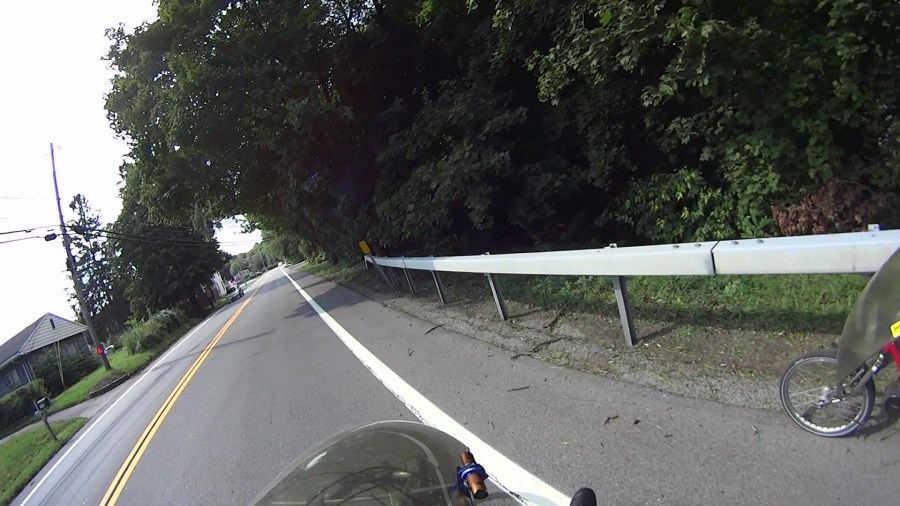
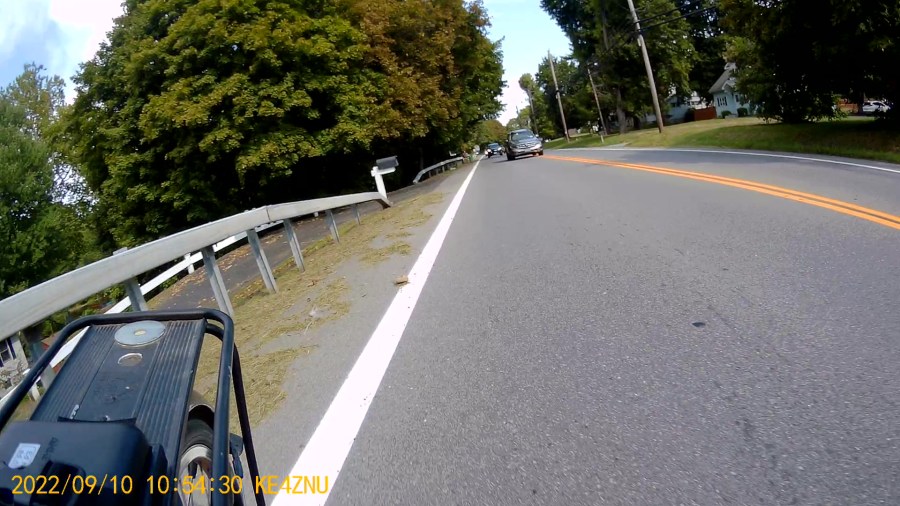
    The offset impact turns the front wheel to the left, so the bike steers out from underneath my weight:

    T + 500 ms

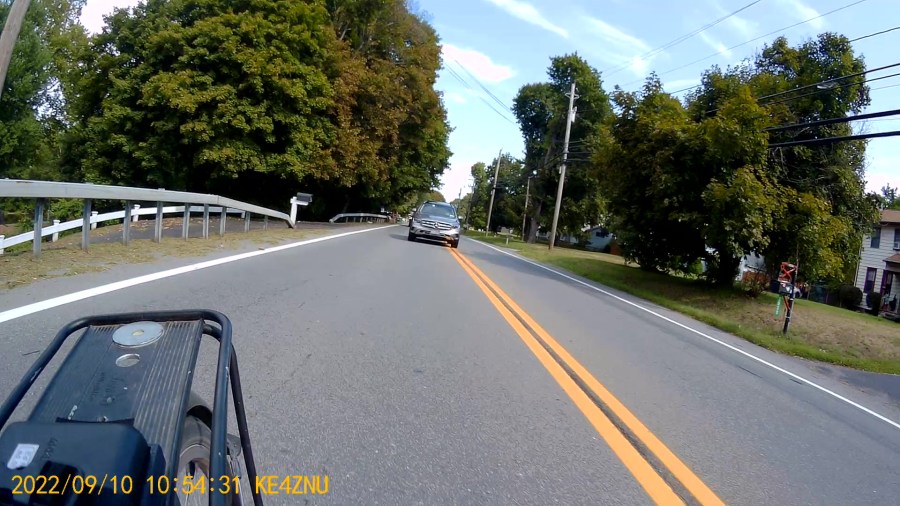
    Because the bike frame was still aimed straight ahead, the wheel is steering further to the left and putting me even more off-balance. I am somehow trying to lean left far enough to get my weight lined up with the bike:

    T + 1.0 s

    One second into the event, Mary has no idea what’s going on behind her.

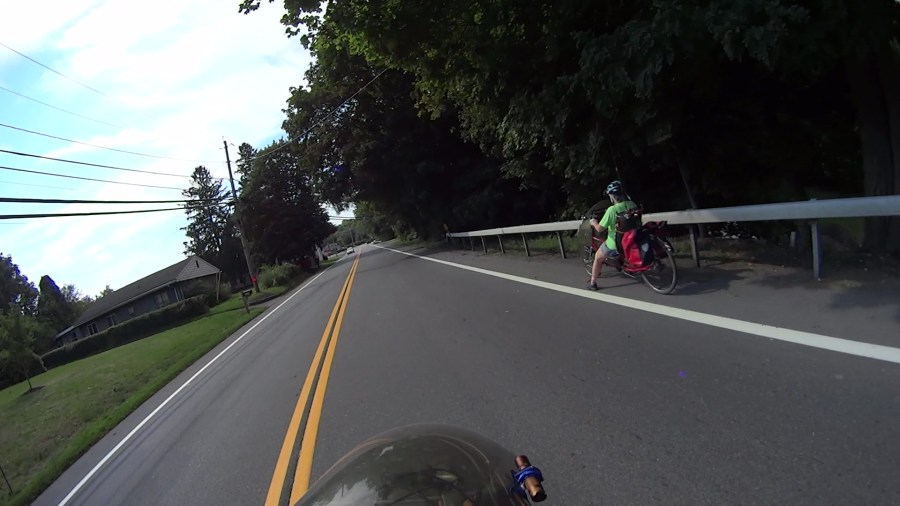
    My memory resumes with an image of the yellow midline just beyond my left foot:

    T + 2.0 s

    Mary heard an odd sound and asks (over the radio) “Are you all right?”

    I’m approximately balanced, turning toward the shoulder, and manage to shout “NO!”:

    T + 3.0 s

    I’m coasting toward the shoulder with my feet off the pedals:

    T + 4.0 s

    Mary is stopping and I coast past her:

    T + 5.0s

    Landing gear out:

    T + 6.0 s

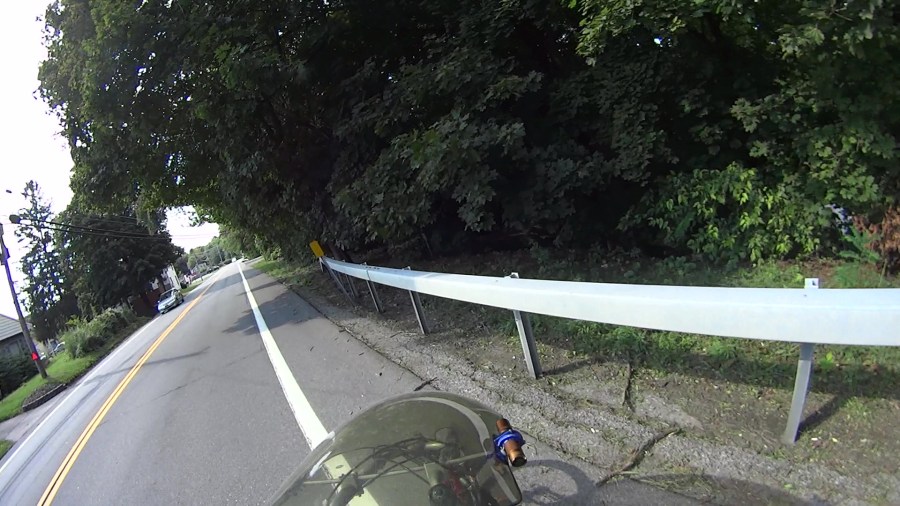
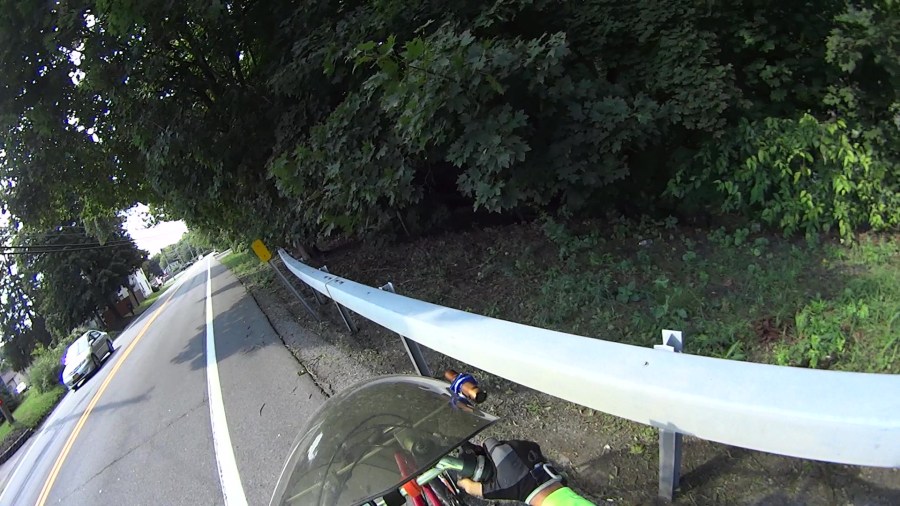
    Back on the shoulder, lining up with the guide rail:

    T + 7 s

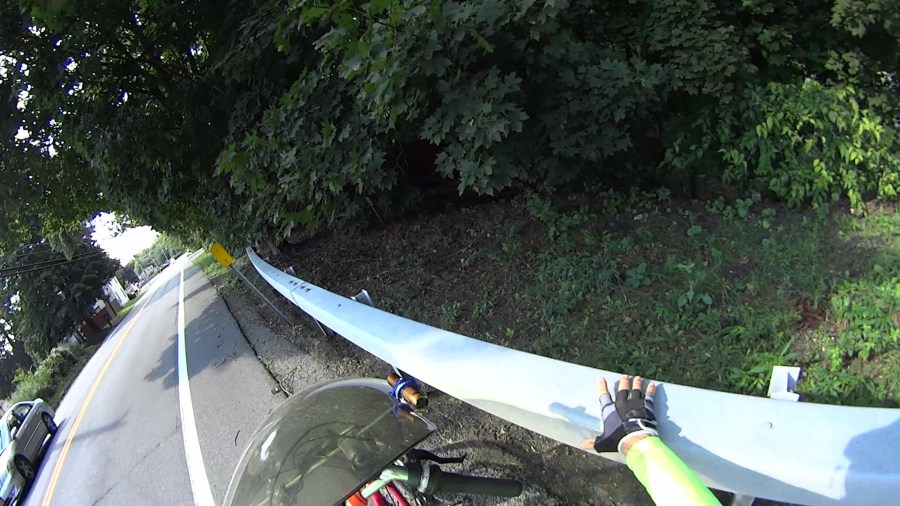
    Dead slow:

    T + 8.0 s

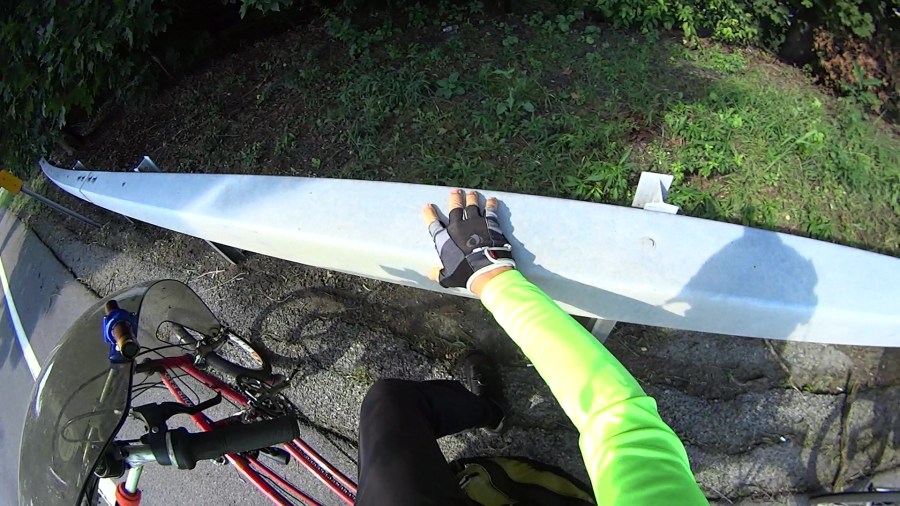
    Docking adapter deployed:

    T + 9.0 s

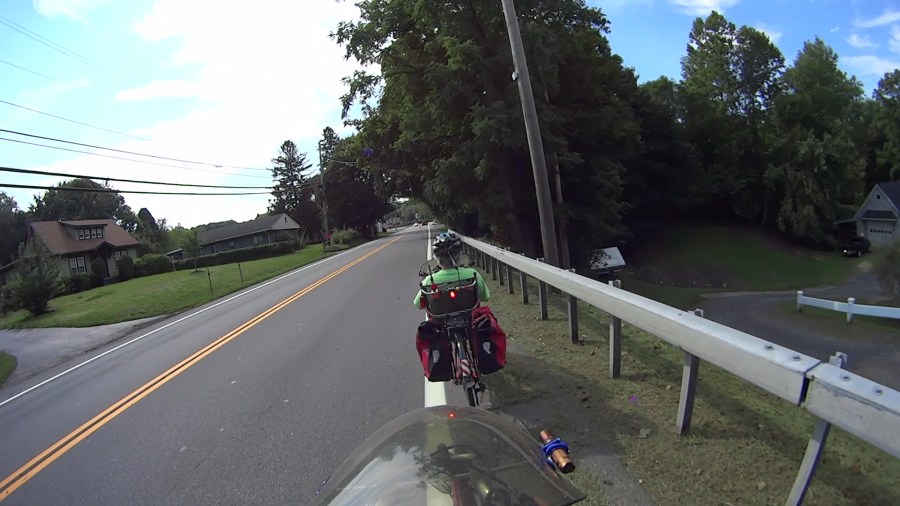
    And stopped:

    T + 10.0 s

    I sat in that exact position for nearly four minutes.

    A slideshow view of the same images so you can watch it unfold:

    Doesn’t look like much, does it?

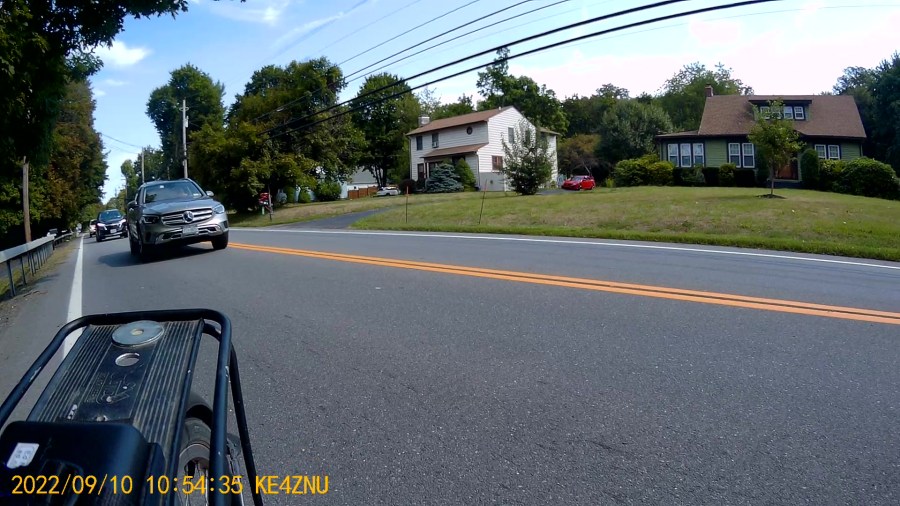
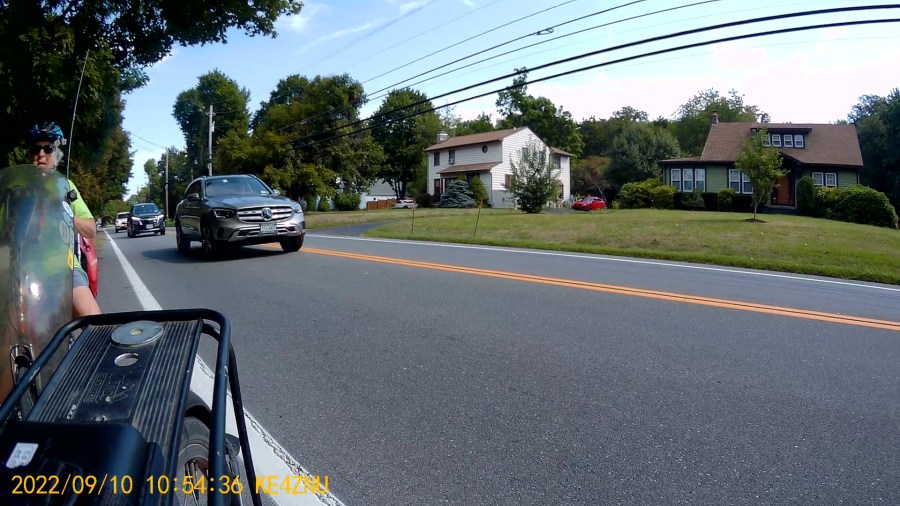
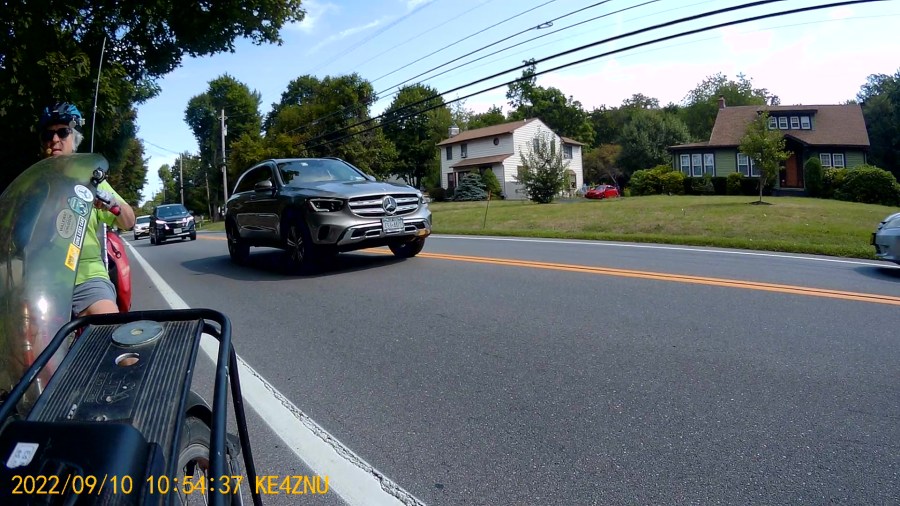
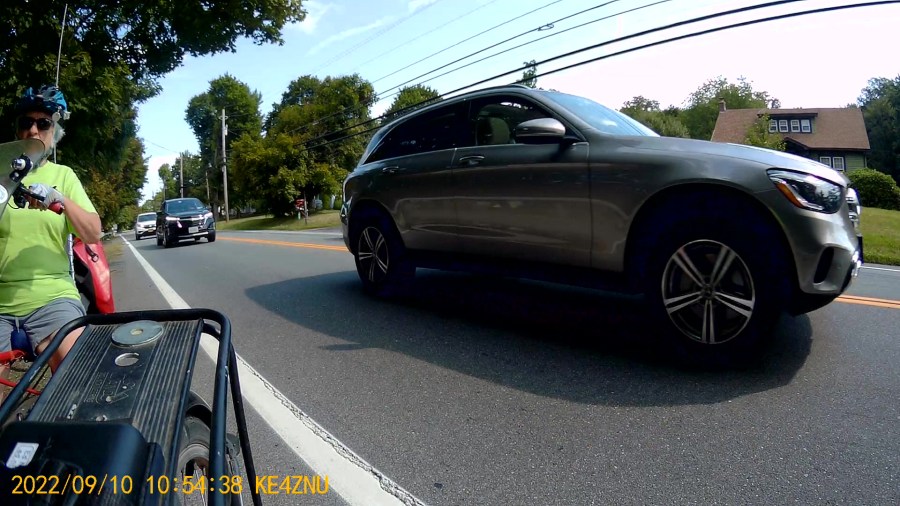
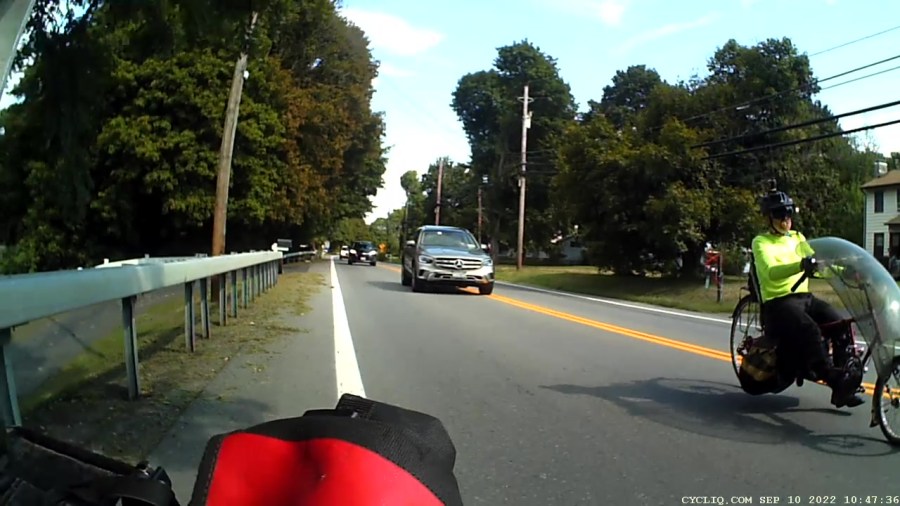
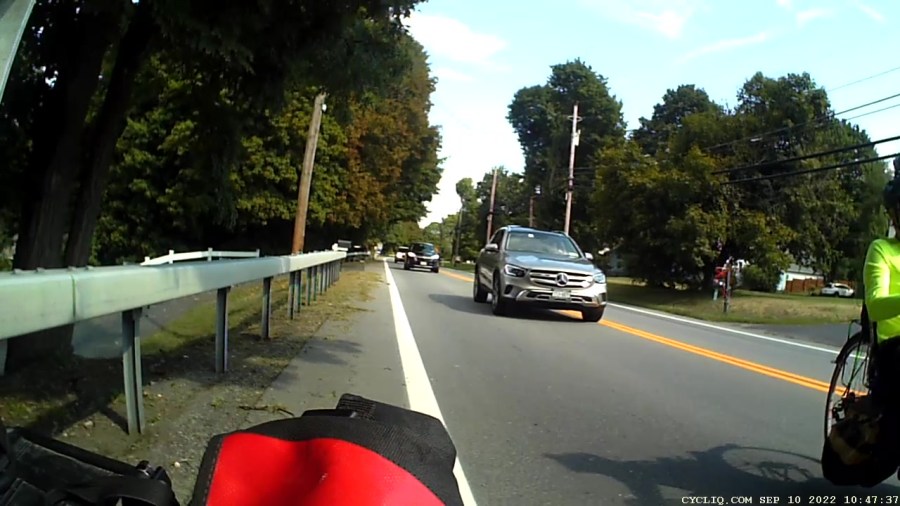
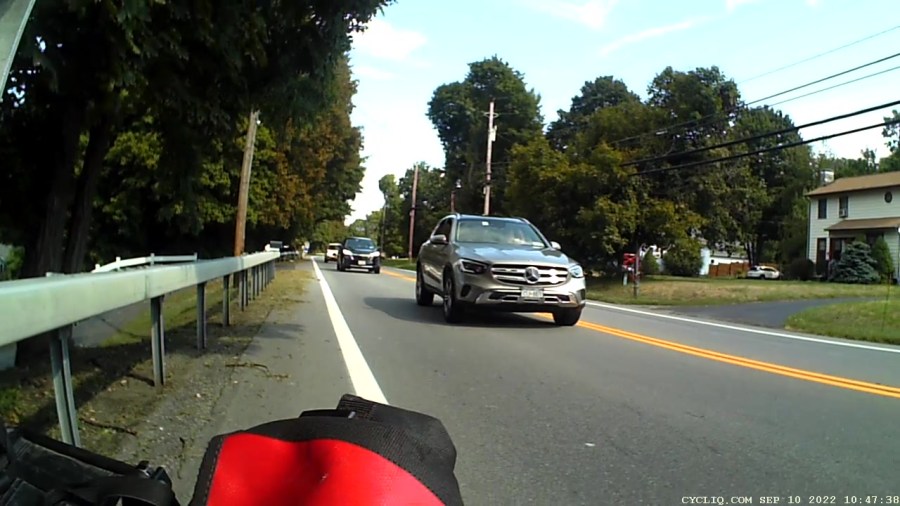
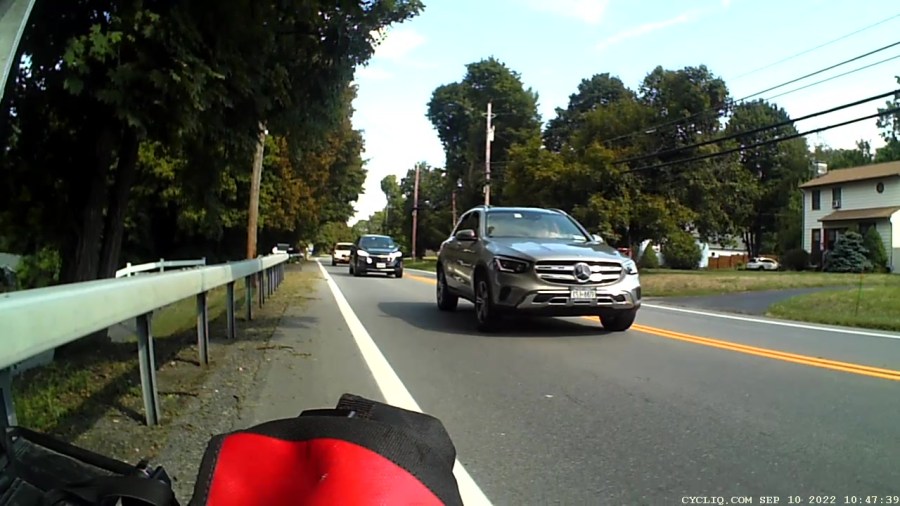
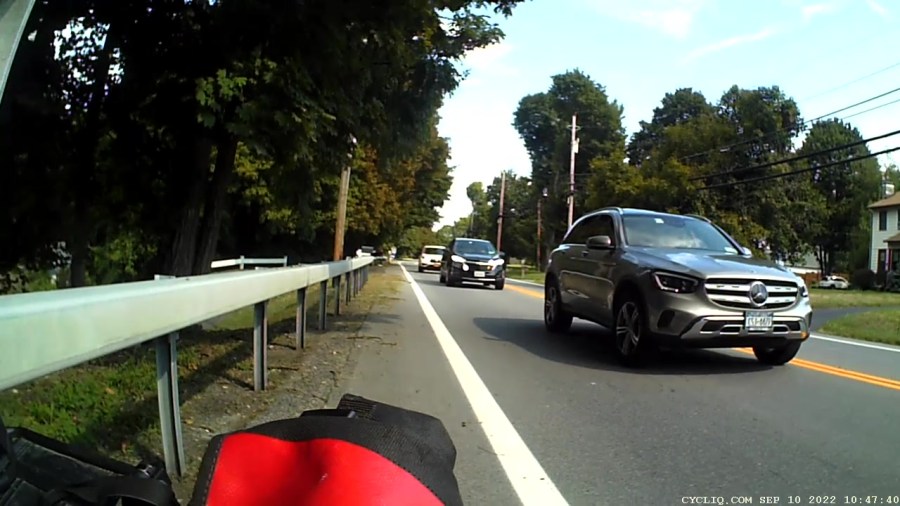
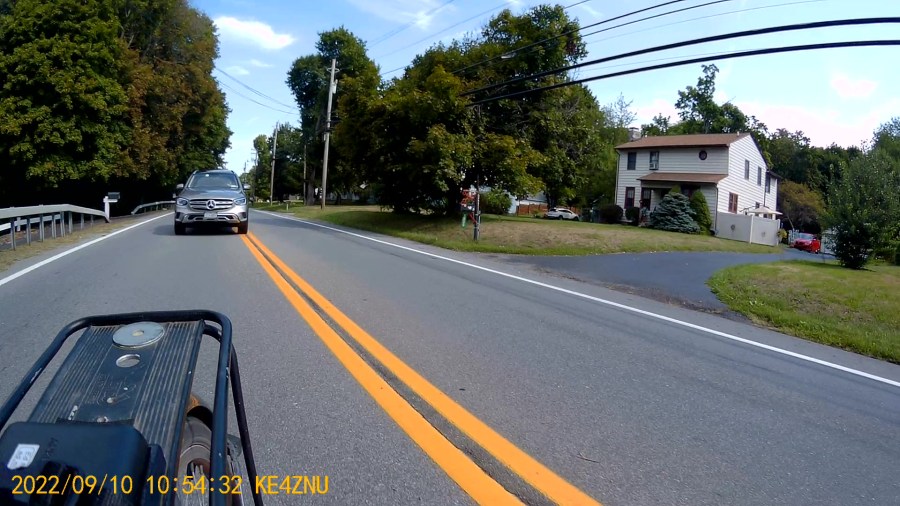
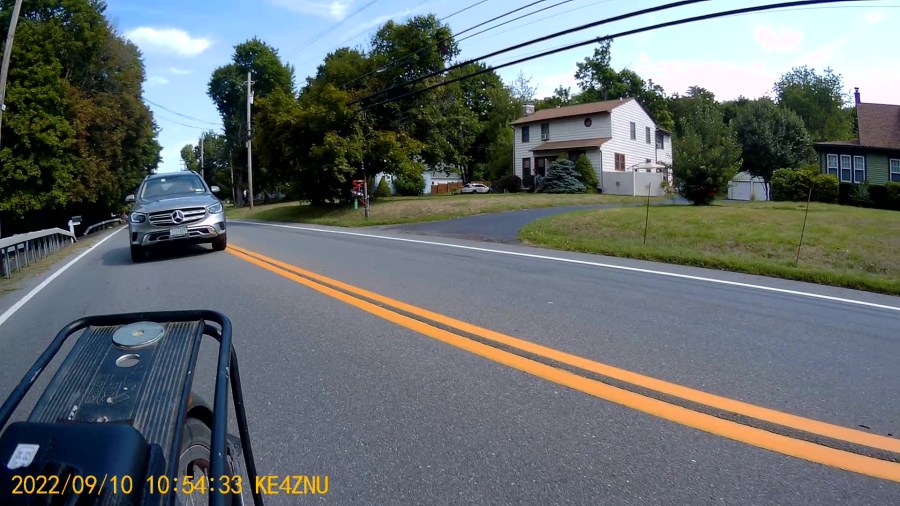
    If I could have looked over my shoulder, this is what I would have seen, starting at T = 0 with the rock impact blurring the image:

    Surely scared the daylights out of that driver, perhaps confirming all the usual expectations of crazy bicyclist behavior.

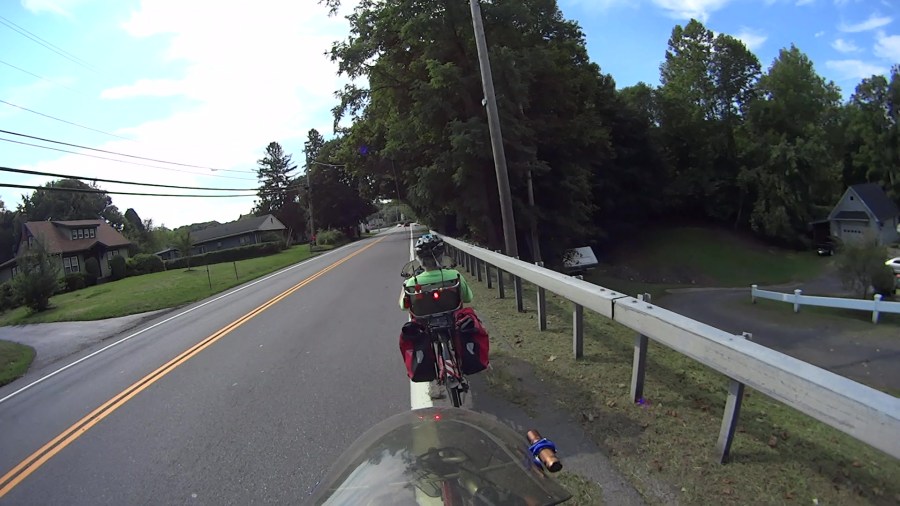
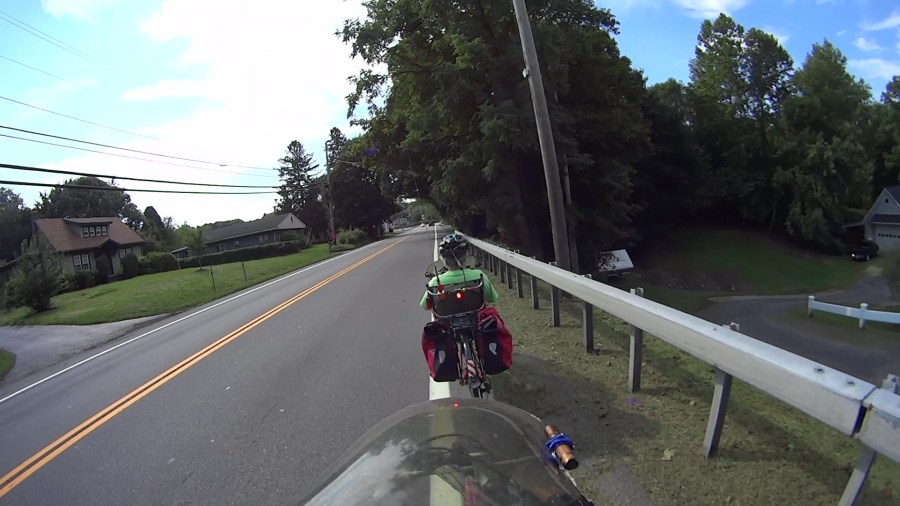
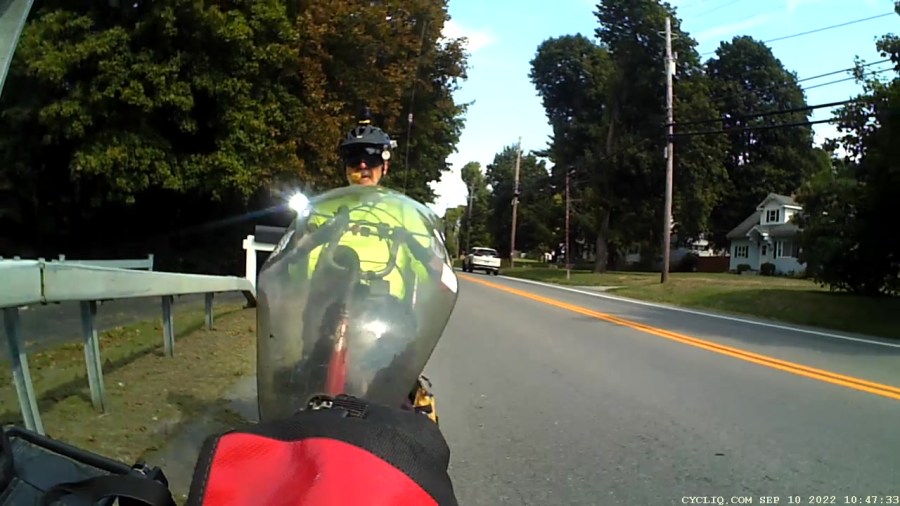
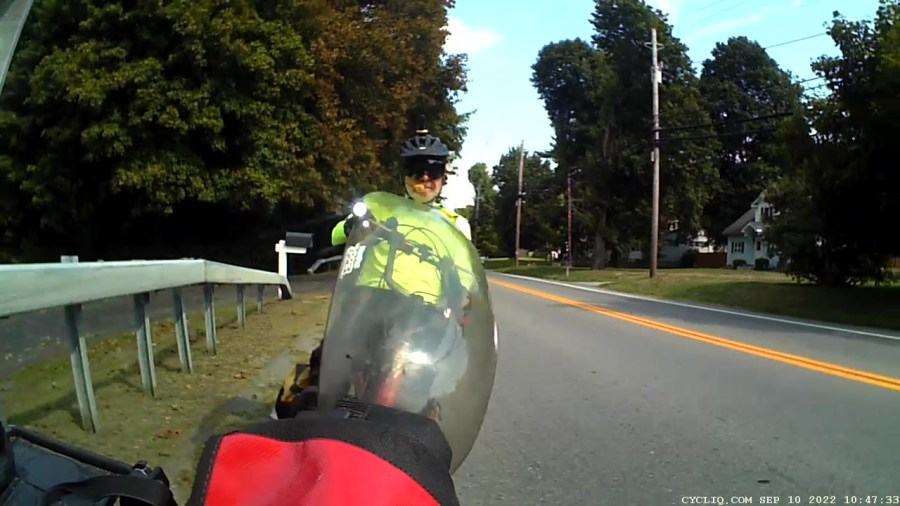
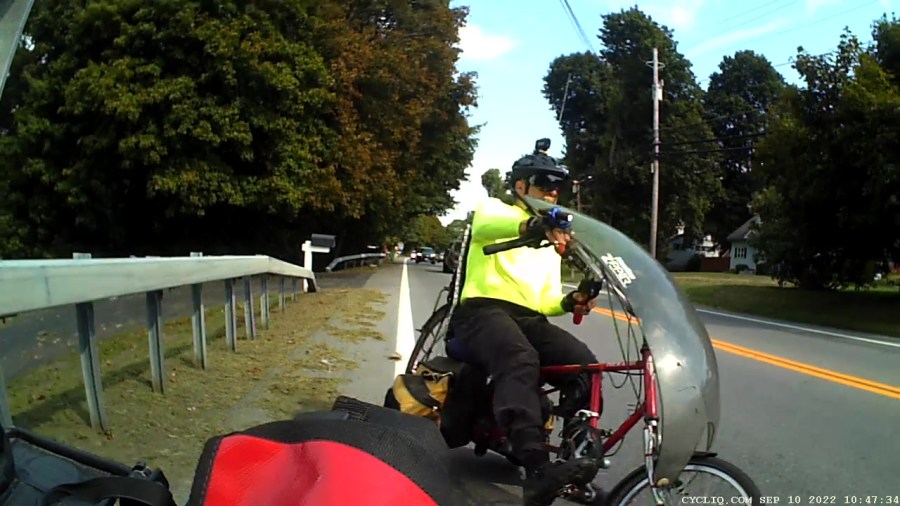
    Here’s what Mary would have seen over her shoulder, again starting at T = 0 with the fairing bulging from the impact:

    Timing is everything.

    That Benz is new enough to have automatic emergency braking, as it slowed pretty dramatically while I was busy getting out of the way, but it’s not clear whether AEB knows about small / lightweight targets like pedestrians and bicyclists.

    We completed the ride as planned, although I finally realized the front fender bracket had broken a few miles later.

    Every adult human male has at least one story beginning “But for that millisecond or inch, I wouldn’t be here.” Now I have one more.

    I must not fear. Fear is the mind-killer. Fear is the little-death that brings total obliteration. I will face my fear. I will permit it to pass over me and through me. And when it has gone past I will turn the inner eye to see its path. Where the fear has gone there will be nothing. Only I will remain.

    Frank Herbert, Dune
  • Tour Easy: Another Front Fender Bracket

    Tour Easy: Another Front Fender Bracket

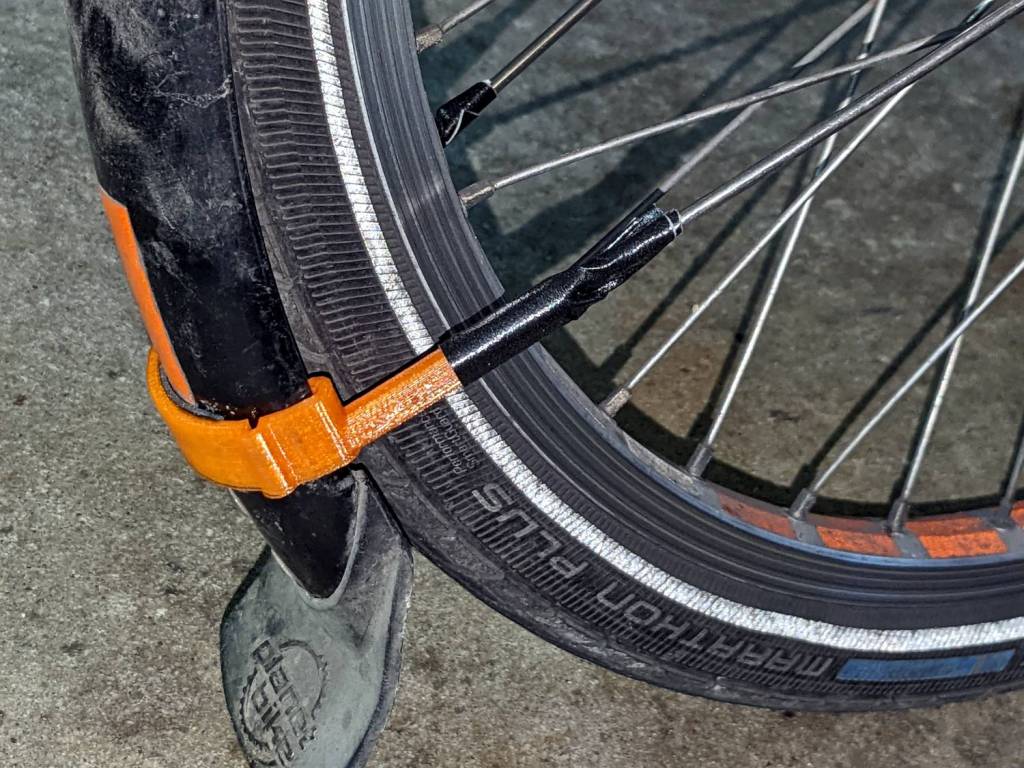
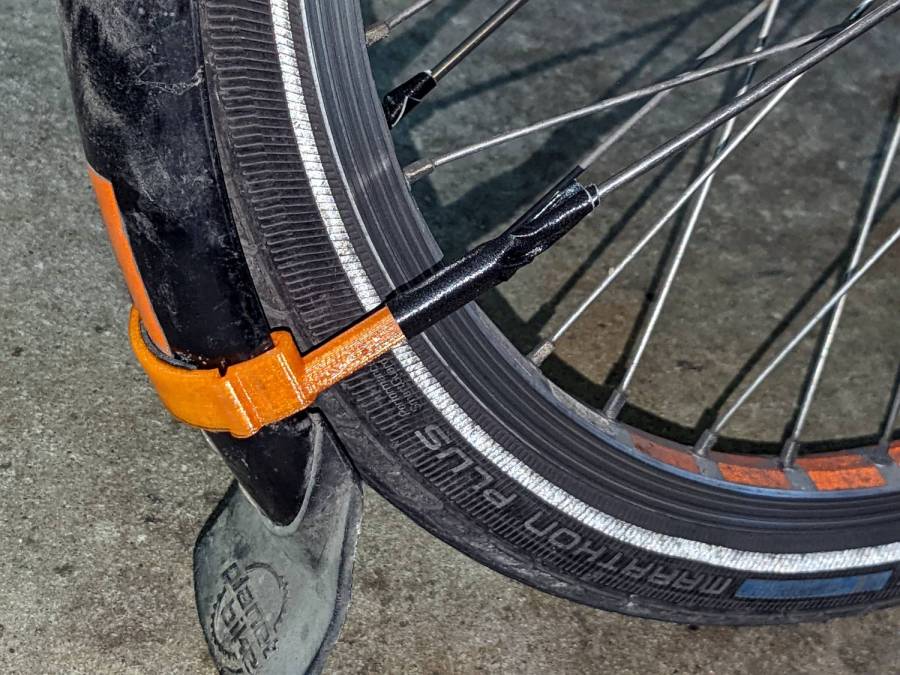
    The mudflap on my front fender rides low enough to snag on obstacles and the most recent incident (about which more later) was a doozy, breaking the left strut ferrule and pulling the bracket off its double-sticky foam tape attachment. Fortunately, the repair kit now has plenty of duct tape.

    The replacement printed up and installed just like its predecessors:

    Tour Easy - front fender bracket
    Tour Easy – front fender bracket

    Having the bracket be the weakest link makes perfect sense to me …