The Smell of Molten Projects in the Morning

Ed Nisley's Blog: Shop notes, electronics, firmware, machinery, 3D printing, laser cuttery, and curiosities. Contents: 100% human thinking, 0% AI slop.

Category: Recumbent Bicycling

Cruisin’ the streets

  • SPD Bicycle Cleats: Wearout Thereof

    Mary decided her cycling shoes were worn out after about four years and maybe 8000 miles. Walking with cleated shoes doesn’t work well (no, we don’t bother with cleat covers), but they’ve seen a few miles of pavement, too:

    Worn SPD cleat in cycling shoe
    Worn SPD cleat in cycling shoe

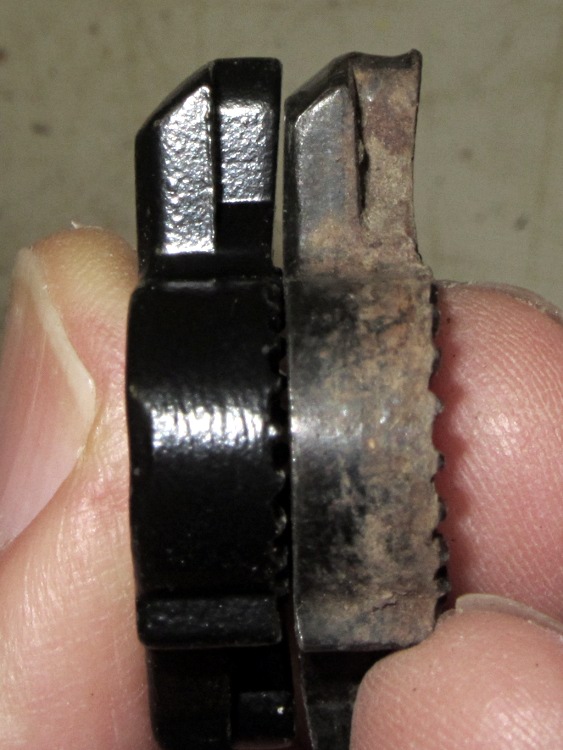
    A closeup shows that the surface of the old cleat really has worn away:

    SPD cleats - new and worn
    SPD cleats – new and worn

    The rear tang is mostly there:

    SPD cleats - rear tang
    SPD cleats – rear tang

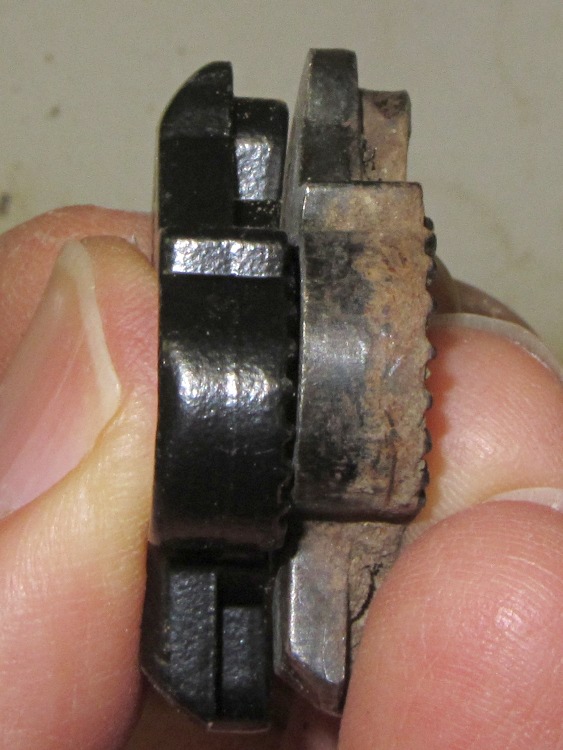
    But the front tang is mostly gone:

    SPD cleats - front tang
    SPD cleats – front tang

    New shoes, new cleats, new pedals… we’re still tuning for best fit.

  • Wouxun HT GPS+Voice Case: Colors!

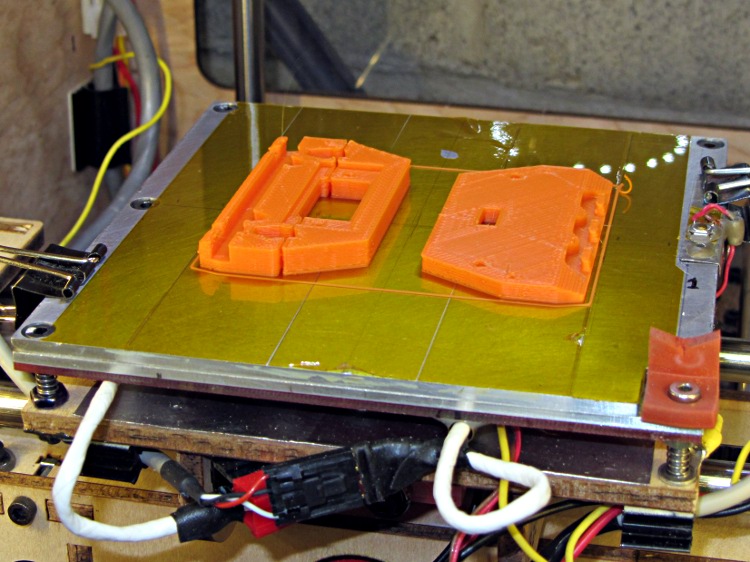
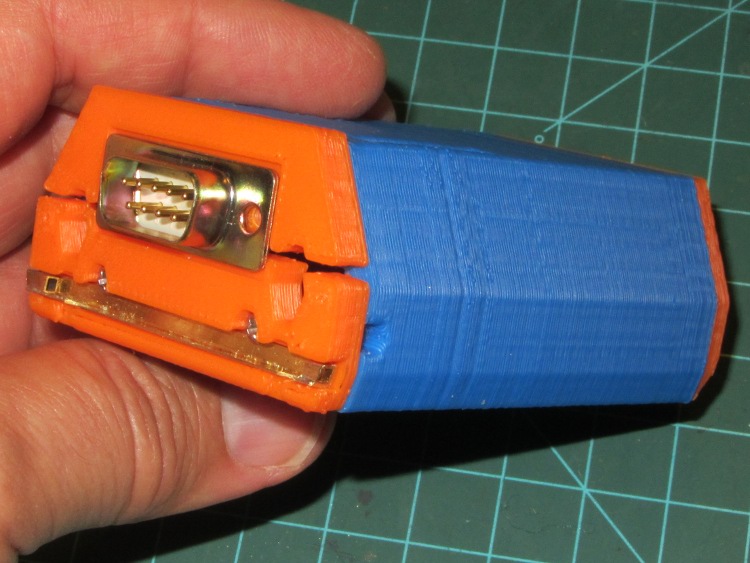
    Rather than print another green case, the new, improved case has orange end caps:

    HT-GPS Case - End caps on build plate
    HT-GPS Case – End caps on build plate

    And a blue shell that’s a bit easier on the eye:

    HT-GPS Case - Shell on build platform
    HT-GPS Case – Shell on build platform

    Put ’em together and it certainly looks peppy, doesn’t it?

    HT-GPS Case - trial fit
    HT-GPS Case – trial fit

    That’s a trial fit with nothing inside, of course.

    Next step: circuitry!

  • USB Wire Color Code: Nobody Will Ever Notice

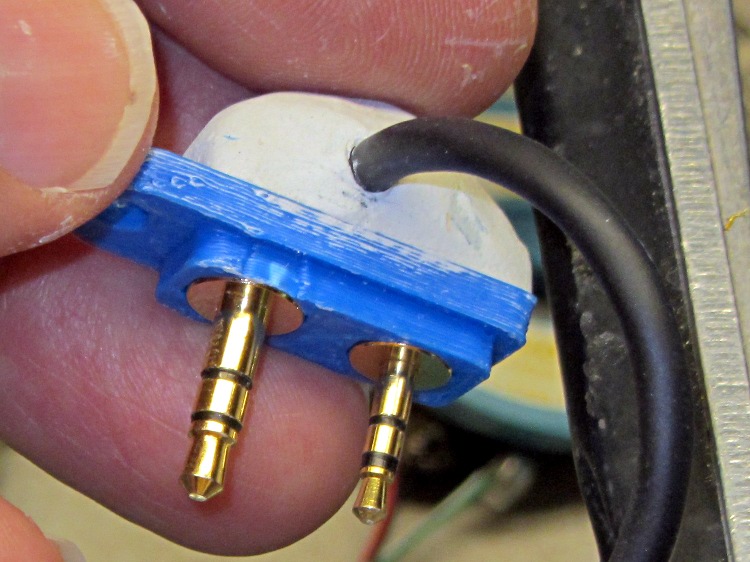
    A USB cable carries the analog mic and earbud audio for our bike helmets; the connectors are cheap, durable, and separate easily. I cut a 2 m “USB extender” cable (which, according to the USB guidelines, isn’t supposed to exist) near the A male connector, then wire that part to the helmet and the A female part to the GPS+voice board.

    The latest USB extender cable included a surprise:

    USB cable with yellow wire
    USB cable with yellow wire

    According to Wikipedia, there’s a standard color code for the wiring inside USB cables and yellow isn’t in the list. For this manufacturer, it seems that yellow is the new red.

    In previous USB extenders the red / black wires were a slightly larger gauge than the green / white data pair, but in this cable they’re not. That might matter if one expected the cable to carry, oh, let’s say an amp of battery charging current.

  • Primo Comet Aneurysm: Teardown

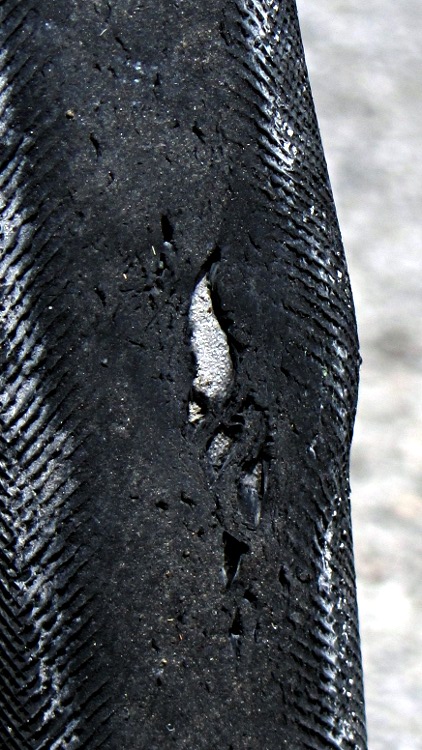
    So, as you might expect, I couldn’t let the aneurysm on that tire get away without a closer look: had to haul the poor thing out of the trash and dissect it. Here’s what it looked like on the bike:

    Primo Comet Aneurysm - inflated
    Primo Comet Aneurysm – inflated

    The outer rubber has disintegrated and is pulling away from the Kevlar belt underneath, but it’s still holding air!

    Cutting that section out of the tire and flattening it makes things look almost normal:

    Primo Comet Aneurysm - flattened
    Primo Comet Aneurysm – flattened

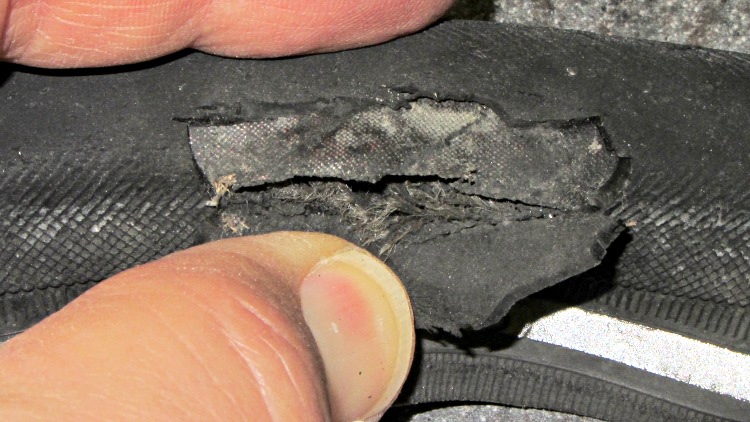
    Peeling the rubber off the carcass reveals that the body cords have either broken or ripped loose under the belt:

    Primo Comet Aneurysm - peeled
    Primo Comet Aneurysm – peeled

    There was no external damage over that part of the tire and I was wrong about a gash in the Kevlar belt. However, the ends of the belt overlap just above and to the right of my thumb, so perhaps there’s a manufacturing flaw in there somewhere.

    Now it’s in the trash!

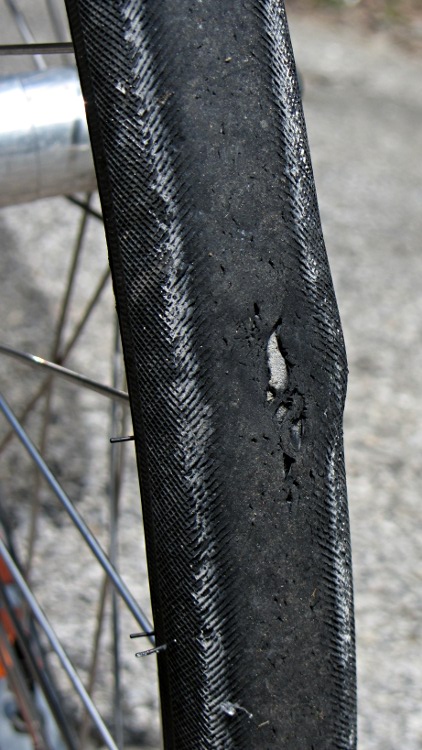
  • Tour Easy: Front Tire Aneurysm

    Front tire aneurysm
    Front tire aneurysm

    Found this aneurysm on the front tire just before a grocery ride, so I stuffed a spare tire and tube into a pannier before rolling away. As expected, it didn’t blow out, but …

    I think this started with a gash in the Kevlar belt that didn’t quite penetrate the cords holding the tire together. As you’ve seen, our tires collect a remarkable number of cuts due to broken glass.

    The cords inside the tire seemed fine, although the weave was somewhat distorted. The inner rubber layer wasn’t punctured, despite what it looks like here.

    The tube also looked fine, despite riding on a tire liner for at least a year. The tube abrasion failures in the rear tire must be due to something other than just the combination of tube and liner; perhaps the tube flexes just enough to erode at the discontinuities.

    This tire went directly to the trash!

  • LED Forward Voltages

    Thinking about those batteries in the context of a really big LED tail light for a bike leads to wondering about the variation in LED forward voltages; it’s possible to drive LEDs in parallel if they’re well-matched for forward voltage. A quick-and-dirty test is in order to get some first-pass numbers… and I have bags of nominally identical red and amber LEDs.

    Applying a fixed voltage that produces 20 mA through 14 randomly chosen LEDs of each color, then measuring the voltage across each diode:

    LED Red V Amber V
    1 1.895 1.939
    2 1.893 1.921
    3 1.903 1.918
    4 1.895 1.921
    5 1.891 1.918
    6 1.935 1.906
    7 1.891 1.926
    8 1.904 1.930
    9 1.901 1.923
    10 1.894 1.927
    11 1.901 1.914
    12 1.894 1.939
    13 1.901 1.933
    14 1.903 1.925
    Minimum 1.891 1.906
    Average 1.900 1.924
    Maximum 1.935 1.939

    Pushing 20 mA through the five lowest voltage red LEDs requires 9.54 V. Applying that voltage to the five highest red LEDs produces 18.2 mA.

    Putting those two strings-of-five in parallel with 9.52 V produces 40 mA total: 16.6 mA in the low string and 19.9 mA in the high string, all measured with a fancy Tek Hall effect probe. No, those aren’t reversed and, yes, I did check twice: it makes no sense at all.

    Temperature matters a lot in such measurements and I wasn’t controlling for that, plus I didn’t have a constant-current supply. Better numbers await better instrumentation, but I think binning a couple bags of 100 LEDs based on forward current should be straightforward.

  • Wouxun KG-UV3D Battery Capacity

    After I get the next GPS+voice interface running on the (yet-to-be-bought) Wouxun KG-UV3D radio, a pair of reasonably new 1A17KG-3 7.4 V 1.7 A·h lithium battery packs will be floating around with nothing to do; the GPS interface connects an external battery to the radio, so there’s no need for the OEM battery.

    Before doing anything else, it’d be useful to know the actual capacity. The pack has flush terminals, so I snipped off two lengths of shield braid, jammed a wire into each one, and taped them in place:

    Battery pack - braid contacts
    Battery pack – braid contacts

    That obviously wasn’t going to last, so I added some closed-cell foam:

    Battery pack - foam compression
    Battery pack – foam compression

    And then, ever so gently, crunched a clamp around the whole mess:

    Battery Pack - clamped contacts
    Battery Pack – clamped contacts

    Crude, but workable, although the ragged start to the test showed I was too gentle. Another click of the clamp and everything settled down just fine:

    Wouxun Pack
    Wouxun Pack

    In round numbers, the pack delivers 1.6 A·h down to 7.0 V and then falls off very rapidly to the 6.0 V that ended the test.

    A string of three red / amber LEDs adds up to 3×1.9 = 5.7 V. A dumb DC blinky light running from 7.4 V has 77% efficiency, which isn’t all that bad, and 70% at the start. A current-regulating switcher might give 85% to 90% at the cost of considerable circuit complexity and wouldn’t be feasible for four independent blinky channels.

    The starting voltage, fresh from the charger, is just shy of 8.5 V, which is why I figured I could get away with 9 V from the external pack through the GPS interface. So far, so good.

    Obviously, if those packs are to be useful, I must conjure up a better battery holder. Having already designed a battery-shaped case for the GPS interface, it should be easy enough to build a radio-shaped mount for the pack.