Ed Nisley's Blog: Shop notes, electronics, firmware, machinery, 3D printing, laser cuttery, and curiosities. Contents: 100% human thinking, 0% AI slop.
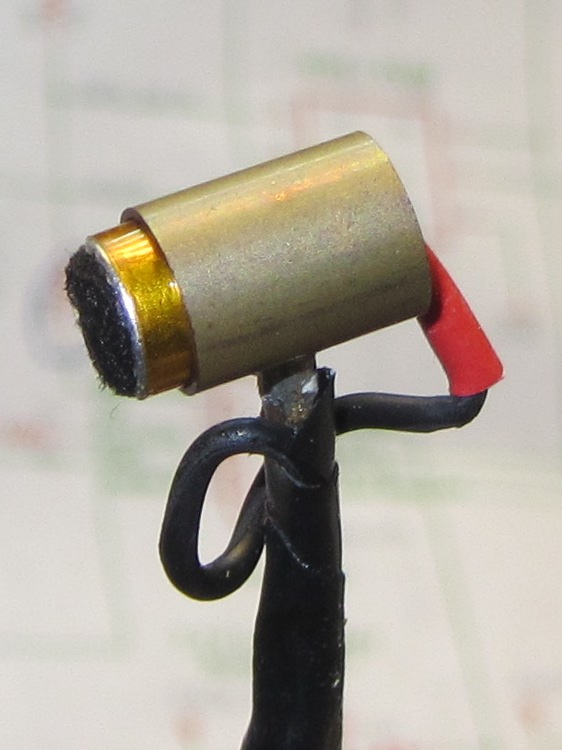
The bikes stand upright inside the van and the helmets ride on the floor with all their stalks sticking up. This usually works out well, but on our last trip my helmet rolled under my bike and rubbed the foam ball surrounding its mic against the chain, producing a result so awful that I had to install new foam.
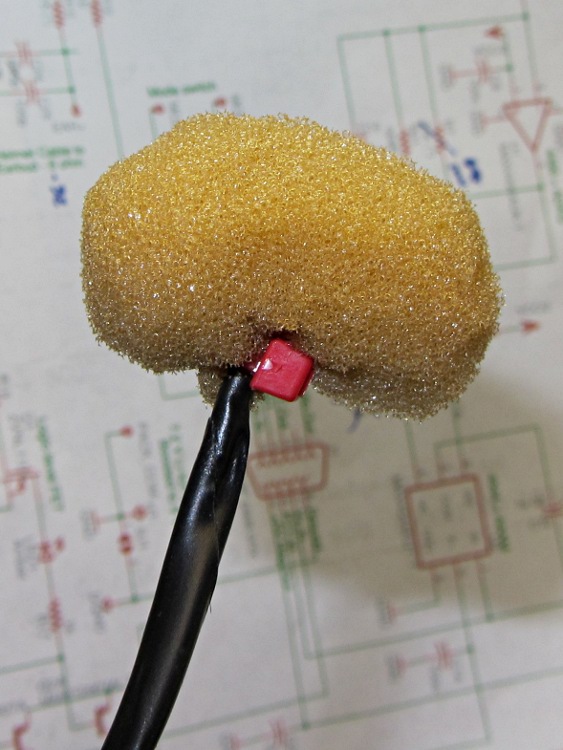
The foam comes from a sheet of Sonex acoustic foam baffle, snipped into a reasonable approximation of a ball, with a slit deep enough to surround the mic, and a cable tie holding it closed:
Foam mic ball on bike helmet boom
For what it’s worth, I’ve found that excessive wind noise correlates with too much mic gain. The mic rides about a finger’s width from the corner of my mouth, I talk at a normal volume, the amp supplies about 20 dB of gain, and we have no trouble with wind noise. The amp gain depends on the mic sensitivity, so your results will certainly differ; these mics came from the heap with no specs whatsoever.
I suppose wind noise also depends on the bike’s speed, but when I’m going that fast I don’t have enough brain or lungs left over to hold a conversation…
It seems that Wouxun KG-UV3D HTs require nearly 0 V to activate the PTT input, which I discovered after the radio on Mary’s bike began acting intermittently. The TinyTrak3+ would transmit correctly, but the PTT button on the handlebar began to not work at all / work intermittently / work perfectly. The switch and cable were OK, pushing the button produced nearly 0 Ω at the 3.5 mm plug, the connections seemed solid, but the radio didn’t transmit reliably.
I finally got the thing to fail on the bench, which led to the discovery that:
Shorting the PTT input to the GPS+voice adapter PCB to ground didn’t make the radio transmit and
Data bursts from the TinyTrack3 worked perfectly
Gotcha!
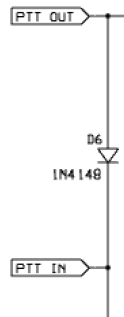
TT3 PTT In-Out
The TT3+ pulls its PTT OUT pin down from +5 V using a 2N2222A NPN transistor (off to the right in the schematic snippet), but, for reasons having to do with ESD, the input from the PTT switch on the handlebars goes through a 100 Ω series resistor, then passes to the TT3 board through PTT IN to D6 before joining the TT3 transistor collector. The low-active diode-ORed signal heads off through PTT OUT to a 10 Ω series resistor, thence to the KG-UV3D PTT input. D6 is an ordinary 1N4148, with the net result that the PTT input voltage at the radio dropped to 630 mV with the PTT button pressed.
Not finding anything else wrong, I replaced D6 with a BAT54 Schottky diode that pulled the PTT voltage down to 300 mV and the radio worked fine.
Of course, a BAT54 is a surface-mount diode, so I clipped off the unused no-connect lead (it’s the only way to be sure it doesn’t do anything) and tacked it down slaunchwise between the PCB thru-hole pads. If I had a BAT54C with common cathodes, I could replace both D5 and D6 in one shot, but D5 just pulls down a PIC input that has an ordinary logic-level threshold voltage.
I don’t know why the KG-UV3D PTT is so fussy, although it may really be a current-driven signal that requires more current than can flow through the 110 Ω + diode forward drop in series with the PTT button. Wouxun presents no specifications that I can find.
The identical circuitry on my bike works fine with the stock D6 diode and a presumably identical KG-UV3D. I should replace that diode before it gives me any trouble, but I’ll wait until I must take the box apart for some other reason.
Friends of ours planted a few dozen Liriope spicata as a border around their nicely trimmed flower garden. This did not work out well, as the stuff spreads like a weed and duplicated beyond their wildest imagination. However, this part of the description caught our attention:
No serious diseases or pests occur for creeping lilyturf. […] Lilyturf is reported to have little wildlife value.
Translation: nothing kills the stuff and deer don’t eat it. Sounds like exactly what we need for the section of the front yard that slopes down to the road, where mowing poses a threat to life & limb.
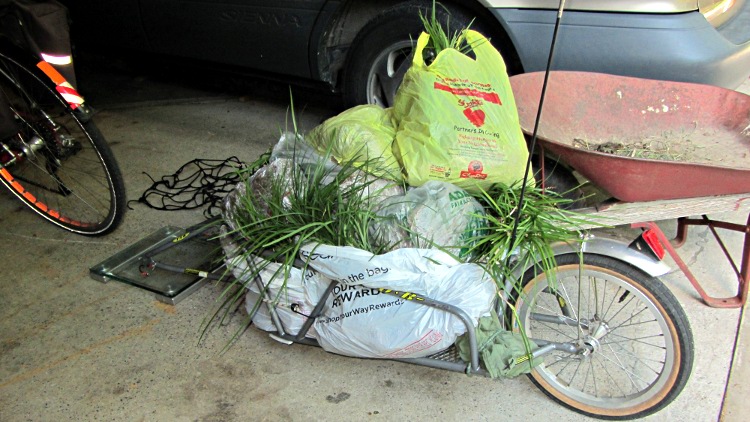
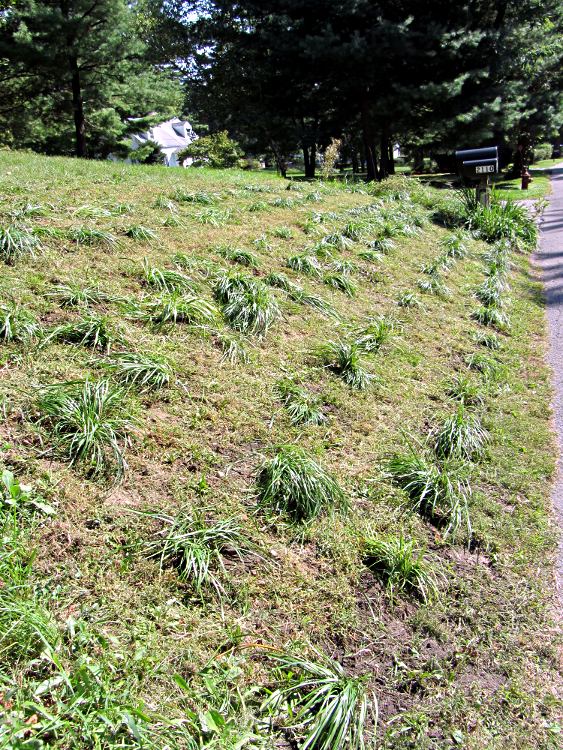
We said we’d take it, they dug it out and bagged it, I hitched up the bike trailer, and we paid them a visit:
YAK Bike Trailer – 55 lb of grass
They’re a few miles off the south end of the Dutchess Rail Trail, which is (by definition) pretty much dead flat and made the trip a lot easier: that load of grass added up to 55 pounds! They dropped off a few bags on their next trip past our house, which tells you how much they wanted to get rid of it.
I wielded the post-hole digger to prepare about 100 sites, shook the dirt off the existing grass roots to backfill the holes, we divided the new clumps by chopping them with a shovel, and a day later we had everything installed and watered down:
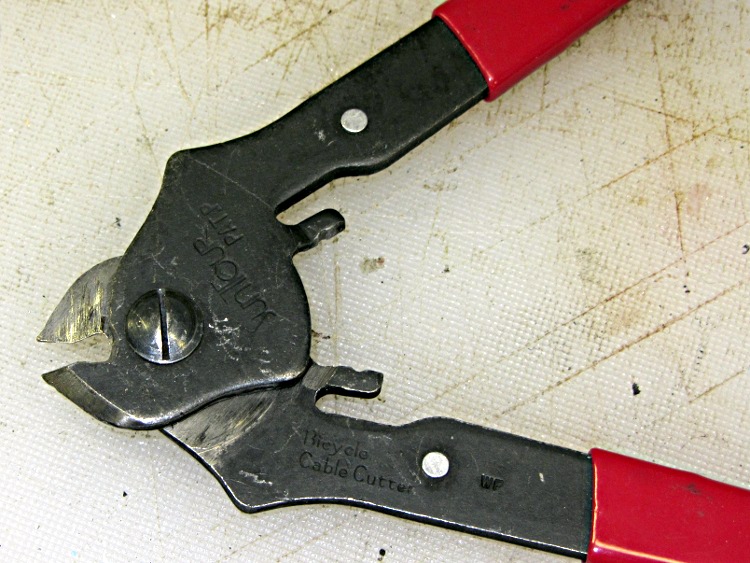
It should go without saying, but you do not cut music wire with diagonal cutters intended for electrical wire or the low-carbon steel shears built into wire strippers. I use a bicycle cable cutter that easily slices through the hard wire used in brake cables and their housing:
Every now and again I touch up the jaws with a diamond file to get rid of small dings; despite being hardened, those fine points seem particularly prone to burrs.
When you see an ordinary wire cutter with matching half-moons in each blade, you know what happened…
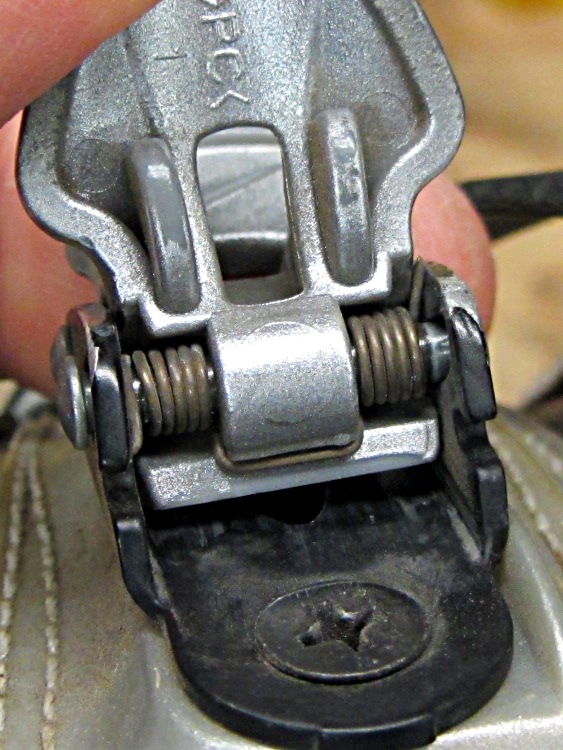
The Nike cycling shoes I bought some years ago (at a steep discount when they got out of the cycling shoe biz) close with a ratcheting plastic strap rather than laces, so I bought a spare set of straps: the plastic part always breaks first. As it turned out, a coil spring inside each latch failed and the stub end (on the right side here) gradually worked its way between the latch tab and the frame:
Cycling shoe latch – broken spring
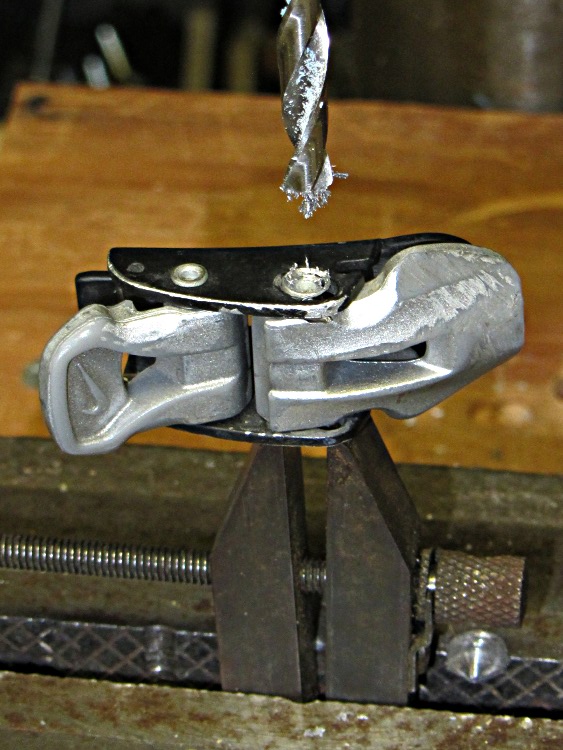
Eventually this got to the point where the latches jammed and I had to do something. The first step was to drill out the rivet holding the spring and tab in place:
Drilling latch rivet – magnetized bit
You’ll note the rich collection of swarf clinging to the drill bit, which indicates this one hasn’t been used since a lightning strike magnetized all the steel in the house. A pass through that demagnetizer shook off the swarf and prepared the bit for the next time.
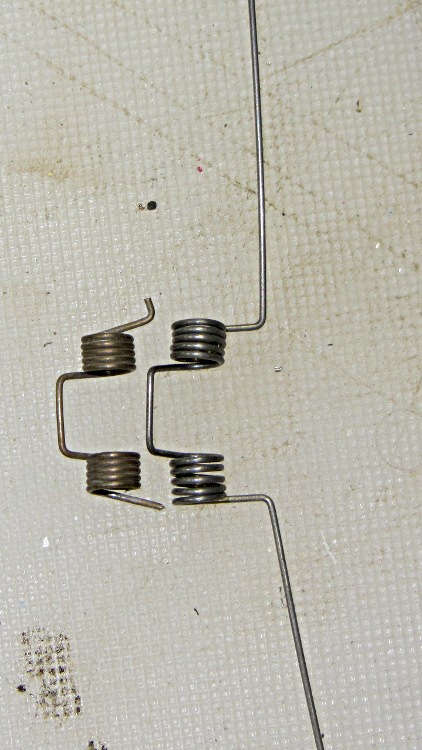
Releasing all the parts shows the problem:
Nike cycling shoe latch – broken spring
The OEM springs used 24 mil spring wire that, surprisingly, matched a box of music wire in the Basement Laboratory Warehouse Wing. The spring coils have 5 turns that just clear the 3 mm rivet that I recycled as a mandrel; I think a 2.5 mm pin would produce a better fit. Not being a fan of rivets, I replaced them with 4-40 machine screws, even though the threads probably won’t do the aluminum frame any good at all.
A protracted bending and wrapping session produced a reasonable approximation of the OEM spring:
Latch spring – formed
It’s worth noting that each of those coils uses up about 55 mm of wire: 5 × 3.5 mm × π. Cut an excessively long piece from the music wire coil!
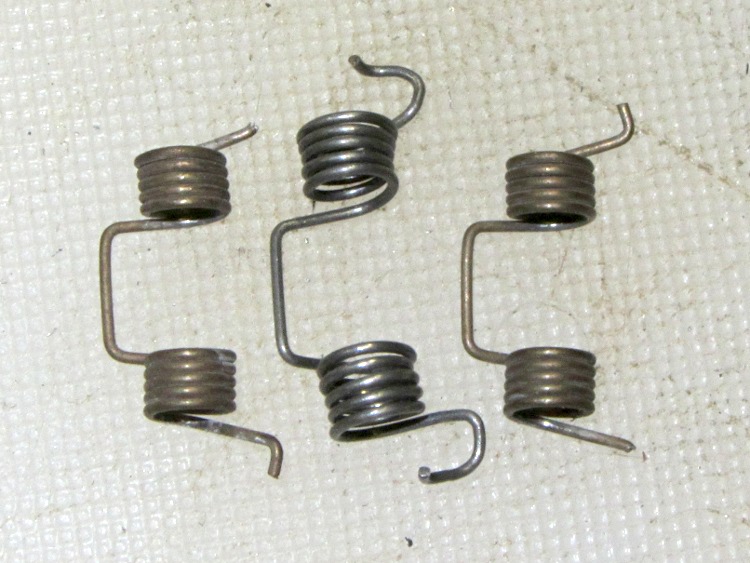
Trimming and shaping the ends to fit through the notches and around the outside of the frame shows that my wire-bending skills need considerably more practice. This spring (the second one I made) also shows that my beginner’s luck with the first coils wore off all too quickly:
OEM springs with homebrew replacement
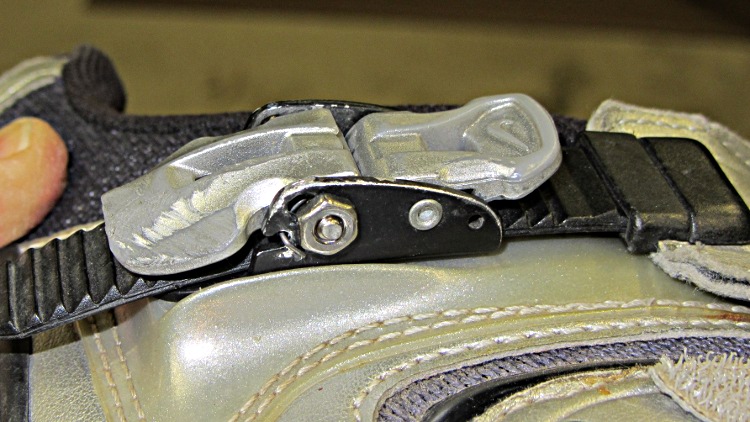
But both springs fit and work fine, so I’ll call it done for now:
Repaired latch – nut side
Will a replacement spring break before the plastic strap?
The display on Mary’s Cateye Astrale cyclocomputer (remember cyclocomputers?) faded to gray, which meant a new CR2032 lithium cell was in order. I grabbed one from the heap, popped out the old cell, inserted the new cell, and … the display stayed blank.
Quick like a bunny, I reinserted the old cell to save the odometer (15524 miles) and wheel circumference (1475 mm) data; the display returned to dim gray.
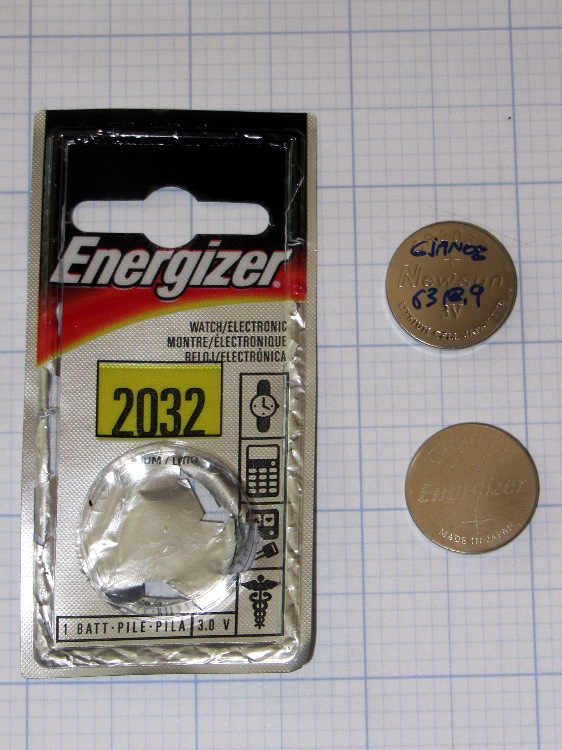
The “new” cell, which came from an unopened pack, read 0.45 V with no load…
The cell didn’t have a date code, but the package sports a cryptic MU that might encode the date of manufacture or the date of packaging or the copyright date or something; the various search results aren’t forthcoming and the Energizer site gives no explanation.
I’m pretty sure I haven’t owned that package for more than a few years and it’s been in a shirtsleeve environment (plus the occasional hot van) ever since.
Another Energizer cell from a more recent lot, bearing CA on the package and YA on the cell, worked fine.
Being that sort of bear, I wrote the date and mileage on the previous cell (a Newsun, whoever they are, with a 3Y code), because the last time around the odometer value didn’t survive the cell change. The current total works out to 277 miles/month = 3300 miles/year, including winter downtime, which is fine with us; we mostly ride the bikes around town on errands and take the occasional tour.
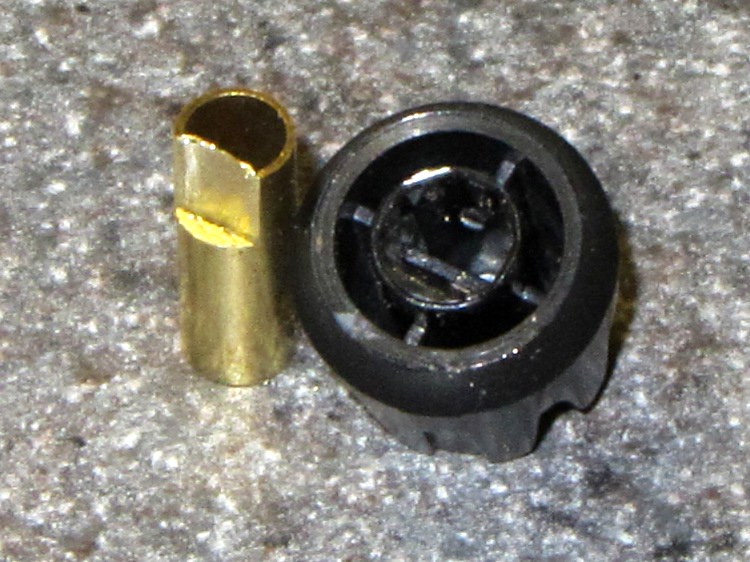
Clamp a cutoff chunk of 3/16 =0.1875 inch diameter brass tubing in the lathe and file down one side to put the flat 0.150 inch from the far side, so that the knob is a tight slip fit. If you happen to have some solid rod, that would work just as well. In this case, the file pushed the paper-thin brass remnant into the tubing and I didn’t bother to clean it out:
KG-UV3D knob with fixture
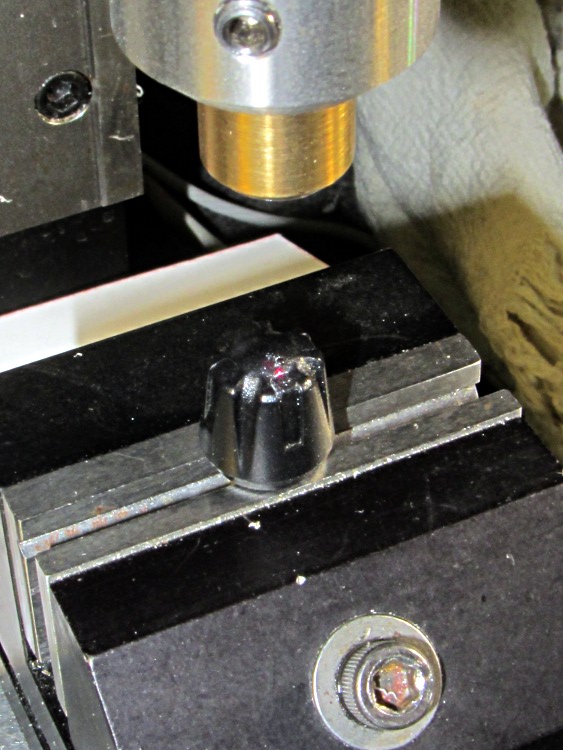
Clean the white glop off the knob, jam the knob on the fixture, clamp the fixture in the Sherline’s vise, use laser targeting to center the spindle on the notch adjacent to the minuscule pip on the knob:
Laser aligning to knob feature
Drill a 2 mm recess that en passant obliterates the pip:
Drilling index recess
Fill it with some light gray paint that just happens to be on the shelf:
Knob with filled index mark
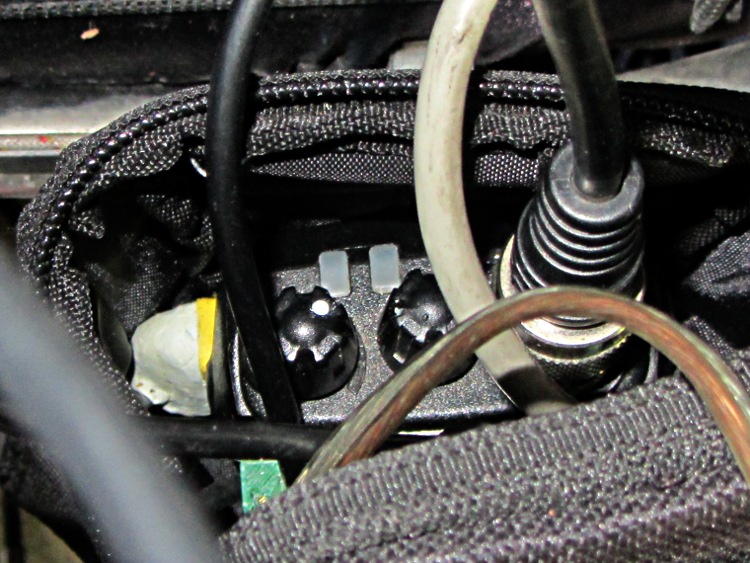
And, by gosh, it really does dress up the radio! [grin]
Wouxun KG-UV3D with improved knob
While I had the Sherline set up, I did the knob for the other radio, too.




 The Smell of Molten Projects in the Morning