Ed Nisley's Blog: Shop notes, electronics, firmware, machinery, 3D printing, laser cuttery, and curiosities. Contents: 100% human thinking, 0% AI slop.
It didn’t involve waiting: by random chance, a fifth NYSDOT road repair crew happened to be in that area when Mary rode by. She stopped directly atop the sinkhole and screamed at the flagger until he came over. She explained the problem and, wonder of wonders, this time they put asphalt in the right spot.
The patch looks hand-tamped and will pop out after a while, but it’ll be great while it lasts.
A moth came within arm’s reach during a ride along the Dutchess County Rail Trail:
This slideshow requires JavaScript.
Squinting at some earlier frames that show only a tiny moving dot, the moth disappears every five frames: one wingbeat requires either 5/60 or 10/60 s = 12 or 6 strokes/second.
We continued our respective missions without incident…
The moth came much closer to the camera than it looks. I should calibrate the images with known objects at known distances, but that seems like a lot of work.
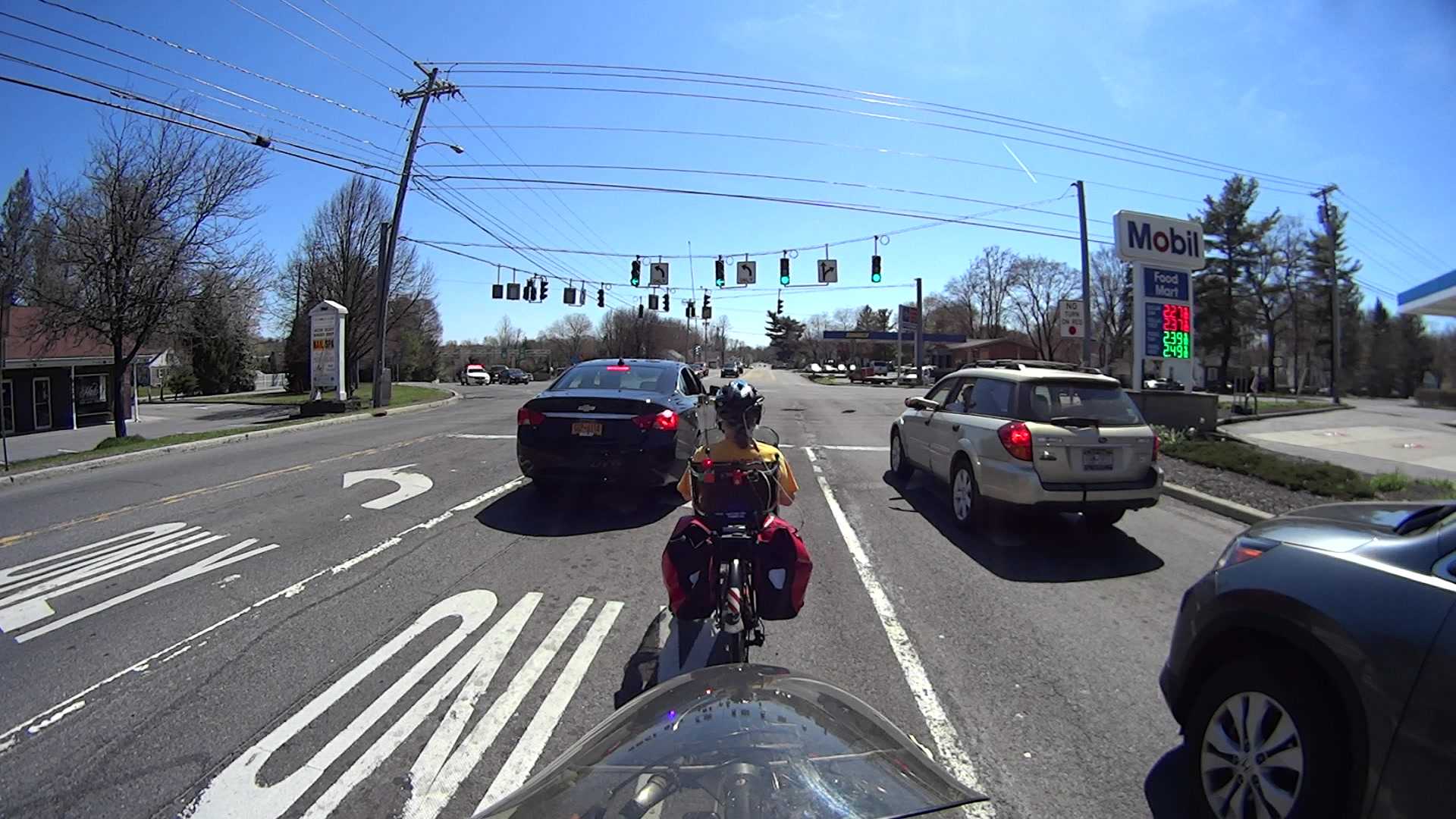
For obscure reasons, the Silly Season brought Sanders, Trump, and Clinton fille to the City of Poughkeepsie within the span of eight days. We know enough to stay far away from such events, but one of the contestants came to us!
A siren heralded flashing lights off to the left, coming up the hill from the bridge over the Mighty Wappingers Creek:
Candidate Motorcade – 0463
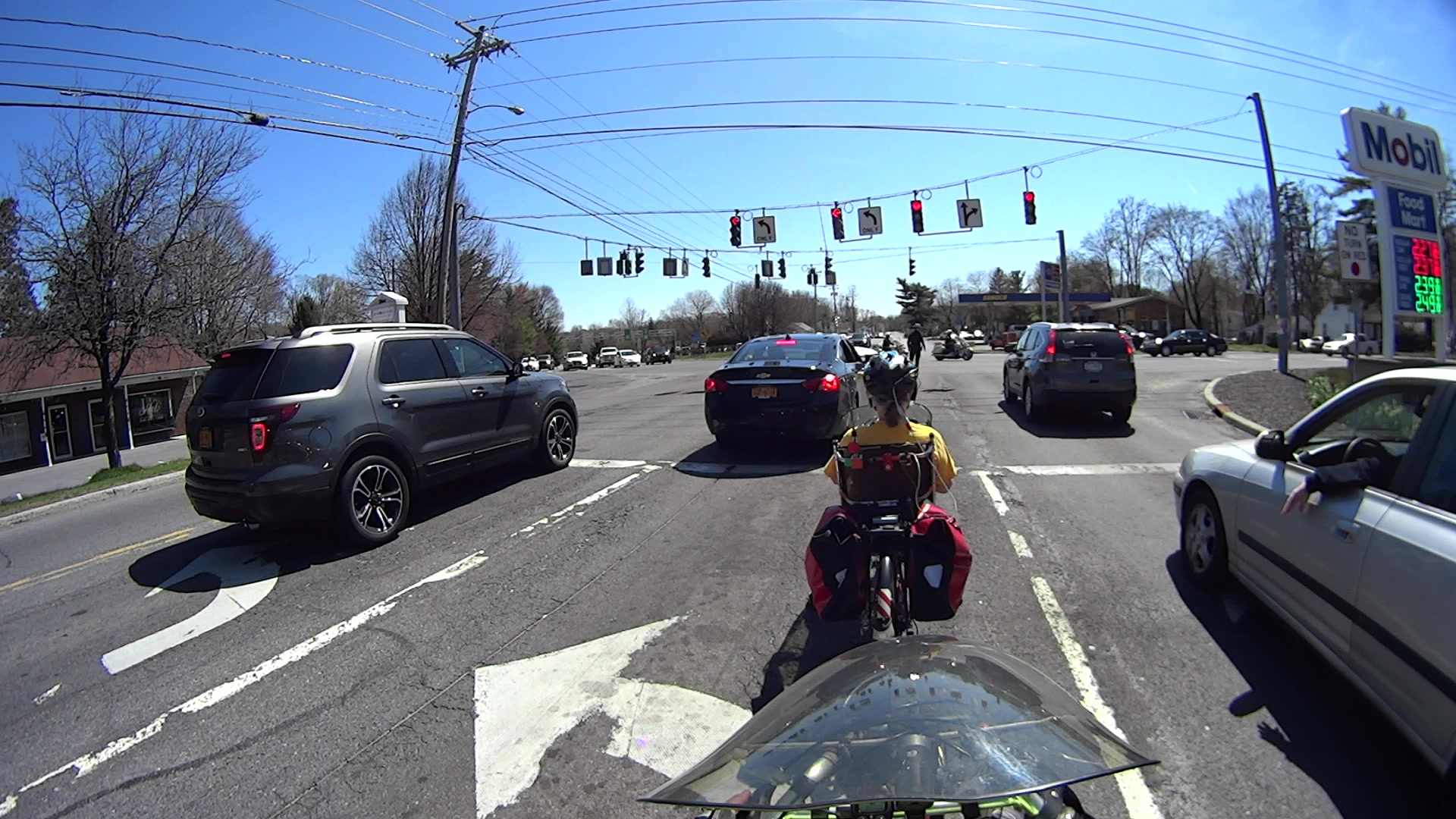
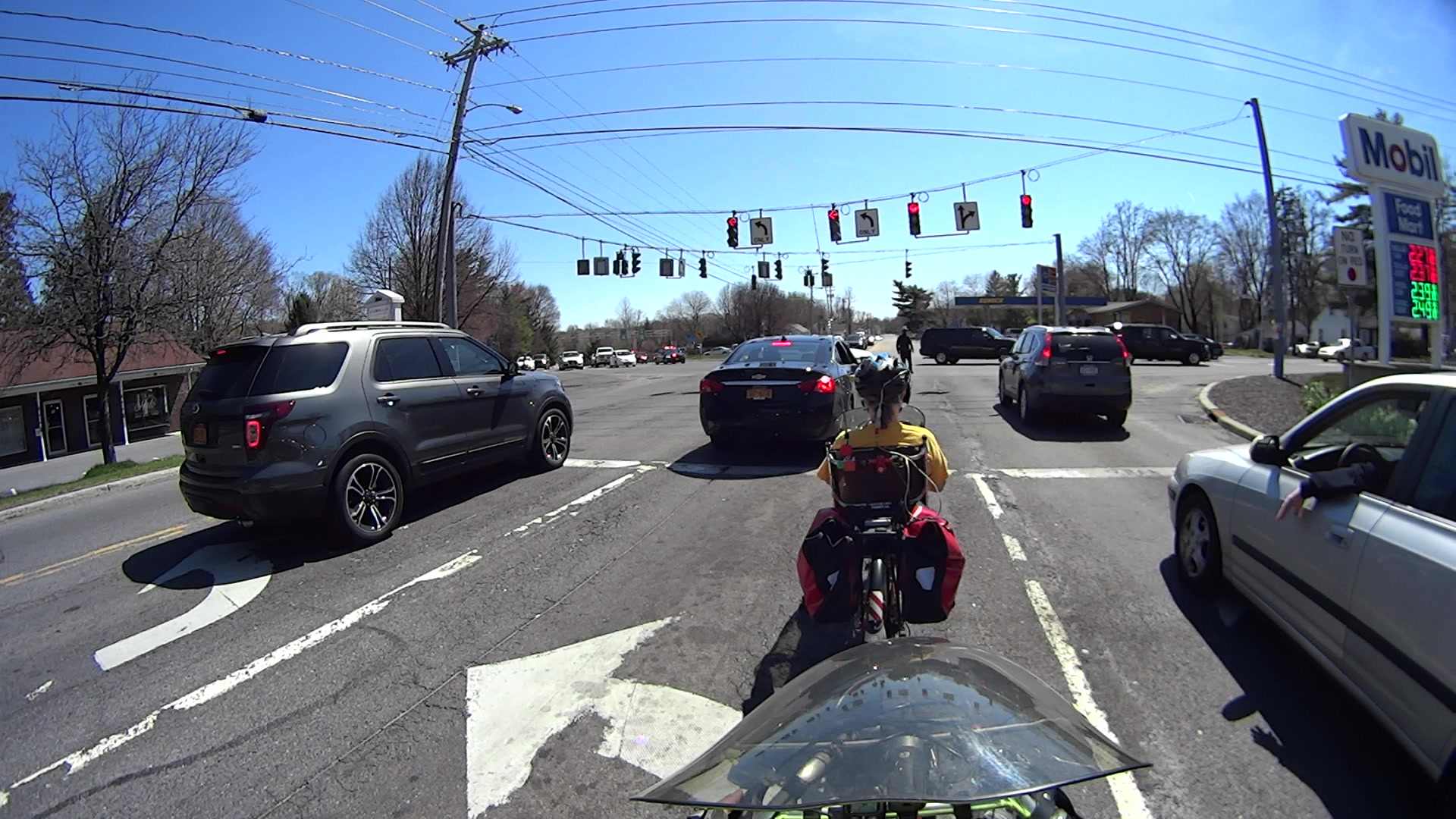
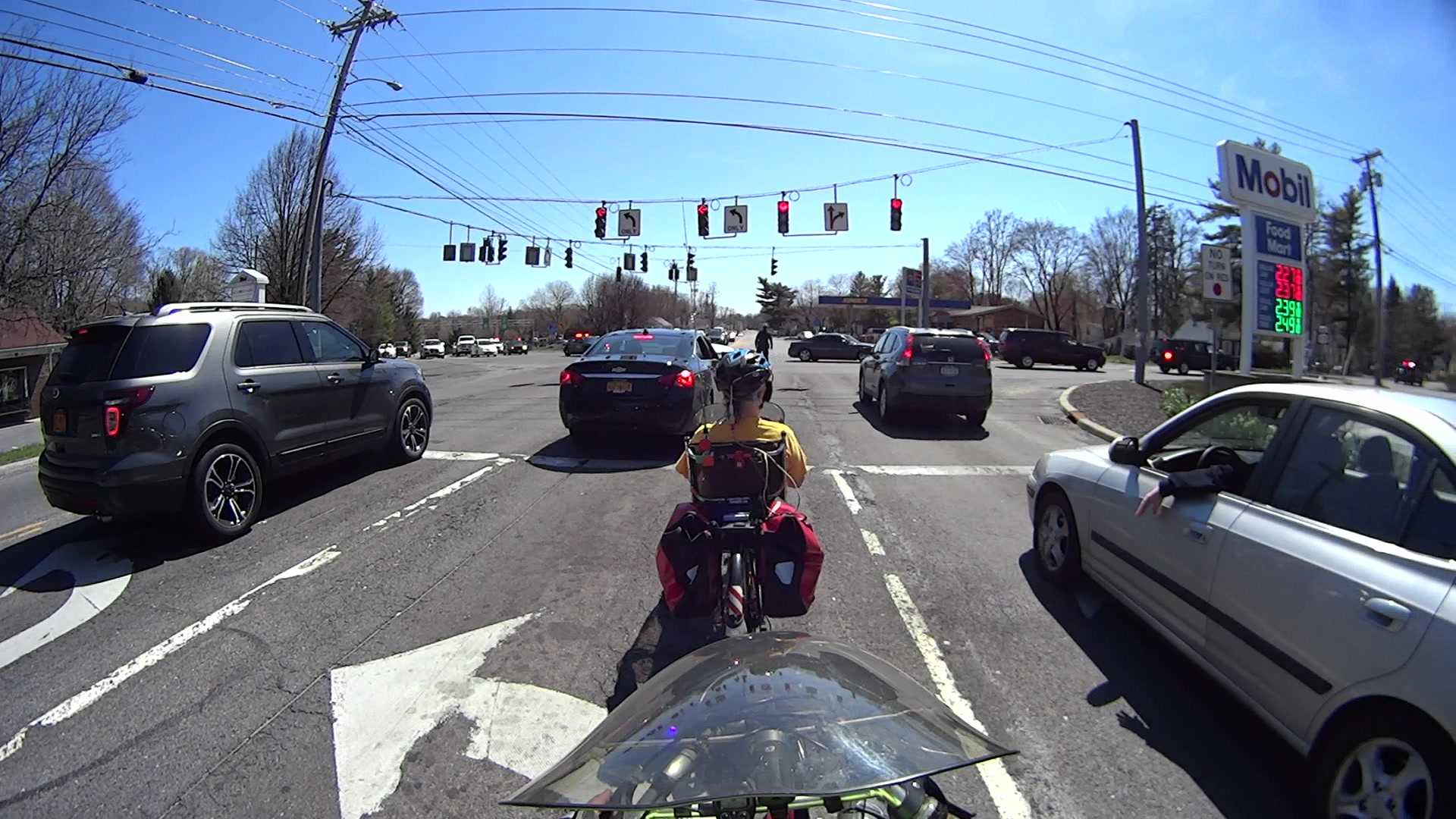
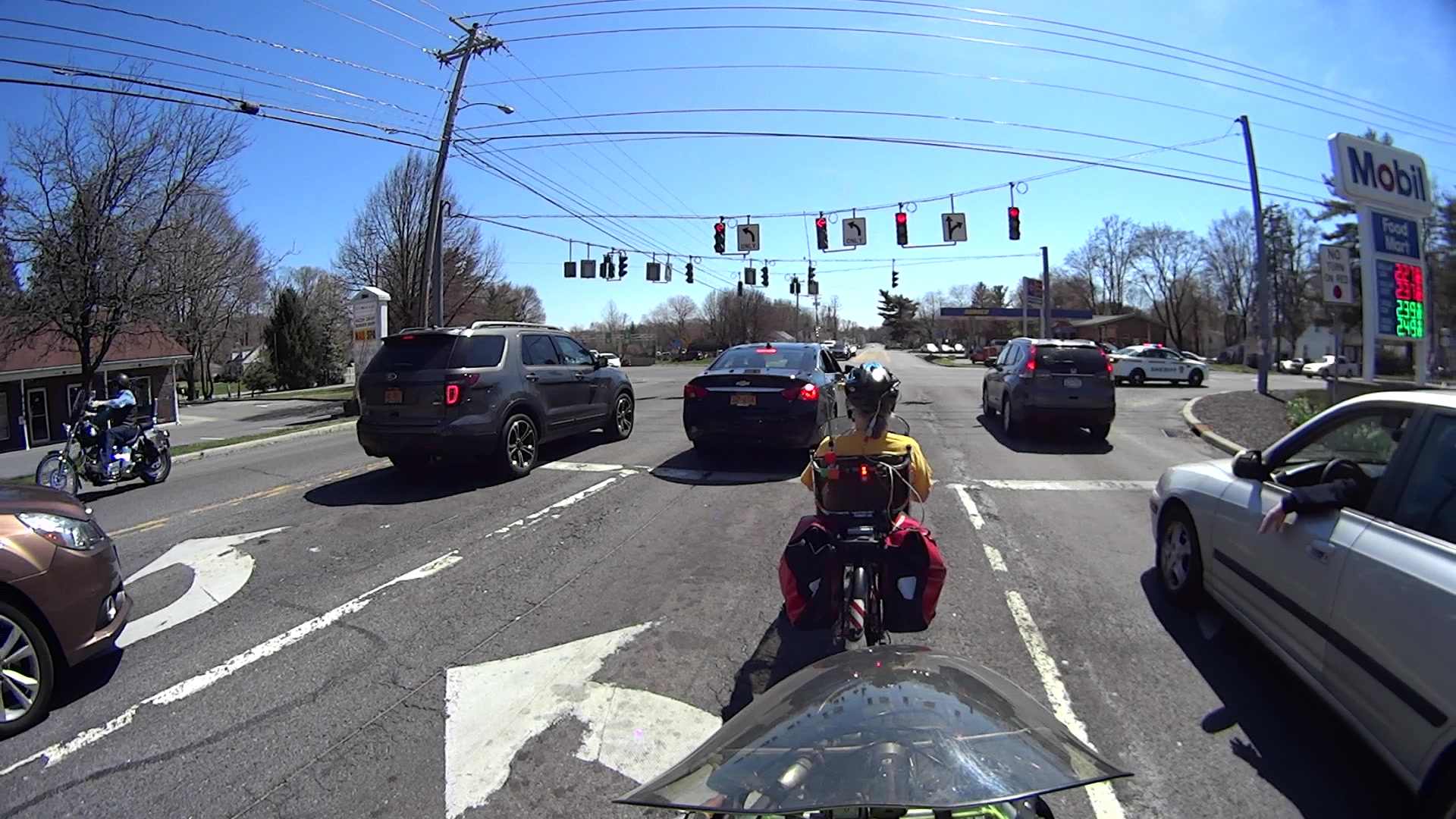
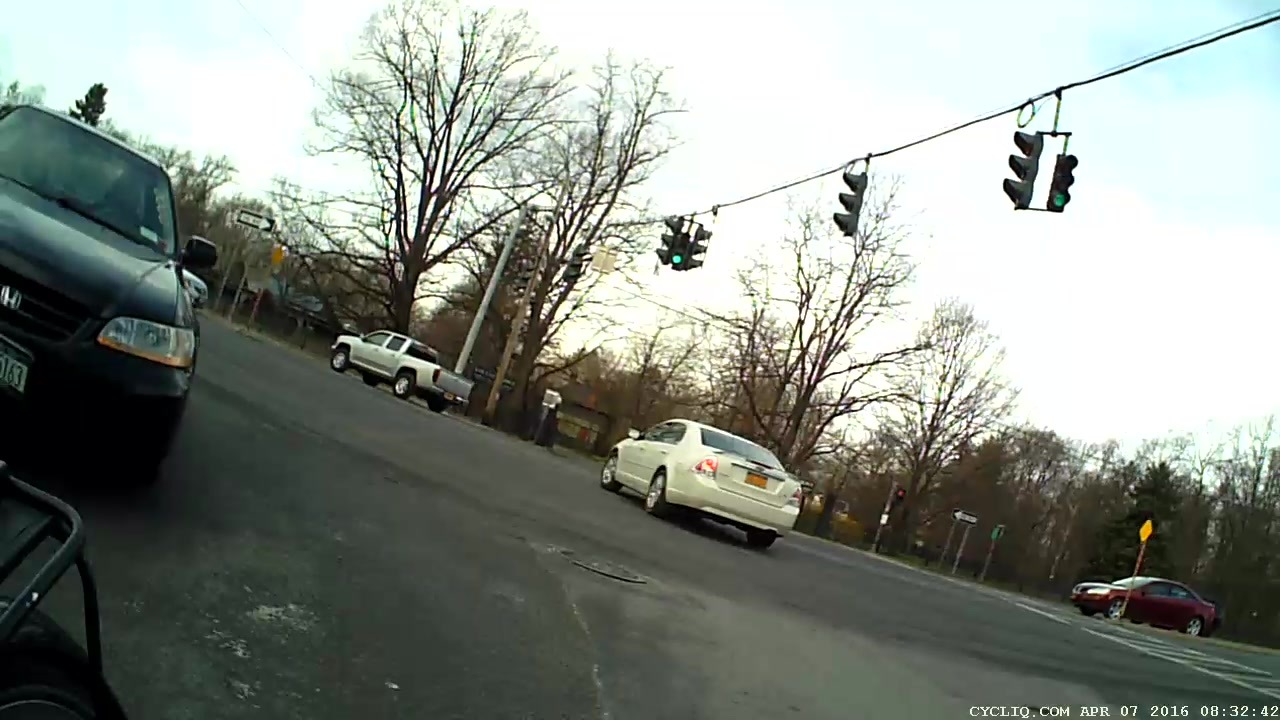
The police car jammed to a stop in the middle of the Red Oaks Mill intersection, directly in front of the cars (and bikes) that had just begun moving after the light turned green:
Candidate Motorcade – 0700
During the next minute, the officer managed to clear most of the traffic from the left-turn storage lanes perpendicular to us, after which two motorcycle officers led the procession:
Candidate Motorcade – 5015
Two ordinary SUVs with flashing light bars followed:
Candidate Motorcade – 5211
Two stretched SUVs with side window and marker flashers:
Candidate Motorcade – 5403
One blatantly inconspicuous black sedan running dark:
Candidate Motorcade – 5467
Two black patrol cars and a white patrol car, all with flashing lights:
Candidate Motorcade – 5792
The officer jumped into his car and rejoined the procession at the end:
Candidate Motorcade – 5992
According to my back-of-the-envelope, the motorcade moved through the intersection at a steady 20 mph.
Given where all the folks who merit such an escort were supposed to be at the time, I don’t know why they brought The Personage through the Red Oaks Mill intersection in that direction; the City of Poughkeepsie is to our rear, due north of Red Oaks Mill. Perhaps they’re following a randomly chosen route to confuse the unprepared, even though it’s longer and requires more traffic control?
Rumors from a Reliable Source indicate that not all trains travel on steel rails.
I suppose you eventually get used to having a couple of quiet people standing in every room with you.
One benefit of the inevitable news coverage: a few more people now know how to pronounce “Poughkeepsie”.
Just because I hadn’t done so for quite a while, I rode Grand Avenue from Beechwood north to the rail trail. The rotted asphalt at the Westbound Arterial (a.k.a. Maple St, at that point) intersection makes it easy to spot the quadrupole sensor loop:
Grand at Arterial WB – front camera – 0193
After half a minute, with no traffic pulling up behind me, I eased the bike over the central wire:
Grand at Arterial WB – front camera – 1693
Which is exactly as awkward as it seems:
Grand at Arterial WB – front camera – 1945
Much to my surprise, the sensor tripped:
Grand at Arterial WB – front camera – 3044
That’s about 50 s from the time I rolled over the first of the two sensor loops, which is fast enough for me. It’s unusual to find a sensor loop that detects a bike, though.
A bit over 6 s seconds later, I’ve cleared the intersection:
Grand at Arterial WB – front camera – 3445
The rear camera shows that the light remains green:
Grand at Arterial WB – rear camera – 1085
And it stays green:
Grand at Arterial WB – rear camera – 1121
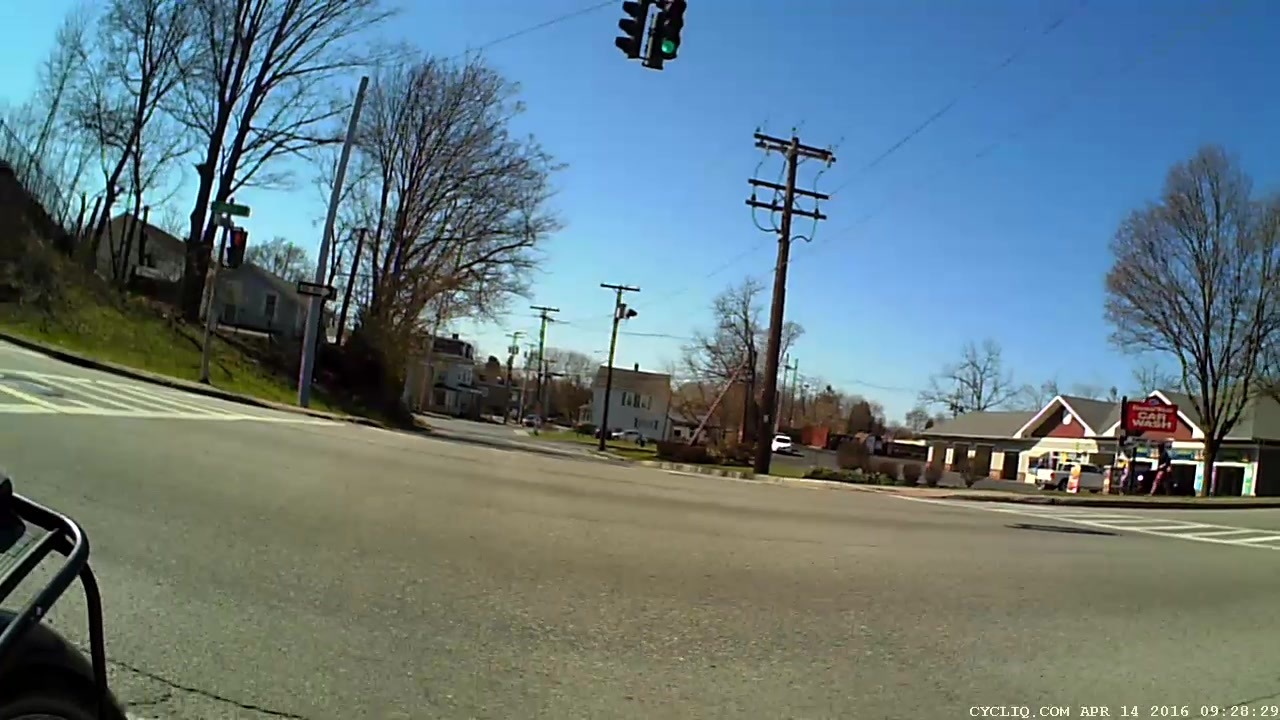
About 11 s after turning green, a car approaches the sensor loop:
Grand at Arterial WB – rear camera – 1228
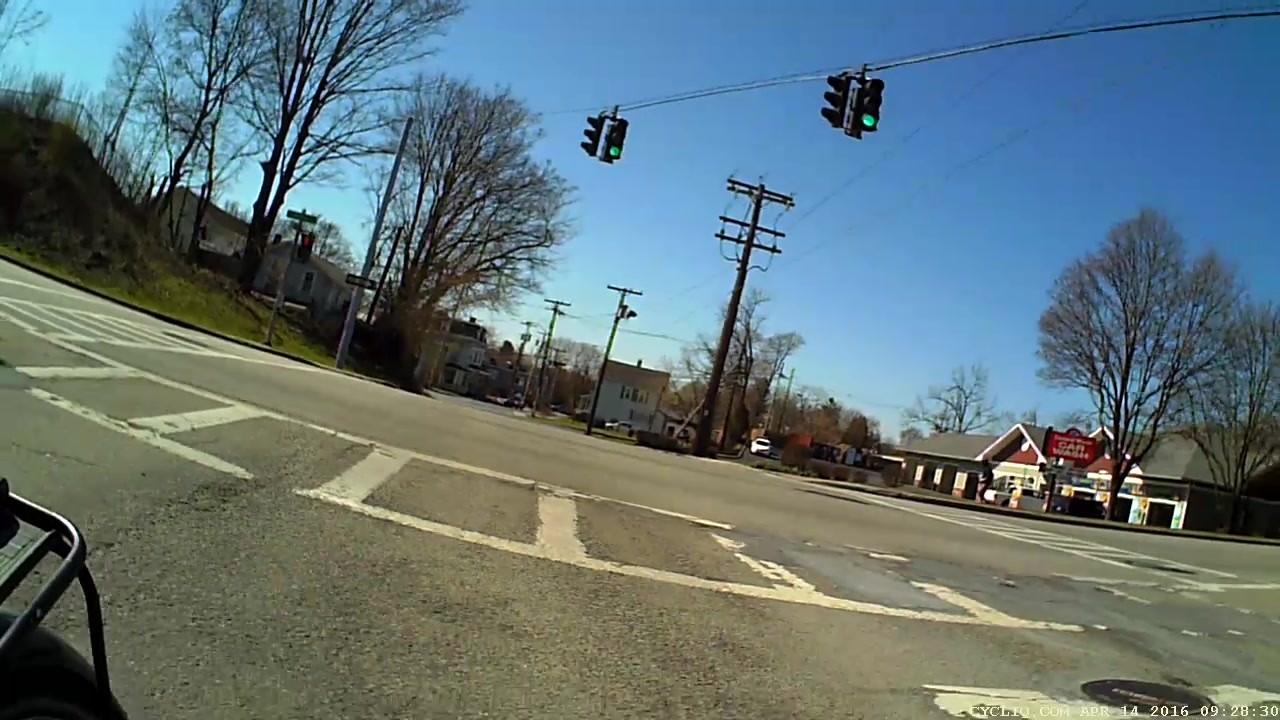
I think that reset the signal timing, so that light remained green for nearly 23 s:
Grand at Arterial WB – rear camera – 1581
It turned red after 26 s:
Grand at Arterial WB – rear camera – 1671
As nearly as I can tell, the minimum green time for this intersection is 12 s.
So life is good: the sensor loop detects a bicycle and the signal remains green for long enough to a bike to clear the intersection. If only all intersections worked that way!
Compare that with the minimum 7 s for the Burnett Blvd intersection and you (well, I) wonder why crossing six lanes requires 5 s less than crossing three lanes. Perhaps different standards apply to this single-direction cross-traffic flow that make it much more difficult than Burnett’s bidirectional cross traffic?
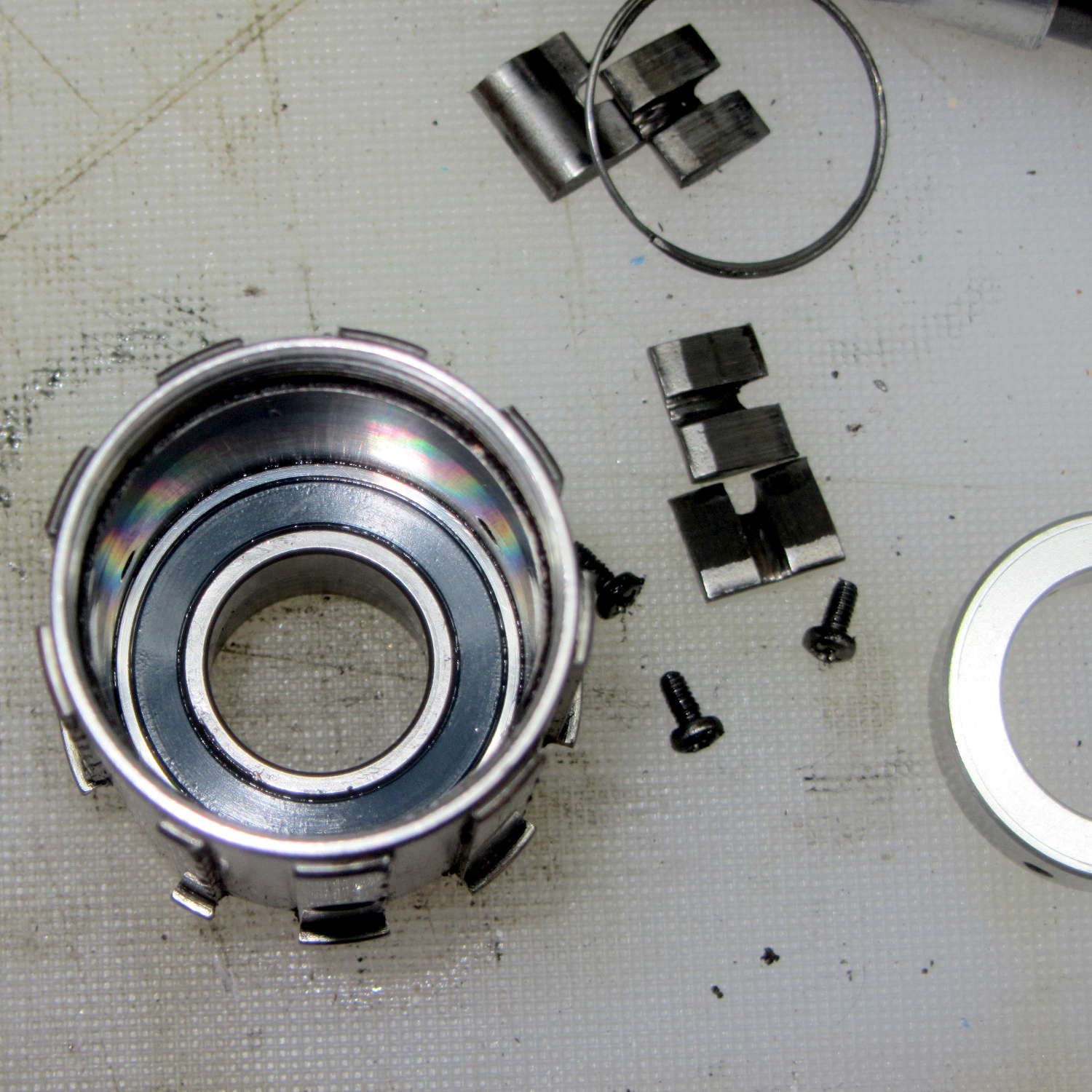
As part of replacing the entire drivetrain on my Tour Easy, I finally got around to replacing the bearings in the Phil Wood rear hub. The rear axle supports four bearings, with the innermost one captured between the end of the freehub and the aluminum retainer:
Phil Wood hub – internal bearing
The three small screws secure the retaining ring (sitting off to the right) against the bearing. If you don’t know what’s inside, you’d think they hold the freehub in place. Removing them doesn’t do anything useful unless you’re replacing the bearings and, if the retainer rotates even slightly inside the hub, you’re faced with taking the whole damn thing apart.
That bearing is lightly loaded, well-protected on all sides, and felt just fine, so I slathered more grease around it and left it in place. The other three bearings hit the trash can with a resounding clang…
I’m returning home after accompanying Mary to her morning of volunteering in the Locust Grove veggie gardens. The Locust Grove gate faces predominantly left-turning traffic from Beechwood Avenue, so I’ll be watching the vehicles approaching head-on.
T = 0.000 – Signal turns green:
Rt 9 Locust Grove – Right on Red – front camera – 0135
T = 2.500 – Entering the intersection:
Rt 9 Locust Grove – Right on Red – front camera – 0270
I don’t start pedaling until the signal in my direction actually turns green, because drivers have been known to blow through intersections with a fresh red signal. Two seconds seems like a reasonable delay.
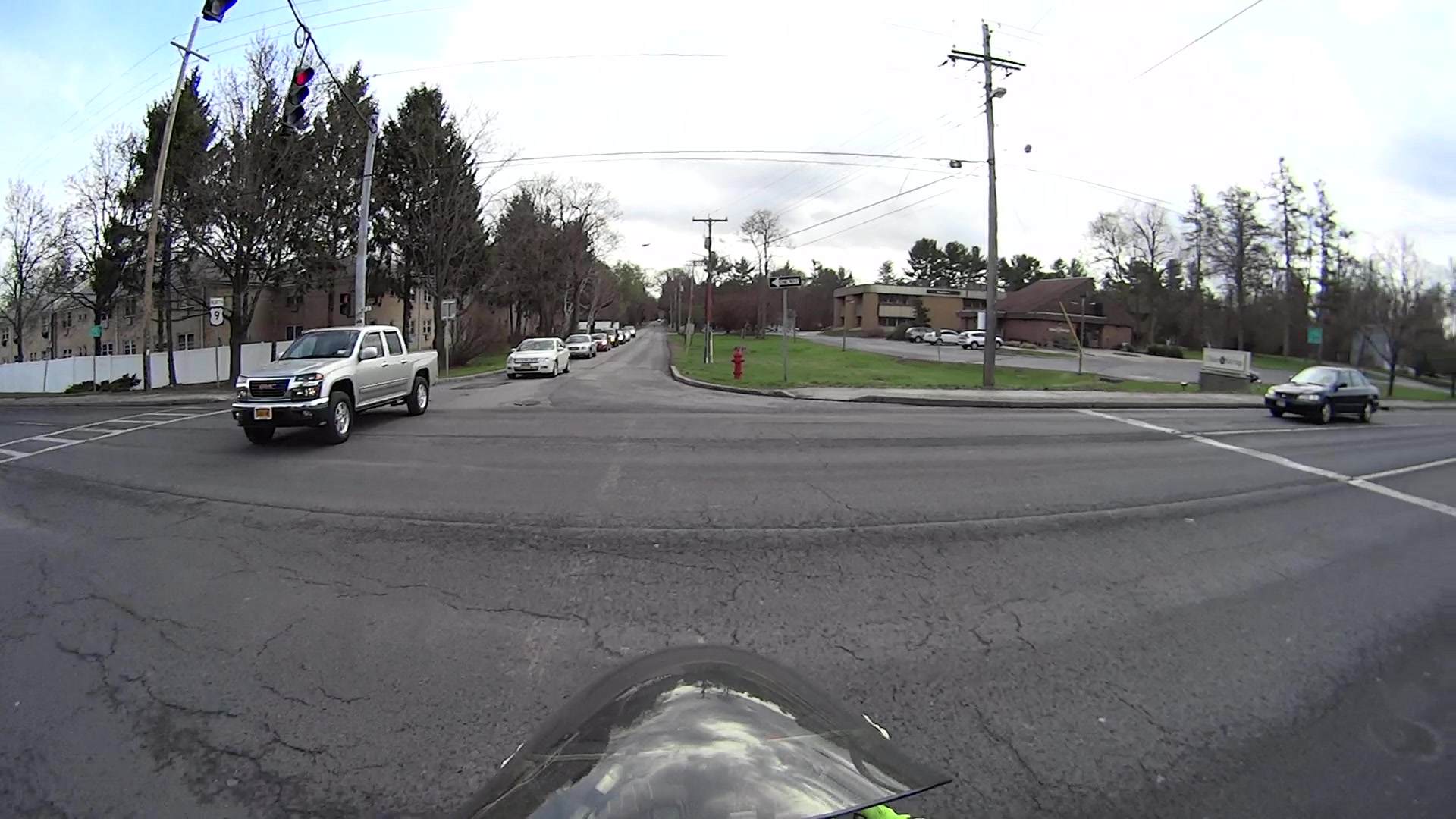
T = 5.500 – Three lanes later, nearing the midline of Rt 9 and still accelerating:
Rt 9 Locust Grove – Right on Red – front camera – 0465
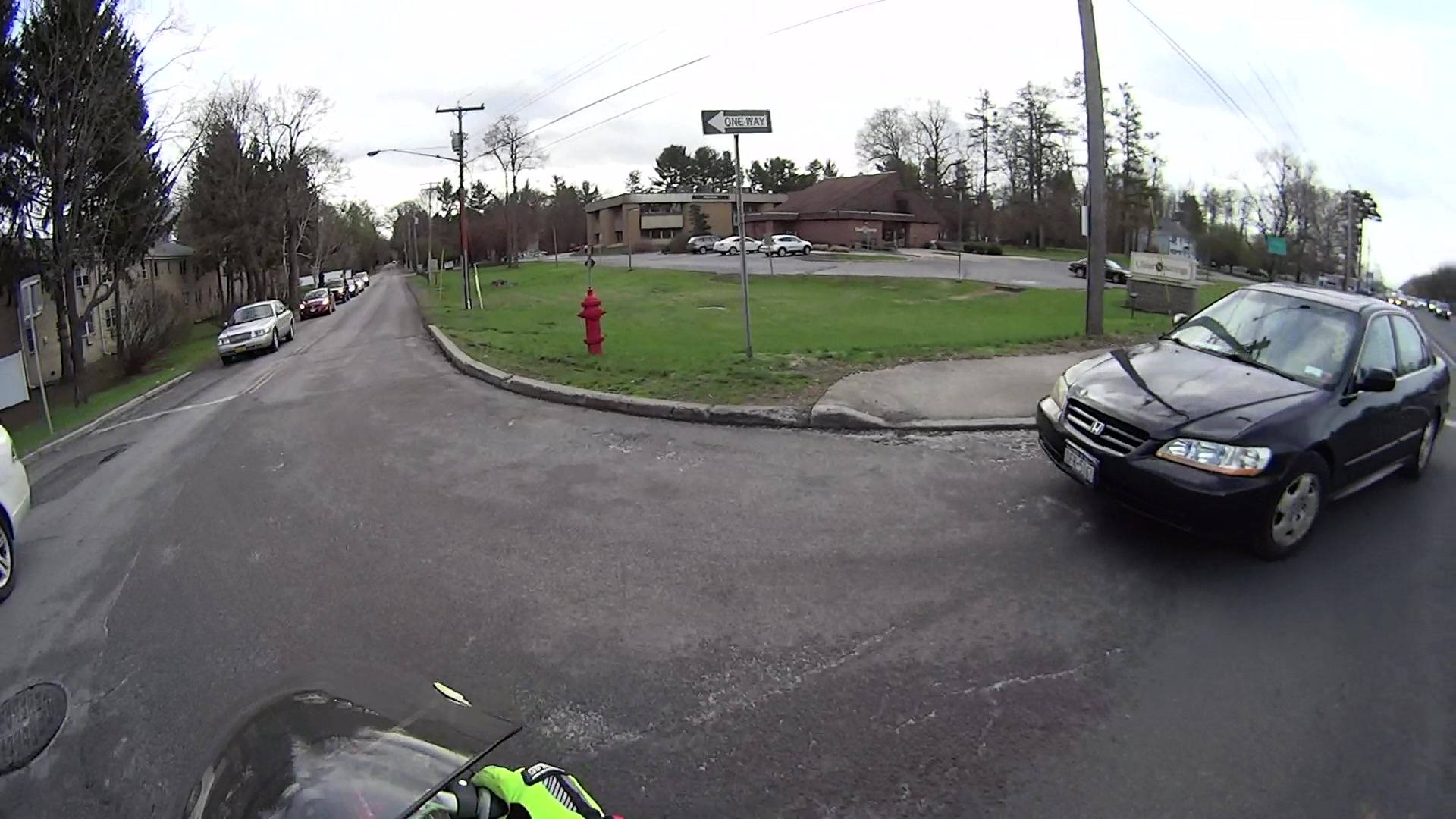
T = 5.917 – The black car in the right lane is moving and I begin to look that way:
Rt 9 Locust Grove – Right on Red – front camera – 0490
I cannot tell from the video whether the driver actually stopped (as you’re required to do for “right on red after stop“, but nobody actually does) or just slowed into a rolling stop for the turn.
Why not slam to a stop in the middle of Rt 9 in front of the left-turning traffic? Come for a ride with me and we’ll try that out. I’ll shout “LOOK OUT!” at some inopportune time when you’re in the middle of traffic and not expecting it, whereupon you must hit the brakes and deal with the consequences.
T = 7.117 – One second later, I’m beginning to veer left, directly toward the stream of oncoming traffic turning toward me:
Rt 9 Locust Grove – Right on Red – front camera – 0562
In round numbers, the black car moved 35 feet in 1.2 s between those frames: 30 feet/s = 20 mph.
T = 7.750 – The white car on my right continues turning and I’ll definitely clear its rear:
Rt 9 Locust Grove – Right on Red – front camera – 0600
The black car has moved another 15 feet in 633 ms: 24 feet/s = 16 mph.
I’m wearing the vest part of my fluorescent green jacket over a fluorescent green shirt with fluorescent green gloves. By now, I think I’ve been sighted, at ten feet and closing.
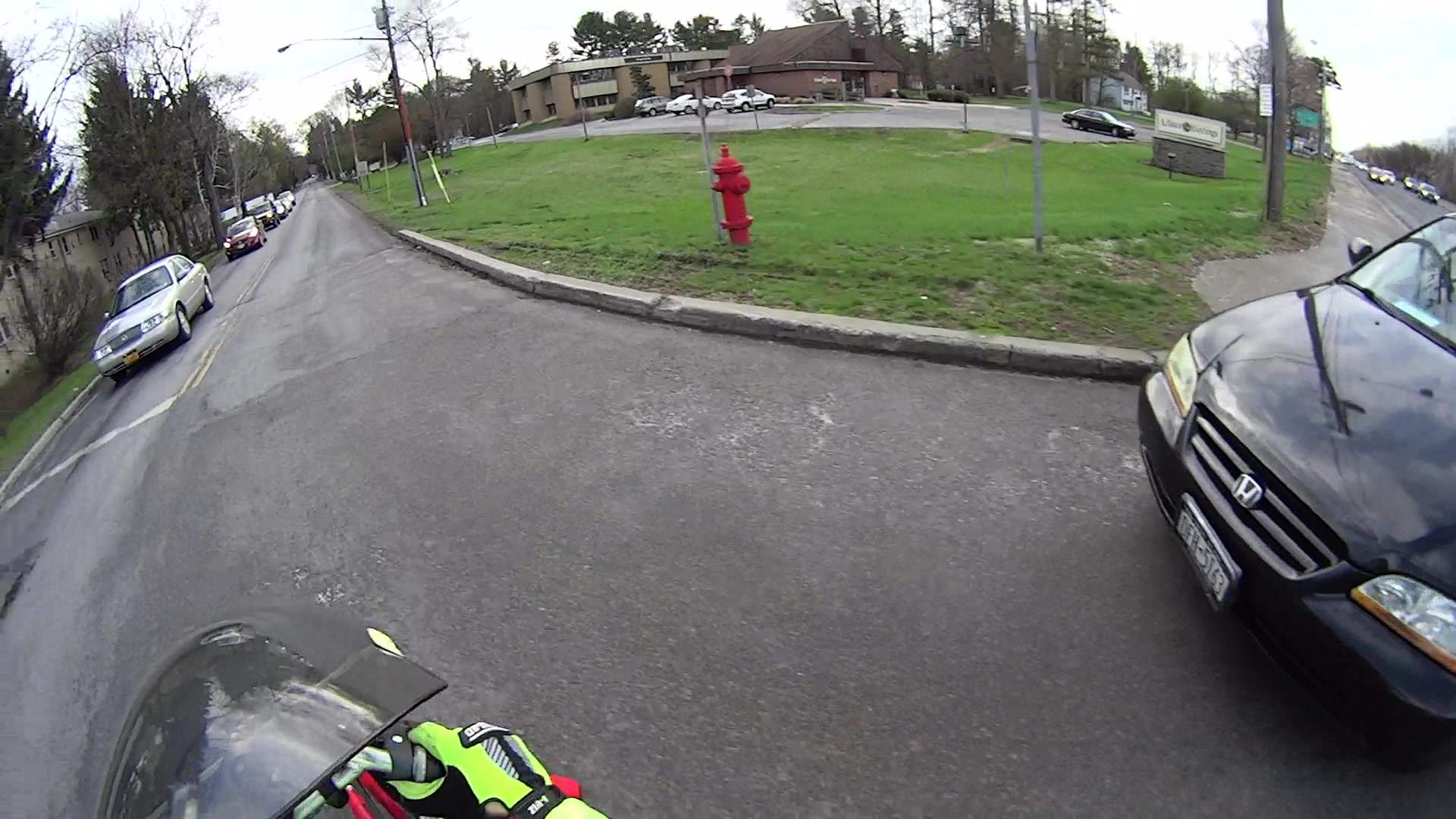
T = 8.383 – The only clear area lies directly ahead of the oncoming silver car:
Rt 9 Locust Grove – Right on Red – front camera – 0638
T = 9.000 – I’m approaching the yellow line, probably won’t sideswipe the silver car, and the black car is now braking:
Rt 9 Locust Grove – Right on Red – front camera – 0675
T = 9.583 – The black car has nearly stopped:
Rt 9 Locust Grove – Right on Red – front camera – 0710
The wide-angle lens on the HDR-AS30V makes it look like I had plenty of room. The Fly6 rear camera shows why I had reason for concern:
Rt 9 Locust Grove – Right on Red – rear camera – 0323
I’m still moving, the black car is slowing:
Rt 9 Locust Grove – Right on Red – rear camera – 0332
T = 9.767 – Props to this driver for not starting quickly:
Rt 9 Locust Grove – Right on Red – front camera – 0781
Elapsed time: four seconds from spotting the black car not stopping in the right-turn lane.
I moved back to the right side of the lane and continued the mission, but decided I didn’t need a jaunt across town to the rail trail before the rain set in to get my heart rate up.
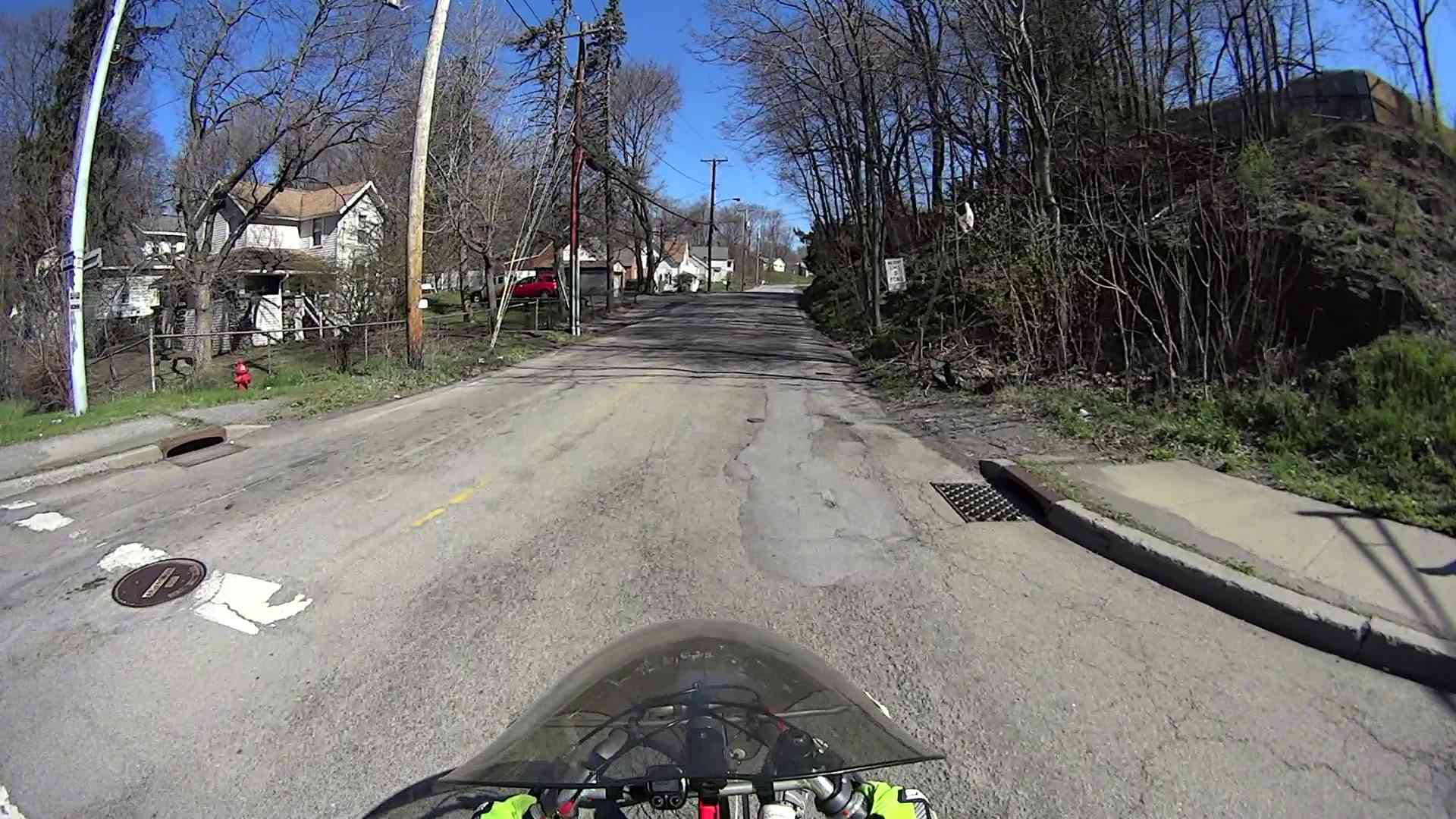
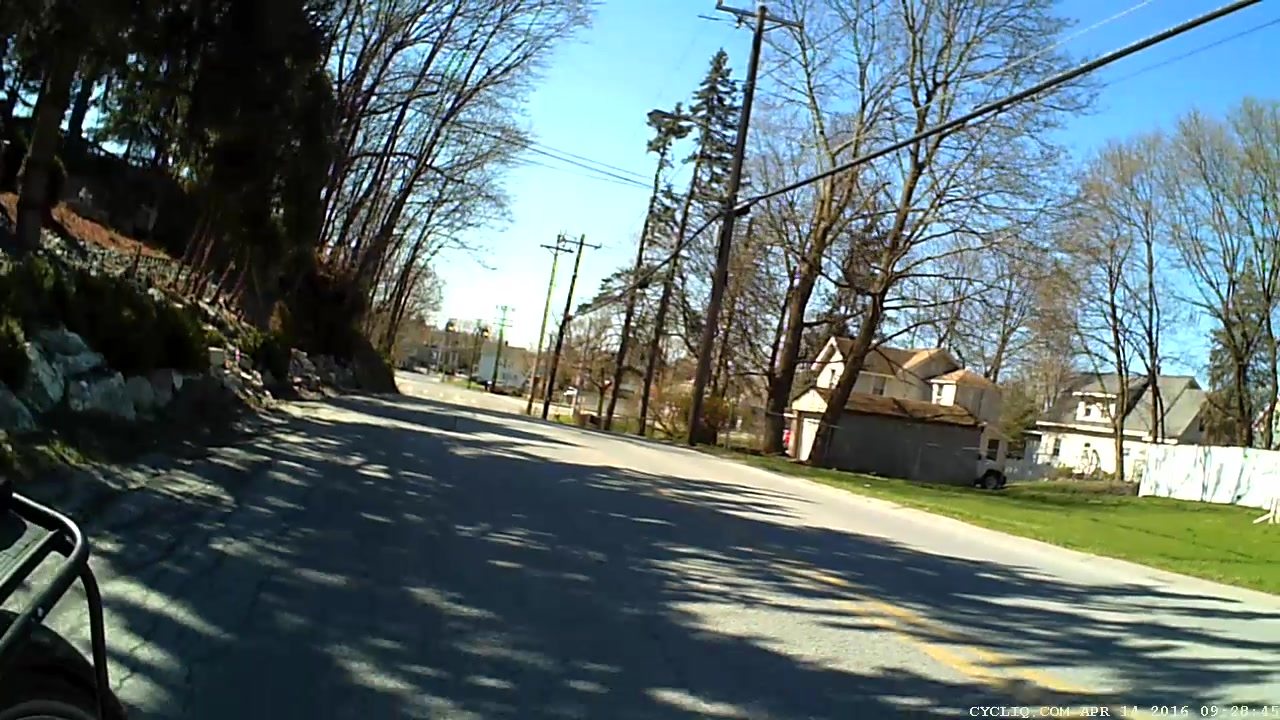
It’s been sinking, month by month, ever since I reported it to NYSDOT last July. They dispatched a work crew that did a remarkable job of patching everything around the sinkhole (note the asphalt obliterating the center line), but somehow missed the actual hole on the shoulder, despite the picture I sent. Just before snow season, a second crew patched many small holes along Rt 376 from Red Oaks Mill to Hooker Avenue, but, once again, missed this one.
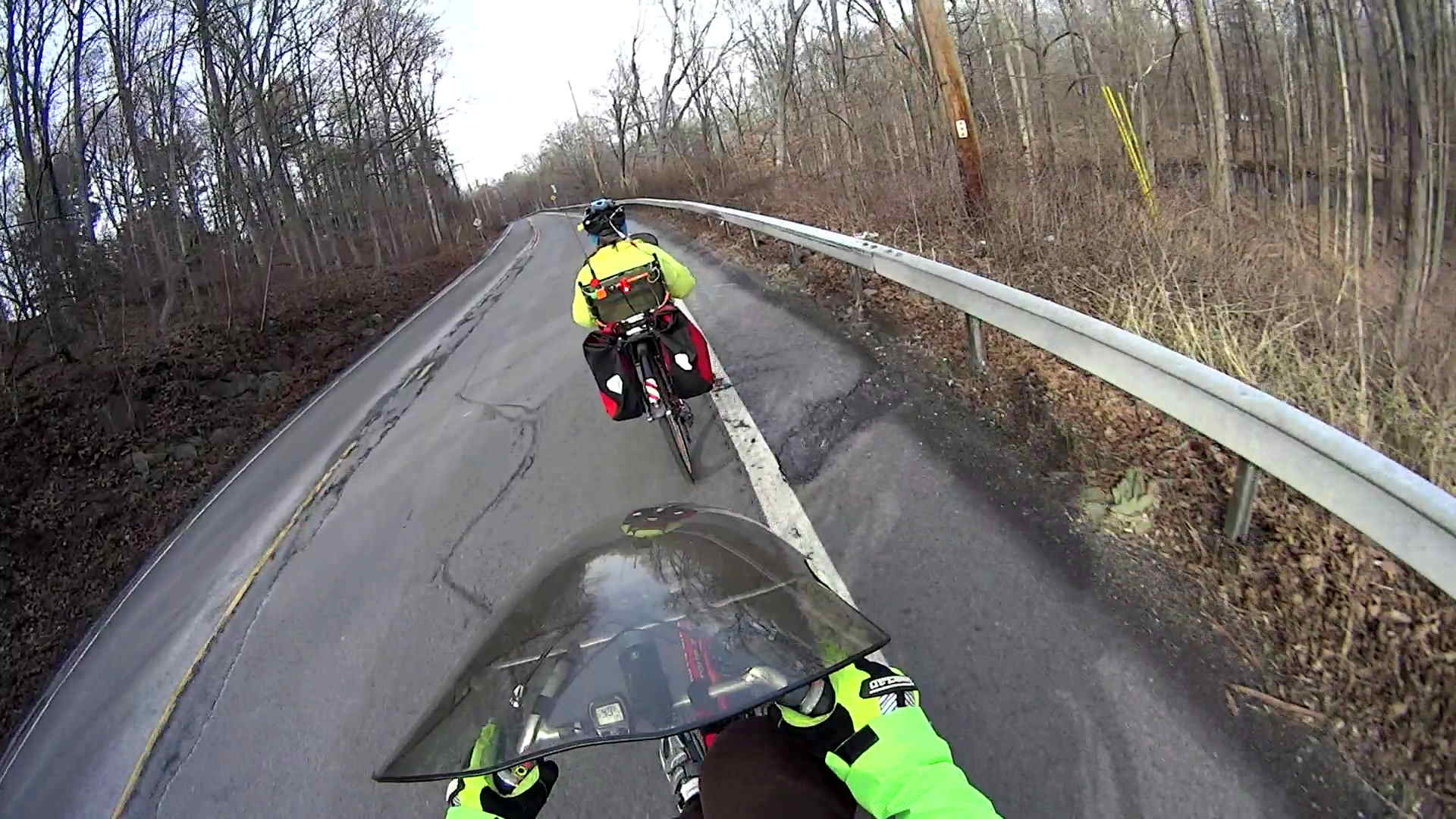
If it doesn’t look like much, let’s go for a check ride.
This section of Rt 376 forms part of NYS Bike Route 9.















 The Smell of Molten Projects in the Morning