Ed Nisley's Blog: Shop notes, electronics, firmware, machinery, 3D printing, laser cuttery, and curiosities. Contents: 100% human thinking, 0% AI slop.
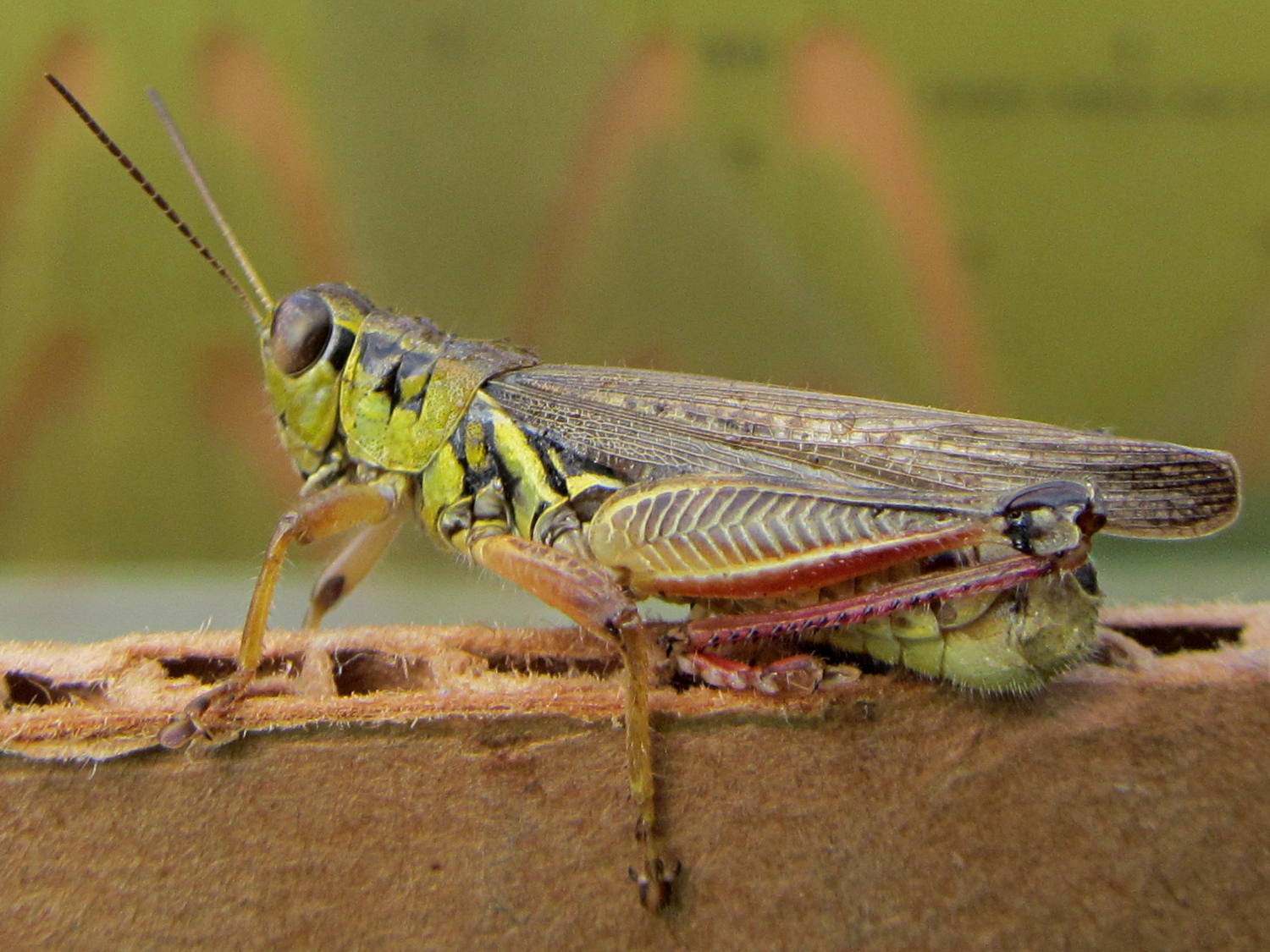
I donated the last of Mad Phil’s stuff to a local nonprofit’s tag sale, where it helped bulk up the bottom line a bit. While I unpacked the van, a grasshopper stopped by to supervise:
The improved platform for the M2 runs at 30 V, but the RAMBo board specs limit the max HBP voltage to 24 V, presumably because the 15 A ATO fuse won’t clear a high-voltage, high amperage DC short. While setting up the SSR that drives the new platform, I looked up the specs for the PSMN7R0-60YS MOSFET controlling the bed heater and … it doesn’t have a logic level gate.
The rDS spec is an impressive 6.4 mΩ max, but that’s at VGS = 10 V. The 1 mA threshold voltage VGS(th) = 4 V max, which means there’s only 1 V of headroom to turn the transistor on enough to pass upwards of 10 A.
The typical ID vs. VGS curve (Fig 6) shows 20 A at maybe 4.2 V, but the typical RDSon curve (Fig 8) shows the resistance skyrocketing for VGS under maybe 4.8 V; sliding that curve a wee bit to the right would cause a Very Bad Thing to take place.
A 20 mΩ resistance dissipates 4.5 W at 15 A, which seems rather aggressive for the small PCB copper-pour heatsink on the RAMBo board. It’s a somewhat more bearable 2 W at 10 A, but I think that’s still too high. Of course, the typical dissipation will should be much lower…
A good engineering rule of thumb is to ignore the datasheet’s “Typical” column and design using the “Minimum” or “Maximum” columns, as appropriate. When you depend on typical specs, getting “the same part” from a different supplier can provide a real education in supply-chain management.
I suspect tolerance stacking works well enough that nearly all the MOSFETs on nearly all the RAMBo boards run cool enough to survive, but I’d rather see logic-level MOSFETs in Arduino circuits where the maximum gate voltage won’t ever get above 5 V.
We biked to Saugerties for the Hudson Valley Garlic Festival and spotted this monster looming in the morning mist during the ride home:
Excavator on CSX gondola car – side
The end view shows it’s not an optical illusion:
Excavator on CSX gondola car – end
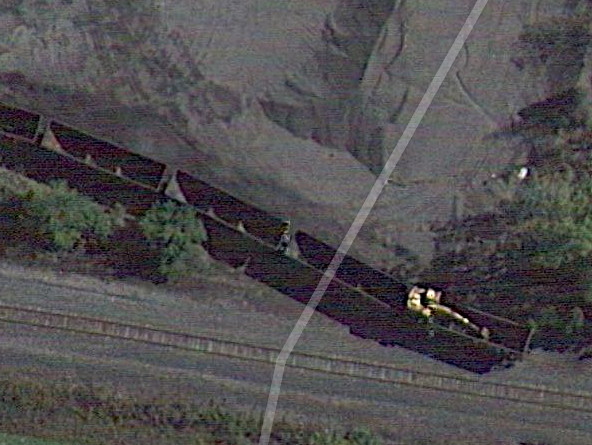
Some Google Maps fiddling reveals the plant, with the excavator atop the first car on the siding, down in the lower-left corner of the image:
Google Maps – Kings Highway at Tissal Rd
A zoomed view, rotated a quarter-turn CCW so it’s not quite so vertiginous:
Google Maps – Kings Highway at Tissal Rd – detail
My search-fu isn’t strong enough to uncover the plant’s name. They’ve obviously been doing something involving gravel and either asphalt or concrete for many years, so it’s not a prank…
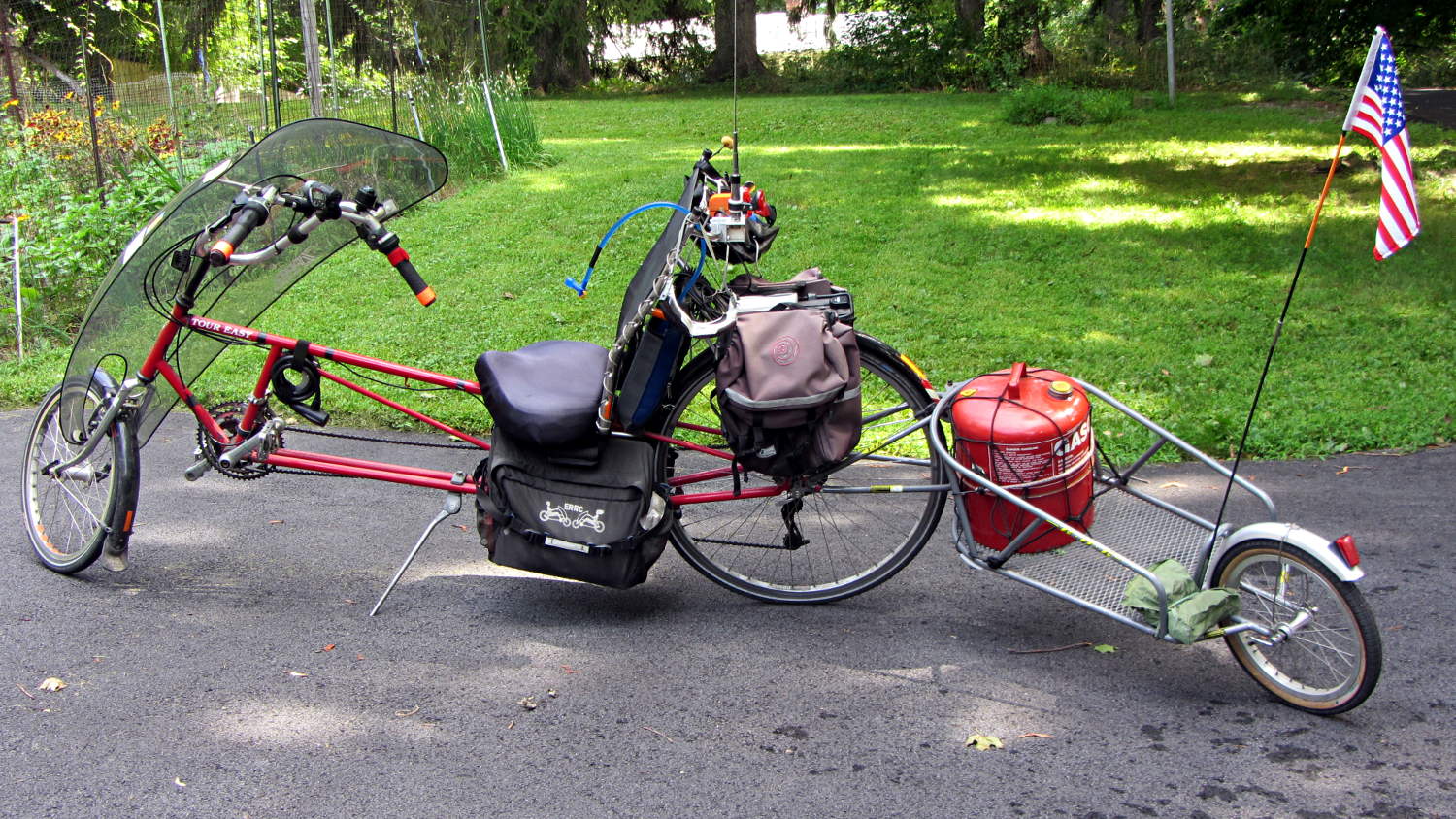
I was going to take a picture with it posed next to the gas pump, but the whole affair isn’t all that stable: it’s tough to look cool when your fancy faired Tour Easy ‘bent flops over like dead possum…
It’s always a good idea to open the barby lid before firing the burners: sometimes unexpected things appear:
Mouse nest in grill – foundation
The mouse being out and about at the time, I dumped the nest (which was just a foundation) over the patio railing into the flower garden, burned out the remainder at full throttle, and continued the mission.
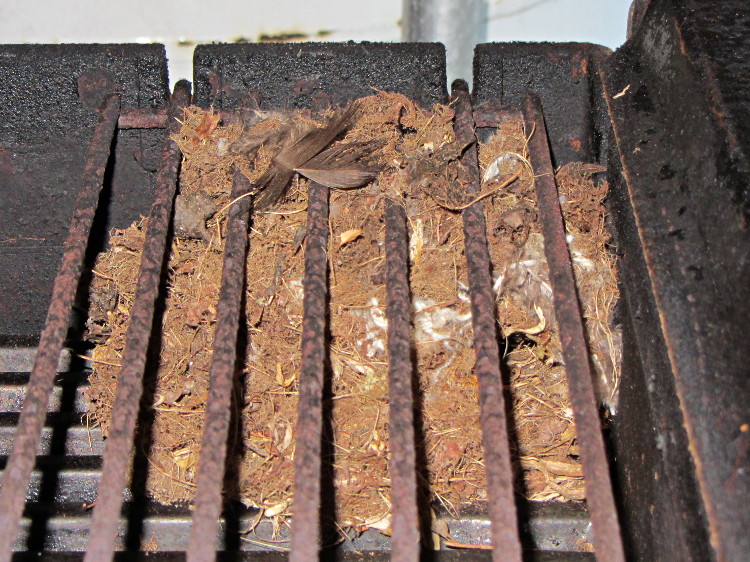
A week later, the mouse had not only returned, but finished off a substantial nest in the same spot, topped with a jaunty bird feather. The entrance tunnel is on the right, opening into a comfy mouse-sized pocket inside:
Mouse nest in grill – finished
Once again, I dumped the nest over the railing, burned out the rest, and continued the mission.
As of three weeks later, the mouse hasn’t returned; I trust it found a hollow log somewhere out back.
As nearly as I can tell, the mouse climbed up a square steel leg, scampered through the grease catch pan, leaped up through the drain hole, wriggled through three layers of crossed bars, and then deposited a single mouthful of building material.
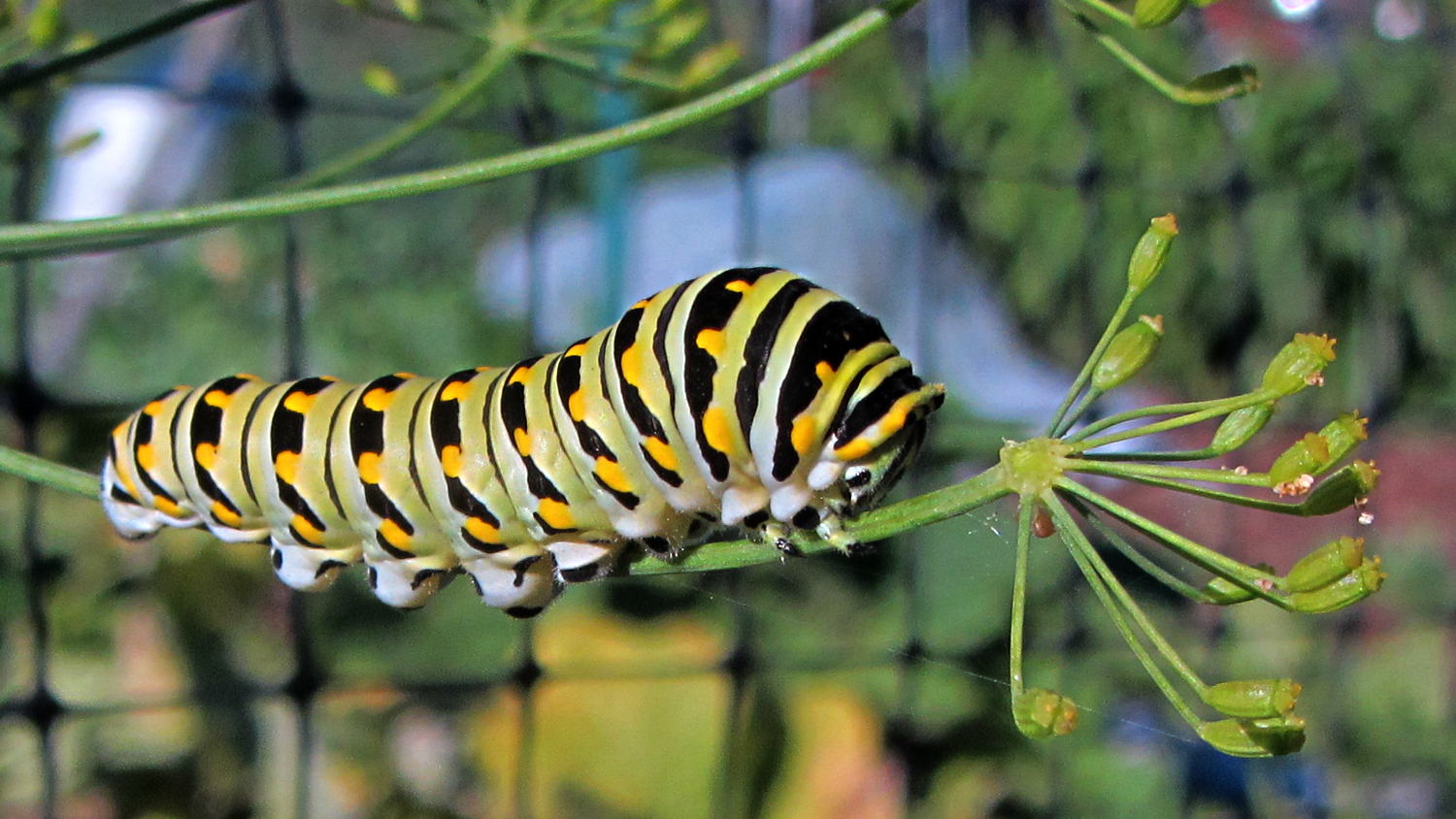
Four of these ferocious Parsley Worms were chowing down on a volunteer dill plant along the garden fence:
Parsley Worm Caterpillar on Dill
Amazingly, they turn into Black Swallowtail butterflies that sometimes visit the Butterfly Bush outside our living room window. Well, maybe not this one, but certainly some of its relatives.
We don’t hassle them; they have a fearsome threat display that apparently works wonders on their natural predators.





 The Smell of Molten Projects in the Morning