Ed Nisley's Blog: Shop notes, electronics, firmware, machinery, 3D printing, laser cuttery, and curiosities. Contents: 100% human thinking, 0% AI slop.
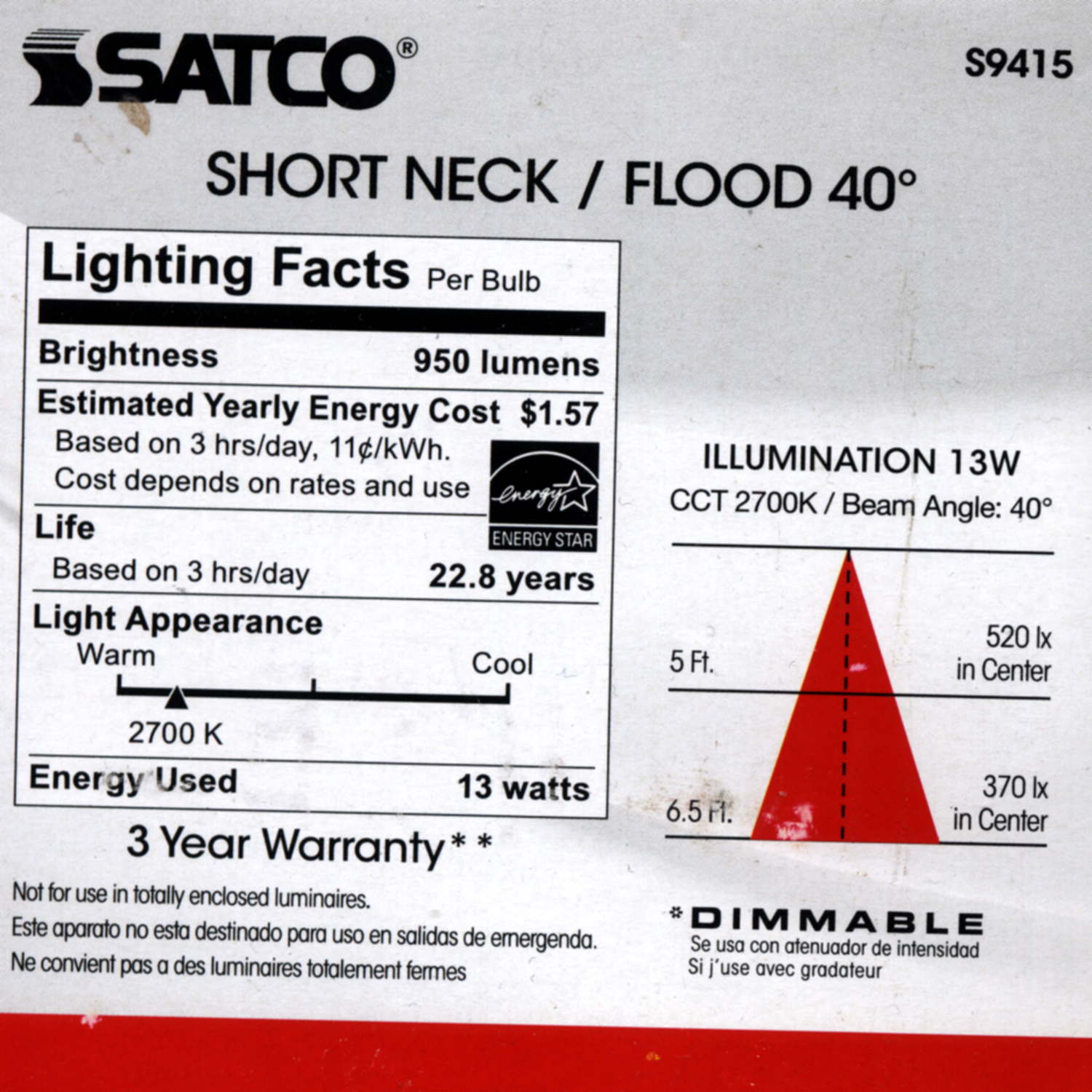
I replaced a dead 75 W halogen PAR30 bulb over the kitchen sink with a Satco S9415 LED bulb that was, at the time, advertised as “75 W equivalent”:
Satco S9415 PAR30 LED Bulb – specs
It’s noticeably less bright than the surviving halogen bulb, which is what you’d expect when 950 lm goes head-to-head with 1100+ lm (based on casual searching), but with a similar color temperature and beam pattern, so it’s Good Enough. I should have bought two and converted the halogens into glass sculptures.
The difference between the 22.8 year Life and the 3 Year Warranty always seems amusing. The warranty requires returning the bulb, so that’s about useless …
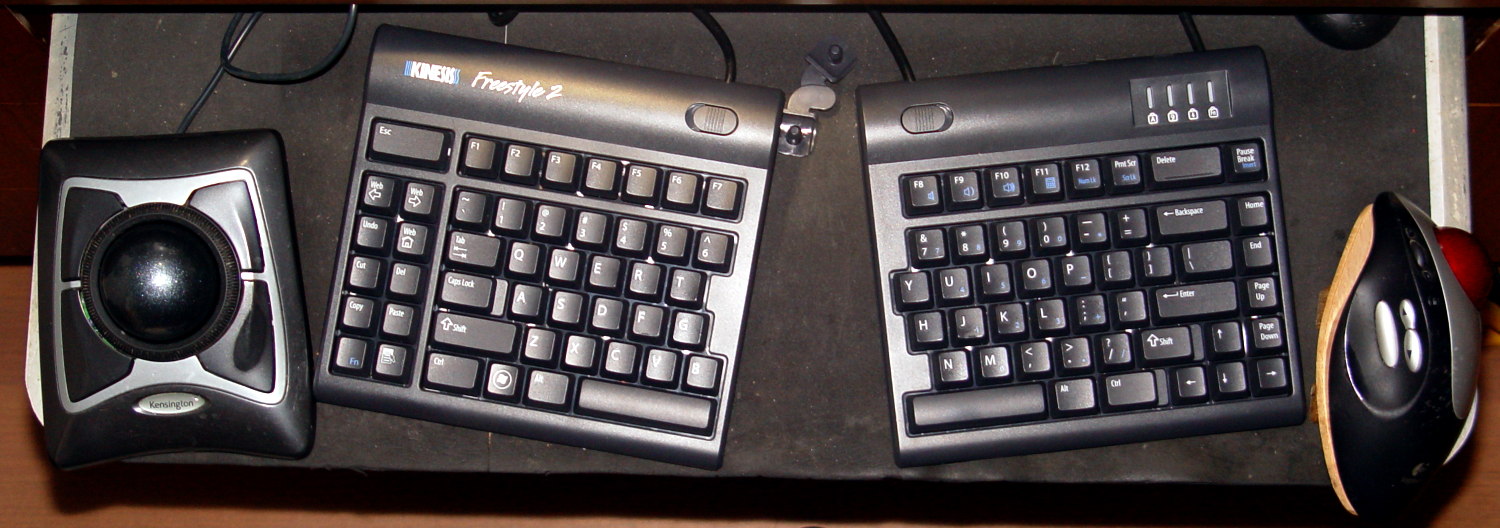
The little hinged dingus (“Pivot Tether”) between the halves (“Keying Modules”) has two posts that pop into into sockets on the back of the halves and are retained by the two sliding latches. The cord connecting the halves allows 9 inches of separation; I don’t need that much, but more than zero seemed about right.
Kinesis also sells various staggeringly expensive (IMO) doodads that attach to the back of the keyboard to “tent” the middle upward with varying degrees of refinement. None of the doodads offer to raise the back of the keyboard, which I vastly prefer to the current flat or reverse-tilted recommendations.
The keyboard & trackballs rest on a homebrew shelf that slides out from where the desk used to have a center drawer, which puts the keyboard slightly above elbow height (heck, slightly above thigh height), whereupon tilting the keyboard puts the keys exactly where they should be. I bandsawed some wood into vaguely triangular sticks, topped them with foam sheets, and tinkered for best tilt. Works for me, anyhow.
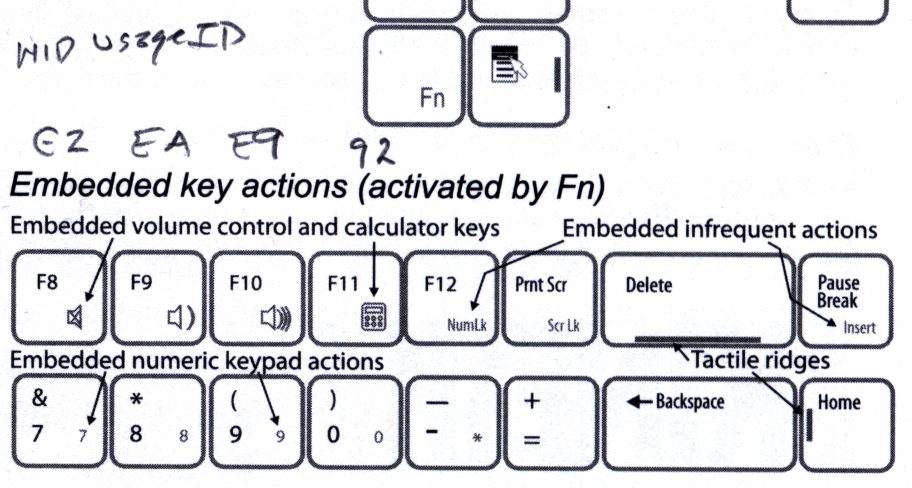
The Compatibility section of the Freestyle2 User Manual describes the “special driverless hot keys”: Most will also work with Linux. Four of them do not work, to the extent that they don’t even send key codes to exv. Some searching suggests this is an intractable problem, for reasons that make no sense to me. Their HID Usage Codes, whatever that might mean:
Kinesis Freestyle2 – inert key codes
That’s only a minor inconvenience; I prefer a physical calculator and don’t spend much of my life listening to anything through the headphones.
For whatever it’s worth, the scroll ring on the most recent warranty replacement Kensington Expert “Mouse” (I think it’s the third) has worked flawlessly for years; they seem to have fixed the sudden death syndrome.
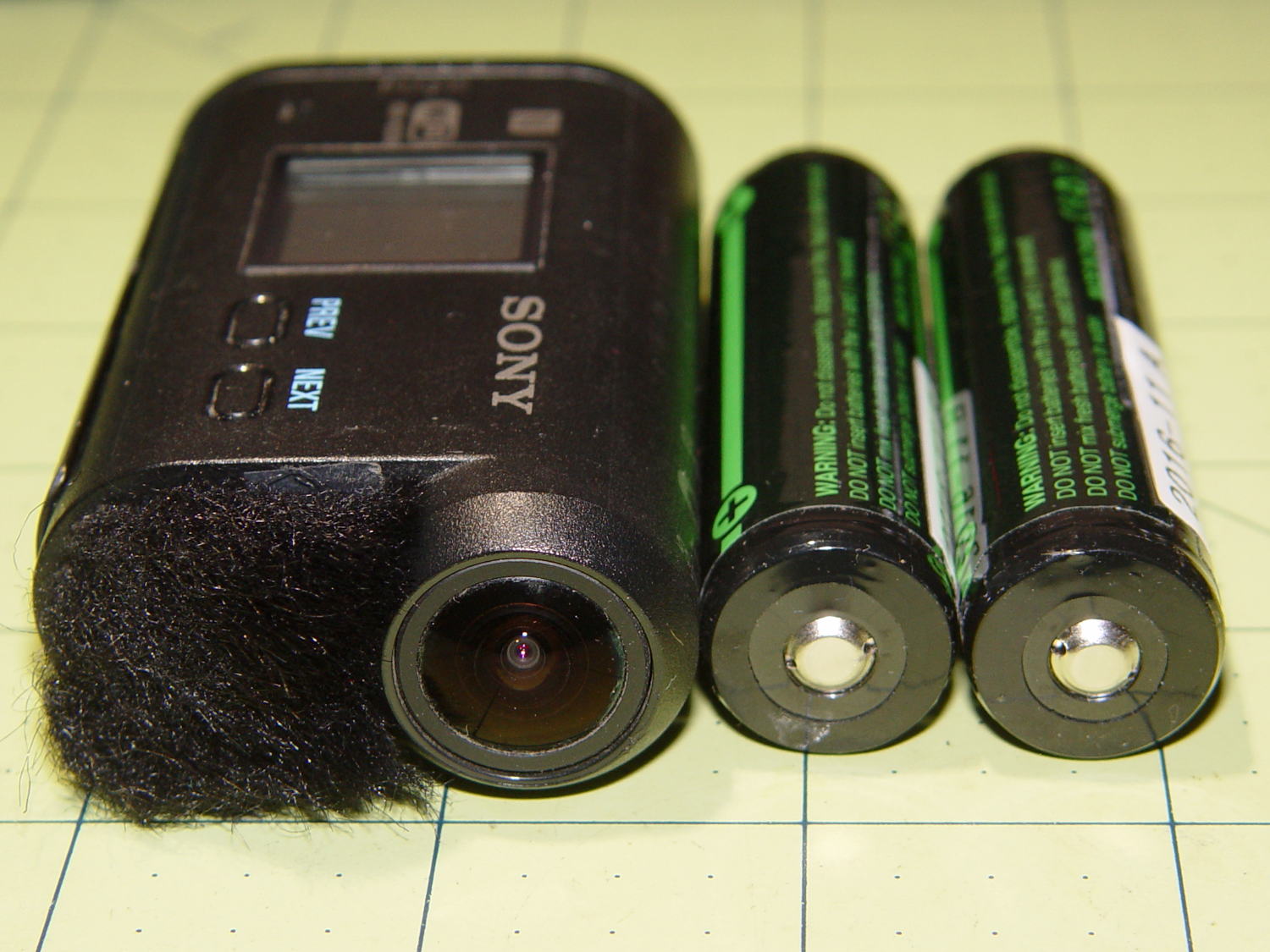
These items came near enough to produce an irresistible force:
Sony HDR-AS30V vs 18650 cells – side view
How can you look at that layout and not jump to the obvious conclusion?
The front view suggests enough room for a stylin’ case:
Sony HDR-AS30V vs 18650 cells – end view
You’d need only one cell for the camera; I happened to have two in my hand when the attractive force hit.
The camera is 24.5 ⌀ x 47 tall x 71.5 overall length (67.8 front-to-door-seating-plane).
The ATK 18650 cells are 19 ⌀ x 69 long, with the overlong length due to the protection PCB stuck on the + end of the cylinder. You can get shorter unprotected cells for a bit less, which makes sense if you’re, say, Telsa Motors and building them into massive batteries; we mere mortals need all the help we can get to prevent what’s euphemistically called “venting with flame“.
Although I like the idea of sliding the cell into a tubular housing with a removable end cap, it might make more sense to park the cell over the camera in a trough with leaf-spring contacts on each end and a lid that snaps over the top. That avoids threaded fittings, figuring out how to get an amp or so out of the removable end cap contact, and similar imponderables.
I think it’s possible to drill a hole through the bottom of the camera at the rear of the battery compartment to pass a cable from a fake internal cell to the external cell. Some delicate probing will be in order.
In round numbers, those 18650 cells allegedly have three times the actual capacity of the camera’s flat battery and cost about as much as the not-so-cheap knockoff camera cells I’ve been using.
Those hex heads let you apply more torque with less risk of stabbing yourself in the palm, which strikes me as an all-around Good Thing. I prefer socket-head cap screws, myself, but I’ll admit they’re an acquired taste.
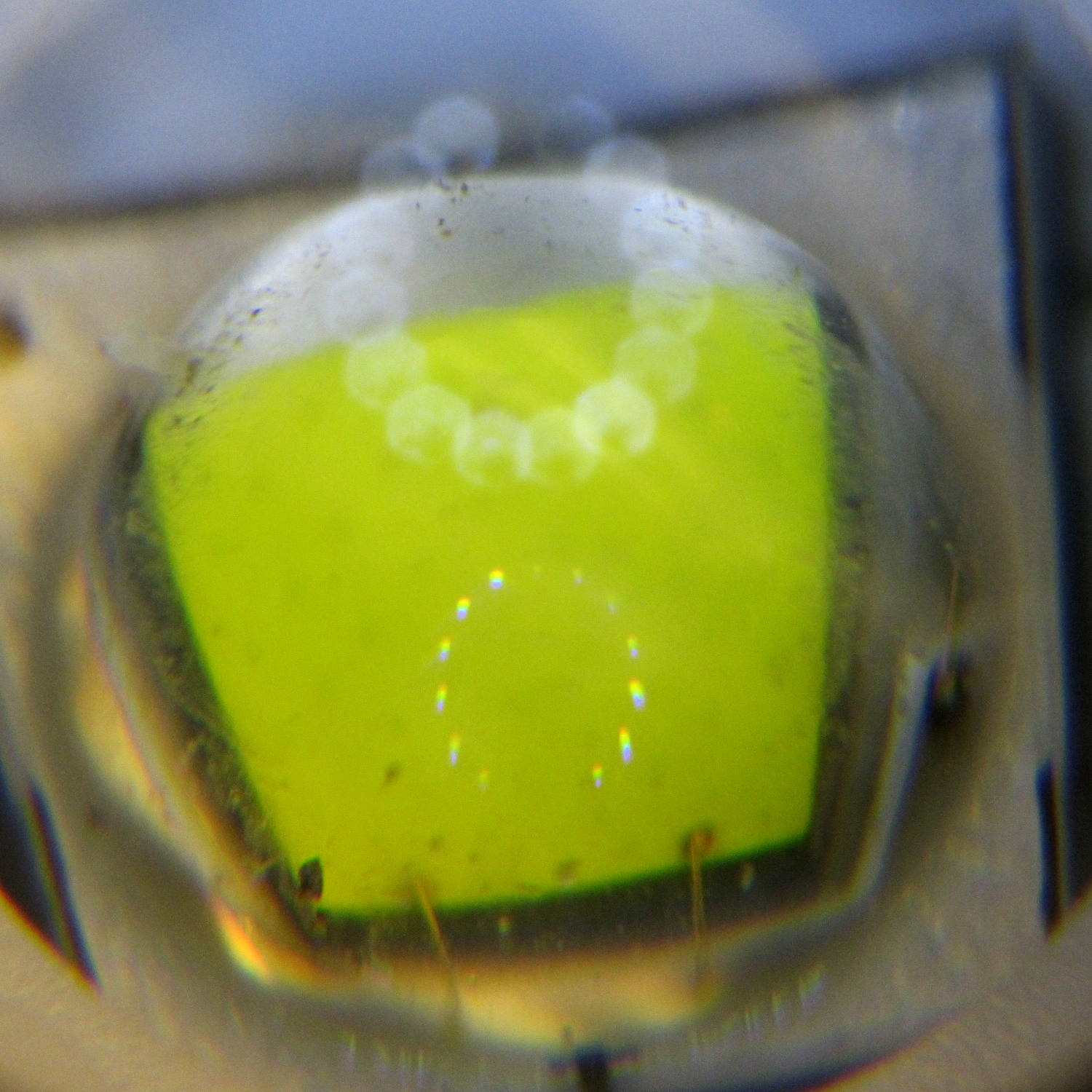
The inside of the replacement J5 V2 Tactical Flashlight doesn’t have quite as much dirt on the LED emitter, but it’s still pretty bad:
J5-V2 Flashlight – LED crud – second unit
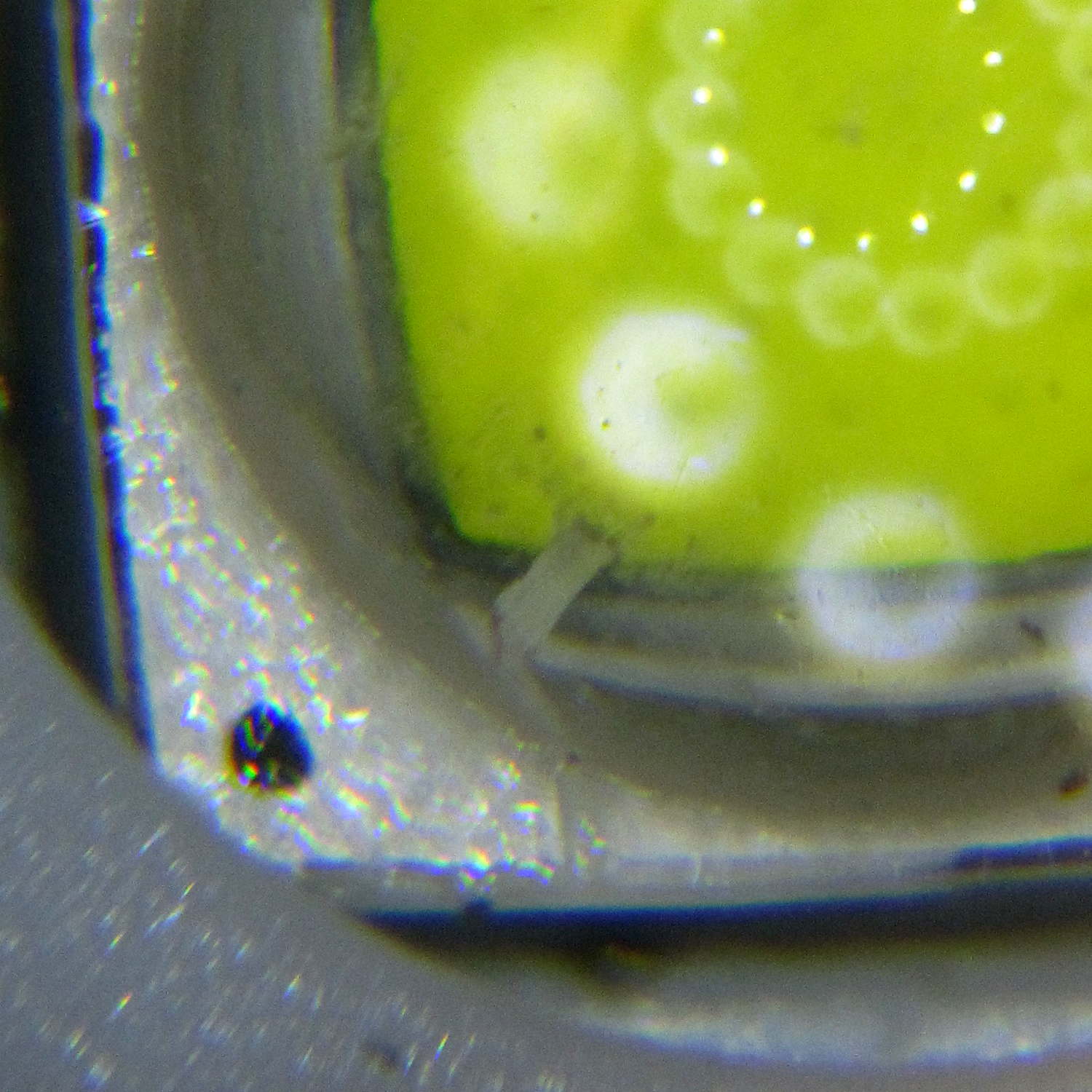
The small white dingus at about 10 o’clock seems to be a plastic shred stuck on end to the emitter lens. Here’s a better look, rotated a quarter-turn counterclockwise:
J5-V2 Flashlight – LED crud detail – second unit
There’s also an alien egg glued to the heatsink beside the LED:
J5-V2 Flashlight – random pellet – second unit
I’m hoping it’s another random plastic blob.
There’s no point in returning this one; it’ll suffice for my purposes. However, given two random samples, I’d say the J5 Tactical Flashlight factory, wherever it may be in China, is really filthy.
I’d hoped that paying a bit more for a “tactical” flashlight, instead of going bottom dollar, would yield a better product. Maybe it did?
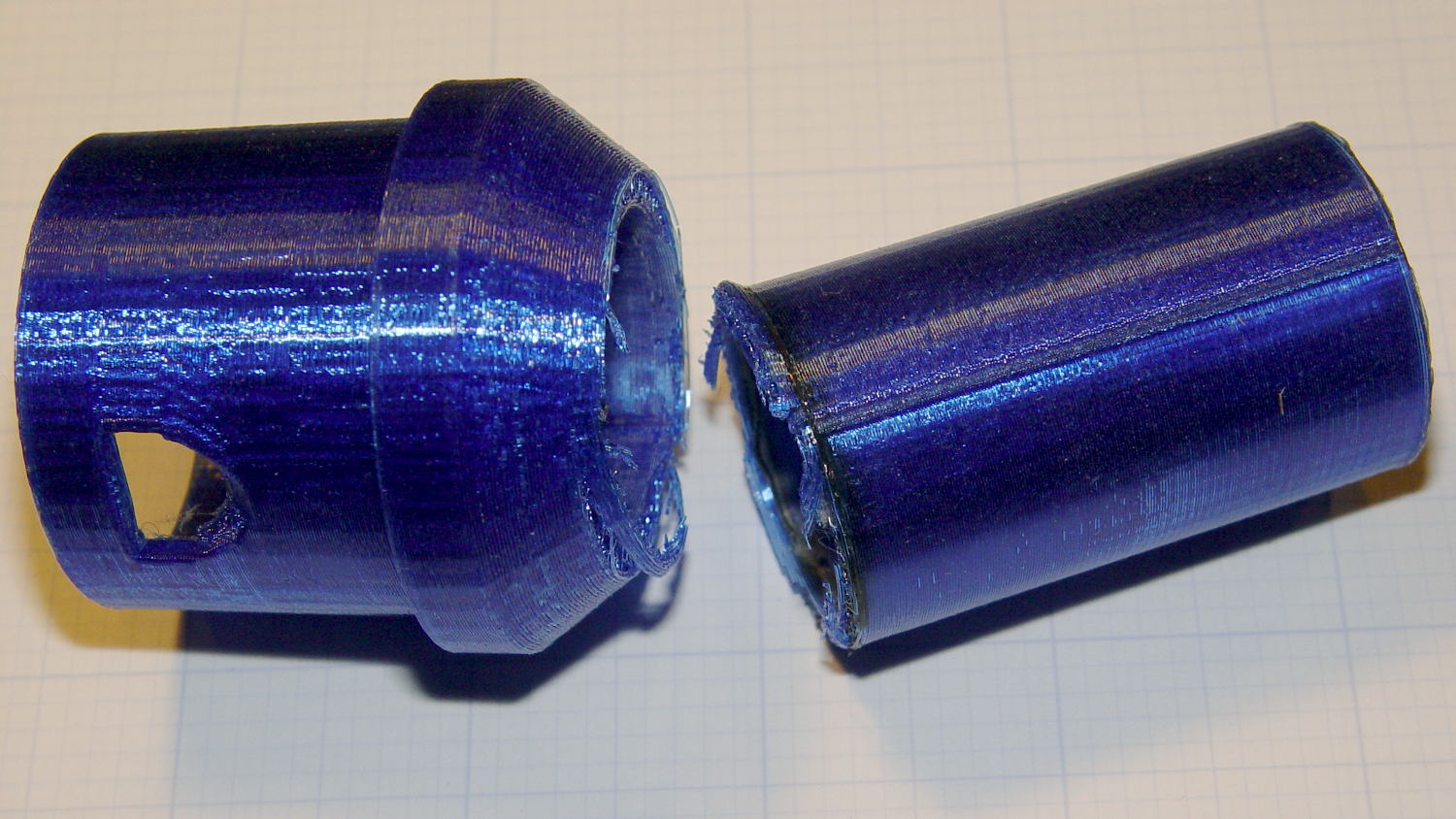
A bit of rummaging turned up some ¾ inch Schedule 40 PVC pipe which, despite the fact that no plumbing measurement corresponds to any physical attribute, had about the right OD to fit inside the adapter’s ID:
Dust brush – PVC reinforcement
The enlarged bore leaves just barely enough space for a few threads around the circumference. Fortunately, the pipe OD is a controlled dimension, because it must fit inside all the molded PVC elbows / tees / caps / whatever.
The pipe ID isn’t a controlled dimension and, given that the walls seemed far too thick for this purpose, I deployed the boring bar:
Dust brush adapter – reinforced tube – boring
That’s probably too much sticking out of the chuck, but sissy cuts saved the day. The carriage stop keeps the boring bar 1 mm away from the whirling chuck.
Bandsaw it to length and face the ends:
Dust brush adapter – reinforcement
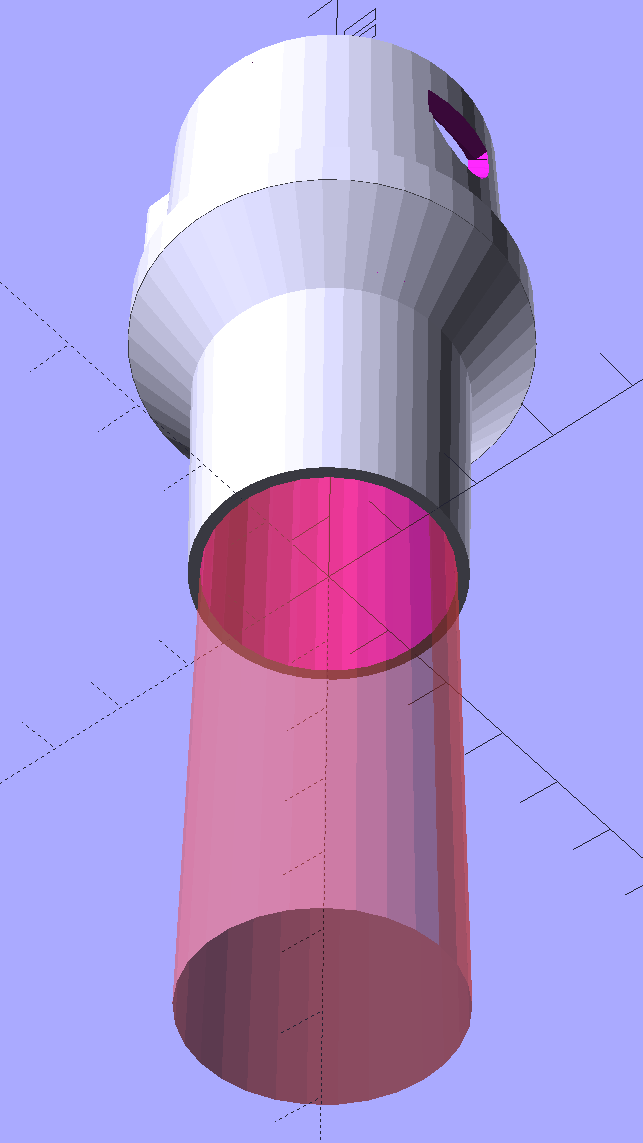
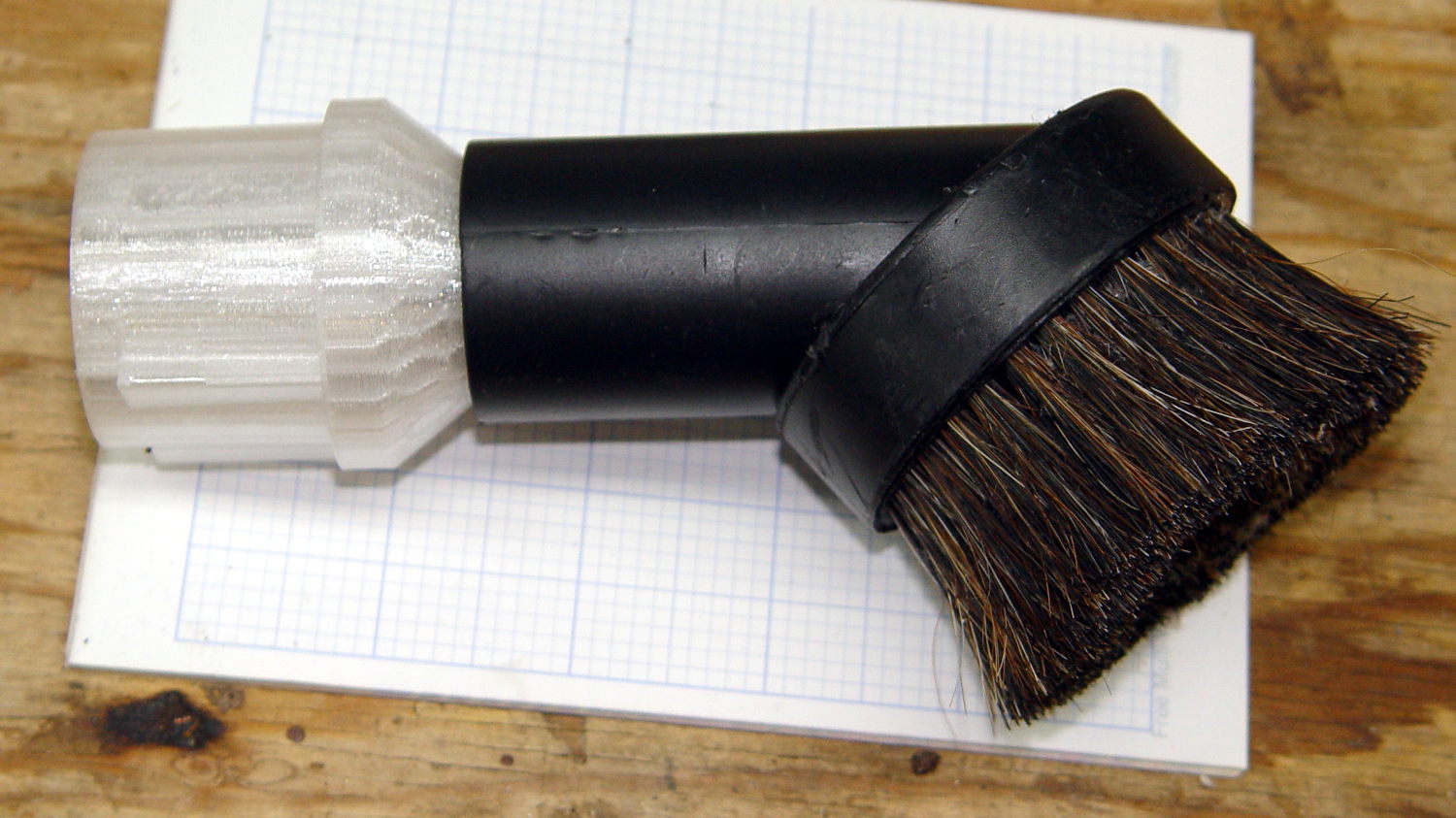
The PVC tube extends from about halfway along the steep taper from the handle fitting out to the end, with the section closest to the handle making the most difference.
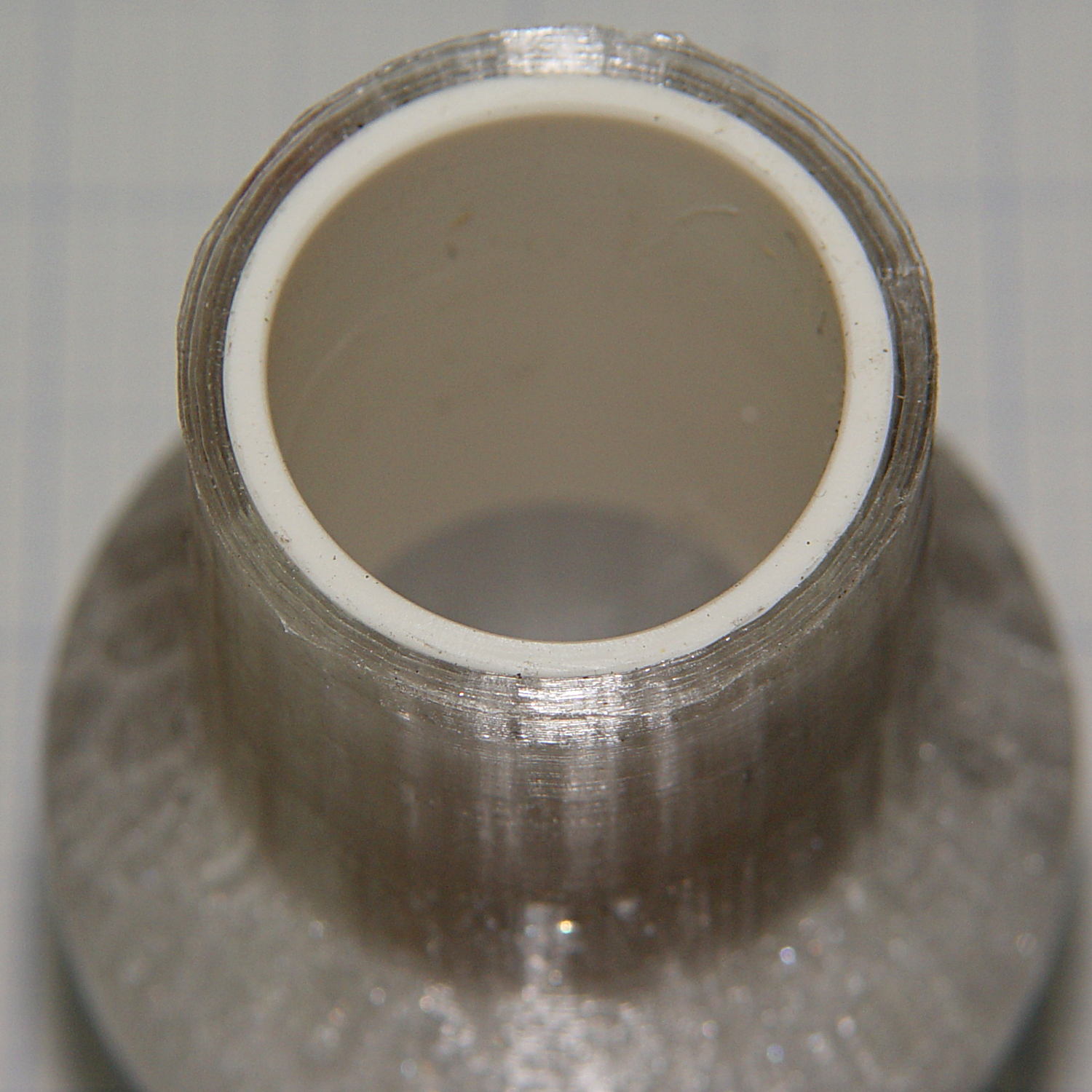
Ram it flush with the end:
Dust brush adapter – reinforced tube – detail
I thought about gluing it in place, but it’s a sufficiently snug press fit that I’m sure it won’t go anywhere.
This file contains hidden or bidirectional Unicode text that may be interpreted or compiled differently than what appears below. To review, open the file in an editor that reveals hidden Unicode characters.
Learn more about bidirectional Unicode characters
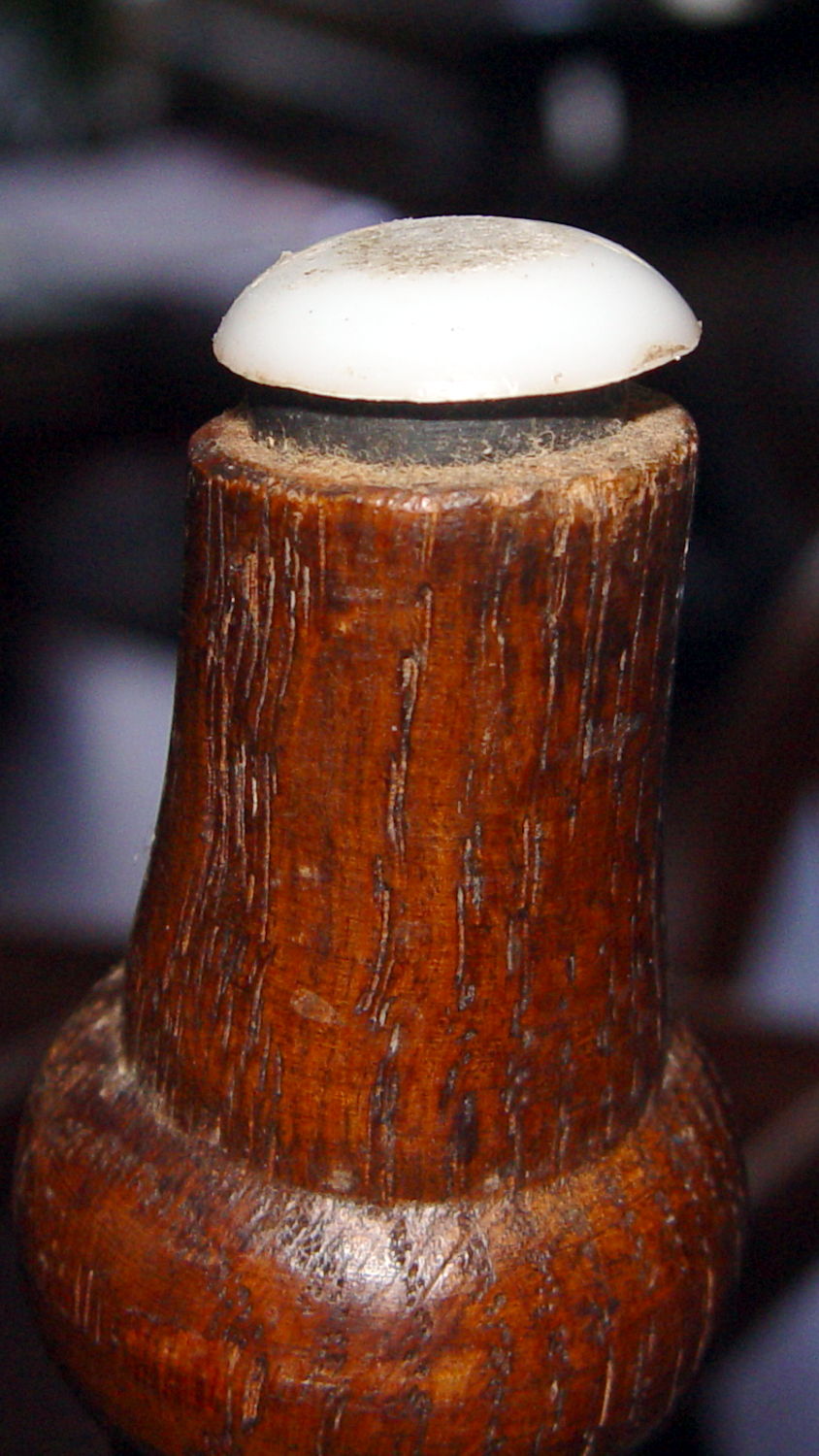
The white plastic glide / slide / foot / cap / whatever is molded around a simple nail that broke a divot out of the foot. Fortunately, I caught it before the nail gouged the kitchen floor.
Under normal conditions, I’d replace the foot from my heap, but, my heap having become somewhat depleted, I swapped in another chair, chipped out the broken plastic, undercut the divot, filled it with JB Kwik epoxy, gooshed the foot in place, and taped it until it cured.