Ed Nisley's Blog: Shop notes, electronics, firmware, machinery, 3D printing, laser cuttery, and curiosities. Contents: 100% human thinking, 0% AI slop.
While packing the vacuum tube LEDs for the HV Open Mad Science Fair, I noticed the knockoff Arduino Nano inside one had come unstuck from the base. It seems the double-stick foam tape I’d used had lost its sticky:
Vacuum Tube LEDs – unstuck foam tape
Replacing it with my now-standard black 3M outdoor rated tape ought to solve the problem forever more.
For whatever it’s worth, the SK6812 RGBW LEDs have had exactly zero failures in the last two years or so; I finally turned off the test fixture.
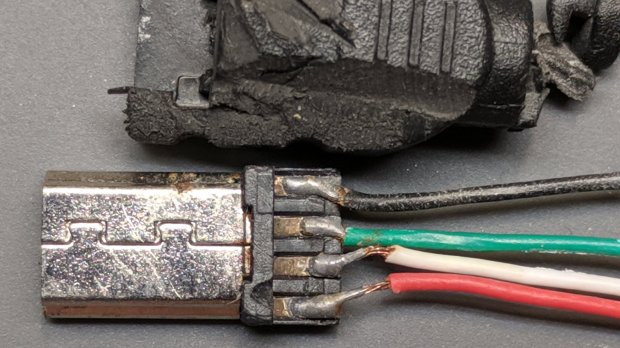
Before reassembling the light, I plugged the USB cable into the bench supply and watched the Nano reset erratically. Careful poking showed the USB cable was intermittent, so I carved it up:
Failed USB cable – autopsy
As far as I can tell, the black wire (supply common) was cut mostly all the way through, with just a few strands remaining, before I peeled the insulation back.
A closer look at the solder joints doesn’t inspire much confidence in their QC:
Failed USB cable – solder joints
If those pads tarnished along with their solder blobs, the overmolded plastic isn’t the right stuff for the job. If they started life like that … ick.
I must up my cable spend, although I have no confidence doing so will improve the quality.
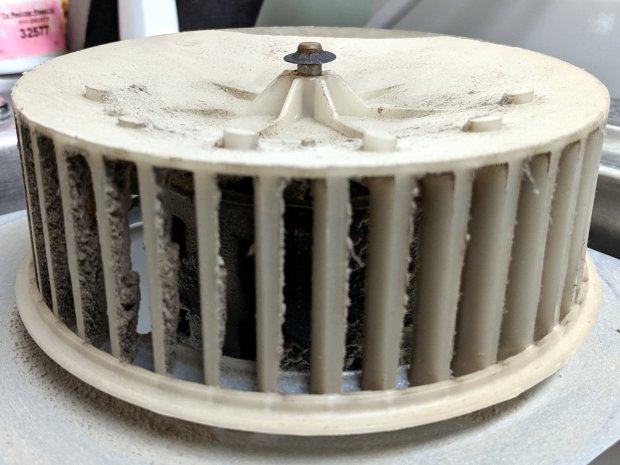
The NuTone 8663RP (for future reference) vent fan in the Black Bathroom began making horrible grinding sounds and, after a day or two, stopped turning. Pulling it out showed the impeller had slipped downward on the motor shaft:
Bath Vent Fan – impeller shift
Which meant the impeller was now resting on the steel frame:
Bath Vent Fan – impeller interference
Curiously, there’s no retainer under the impeller preventing it from sliding downward, other than good intentions and a friction fit. Nothing lasts, although it’s been working for the last two decades, so I guess it doesn’t owe me much.
My first thought was to build a steel or aluminum collar with a setscrew to hold the thing up, but I decided to try a simple bushing made of UHMW polyethylene between the motor and the impeller.
Turning it to the proper length required a test fit, then another session on a mandrel made from some aluminum tubing:
Bath Vent Fan – bushing trim
The snout came out just long enough to clear the motor frame, resting the impeller’s weight atop the bearing around the shaft:
Bath Vent Fan – bushing installation
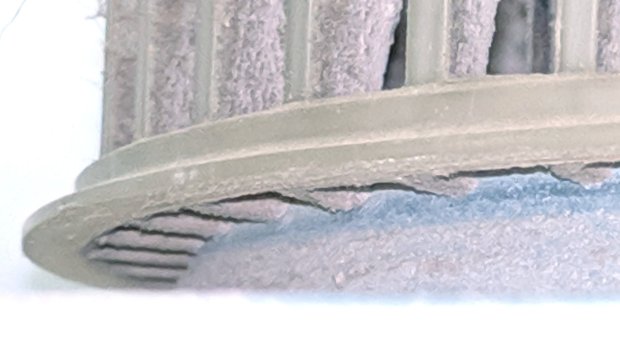
It’s hard to see between the impeller blades, but there’s actually a bit of clearance underneath:
Bath Vent Fan – bushing installed
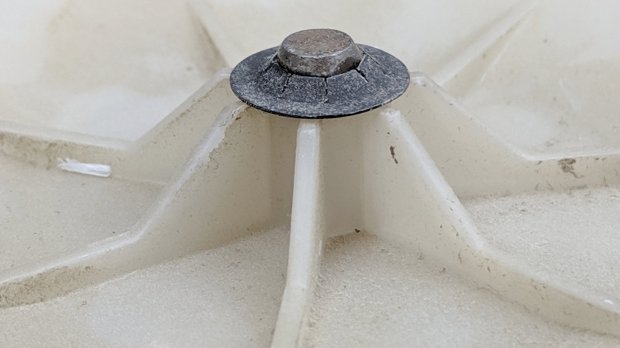
Which left just barely enough room on the top for the retaining clip:
Bath Vent Fan – shaft clip – detail
I had high hopes for the UHMW, but it seems any contact between the rotating impeller and the stationary bearing transmits enough sound to be annoying.
So I must break down and build a collar, although it’s off the critical path right now.
As far as I can tell from the pictures, dropping $50 on a new fan unit will get me exactly the same problem. Whether it would last for two decades before failing is an open question, but my experience with freezer fans suggests what we have is as good as it gets and making a bushing is the least-awful way to proceed.
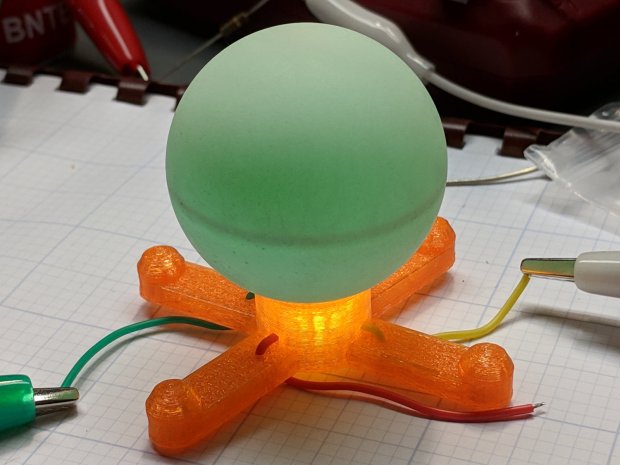
Because I planned to take my collection along to HV Open’s Mad Science Fair, I finally used a Round Tuit for some adhesive action.
The general plan was to punch a ring from double-sided tape, thusly:
Astable – Radome adhesive – poor surface
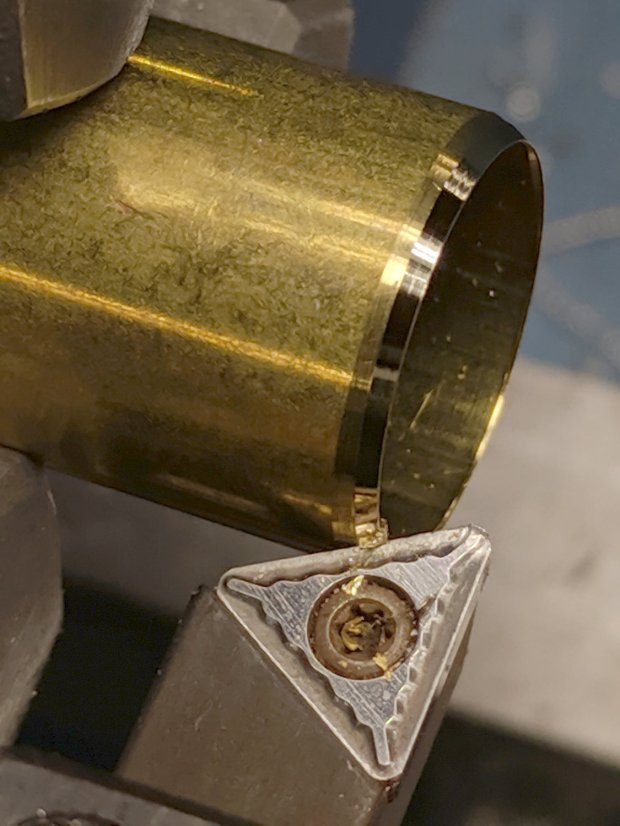
The OD required touching up the edge of a brass tube punch I’d made a while ago:
Astable – Radome adhesive – punch sharpening
It worked exactly as expected:
Astable – Radome adhesive – punching
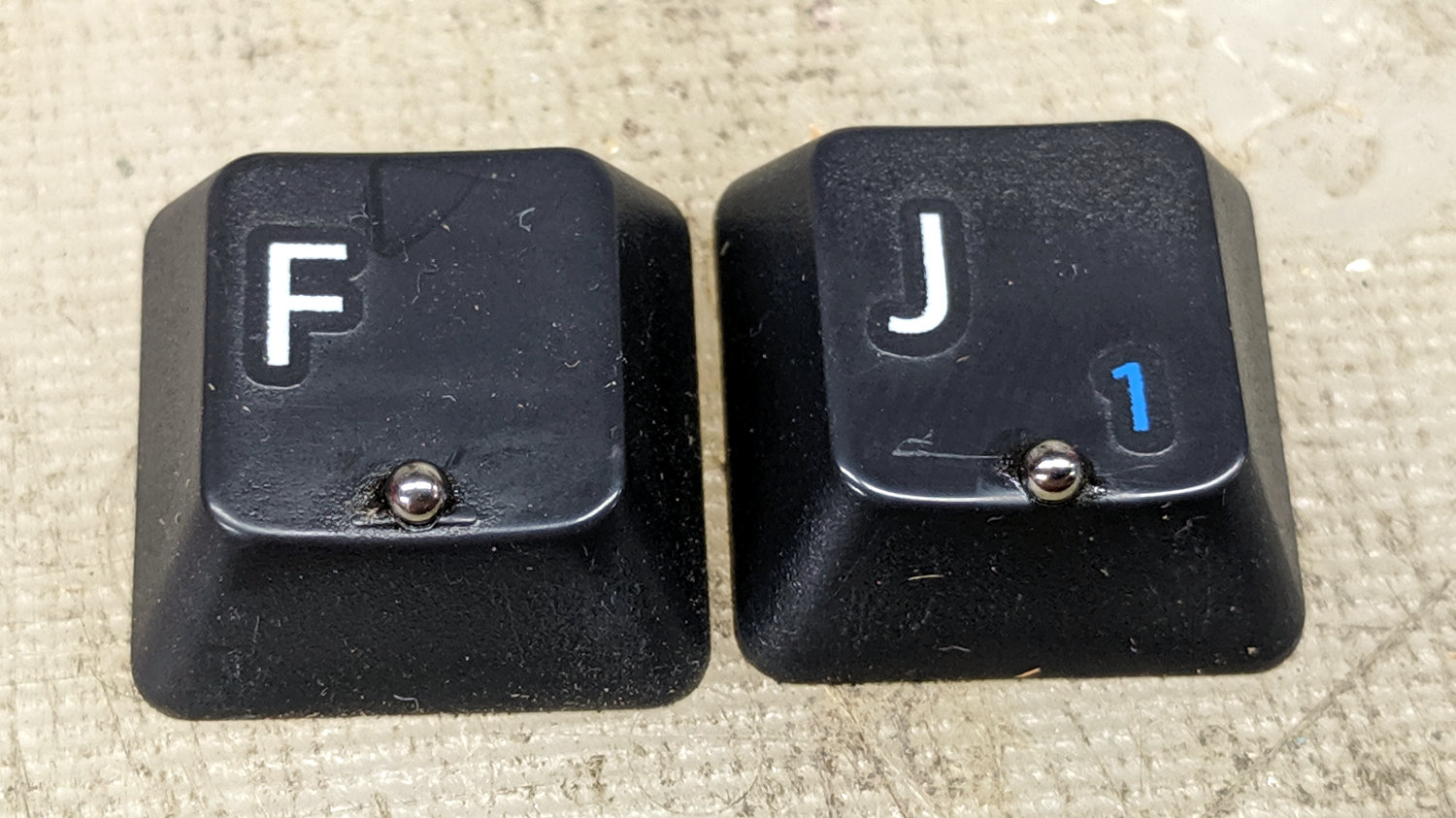
Unfortunately, the 3D printed spider’s “spherical” socket has such a rough surface that the adhesive had too few contact points to hold the ball in place.
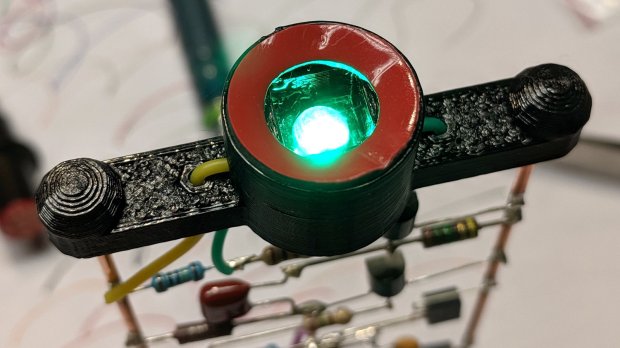
My fallback has become 3M outdoor-rated double-stick foam tape, so:
Astable – Radome adhesive – 3M foam tape
This leaves a small black ring visible between ball and socket. Recessing the foam tape by half its thickness should improve its ahem optics, although it’s probably not worth the effort with black PETG.
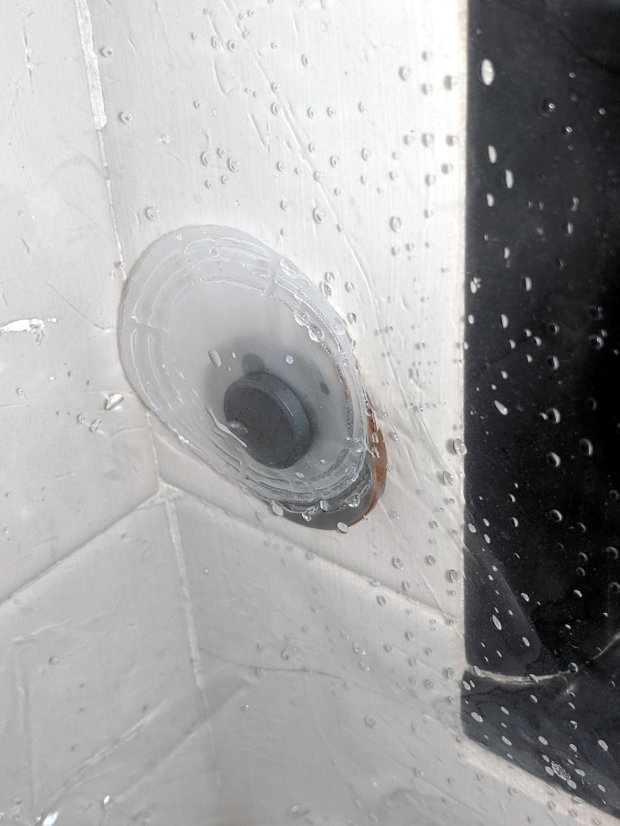
Back in the day, bathtubs had a porcelain coating over a cast-iron carcass, so embedding little magnets in shower curtains worked perfectly to keep the loose ends from billowing out of the tub. Surprisingly, even here in the future, with plastic bathtubs ruling the land, some shower curtains still have magnets. The mud-job tile walls of shower stall in the Black Bathroom have nary a trace of iron, but we though I could add ferrous targets for a new shower curtain, thusly:
Shower Curtain Anchor – installed
The magnet lives inside a heat-sealed disk, so it’s (more-or-less) isolated from the water. As you’d expect, it’s a cheap ceramic magnet, not a high-performance neodymium super magnet, with no more strength than absolutely necessary to work under the most ideal of conditions.
My anchors must also be waterproof, firmly attached, non-marking, easily removable, and no more ugly than absolutely necessary. The general idea is to slice the bottom from a pill bottle, entomb a thin steel disk in epoxy, and attach to the tile with a patch of outdoor-rated foam tape.
So, we begin …
Cutting a narrow ring from a pill bottle requires a collet around the whole circumference, which started life as some sort of stout aluminum pole:
Shower Curtain Anchor – cutting tube stock
Bore out the inside, with a small step to locate the bottle:
Shower Curtain Anchor – boring fixture
Clean up the outside, just for pretty:
Shower Curtain Anchor – turning fixture OD
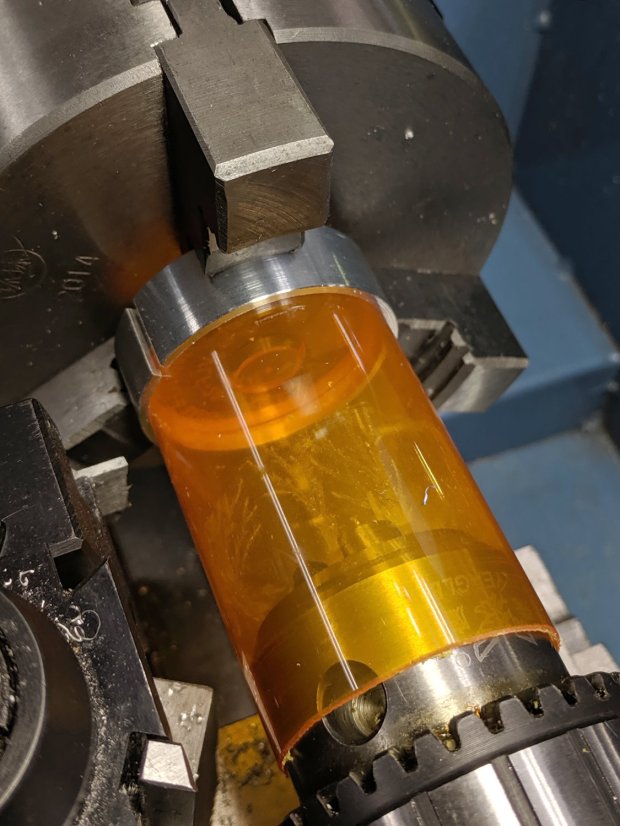
Slit the fixture to let it collapse around the bottle, then chuck up the first victim with support from a conveniently sized drill chuck in the tailstock:
Shower Curtain Anchor – cutting bottle
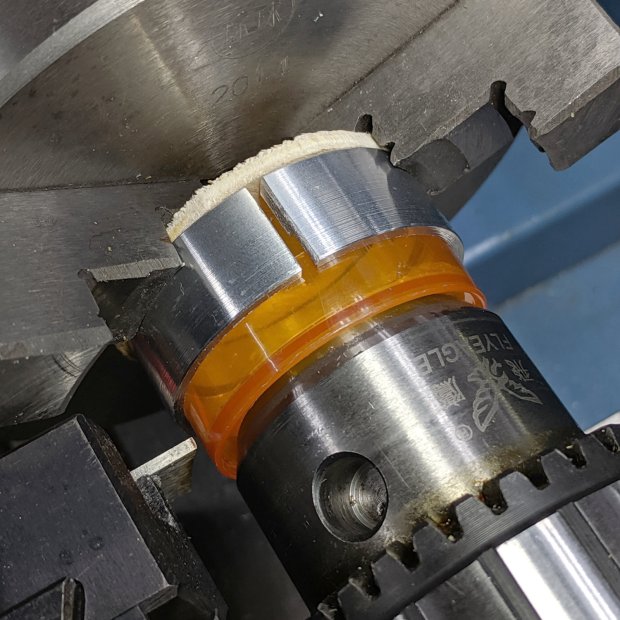
I did a better job of cutting the second bottle to the proper length:
Shower Curtain Anchor – parting base
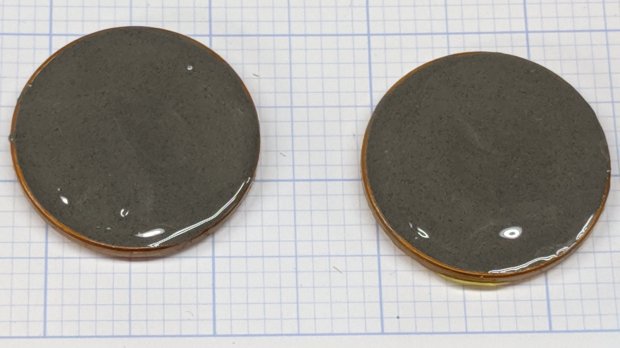
Nibble disks from sheet metal, half-fill the bottle bottoms with steel-filled (and, thus, magnetic!) JB Weld epoxy, insert disks, add sufficient epoxy to cover the evidence:
Shower Curtain Anchor – epoxy curing
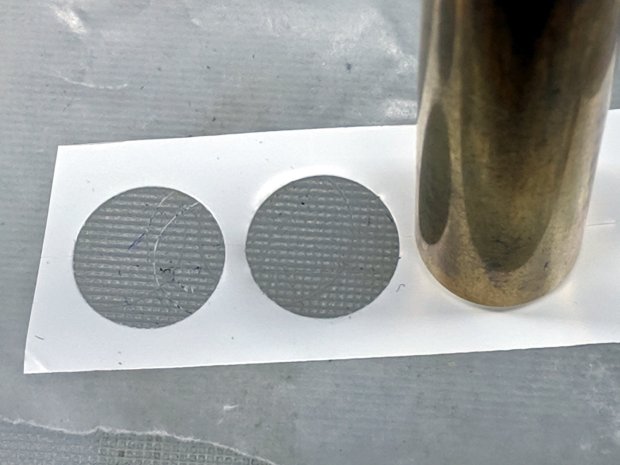
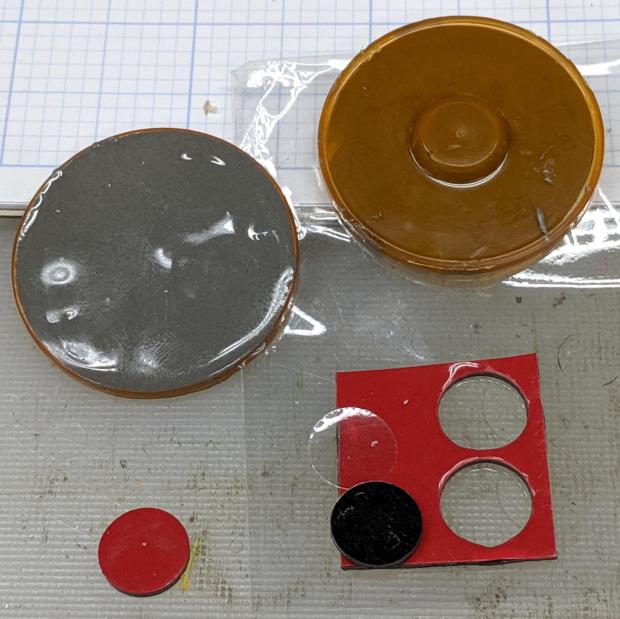
Fast-forward to the next day, punch out two disks of double-sided foam tape:
Shower Curtain Anchor – adhesive foam
Affix, install, and it’s all good.
Actually, it’s not. The ceramic magnets are so weak they don’t hold the curtain nearly well enough to satisfy me. The next anchor iteration should have embedded neodymium magnets to attract the curtain’s crappy ceramic magnets, but this is Good Enough™ for now.
Well, all I can say is it seemed like a good idea at the time.
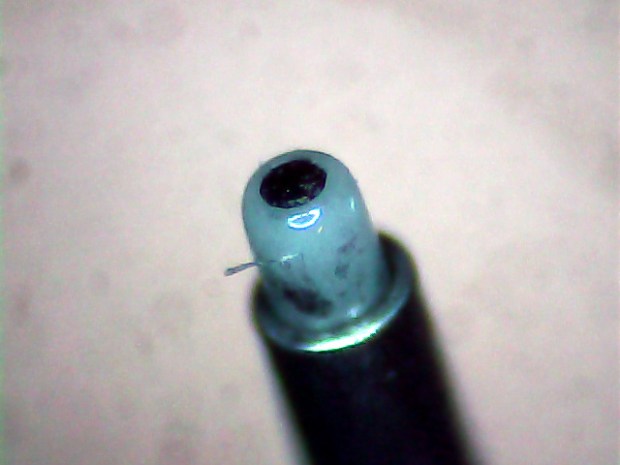
Alas, even the newly exposed fiber didn’t make much of a mark on the paper and, as you’d expect, the ragged ceramic tip dragged painfully across the paper. I assume the fiber had filled with fossilized dry ink.
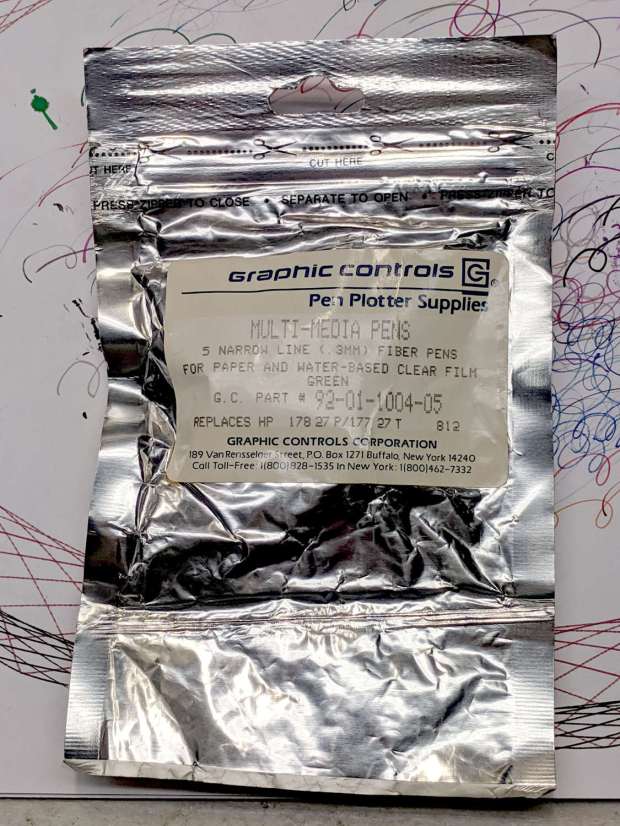
A New Old Stock bag of fiber-tip pens emerged from the Big Box o’ Pens while I was flailing around:
HP 7475A Plotter – NOS Green pen package
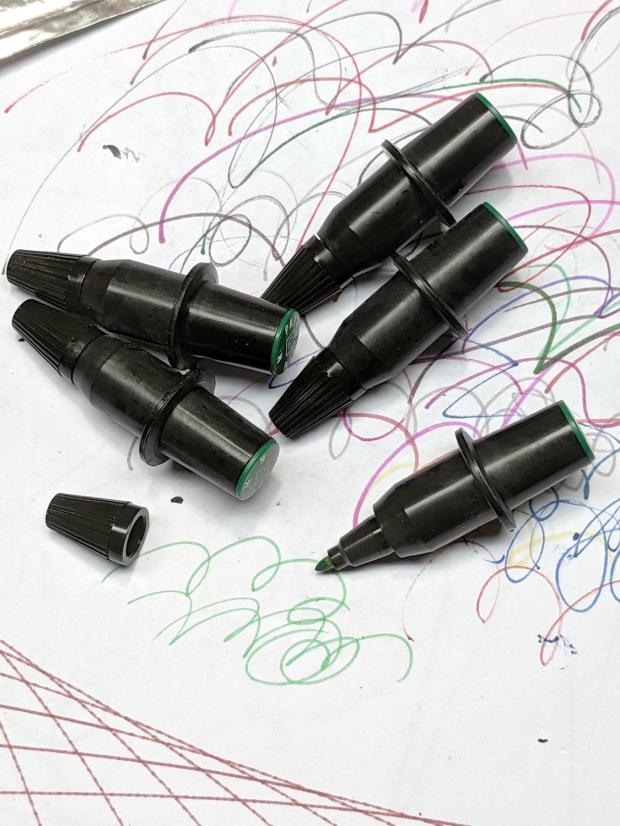
I think the “812” in the lower right corner is a date code, most likely early in 1988, so the pens started their lifetime countdown at least three decades ago. They still work, though:










 The Smell of Molten Projects in the Morning