Ed Nisley's Blog: Shop notes, electronics, firmware, machinery, 3D printing, laser cuttery, and curiosities. Contents: 100% human thinking, 0% AI slop.
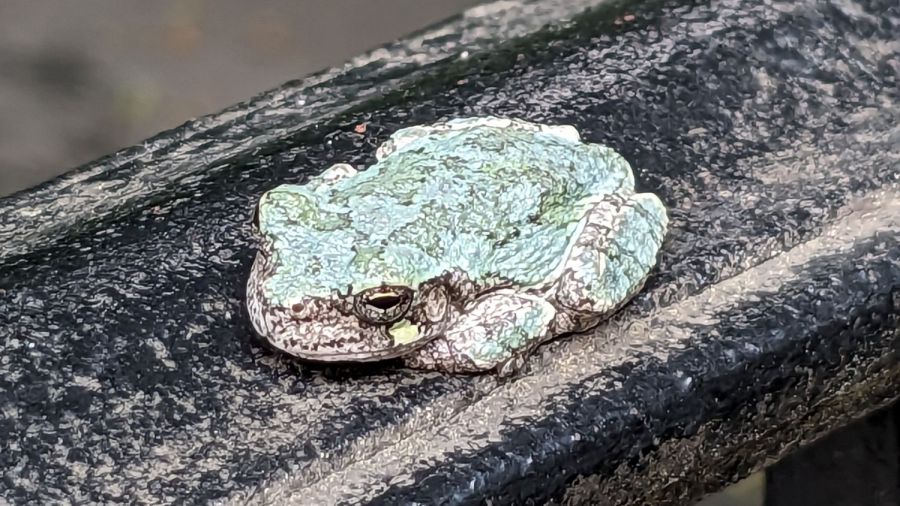
If that isn’t a smug smile, I don’t know what one might look like.
When she related this tale at a Master Gardener meeting, one of her cronies said a similar frog commandeered a shoe and refused all offers of a new home, so apparently tree frogs and shoes just go together.
Anybody that persistent deserves whatever it wants; Mary will get a new pair of shoes and keep them indoors.
Being a guy of a certain age with a diagnosis of Low Bone Density, I must increase my calcium intake. Rather than add a few hundred calories a day of calcium-rich food that my waistline does not need, I’ll see what adding 600 mg of calcium citrate can do.
Being a guy of a certain type, I prefer to fill my own capsules, which of course involves Quality Shop Time:
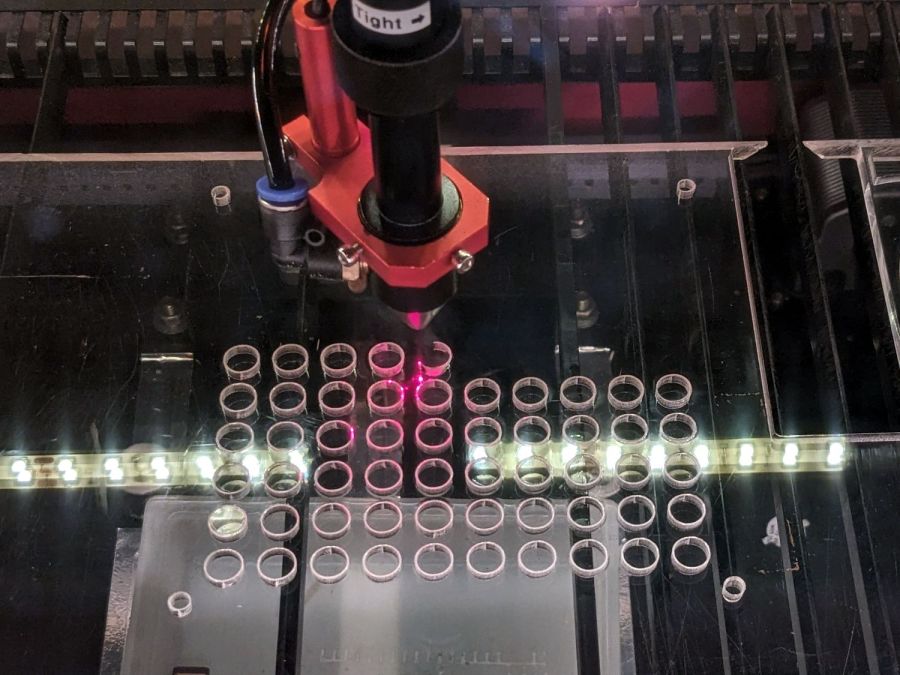
Gelatin 000 Capsule Fill Plate – cutting
Quite some years ago, for reasons not relevant here, I acquired several of what were called “manual capsule filling machines” from the usual online sources. During the ensuing years, such devices have fallen under the purview of the DEA and vanished from the import market, leaving (AFAICT) one USA-ian supplier.
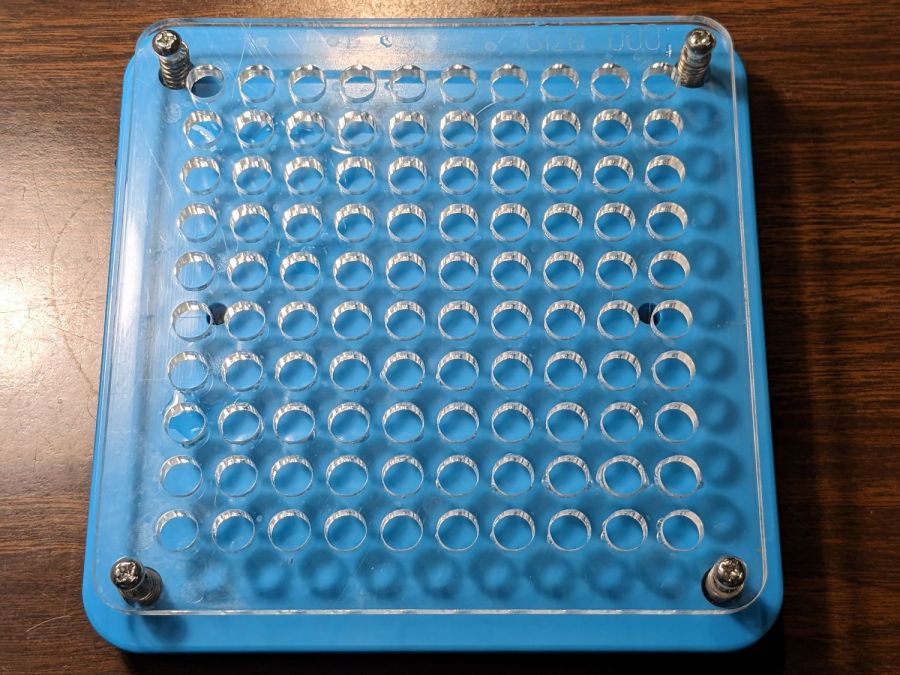
The key difference between “machines” for different capsule sizes is the plate holding the capsule bodies:
Gelatin 000 Capsule Fill Plate – installed
A complete machine includes three other capsule-size-related parts:
A plate holding the caps
A plate with conical holes used to shake caps & bodies into their respective plates
A guide plate helping mate caps with bodies
In normal use, you put the “shake plate” on the body or cap plate, dump a pile into it, and shake until most of the caps / bodies fall into the holes. Then you manually insert the rest, invert any that fell in backwards, and generally mess around until they’re all properly oriented in their sockets. After filling the capsules, you put the cap + guide plates atop the bodies, press down firmly, and (ideally) produce 100 filled and sealed capsules.
It turns out Size 000 capsules are sufficiently chonky that I have no trouble capping the bodies by hand without those other parts, so making just the body plate seemed Good Enough™. The story might be different for Size 1 capsules.
The external dimensions and screw holes match the original plate, so this one fits the same base:
Gelatin 000 capsule plate – LB layout
Make one plate and four spacing clips from 6 (-ish) mm acrylic.
If you can think of anything to do with 100 3/8 inch cylinders of 1/4 inch acrylic, clue me in.
Size 000 bodies are close enough to 3/8 inch that I cleaned up the holes with a step drill for a nicer fit. Perhaps making the plate from 3 mm acrylic would produce better results.
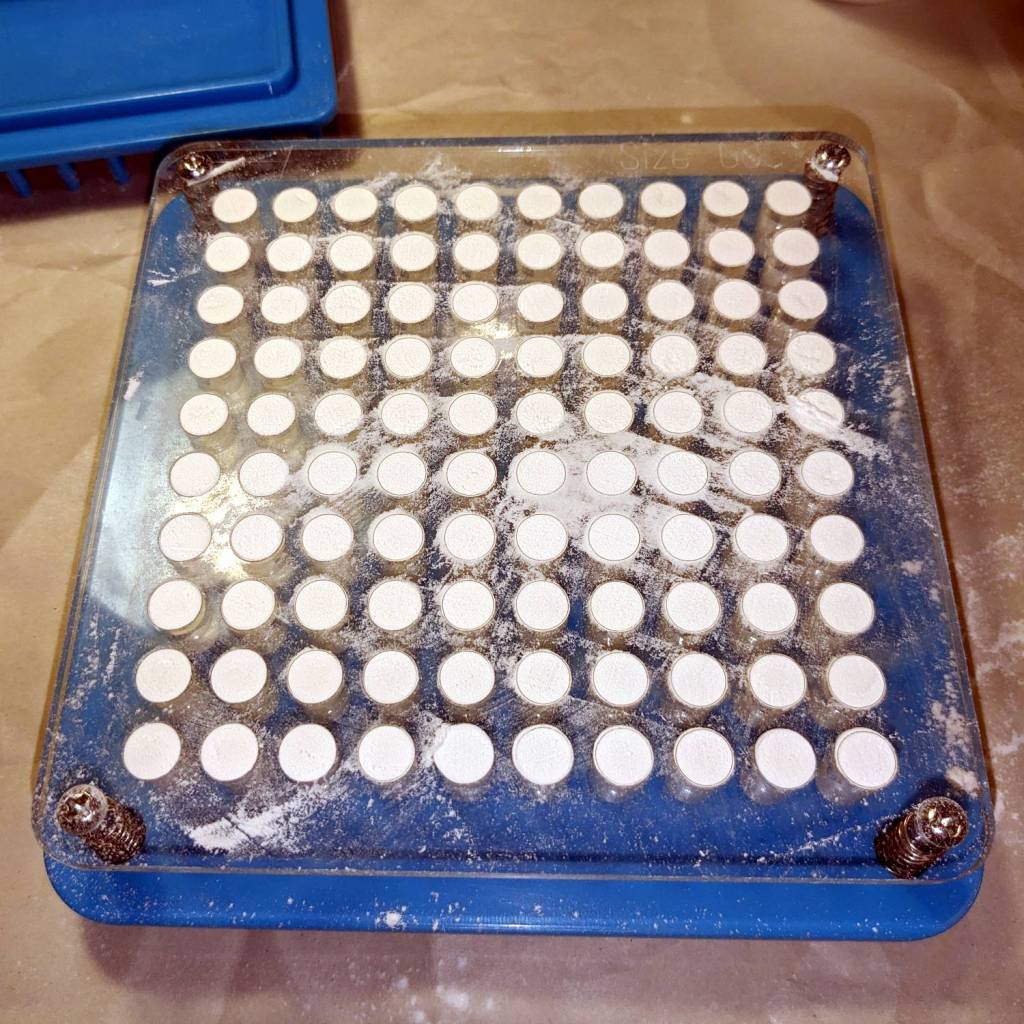
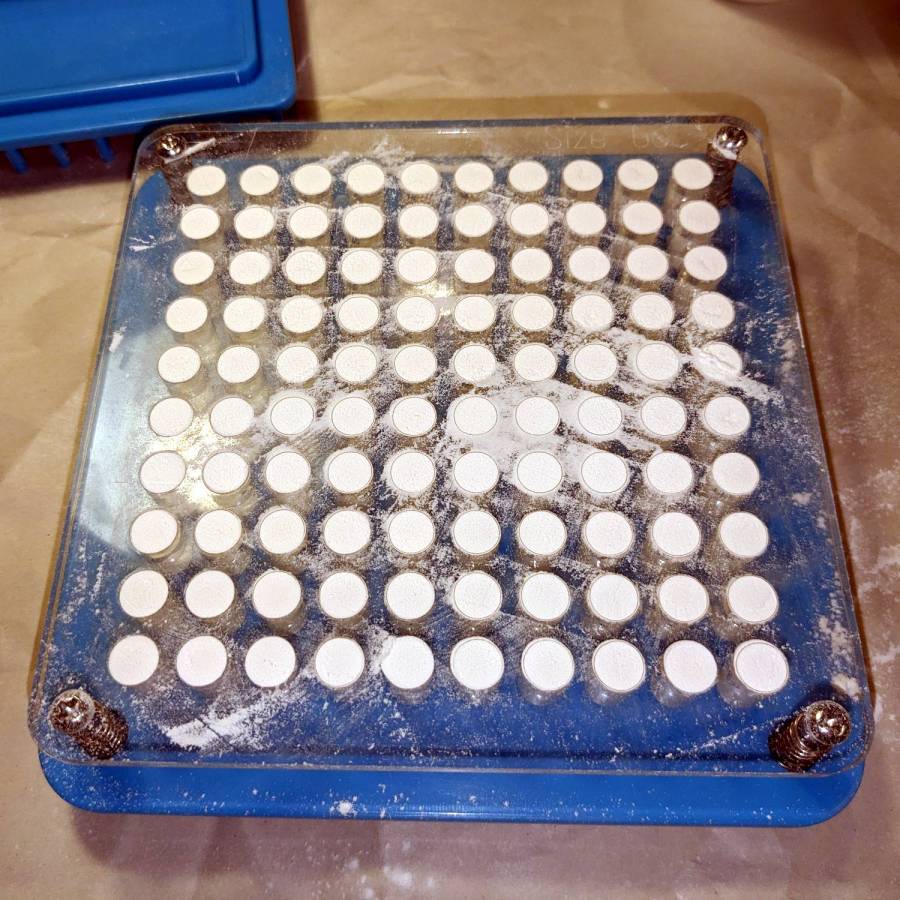
Four springs around the screws in the corners support the plate to allow pressing the caps in place. I adjusted the screws to put the top of the plate at exactly the height of the bodies above the blue base place, producing a smooth surface for scraping suspicious white powder into the bodies:
Gelatin 000 Capsule Fill Plate – filled
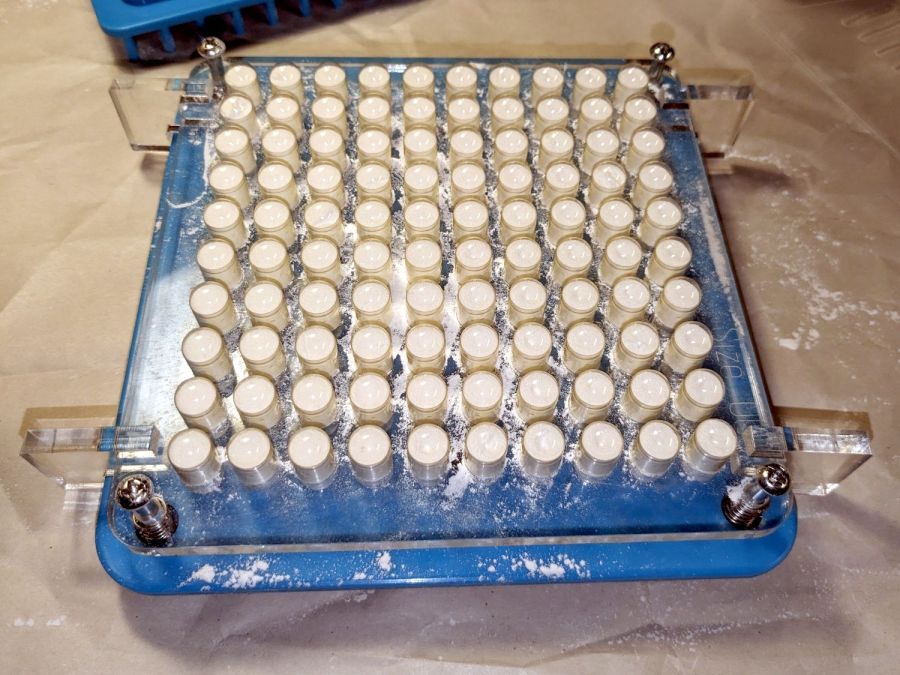
Iterate filling and tamping until the capsule contents are firm-but-not-overstuffed, then press the plate downward and secure it with the spacer clips:
Gelatin 000 Capsule Fill Plate – capped
The clips hold the plate at the proper distance to let the caps slip over the bodies and lock in place. This is tedious, but much faster than doing the entire process on individual capsules one-by-one.
With the caps locked in place, flip the whole thing above a bowl, remove the clips, press the plate against the base, and 100 finished capsules shower into the bowl.
You could build a complete filler without having the blue base plate & springs, but I’ll leave that project to your imagination.
Fiskars cutting mats must lie flat on the table to be of any use, but they’re remarkably sensitive to warping due to localized temperature variations; a hot cup of tea can wreak a remarkable amount of damage. Suggestions from the InterWebs generally involve a clothes iron, temperature tweaks, overnight cooling, and unpredictable results.
Given that the mats are large polypropylene sheets, I figured applying moderate heat to the entire mat while it’s compressed between two flat plates would work better:
Fiskars cutting mat – solar flattening
That’s one of Mary’s 36×24 mats atop an MDF sheet (with pictures of wood laminated to both sides), under a 7/32 inch = 5.6 mm sheet of non-tempered glass, with a maple shelf supporting the last two inches of the unwarped edge, all sitting on the driveway in full sun.
The first attempt started too late in the afternoon for good heating and, after a few hours, had only slightly reduced the warp. Laying it out the next morning got the mat up to about 110 °F = 43 °C around noon and the warp was completely gone by evening.
I don’t trust the IR thermometer’s temperature measurements on glass, but the surrounding MDF and driveway were plenty hot.
The next sunny day flattened the warp out of 24×18 inch mat on my desk, so success wasn’t a fluke.
We noticed that the larger mat is now uniformly smaller by about 3/16 inch along the 36 inch width and 1/4 inch over the 24 inch height. It was a tag sale find with unknown provenance and, due to the warp, Mary had been using her other large mat for layout, so we don’t know if this one arrived a little short or if my technique both flattened and shrank it.
The smaller mat seems unaffected by its similar treatment, so your mileage may vary.
In any event, a flat mat is much more useful than a warped mat, so we’ll call the operation a success.
Having stuck many cork bottoms to many coasters and aligning nearly all of them pretty close, I finally made a fixture to get it right from now on:
Coaster cork fixture – test fit
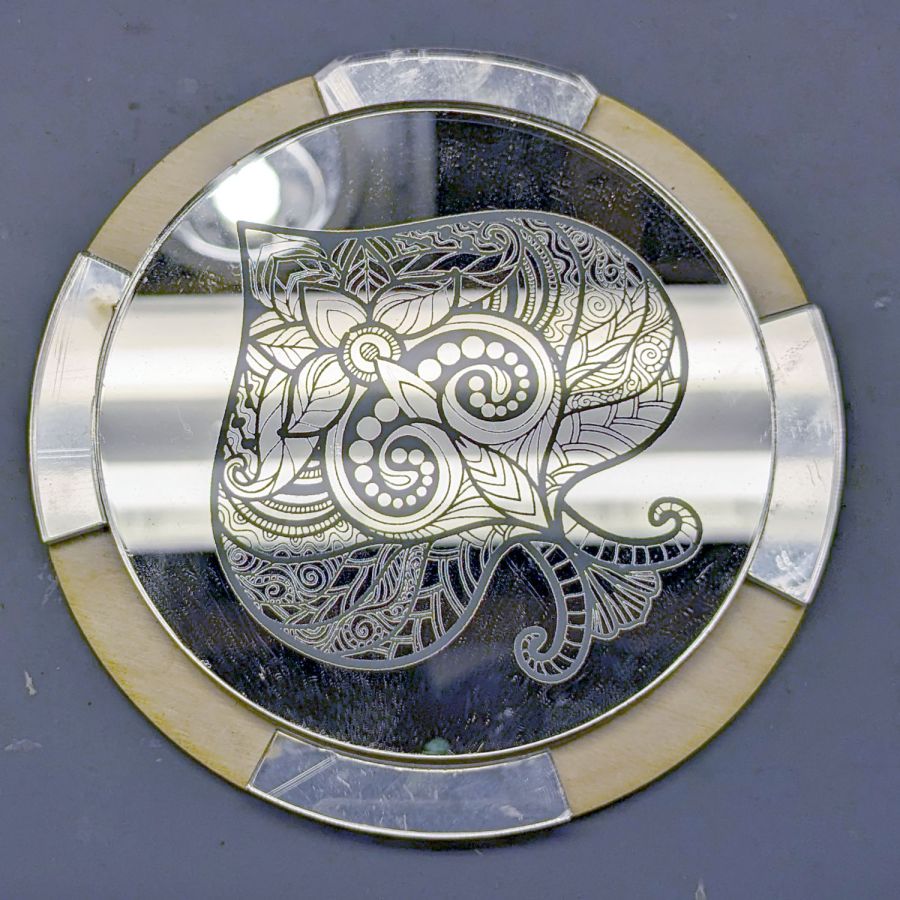
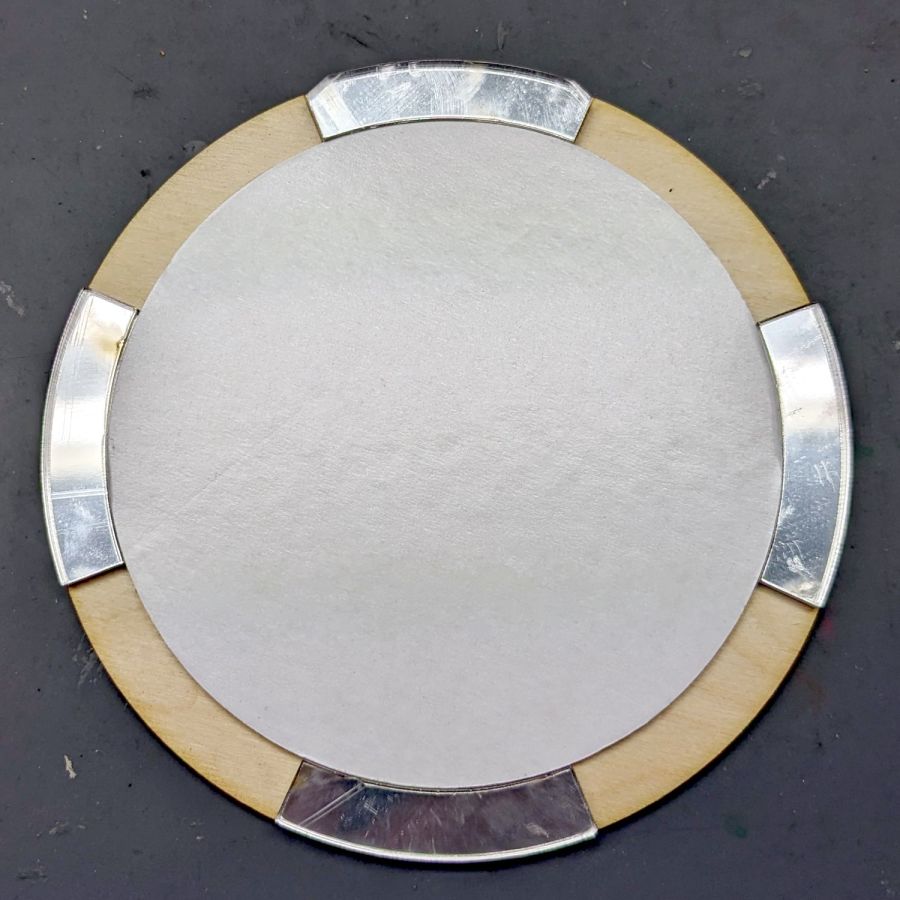
A plywood disk anchors four arcs cut from a remnant of acrylic mirror left over from the card-suit coasters, using strips of adhesive sheet cut 1 mm smaller than the arcs:
Coaster cork fixture – adhesive sheets
Stick an arc in place, lay the cork inside the arc, and stick the rest of the arcs around the cork:
Coaster cork fixture – cork fit
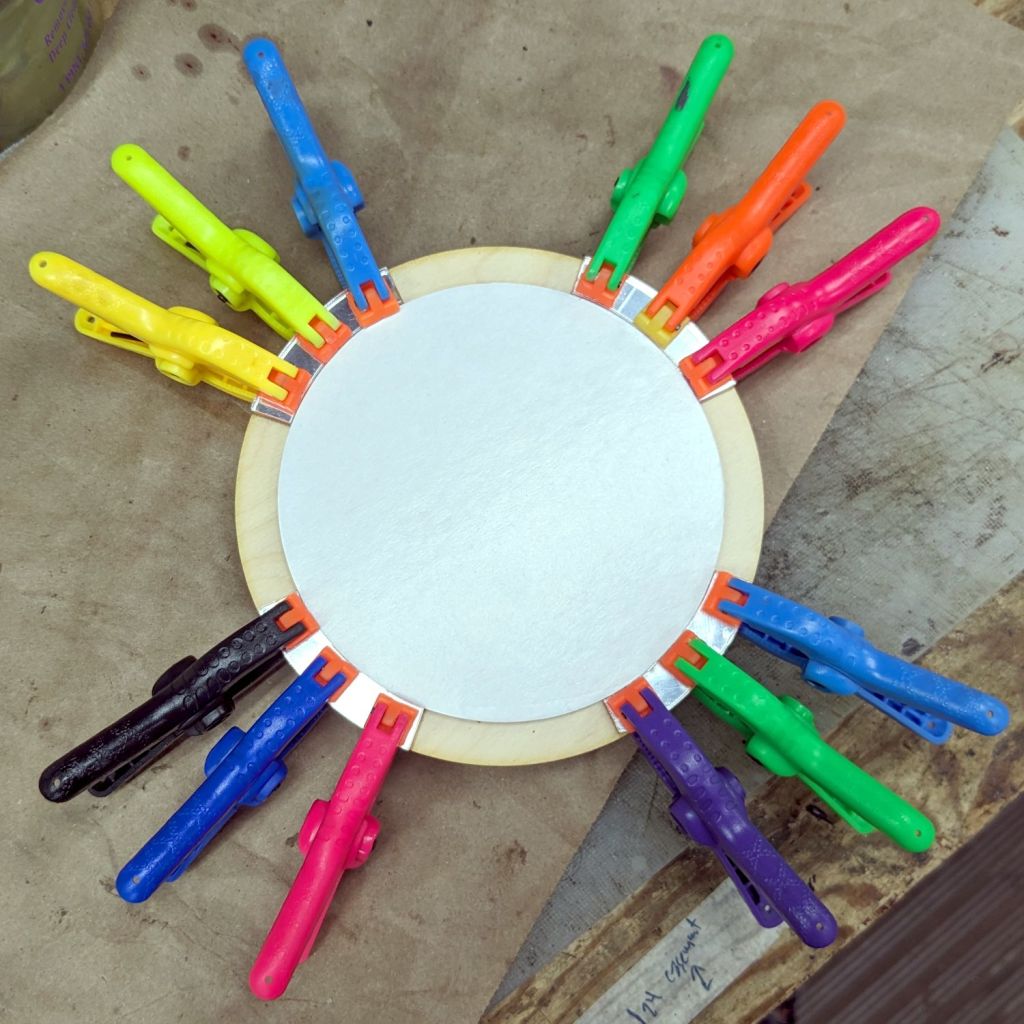
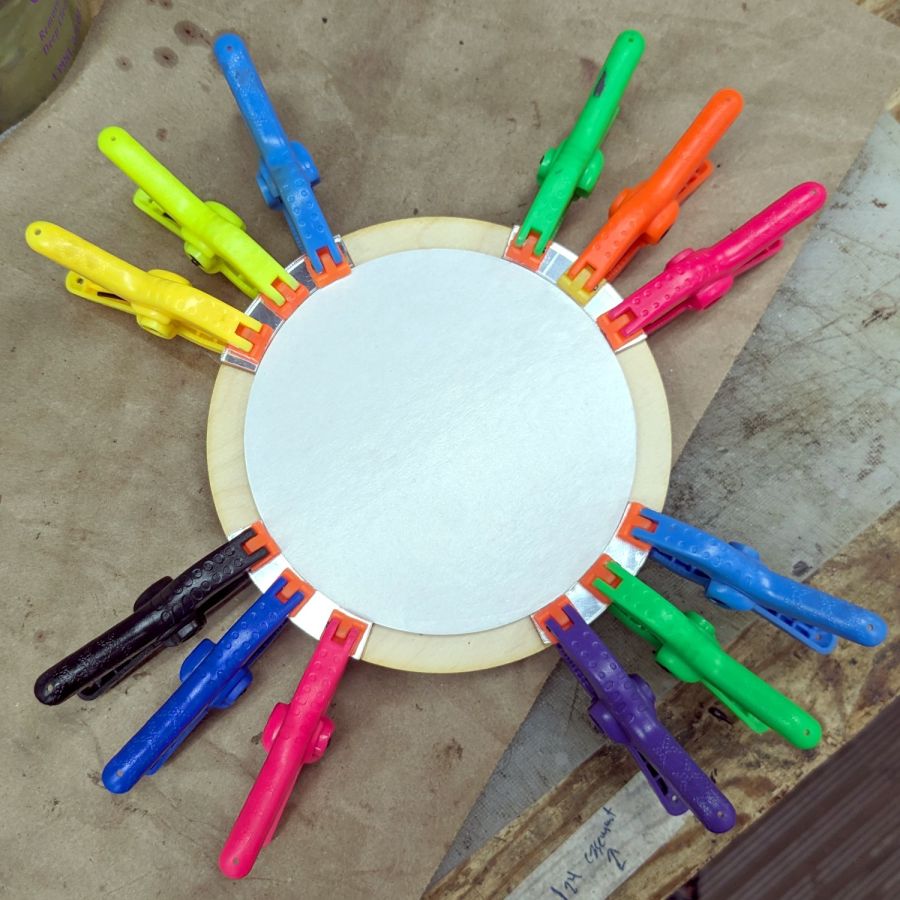
Squish the arcs in place overnight with Too Many Clamps™:
Coaster cork fixture – clamping
In use, peel the paper off the cork, lay it in place, ease the coaster atop it, press firmly, remove the perfectly aligned coaster, then put a stack of them in the overnight clamp to solidify the PSA bond.
That’s after an inadvertent drop edgewise onto the concrete patio.
Stipulated: given what I’ve already done to / for the thing, the usual warranties do not apply.
The frame around the NP-BX1 lithium batteries held the glass fragments together surprisingly well:
Kitchen scale – shattered glass – detail
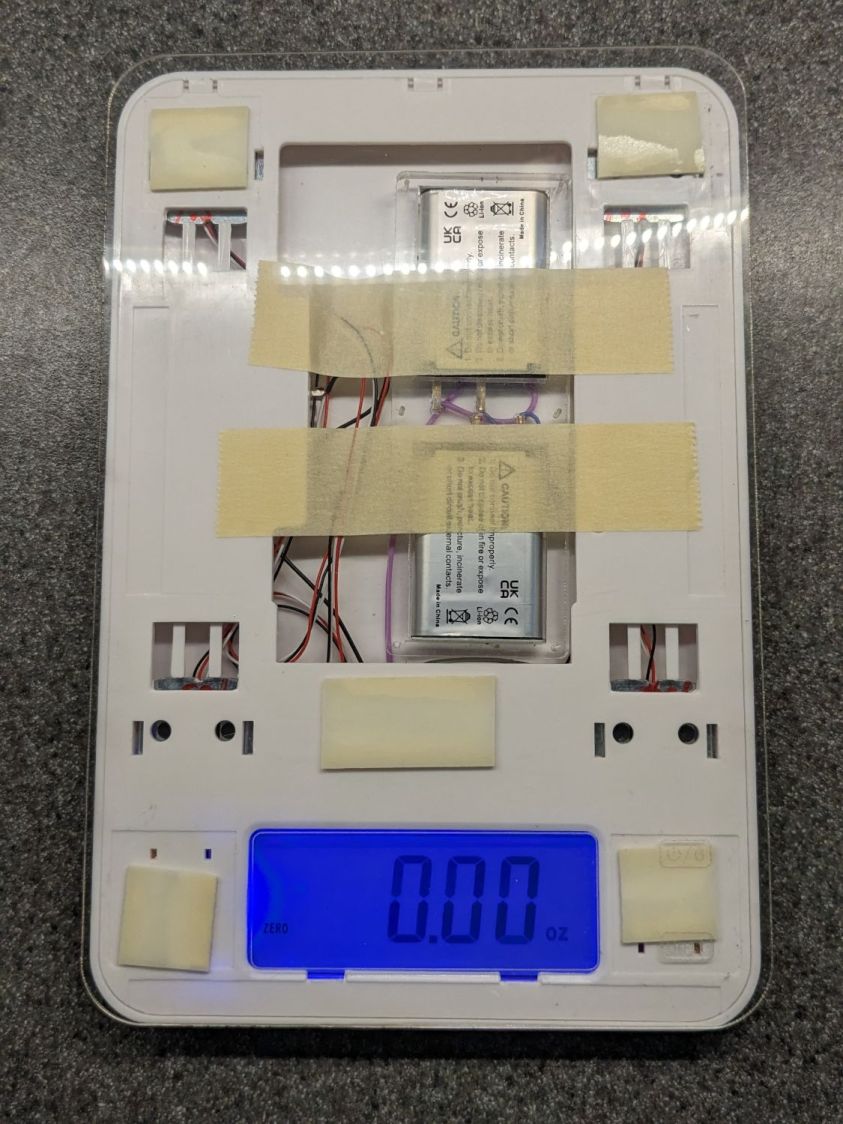
Of course, harvesting the good stuff resulted in a pile of fragments, but the carcass cleaned up nicely and, after grafting a temporary top made from scrap acrylic it still worked:
Kitchen scale – temporary surface
I expected to just cut a slab of 6 mm acrylic to match the original 5 mm glass, but for reasons probably related to dielectric constants, the touch controls do not work through that much acrylic. In fact, they don’t work through anything other than the 1.5 mm acrylic shown above, which seems a bit too flimsy for normal use.
The original glass had a design screened on the back surface and covered with paint, which I can certainly mimic, but right now I’m unsure how much effort to put into the thing.
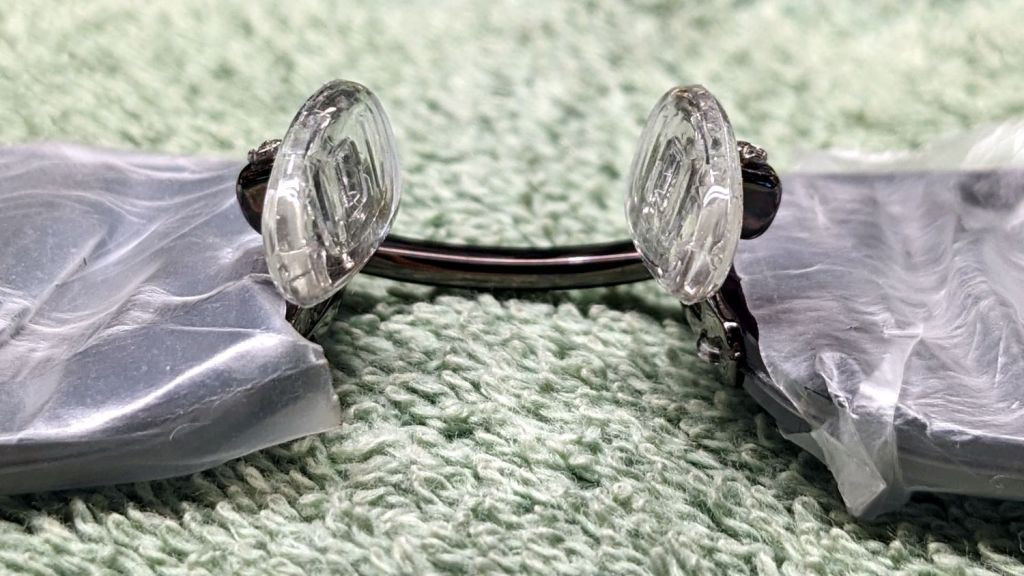
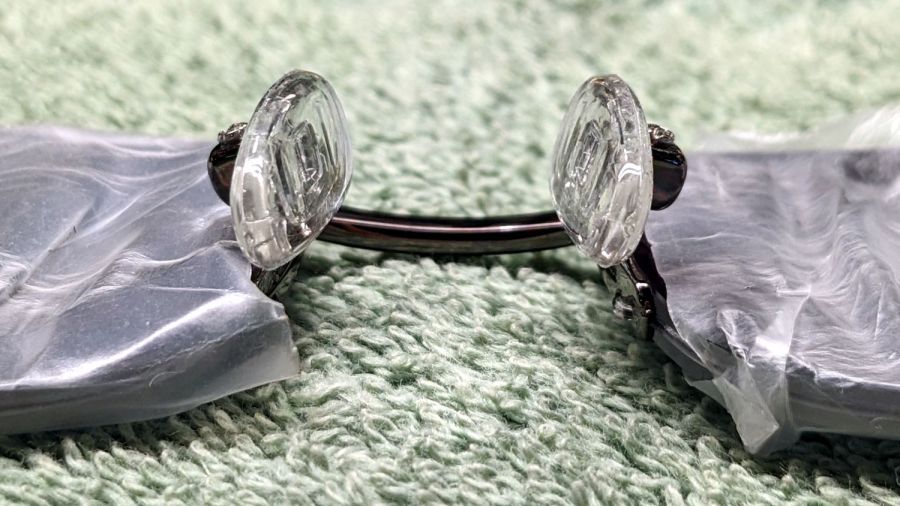
I suppose this is a consequence of being able to get two eyeglasses + two sunglasses in three different frame styles and two different prescriptions, each with progressive lenses and antireflective coating, for about $350 delivered halfway around the planet.











 The Smell of Molten Projects in the Morning
