The Smell of Molten Projects in the Morning

Ed Nisley's Blog: Shop notes, electronics, firmware, machinery, 3D printing, laser cuttery, and curiosities. Contents: 100% human thinking, 0% AI slop.

Category: Amateur Radio

Using and building radio gadgetry

  • KG-UV3D GPS+Voice: Box

    The previous iteration of GPS+voice interface boxes came from the Sherline CNC mill, with a considerable amount of huffing & puffing. I got the Thing-O-Matic to simplify that process…

    The general idea is to build a box that clips onto the radio in place of the standard battery pack. External power comes into the box and goes directly to the radio’s battery contacts; this will pose a problem with the Wouxun KG-UV3D, because it wants 7.2 V rather than the stepped-up 9 V from the Li-Ion packs I’ve been using. I think a three-wire power cord is in order: +9 V for the interface, +7.2 V for the radio, and common.

    The box also interfaces with the radio’s mic and speaker jacks. Last time around, I made a gluing fixture to keep the plugs in alignment while the epoxy cured around the plugs in the plate, but maybe I can simplify that with 3D printing. Plastic will be better in one respect: the shells of the two plugs must be electrically isolated.

    This first-pass (*) approximation shows the three tabs on the pack that engage the radio’s base:
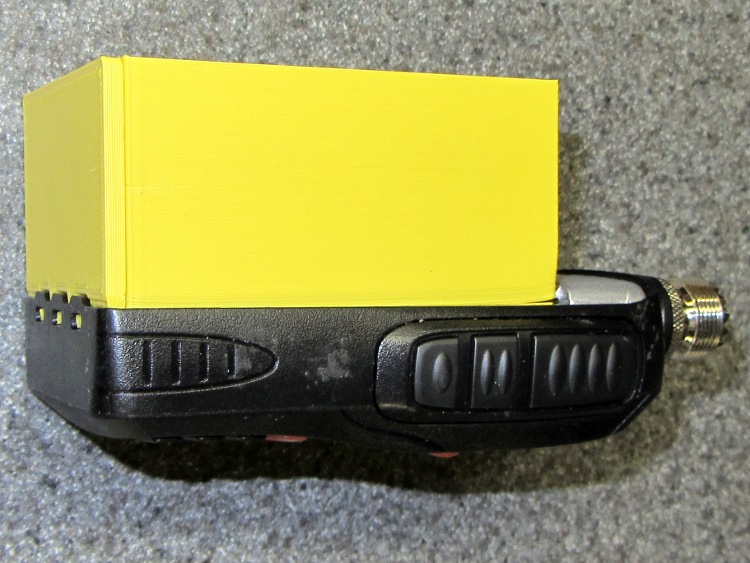
    KG-UV3D Interface Box prototype - right side
    KG-UV3D Interface Box prototype – right side

    A detail of those tabs, as seen from the bottom:
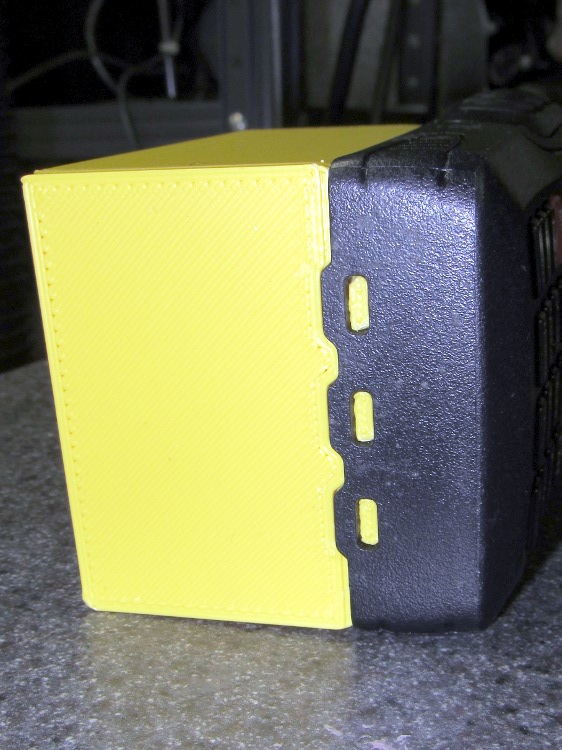
    KG-UV3D Interface Box prototype - end tabs
    KG-UV3D Interface Box prototype – end tabs

    The ICOM IC-Z1A battery pack had a set of slip-in alignment features that held the pack on the radio, so two strips of tape sufficed to hold the interface box in place. Each Wouxun battery pack includes a spring-loaded latching mechanism that engages a pair of ramped tabs on the radio body that hold the pack against the spring-loaded battery contacts. That means I must come up with an actual latch of some sort to oppose the contact springs, but I haven’t figured that out yet.

    The solid model, with the plug mounting plate floating beside it, looks like this:

    Case Solid Model - Tab End View - Fit
    Case Solid Model – Tab End View – Fit

    Tomorrow, the solid modeling…

    * It’s actually the third printing of the bottom plate with the three tabs and the base plate with the battery contacts. That’s how I figured out the 0. 5% shrinkage thing.

    [Update: The sketch with the dimensions emerged from beneath a pile o’ stuff…]
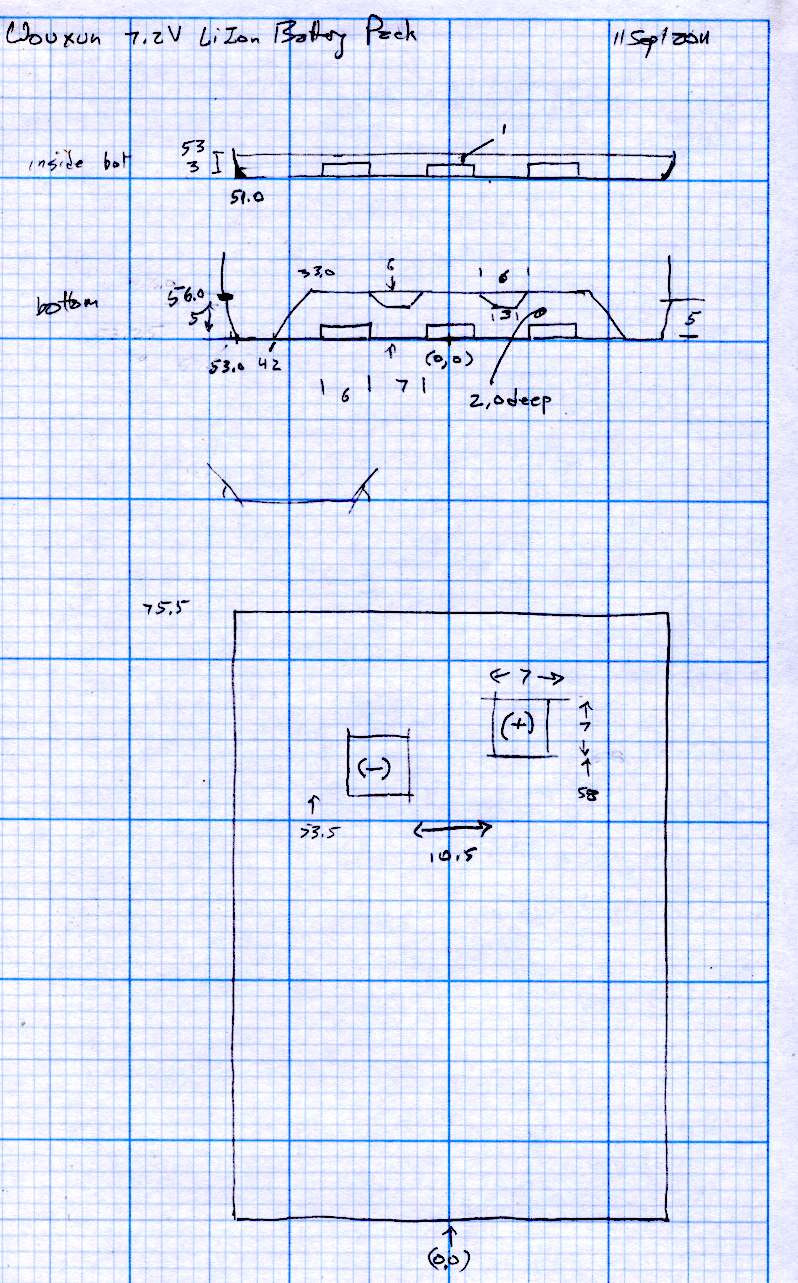
    Wouxun KG-UV3D Battery Pack Dimensions
    Wouxun KG-UV3D Battery Pack Dimensions


  • GPS+Voice Interface for Wouxun KG-UV3D: Circuit Hackage

    Having had my old ICOM IC-Z1A HT stop working, most likely due to the innards finally shaking loose, I replaced it with a Wouxun KG-UV3D dual-band radio. Unfortunately, the interface box I designed to connect the Byonics TinyTrak 3+ GPS modem, the helmet earbud/mic, and the external battery pack to the Z-1A doesn’t work with the Wouxun. It’s all different:

    • Mechanical interface to the radio
    • Battery voltage
    • Power control
    • Mic level
    • PTT interface

    I modified the interface box from my bike thusly:

    GPS-HT Interface Circuit Mods for Wouxun
    GPS-HT Interface Circuit Mods for Wouxun

    Because the KG-UV3D uses the Kenwood HT interface with a single ground for mic, speaker, and PTT functions, there’s no need for galvanic isolation; all the optoisolators & the audio transformer will Go Away when I rebuild it.

    The plug connections:

    Wouxun KG-UV3D Mic & Speaker Jacks
    Tip Ring Shell
    3.5 mm +5 V Mic audio PTT
    2.5 mm Speaker audio Buttons Ground

    One distressing change: the IC-Z1A mic power was 3.5 V behind 400 Ω = 6 mA into an optoisolator LED, but the KG-UV3D puts 5 V behind 50 kΩ = 100 µA into a dead short. I think the voltage will suffice to drive a logic-gate MOSFET to switch the power through a PNP transistor, but, for the moment, I hotwired OK1 and “control” the interface power by unplugging the external battery. The radio runs from its own snap-on Li-Ion pack.

    The PTT now has a separate logic wire and is no longer multiplexed as a DC current on the audio line. The hack on OK2 was the easiest way to make that happen on the existing board, but the TT3 PTT Out line can  probably drive the PTT directly.

    I’m not happy with the audio levels; the KG-UV3D requires more mic gain (which change doesn’t appear in the mods) and more TT3 output. Having tediously calibrated the TT3 for the IC-Z1A, I’m not looking forward to doing that again. I still like using an analog multiplexer to switch the audio signal, though, because it doesn’t mix the machine noise with the voice transmissions.

    Bungied GPS Interface Box
    Bungied GPS Interface Box

    There being no way to mount the box on the radio and no way to control the interface power if I did, I simply lashed it to the side of the pack holding the radio behind the seat. Obviously, that can’t last forever…

    I think the KG-UV3D stuffs more RFI into the mic circuit, because that box is now in the only position that doesn’t result in weird voice audio dropouts. Given the precarious nature of the thing, though, I must look again after getting it in a box on the radio.

    Earth to amateur radio manufacturers: seen from out here, it’d be perfectly OK to standardize some of this stuff!

  • Thing-O-Matic: Axis Calibration vs. ABS Shrinkage

    In the process of adapting my HT GPS interface to a Wouxun KG-UV3D radio, I printed some trial-fit pieces that consistently came out a little short. A bit of division showed that the larger pieces tended to be small in the X & Y axes by about 0.5%. This makes no difference for most 3D printed objects, but in this case the pieces must match up precisely with the radio’s existing battery interface layout. Half a percent matters a lot across a 75 mm part.

    The advice found with most calibration pieces seems to boil down to fudging the printer’s steps/mm setting to make the answer come out right. The default Thing-O-Matic calibration (in machines/thingomatic.xml, wherever that’s hidden in your installation) looks like this:

    <axis id="x" length="106" maxfeedrate="6000" homingfeedrate="2500" stepspermm="47.069852" endstops="min"/>  <!-- Pulley dia: 10.82mm / 1/8 step = 1/(10.82 * pi / 1600) -->
    <axis id="y" length="120" maxfeedrate="6000" homingfeedrate="2500" stepspermm="47.069852" endstops="min"/>  <!-- Pulley dia: 10.82mm / 1/8 step = 1/(10.82 * pi / 1600) -->
    

    You will, of course, have twiddled the maxfeedrate, homingfeedrate, and maybe even the comments to make the answers work on your machine.

    Nophead slapped me upside the head when I made the same mistake that produced the stock stepspermm values: the pulley moves the belt by a fixed number of teeth on each revolution, so you just multiply by the belt tooth pitch to find the distance per revolution. Divide that into the number of (micro)steps per revolution and you get the exact stepspermm value. The stock MBI pulleys have 17 teeth and the belt has a 2 mm tooth pitch, so:

    47.05882 step/mm = 1600 step / (17 * 2 mm)

    That differs from the stock value by not very much at all:

    0.999766 = 47.05882 / 47.069852

    Given that these steppers aren’t losing steps (don’t start with me, you know how I get), I’m quite confident that the X and Y stages move by exactly the commanded distance every time.

    The printer uses a heated build plate and the first layer is 0.33 mm, give-or-take about 0.05 mm, and the objects come out with essentially straight vertical walls. However, the walls aren’t quite perfect, tending to be a bit larger where they contact the plate, and I finally asked the obvious question (abs plastic shrinkage), which produces, among many other hits, that useful table.

    The money quote is that ABS shrinks just about exactly 0.5% as it cools. That’s modulo the starting temperature, the molding process, and so forth and so on, but it’s a pretty nice match.

    Therefore, fudging the printer’s scale isn’t appropriate, because that affects everything you might do with it. Such as, for example, the initial homing sequence, which depends on fairly precise locations that must match up with reality and have no shrinkage problems whatsoever.

    Skeinforge’s Scale plugin applies a factor to the object, so that’s (probably) a more appropriate location for this adjustment. The myriad SF settings get broken down by Craft (extrusion, milling, whatever) and material (ABS, PLA, whatever), so if you can keep all that straight, then you can apply the appropriate Scale for each process and material.

    The Scale doc may seem a tad sparse, but the plugin does have separate settings for the XY plane and the Z height. The latter (probably) doesn’t need scaling, because the nozzle height sets the actual extrusion level; the top layer or two will stretch to make the vertical size come out right as the object cools while it’s a-building.

    I’ll toss a 1.005 scale factor into the XY mix and see what horrors that unleashes by way of unintended consequences.

    More on the radio interface & suchlike in a while…

  • I Loves Me My Tour Easy

    ZNU APRS speed
    ZNU APRS speed

    My speedometer stored 39.3 mph max somewhere near that point, downhill along nice S curves that end, alas, in that abrupt left turn at the creek. By glancing across the field inside the corner, hoping for the best, and clipping the yellow line, I can emerge at 20+ mph, but some day that’ll have a bad outcome.

    I can’t hold that pace on the flats, of course, but the 22 mile ride came out at 15 mph average and, unlike the guy on the Rail Trail about five miles later, I wasn’t trying to find a more comfortable position on the saddle.

    News Flash: when you go Rail Trail dueling, don’t match your knobby-tire mountain bike against a faired Tour Easy, even if the TE driver is the canonical Fat Old Guy with a Beard and the bike carries all manner of racks and packs and accoutrements. Heh!

  • Merry Christmas To All

    Take the day off:

    A Ham’s Night Before Christmas

    We lived in Raleigh during the mid 90s, just long enough for us to get our ham licenses. KN4AQ was a major force in the Raleigh Amateur Radio Society.

    A tip o’ the cycling helmet to Gary for all his good works…

  • Ending an Antenna Rattle

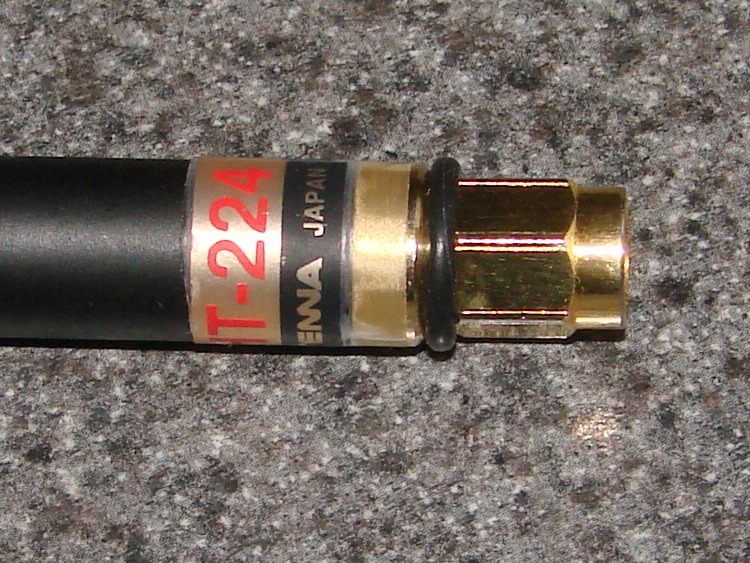
    This Comet HT-224 antenna fits on my Kenwood TH-F6A radio, but the connector fitting is just slightly too long / short / something: it moves just a little bit, even with the nut firmly tightened.

    This isn’t a real fix, but it pretty much eliminates the rattle: a rubber O-ring between the nut and the antenna…

    Antenna connector and O-ring
    Antenna connector and O-ring

    The ring lasts for a few years, then cracks and falls off. My O-ring stash has what could possibly be a lifetime supply.

    Antenna with O-ring in place
    Antenna with O-ring in place

    There’s a wrap of tape around the label, just for neatness.

  • Tour Easy: Underseat Pack Repair Finished

    So, after a bit more than a year, I replaced the cracked backing plate in the other ERRC underseat pack on my Tour Easy. The first plate held up much better than I expected: hasn’t cracked or poked through the pack fabric.

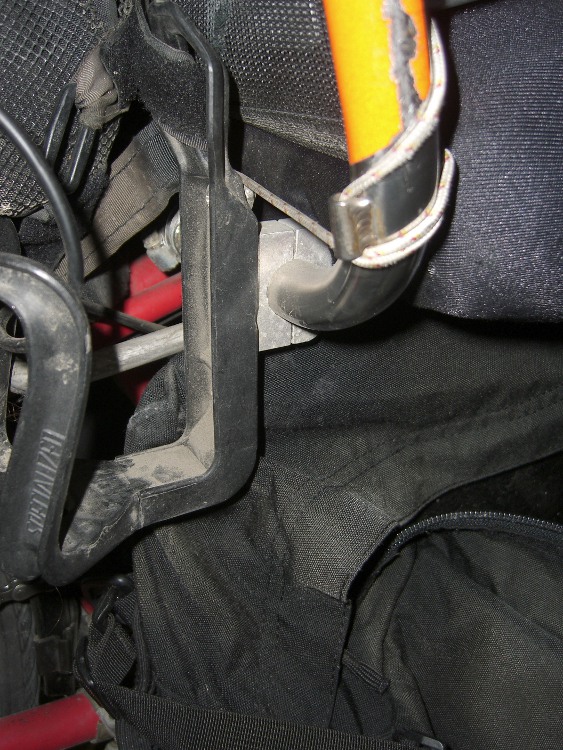
    This repair followed the same outline, including cutting off the ripped netting on the outside of the pack and marching the pack into the clothes washer for a spin with a few shop rags. Reassembled everything, put it back on the bike, and … the new aluminum extrusion across top  of the plate smacked firmly into the water bottle holder clamped to the rear of the seat frame for the amateur radio.

    Underseat pack vs radio holder
    Underseat pack vs radio holder

    The extrusion is the lump running horizontally, just under the seat cushion. The corner of the pack extended rearward (left) of the water bottle holder’s black plastic body.

    The original flexy plastic pack plate simply bent out of the way, but that’s not going to work now.

    So I loosened the clamp, moved it a bit more to the right, and tightened it up again. I’d originally located it at the far right end of the straight part of the seat frame, so it’s now edging into the curved part that eventually forms the right side of the frame, but it’s good enough.

    My shop assistant says she wants another water bottle holder for an actual water bottle on her bike. I say she should just go to the shop and make whatever she wants, then install it. Negotiations continue…