The Smell of Molten Projects in the Morning

Ed Nisley's Blog: Shop notes, electronics, firmware, machinery, 3D printing, laser cuttery, and curiosities. Contents: 100% human thinking, 0% AI slop.

Author: Ed

  • Stepper Motor Driver Bypassing: Mind the Voltage

    The supply voltage for that picture came from a bench supply and, having confirmed that the initial slope of the current waveform matched the voltage, I twiddled the knob while watching the slope change.

    As expected, lower voltage = lower slope and higher voltage = higher slope. That worked fine, right up until a firecracker popped about a foot in front of my face, launched a missile over my left shoulder, and filled the Basement Laboratory with the pungent smell of electrical death.
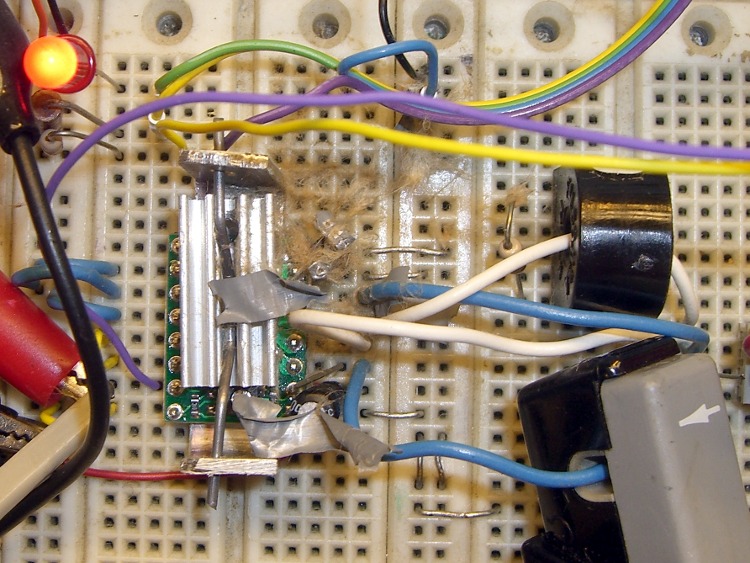
    Detonated electrolytic cap
    Detonated electrolytic cap

    While wiring up a hairball test circuit for that Pololu driver, I’d put a pair of electrolytic caps on the +5 and +12 V supply lines, seeing as how solderless breadboards aren’t all that great for power distribution. The brown fur growing just to the upper right of the heatsink is what’s left of a 16 V cap that had 25 V applied for a few seconds: I’d wired in the bench supply in place of the breadboard’s fixed +12 V output and forgot all about the caps.

    The cap body departed for the far reaches of the Basement Laboratory, leaving behind shredded cardboard and unrolled plastic strips. I’m sure it’ll turn up some day.

    Nothing else took any damage, but for a few minutes I thought I’d killed Eks’ AM503 current probe, which pokes in from the lower right.

    The black lump just above the probe is an ordinary AC current transformer that didn’t work well at all: the 1/rev frequency was just too low.

    If you don’t always wear glasses at the workbench, start now.
  • Stepper Sync Wheel: Current Waveform First Light

    Eks loaned me a Tek AM503 Current Probe Amplifier, one of those gorgeous instruments that Just Works: a clamp-on DC to 50 MHz Hall Effect current meter. Because it’s electrically isolated from all the hideous electrical hash that surrounds any stepper motor driver circuit, it doesn’t see much of the garbage that pollutes any current sensor depending on a series resistance and a differential amplifier.

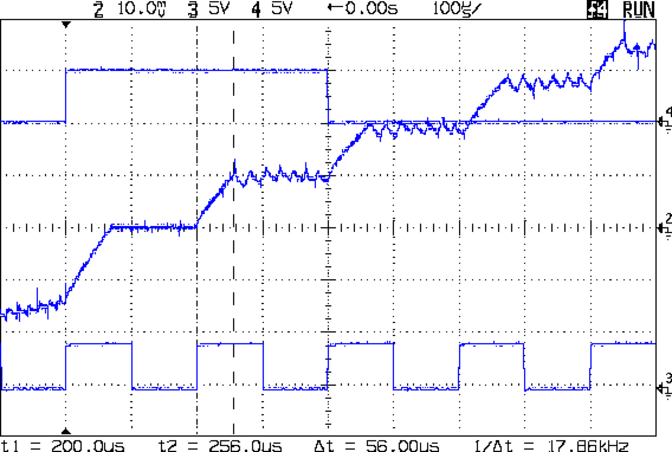
    Which lets you take pix like this:

    Stepper Test
    Stepper Test

    From top to bottom:

    The initial ramp occupying the first third of each step comes from the motor’s L/R time constant coupled with the 9 V supply I was using. Back of the envelope: 2 mH / 2 Ω = 1 ms. With 8 V (9 V less MOSFET drops &c) applied, the initial slope = 8 V / 2 mH = 2500 A/s, so in 75 ms it rises 187 mA: close enough.

    The small ripples show the A4988 chopping the current to maintain the proper value for each microstep.

    Looks just like the pretty pictures in the datasheet, doesn’t it?

  • Bedbugs Redux

    Mary quite deliberately brought home a pair of bedbugs… even knowing what we went through, you cannot imagine how dead those things had to be. She doesn’t just want them dead, she wants them extinct.

    Anyhow.

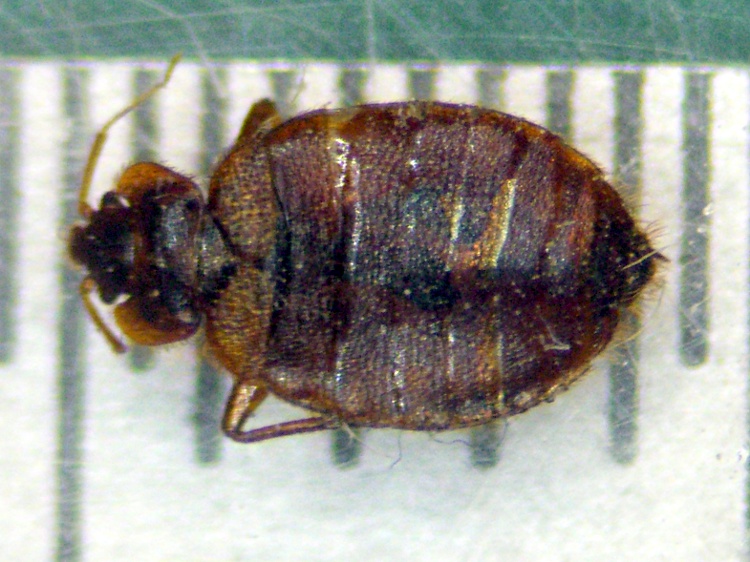
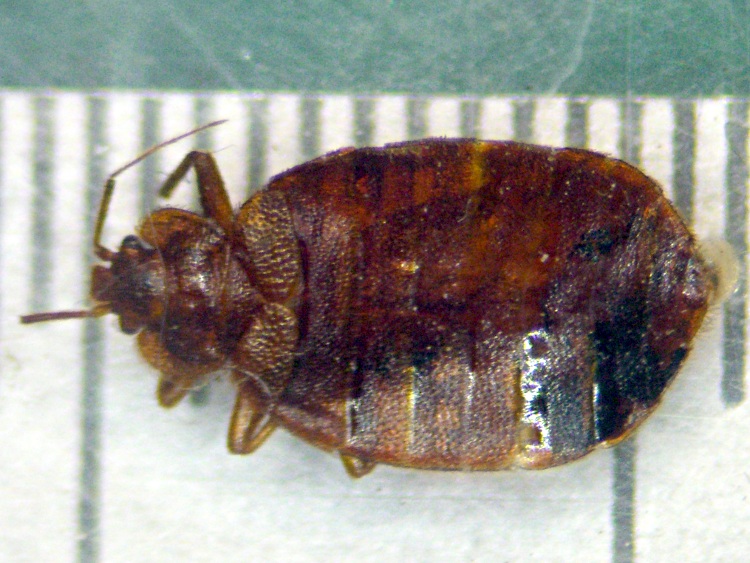
    Some pix, atop a scale with 0.5 mm divisions:

    Bedbug - 4 mm - dorsal
    Bedbug – 4 mm – dorsal
    Bedbug - 4 mm - ventral
    Bedbug – 4 mm – ventral
    Bedbug - 6 mm - dorsal
    Bedbug – 6 mm – dorsal
    Bedbug - 6 mm - ventral
    Bedbug – 6 mm – ventral
    Bedbug - 6 mm - mouthparts
    Bedbug – 6 mm – mouthparts

    They were actually on load from Cornell’s Co-op lab, having recently been distinguished from bat bugs.

  • Thing-O-Matic: Multiple Bunnies vs Print Speed

    What’s more fun than one Stanford Bunny? A few litters!

    These at 50 mm/s feed came out a bit jittery. The ear overhangs were particularly messy:

    Small bunnies - ragged edges - 50-100
    Small bunnies – ragged edges – 50-100

    Another litter at 20 mms/s had better ear overhangs and much smoother coats with less overall jitter:

    Small bunnies - ragged ears - 20-100
    Small bunnies – ragged ears – 20-100

    The obvious shear line across their tummies came from my messing around with the HBP cabling, jerking the X stage while preventing the cables from snagging on the Y stage. Moral of the story: don’t mess around with anything inside the box while it’s printing!

    They have little droopy tails:

    Small bunnies - droopy tails - 20-100
    Small bunnies – droopy tails – 20-100

    I think 25 or 30 mm/s would be better all around, as it’d move the extruder away from the Z stage’s mechanical resonance at 1.10 rpm.

  • Gas Grill Igniter: Design Failure Therein

    The Judges at the Trinity College Home Firefighting Robot contest use butane grill igniters to light the candles in the arenas, but the gadgets seem to have terrible reliability problems: very often, they simply don’t work. I brought a few deaders back to the Basement Laboratory this April and finally got around to tearing them apart.

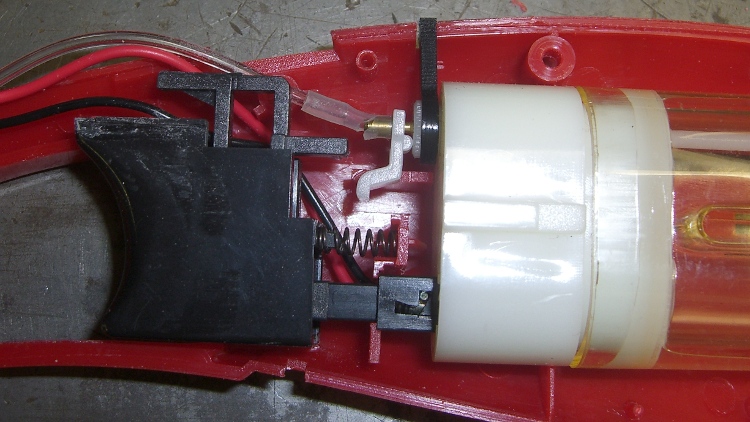
    It seems they don’t ignite because the trigger’s safety interlock mechanism shears the plastic gas hose against the fuel tank’s brass outlet tube:

    Grill igniter with sheared gas tube
    Grill igniter with sheared gas tube

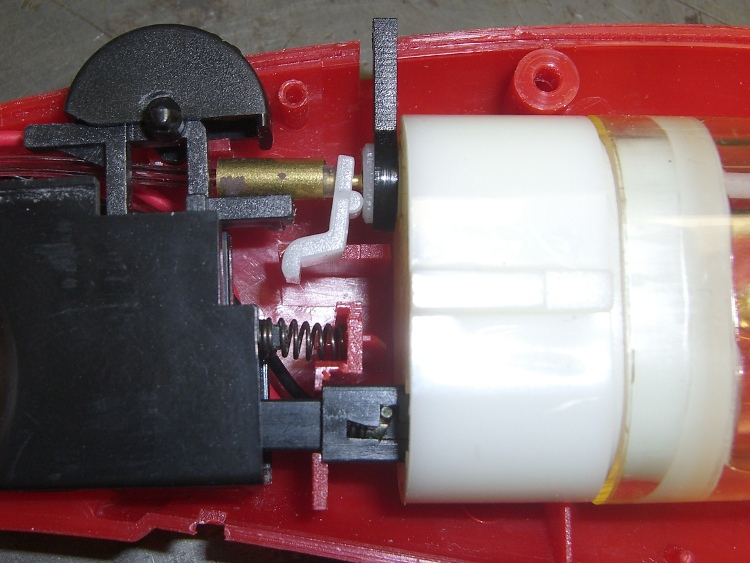
    I tried putting a small brass tube around the (shortened and re-seated) hose, but it turns out the trigger interlock slides into that space and depends on the hose bending out of the way:

    Grill igniter with brass tubing
    Grill igniter with brass tubing

    So there’s no easy way to fix these things.

    It seems to me that a device using flammable gas should not abrade its gas hose, but what do I know?

  • Pololu Stepper Driver Board Heatsinking: Crude Prototype

    Those cute little Pololu stepper driver boards using the Allegro A4988 chip have one conspicuous problem: there’s no good way to heatsink the chip. The doc recommends heatsinking for currents around 1 A and some informal testing shows it will trip out on thermal protect around 800 mA, so heatsinking really isn’t optional.

    A thermal pad from the chip bonds to vias that conduct heat through the PCB to the bottom surface copper layer: putting a heatsink on the top doesn’t help as much as one on the bottom. What I’m doing here is a first pass at a bulk heatsink that would work with several of the driver chips lined up in a row; this one is ugly and doesn’t work well, but it should let me do some further electrical tests.

    The general idea is to clamp the heatsink around the board, with the chip as the top-side pressure point. The catch: no room for an actual heatsink underneath, because that’s where the connector pins live. You could mount the board upside-down, but then there’s no good way to tweak the stepper current trimpot. That may not be a problem after you get things set up, although I’d hate to unplug and replug the board for each adjustment.

    So I think a reasonable solution involves a metal strip to conduct the heat out the ends and up to the heatsink. What I’ve done here does not accomplish that; I’m just feeling around the parameter space.

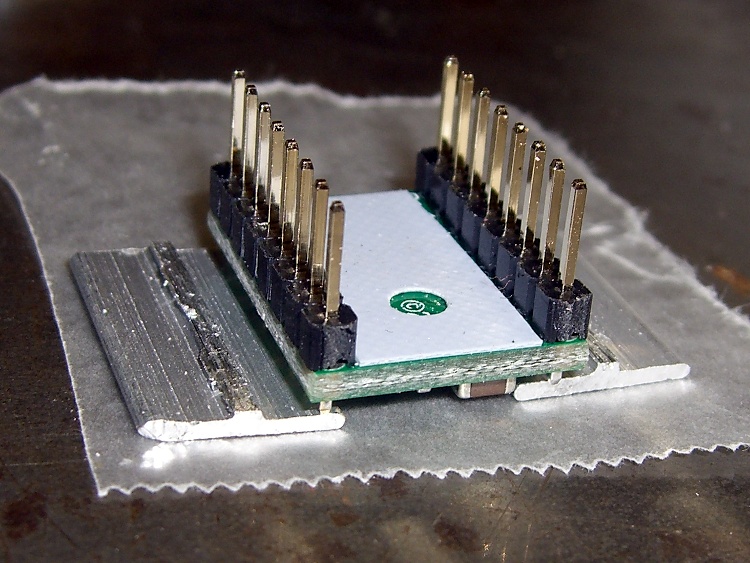
    You can’t get too enthusiastic with the clamping force, lest you crush the chip, so moderate pressure is the rule of the day. However, the chip sits low on the board, surrounded by taller components, so I put a drop of epoxy on top and flipped it over to produce a short thermally conductive column that’s higher than everything else:

    Pololu stepper board - epoxy curing
    Pololu stepper board – epoxy curing

    The blue sheet comes from a trimmed-down TO-220 transistor heatsink pad; it’s thermally conductive silicone, provides a bit of compliance against the PCB, and insulates the REF trimpot test point from the heatsink.

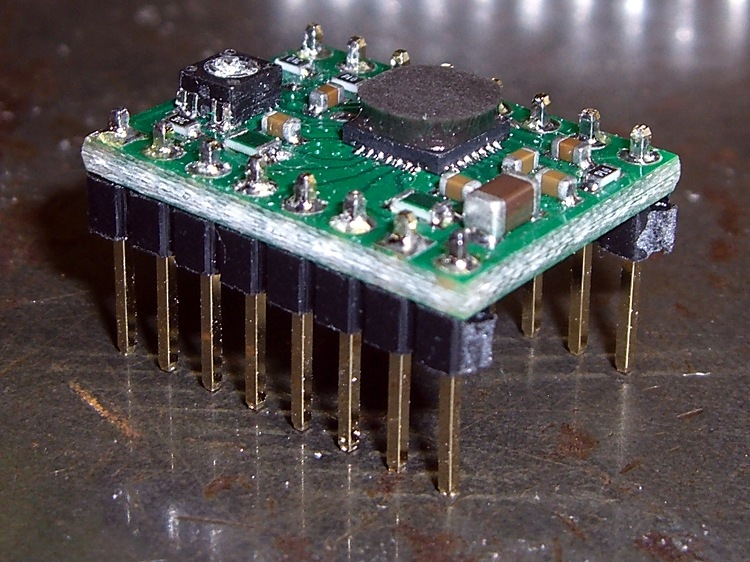
    The result looks OK, but it would be better to embed a small metal block between thinner epoxy layers to get better thermal conductivity:

    Pololu stepper board - epoxy blob on driver chip
    Pololu stepper board – epoxy blob on driver chip

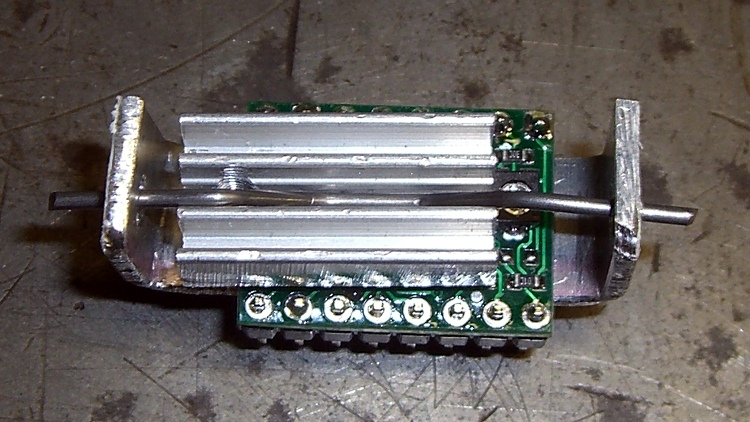
    Although most of the heat goes out the bottom, you still need something on the top to take the spring pressure. I trimmed down the TO-220 heatsink that came with that silicone pad; it must mount off-center to permit access to the trimpot but, alas, blocks the voltage monitoring pad and both sense resistors. A length of 45-mil music wire bent into a flat M  provides the spring:

    Pololu stepper board - heatsink top view
    Pololu stepper board – heatsink top view

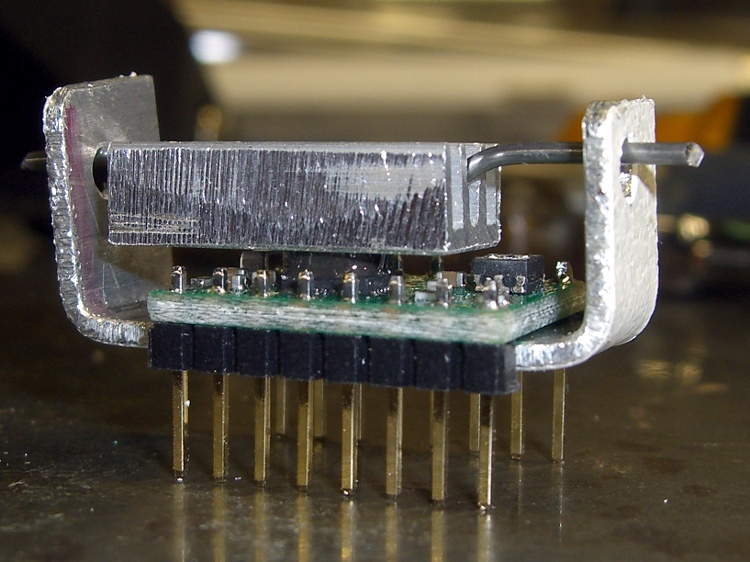
    The side view show how the kludge fits together:

    Pololu stepper board - crude heatsink
    Pololu stepper board – crude heatsink

    The final result is truly ugly. The epoxy column didn’t turn out nearly as parallel to the PCB as I’d like, so some filing and finishing will be in order.

    Now, to find out if it’ll allow the chip to run above 1 A for at least a while.

  • Roof Work: Vent Stack Gaskets and Shingle Fungus

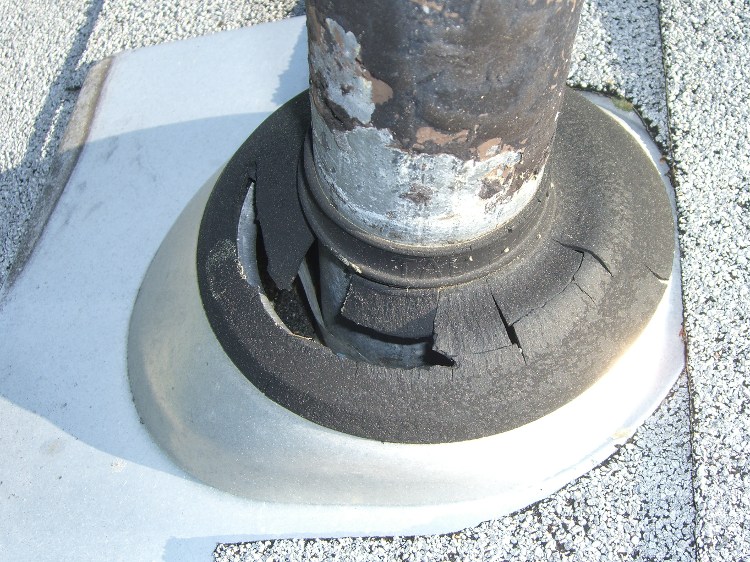
    Part of the spring ritual involves cleaning the maple seeds out of the gutters, which also gives me an opportunity to inspect things up there. This year brought a revolting discovery:

    Rotted vent stack gasket
    Rotted vent stack gasket

    It seems the rubber (?) seals around all three vent stack pipes have disintegrated. Now, the contractor installed these as part of the re-roofing project late in the last millennium, so it’s not like they came with the house. They’re an exact match for what’s currently available at Home Depot and I have no reason to believe new ones will last any longer. Sheesh.

    The correct fix involves removing the shingles around the existing aluminum plates, installing new plates, and then replacing the shingles. That seems unwarranted, seeing as how the aluminum remains nicely bonded to everything, so I slipped some solid polyethylene shields around the vent stacks, tucked them under the uphill shingles, and hope that’ll suffice.

    The discoloration on the roof is getting worse, except downhill from the chimney’s copper flashing. You can see one of the ugly new black plastic vent seals over on the right:

    Copper effect on roof discoloration
    Copper effect on roof discoloration

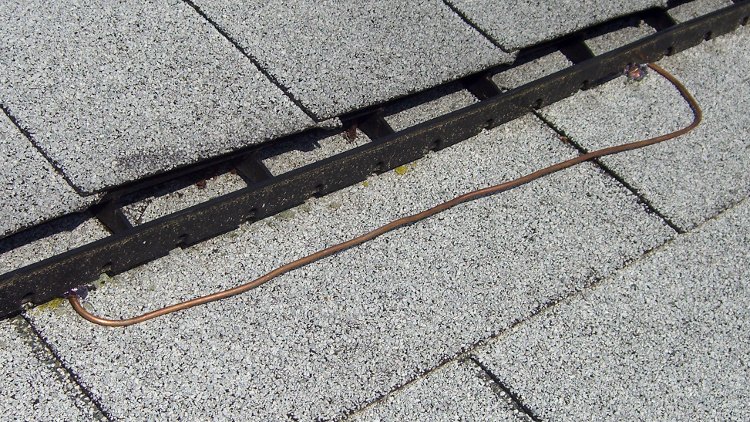
    I suspect the copper ions kill off the fungus, so, invoking Science, I tucked a foot of copper wire under the ridge vent uphill from a patch of fungus:

    Anti-fungal copper wire test
    Anti-fungal copper wire test

    We’ll see if that makes any difference. I suppose the next time I’m up there I should tuck a strip of copper flashing under the shingle on the other side of the chimney to see if a bit more surface area will have more effect.