The Smell of Molten Projects in the Morning

Ed Nisley's Blog: Shop notes, electronics, firmware, machinery, 3D printing, laser cuttery, and curiosities. Contents: 100% human thinking, 0% AI slop.

Author: Ed

  • EAGLE Library: 10 W Aluminum Power Resistor

    It appears there are at least two different 10 W aluminum resistor sizes: the one used by Dale and the one used by everybody else. It’s either that or the EAGLE HS10 symbol is wrong…

    Using those dimensions, here’s a part that more closely fits the resistors in my heap. EAGLE 6 uses an XML file format, so you can stuff some ASCII text into the appropriate sections of your custom.lbr file (or whatever).

    The EAGLE package, which remains HS10 as in the resistor-power library, should produce something that looks like this:
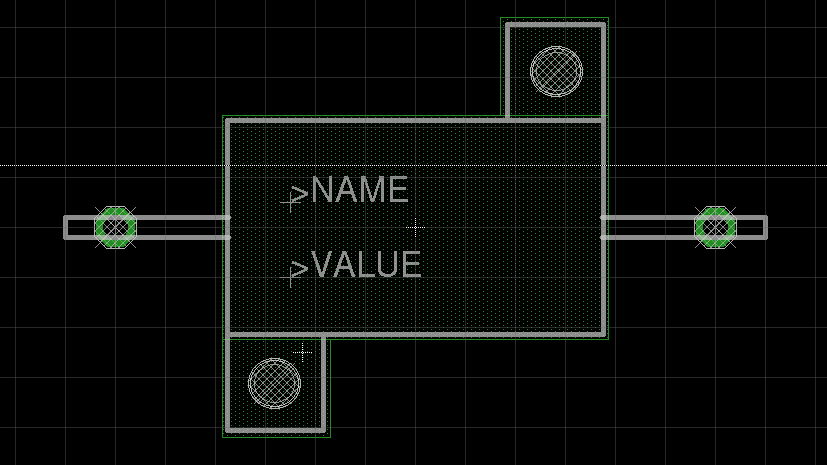
    EAGLE 10 W Resistor package
    EAGLE 10 W Resistor package

    The XML code includes top-keepout rectangles under the body footprint:

    <package name="HS10">
    <description>DALE Power Resistor 10W</description>
    <wire x1="9.525" y1="5.461" x2="9.525" y2="10.3378" width="0.2032" layer="21"/>
    <wire x1="9.525" y1="10.3378" x2="4.6482" y2="10.3378" width="0.2032" layer="21"/>
    <wire x1="-9.525" y1="-5.461" x2="-4.6482" y2="-5.461" width="0.2032" layer="21"/>
    <wire x1="-4.6482" y1="-5.461" x2="9.525" y2="-5.461" width="0.2032" layer="21"/>
    <wire x1="9.525" y1="-5.461" x2="9.525" y2="5.461" width="0.2032" layer="21"/>
    <wire x1="9.525" y1="5.461" x2="4.6482" y2="5.461" width="0.2032" layer="21"/>
    <wire x1="4.6482" y1="5.461" x2="-9.525" y2="5.461" width="0.2032" layer="21"/>
    <wire x1="-9.525" y1="5.461" x2="-9.525" y2="-5.461" width="0.2032" layer="21"/>
    <wire x1="4.6482" y1="5.461" x2="4.6482" y2="10.3378" width="0.2032" layer="21"/>
    <wire x1="-9.525" y1="-5.461" x2="-9.525" y2="-10.3378" width="0.2032" layer="21"/>
    <wire x1="-9.525" y1="-10.3378" x2="-4.6482" y2="-10.3378" width="0.2032" layer="21"/>
    <wire x1="-4.6482" y1="-5.461" x2="-4.6482" y2="-10.3378" width="0.2032" layer="21"/>
    <wire x1="-9.47" y1="0.5" x2="-17.78" y2="0.5" width="0.2032" layer="51"/>
    <wire x1="-17.78" y1="0.5" x2="-17.78" y2="-0.5" width="0.2032" layer="51"/>
    <wire x1="-17.78" y1="-0.5" x2="-9.47" y2="-0.5" width="0.2032" layer="51"/>
    <wire x1="9.47" y1="-0.5" x2="17.78" y2="-0.5" width="0.2032" layer="51"/>
    <wire x1="17.78" y1="-0.5" x2="17.78" y2="0.5" width="0.2032" layer="51"/>
    <wire x1="17.78" y1="0.5" x2="9.47" y2="0.5" width="0.2032" layer="51"/>
    <pad name="1" x="-15.24" y="0" drill="1.3" shape="octagon"/>
    <pad name="2" x="15.24" y="0" drill="1.3" shape="octagon"/>
    <text x="-6.35" y="1.27" size="1.27" layer="25">&gt;NAME</text>
    <text x="-6.35" y="-2.54" size="1.27" layer="27">&gt;VALUE</text>
    <rectangle x1="-9.779" y1="-5.715" x2="9.779" y2="5.715" layer="43"/>
    <rectangle x1="4.318" y1="5.715" x2="9.779" y2="10.668" layer="43"/>
    <rectangle x1="-9.779" y1="-10.668" x2="-4.318" y2="-5.715" layer="43"/>
    <hole x="-7.1374" y="-7.9375" drill="2.3876"/>
    <hole x="7.1374" y="7.9375" drill="2.3876"/>
    </package>
    

    The EAGLE symbol looks just an ordinary schematic resistor:

    <symbol name="RESISTOR">
    <wire x1="-2.54" y1="0" x2="-2.159" y2="1.016" width="0.2032" layer="94"/>
    <wire x1="-2.159" y1="1.016" x2="-1.524" y2="-1.016" width="0.2032" layer="94"/>
    <wire x1="-1.524" y1="-1.016" x2="-0.889" y2="1.016" width="0.2032" layer="94"/>
    <wire x1="-0.889" y1="1.016" x2="-0.254" y2="-1.016" width="0.2032" layer="94"/>
    <wire x1="-0.254" y1="-1.016" x2="0.381" y2="1.016" width="0.2032" layer="94"/>
    <wire x1="0.381" y1="1.016" x2="1.016" y2="-1.016" width="0.2032" layer="94"/>
    <wire x1="1.016" y1="-1.016" x2="1.651" y2="1.016" width="0.2032" layer="94"/>
    <wire x1="1.651" y1="1.016" x2="2.286" y2="-1.016" width="0.2032" layer="94"/>
    <wire x1="2.286" y1="-1.016" x2="2.54" y2="0" width="0.2032" layer="94"/>
    <text x="-3.81" y="1.4986" size="1.778" layer="95">&gt;NAME</text>
    <text x="-3.81" y="-3.302" size="1.778" layer="96">&gt;VALUE</text>
    <pin name="2" x="5.08" y="0" visible="off" length="short" direction="pas" swaplevel="1" rot="R180"/>
    <pin name="1" x="-5.08" y="0" visible="off" length="short" direction="pas" swaplevel="1"/>
    </symbol>
    

    And then the EAGLE resistor device lashes everything together:

    <deviceset name="R" prefix="R" uservalue="yes">
    <description>Resistors</description>
    <gates>
    <gate name="R" symbol="RESISTOR" x="0" y="0"/>
    </gates>
    <devices>
    ... many more devices...
    <device name="ALUM-10W" package="HS10">
    <connects>
    <connect gate="R" pin="1" pad="1"/>
    <connect gate="R" pin="2" pad="2"/>
    </connects>
    <technologies>
    <technology name=""/>
    </technologies>
    </device>
    ... many more devices ...
    </devices>
    </deviceset>
    

    Update the libraries and then it should Just Work.

    It would have been much better had I discovered this before drilling & etching the board with one of those resistors…

  • Basement Safe Humidity: The Trend Continues

    The desiccant in the basement safe:

    Desiccant in safe
    Desiccant in safe

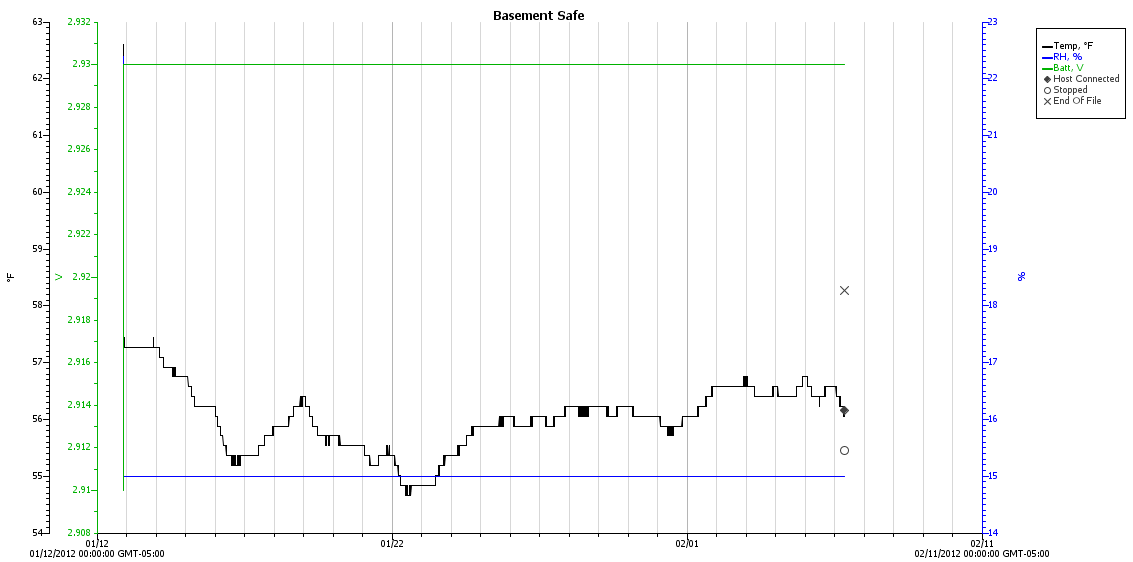
    Continues to work just fine, much better than the first attempt:

    Basement Safe Humidity - 2012-02-06
    Basement Safe Humidity – 2012-02-06

    The paper scrap gives the weight of tray+desiccant, so when the humidity finally starts going up I’ll have some idea of the average leak rate. Most likely, opening the door for the more-or-less monthly logger readout introduces most of the water vapor…

  • Tweezer Tip Alignment & Shaping

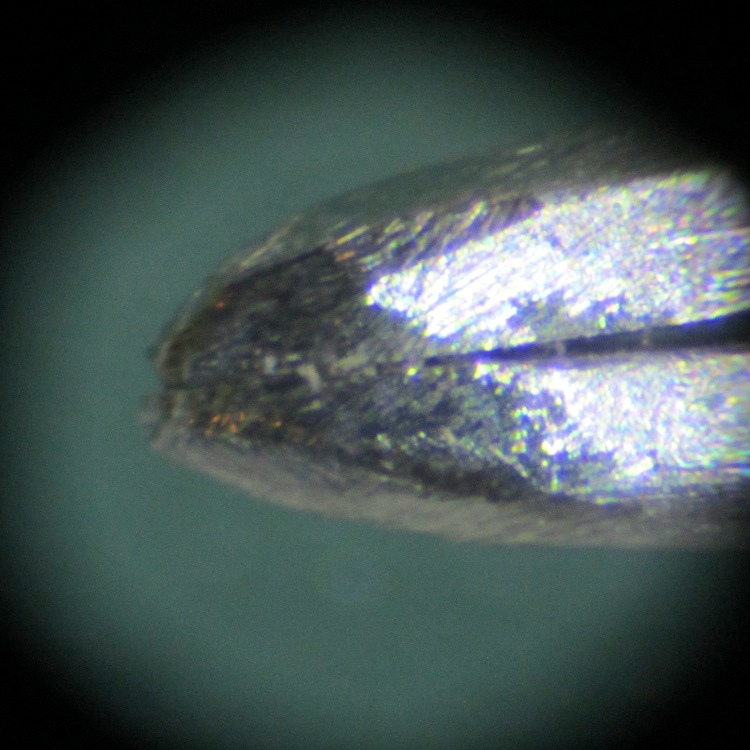
    During a recent rainstorm I grabbed the fiberglass marker pole at the end of the drain pipe to clear a wad of leaves out of the driveway gutters. Unfortunately, that left me with a finger full of glass fibers; it seems the top of the pole has deteriorated. The first tweezer I plucked from the stash around the pencil-oid tool holder hadn’t had its jaws aligned, so after I plucked (most of) the glass using those tweezers, I did a bit of filing and sandpapering:

    Tweezer tips
    Tweezer tips

    That’s a millimeter scale in the background: these really are needle-tip tweezers.

    A closer view:

    Aligned and shaped tweezer tip
    Aligned and shaped tweezer tip

    It still has a bit of overbite, but it grabs hairs from the bench with no hassle. Given that you can’t get all the glass fibers on the first pass, it’ll come in handy…

  • DIY Vanilla Extract: Batch 2

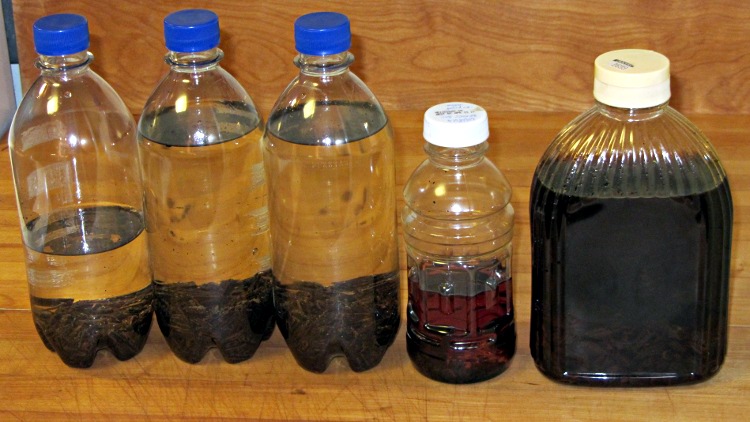
    So I picked up half a pound of Grade B Madagascar Vanilla Beans from the usual eBay supplier, a 1.75 liter slug of the next-to-the-cheapest 80 proof vodka (“carefully distilled, then filtered through selected charcoal”) from the neighborhood liquor store, and scavenged some bottles from the basement stash:

    Vanilla extract bottles
    Vanilla extract bottles

    The proper mix seems to be around 2 ounces of beans per 16 liquid ounces of 80-ish proof vodka, which nearly fill the two round half-liter (16.9 fluid ounce) bottles. The flat bottle on the right has the rest of that Devil’s Spring 160 proof rotgut, cut down to 90 proof, with enough beans to make the answer come out right for that volume. The leftmost round bottle has the remainder of the beans in the appropriate volume, which is why it’s half full. The little bottle is that one, minus doses for my hot chocolate & pancakes.

    One motivation for using 80 proof vodka is that a teaspoon of 160 proof hooch brings a cup of hot chocolate right up around 3 proof. That earlier batch really didn’t have enough vanilla to be effective, but increasing the total dosage would put a dent in my already meager afternoon productivity…

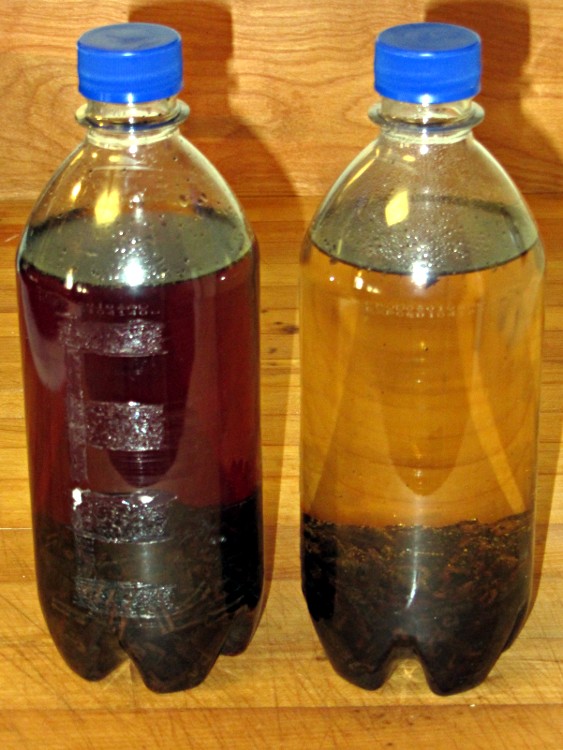
    Although the recipes recommend daily shaking for a month before the brew reaches equilibrium, I’m sure this is one of those exponential diffusion deals that’s mostly done after a day or three. These two bottles show the concentration on the next morning, after and before shaking:

    Vanilla extract - shaken and unshaken
    Vanilla extract – shaken and unshaken

    Chopping half a pound of vanilla beans on the kitchen cutting board produces an interesting side effect: everything you cut for the next day or so smells strongly of vanilla, as does the entire kitchen end of the house, as do your fingers. Mostly, that’s OK, but we decided vanilla-scented onions were just plain weird and there really isn’t any justification for vanilla-flavored green tea.

  • Kitchen Hazard: Exploding Potato!

    It was such a small potato that it didn’t need a nail and, somehow, didn’t get punctured before going into the oven. When it came out, the first touch of the fork detonated the thing:

    Exploded Potato
    Exploded Potato

    Memo to self: always puncture potatoes before baking!

  • Relocated Sherline Tool Length Probe Switch

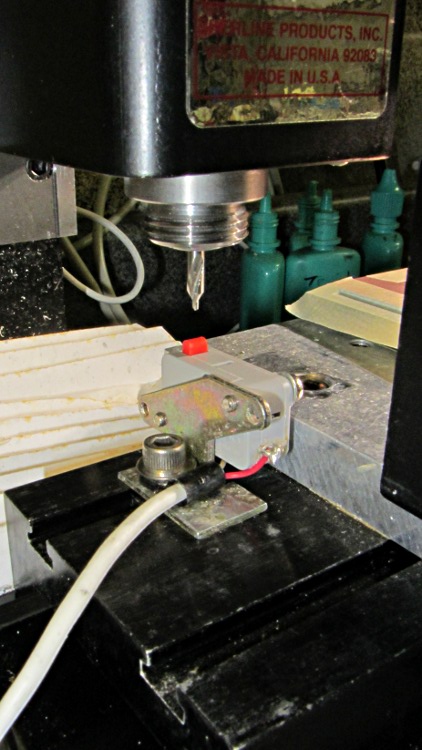
    Putting the tool length switch atop the tooling plate has the advantage that it’s higher than most of the workpieces, but it also soaks up a bit of precious real estate. Moving it off the plate to the table puts it nearly level with the top of the plate, but at least now I have room for clamp blocks and suchlike:

    Relocated tool length switch
    Relocated tool length switch

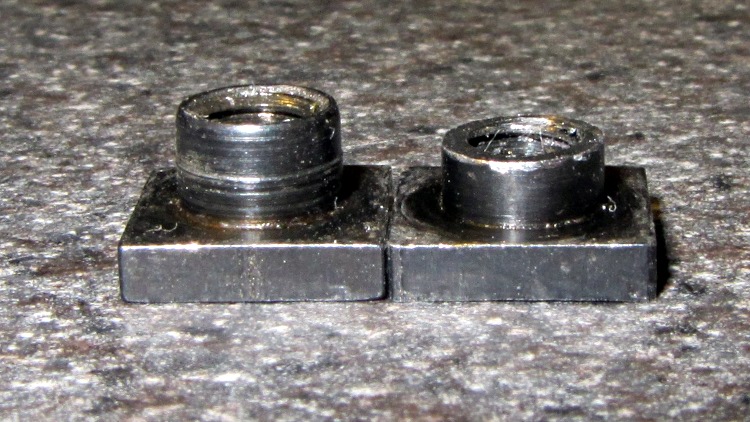
    It turns out that Sherline T-nuts protrude just an itsy above the top of the table (which lets them locate the tooling plate to the slot, for example), so I shortened one by filing it down to size:

    Original and shortened Sherline T-nuts
    Original and shortened Sherline T-nuts

    Now, I’d like to front as if all that happened in a rational and well-thought-out manner, but the fact of the matter is that I completely used up one 10-32 stainless socket-head cap screw while thinking it was somehow still bottoming out in the slot, before realizing that the T-nut was sticking up. Drat!

  • KitchenAid Mixer Pivot Shaft Tweak

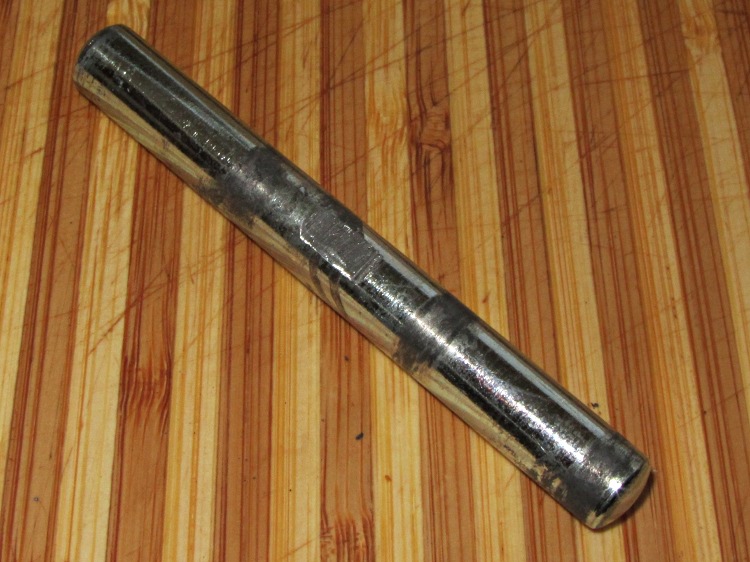
    The shaft that tilts the mixer head has started walking sideways out of its hole, which is not to be tolerated. Looking up inside the base column shows a locking screw that’s worked loose:

    KitchenAid mixer - pivot shaft and locking screw
    KitchenAid mixer – pivot shaft and locking screw

    I took the thing apart and filed a flat on the shaft:

    KitchenAid mixer pivot shaft - added flat
    KitchenAid mixer pivot shaft – added flat

    And then a dab of Loctite on the screw will prevent that from happening again:

    KitchenAid mixer pivot locking screw
    KitchenAid mixer pivot locking screw

    It’s still piddling oil on the countertop. If you have one of these things, always store it with the head tilted upward. That makes the oil run down the column onto the counter, rather than through the planetary gears into the mixing bowl…