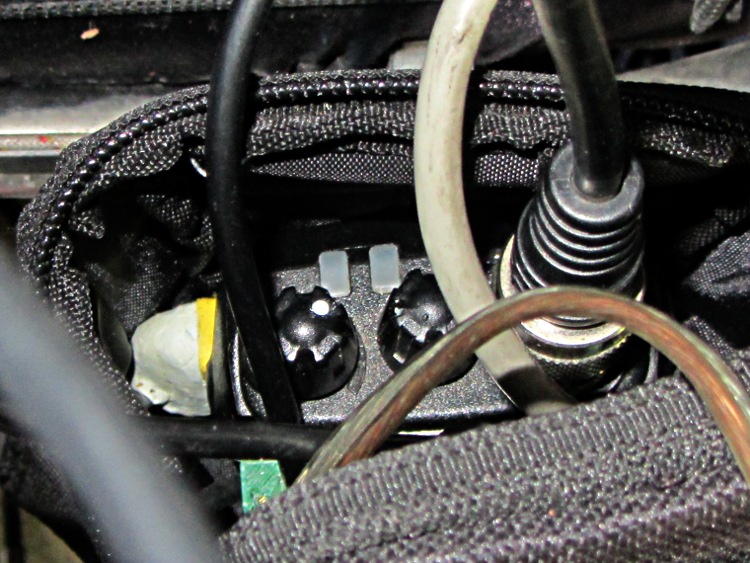
The Smell of Molten Projects in the Morning

Ed Nisley's Blog: Shop notes, electronics, firmware, machinery, 3D printing, laser cuttery, and curiosities. Contents: 100% human thinking, 0% AI slop.

Author: Ed

  • Three-way Lamp Socket: Fuse Test

    After un-bending the top of a pole lamp that suffered an untimely collision with the floor, I discovered that the entire stock of three-way bulbs in the heap had at least one burned-out filament each; I’d acquired them when Mom moved out of the Ancestral House, so they dated back a long time. So I figured I’d insert a decently sized single-filament bulb and be done with it.

    Three-way lamp sockets have an additional tab contact between the usual central contact and the outer shell:

    Interior of 3 way lamp socket
    Interior of 3 way lamp socket

    The shell forms the common contact for the filaments and the switch counts in binary: off / off, off / on, on / off, on / on. In principle, the tab sits low enough to not contact the shell of an ordinary bulb.

    I was doing this in the Basement Laboratory Workshop Wing, with the lamp plugged into the outlet strip along the front edge of the bench; that way, I simply poked the power strip button to remove line voltage from the lamp while swapping bulbs. So I:

    • turned the power strip off
    • unscrewed the last dead three-way bulb
    • threw it away
    • screwed in an ordinary bulb
    • turned the strip on

    At which point all the fluorescent overhead lights in the Laboratory went dim, the shop resounded with a deep resonant groan, and the acrid smell of electrical death filled the air. Elapsed time less than a second, tops.

    Come to find out that the socket’s contact tab stuck up a little bit further than it should, producing a dead short across the line:
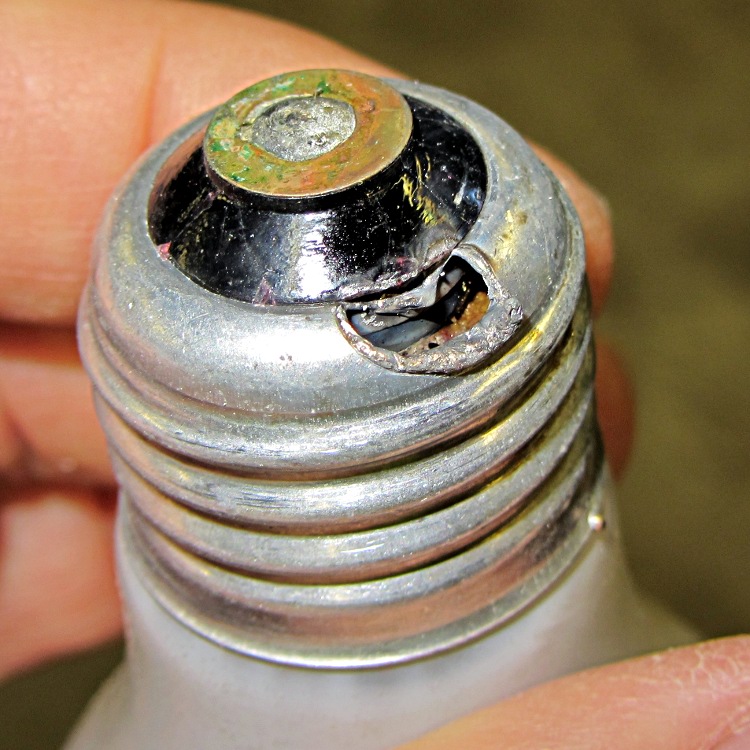
    Melted bulb base
    Melted bulb base

    Of interest: the branch circuit breaker didn’t trip, the GFI on the circuit didn’t trip, and the pop-out breaker in the power strip didn’t trip.

    Huh.

    I harvested the pole sections, the base counterweight, and the line cord. The rest of the corpse joined the bulbs in the trash…
  • Dismantling a Gas Tank

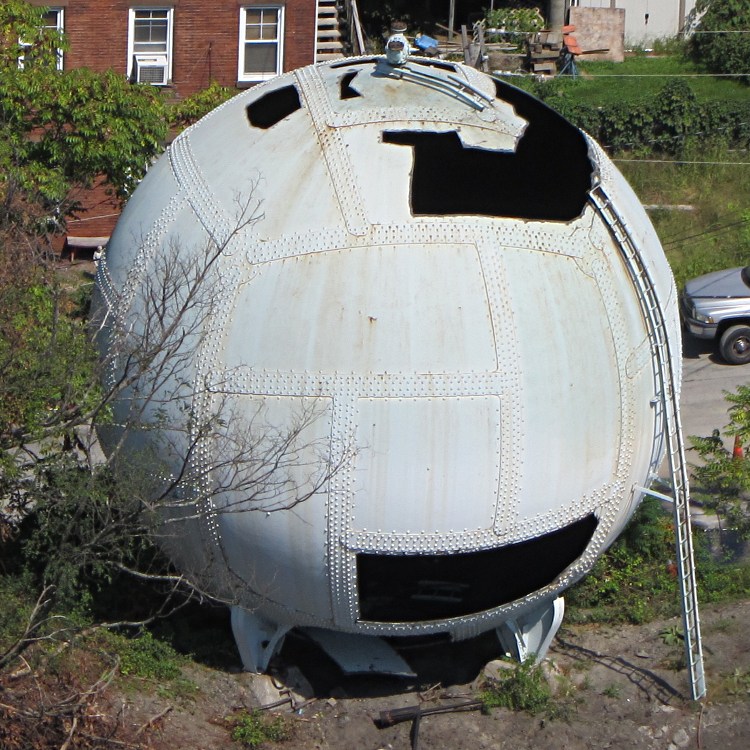
    That gas tank has evidently reached the end of its life:

    Cutting up spherical CHGE gas tank
    Cutting up spherical CHGE gas tank

    Many of the nearby gas pipelines end in open stubs and a concrete crusher worked over one of the pads for a long-vanished cylindrical tank, so it looks like they’re scrapping the whole installation. I think the project to install an elevator for the Walkway lands nearby, which may explain everything.

    I took the picture from the Walkway, aligning the SX230HS lens through the chain-link fence. Occasionally a small lens wins over more glass!

  • Orb-Weaving Spiders

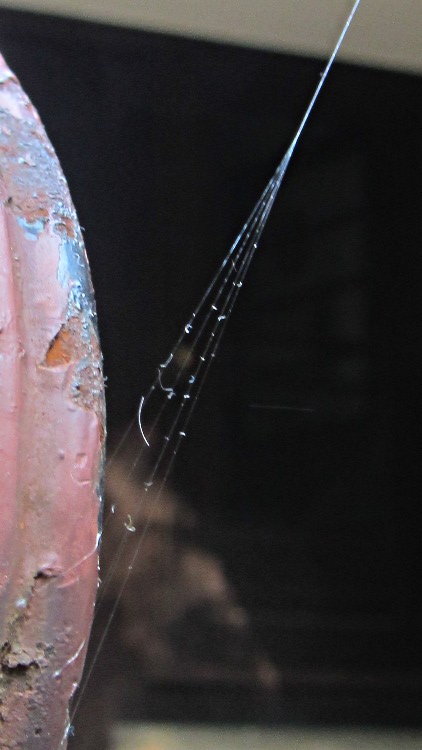
    August was the month for giant orb weaving spiders; a pair of thumb-sized monsters took up residence under the gutter over the patio. One started by anchoring its web to the handrail by the steps:

    Web anchor on handrail
    Web anchor on handrail

    While we like and encourage spiders, that anchorage didn’t last long and, yes, I must strip and repaint that railing…

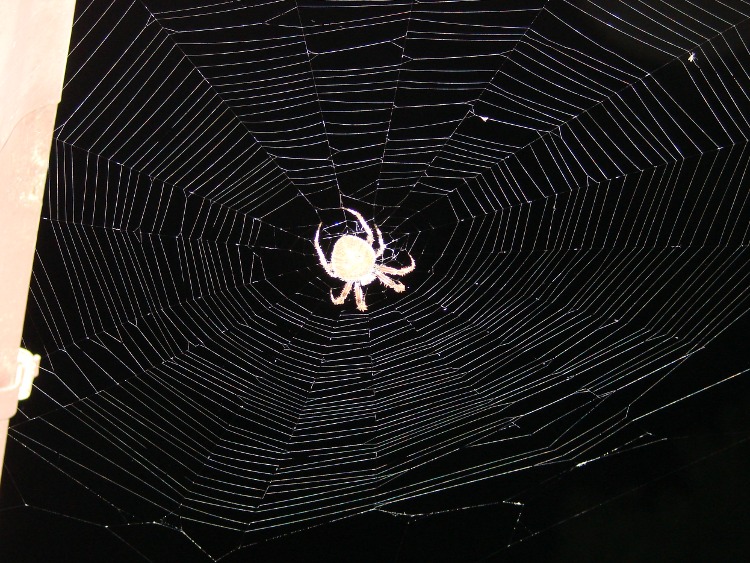
    There’s a horizontal web at the corner of the gutter over the back door:

    Orb spider at gutter - light
    Orb spider at gutter – light

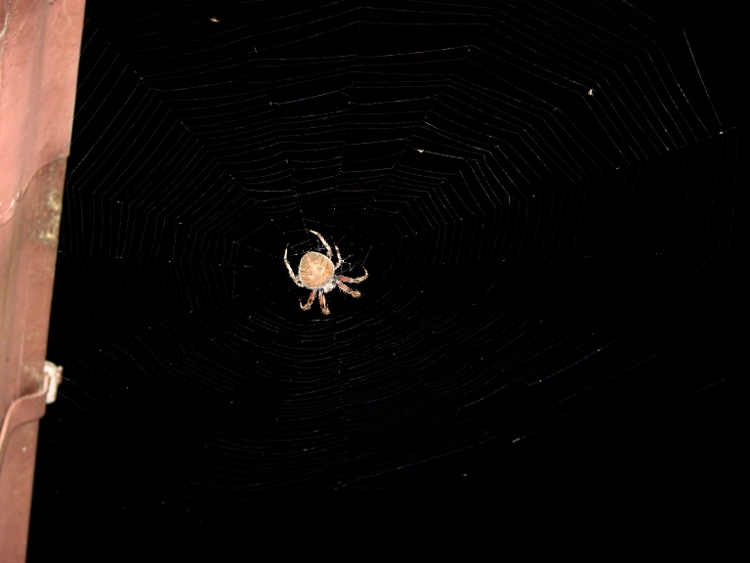
    Changing the exposure to favor the spider loses the web strands:

    Orb spider at gutter - dark
    Orb spider at gutter – dark

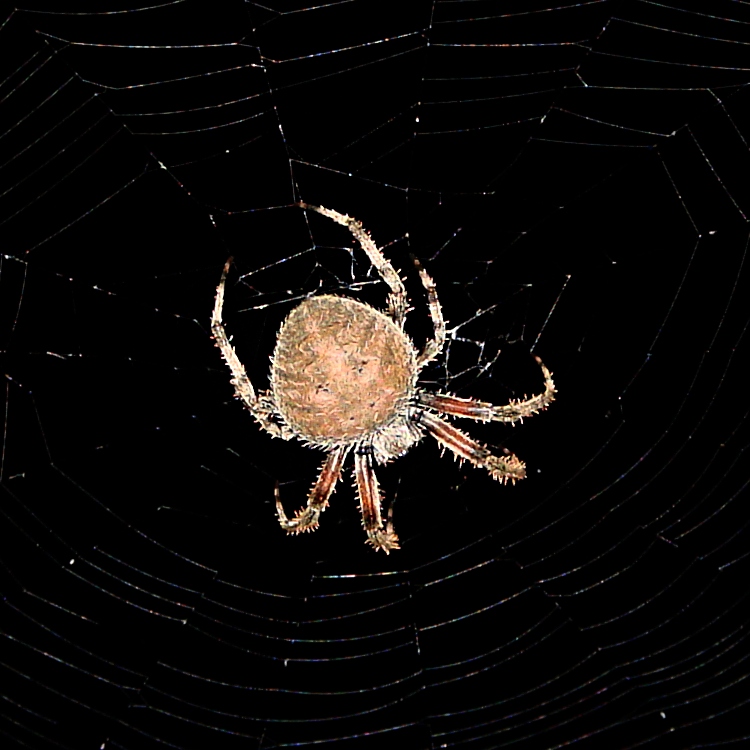
    Cropping that one down around the spider shows they really are the stuff of nightmare:

    Orb spider - detail
    Orb spider – detail

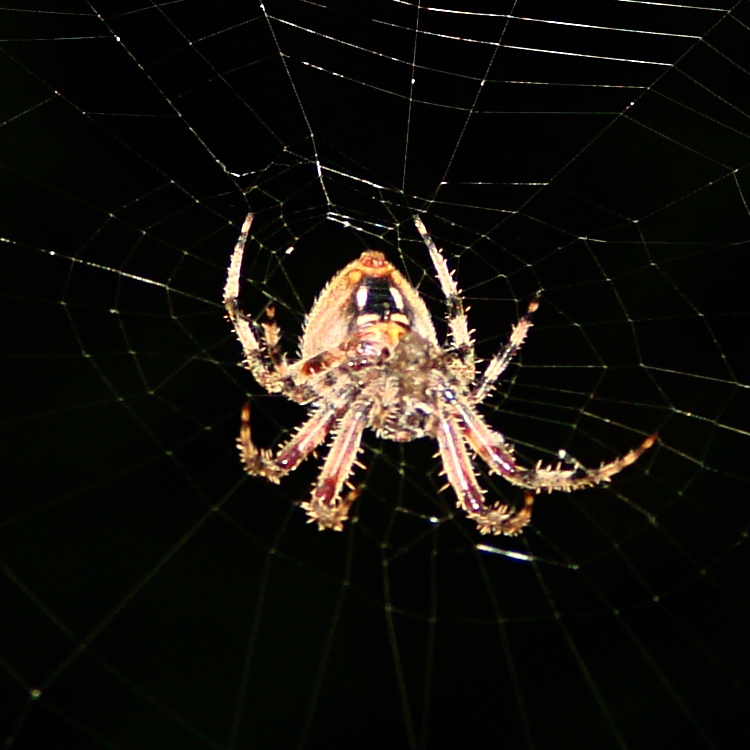
    The other spider prefers a vertical web attached along the gutter and anchored to a patio chair, which means I can get between the house and the web to see the spider’s tummy:

    Orb spider - ventral
    Orb spider – ventral

    We leave the lights on in the evening for their benefit…

  • Monthly Picture: Paper Wasp Nest

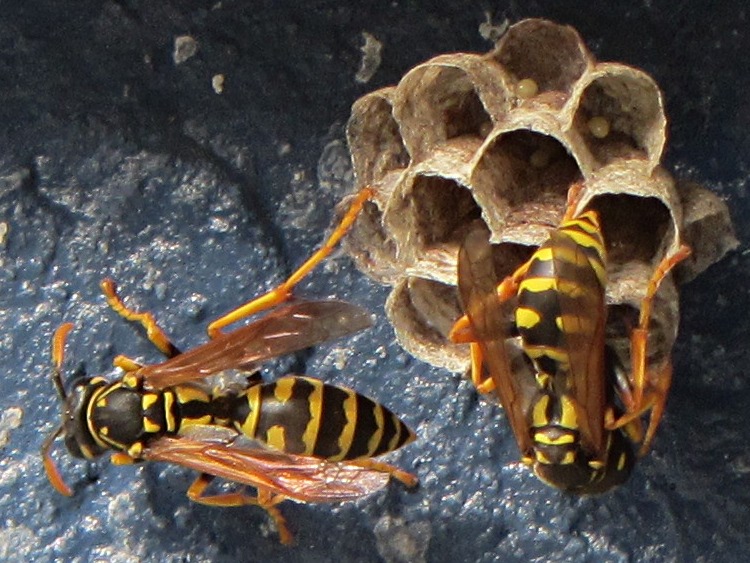
    Found these paper wasps building their nest on a painted brick post:

    Paper wasp nest with eggs
    Paper wasp nest with eggs

    That’s a new nest with eggs a-cooking!

    They were minding their own business, but they’re in a very public area and won’t last long…

    This is a dot-for-dot crop from a larger image, with just a touch of unsharp mask to bring out their hazard warning stripes.

  • Spammers vs. Turing Test: Inching Along

    Most of the dozen or so spam comments I delete every day consist of little more than gibberish. At best, a spam comment will have a poorly worded paragraph or two touting pharmaceuticals, handbags, shoes, or other junk, with absolutely no relation to the post. It’s easy to tell they’re generated by a script: keyword-heavy verbiage, bogus usernames, junk websites, and so forth and so on. Boring, is what they are.

    Recently an interesting comment appeared in response to that post on KG-UV3D audio levels which Akismet tagged as spam:

    The microphone and radio matching capabilities are terrific. Adjust the wide-range input level for optimum drive to the built-in microphone amplifier […]

    Fluent, idiomatic English that started out pretty nearly on-point for the post! The rest of the comment sounded like advertising copy, though. Well written ad copy, but ad copy nonetheless. Feeding a representative chunk into Google produced a link to the description of the W2IHY Two-band Audio Equalizer on the Official Website.

    Now, as it turns out, Julius lives up the river from here and I’ve met him several times. I also know he’s not spamming me, because the URL associated with the post points to some weird-ass Angola gold mining fraud that’s all too familiar from previous spammage. Oh, and the IP address resolves to a Tor server.

    As I observed there, eventually the spammers will become bright enough to hold an intelligent conversation and then they’ll be provisionally human. Depending on what they want to talk about …

  • Current-Sense Resistors: Mind the Power

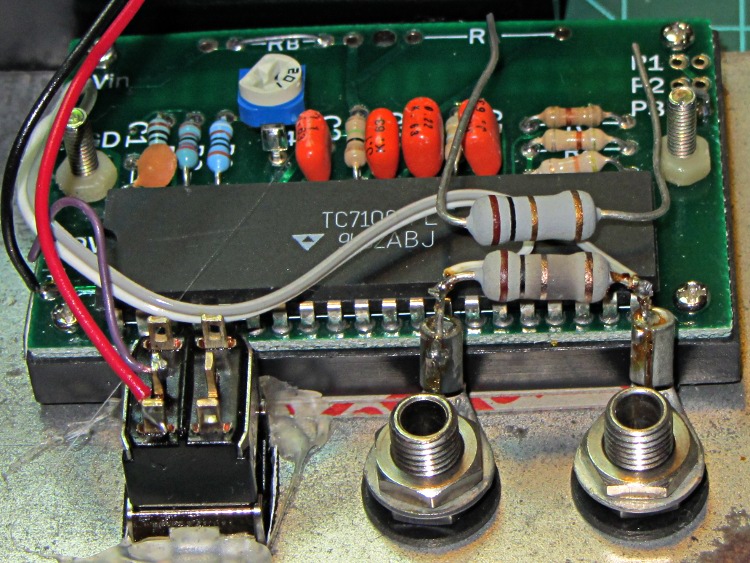
    The bench supplies I use have current limiting, but the 10 mA meter resolution leaves a lot to be desired, so I conjured up a simpleminded 200 mA meter from a panel-mount meter and a 1 Ω sense resistor. That means it’s good for only 200 mA, so I insert it in series with the supply only when it’s needed. Lately it’s been reading more than a little bit high and I took it apart to find this obvious evidence of abuse:

    Homebrew millammeter with burned sense resistor
    Homebrew millammeter with burned sense resistor

    The loose resistor sitting atop the chip shows what the burned resistor soldered in the circuit should look like.

    The power supply has a 3 A current limit. No surprise: 9 W is more than the unfortunate 5 W resistor can handle.

    It’s all better now …

  • Wouxun KG-UV3D: Improved Knob Index

    After Raj thoroughly shamed me for slobbering white glop on the KG-UV3D’s volume / power knob, I hereby repent…

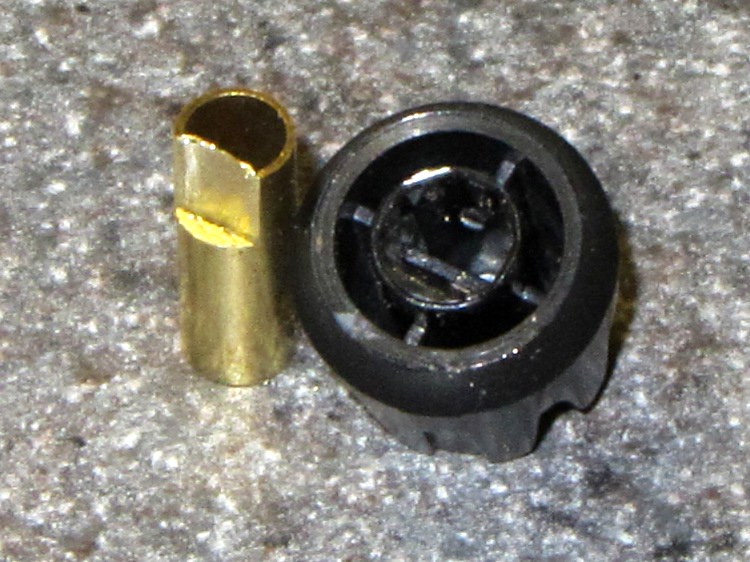
    Clamp a cutoff chunk of 3/16 =0.1875 inch diameter brass tubing in the lathe and file down one side to put the flat 0.150 inch from the far side, so that the knob is a tight slip fit. If you happen to have some solid rod, that would work just as well. In this case, the file pushed the paper-thin brass remnant into the tubing and I didn’t bother to clean it out:

    KG-UV3D knob with fixture
    KG-UV3D knob with fixture

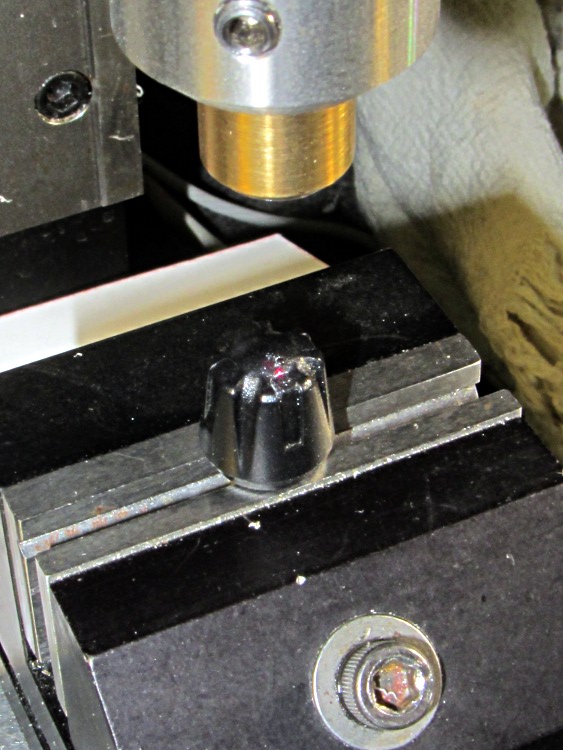
    Clean the white glop off the knob, jam the knob on the fixture, clamp the fixture in the Sherline’s vise, use laser targeting to center the spindle on the notch adjacent to the minuscule pip on the knob:

    Laser aligning to knob feature
    Laser aligning to knob feature

    Drill a 2 mm recess that en passant obliterates the pip:

    Drilling index recess
    Drilling index recess

    Fill it with some light gray paint that just happens to be on the shelf:

    Knob with filled index mark
    Knob with filled index mark

    And, by gosh, it really does dress up the radio! [grin]

    Wouxun KG-UV3D with improved knob
    Wouxun KG-UV3D with improved knob

    While I had the Sherline set up, I did the knob for the other radio, too.

    Thanks, Raj… I needed that!