The Smell of Molten Projects in the Morning

Ed Nisley's Blog: Shop notes, electronics, firmware, machinery, 3D printing, laser cuttery, and curiosities. Contents: 100% human thinking, 0% AI slop.

Author: Ed

  • Kenmore 158: Pedal Recalibration

    With the Crash Test Dummy in place, Mary reports that the pedal required too much motion to reach the full speed position. The graph from the last time around shows the output as a function of pedal position:
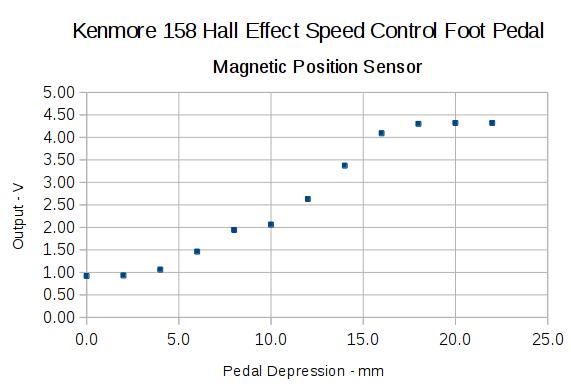
    Hall sensor output vs pedal depression
    Hall sensor output vs pedal depression

    I’d done some fiddling around after recording that data, but it remained pretty close to the truth.

    A new scale, not quite in the same spot as the previous one:
    Kenmore 158 - Foot Pedal - motion recalibration
    Kenmore 158 – Foot Pedal – motion recalibration

    The two long lines mark the active region after I finished the mechanical tweaking described below; the pedal now produces nearly full output just beyond the 12 mm mark and has about that much overtravel. Measuring those values requires squeezing the pedal by hand, holding its position, and recording the ADC output dumped by the motor control program in the Arduino, a process that could be improved, but to not much benefit.

    The original pedal writeup goes into the gory details, but the bottom line is that the mechanical motion producing that output range depends on the length of the rod from the actuator bar to the magnet.

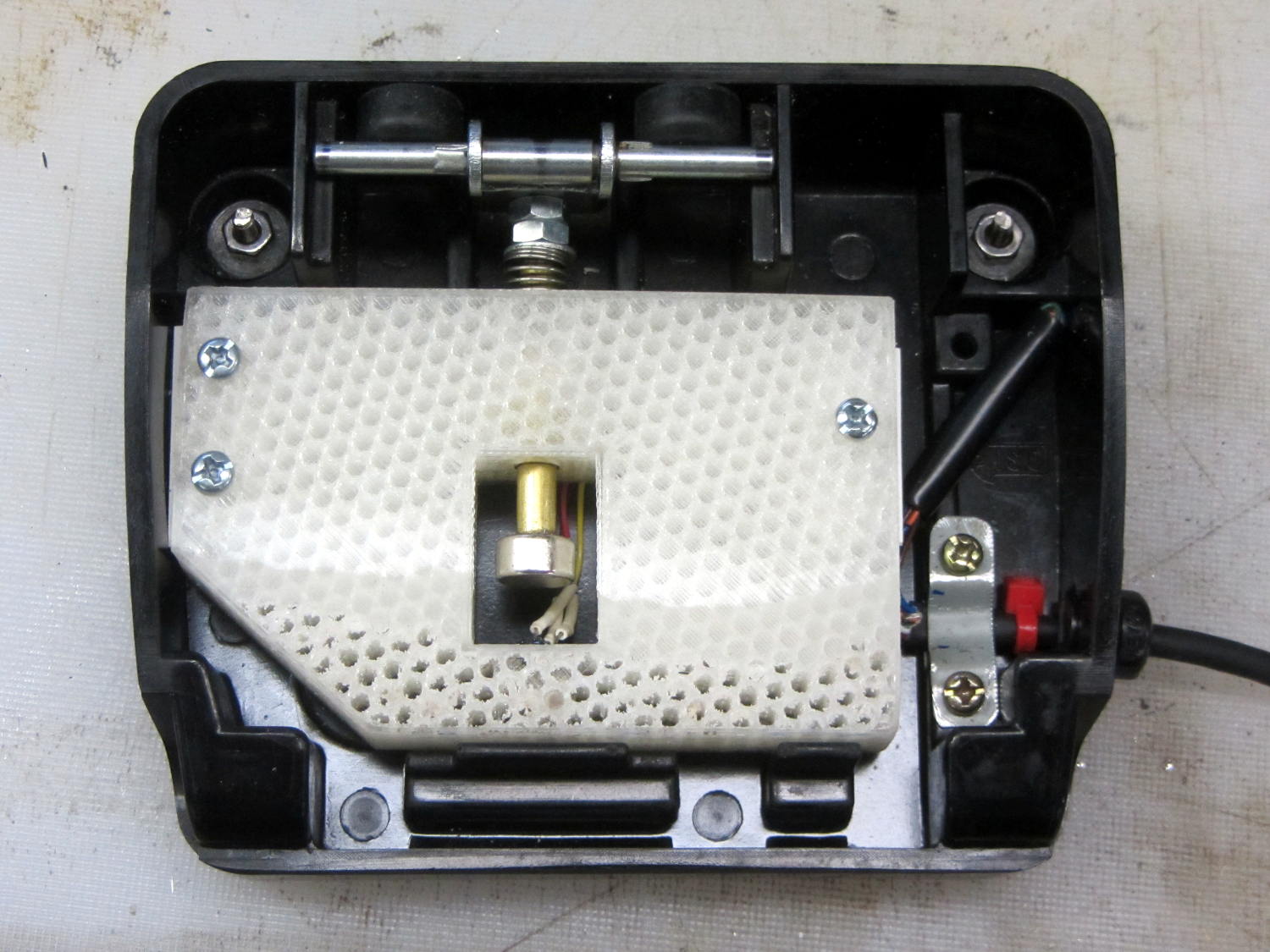
    The original version had a thin nut securing a screw inside the brass shaft to the actuator:

    Kenmore 158 - Hall speed control - prototype interior
    Kenmore 158 – Hall speed control – prototype interior

    I later swapped the nut for three washers, after observing that the nut wasn’t actually necessary, but that produced too much dead travel at the beginning of motion.

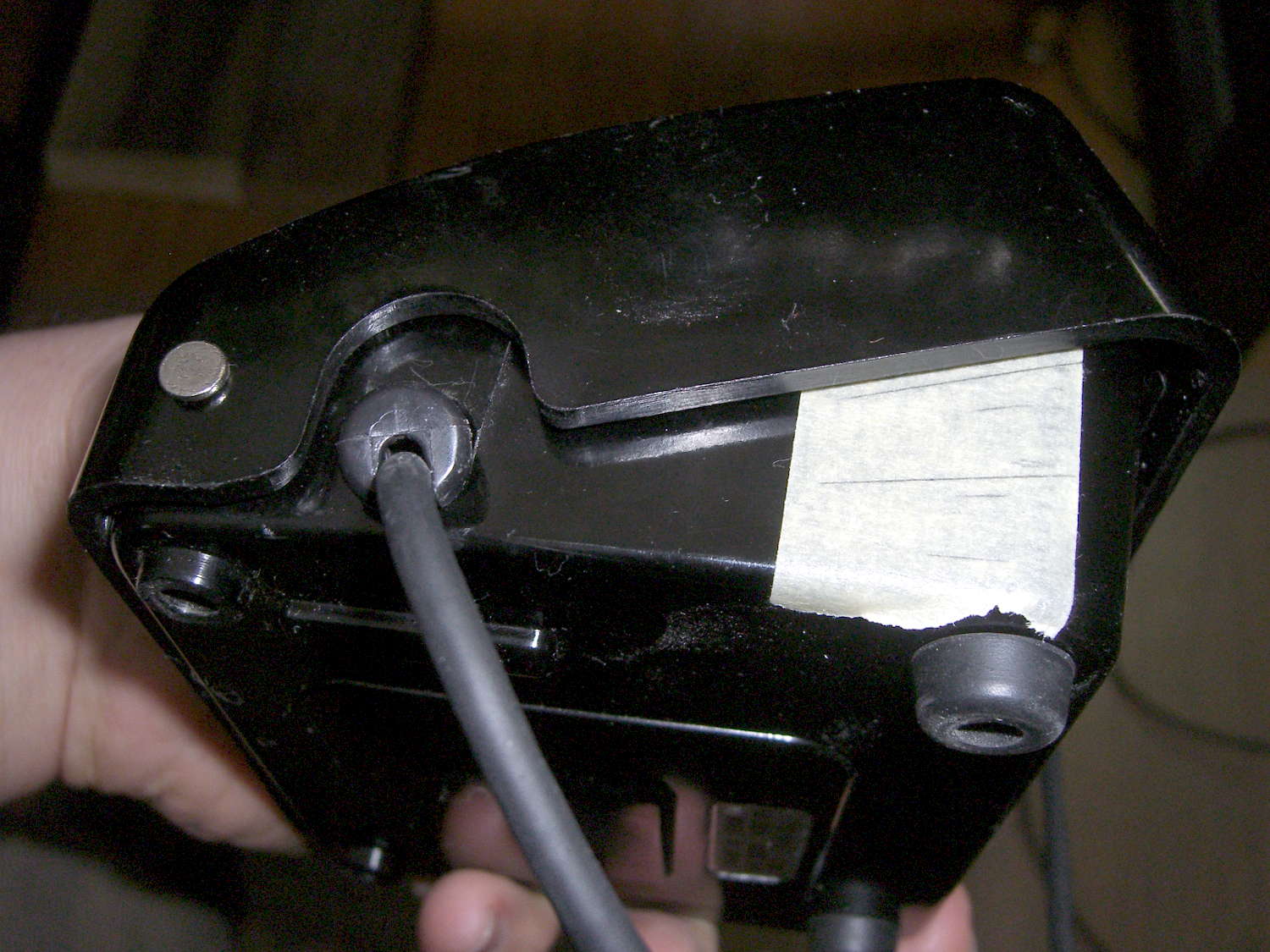
    We discovered that the actuator bar could slip off the end of the ramp cast into the pedal cover, jamming the end of the ramp, making the case extremely difficult to disassemble, and causing heartache & confusion. Affixing a pair of rubber feet to the rear wall of the pedal case with tapeless sticky keeps the bar about half a millimeter further forward and eliminates that problem:
    Kenmore 158 - foot pedal - short actuation
    Kenmore 158 – foot pedal – short actuation

    A second nut moved the brass rod forward, but that turned out to be a bit too much, so it now has a single, slightly thicker, nut. The 3D printed frame allows for far more travel in each direction than is strictly necessary, specifically to allow this fine tuning; it’s possible to make the rod’s resting position too close to the Hall effect sensor and have them collide at full travel, but I managed to avoid that.

    It’s impossible to measure anything with the case disassembled: each change requires reassembling everything, measuring, and iterating.

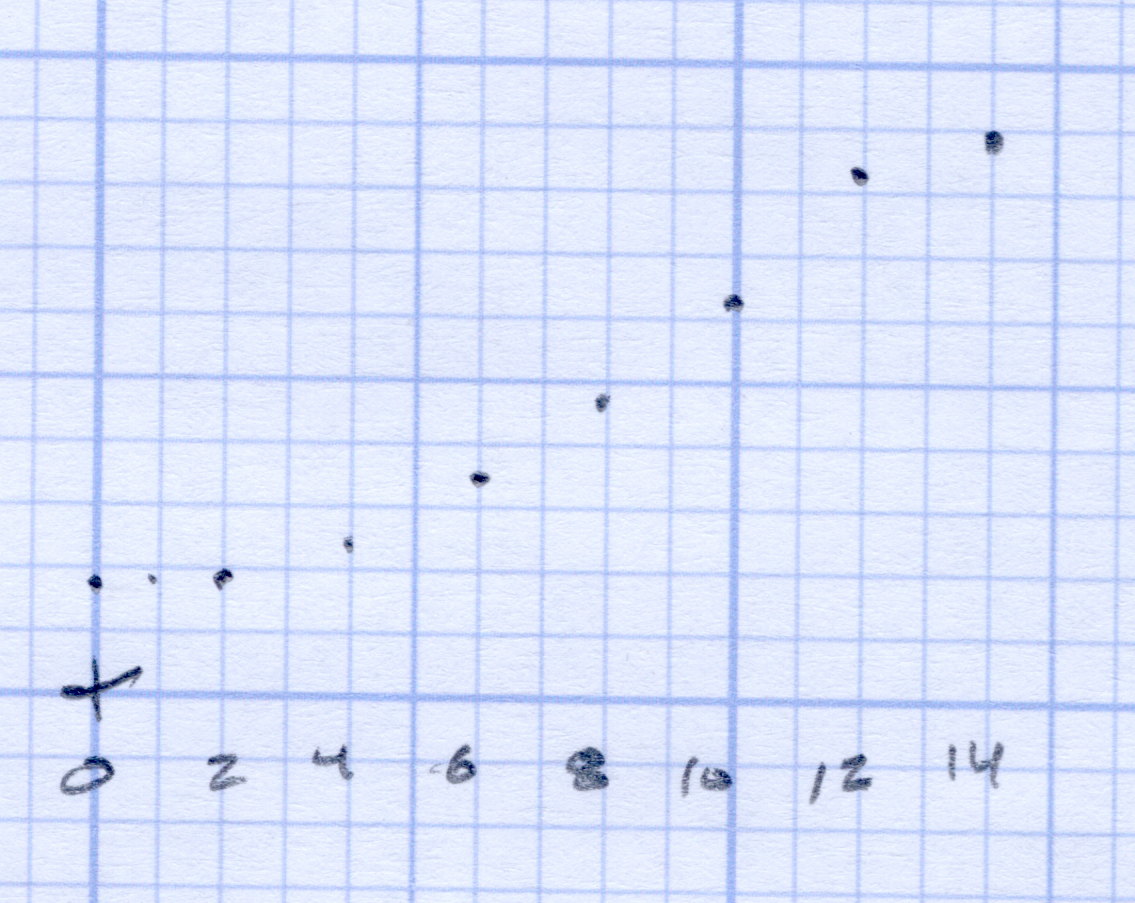
    After some of this & that, this graph shows the final output curve, with the Y axis in raw ADC counts at 100/div:
    Foot Pedal - ADC vs position - graph detail
    Foot Pedal – ADC vs position – graph detail

    The first 3 mm doesn’t produce much change in the output, it smoothly changes to the more-or-less linear ramp up to 12 mm, then tapers off to full output beyond 14 mm. That’s pretty close to the original graph, with full throttle occurring a bit more than 2 mm earlier; the difference between the two scales may have some effect. In any event, Mary reports it feels much better.

    Trust me: that matters.

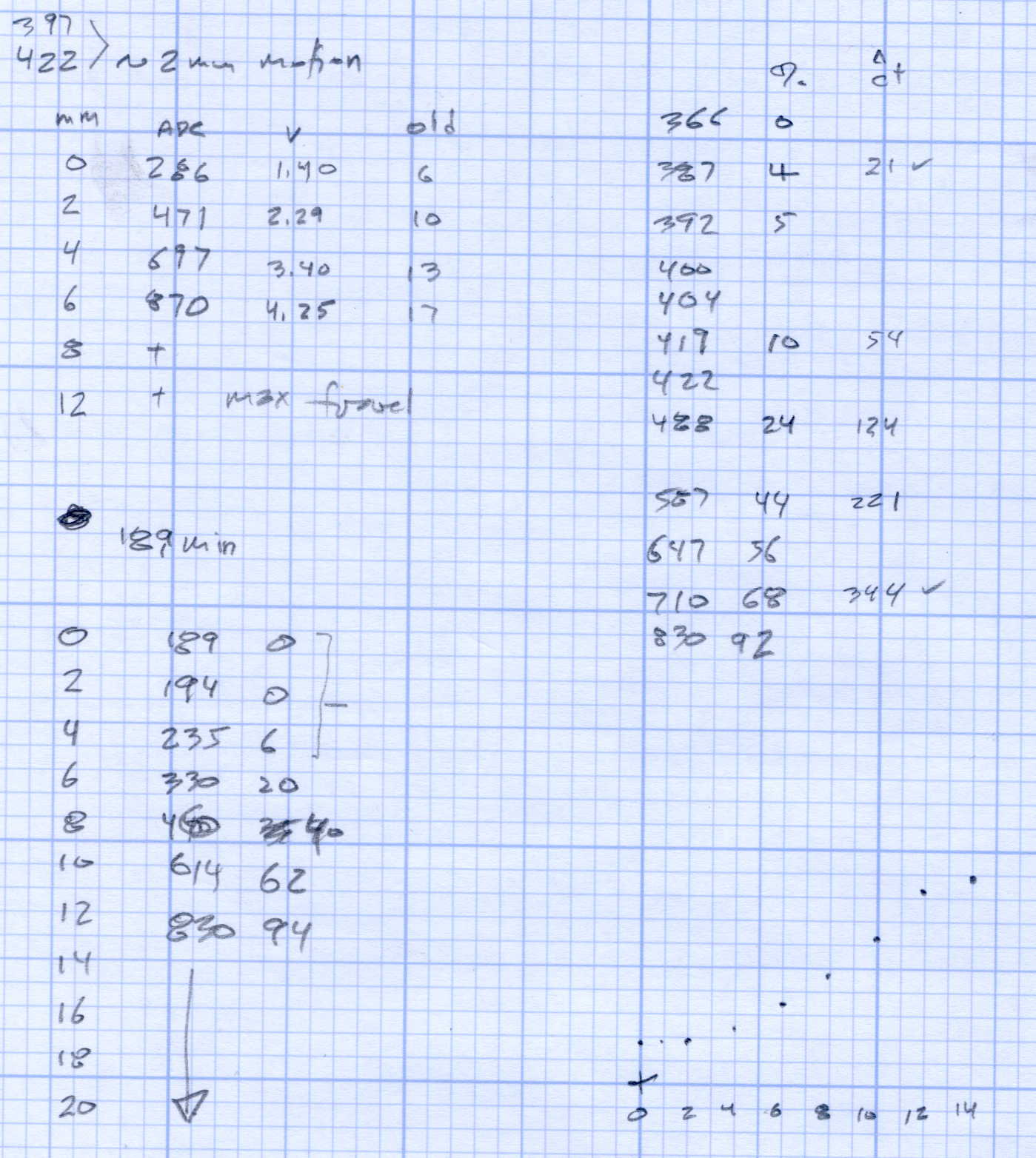
    The original data from the first and second mods, plus a teeny version of that graph:
    Foot Pedal - ADC vs position
    Foot Pedal – ADC vs position
  • Incandescent Bulb Lifetime

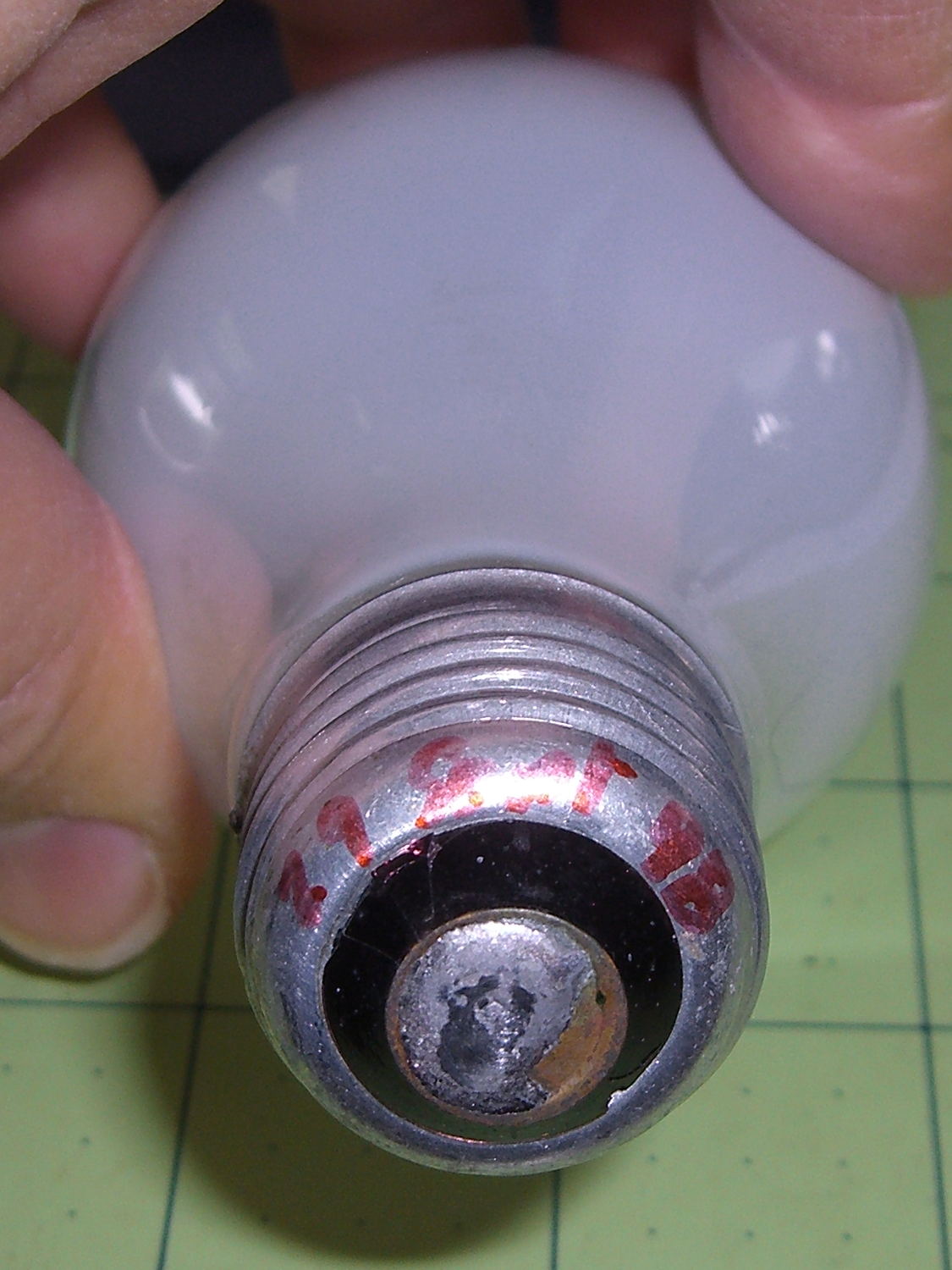
    One of the four 40 W bulbs in the classic 1955 fixture over the front bathroom mirror burned out, leading to this discovery:

    40 W bulb - lifetime
    40 W bulb – lifetime

    Yup, I installed that bulb in late September 1998, when we repainted that bathroom (for the first time since the original owners painted it in 1955). Getting a decade and a half from an incandescent bulb in regular use ain’t all that bad, sez I. Two other bulbs appeared in mid 2014, replacing bulbs with barely 6 years of service. Inexplicably, the third bulb has no date; I must be slipping.

    Having burned through the 40 W bulb stash, I put two 60 W incandescents in the center sockets, leaving me with four new-old-stock bulbs on the shelf. Might be a lifetime supply for this house…

  • Kenmore 158: Crash Test Dummy Installation

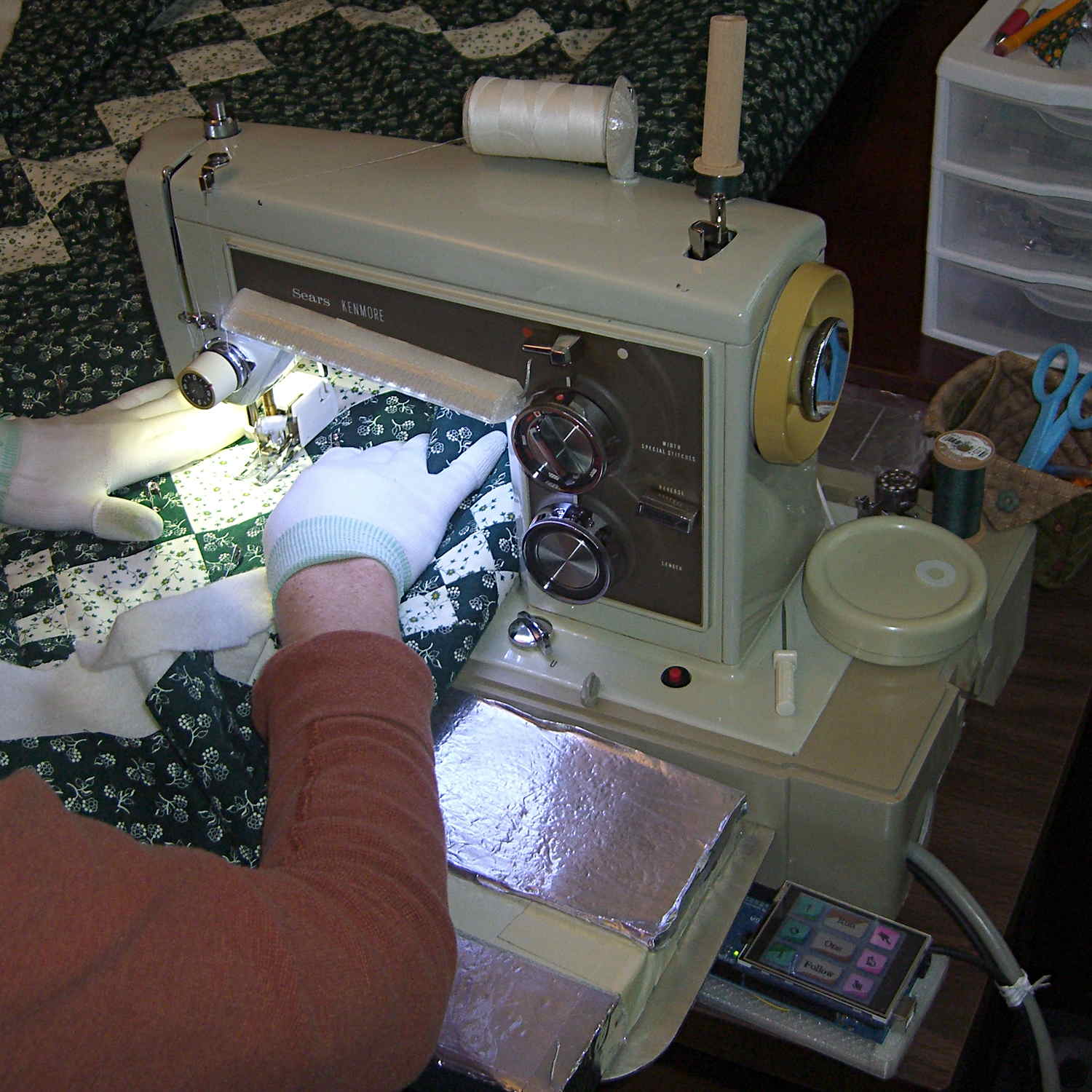
    The Crash Test Dummy’s double-walled and somewhat crushed base turns out to be slightly larger front-to-back than the one on Mary’s original Kenmore 158 (which has a later serial number), but it still fits into the cutout in the insulating board we’re using in lieu of a Real Sewing Surface:

    Kenmore 158 Controller - First Quilting
    Kenmore 158 Controller – First Quilting

    Lashing the UI data/power cable to the motor & LED / sensor cables from the sewing machine keeps the Arduino Mega + TFT from falling off the tabletop, but the arrangement reeks of impromptu.

    Early reports indicate that the pedal doesn’t feel quite right, with faster speeds requiring too much travel. Given that I worked hard to get more travel with slower transitions into that thing, differences shouldn’t come as any surprise, but … this will require some tweaking.

  • Kenmore 158 Base: Cable Port

    The Crash Test Dummy machine arrived from the usual eBay seller in a cardboard box with a few rigid foam strips and some closed-cell foam sheets tossed inside. The seller thought the machine was “adequately protected”, which turned out to be, at best, optimistic:

    Kenmore 158 - Crash Test Dummy Case
    Kenmore 158 – Crash Test Dummy Case

    Fortunately, the crushed case protected the sewing machine itself and, given that I specifically bought it with the intent of making mistakes thereupon, it worked well enough. At one point, it vibrated off a desk, landed face-down on the concrete basement floor, and now the stitch selection / length cam followers don’t follow their cams very well at all.

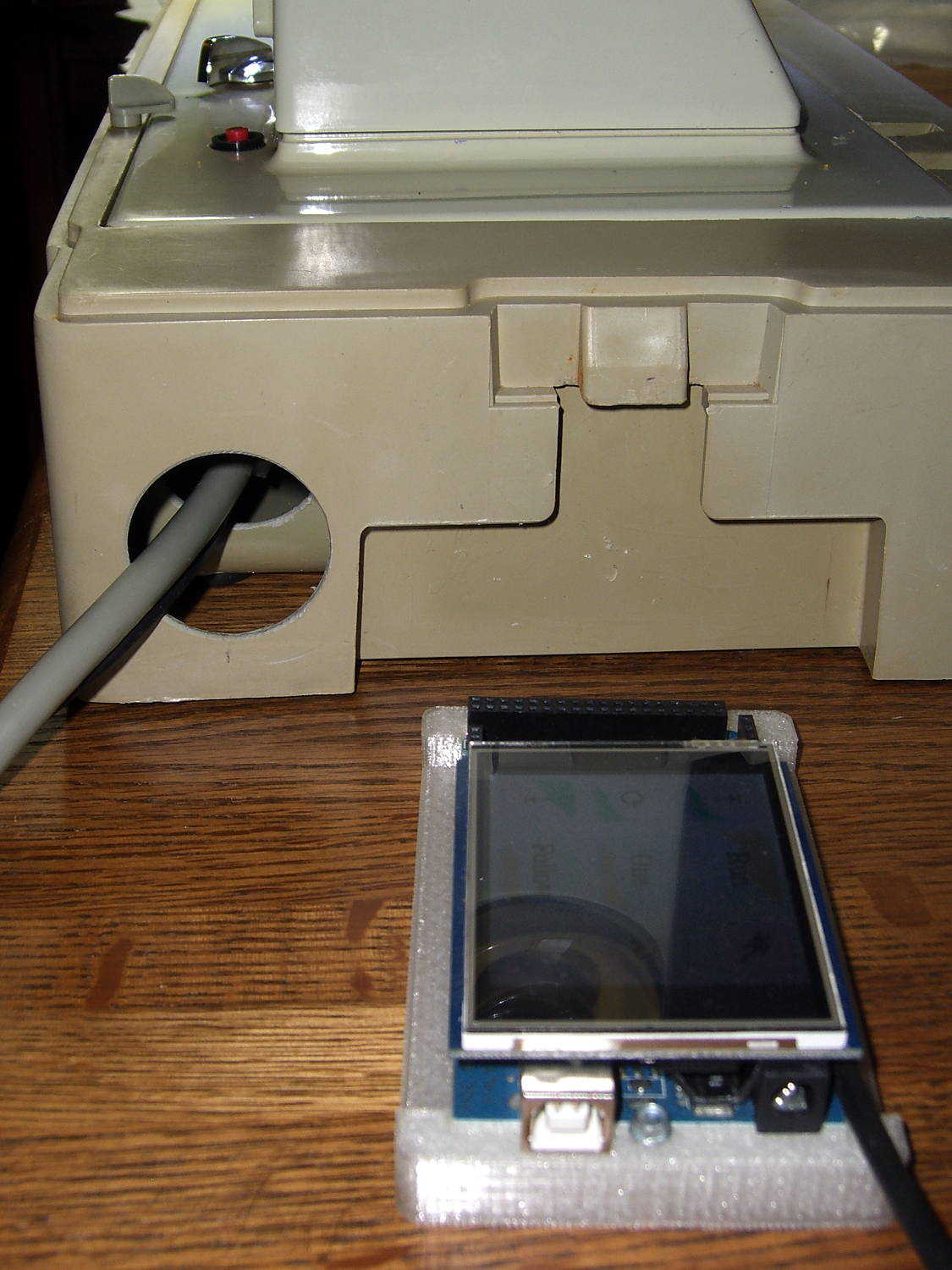
    I modified the cracked-but-workable base to pass the connectors on the AC motor power and LED power / position sensor cables:

    Kenmore 158 Base - cable hole
    Kenmore 158 Base – cable hole

    That was done by chucking a hole saw in the drill press, running at lowest speed, resting the other end of the case on my thigh, and tipping my foot to drive the case upward into the saw. Worked surprisingly well, but I’d appreciate it if you didn’t use that technique yourself.

    Now that the Crash Test Dummy resembles a sewing machine again, running a few trial stitches in scrap fabric showed that it works well enough for straight-line sewing and free-motion quilting:

    Kenmore 158 Crash Test Dummy - test stitching
    Kenmore 158 Crash Test Dummy – test stitching

    We installed it in the Quilting Room, ready for a more extensive evaluation on an actual quilt…

  • Xubuntu vs. Gnome Keyring Redux

    Once again, another Xubuntu desktop box started having troubles with the Gnome keyring manager, with baffling symptoms including a request for a password you don’t know and forgetting passwords you’ve entered correctly.

    The solution, much as before, requires at least some of:

    • Auto-start Gnome services: Session & Startup -> Advanced -> ×
    • Find and delete the keyrings directory: this time it was ~/.gnome2/keyrings
    • Tweak the contents of /etc/xdg/autostart/gnome-keyring-pkcs11.desktop
    • Reboot that sucker
    • Enter passwords as needed, which should be The Last Time you must do that

    This keyring problem remains a problem after all these years, because … I haven’t a clue.

    At least now I have a list of things to try, which should might reduce the hassle next time around.

  • Attack of the Sedum Morganianum

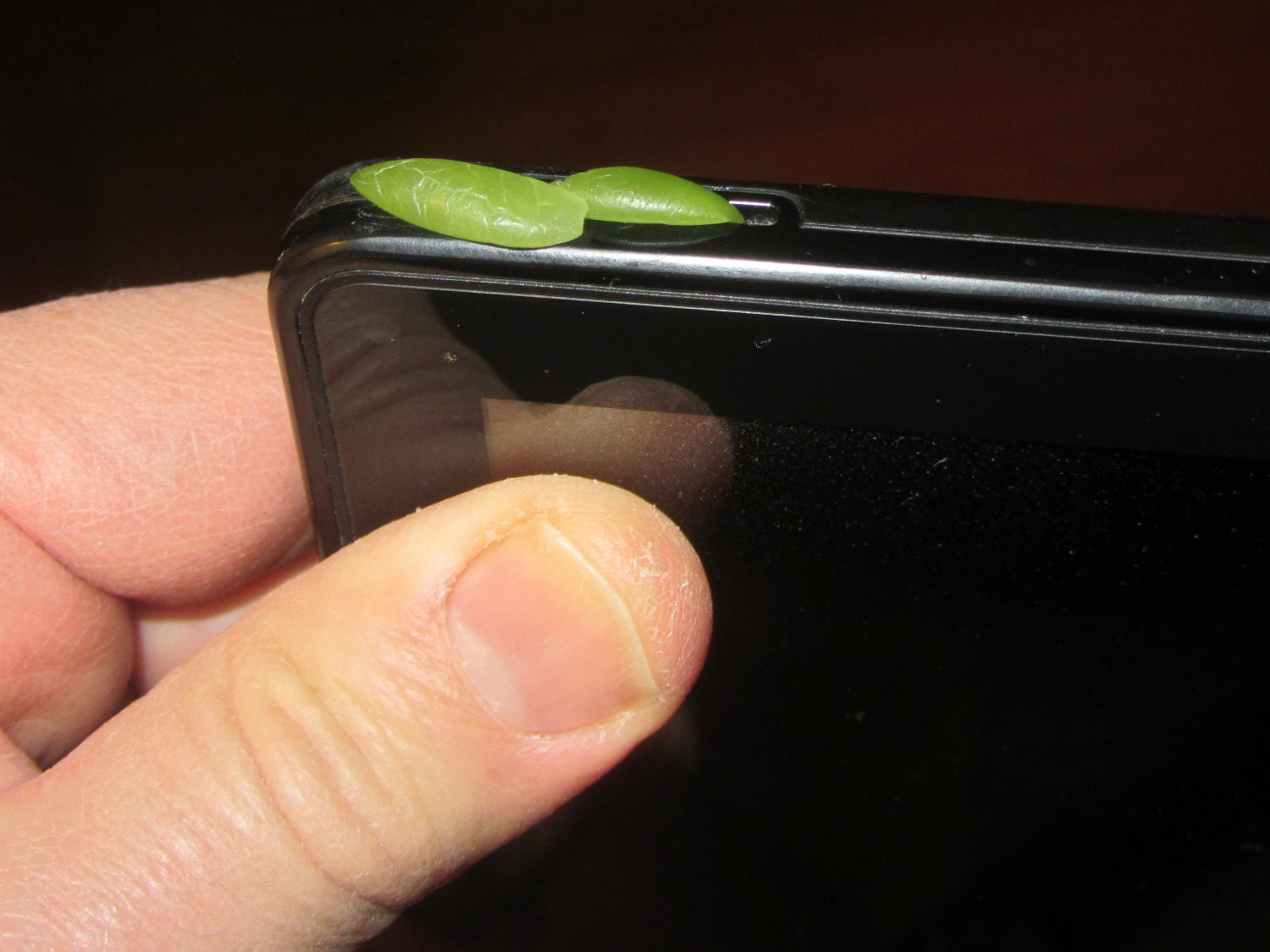
    So I pulled my trusty Kindle Fire out of my pocket, only to find slugs racing across the edge:

    Lambs Tail leaves atop Kindle Fire
    Lambs Tail leaves atop Kindle Fire

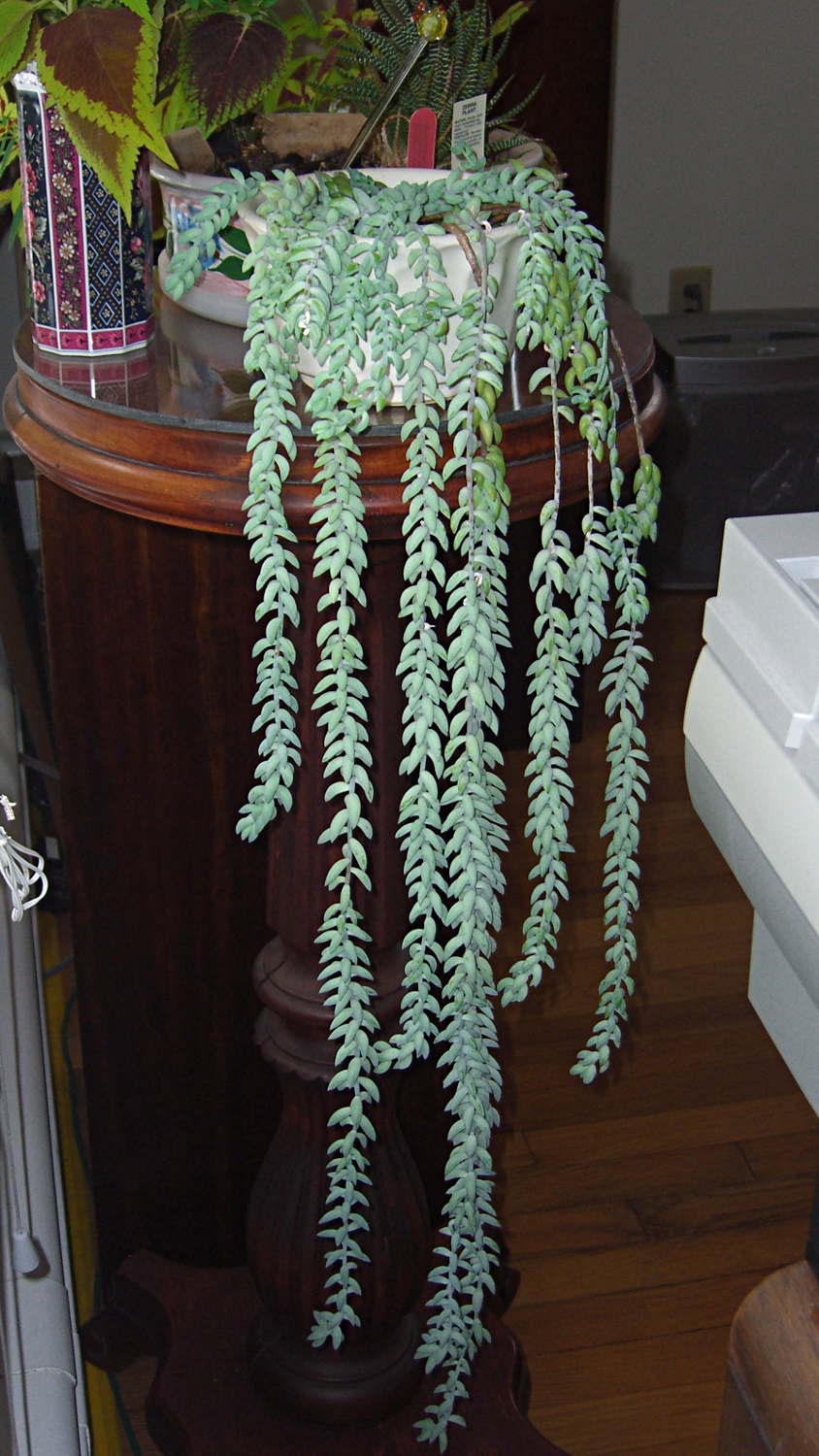
    Turns out those are leaves of the Sedum Morganianum, a.k.a. Lamb’s Tail, plant next to the window behind my desk:

    Sedum Morganianum - Lambs Tail
    Sedum Morganianum – Lambs Tail

    I’d been leaning in there past the plant stand to swap cables for the new portrait monitor, brushed against the plant, and knocked some leaves into my pocket. The bare sections on the right side are entirely my fault, although not entirely during this incident; the leaves seem perfectly willing to fall off during a harsh glance.

    You can find more than you probably want to know about the care & feeding of Sedum Morganianum, some of which suggests that those tendrils have reached pretty nearly their maximum length. If past experience is any guide, the heavy glazed ceramic pot will eventually overbalance and auto-trim the stems to a length suitable for replanting in a new & intact pot.

  • Business Expenses: 1985 Hardware

    My biz records from 1985 emerged from hiding on their way to the recycling bin:

    Hardware Expenses - 1985
    Hardware Expenses – 1985

    Yup, you read it right:

    • $944 for what might have been a 20 MB drive
    • $406 for a 10 MB (!) hard drive
    • $1400 for an EGA graphics board & matching display

    A few years after that, I gingerly plugged a $750 80387 math coprocessor into an 80386 system that we depreciated forever.

    Another page of that report says I dropped nearly $3500 on various chunks of software.

    The times, they definitely have changed. Nowadays, I buy throwaway off-lease Dell boxes costing less than that 10 MB hard drive and use Free Software for essentially everything I do.

    I wish I still had that HP plotter, though…