The Smell of Molten Projects in the Morning

Ed Nisley's Blog: Shop notes, electronics, firmware, machinery, 3D printing, laser cuttery, and curiosities. Contents: 100% human thinking, 0% AI slop.

Author: Ed

  • Sony 64 GB MicroSDXC Card: Speed Failure Redux

    After about 1 TB of data spread over three months and maybe 100 bike rides, the second Sony SR-64UY 64 GB MicroSDXC card I bought last summer has failed… barely two weeks inside the one year warranty.

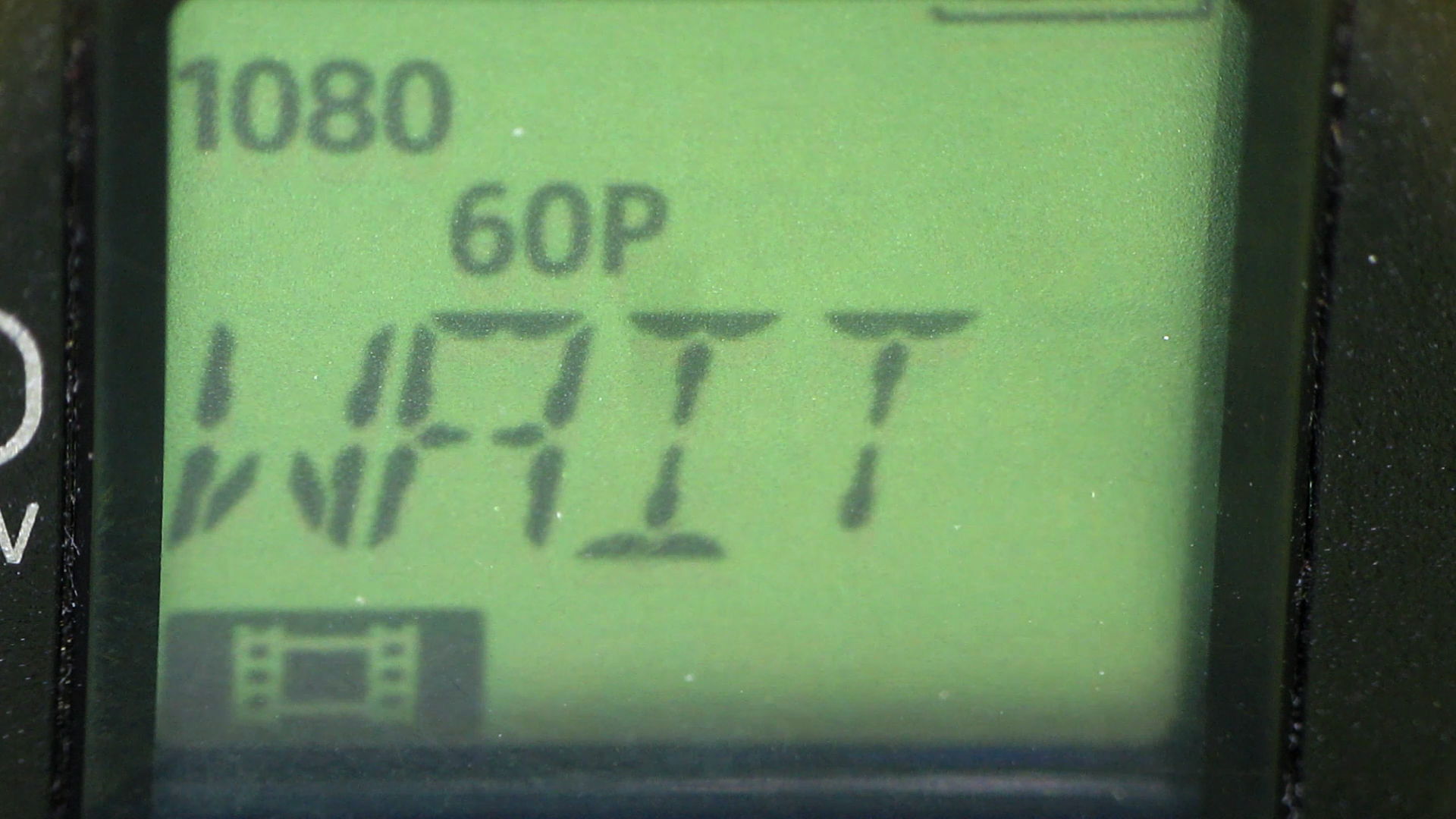
    As with the first card, this one works fine except for the speed: it cannot record at 1920x1080p @ 60 fps. The only indication comes from aiming another camera at the display to capture the failure as it happens.

    Just before the failure:
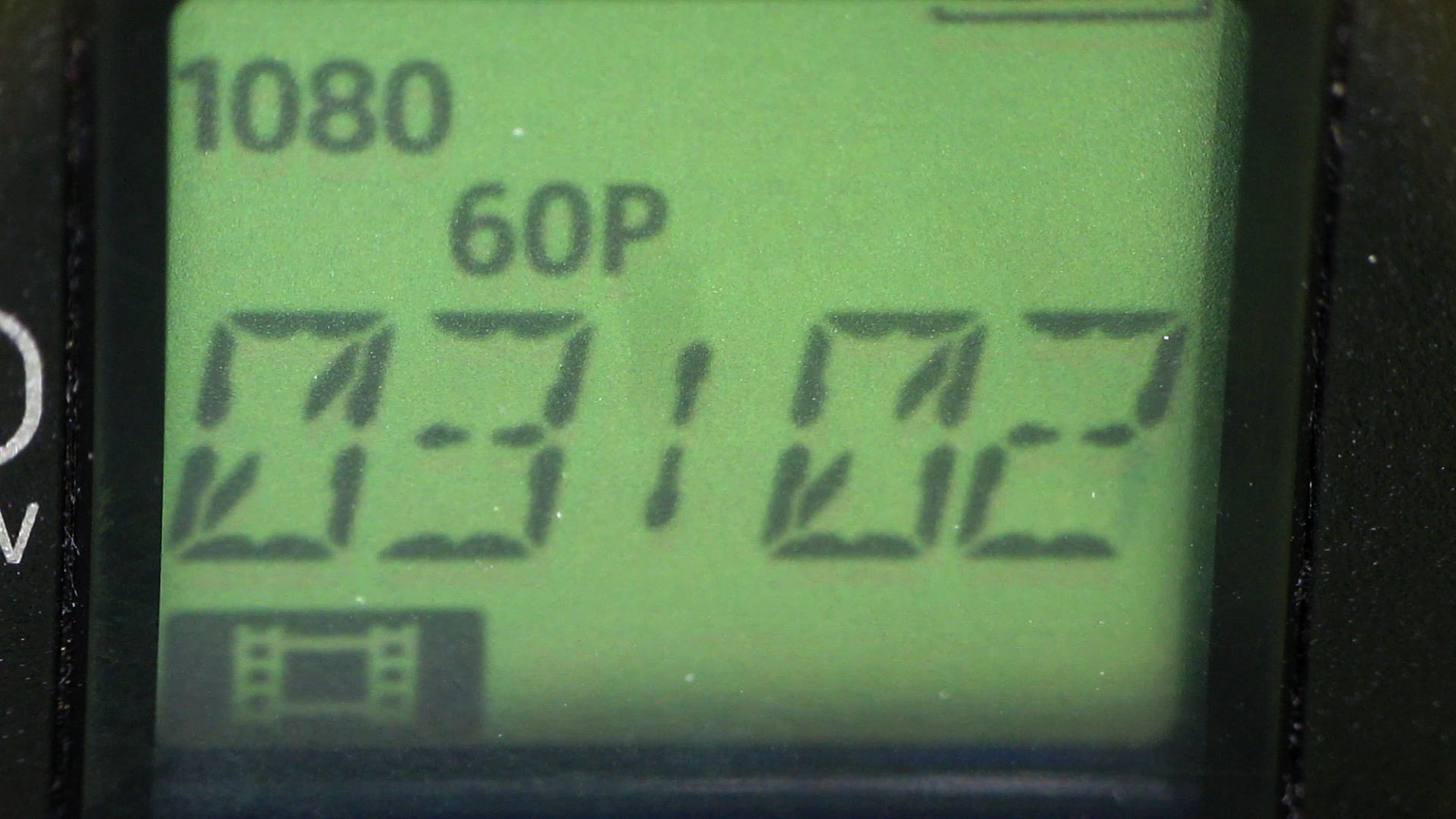
    HDR-AS30V - MicroSDXC failure - 1
    HDR-AS30V – MicroSDXC failure – 1

    It’s taking stock of the situation:

    HDR-AS30V - MicroSDXC failure - 2
    HDR-AS30V – MicroSDXC failure – 2

    Presumably, it’s patching up the abruptly terminated file:
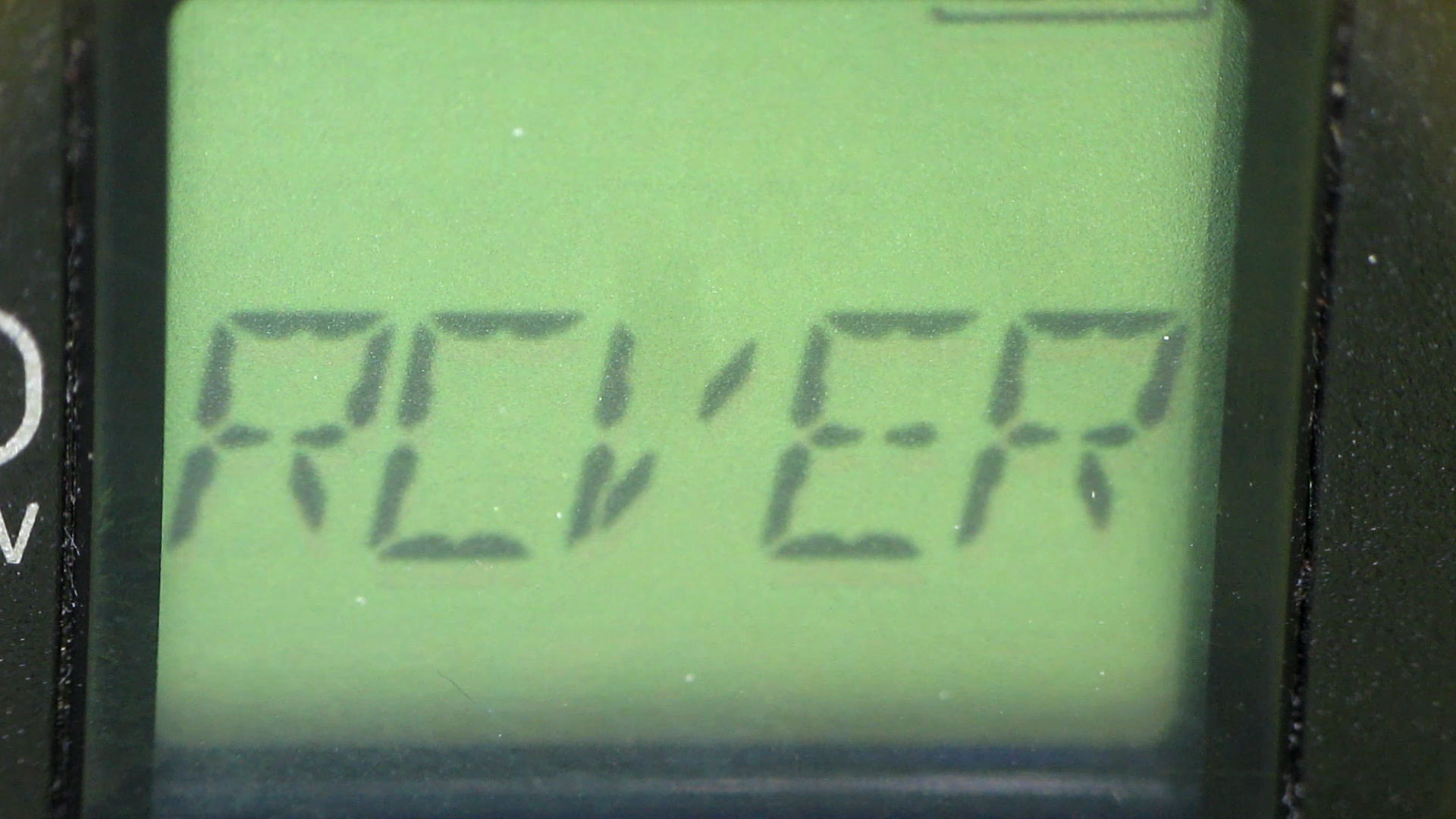
    HDR-AS30V - MicroSDXC failure - 3
    HDR-AS30V – MicroSDXC failure – 3

    Another box is on its way to Sony Media Services…

    Over the last year, the price of an almost certainly genuine Sony SR-64UY Class 10 UHS-1 MicroSDXC card has dropped by 2.2 dB: $40 to $24. Now, however, the SR-64UY is the “old model”, so you can pay $30 (-1.3 dB) for an SR-64UY2 rated at 70 MB/s transfer speed (up from 40 MB/s), albeit with no change in the card’s speed class.

    Huh.

    Both cards failed after writing 1 TB of data (give or take maybe 20%) in 4 GB chunks over the course of 100 recording sessions. The cards still work, in the sense that they can store and accurately retrieve data, just not at the Class 4 (not Class 10) speed rating required by the HDR-AS30V at 1920x1080p @ 60 fps.

    The table in the Wikipedia Secure Digital article says Class 4 = 4 MB/s, which is slightly faster than the camera produces 4 GB files in 22:43 min:sec = 3 MB/s. A Class 10 card should write at a sustained 10 MB/s, so the SR-64UY write speed has dropped by at least a factor of 3 from the spec. I’d expect the root problem to be the error correction / block remapping / spare pool handling time has grown as the number of failed blocks eats into the card’s overcapacity, but I have no inside information.

    When the replacements slow down, I’ll see how they work as Raspberry Pi memory…

  • HP 7475A Plotter: LED Lighting

    If white LED strips had existed in the early 1980s, the engineers responsible for the HP 7475A plotter would surely have done this:

    HP 7475A Plotter - LED paper illumination
    HP 7475A Plotter – LED paper illumination

    Not, that’s not stretched vertically: I bought a ream of B-size paper (11×17 inches) just for plotter demos.

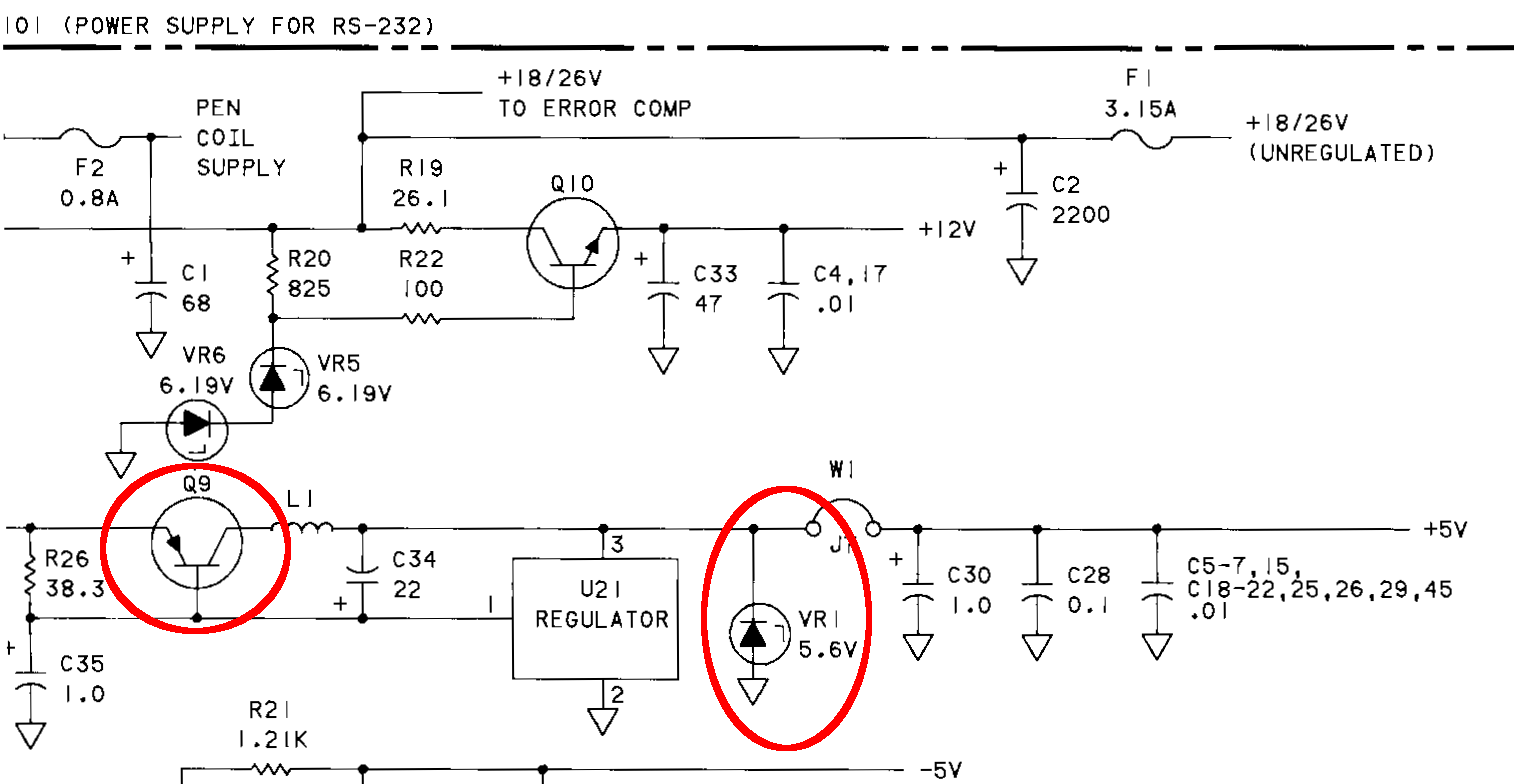
    Although the power supply does have a +12 V output, it comes from a TO220 transistor without a heatsink. The +5 V supply uses a robust TO3 transistor on a huge quad heatsink that can surely dissipate another watt or two without getting any sweatier.

    I powered the LEDs from a dirt-cheap boost converter that provides a convenient brightness adjustment; it’s set to 10.5 V and that’s plenty bright enough. The converter attaches to pair of wires soldered across VR1, which is probably a crowbar that blows F3 (not shown) in the event the regulator fails hot:

    HP 7475A - LED power tap - schematic
    HP 7475A – LED power tap – schematic

    They don’t make power supplies like that any more.

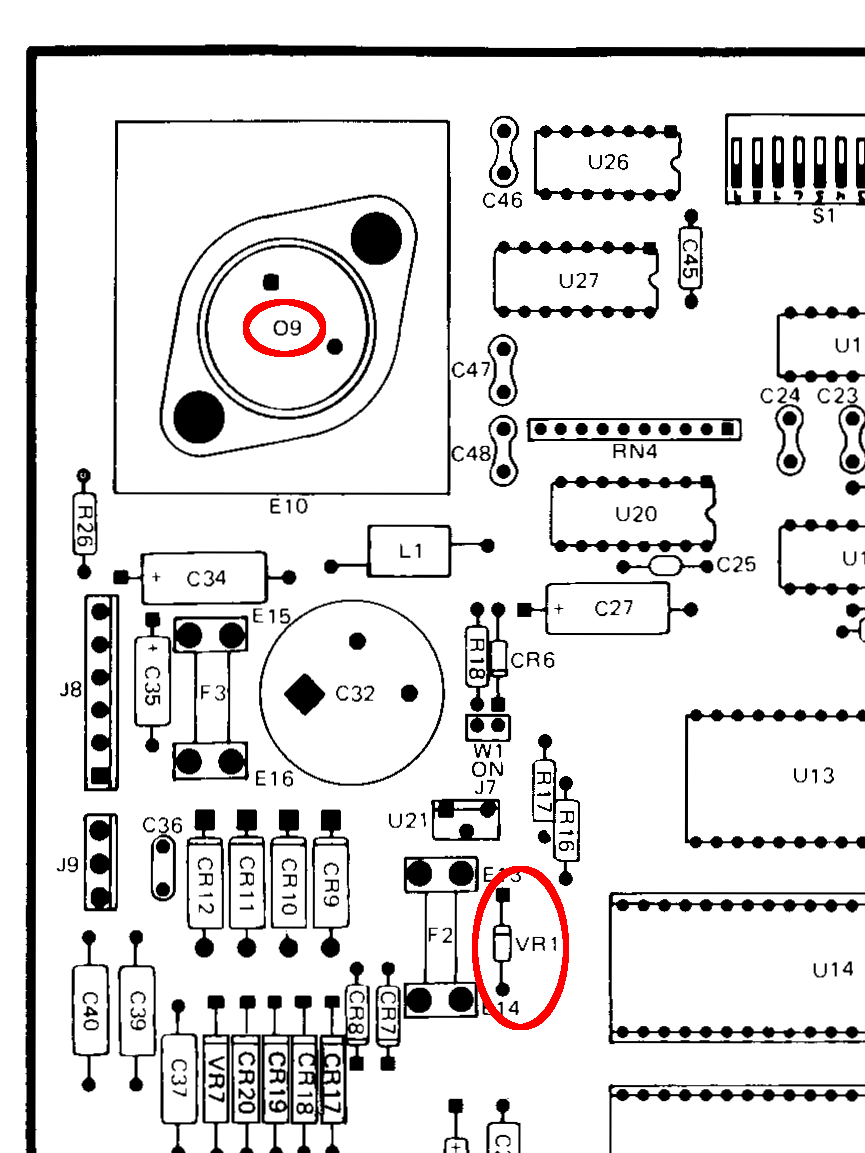
    The part locations (“O9” looks like a typo):

    HP 7475A - LED power tap
    HP 7475A – LED power tap

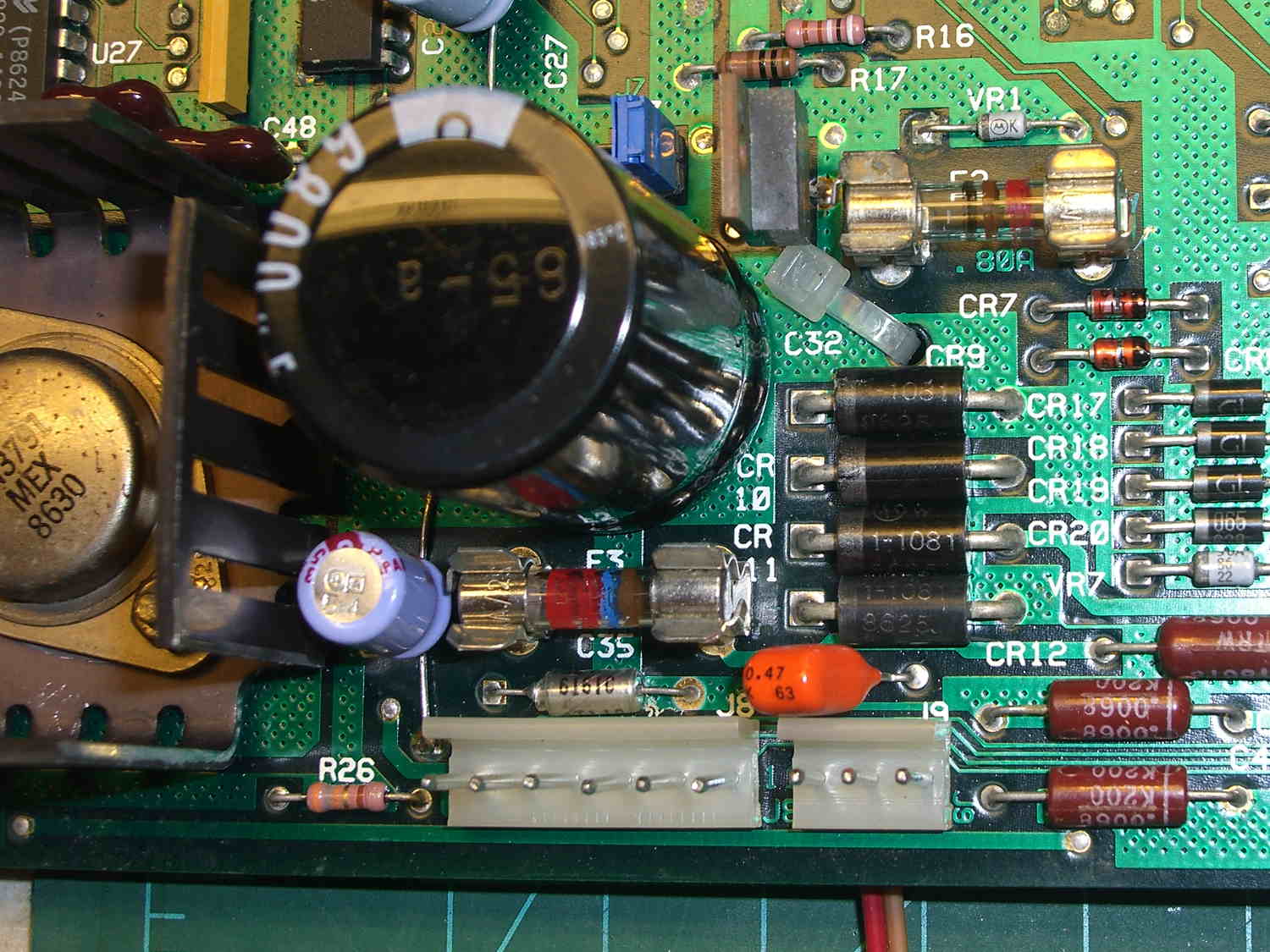
    The PCB has holes in exactly the right spot for a zip tie anchoring the wires exiting to the bottom:

    HP 7475A Plotter - LED power tap - PCB top
    HP 7475A Plotter – LED power tap – PCB top

    This vertiginous view shows the inside of the case atop the chassis, with the boost converter affixed to the galvanized steel pan with foam tape and the LED wires stuck down with Gorilla Tape:

    HP 7475A Plotter - LED strip and boost converter
    HP 7475A Plotter – LED strip and boost converter

    Red silicone tape around a PCB-mount coax jack rounds out a true hack job.

    Although I didn’t bring the plotter to the CNC Workshop, that venue’s dim light reminded me that you can never have enough light when you’re showing off your toys: the LED panels on the M2 and the LED light bars on the Model 158 sewing machine were the brightest spots to be seen.

  • Electrometer Amp: Darlington NPN

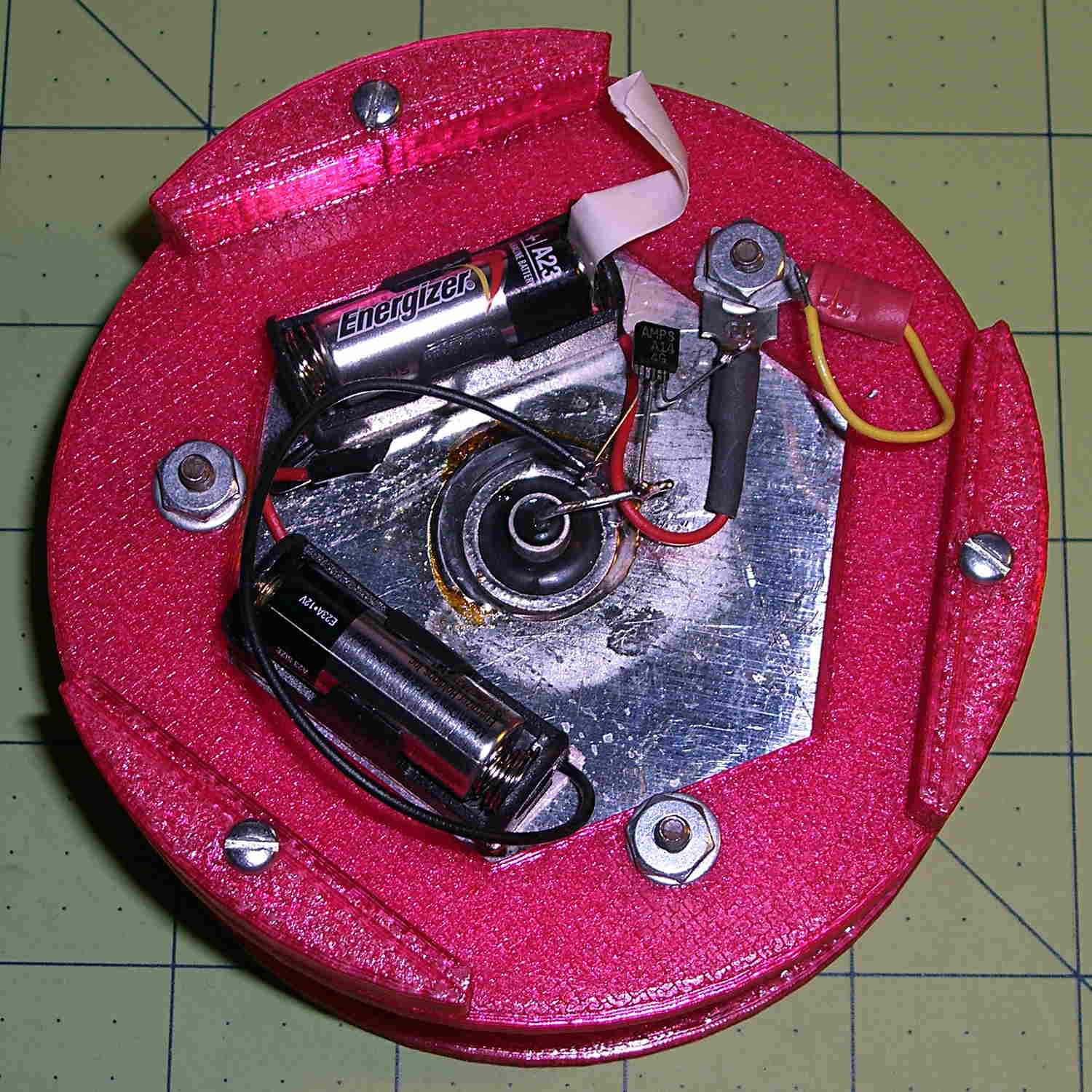
    I soldered up the simplest possible “electrometer amplifier” at Squidwrench, based on Charles Wenzel’s writeup:

    Electrometer Amp - MPSA14 NPN Darlington
    Electrometer Amp – MPSA14 NPN Darlington

    It’s an MPSA14 NPN Darlington transistor, with the base soldered directly to the Victoreen 710-104 ionization chamber collector pin. The flying leads connect to an ordinary digital voltmeter set to read voltage, rather than current, so that you see the voltage created by the transistor’s collector current through the meter’s input resistance.

    The MPSA14 data sheet specifies DC current gain hFE > 10 k for low collector currents, with a graph suggesting it might be somewhat larger. Alas, all those are for “ordinary” currents, not the countably finite number of electrons coming from an ionization chamber, but let’s assume 10 k is close.

    I used a Radio Shack 22-805 DMM, set to auto-ranging DC volts. The specs say the input “impedance” is 10 MΩ for all voltage ranges, so let’s run with that, too.

    With 24 V (actually 24.6 V) applied to both the chamber (through the red wire) and the DMM (through the yellow wire), it read 250 mV: a mere 25 nA through the 10 MΩ meter resistance.

    Assuming a transistor gain of 10 k, that’s a chamber current of 2.5 pA.

    The ionization chamber specs say it produces 5 pA at 0.5 röentgen/hour → 100 mR/h produces 1 pA.

    No, I do not believe the Squidwrench Operating Table is bathed in gamma radiation at 250 mR/h.

    I should wipe down the transistor to see if that reduces the external leakage, then try a few others, but obviously the signal will remain lost in the noise.

    We replaced the DMM with an oscilloscope and 10 MΩ probe, which conclusively demonstrated that unshielded high-impedance circuits make excellent 60 Hz receivers.

  • Sharing The Road on Raymond Avenue: Part 2

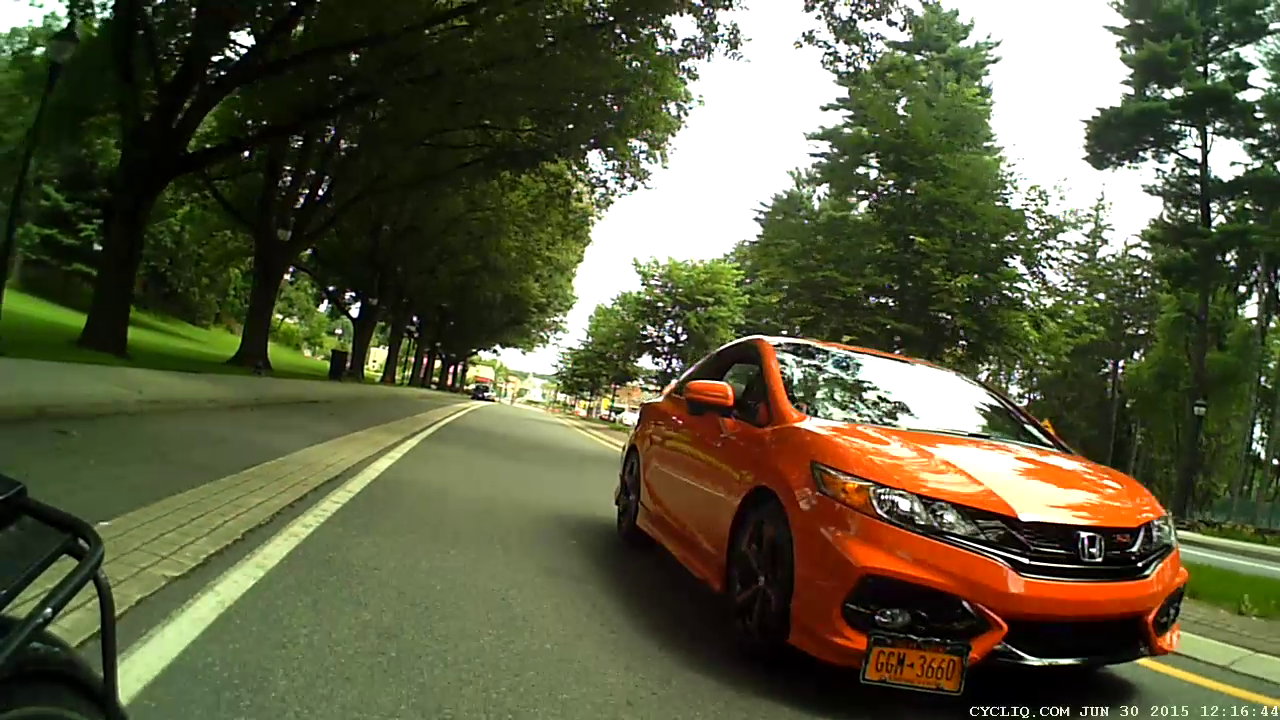
    A few days after I didn’t get sideswiped at the Vassar Main Entrance Rotary, we were returning from errands. Traffic is light, but Raymond Avenue doesn’t provide much clearance. This orange car is about as far away as one can expect:

    Raymond Ave 2015-06-30 - door opening - 0
    Raymond Ave 2015-06-30 – door opening – 0

    Two seconds later, however, there’s a door opening ahead of Mary (clicky for more dots):

    Raymond Ave 2015-06-30 - door opening - 1
    Raymond Ave 2015-06-30 – door opening – 1

    I’m shouting “DOOR! DOOR! DOOR!” in the hopes that the driver won’t step directly in front of Mary, but most likely the orange car whooshing by three feet away made more difference:

    Raymond Ave 2015-06-30 - door opening - 2
    Raymond Ave 2015-06-30 – door opening – 2

    Fortunately, there wasn’t any overtaking traffic and, during the four seconds after the orange car passed us, we could move to the left:

    Raymond Ave 2015-06-30 - door opening - 3
    Raymond Ave 2015-06-30 – door opening – 3

    The driver’s body language suggested that, until we passed her, she remained oblivious to the outside world and, in fact, she was probably annoyed that two cyclists came that close to her.

    “Sharing the road” requires two parties. Raymond Avenue’s design doesn’t encourage motorists to share the road and certainly doesn’t provide a fair playing field for the most unprotected party in the transaction.

    Broken by design, I’d call Raymond Avenue, and that’s pretty much what NYSDOT’s original planning documents admit.

  • Sharing The Road on Raymond Avenue: Part 1

    The “Share the Road” sign tells you how NYSDOT intended that Raymond Avenue should work:


    Raymond Ave 2015-06-27 - Vassar Main Entrance - 0
    Raymond Ave 2015-06-27 – Vassar Main Entrance – 0

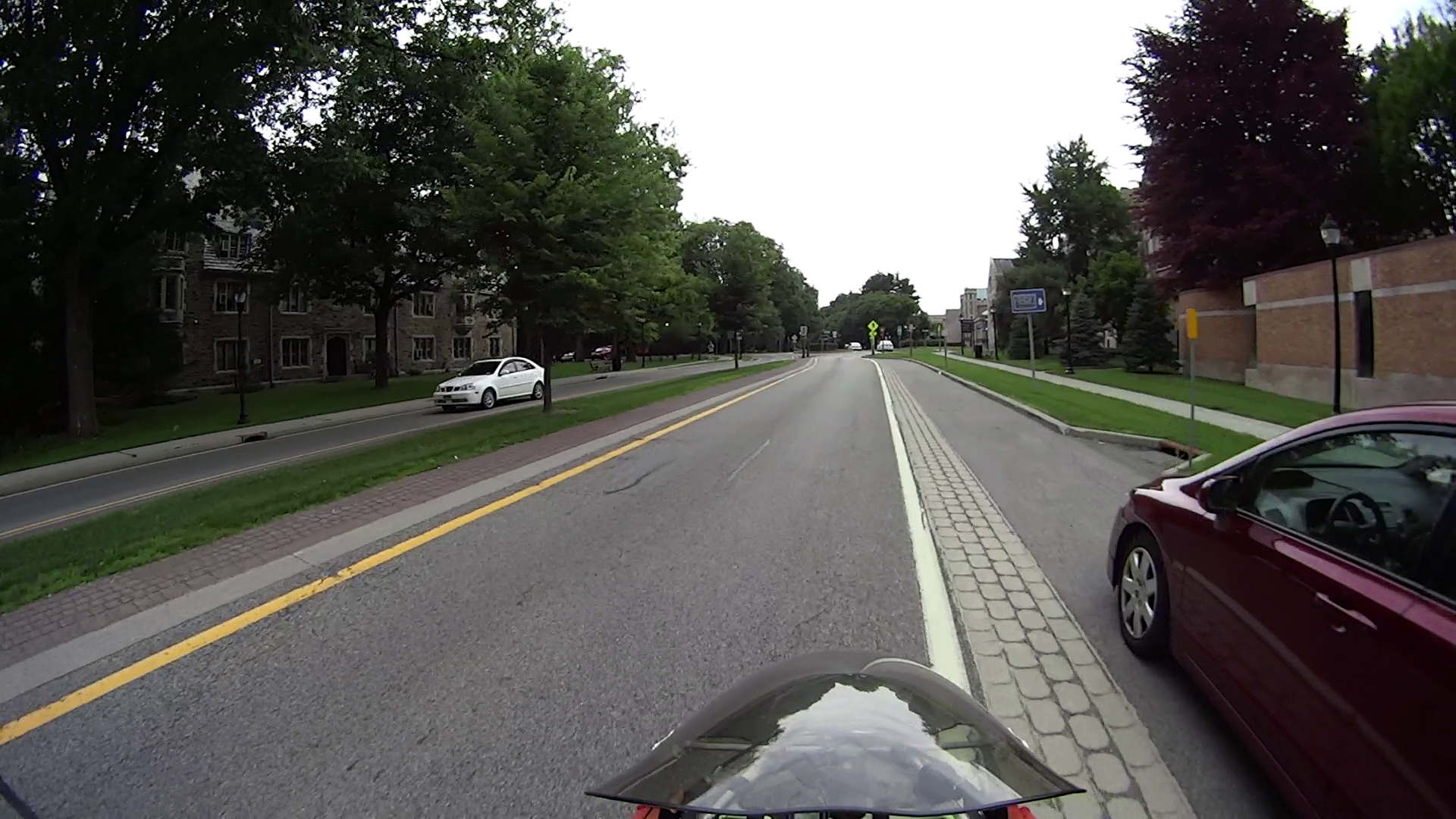
    I’m just about to enter the traffic circle /rotary / roundabout in front of the Vassar College main entrance:

    Raymond Ave 2015-06-27 - Vassar Main Entrance - 1a
    Raymond Ave 2015-06-27 – Vassar Main Entrance – 1a

    The catch basin recess just in front of the car is 150 feet from the pedestrian zebra stripe at the rotary entrance. I’m pedaling at about 18 mph = 25 ft/s, my usual speed on that section, so the rotary is six seconds away.

    Despite the cobbled strip adjacent to the parked car, I’m riding well within the door strike zone, which is pretty much where cyclists must ride on Raymond in order to not impede traffic flow. I was about to signal before taking the lane into the rotary, but a glance in the mirror (copied by the Fly6 aft camera) shows I’m too late:

    Raymond Ave 2015-06-27 - Vassar Main Entrance - 1b
    Raymond Ave 2015-06-27 – Vassar Main Entrance – 1b

    As always, motorists plan on squeezing past me and getting through the rotary before I arrive, presumably figuring that I can share the road with them both into and through the rotary. That doesn’t take into account the fact that vehicles must speed up to pass me at more than 18 mph, slow down before the rotary entrance, then veer right around the central island. Given, say, 300 feet, that’s 12 seconds, which isn’t really all that long.

    Under ordinary circumstances, I can pass through the rotary by backing off on the pedaling and coasting, without slowing very much at all, occupying the entire lane. If there’s oncoming traffic, then I plan to stop at the Yield sign, an event which often takes motorists by surprise.

    Three seconds later, with the entrance barely two car lengths ahead, we’re both braking hard:

    Raymond Ave 2015-06-27 - Vassar Main Entrance - 2
    Raymond Ave 2015-06-27 – Vassar Main Entrance – 2

    The rotary entrance lane squeeze just ahead slows motor vehicles and channels them in the proper direction around the central island, a bike-unsafe design that mashes cyclists right up against the side of improperly passing vehicles.

    After another four seconds, we’re both almost stopped, which is a Very Good Thing for me, because I can’t tell if they’re going straight or, hey, about to turn right into the Vassar Main Gate without the formality of signaling:

    Raymond Ave 2015-06-27 - Vassar Main Entrance - 3
    Raymond Ave 2015-06-27 – Vassar Main Entrance – 3


    You can’t hear me shouting “GO! GO! GO!” to encourage them to get the hell out of the rotary. For sure, I am not going to pass them on the right.

    As it turned out, the driver continued straight through the rotary, then parked close to the Juliet, along with the car following them, which was a few feet behind me in the last picture. I decided that stopping by the driver’s window and asking if he / she / it understood what just happened would not be a productive use of anyone’s time.

    Speaking of time, if seven seconds sounds ample for evasive maneuvering, bring your bike over and let’s do some riding.

    There’s nothing like a shot of adrenaline to perk up one’s pedaling…

  • Houses Are Trouble: Terwilliger House Windows

    Imagine “updating” these windows with modern high-efficiency glass:

    Terwilliger House - parallelogram windows
    Terwilliger House – parallelogram windows

    That’s the end wall of the 1738 Terwilliger House on the Locust Lawn site. I’m sure the woodwork doesn’t date back that far, but the glazier demonstrated genius-level mastery.

    We were on a fascinating behind-the-scenes tour, marred by a visitor who knew the rules about not touching the exhibits didn’t apply to her. My parents ran a restaurant / gift shop and, to this day, my hands automatically find their way into my pockets when I enter a store, let alone a museum.

  • Making the Asterisk Visible

    Spotted a new sign at the Van Wyck Road entrance to the Dutchess Rail Trail:

    DCRT at Van Wyck Rd - ATV Patrol sign
    DCRT at Van Wyck Rd – ATV Patrol sign

    The tiny print on the top sign still reads No Motorized Vehicles, but the bottom sign makes it explicit that that particular prohibition applies only to ordinary citizens.

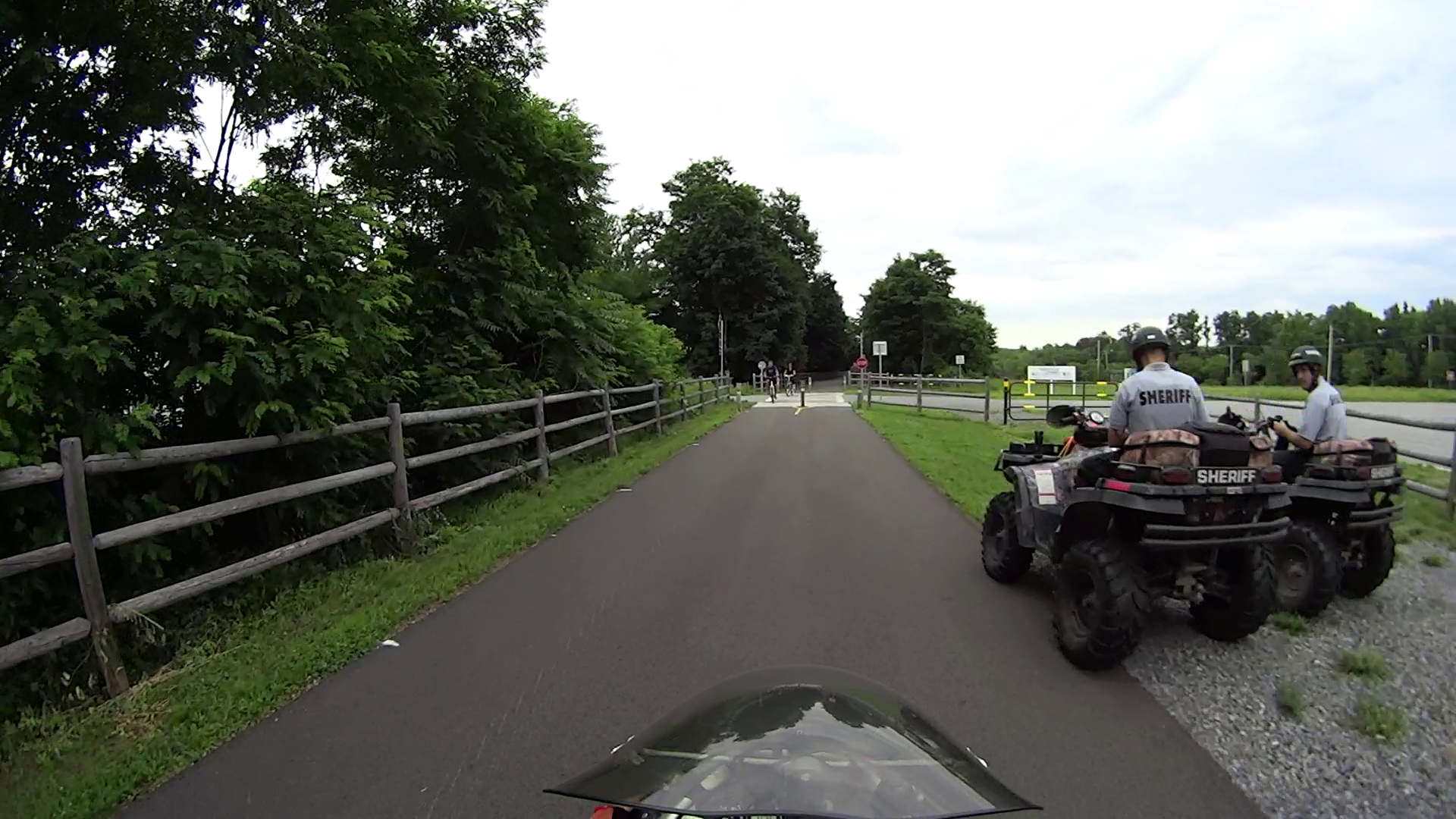
    Which matches up with the Sheriff’s ATVs I spotted a weeks earlier:

    DCRT - Sheriff ATV Patrol - Page Park
    DCRT – Sheriff ATV Patrol – Page Park

    As of late May, the No All Terrain Vehicles signs were still up. Maybe they still are.

    According to the New York Times style guide and other reasonably erudite sources, the plural of ATV should be ATVS (or, if you have the luxury of mixed case, ATVs), not ATV’S.