Ed Nisley's Blog: Shop notes, electronics, firmware, machinery, 3D printing, laser cuttery, and curiosities. Contents: 100% human thinking, 0% AI slop.
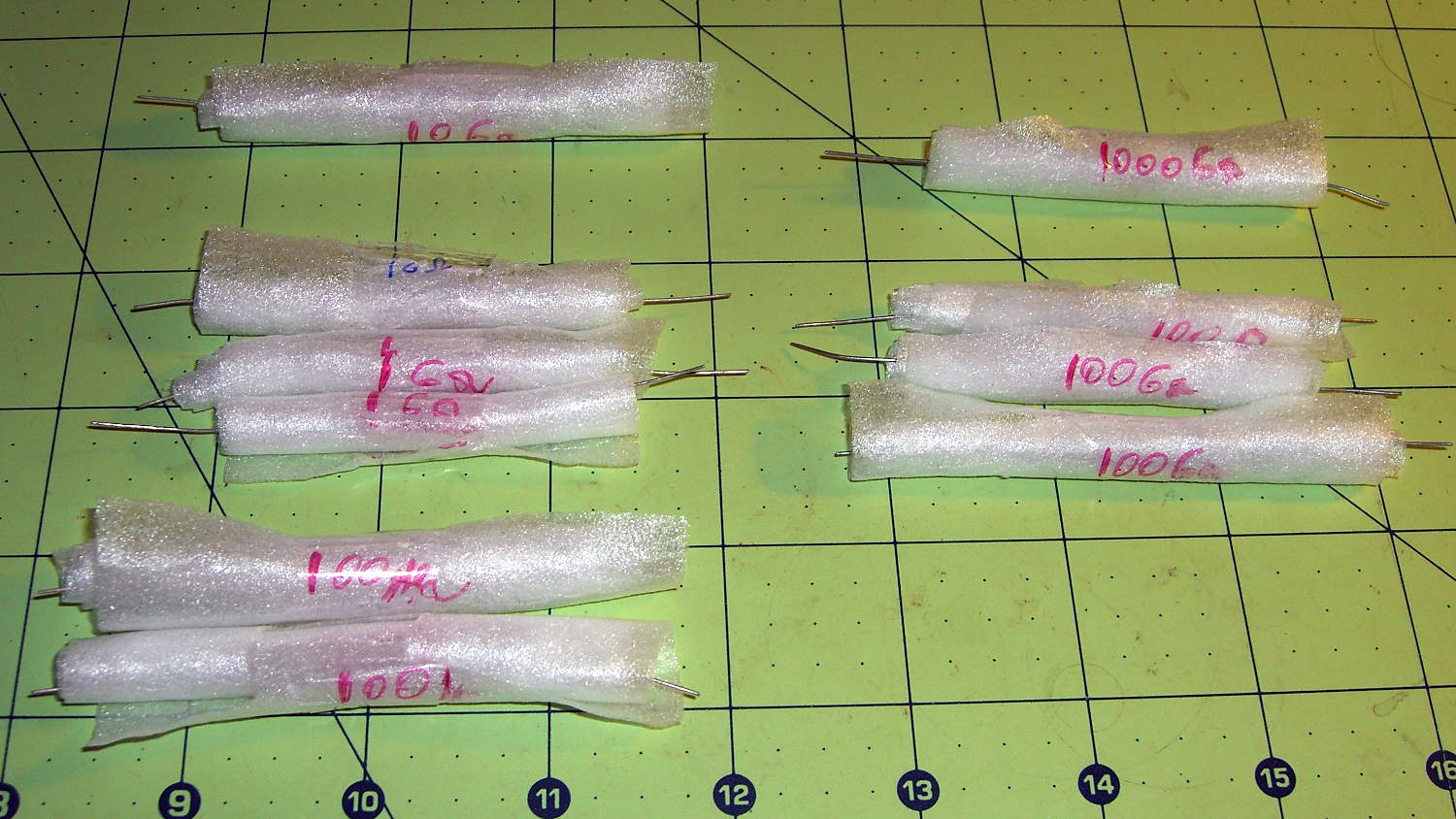
They’re glass electrometer resistors from late in the Cold War:
Russian 100 G electrometer resistor
That one presents 100 GΩ between its lead wires, which would count as open in any other circuit I’ve ever built.
The assortment arrived much richer than advertised, although I’d be even happier with a few more 10 GΩ and a few less 100 MΩ resistors. The 1000 GΩ = 1 TΩ resistor in the upper right seems absurd on the face of it, but there it sits.
I have no way to measure these, other than to build an electrometer amp and see what happens…
Given the ionization chamber’s tiny currents and the huge resistors required to turn them into voltages, reviewing the thermal noise I generally ignore seems in order…
The RMS noise voltage of an ordinary resistor:
vn = √ (4 kB T R Δf)
The constants:
kB – Boltzman’s Constant = 1.38×10⁻²³ J/K
T – temperature in kelvin = 300 K (close enough)
Mashing them together:
vn = √ (16.6x10⁻²¹ R Δf)
vn = 129x10-12 √ (R Δf)
For a (generous) pulse current of 20 fA, a 10 GΩ resistor produces a mere 200 μV, so wrap a gain of 100 around the op amp to get 20 mV. An LMC6081 has a GBW just over 1 MHz, giving a 10 kHz bandwidth:
vn = 129x10-12 √ (10x109 10x103) = 1.3 mV
Which says the noise will be loud, but not deafening.
A 100 GΩ resistor increases the voltage by a factor of 10, so you can decrease the gain by a factor of ten for the same 20 mV output, which increases the bandwidth by a factor of ten, which increases the noise by a factor of … ten.
Ouch.
With the same gain of 100 (and therefore 10 kHz bandwidth) after the 100 GΩ resistor, the output increases by a factor of ten to 200 mV, but the noise increases by only √10 to 4 mV.
The LMC6081 has 22 nV/√Hz and 0.2 fA/√Hz input-referred noise, neither of which will rise above the grass from the resistor.
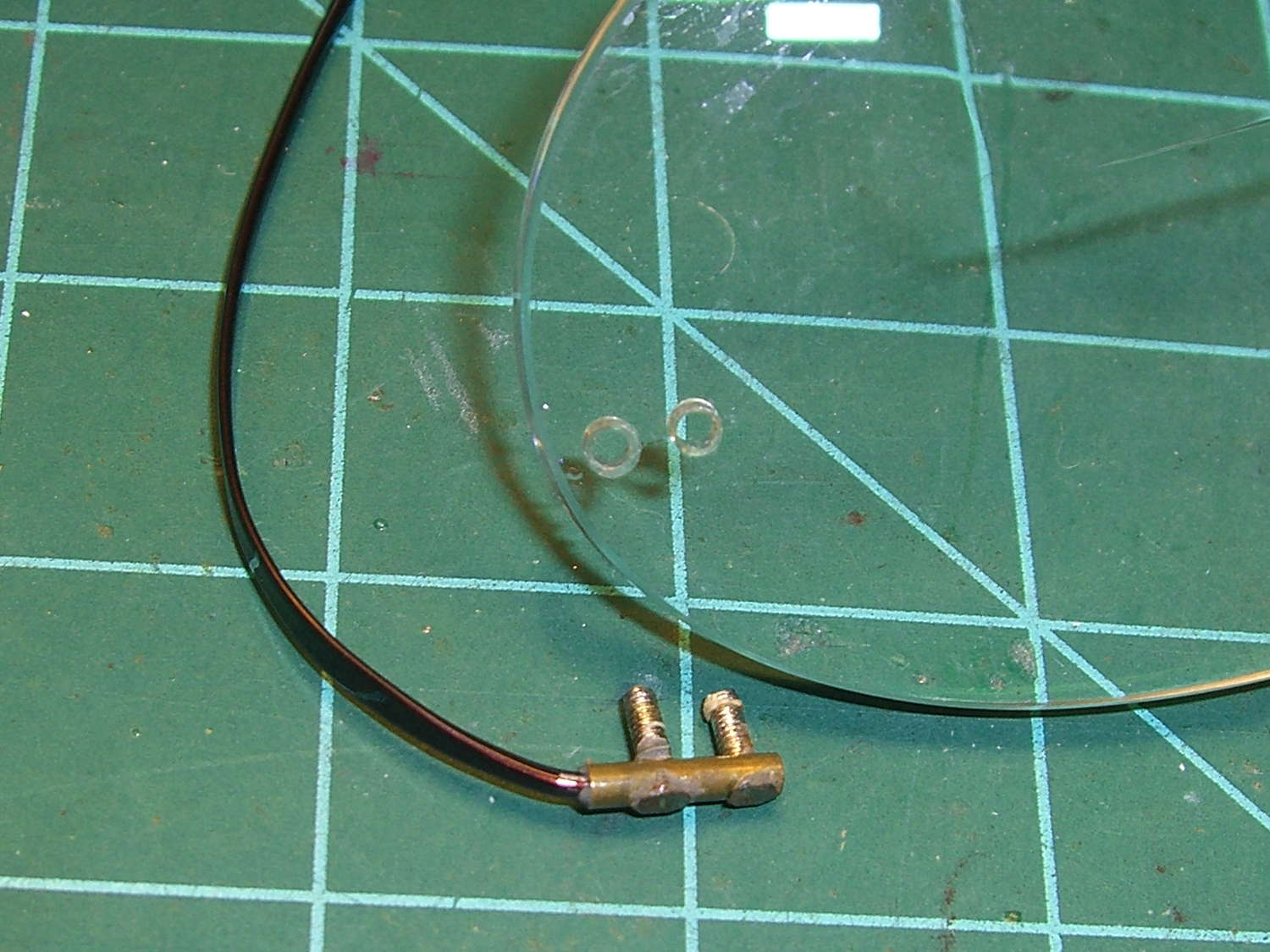
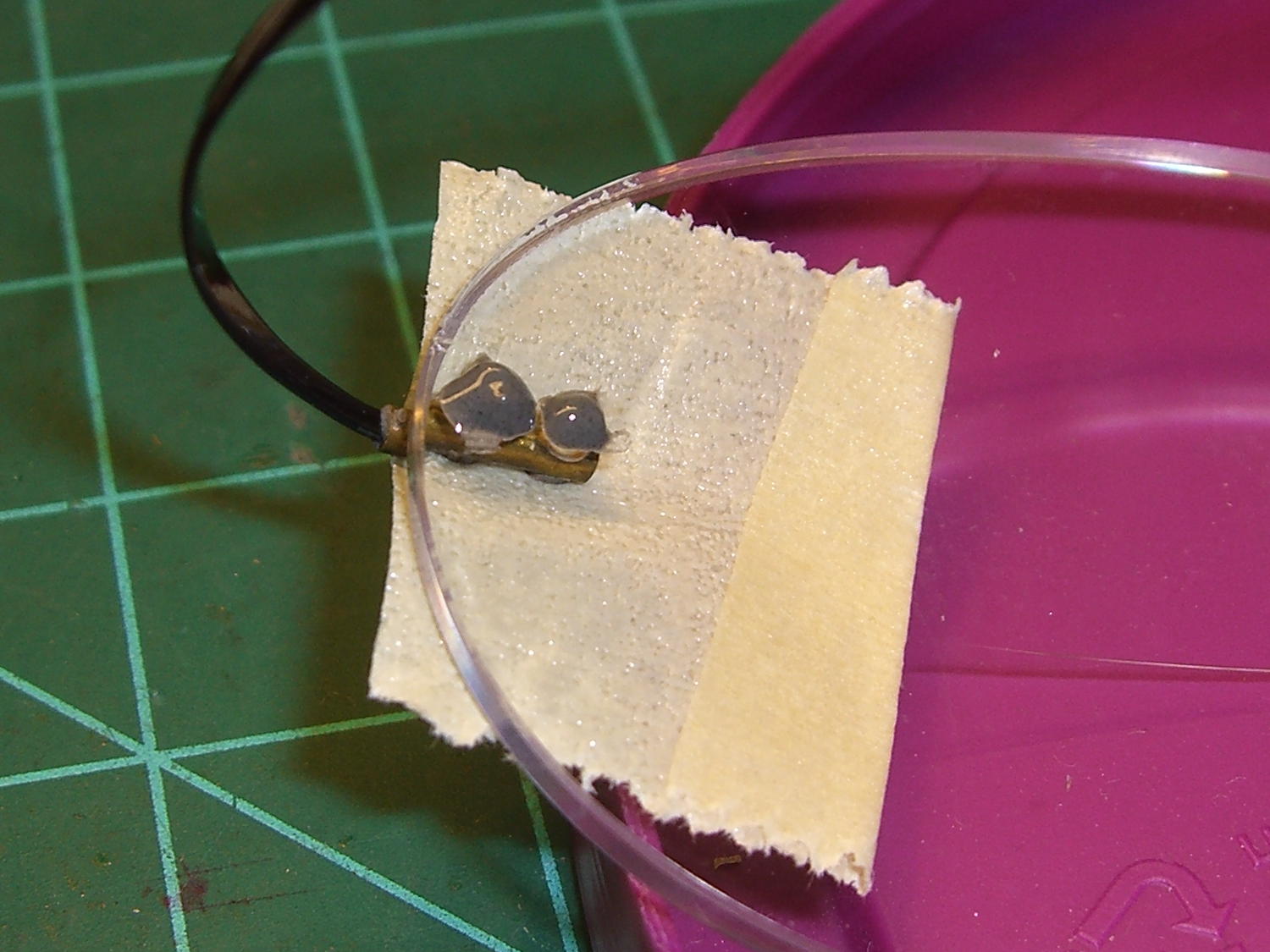
As failures go, that one’s survivable; slightly larger epoxy dots should do the trick:
Silhouette temple – re-repair
The other temple worked loose inside the brass tube and rotated freely, so I yanked it out, bashed the tip slightly flatter, and epoxied it back in place, along with overcoating the epoxy dots on the lens to forestall another failure.
This has obviously blown right by the point of absurdity, but …
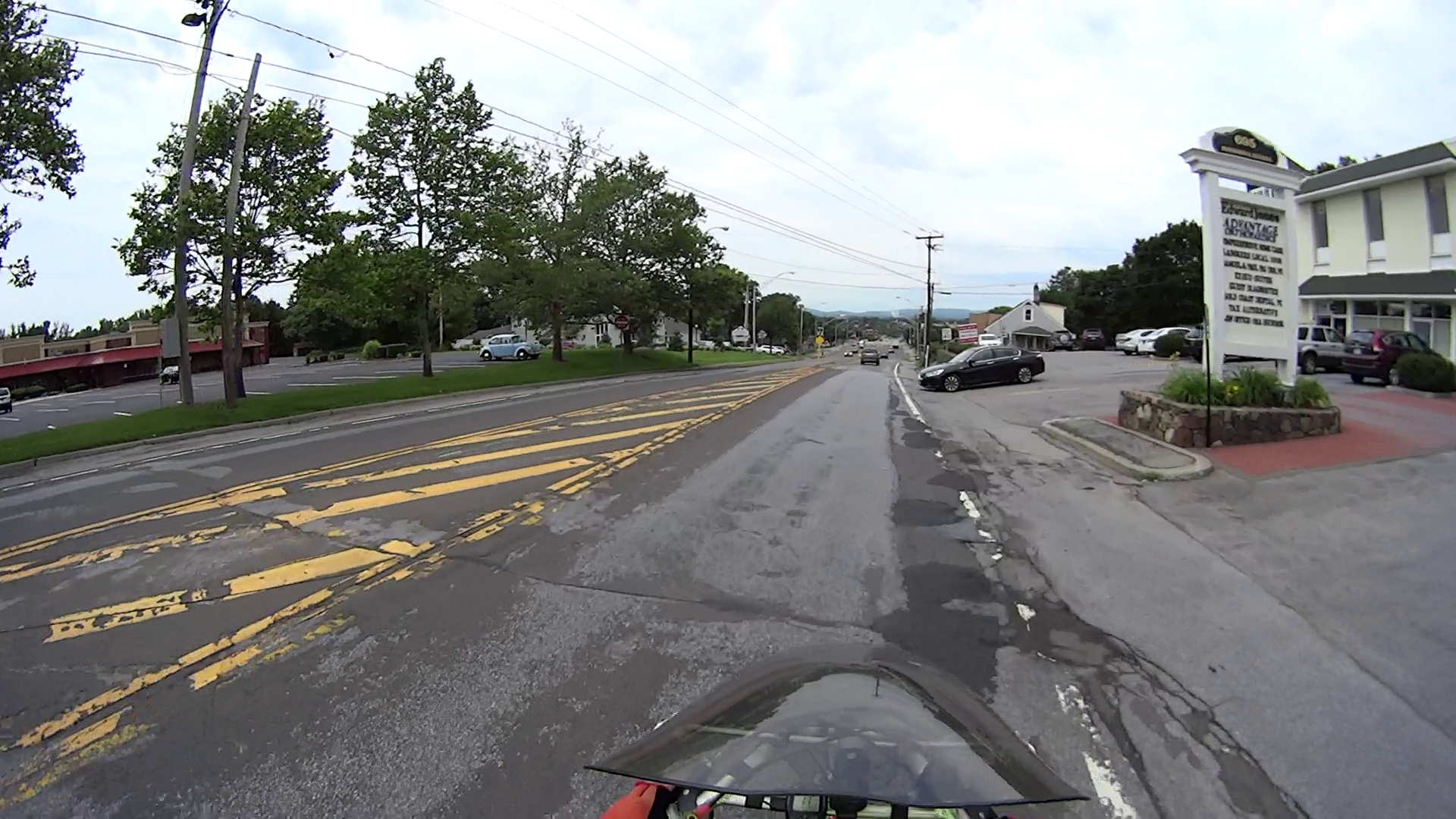
Janet Drive is across Rt 44 from the patch palimpsest I’ve already described. It serves as an entrance to two strip malls and the Canterbury Gardens apartment complex and, oddly enough, turns out to be a private road owned by Canterbury.
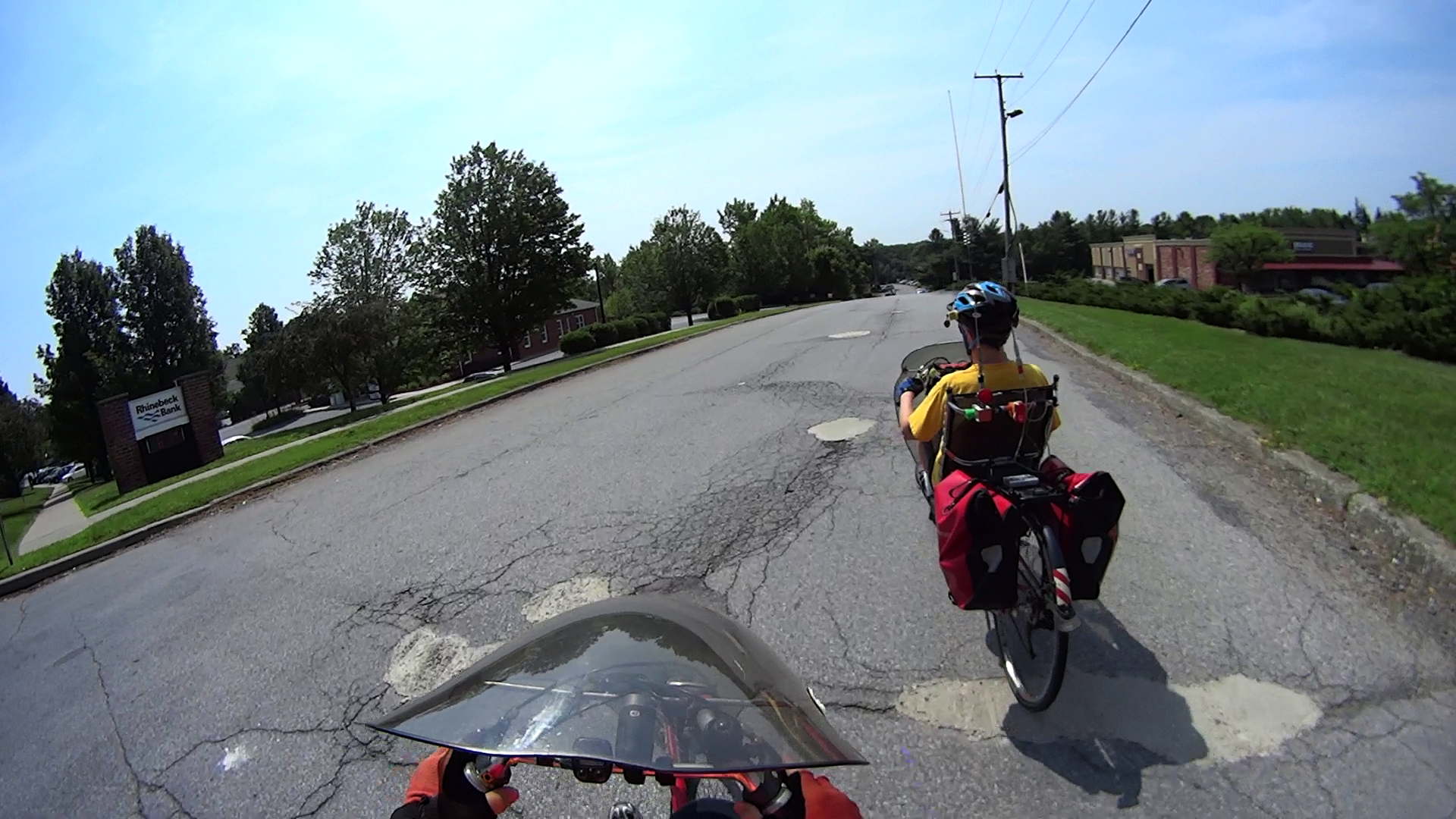
A huge pothole is consuming the pavement in front of the mall entrance behind the Rhinebeck Bank branch:
Janet Dr at 708 Dutchess Turnpike entrance – 2015-07-12
The light gray patches mark smaller potholes filled with what appears to be Sackrete:
Janet Dr at 708 Dutchess Turnpike – patches – 2015-07-12
The potholes made turning from Rt 44 onto Janet a bit of a challenge, particularly with drivers trying to pass on the left during the turn. We now signal for and take the entire lane from Rt 44 to the mall entrance, although impatient drivers still roar around us, directly into oncoming traffic.
Because Janet is a private drive, it doesn’t quite qualify for the Tax Dollars Asleep tag, but it gives you the general idea. The road is not signed “Private Drive” and, at least in that section, is obviously used by the general public, so it’s not at all clear what repair standards apply.
Adapted from an email to NYSDOT (hvtmc@dot.state.ny.us):
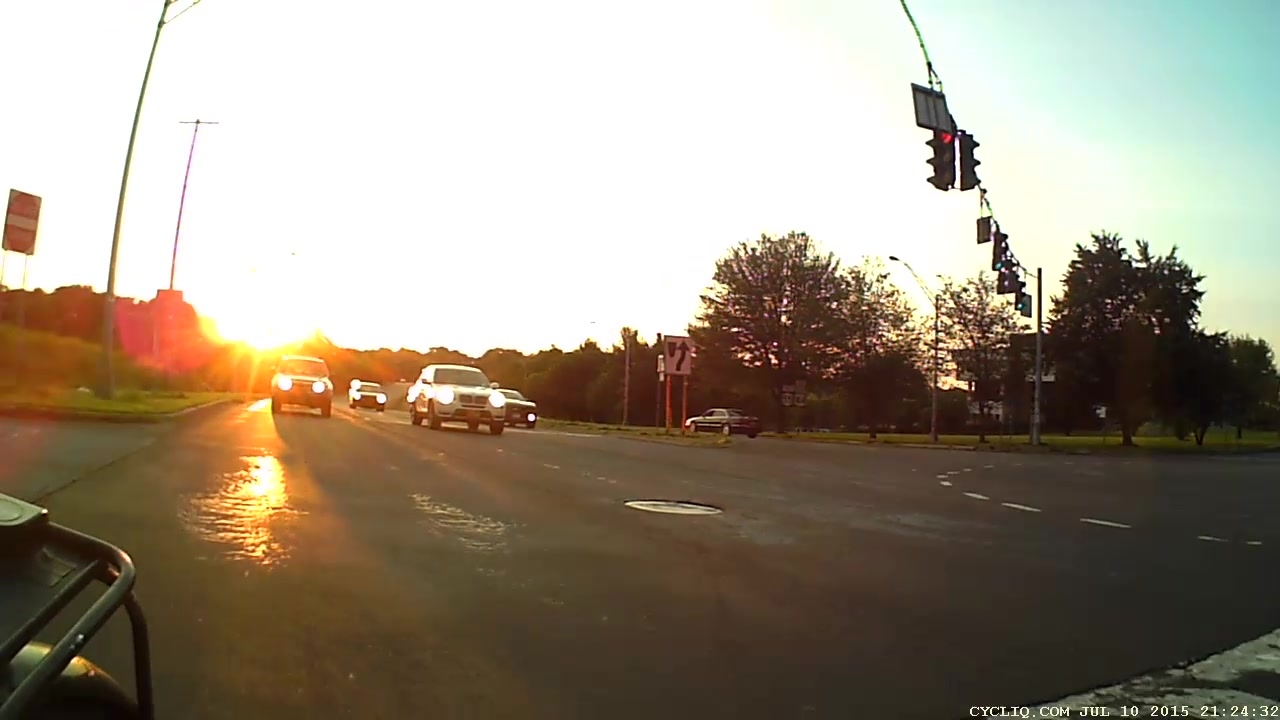
The minimum green and yellow times on the signals from Burnett Blvd to Rt 55 are too short for bicycle traffic making a left turn across six traffic lanes.
The pictures show key points from our ride on 2015-07-10, returning from the Balloon Festival in Poughkeepsie. We took the DCRT around Poughkeepsie, went through Arlington to Rt 376 at Collegeview, then took Rt 376 Red Oaks Mill.
The image sequence numbers identify frames extracted from video files. The front camera (a Sony HDR-AS30V) runs at 60 fps and the rear camera (a Cycliq Fly6) at 30 fps, so you can directly calculate the time between frames. The Fly6 timestamp is one hour ahead, for reasons I don’t quite understand.
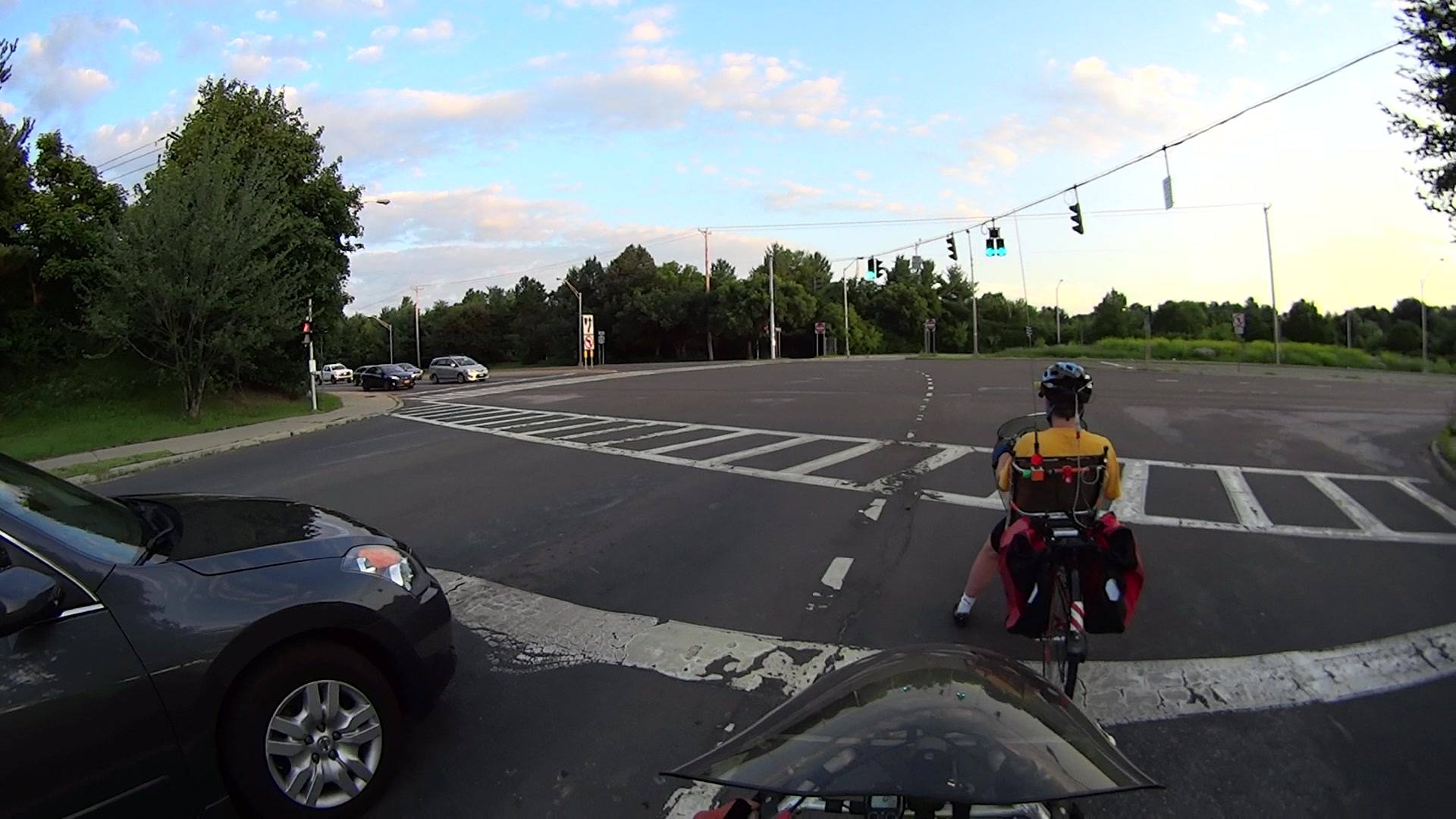
The red signals are turning off and the greens haven’t lit up yet:
Burnett at Rt 55 Signal – Front 0196
One second later, the car and our bikes are starting to roll:
The yellow signals begin turning on seven seconds after the green:
Burnett at Rt 55 Signal – Front 0633
The car has reached the pedestrian ladder across Rt 55, but we’re still crossing the westbound lanes of traffic. Note that I’m lined up with the lane closest to our starting point on Burnett: this is a big intersection. We may not be the fastest riders on the road, but we’re not the slowest, either.
We’ve reached the far side of the intersection just under 16 seconds from the green:
Burnett at Rt 55 Signal – Front 1142
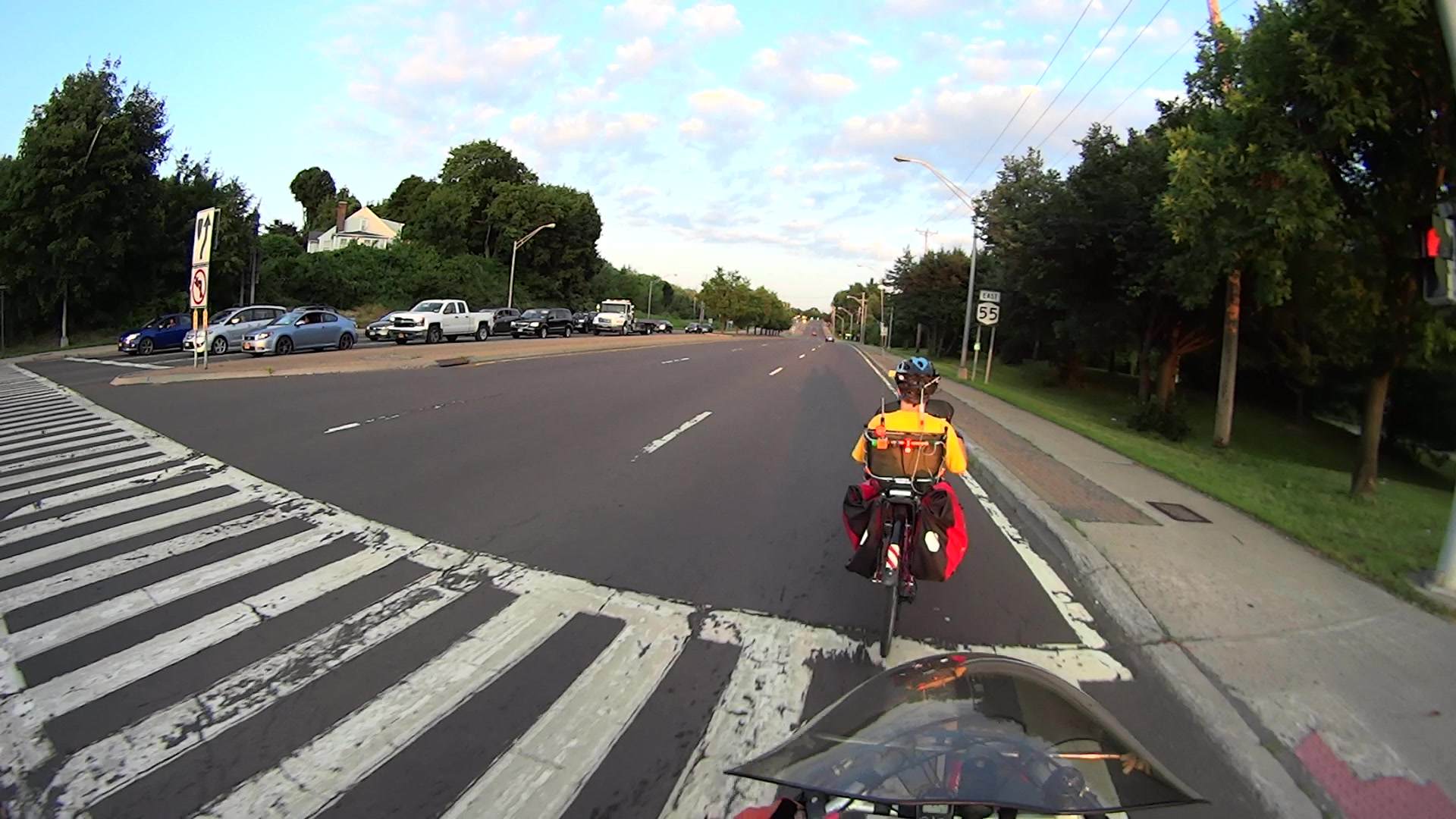
However, the opposing signals turned green while we’re still crossing the eastbound lanes of Rt 55, 15 seconds after the Burnett Blvd signals went green:
Burnett at Rt 55 Signal – Rear 0408
About 2.7 seconds later, cars have been accelerating across the intersection toward us as we reach the pedestrian ladder:
Setting the minimum Burnett green to 12 seconds, the minimum yellow to 10 seconds, and the minimum delay from Burnett green to Rt 55 green to 30 seconds would help cyclists (just barely) reach the far side of the intersection before opposing traffic starts rolling.
As a bonus, adjusting the sensor amplifiers on Burnett to respond to bicycles and marking the coil locations on the pavement in both lanes would help us through the intersection during low-traffic-volume times, as our bikes seem unable to trip the signals.





 The Smell of Molten Projects in the Morning