Ed Nisley's Blog: Shop notes, electronics, firmware, machinery, 3D printing, laser cuttery, and curiosities. Contents: 100% human thinking, 0% AI slop.
This 2 GB flash drive arrived with datasheets & sample files for a (computerized) sewing machine Mary eventually decided she wasn’t going to get (because computerized):
Fake Flash drive
Being of sound mind, we reformatted it and dropped it in the bag o’ random drives. She eventually used it for one of her gardening presentations, whereupon the library’s (Windows) laptop said it needed formatting; she pulled out a backup drive and continued the mission.
Lather, rinse, verify a good format, verify presentation files on the Token Windows Box, and repeat, right down to having another library’s laptop kvetch about the drive.
Soooo, I did what I should have done in the first place:
sudo f3probe -t /dev/sdc
F3 probe 6.0
Copyright (C) 2010 Digirati Internet LTDA.
This is free software; see the source for copying conditions.

WARNING: Probing normally takes from a few seconds to 15 minutes, but
         it can take longer. Please be patient.

Probe finished, recovering blocks... Done

Bad news: The device `/dev/sdc' is a counterfeit of type limbo

You can "fix" this device using the following command:
f3fix --last-sec=25154 /dev/sdc

Device geometry:
	         *Usable* size: 12.28 MB (25155 blocks)
	        Announced size: 1.86 GB (3893248 blocks)
	                Module: 2.00 GB (2^31 Bytes)
	Approximate cache size: 511.00 MB (1046528 blocks), need-reset=no
	   Physical block size: 512.00 Byte (2^9 Bytes)

Probe time: 55'18"
 Operation: total time / count = avg time
      Read: 8'35" / 3145715 = 163us
     Write: 46'37" / 18838872 = 148us
     Reset: 350.7ms / 2 = 175.3ms
Huh.
As long as you don’t write more than a few megabytes, it’s all good, which was apparently enough for its original use.
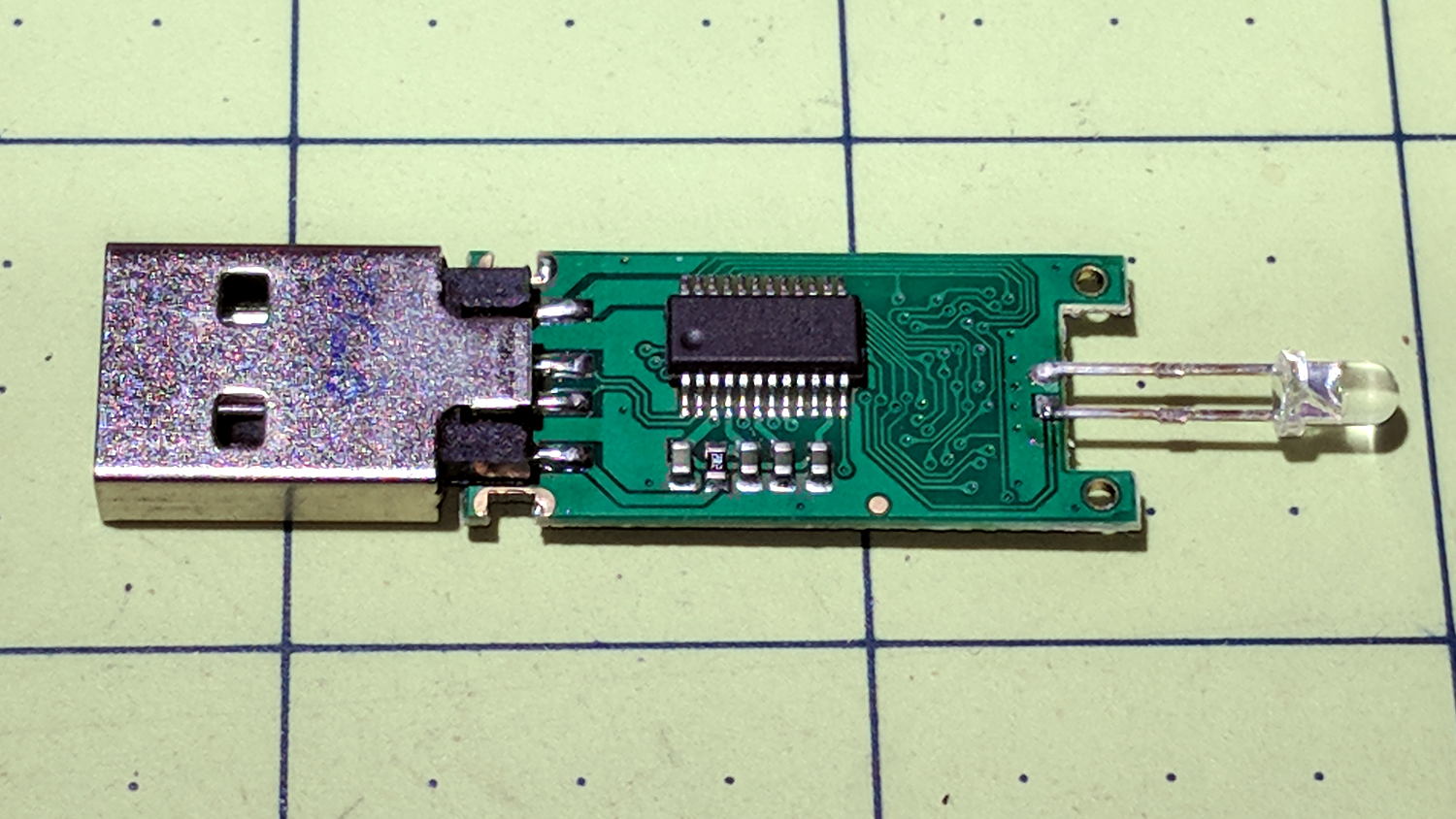
The front of the PCB looks normal:
Fake Flash – controller
But it seems they really didn’t want you to see the flash chip:
Fake Flash – covered chip
Given the two rows of unused pads, it must be a really small chip!
Memo to Self: Always examine the dentition of any Equus ferus received as a gift.
A friend now owns my trusty Canon SX230HS camera, but, given the restrictions on shipping lithium batteries, we agreed there was no point in transferring ownership of my nearly dead batteries.
For completeness, their final state:
Canon NB-5L – 2018-03-25
The original Canon OEM battery (orange curve) looms above all the offerings from various Amazon sellers.
After three years, the bracket locking the snowblower’s muffler bolts broke, but this time I saw the bolt pop out of the muffler, fall to the driveway, and lie there sizzling in the slush. I tightened the remaining bolt and completed the mission.
The OEM bracket was thin sheet metal and broke across one bolt hole under the head. I sawed a rectangle out of a defunct PC case, then drilled clearance holes:
Snowblower muffler – drilling bracket
Bending two corners upward locks the bolt heads in position. I started the bends by clamping the bracket in the bench vise and whacking the corners, then finishing the job with a drift punch after installing it:
Snowblower muffler installed
Of course, I renewed the Never-Seez on the bolt threads; they obviously weren’t corroded in place!
For whatever it’s worth, the many spot welds joining the top bracket to the muffler are doing just fine.
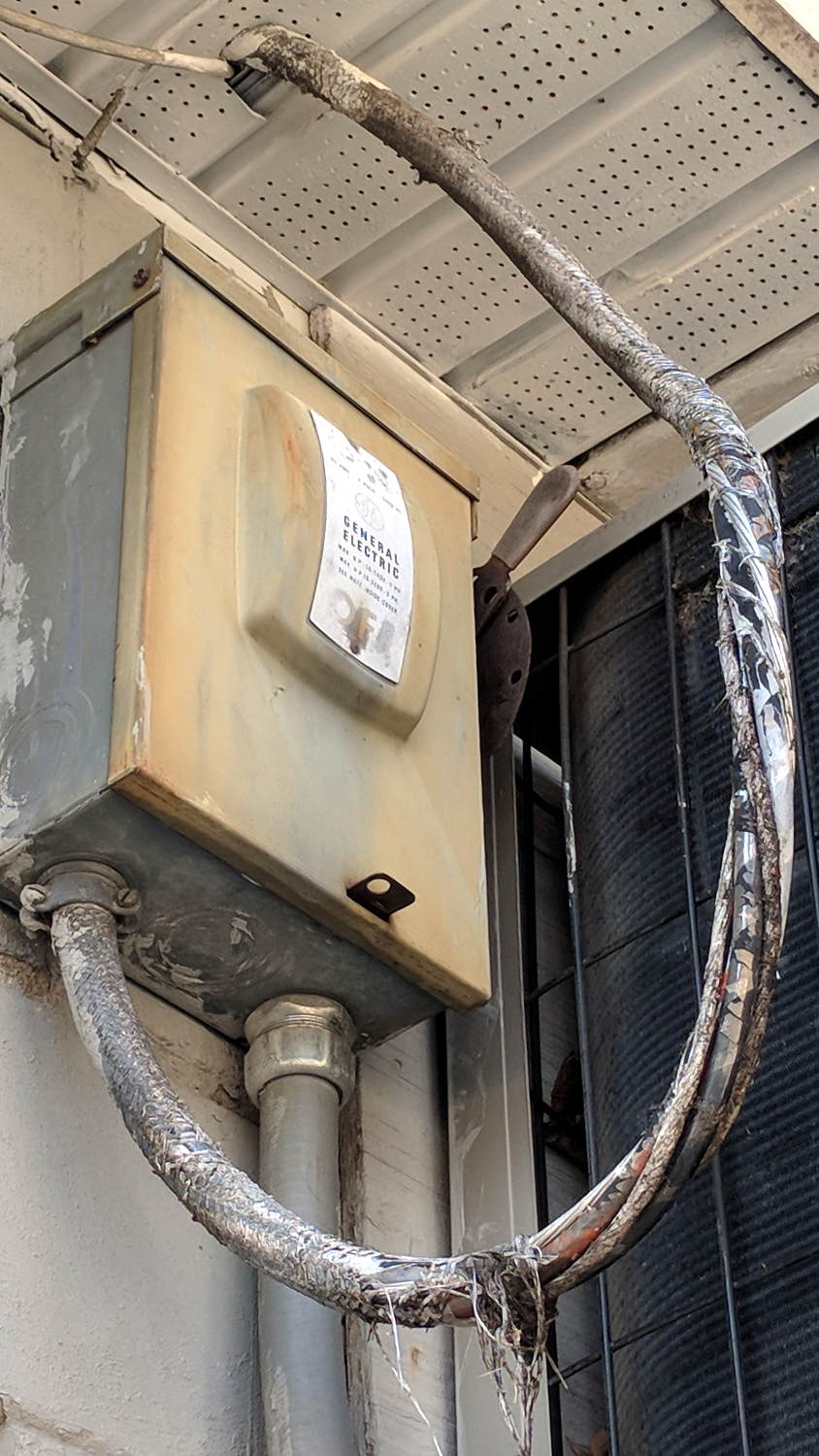
Spotted behind a small strip mall during one of our walks:
Rotted power cable
Perhaps the cable wasn’t rated for outdoor use?
The earth ground conductor isn’t insulated and the nonconductive filler strands look scary, but neither should kill you outright.
As far as I can tell, the insulation around the individual conductors remains intact, but it’s surely brittle and ready to fall off at the slightest touch.
The breaker box and cable are out of reach and, I suppose, out of mind.
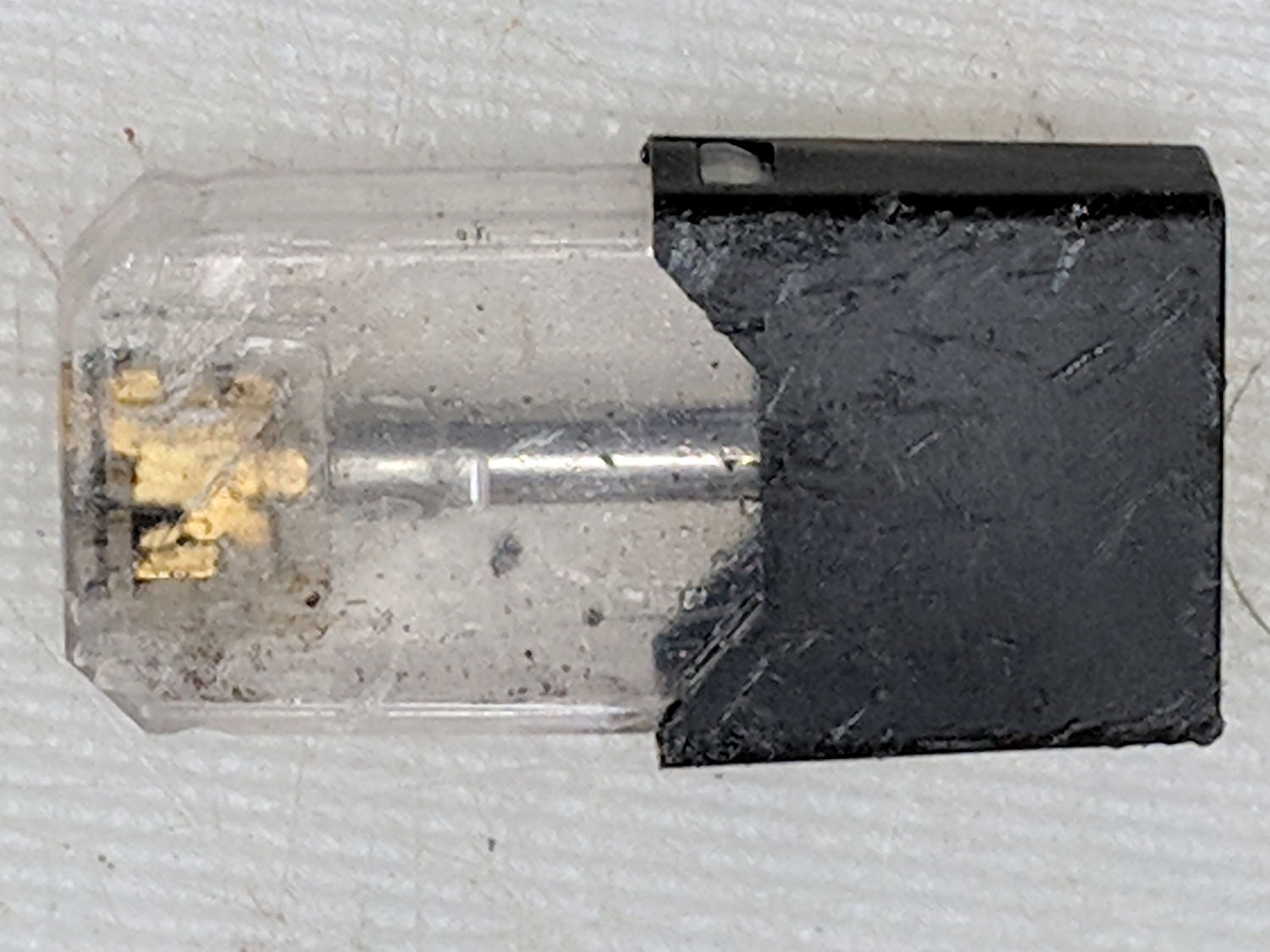
Being the kind of guy who lives under a rock, I thought this thing lying at the end of the driveway might be a USB widget:
Vape cartridge – side
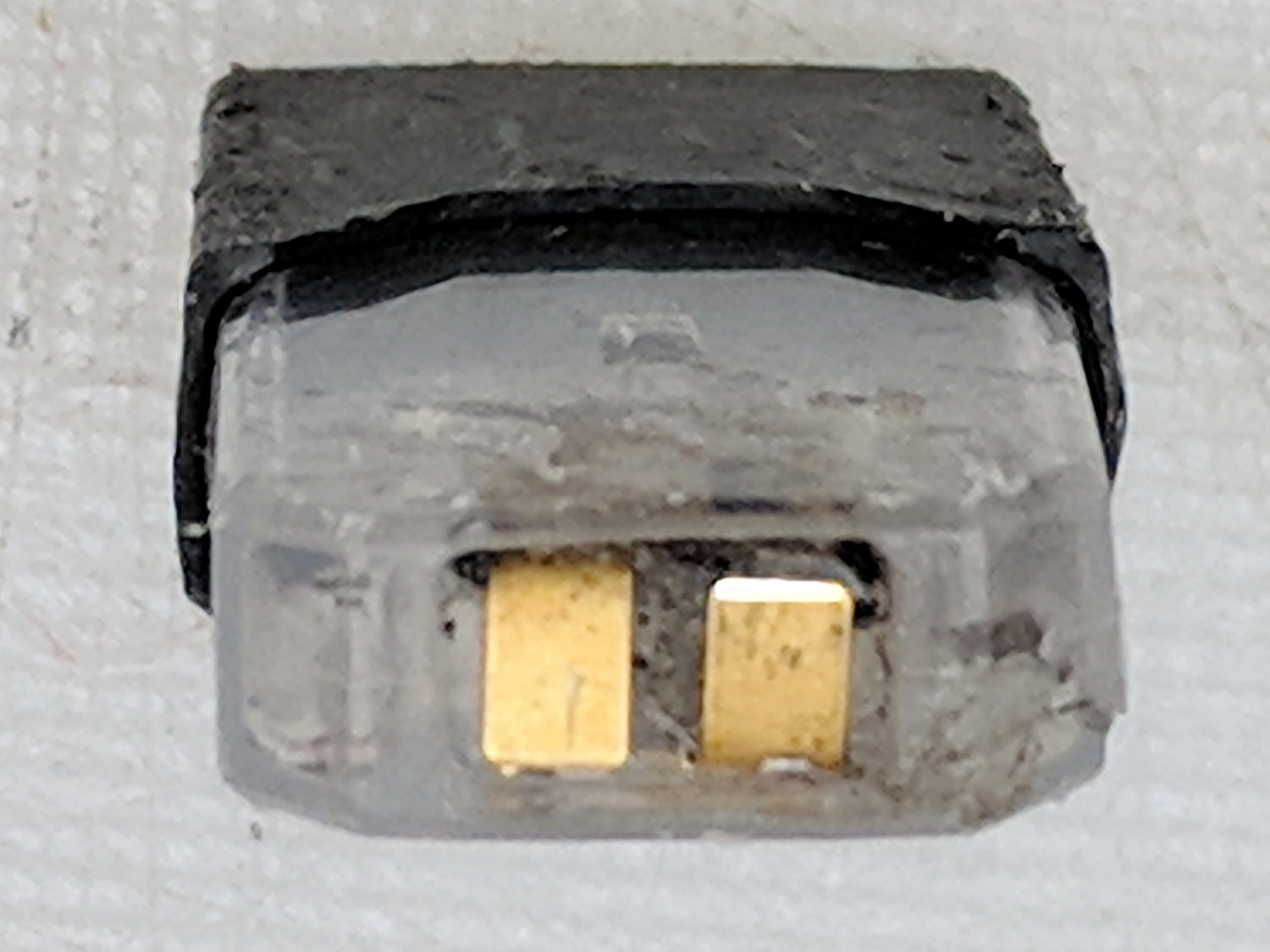
But the contacts are all wrong:
Vape cartridge – contacts
It has an opening on the other end:
Vape cartridge – exhaust port
An easy teardown produces a yard sale of parts:
Vape cartridge – components
The fiber snippet inside the coil carries the same sickly sweet scent as exhaled by passing vapers.
Some casual searching suggests it’s a Juul Vape Pod. The Juul site insists on lower browser armor than I’m willing to grant it; you’re on your own.
The heating coil press-fits into slots cut in the contacts:
Vape cartridge – heater and contacts
It’s about 1 Ω cold, so I foolishly assume there’s a current limiter somewhere in the circuitry.
The little steel tube goes into the Tray o’ Cutoffs, where it might come in handy some day, the debris hits the trash, and I washed my hands up to the elbows.
Ya learn something new every day around here and, obviously, I must get out more …
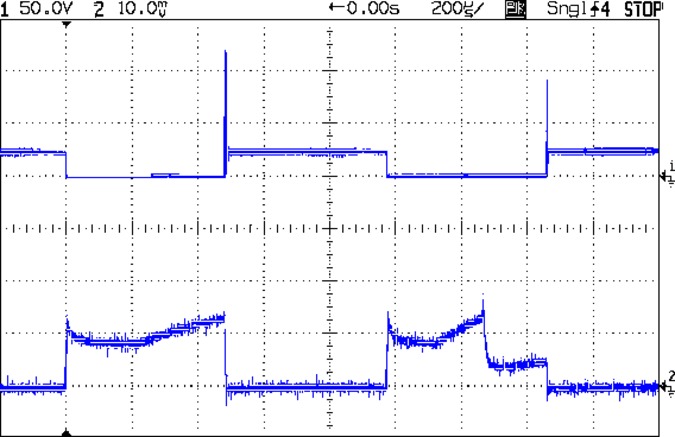
BLDC Blower – 24 V 1 kHz 50 pct 2600 RPM – 200 mA-div – sample B
The upper trace shows the MOSFET drain voltage, the lower trace is the current at 200 mA/div.
The fan is connected from +24 VDC to the drain, so it’s getting power when the MOSFET is turned on and the drain is at 0 V. When the MOSFET turns off, the drain goes high and the drain current flow stops dead in its tracks.
Of course, the fan current doesn’t drop to zero, because inductance. The drain voltage rises until the MOSFET body diode enters avalanche breakdown, whereupon the energy in the magnetic field burns down across the voltage difference as usual.
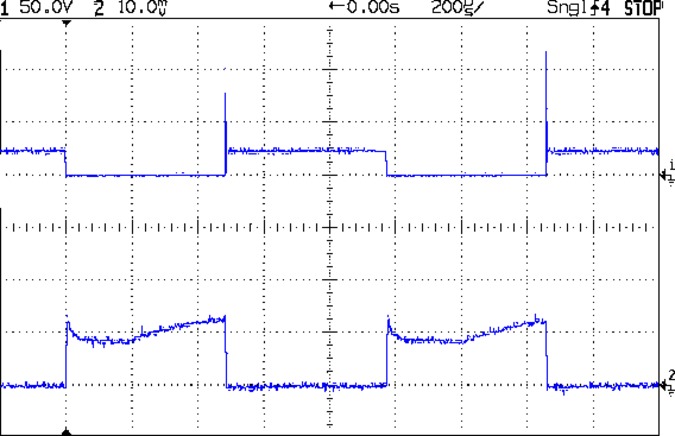
Weird current waveforms happen all the time:
BLDC Blower – 24 V 1 kHz 50 pct 2600 RPM – 200 mA-div – sample C
Or like this:
BLDC Blower – 24 V 1 kHz 50 pct 2600 RPM – 200 mA-div – sample A
I think we’re looking at a sensorless BLDC controller trying to figure out the fan RPM from the back EMF after rebooting during each PWM cycle.
In any event, the drain voltage in the upper trace tops out around 120 V, because the IRF530 MOSFET has a 100 V absolute maximum VDS spec: you’re watching avalanche breakdown happen. A transistor rated for 14 A of avalanche current isn’t in much danger quenching only 200 mA, though, so it’s all good, apart from slapping the fan with -100 V across what used to be its +24 V supply.
Eyeballometrically, the drain current decreases at 100 mA / 500 ns = 200 kA/s with the drain voltage clamped at 120 V, during the division just right of center. The other side of the fan sits at +24 VDC, so the effective inductance looks like 480 μH = 96 V / 200 kA/s. I’m unwilling to tear the blower apart just to measure the motor winding inductances.
In any event, because we’re seeing the output of a 24 V three-phase fan controller being reverse-biased at 100 V, I doubt those numbers mean anything, other than that you shouldn’t PWM-chop the current going into a BLDC fan controller, of course.









 The Smell of Molten Projects in the Morning