After five years of daily use, the lithium battery in the charging case of my Nuheara IQbuds² MAX they’re-not-hearing-aids earbuds began absorbing far more energy during its overnight recharges than the usual 100-ish mA·hr. This isn’t unexpected and, of course, Nuheara specifically mentions their batteries are not replaceable, so just toss the earbuds in the e-waste stream and buy another set.
Having already replaced the smaller and harder-working lithium batteries in the earbuds twice, that’s just useless information … and something of a challenge.
So, we begin.
The lower part of the hinged case holds all the good stuff, with that blank hump obviously covering a great place for a battery:
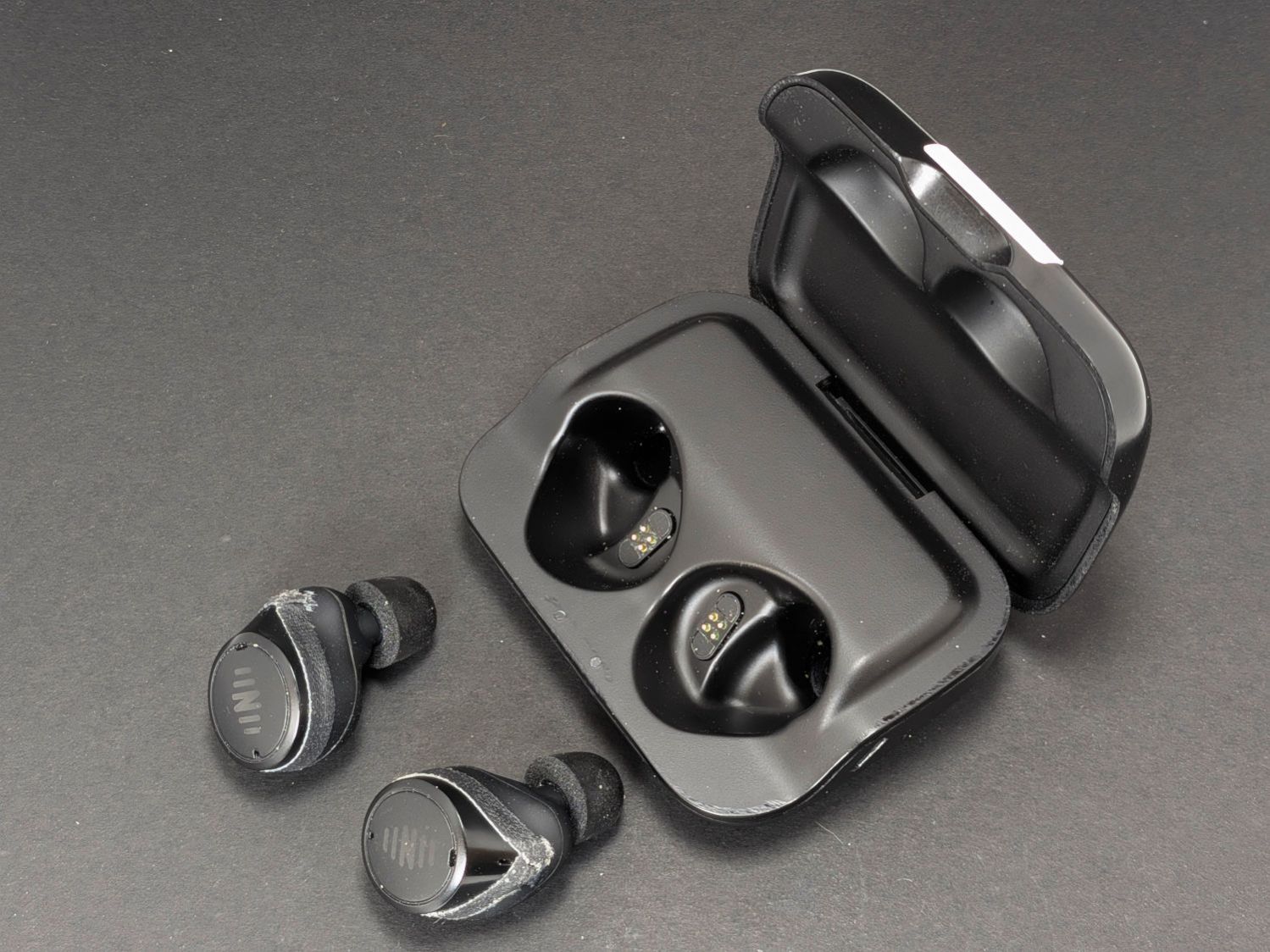
The bands around the earbuds are strips of gaffer tape holding their halves together after replacing their batteries. In this application, gaffer tape works much better than duct tape.
There being no obvious screws, wedging a thumbnail into the joint just above the Micro-B USB jack proved promising. Doing the same on the other side produced enough of a gap to force a flat steel blade in there; further prying popped the snaps (red):
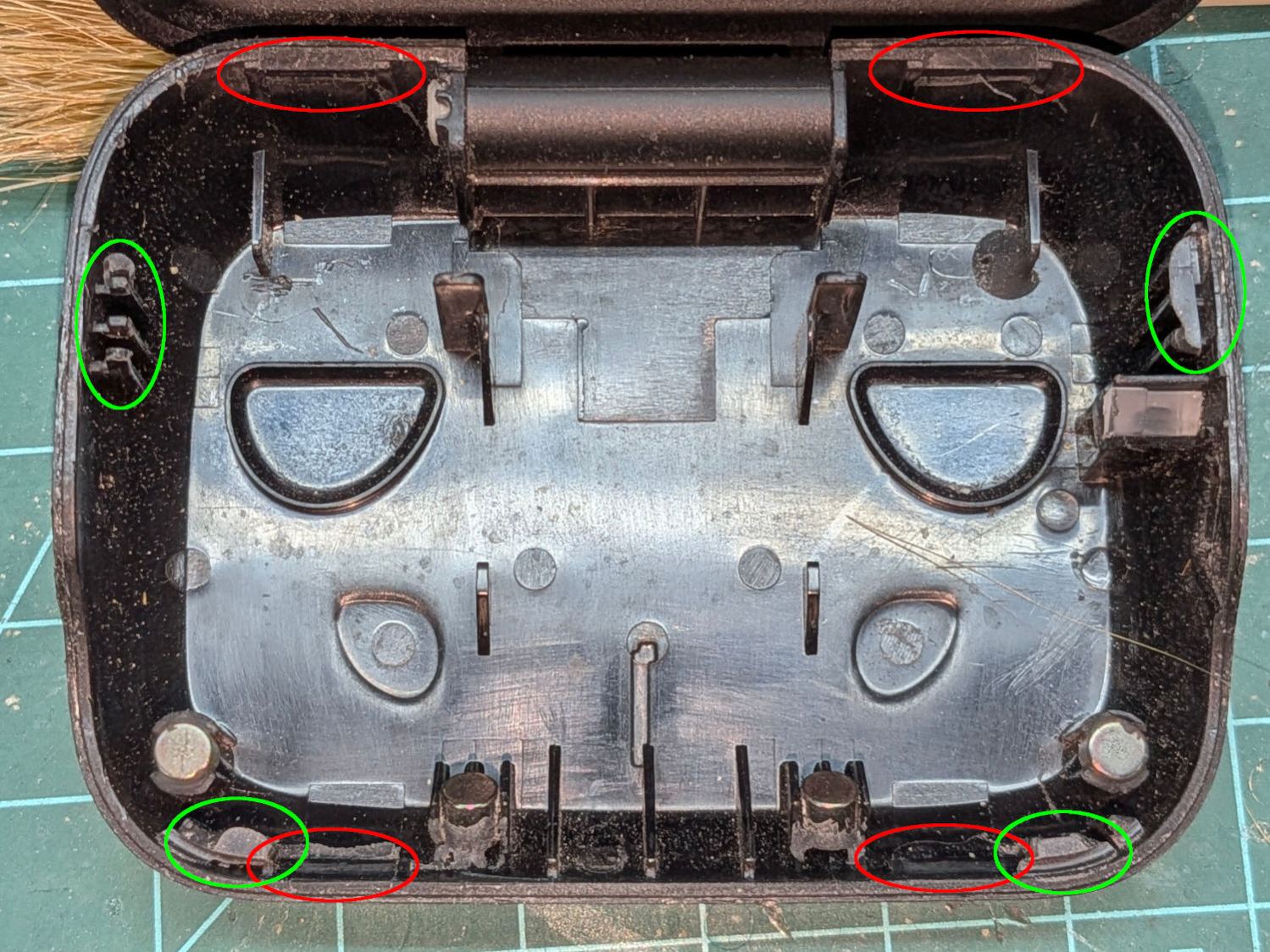
The green ovals mark places where the case halves were glued together, accounting for some of the struggle.
The two neodymium magnets in the front corners grab similar magnets in the upper cover to hold the case closed. The two magnets along the front edge grab magnets in the earbuds to hold them in the pockets, with more magnets flanking the gold-ish pogo pins visible in the first picture for better connections. If you’re concerned about the health effects of static magnetic fields, get over it.
The battery was glued in place, so the first position after cracking the case apart must look like this:
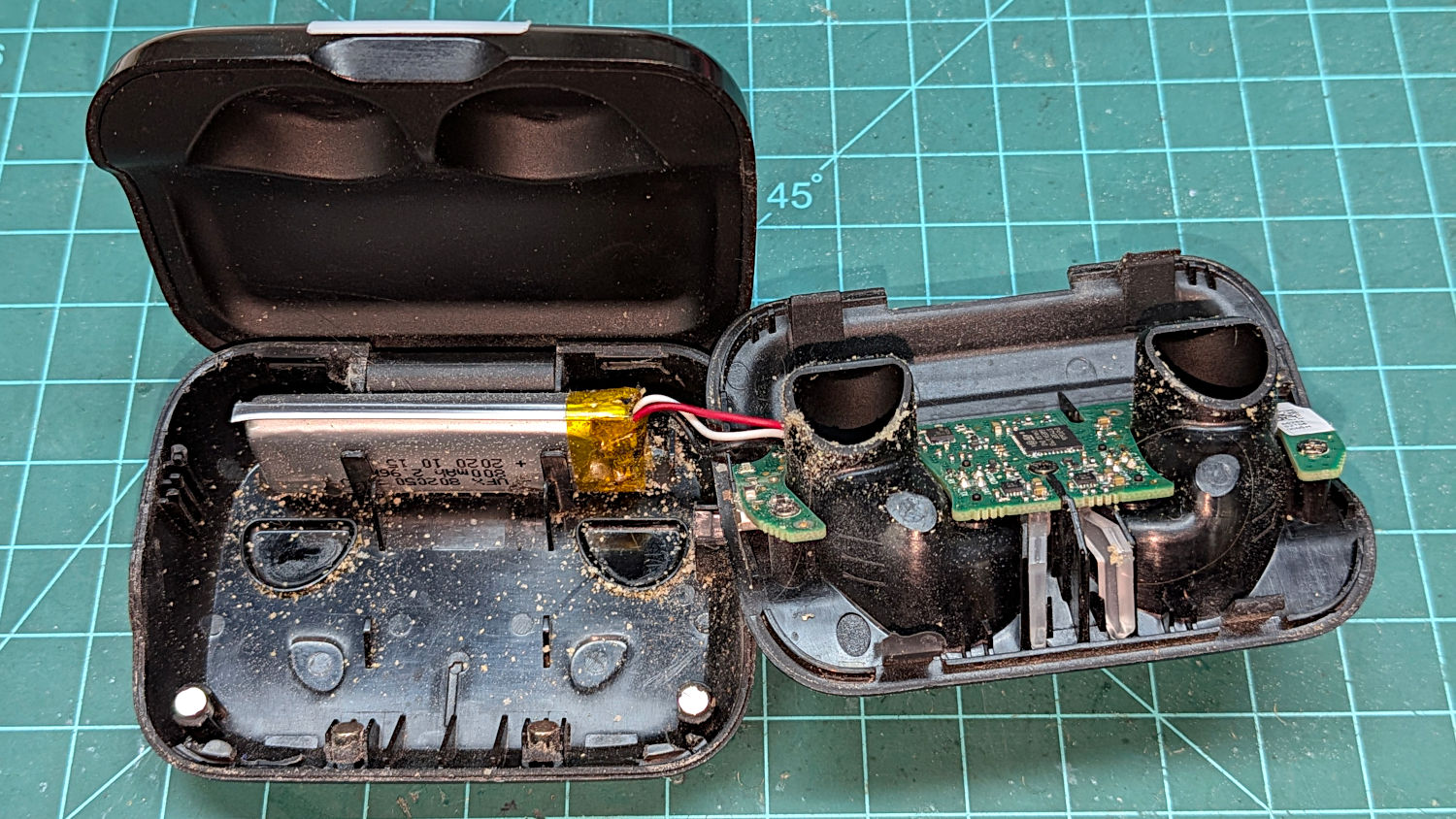
Yes. Yes, that is five years of earwax. You’ll note the lack of a seal at the bottom of the tunnels guiding the foam earbud tips: any and all particles falling off the earbuds have a direct path to the interior of the case.
Easing the battery from its restraints reveals the data plate:
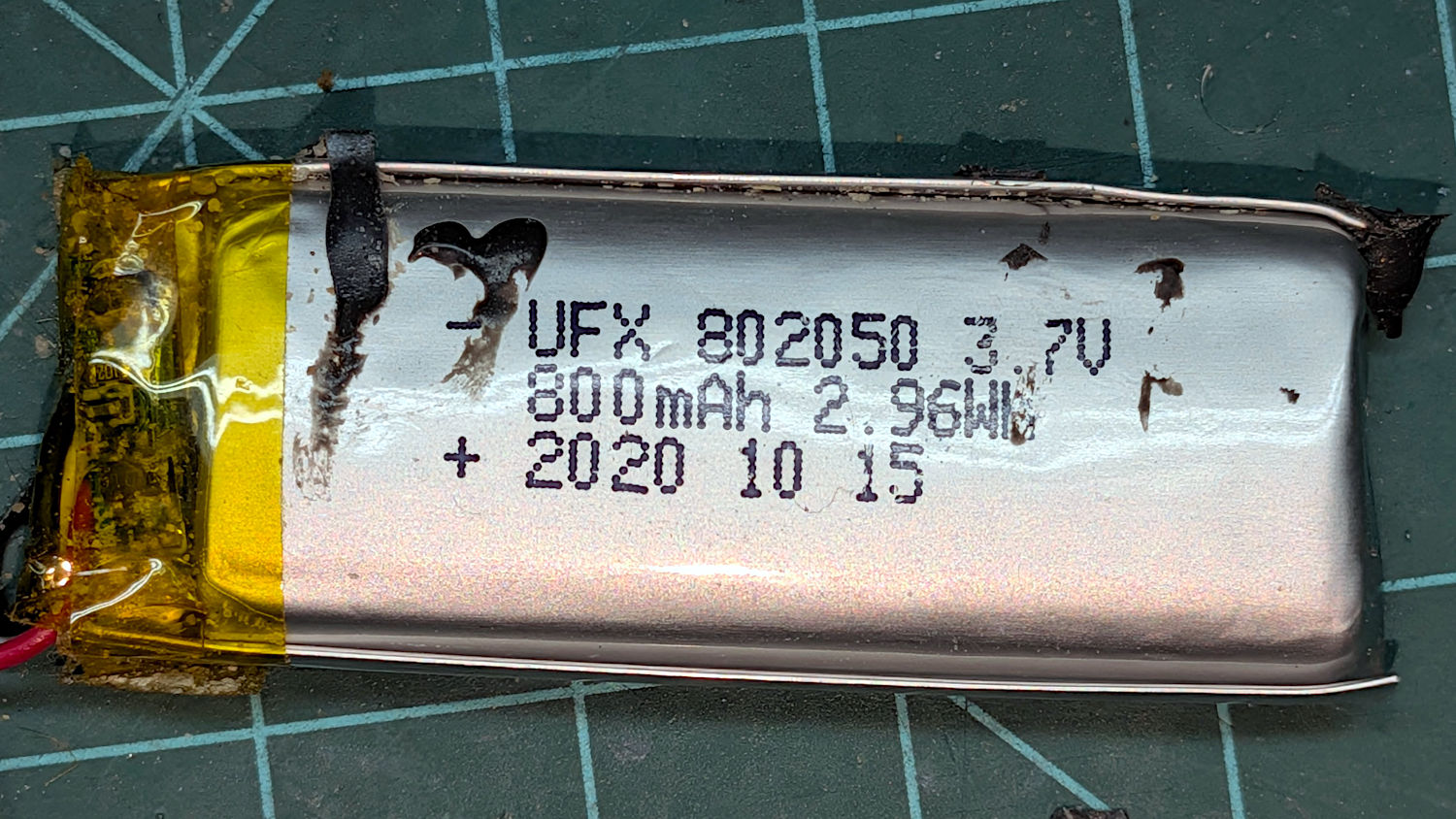
The reflections in the pouch’s now-curved upper surface show the battery has become a Spicy Pillow.
Somewhat to my surprise, 802050 batteries are available from the usual sources.
Unwrapping several layers of kapton tape exposed the battery protection PCB:
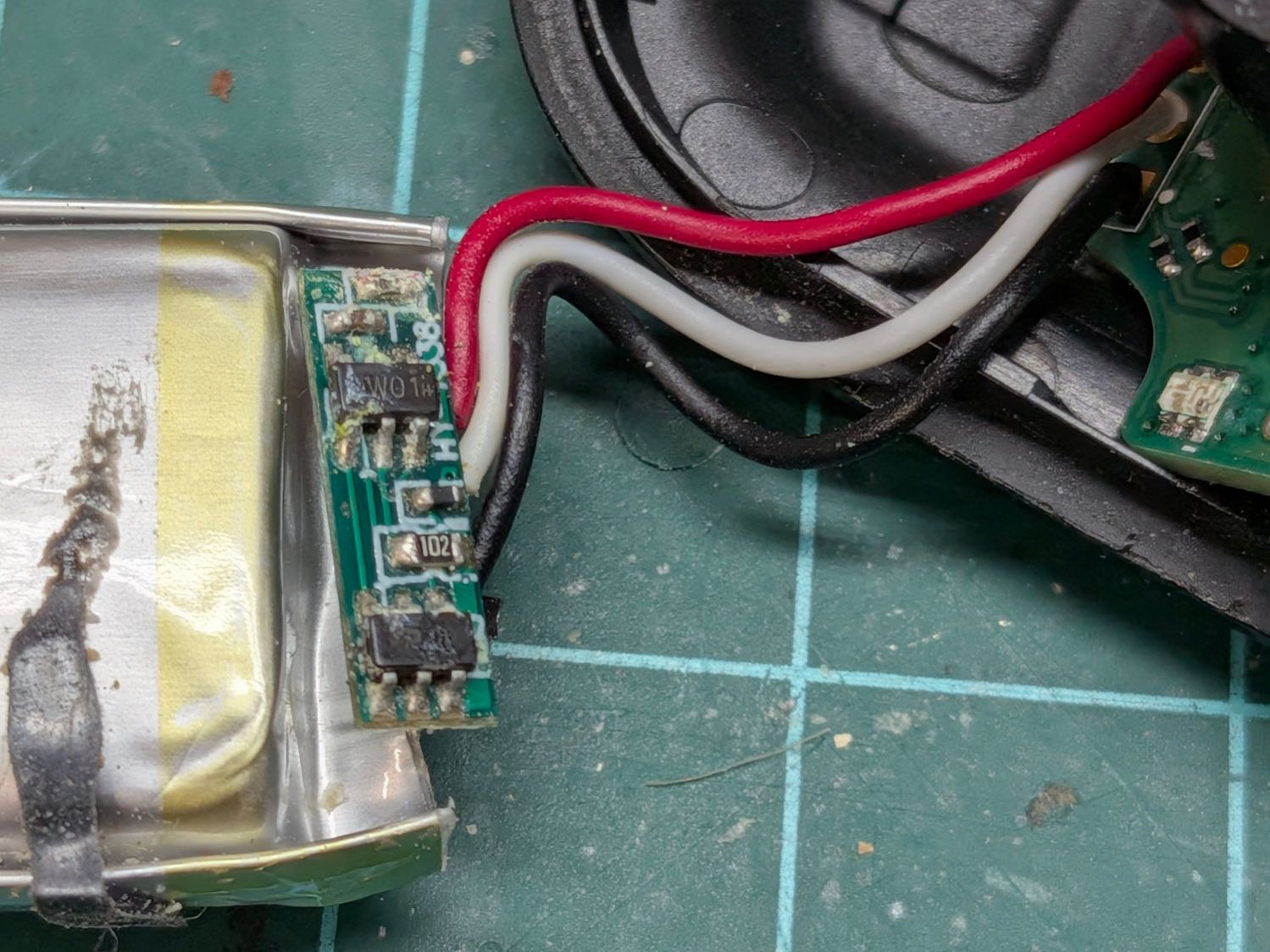
Comfortingly, the DW01 topmark on the upper IC says it’s a battery protection IC and the 8205A topmark on the lower IC indicates a dual MOSFET switching the battery current off during shutdowns. I did not trace the circuitry, but the white wire might control the DW01 CS terminal.
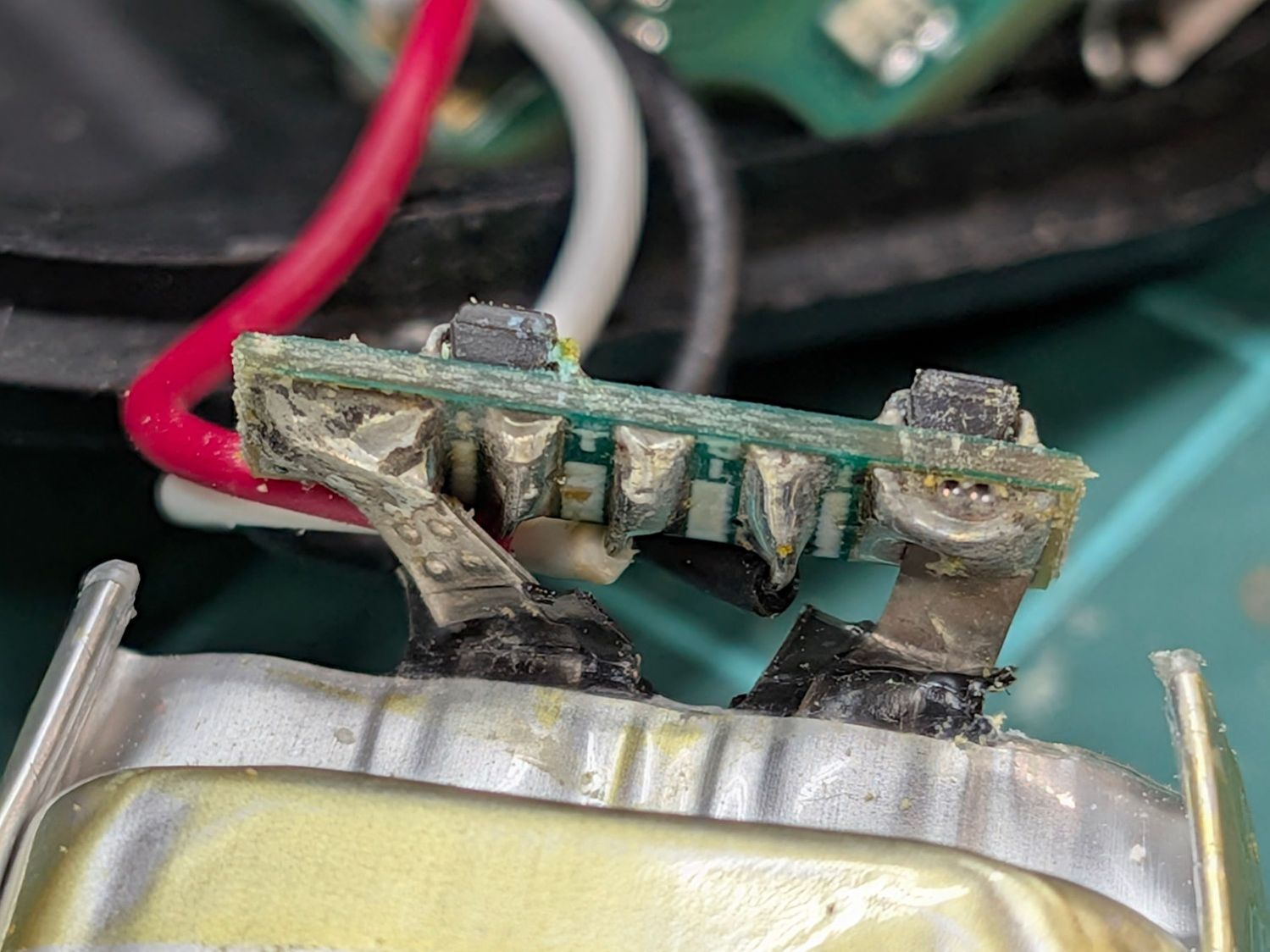
The solder side:
The new battery had a similar protection PCB with two wires. Rather than argue the point, I snipped its (welded!) battery tabs and transplanted the Nuheara PCB to the new battery, adding 30 AWG jumpers because the new tabs were shorter than the old ones:
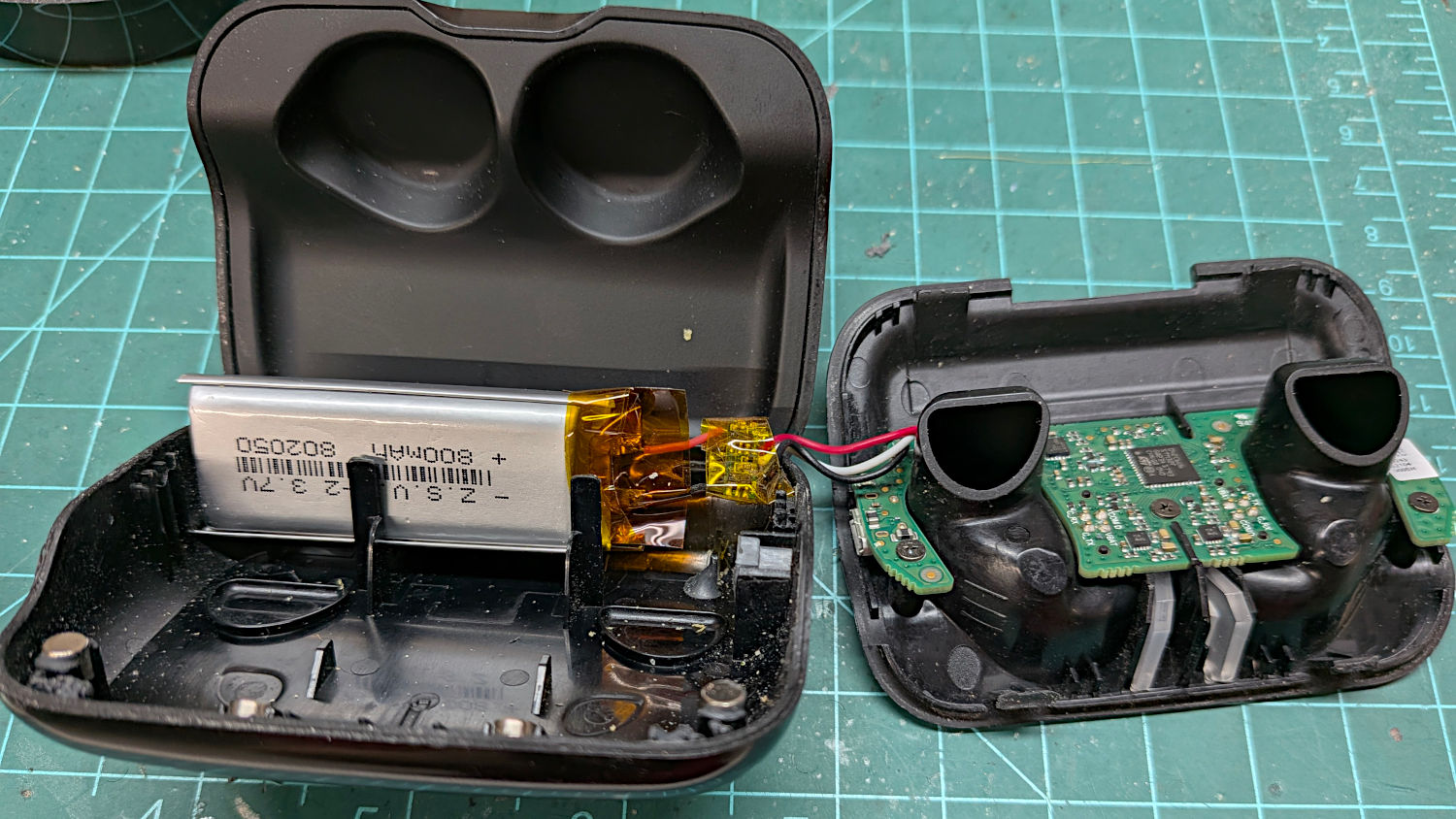
The strangely empty space to the right of the battery is just big enough for the protection PCB and all the kapton wrappings. The various plastic tabs around the battery hold it in place, so I did not renew its glue.
Similarly, the four case snaps do a great job of holding the halves together, so they’re not glued, either.
An overnight charge brought the case back to life and it’s once again working fine. However, the earbuds may be due for their third battery refresh.
I love a happy ending!


Spam comments get trashed, so don’t bother; you’re not as clever as you think. Comment moderation may cause a delay.