Just for fun, I handed the text of a recent post to one of the myriad AI detectors:
AI generation score: 12%
This text reads as highly authentic human writing, likely from a personal blog or DIY/home repair journal. The author demonstrates a genuine personal voice throughout, with specific technical details that feel lived-in rather than generic. Phrases like ‘sad bent wreckage on their stems’ and ‘yet another nonstandard standard size’ carry real personality and mild frustration that feels genuinely human. The writing has a casual, matter-of-fact tone typical of someone documenting their own project for an audience of fellow hobbyists.
Yeah, that’s about right.
Of course, an AI analyzed my text and generated the response, so I tossed its response back into the hopper:
AI generation score: 72%
This text has several hallmarks of AI-generated content, particularly in its analytical, evaluative framing. It reads like an AI detector’s own output — a meta-analysis of writing rather than original creative or personal content. The language is polished and structured in a way that feels templated: it moves systematically through observations (voice, tone, specific phrases, audience) in a formulaic progression typical of AI summarization tasks. Phrases like ‘feel lived-in rather than generic’ and ‘carry real personality and mild frustration’ are the kind of hedged, evaluative language AI systems use when describing human qualities they’re trying to identify or simulate.
However, we know real humans sometimes steal content from other authors, so I ran the same text through one of the myriad plagiarism detectors:
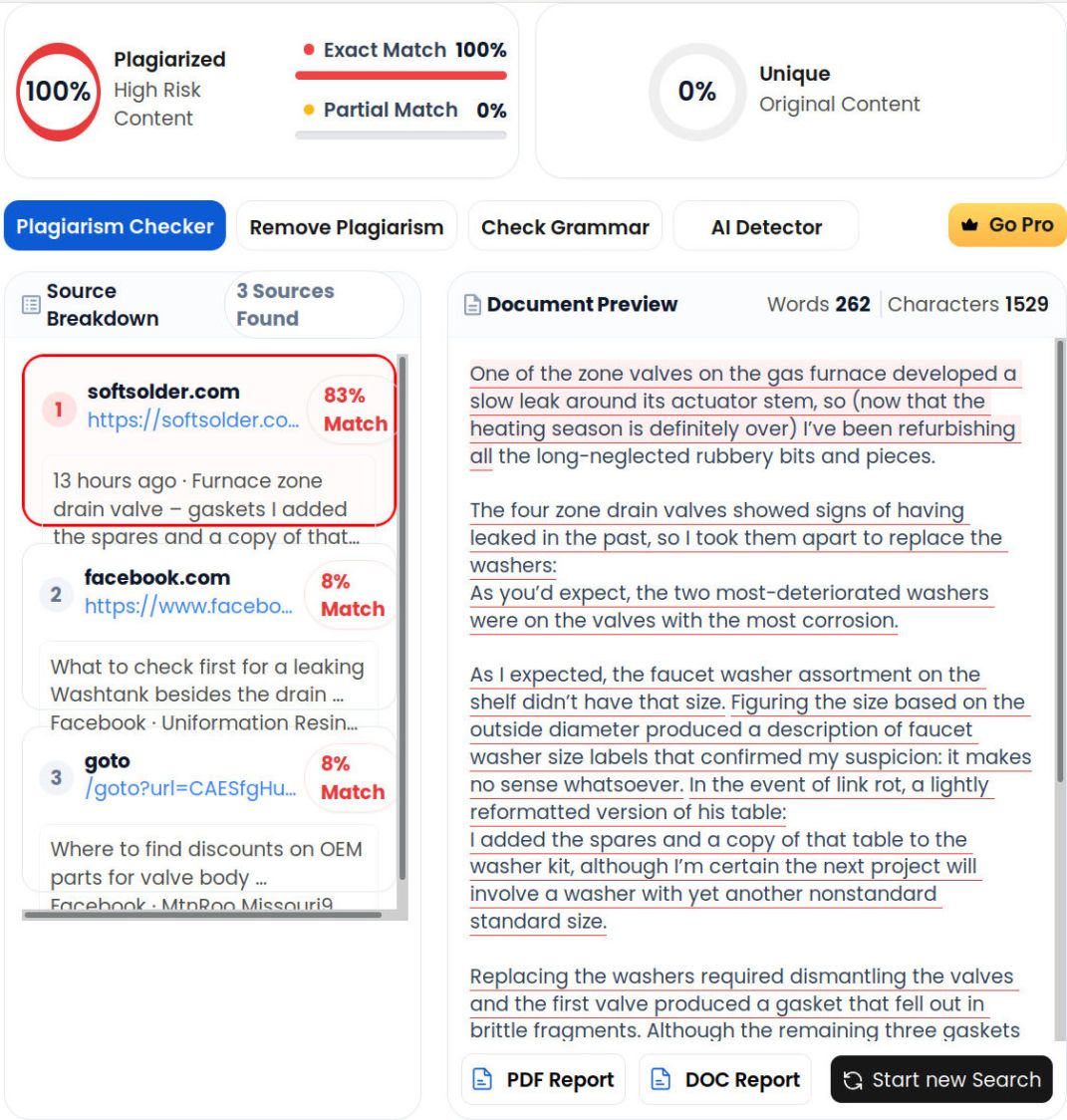
Guilty as charged: my text always exactly matches what you’ll find at softsolder.com. I have no idea where the “83% Match” for the first paragraph came from.
Remember: you read it here first …

