Of late, the magnetic stirrer mixing my morning cocoa occasionally doesn’t start spinning when I turn it on, which calls for some investigation.
Removing the four obvious screws concealed under the rubber feet and prying off bottom cover reveals the trivial innards:
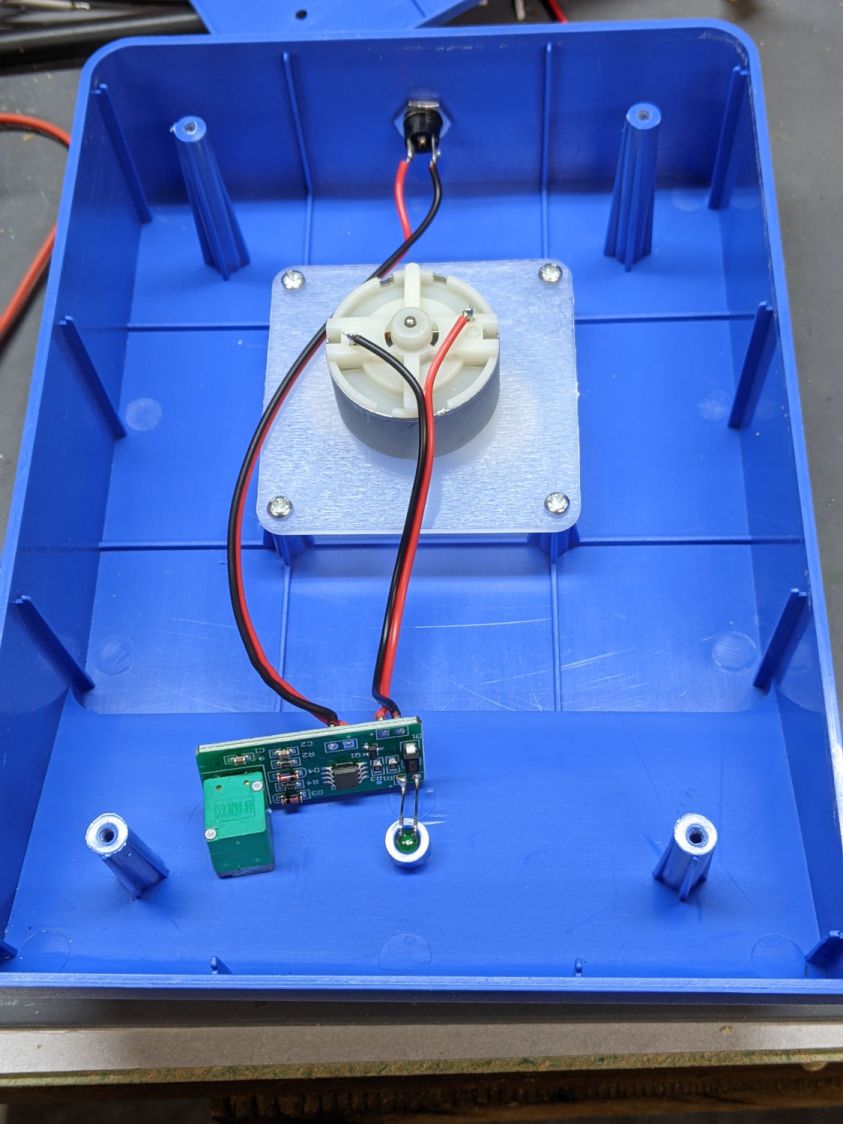
The speed adjustment pot holds the little circuit board in place, with the green LED setting its jaunty angle.
The motor spins a pair of neodymium magnets:
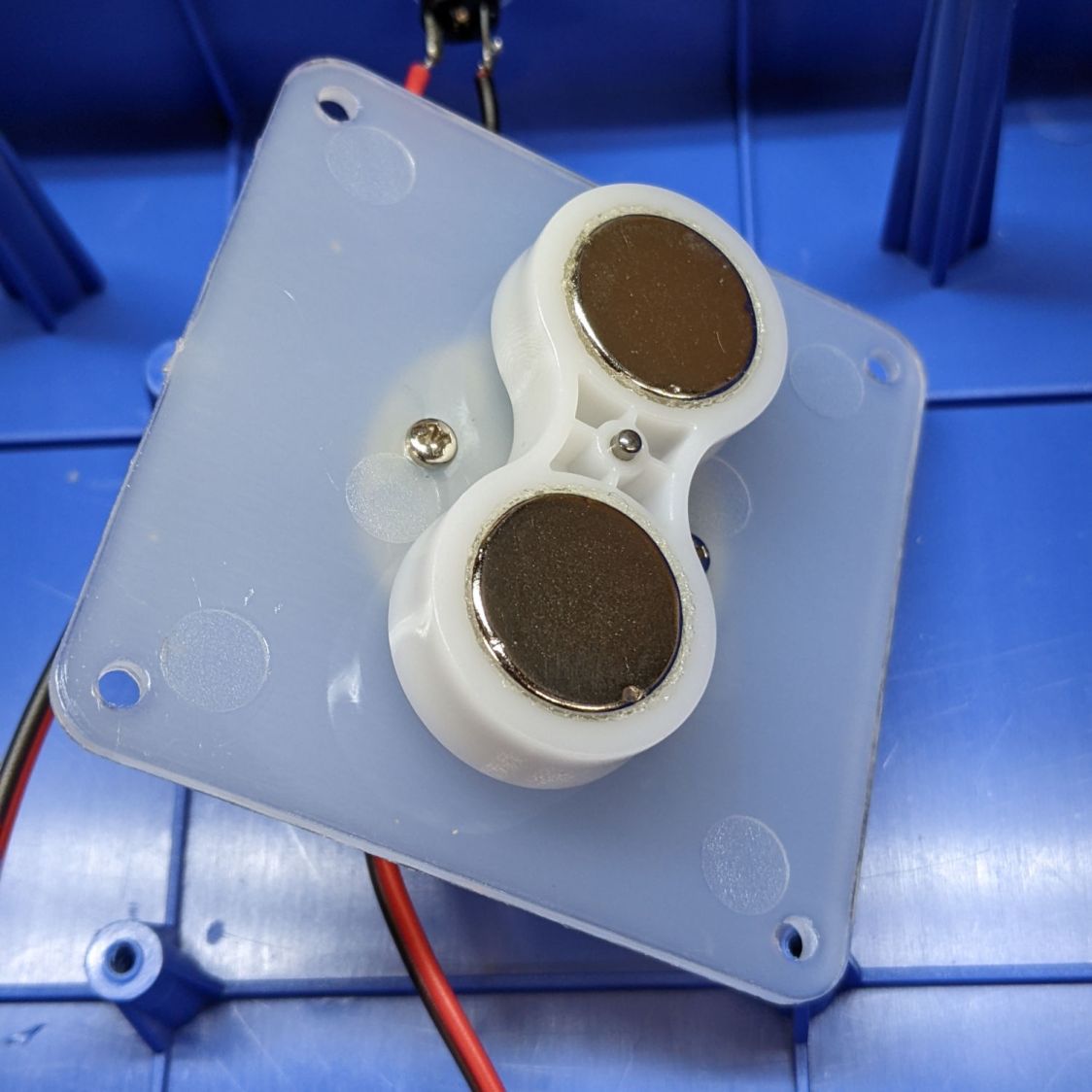
I expected a gearbox instead of the direct drive setup.
Perhaps those whirling neodymium magnets have been slowly demagnetizing the motor’s internal (alnico?) magnets.
The motor brushes seem to be a pair of stiff wires, rather than carbon blocks, contacting the commutator, the wear from which may account for motor’s decreasing startup enthusiasm. Even though I didn’t expect a BLDC motor, this one may have been overly cheapnified.
Perhaps kickstarting the motor with the steel fork I use to fish the stirrer magnet out of the mug will get the thing going.


Comments
2 responses to “Magnetic Stirrer: Interior”
The cheap little DC motors ( <$1 shipped) used in anything from cheap electric dollar-store toothbrushes, personal fans, IKEA milk frother / mini blender sticks, etc… all have copper contacts instead of proper brushes.
Once the motor stops working it is usually the “brushes” (for lack of a better term). I took one apart that had the copper worn through and holes burnt into the copper pads, the commutator was still fine, just needed cleaning.
However, I am mildly surprised to find this kind of motor in a “high value item” beyond $10
It’d definitely not a “laboratory grade” stirrer, no matter what the name may imply. :grin: