The Samsung over-the-range microwave (ME18H704SFS, should you care) that Came With The House™ coughed up a C-11 error code resolving to “replace the gas / humidity sensor”. Replacement DE32-60013A sensors are readily available, although if you’re expecting a Genuine Samsung Part from Amazon, that is not the universe I live in.
You can remove the upper front bezel from the microwave to reveal the slotted front cover of the compartment containing the sensor, but you cannot replace the sensor without extracting the microwave from above the stove and removing its shell. The bottom of the microwave sits about 18 inches above the stove, so I put a 16 inch cubical moving box (of which we have a near-infinite supply) on the stove to reduce the risk of dropping the mumble thing while removing it.
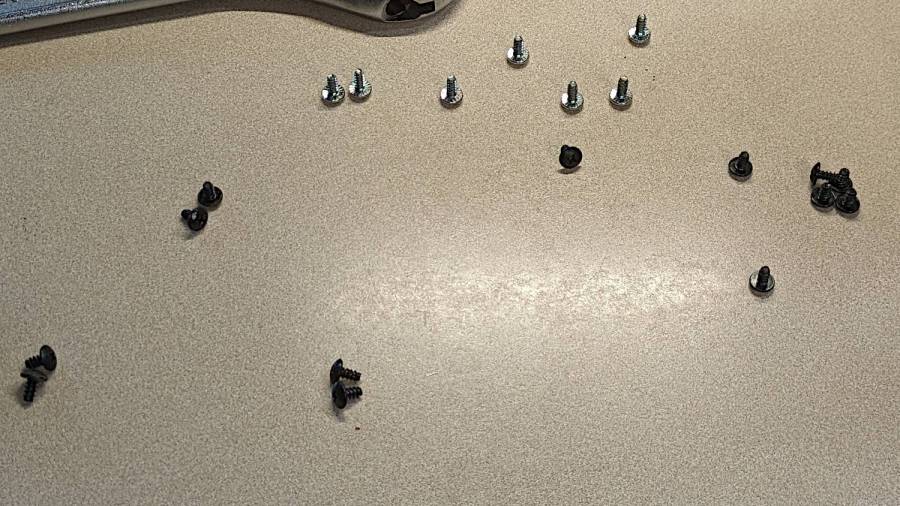
A total of 20 screws, here laid out in roughly geographic order, hold the shell to the inner frame:
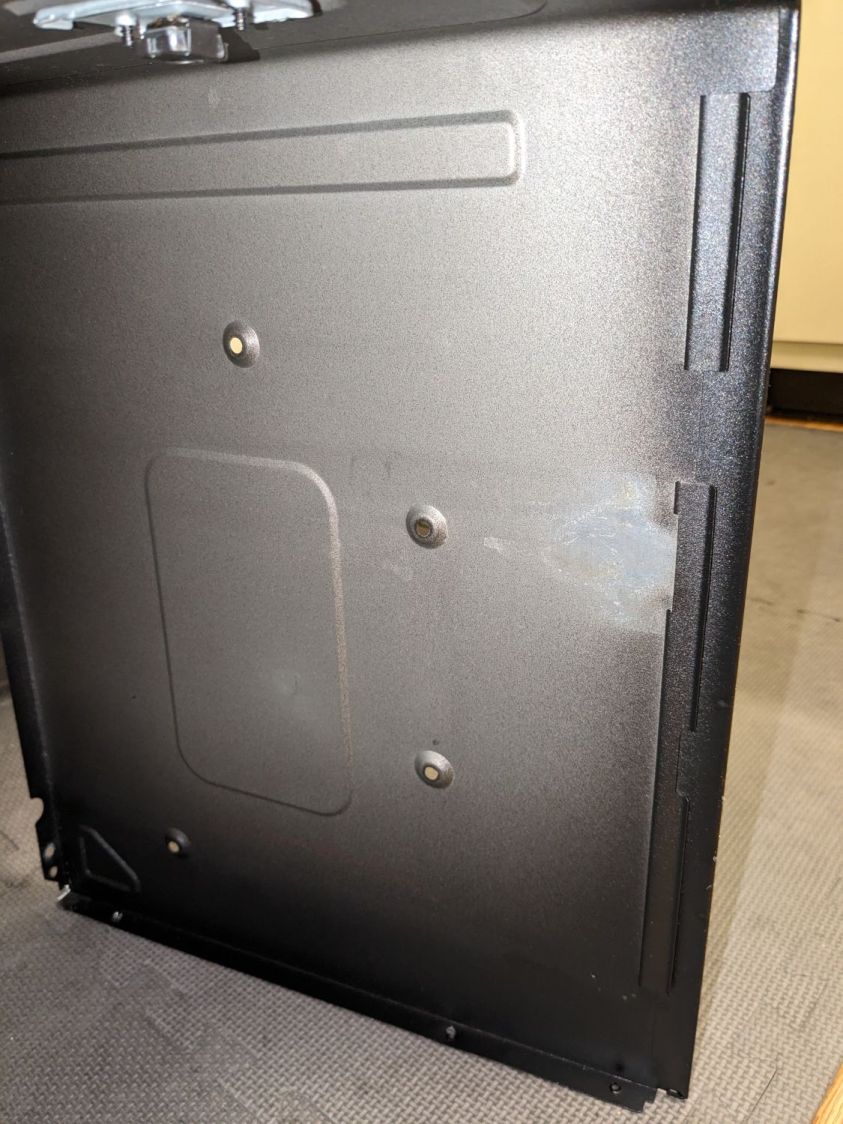
With all the screws out, slide the shell toward the rear by more than you might think to clear the latches along both sides. The latches along the front of the right side look like this:
With the shell off, the sensor compartment on the top of the microwave enclosure is revealed:
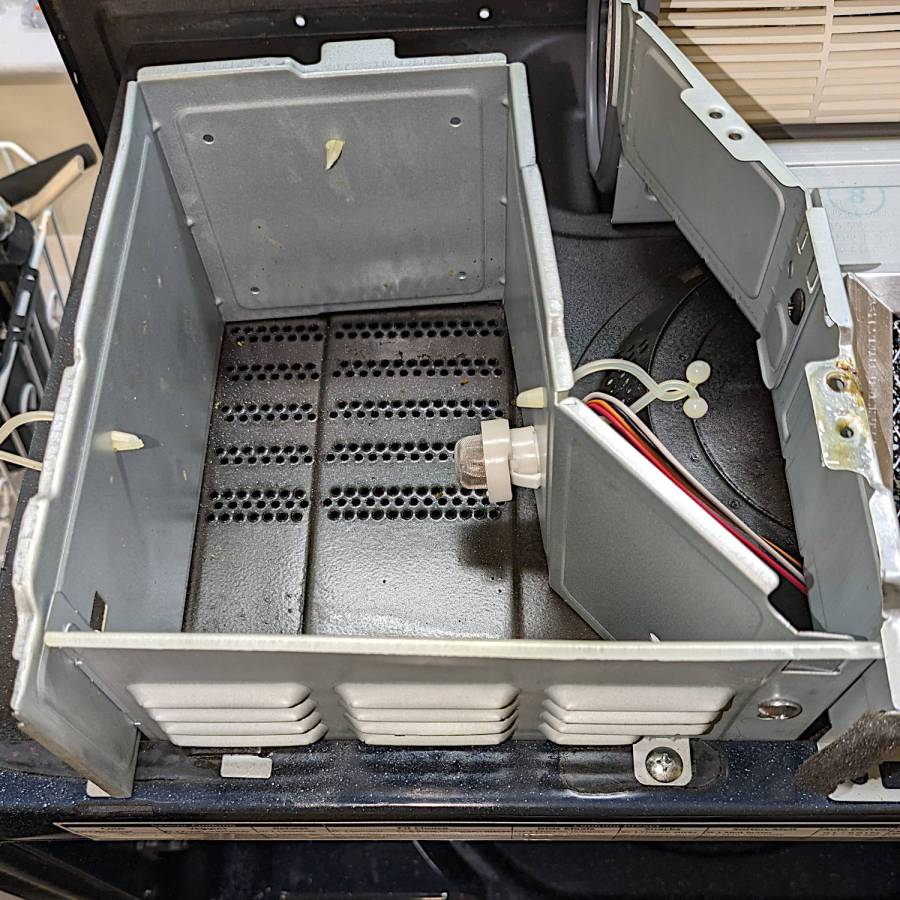
Although you might think removing those two screws would grant access to the sensor compartment and let you replace the sensor (if you have very long fingers), that is not the case: the small tab toward the left side of the louvered front plate prevents you from sliding it and the plate is not hinged along its left side.
The sensor is held into the socket by a clip snapping into the arms that, in turn, hold the socket into the side wall:

A small screwdriver will assist in releasing the latches on the clip arms; squeezing them in the obvious way didn’t get the job done.
The old sensor then unplugs and the new one plugs in the obvious manner; it is not polarized and either orientation works.
For completeness, the top of the electronics bay:
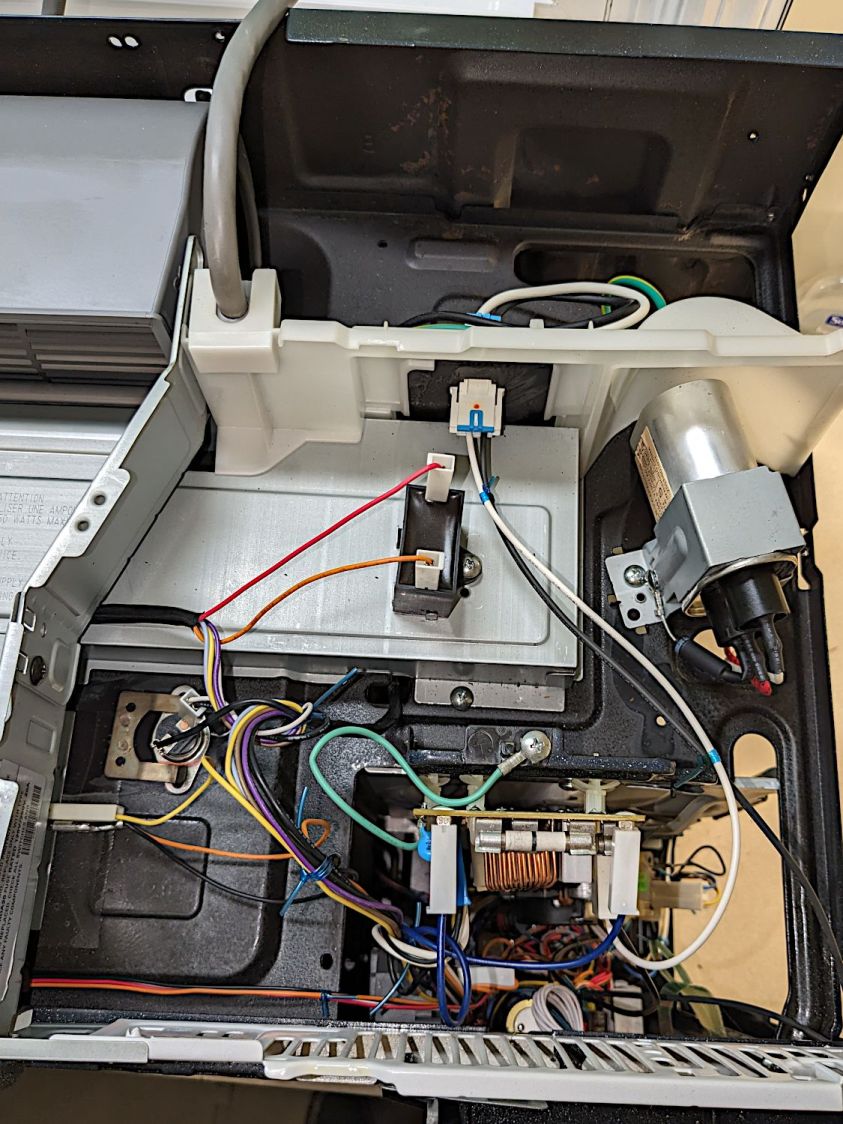
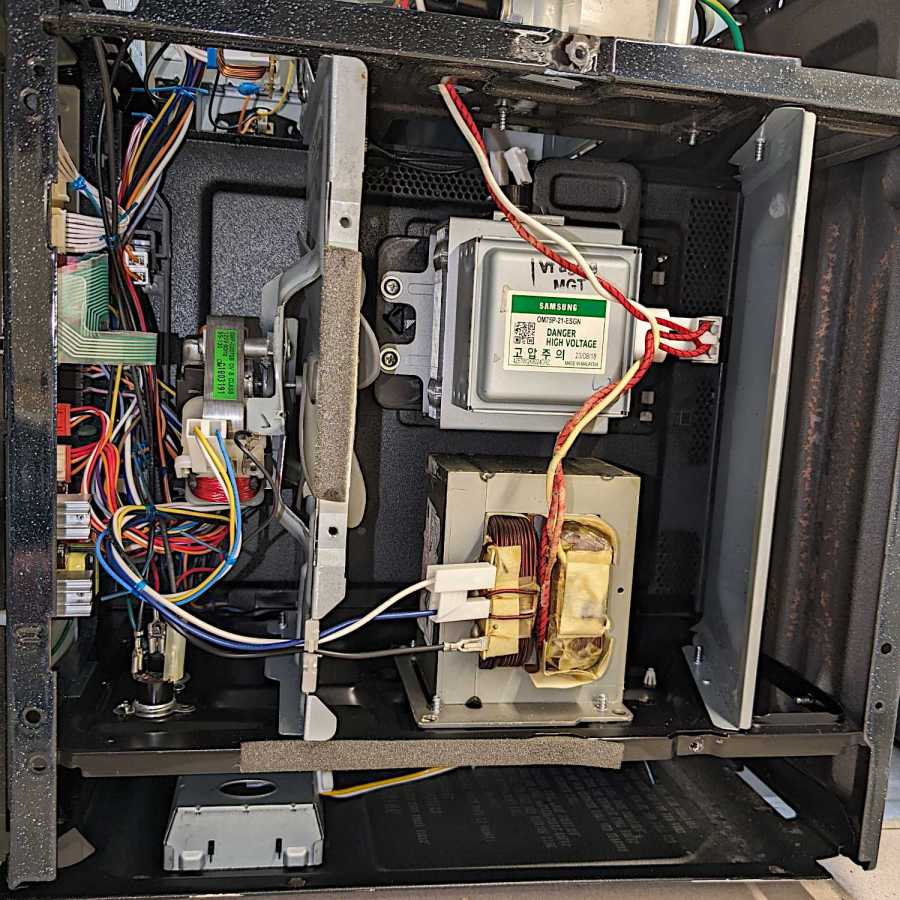
The magnetron and HV transformer live on the right side:
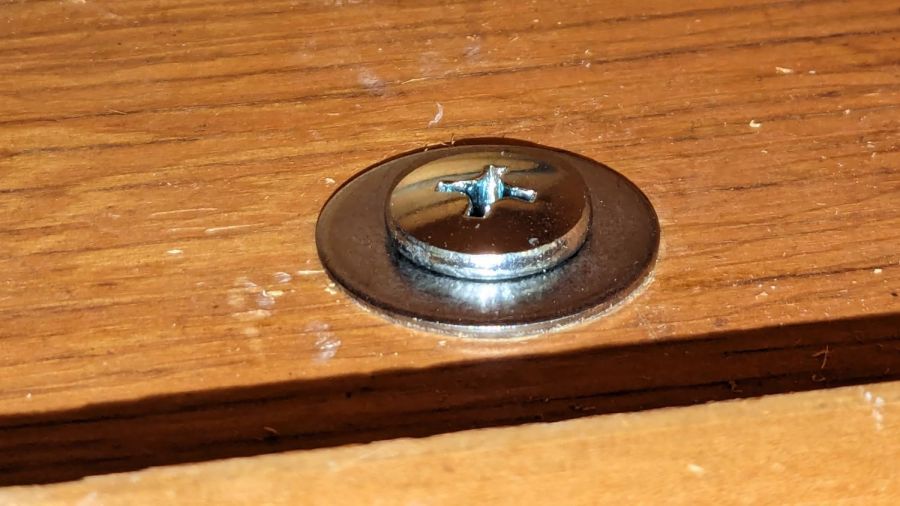
Then you reassemble in reverse order, heave the microwave atop the 16 inch cubical box, hoist it onto the rail along the back, and install the two loooong screws from the top while holding the front upward with one knee. I took the liberty of replacing the janky steel plates pretending to be washers with actual fender washers:
And now it works the way it should.
Of course, the microwave’s “beverage” mode assumes you’re drinking a piddly 8 ounces, rather than sipping from a manly 20 ounce mug:
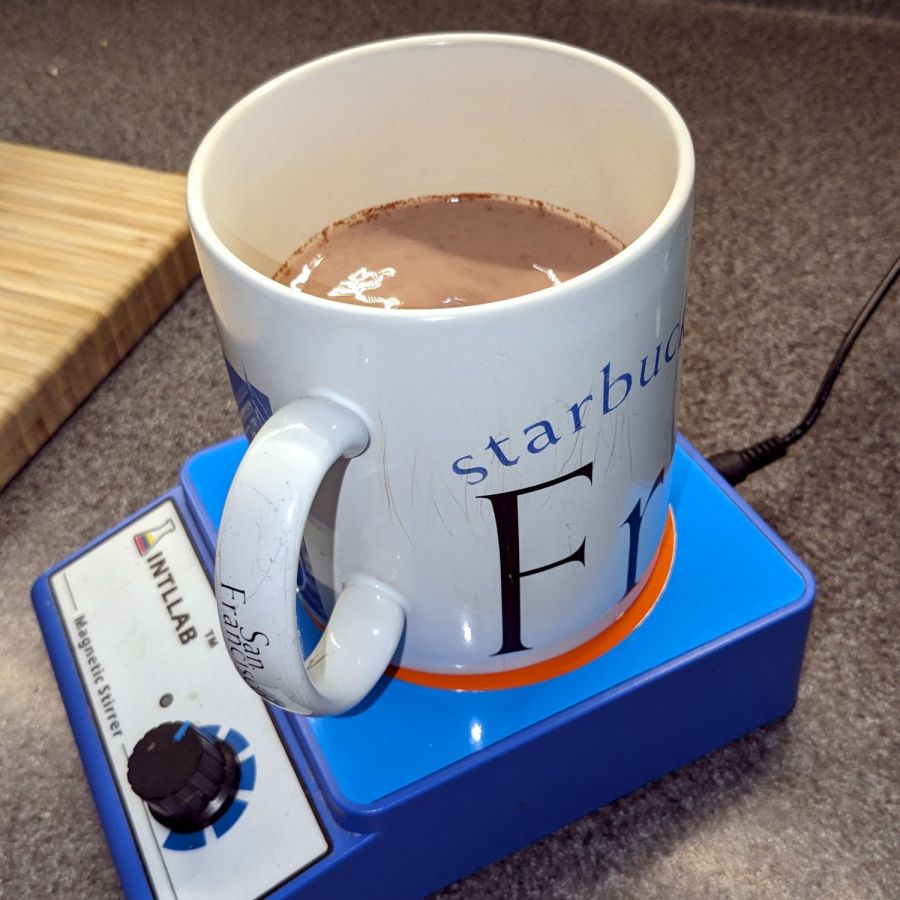
It heats 9 ounces of milk + cocoa just fine, but those 18 ounces of water for tea become just barely tepid.
WordPress has gone full-frontal AI and suggested I use this AI creation as the Featured Image:
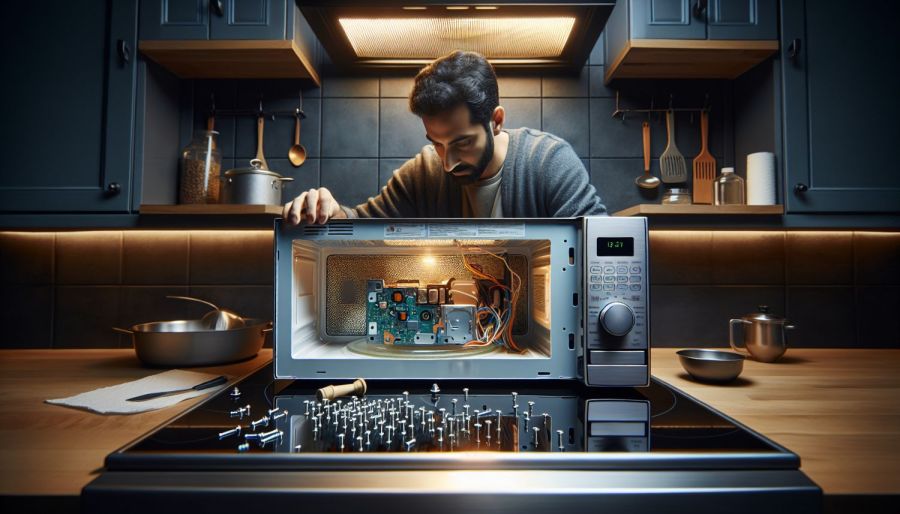
Inquiring minds want to know:
- Black tile in a kitchen makes sense because … ?
- Why does the doorless microwave have a knob?
- Who is that handsome guy?
- So. Many. Screws.
At least his hand has the right number of fingers, even if they do look a bit arthritic.
The WordPress AI generated this evaluation of my writing:
The content provides a detailed guide on replacing the gas/humidity sensor in a Samsung over-the-range microwave. Consider adding subheadings to break down the process for easier reading. Additionally, including a brief introduction and a conclusion summarizing the key points would enhance the post. The technical details and images greatly support the instructions. Great job!
Dopamine rush in full effect!
 The Smell of Molten Projects in the Morning
Comments
8 responses to “Samsung Microwave Gas Sensor Replacement”
Our neighbors bought a Samsung freezer when they moved in a few years ago. Shortly after the 1 year warranty expired, the freezer failed, though I don’t know the failure mode.
They purchased another Samsung to replace it, and it returned the favor by failing shortly after its 1 year warranty expired.
I’m not sure if that reflects more on Samsung or my neighbor, who freely admits ignorance about anything electrical. OTOH, it appears your microwave is yet another example of an appliance made for ease of manufacture than for ease of maintenance. (For the latter, I hold the KitchenAid stand mixer as a shining example.)
I don’t know if appliance repair outfits exist in what passes for the big city here, but I do know it costs $100 in travel charges alone for repair calls. Sigh.
The kitchen has full-frontal Samsung appliances, all of which miss the mark in critical ways. I do not look forward to fixing these things, but I know how awful their successors would be.
Must you ask for “AI”‘s opinion/improvement on your writing… or is this an automagic feeture?
On what surface has the AI guy plopped his microwave? It looks like an induction cook top… not a terrific work surface.
There are now three buttons offering AI “improvements” for the posts: SEO-tuned titles, overall writing style / tone, and a synthetic “featured image” brewed from the text & any pictures. I think I do an OK job of writing, even if my style & voice do not match contemporary standards, so I’m ignoring their suggestions.
The AI images, on the other paw, are breathtakingly weird …
My microwave also came with the house, and has a recurrent failure mode where the high temperature cutout over the cooking box goes high resistance and then the high current burns it. I’m on the third one since I moved in. Fortunately, these cutouts are not hard to find. However getting to them involves a bunch of disassembly, including removing the stirrer motor. The first time, I didn’t realize that the stirrer would then come unmoored and not remate with the motor shaft, leading to worrisome zapping noises. Now I know to remove the stirrer cover and place the stirrer back on its shaft when reassembling.
Ewww!
I never even thought about the mode stirrer! Now that you mention it, I think the yellow/orange/black wires plug into the motor under the air duct between the electronics bay and the sensor cage. Maybe that’s the over-temperature cutout next to the connector?
[…] With the microwave back in operation, I thought I might learn something about the failed gas sensor: […]
[…] replacing the gas / humidity sensor in the Samsung microwave, replacing the pair of 40 W (!) halogen bulbs with G8 LED bulbs didn’t pose much of a […]