Ed Nisley's Blog: Shop notes, electronics, firmware, machinery, 3D printing, laser cuttery, and curiosities. Contents: 100% human thinking, 0% AI slop.
Some handwaving discussion of construction, electrolytic capacitor innards, and The Plague:
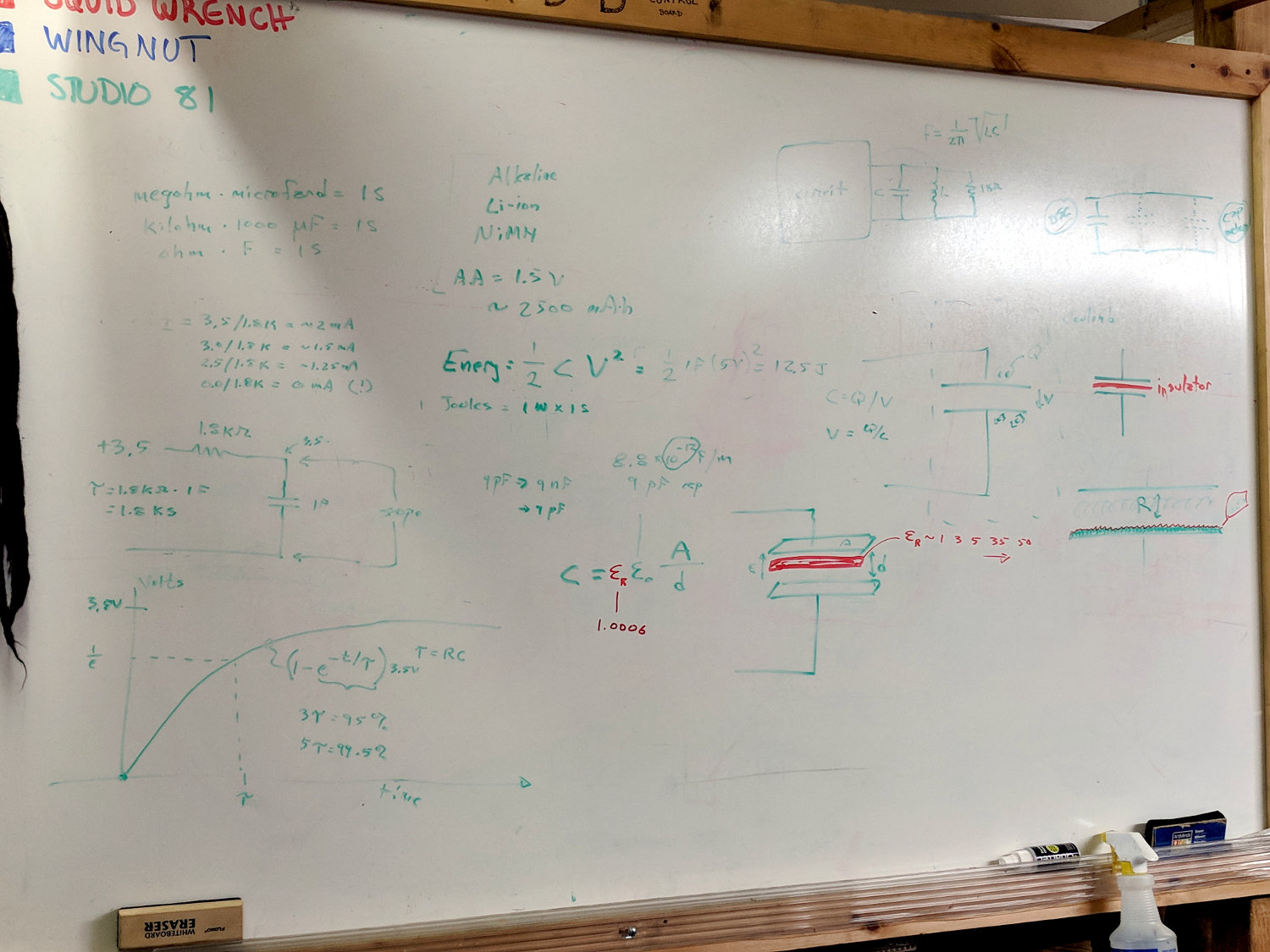
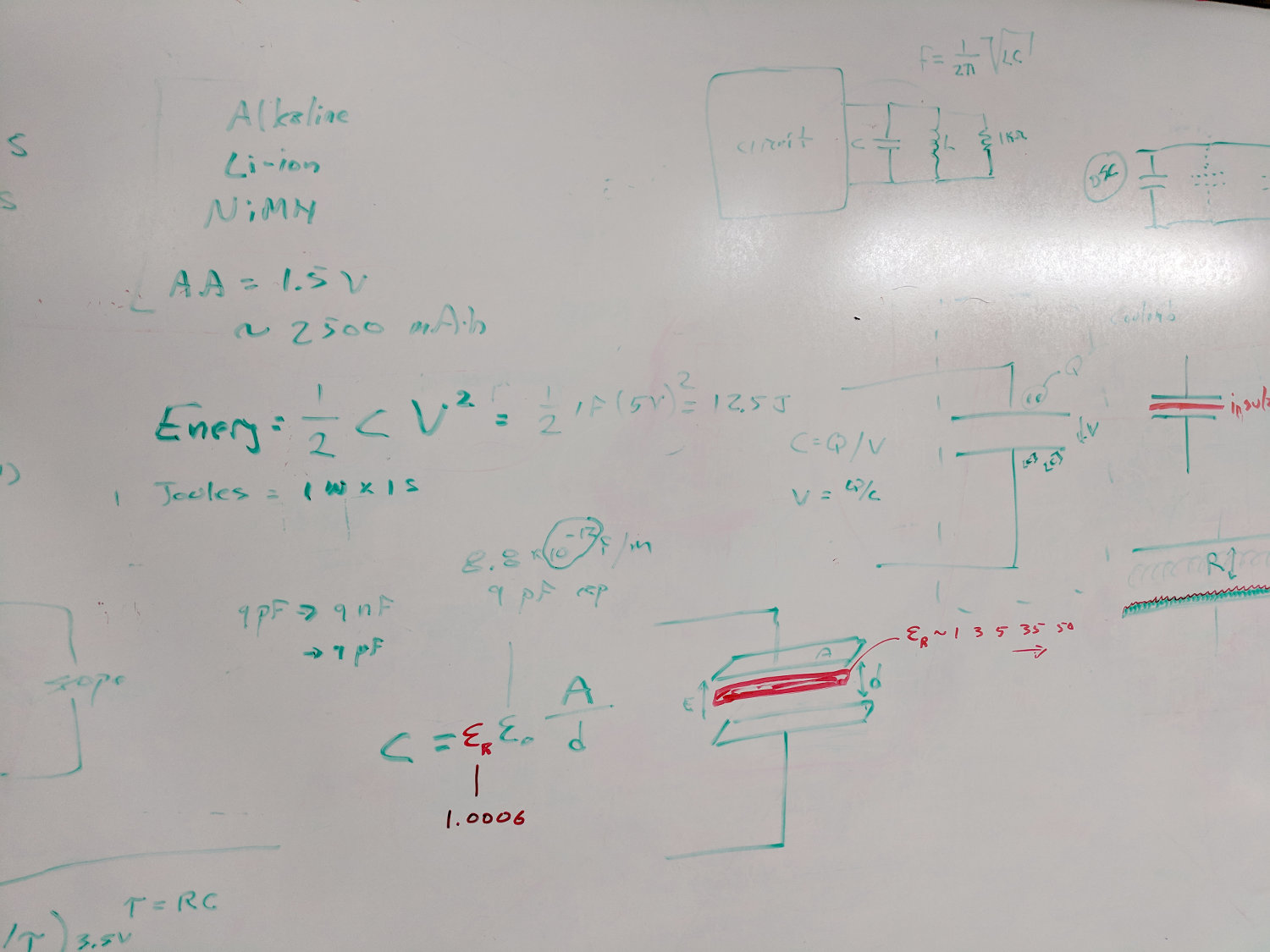
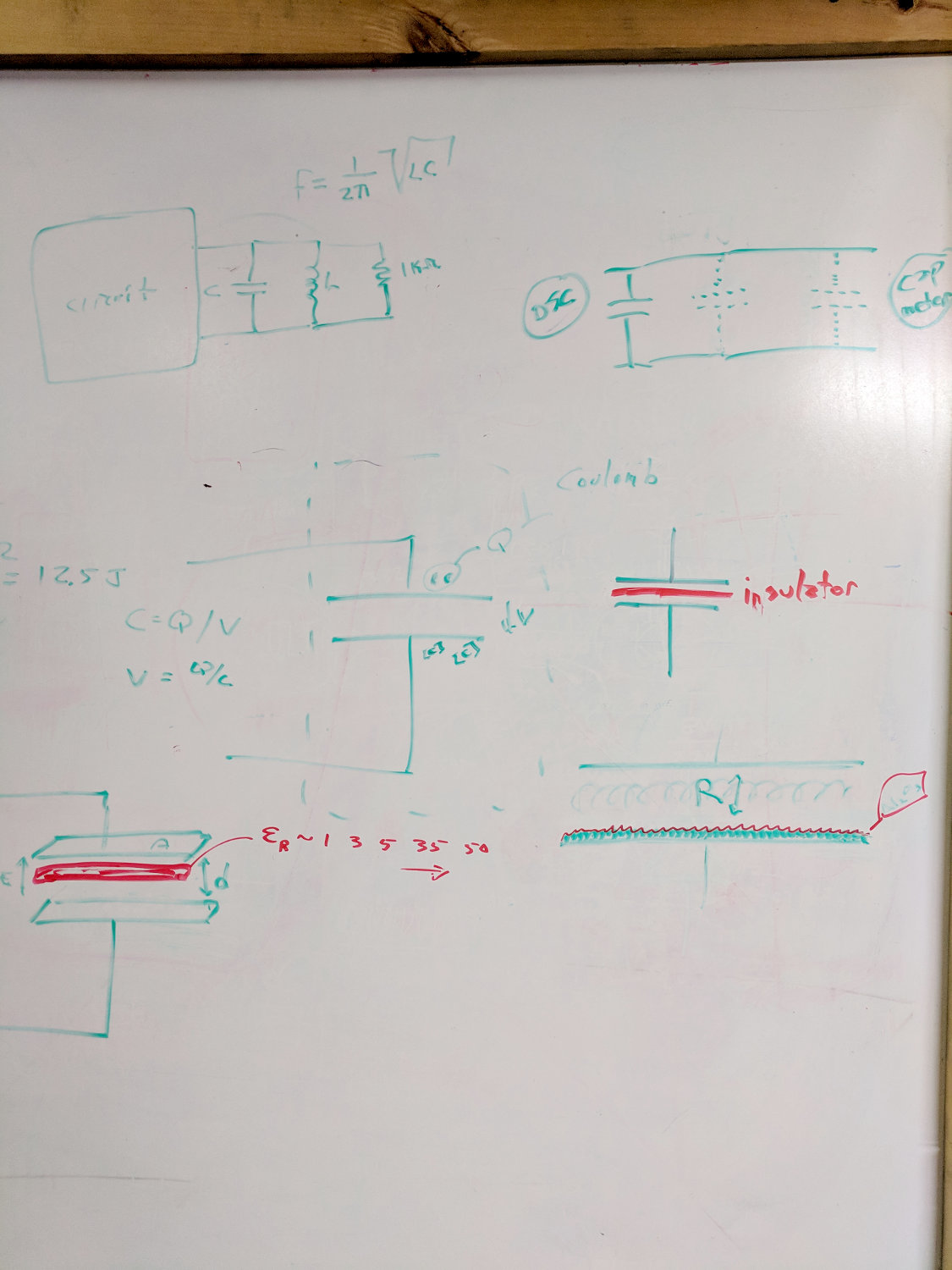
Session 6 – Whiteboard 1 – cap construction
A 1 F cap charged through a 1.8 kΩ resistor during most of the session to show what an 1800 s time constant looked like. Nope, it never quite got to the 3.5 V from the power supply, even when we all decided it was time to shut down!
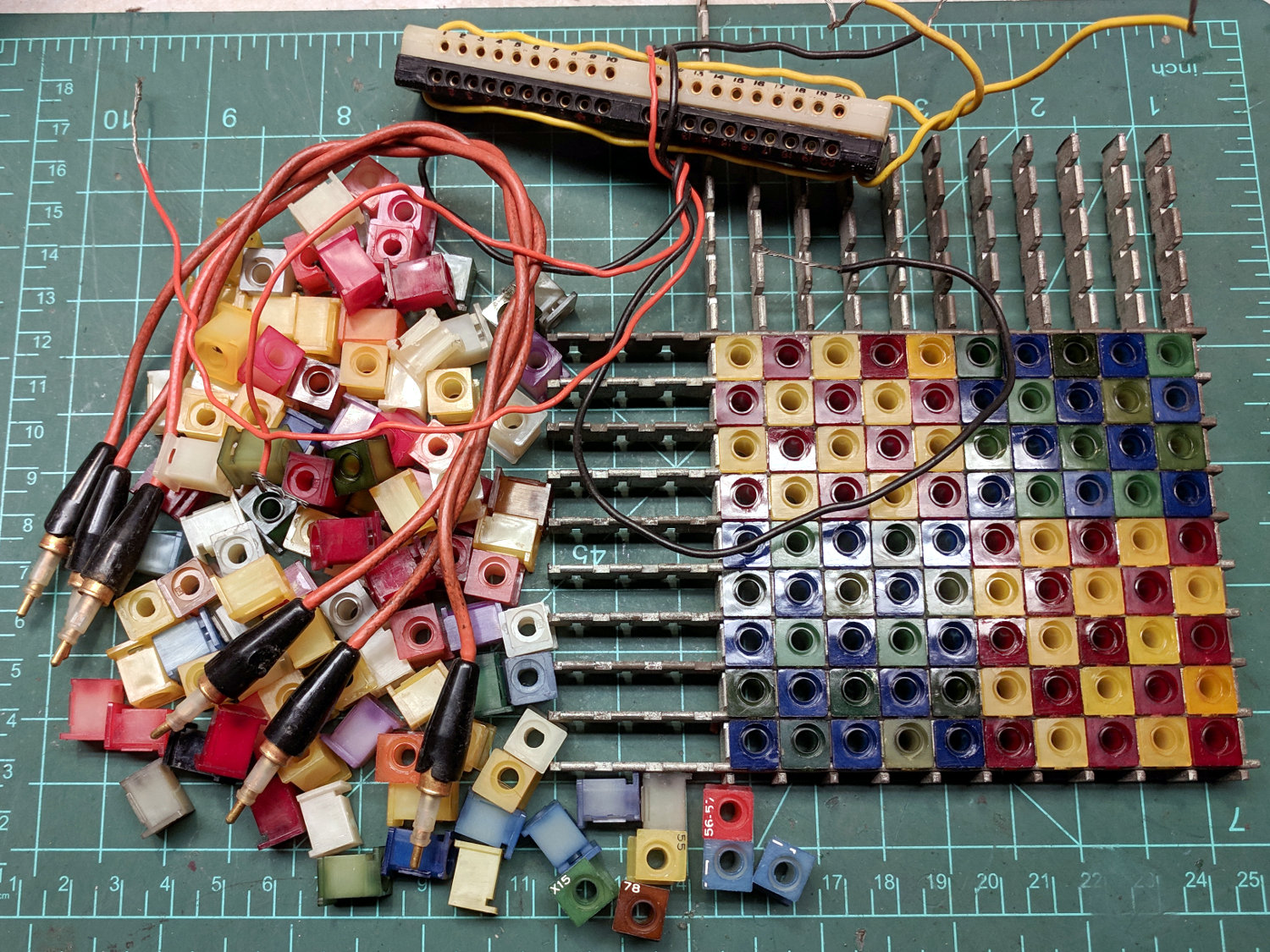
Around 1960, somebody my father knew at the Harrisburg AMP factory gave me a chunk of plugboard bandsawed from a scrapped computer or industrial controller, because he knew I’d enjoy it:
AMP Plug Board
He was right.
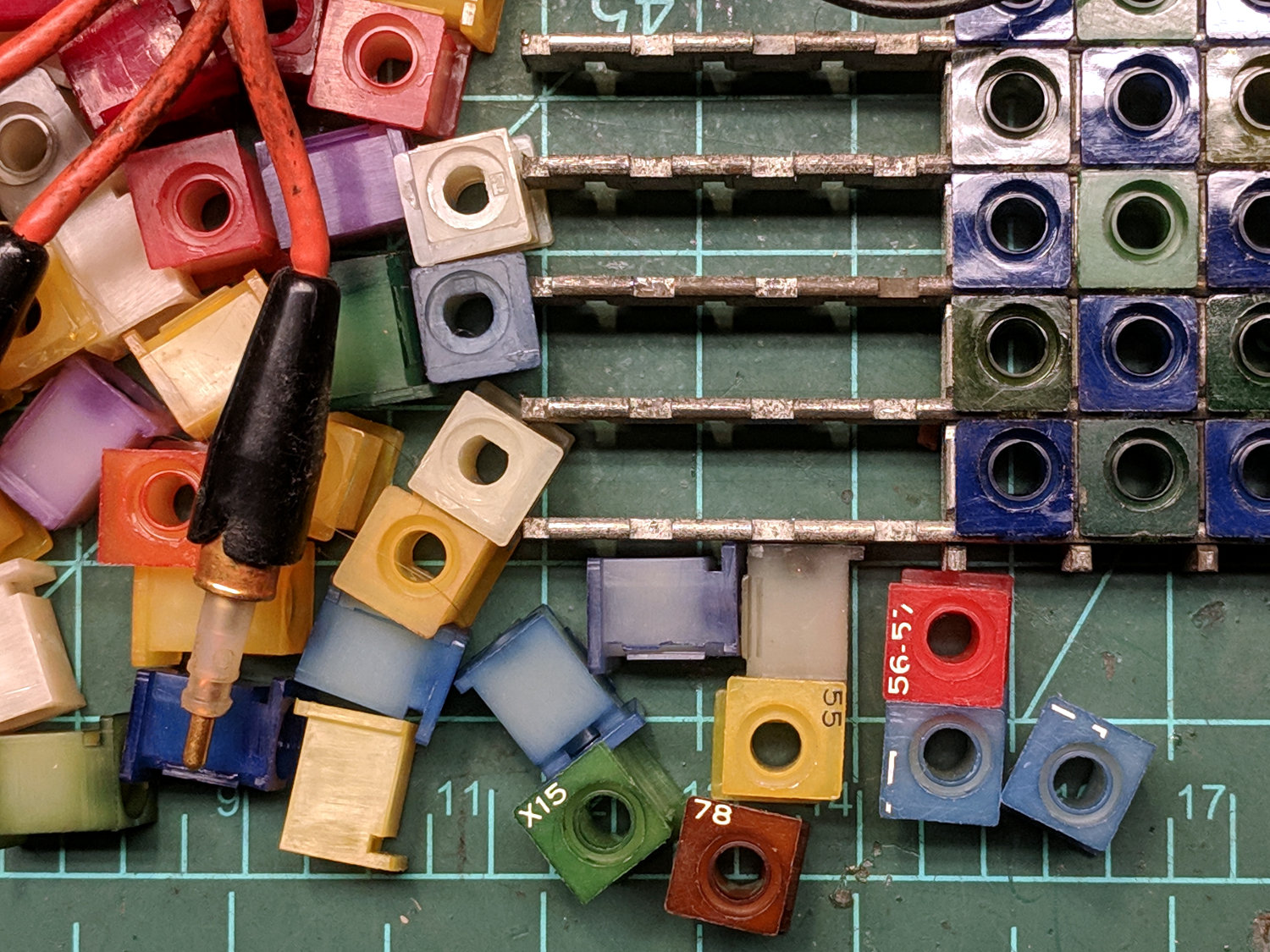
I spent months rearranging those little cubes (some with cryptic legends!) into meaningful (to me) patterns, plugging cables between vital spots, and imagining how the whole thing worked:
AMP Plug Board – detail
Long springs ran through the notches under the top of the blocks to connect the plug shells to circuit ground. The ends of the steel rails (still!) have raw bandsaw cuts, some of the blocks were sliced in two, the tip contact array behind the panel wasn’t included, and none of that mattered in the least.
Only a fraction of the original treasure trove survives. It was absolutely my favorite “toy” ever.
Quite some years ago, our Larval Engineer assembled the pattern you see; the hardware still had some attraction.
I’ve asked Mary to toss it in the hole with whatever’s left of me, when that day arrives …
The meter range switch on Squidwrench’s HP 6201B bench power supply became erratic enough to get me to tear it apart:
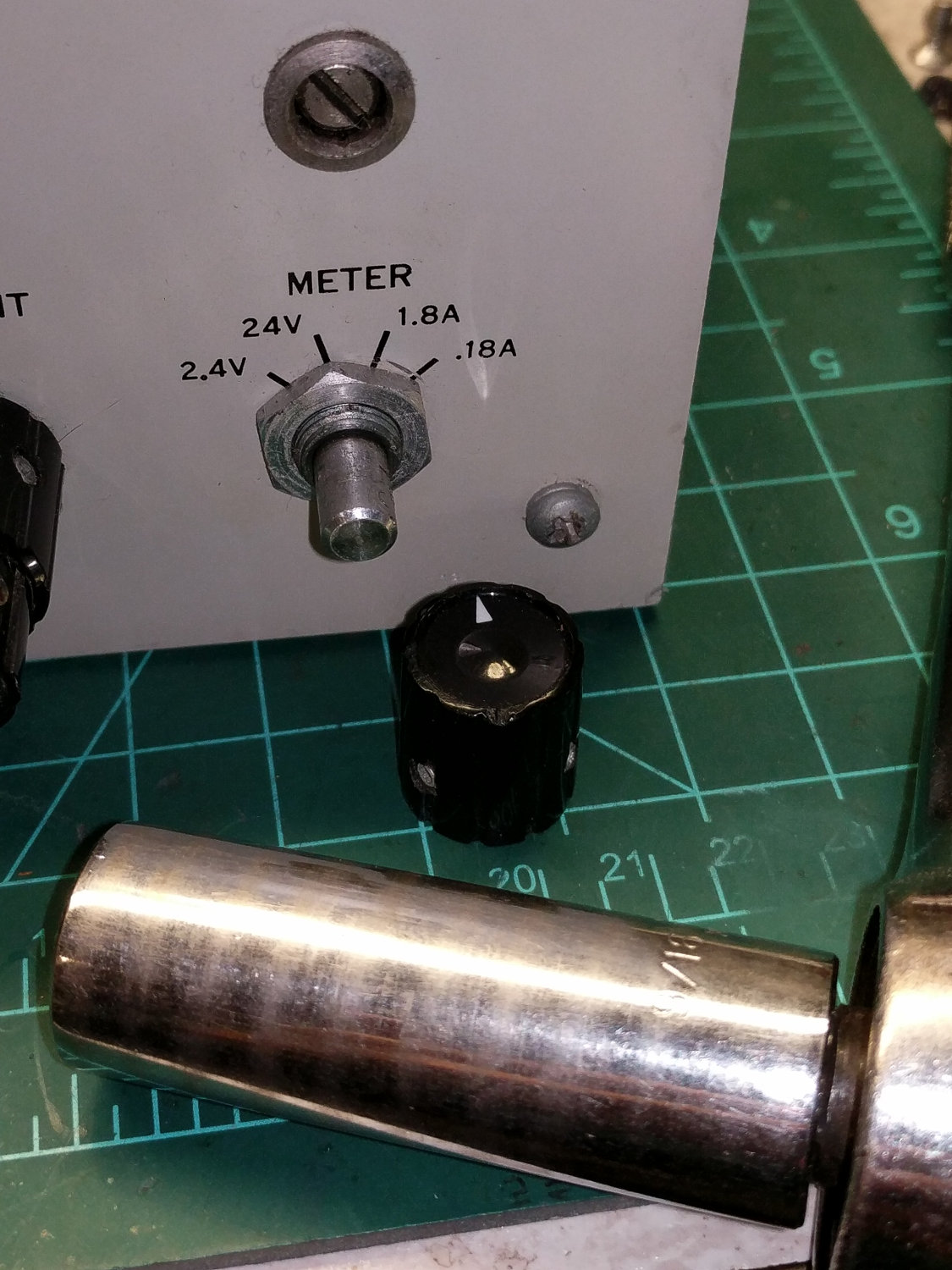
HP 6201B Power Supply – meter switch nut
For future reference, apply a 9/16 inch deep socket after loosening two teeny setscrews in the knob.
The date codes suggest a mid-70s assembly, but the design dates back to the 60s with no plug-in anything:
HP 6201B Power Supply – meter switch in panel
Rather than unsolder eight switch leads, I wrangled it into a visible location:
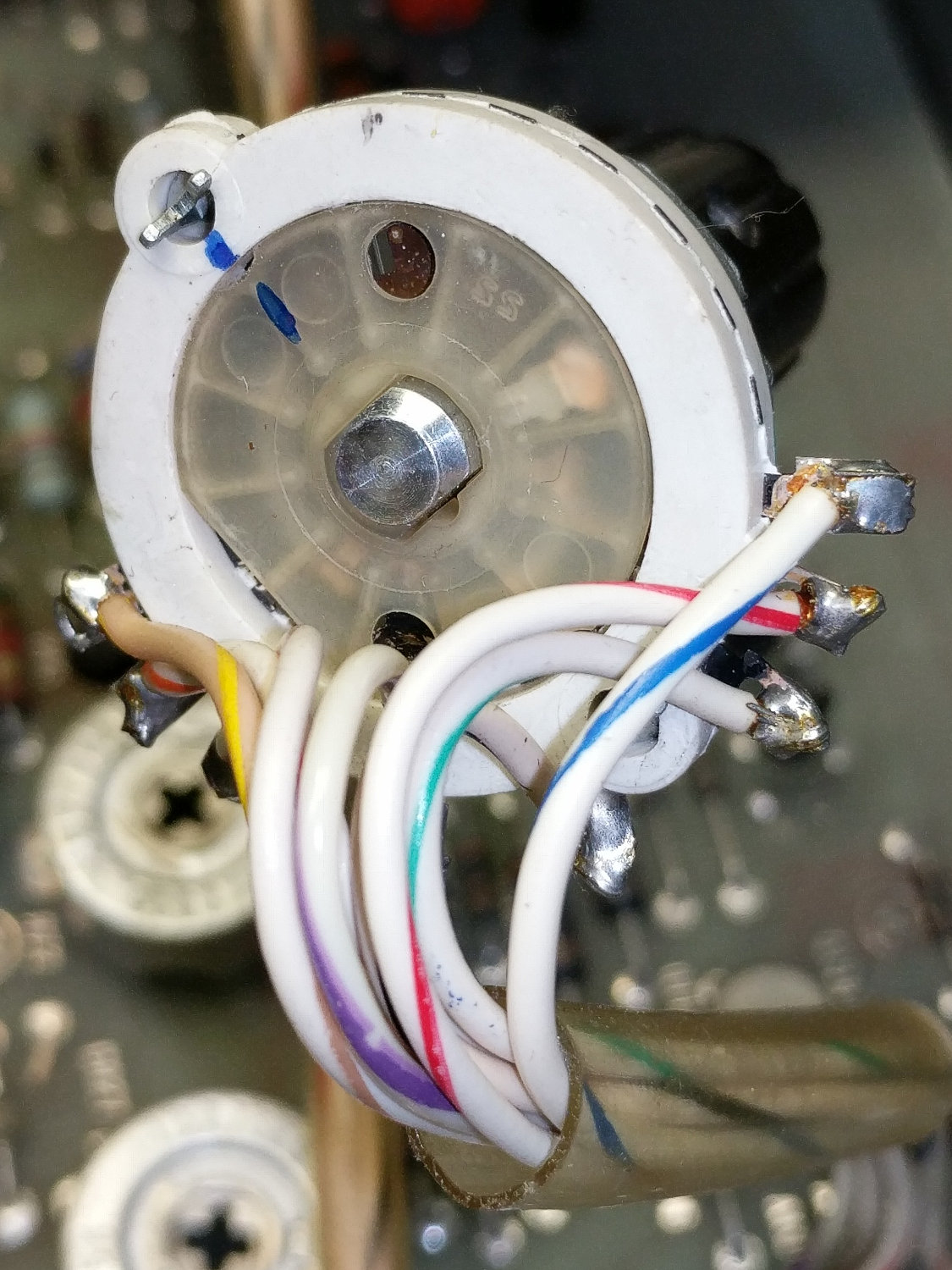
HP 6201B Power Supply – meter switch rear
The knob and shaft sit on a separate metal bracket held in the white plastic ring with a pair of expanded prongs. Squashing the prongs together released the bracket, so I could see both sides of the switch wafer:
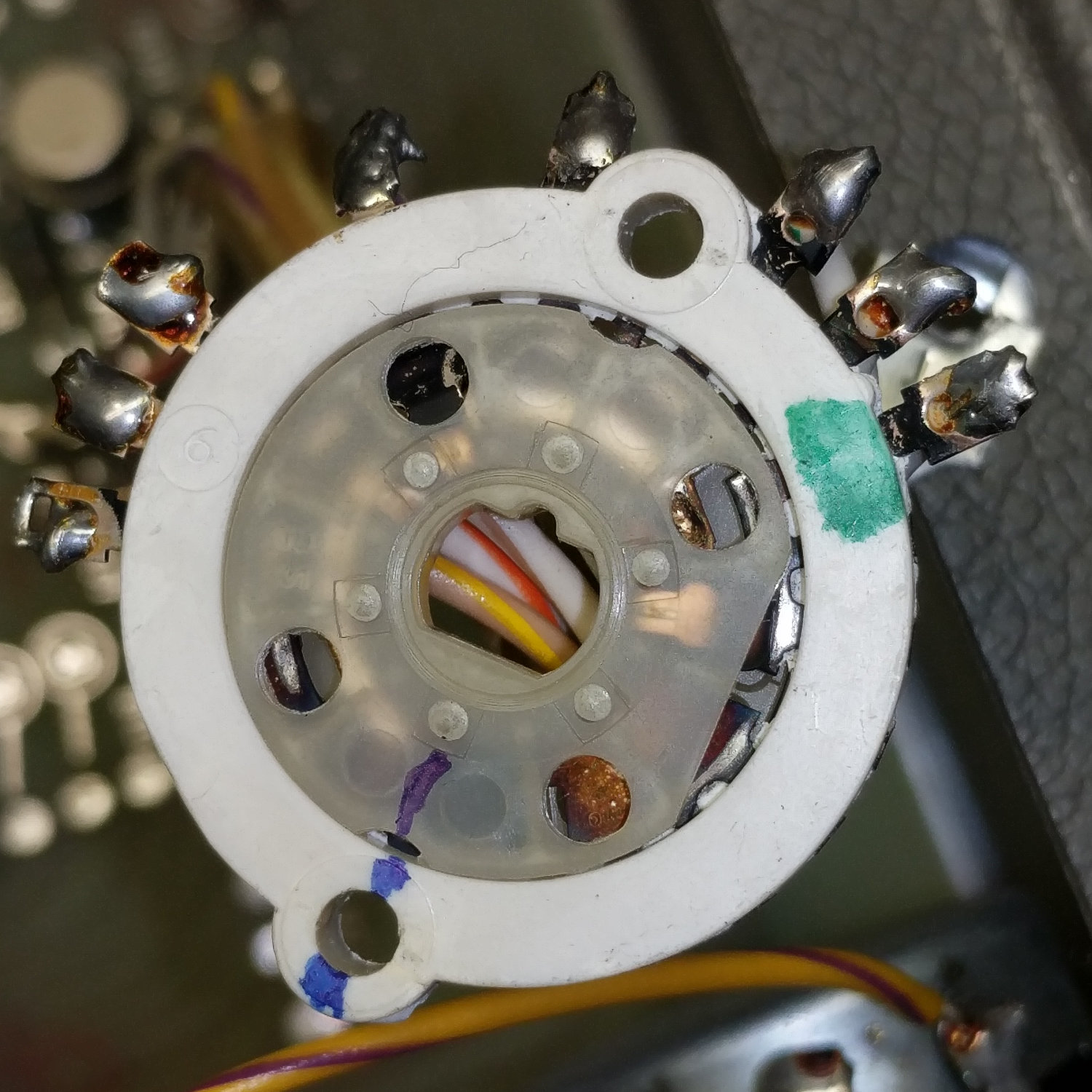
HP 6201B Power Supply – meter switch front
Note the copious markings which would, in the event of an actual finger fumble, give me a better chance of reassembling the spilled guts. Turned out not to be necessary, but it’s good to be prepared!
The actual repair consisted of easing a drop of DeoxIT Red into each side, spinning the central switch wafer / contacts a few dozen times, then reassembling in reverse order. Re-bending the prongs turned out to be the most difficult part, eventually requiring the designated Prydriver, and ended well enough.
A quick test with a 100 Ω power resistor shows the supply was working fine and the switch produced the expected results without glitches or twitches:
HP 6201B Power Supply – test load
You just can’t beat the performance of old lab equipment!
At some point in its history, the left rail holding the wood perch on our industrial-strength “squirrel proof” seed feeder took a hit, most likely from being dropped:
Squirrel on bird feeder
I finally got a Round Tuit and un-bent the poor thing:
Bird feeder – rail un-bending
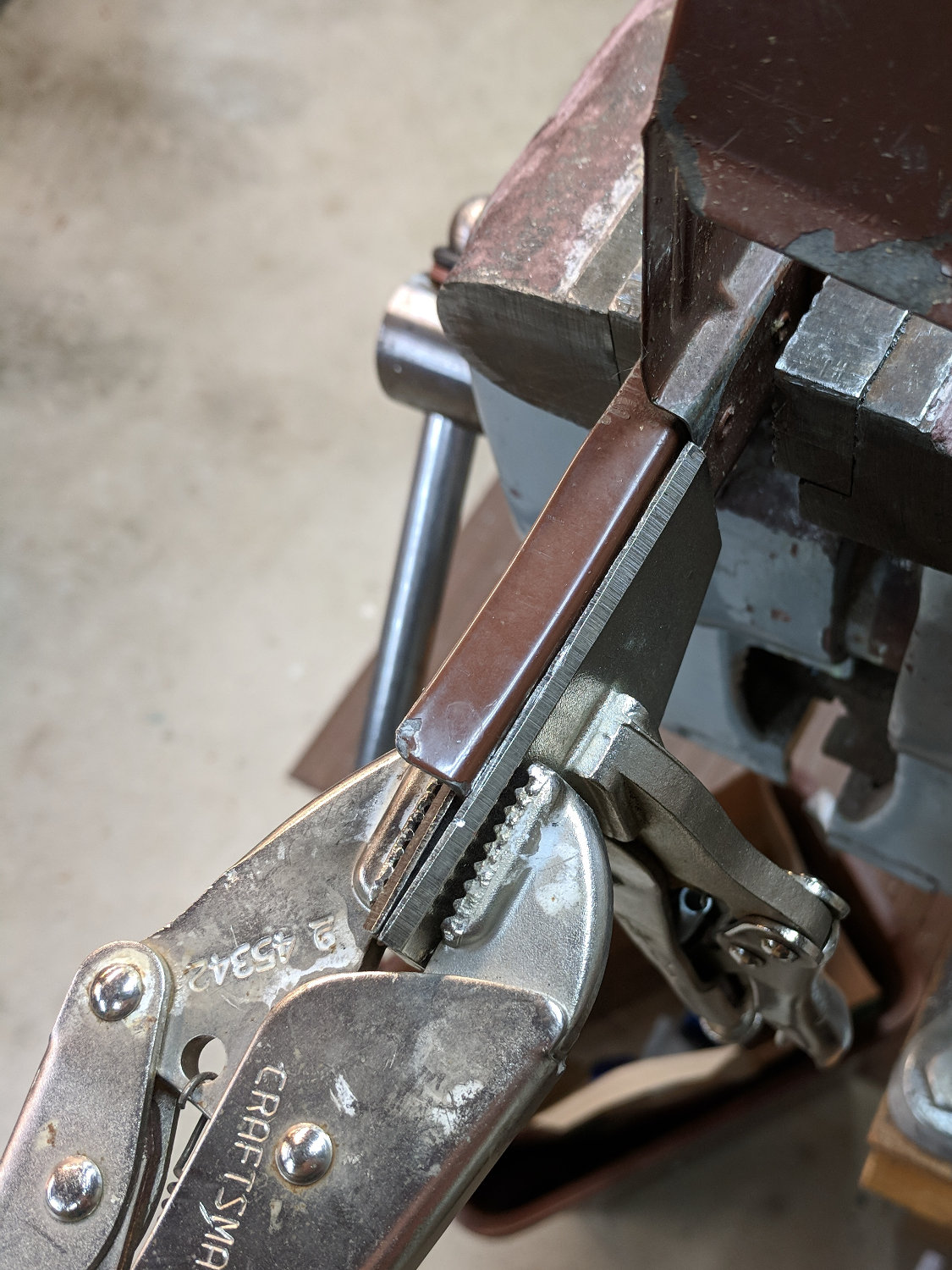
Because the bend happened at the base of the vertical strut holding the shutter, I clamped a Genuine Vise-Grip sheet metal pliers along the straight section. The Craftsman knock-off Vise-Grip then applied torque at the bend, rather than just making things worse, and some two-axis tweakage lined up the rail pretty well.
With the bend taken care of, I clamped the rail in the bench vise with some scrap wood around the strut:
Bird feeder – warped rail
A percussive adjustment jam session flattened the top flange, leaving both sections as flat as they’re gonna get.
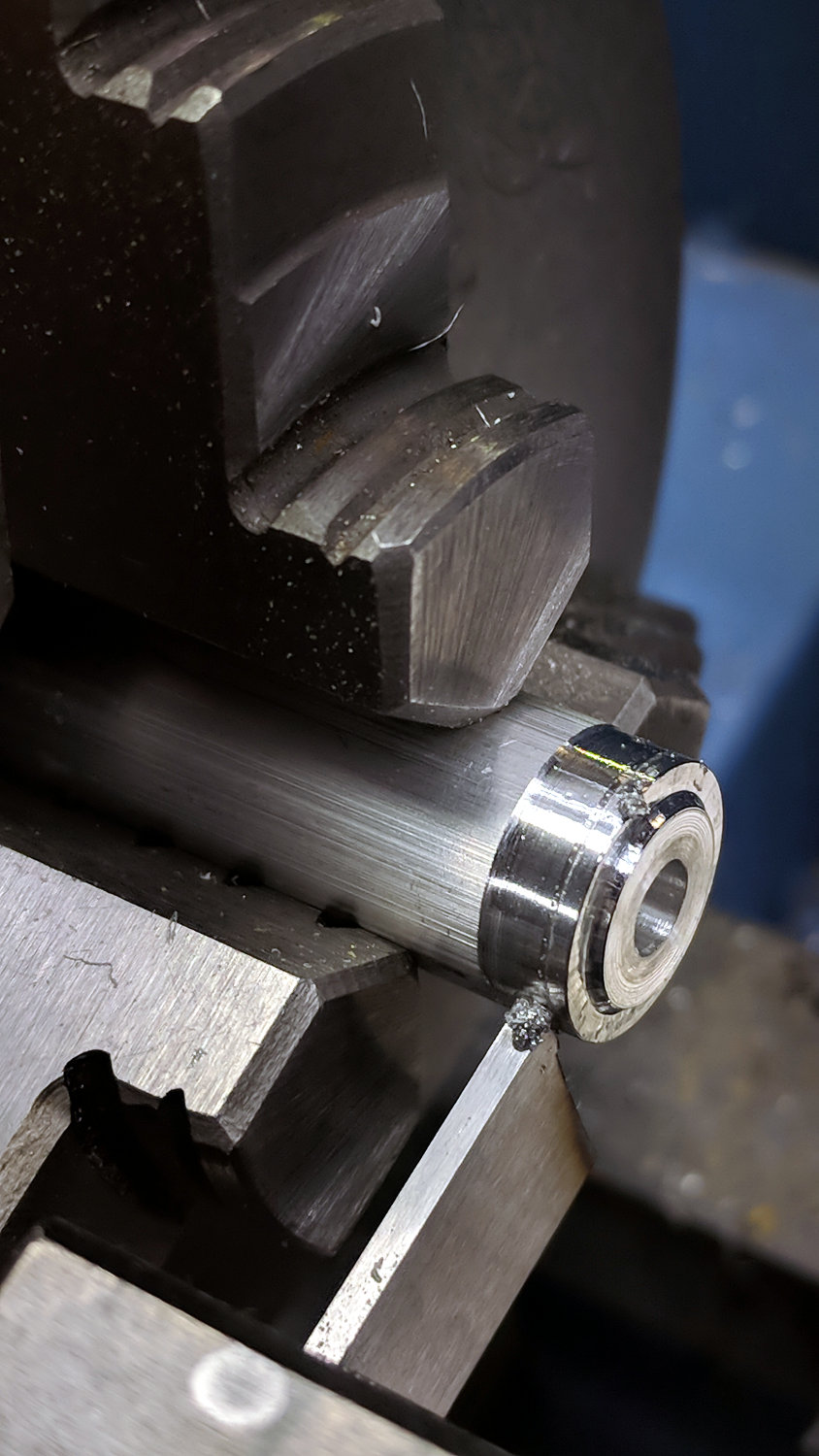
While I was at it, I turned a pair of stepped aluminum washers for the new wood rod:
Bird feeder – parting off washer
Which looked about like you’d expect, including a little chatter from the cut off tool:
Bird feeder – perch hardware
Yeah, I drilled the wood rod on the lathe, too; I loves me some simple lathe action.
Reassemble in reverse order and it’s all good:
Bird feeder – perch installed
We’re supposed to bleach the feeder every week to kill off the bacteria causing House Finch Eye Disease and, while I can’t promise a weekly schedule, we’ll (try to) reduce the amount of crud on the feeder this year.
If you’ve got a feeder, sign up for Project Feederwatch and do some citizen science!
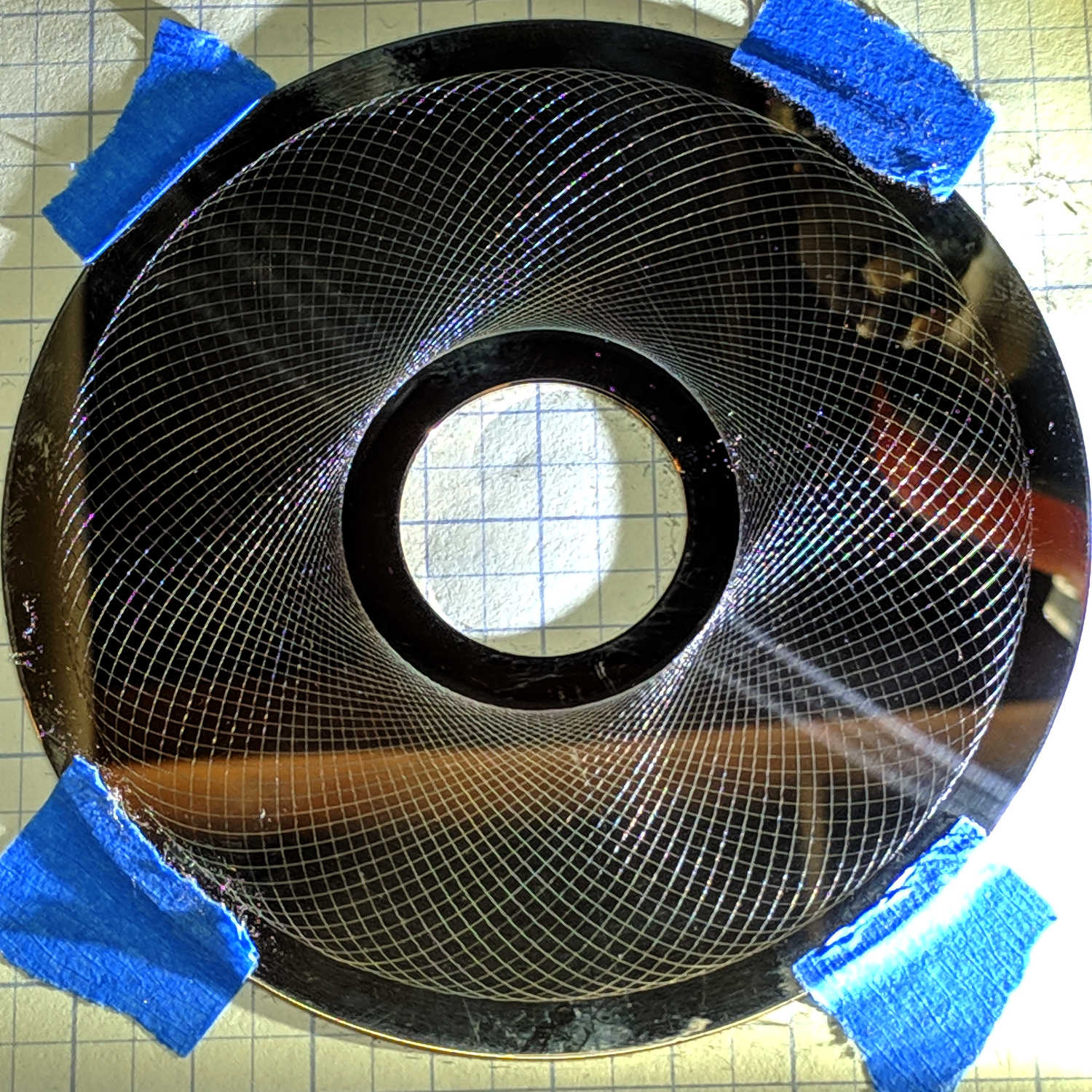
That’s with a 0.1 mm cut depth, sidelit with an LED flashlight.
Feeding those nine digits into the Guilloché pattern generator script should get you the same pattern; set the paper size to 109 mm and use Pen=0 to suppress the legend.
The same pattern at 0.3 mm cut depth looks about the same:
MPCNC – Guilloche 835242896 – HD plattter – 0.3mm
It’s slightly more prominent in real life, but not by enough to make a big difference. I should try a graduated series of tests, of course, which will require harvesting a few more platters from dead drives.
Either side will look great under a 21HB5A tube, although the disks are fingerprint and dust magnets beyond compare.
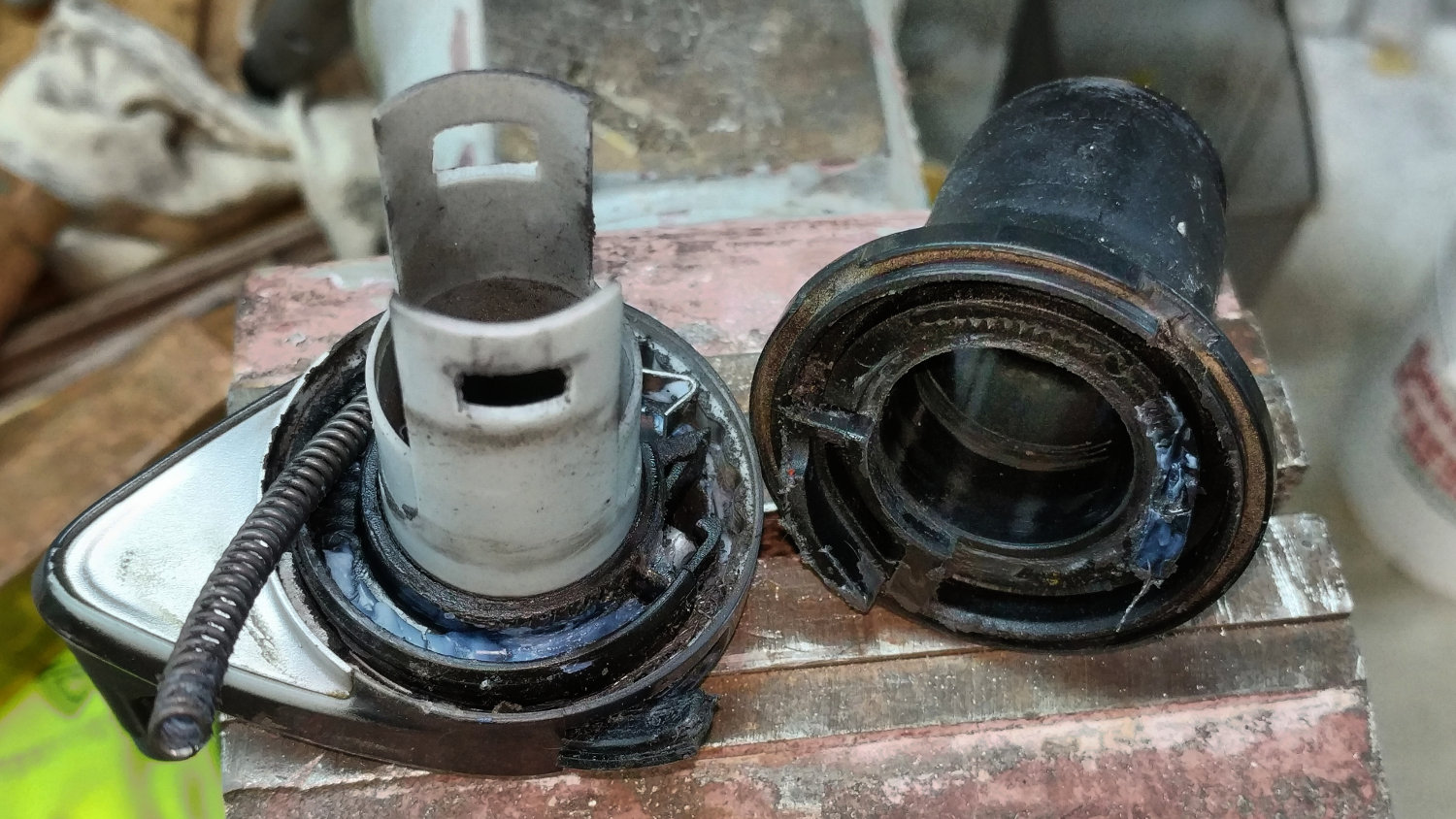
The identical rear shifter on Mary’s bike also seems to be wearing out, as it glides between two of her favorite click stops a bit too easily. You can see the spring peeking out to the right, beyond the white tube, and the notches forming the clicks.
AFAICT, the raised section between the notches is wearing down; there’s no repair for that sort of thing. I took this one apart to see what’s inside: now we know!
We’ve agreed to not replace the shifter until the situation gets worse. An X.0 shifter should arrive shortly; it appears identical except for deeper scallops around the grip.
My old Gen 1 Kindle Fire hasn’t seen much action lately, so I figured maybe it could end its days by becoming a slide show / picture frame. While fiddling around, I tried to fire up the Amazon Shopping app:
Amazon App Unsupported on Amazon Gen 1 Kindle
Clicking the big orange button fired up Amazon’s Silk browser, which promptly crashed.








 The Smell of Molten Projects in the Morning