Ed Nisley's Blog: Shop notes, electronics, firmware, machinery, 3D printing, laser cuttery, and curiosities. Contents: 100% human thinking, 0% AI slop.
Of late, the OLED displays on two RPi 3 streaming players (the others are RPi 2) have occasionally gone blank, while the players continue to work fine. I checked the logs, swapped MicroSD cards, rebuilt the images, and generally screwed around, all to no avail. The SH1106 controller has a command containing a single bit to blank the display and, perhaps, an SPI data transfer error could shut it off.
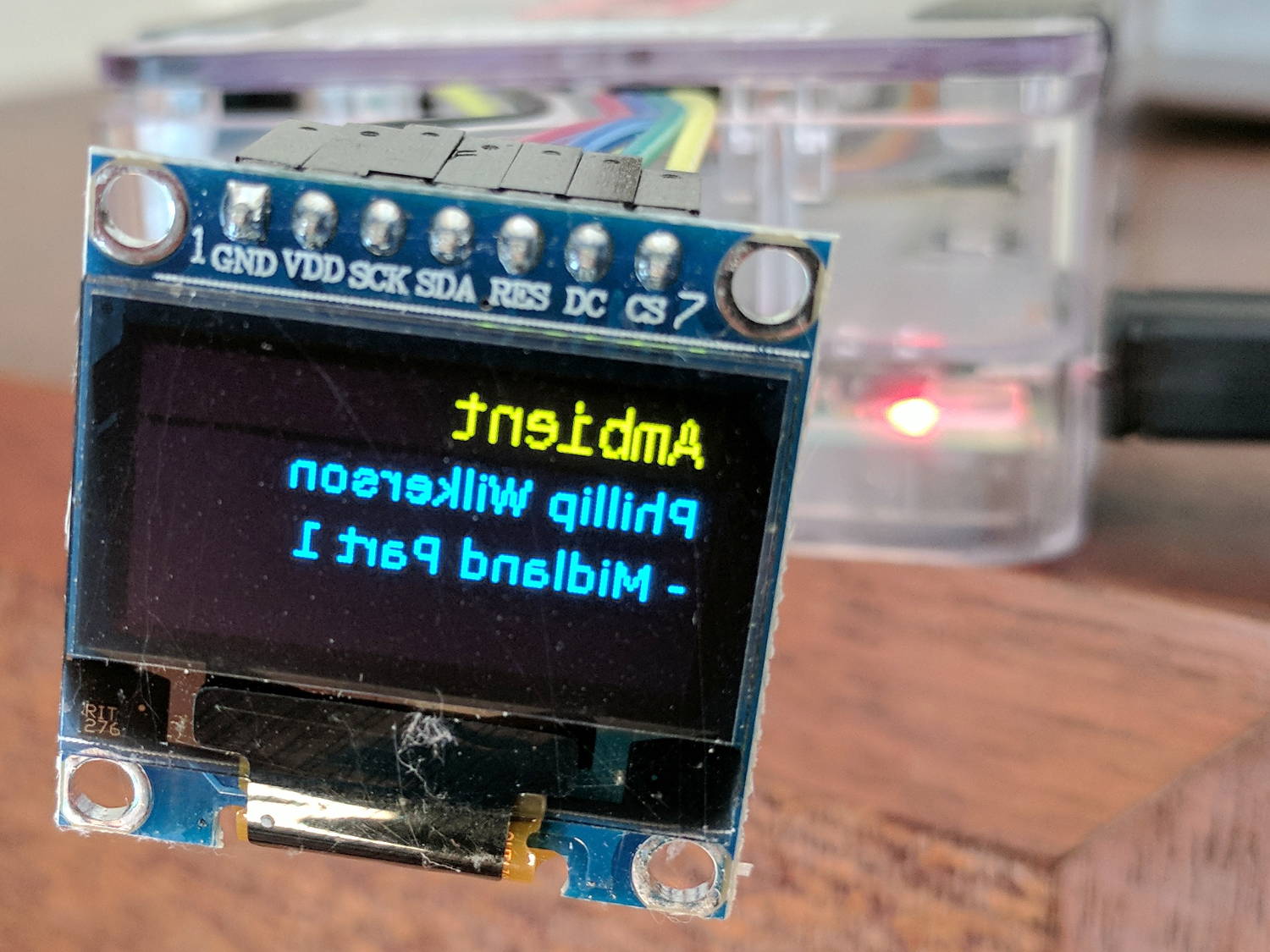
This is much harder to explain:
Mirror-image OLED display
There’s a hardware command to flip the display top-to-bottom, not left-to-right. The Luma OLED driver can rotate the display in 90° increments, but AFAICT not reflect it.
Yes, they’re networked, but, no, they’re not directly exposed to the Intertubes.
Changing streams had no effect. Shutting down and rebooting restored normal operation.
There’s been exactly one such failure so far, so I lack evidence.
I didn’t include a pair of capacitors to simulate the antenna’s stray capacitance, as the resonance is so broad and my signal so strong that pretty nearly anything will work.
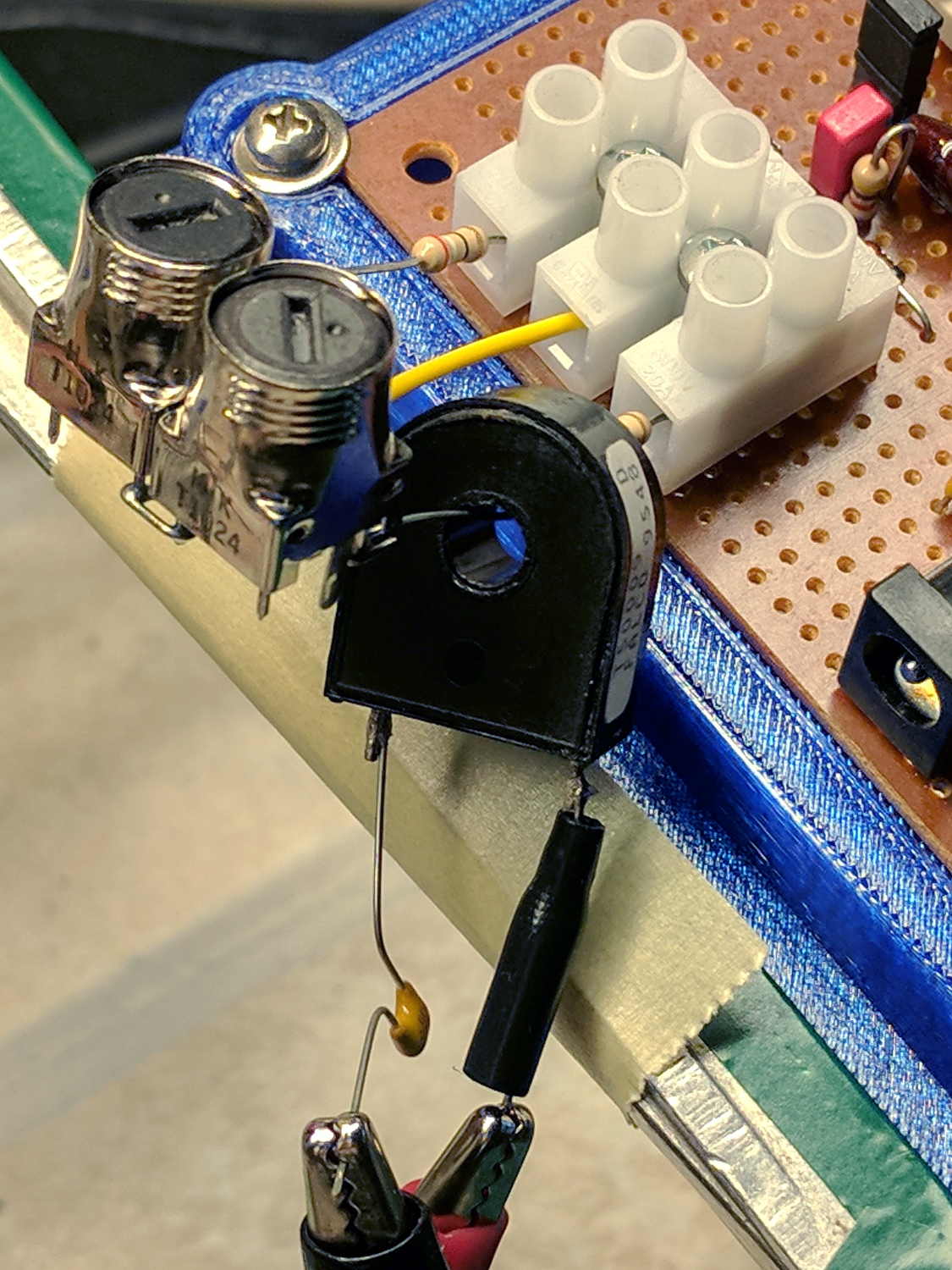
The current transformer injecting a differential signal into the “antenna” came without provenance; it measures 3 Ω DC resistance and 140 mH inductance, so it most likely has a bazillion turns. A 50 pF cap would resonate it at 60 kHz, where both reactances would be 53 kΩ, which also doesn’t matter.
The alligator clips come from the LF Crystal Tester‘s buffer amp, with the Arduino Nano loaded with sine generator firmware. A 100 nF cap blocks the buffer’s DC bias, a 3.3 kΩ resistor (inside the heatstink tubing) knocks the signal down a bit, and it works pretty well:
DDS ant drive – Preamp out
The upper trace is the DDS buffer output at the clip leads and the lower trace is the preamp output.
The output of the LT1920 instrumentation amplifier (not shown) is 4.7 mVrms with a 20 dB gain, so the differential input runs a bit under 500 μV at the antenna terminals. That’s hotter than you’d expect from real WWVB RF, at least in the off season.
Looking in the other direction, the net gain through LF353 bandpass filter and resonator works out to 22 dB, so the resonator isn’t all that lossy right in the middle of its passband. Yes, I’m cheating: I tweaked the series cap for maximum output at 60.000 kHz input.
Good enough for a first pass, though, and makes for easy measurement.
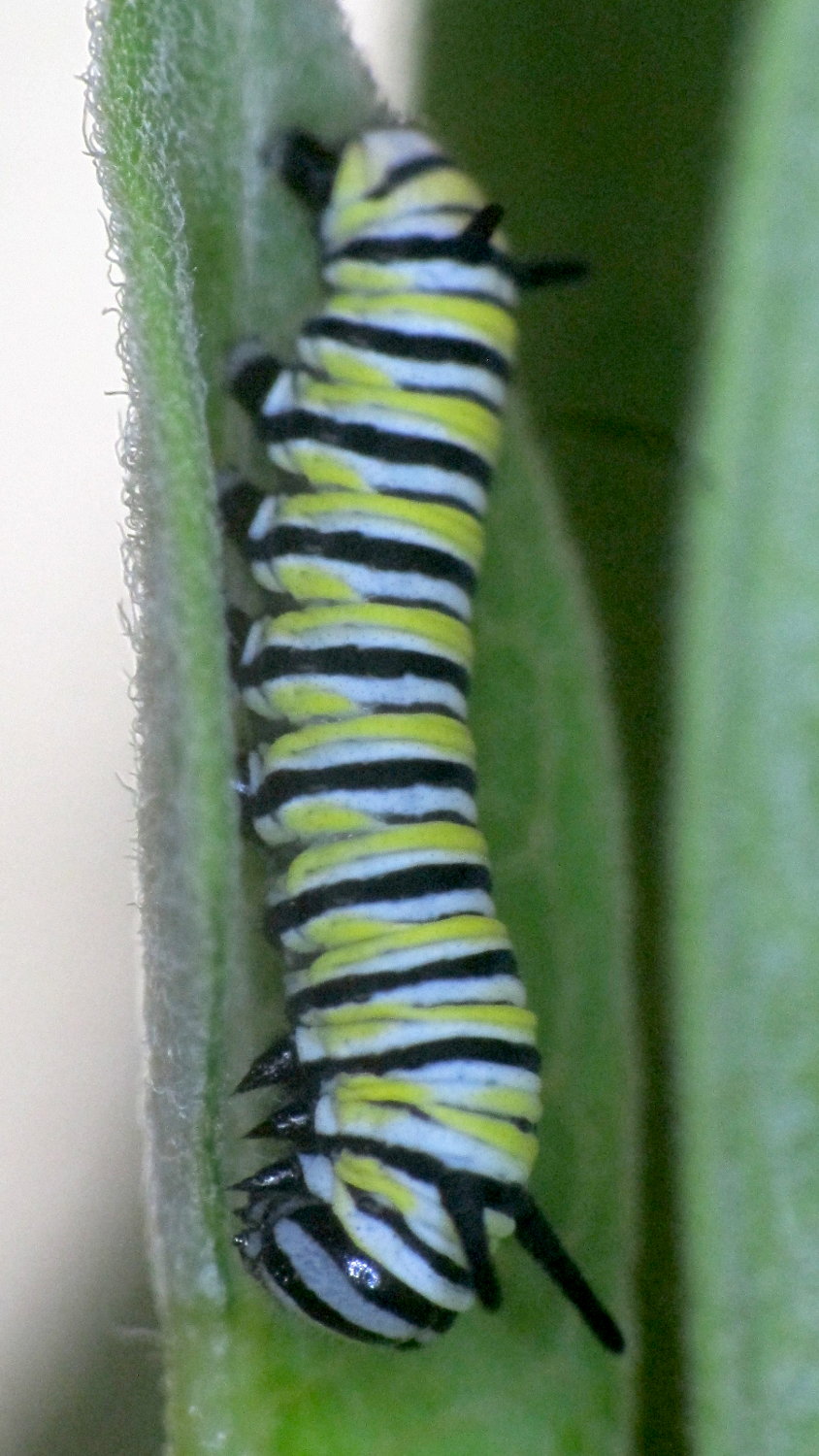
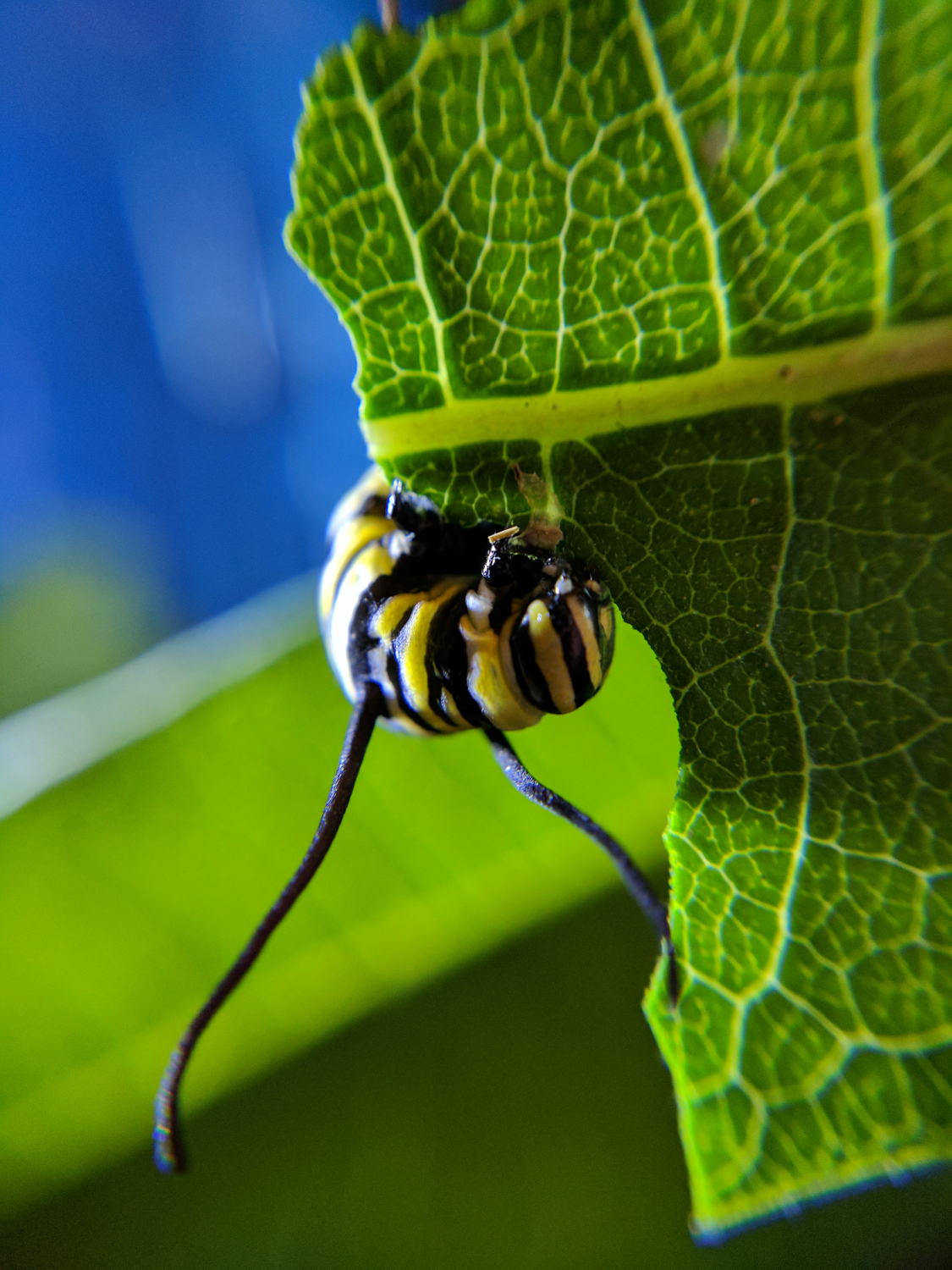
We kept fresh milkweed branches in a vase and the caterpillar ate almost continuously:
Monarch caterpillar – 2017-08-13
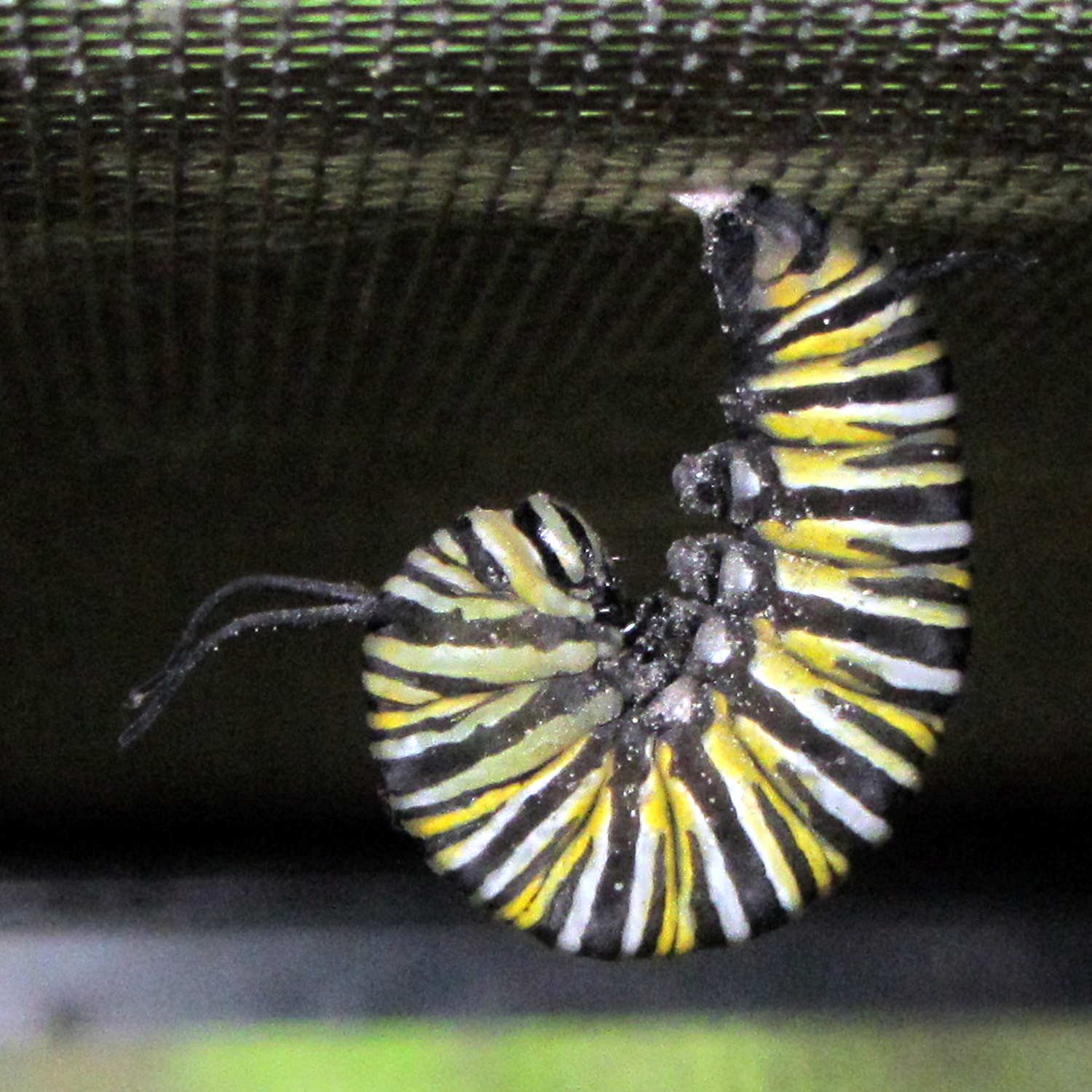
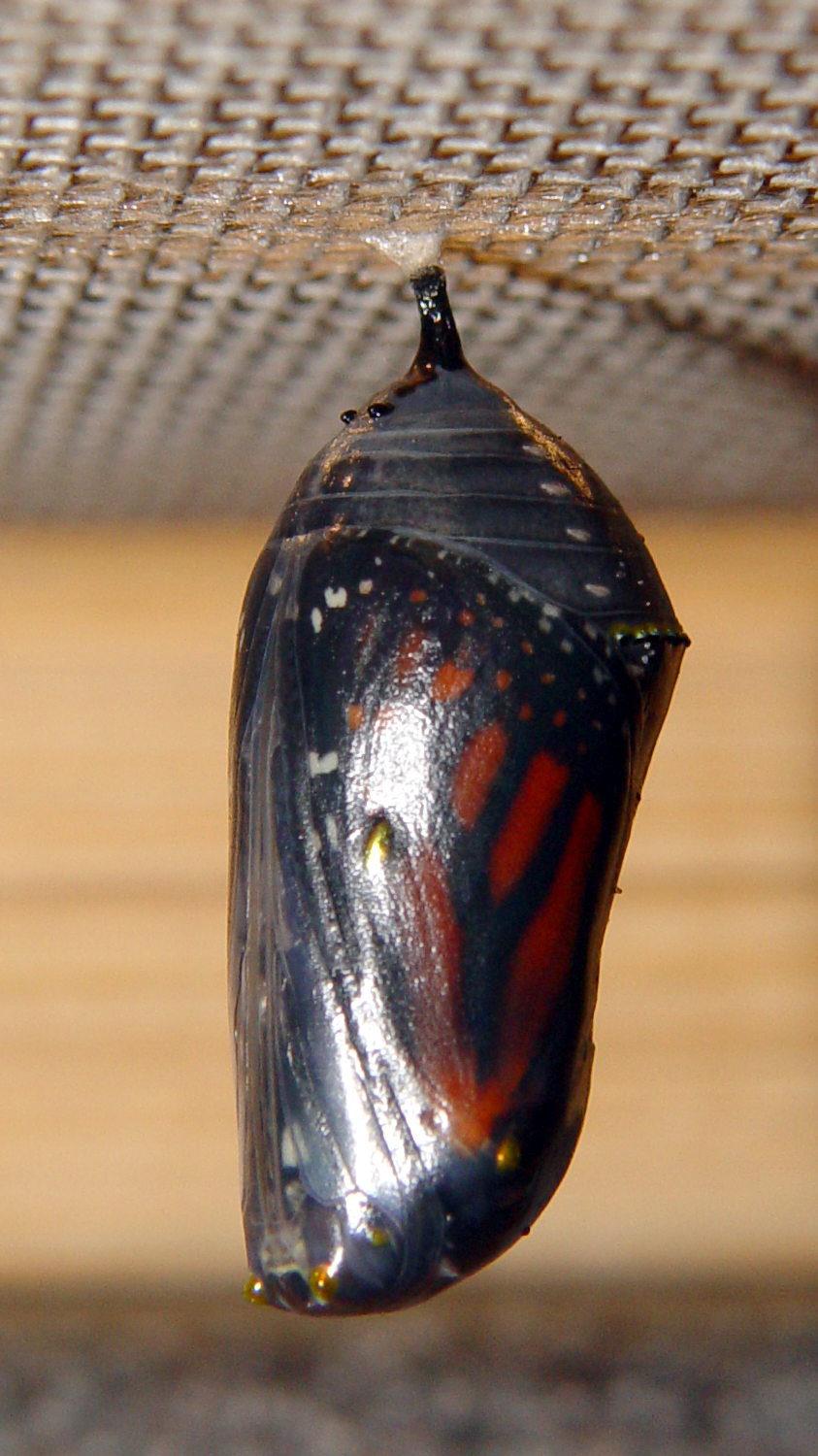
By August 15, the caterpillar was ready for the next stage in its life. At 10 in the morning it had attached itself to the screen covering the aquarium and assumed the position:
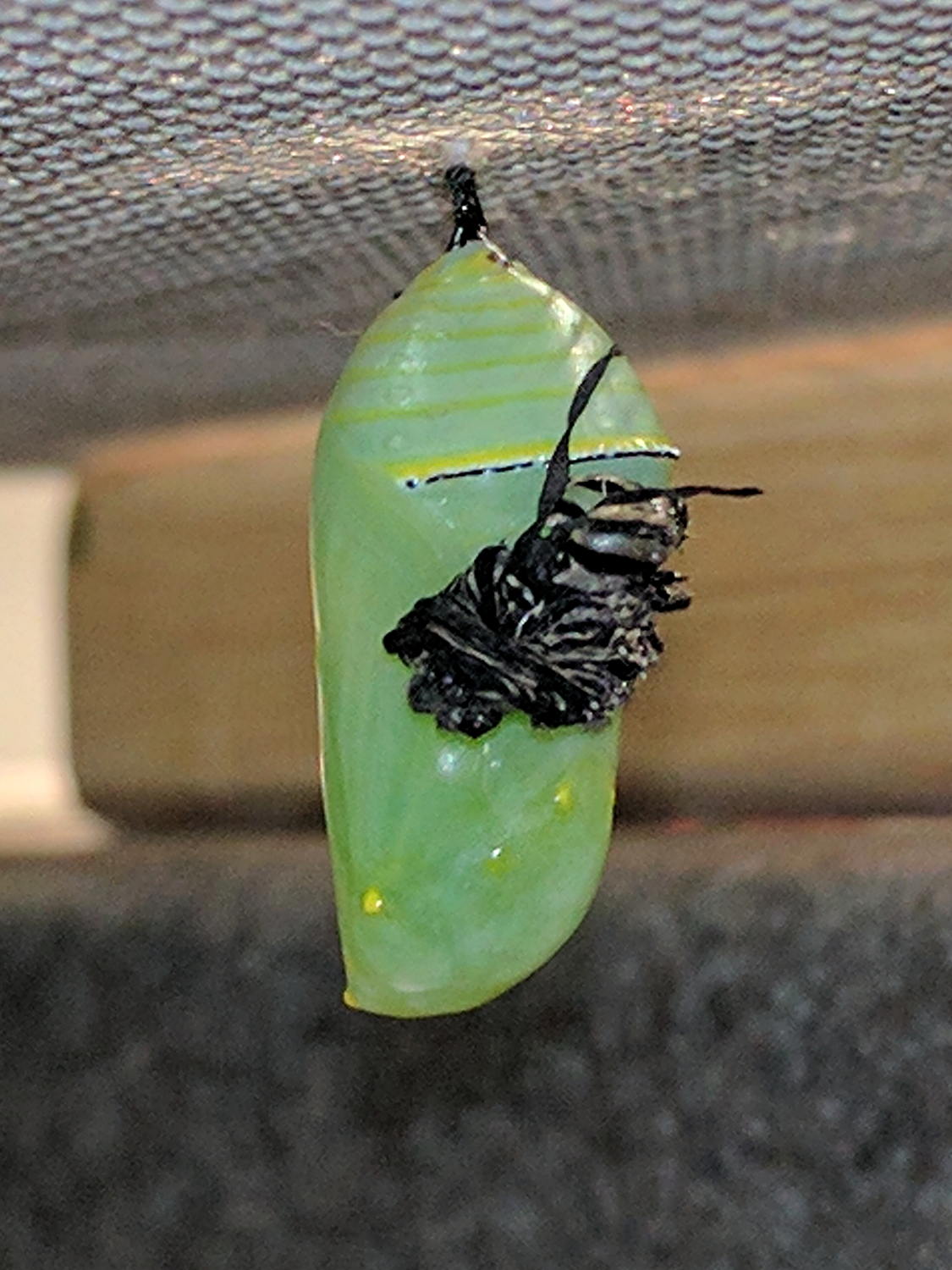
The discarded skin remained loosely attached until I carefully removed it.
What look like small yellow spots are actually a striking metallic gold color.
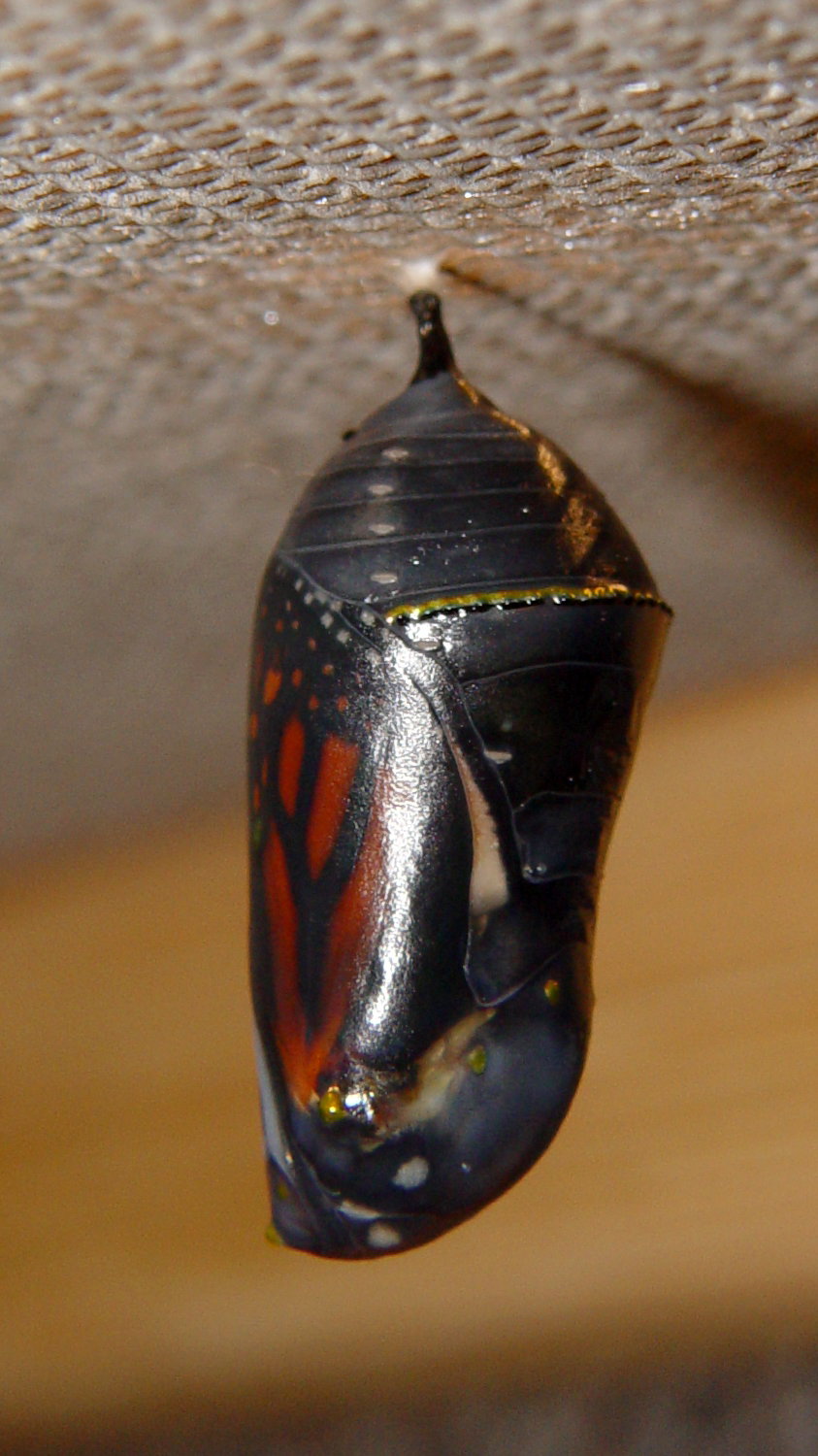
Eleven days later, on August 26 at 9 AM, the chrysalis suddenly became transparent:
Monarch chrysalis – ready – left
And:
Monarch chrysalis – ready – right
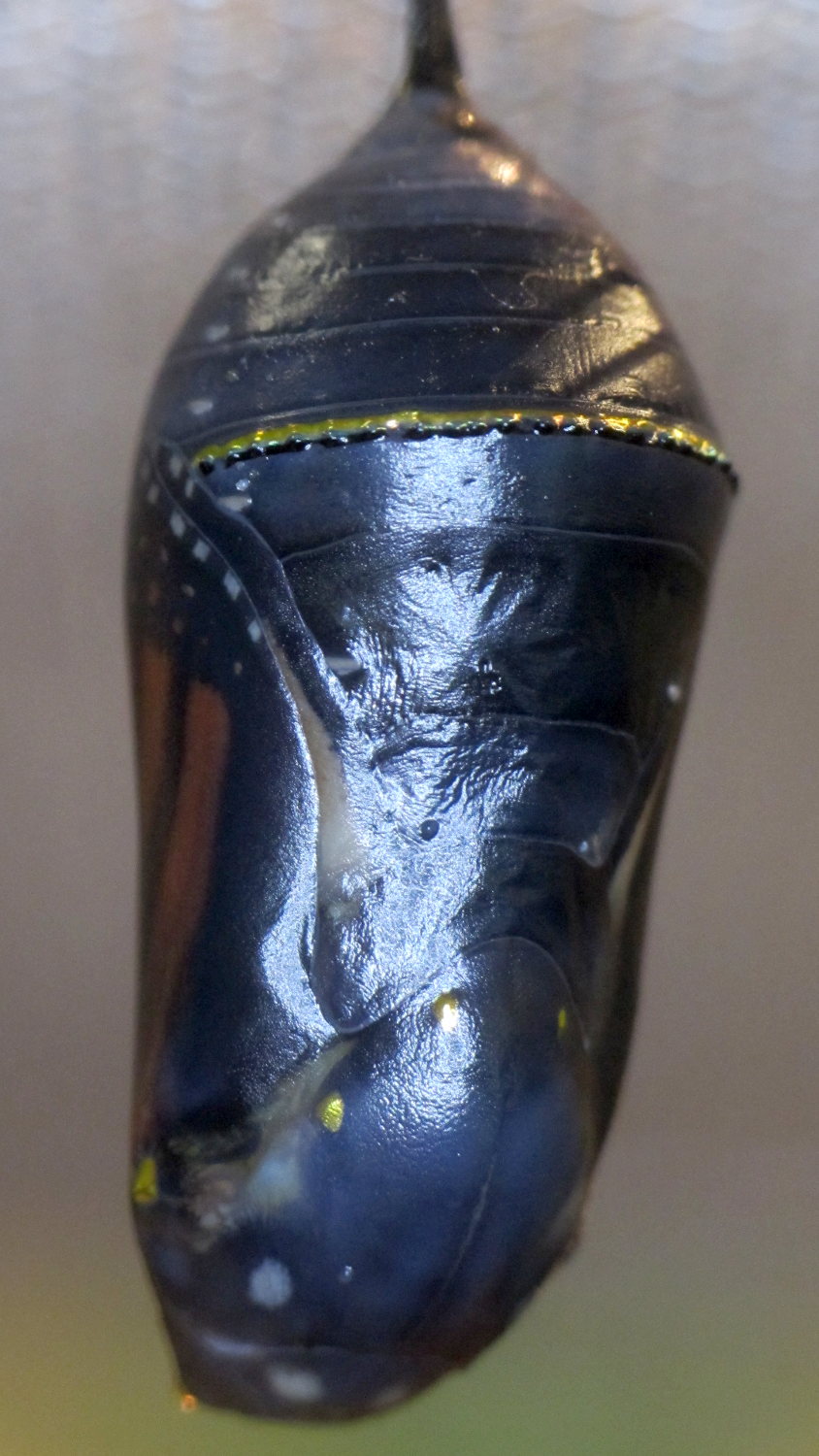
The shape of the butterfly becomes visible in reflected light:
Monarch chrysalis – ready – ventral detail
The gold dots and line remained visible.
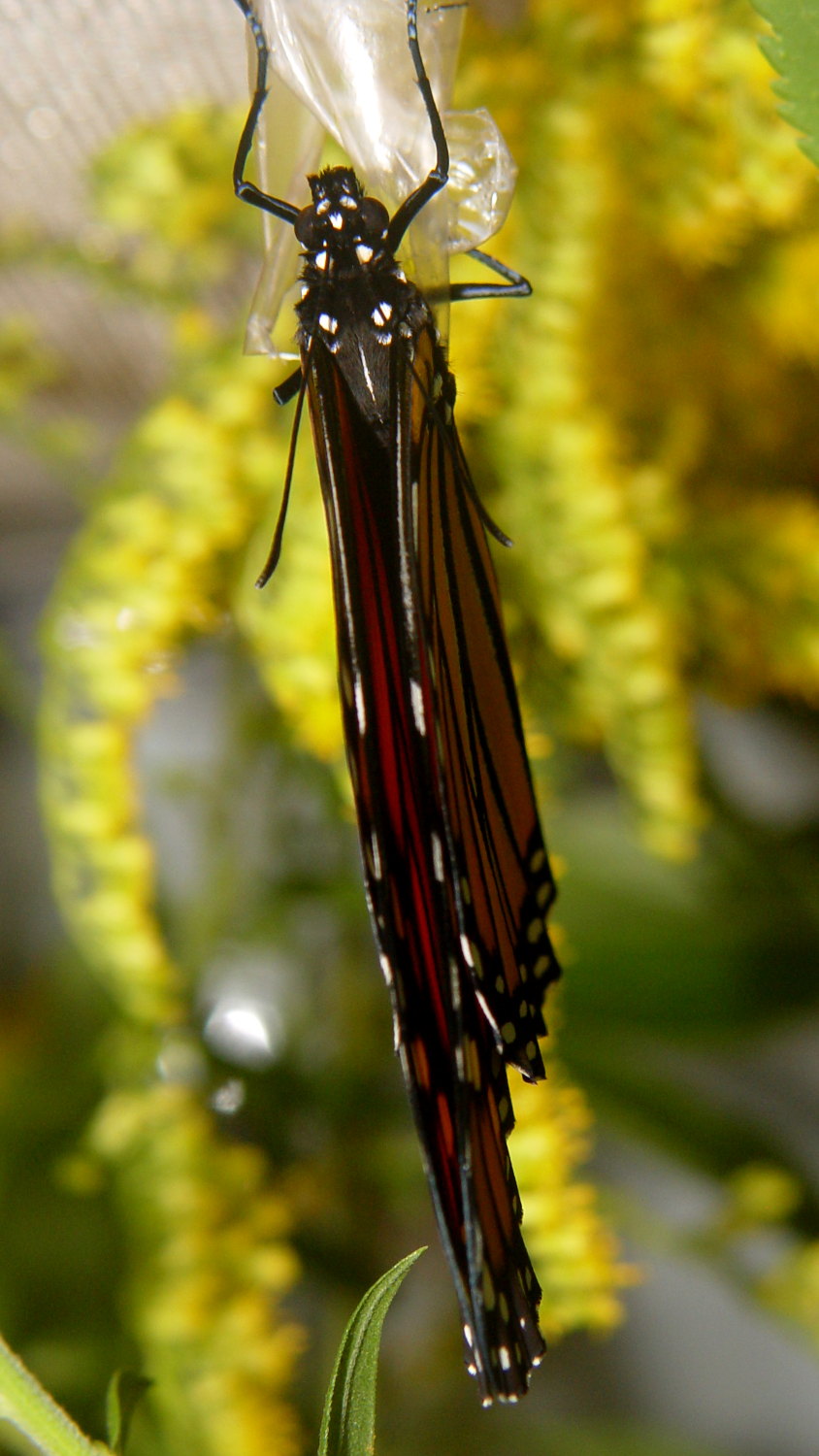
The magic happened at 3 PM:
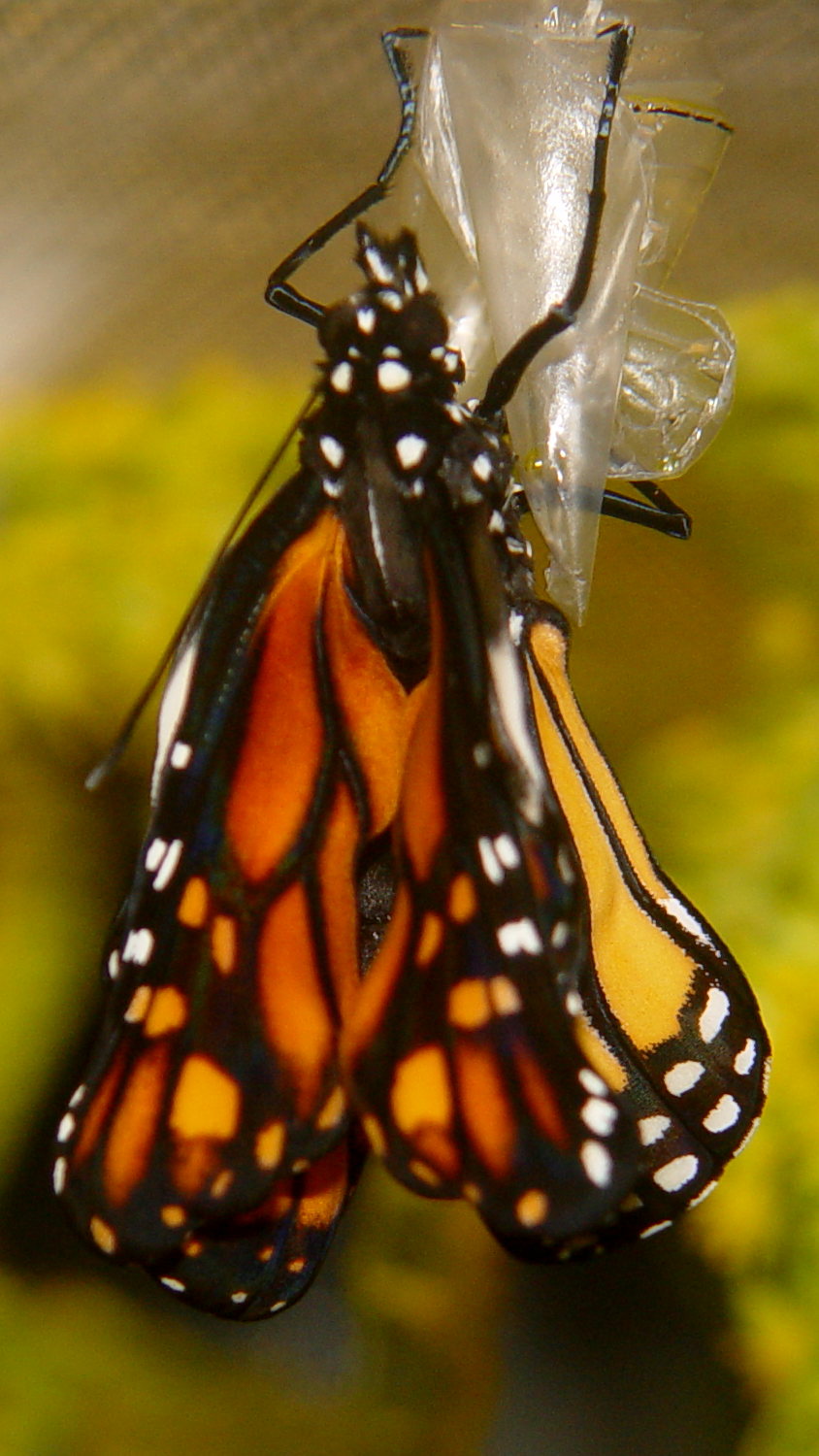
Monarch chrysalis – emerging – unfolding
The compacted wings emerge intense orange on the top and lighter orange on the bottom:
Monarch unfolding – left
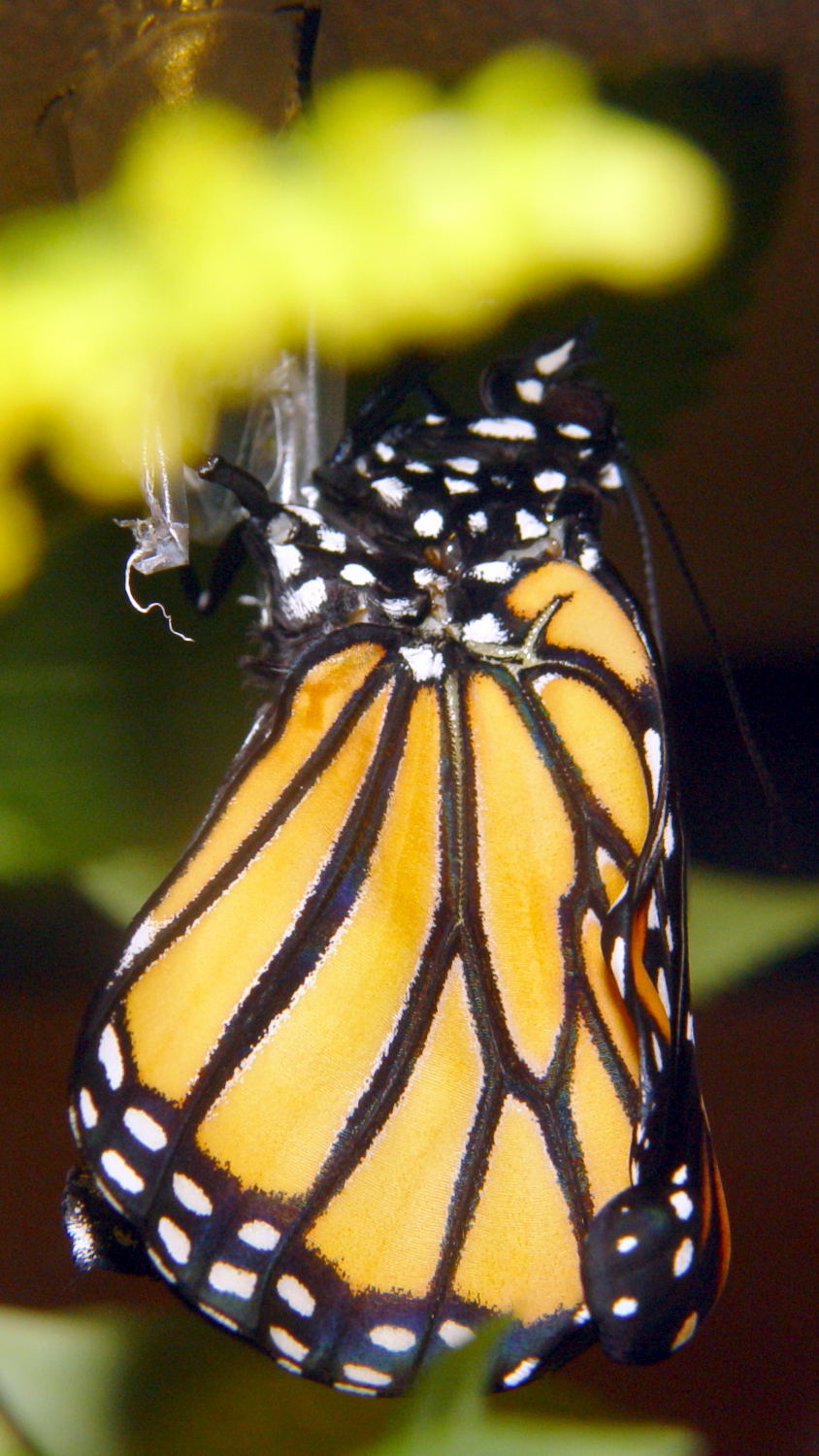
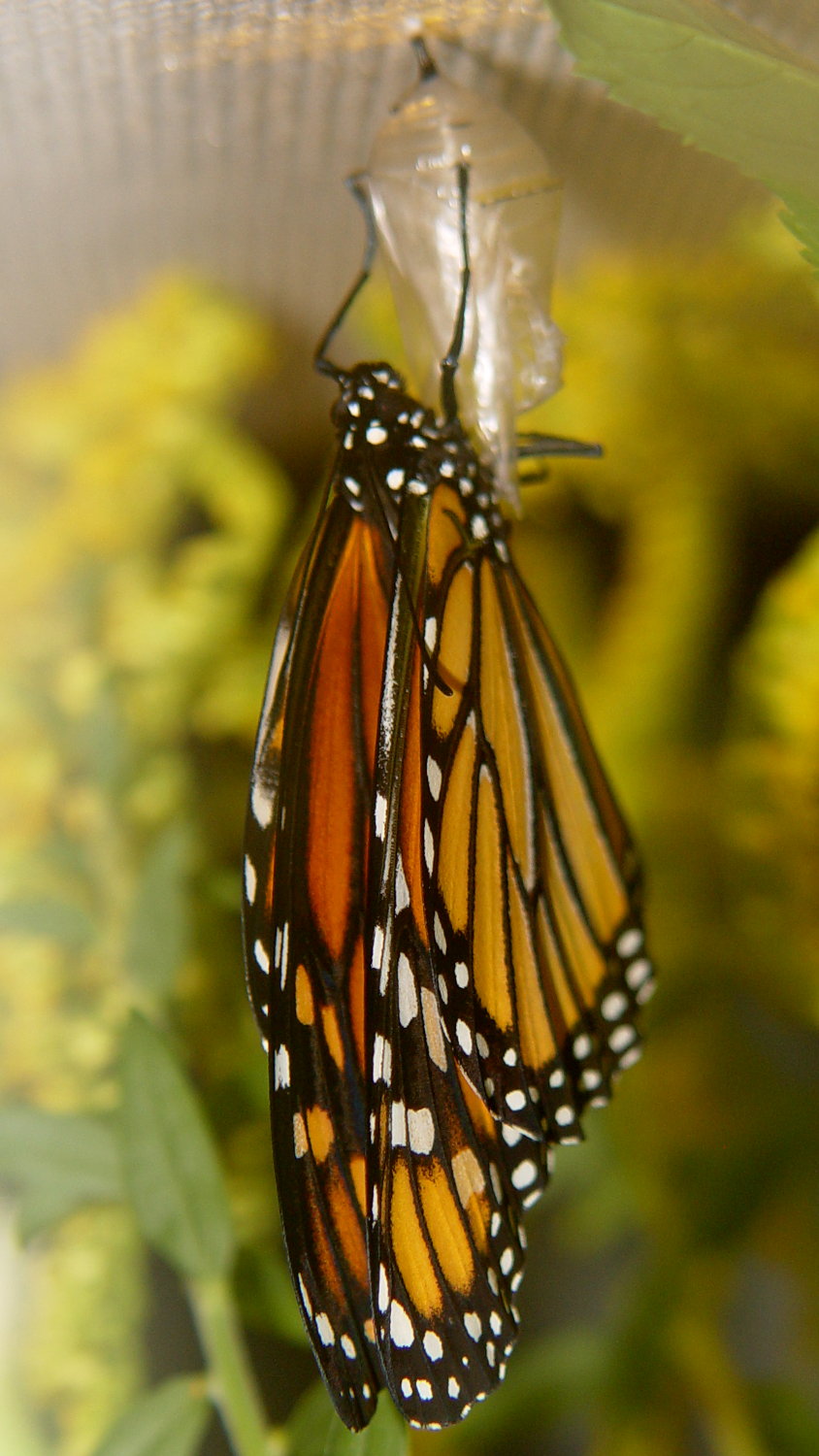
The butterfly took most of the day to unfurl and stiffen its wings into flat plates:
Monarch unfolding – dorsal
And:
Monarch unfolding – right
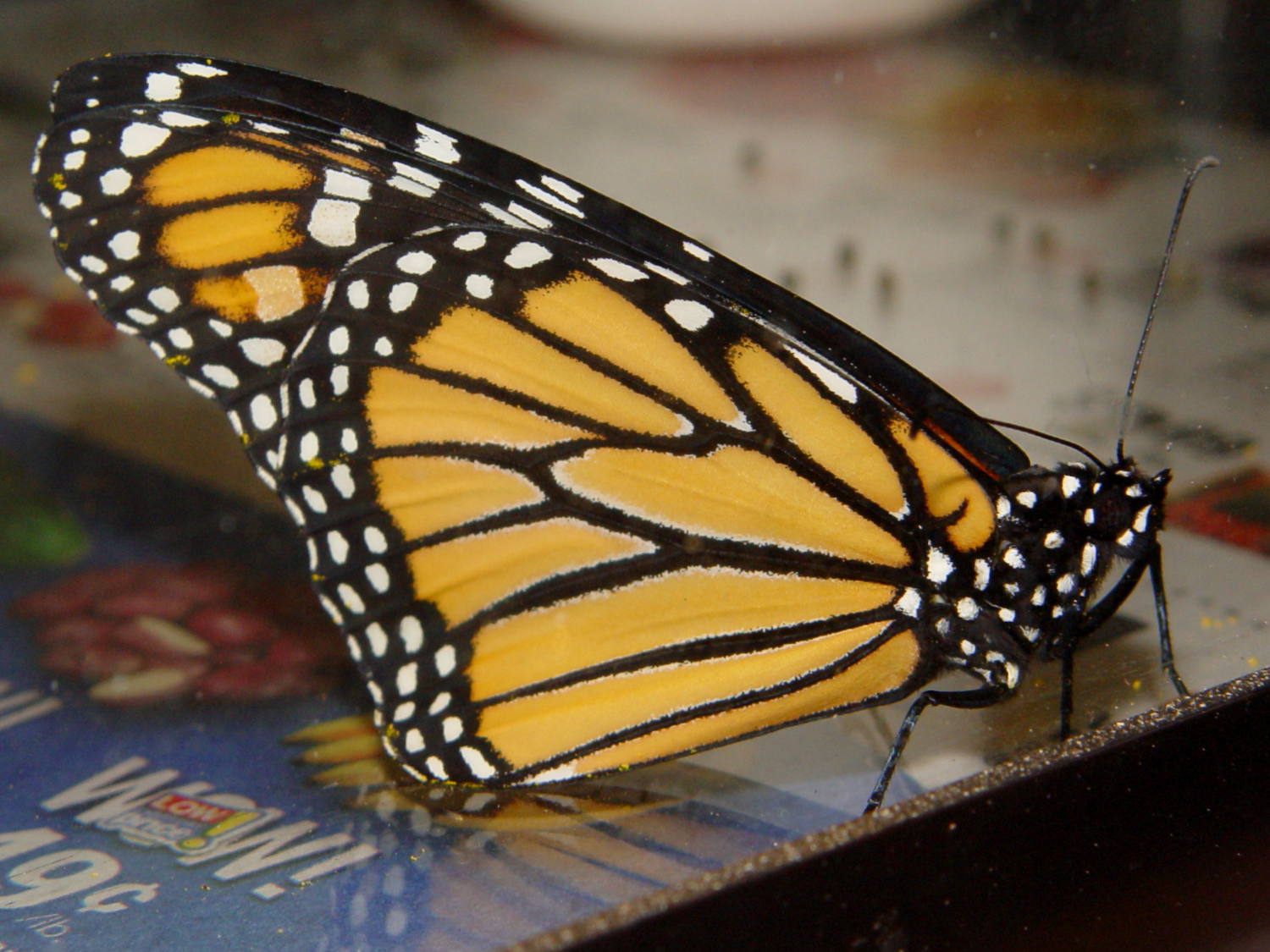
By 8 PM it began exploring the aquarium:
Monarch unfolded – right
As adults, they sip nectar from flowers, but don’t feed for the first day, so we left it in the aquarium overnight.
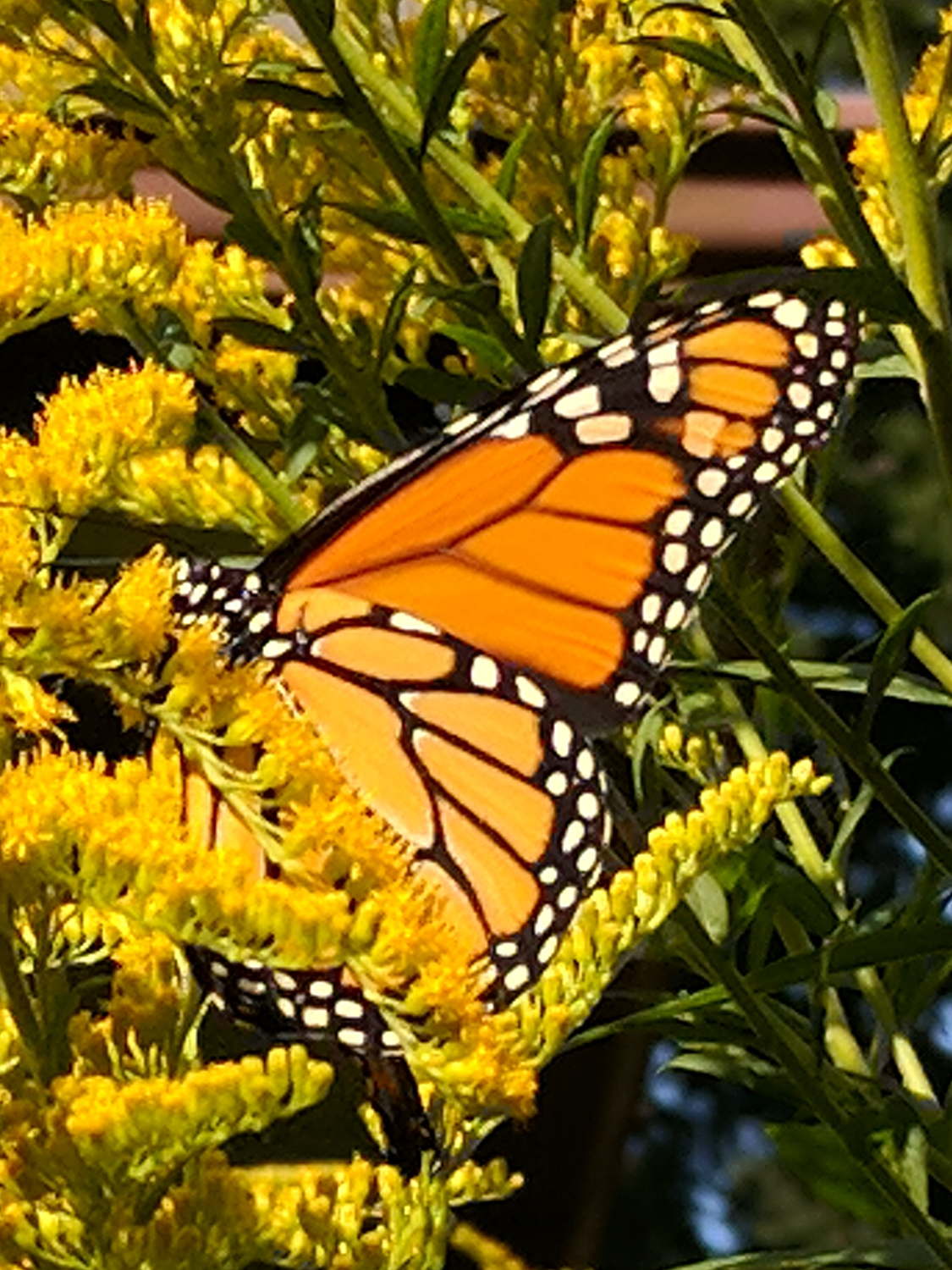
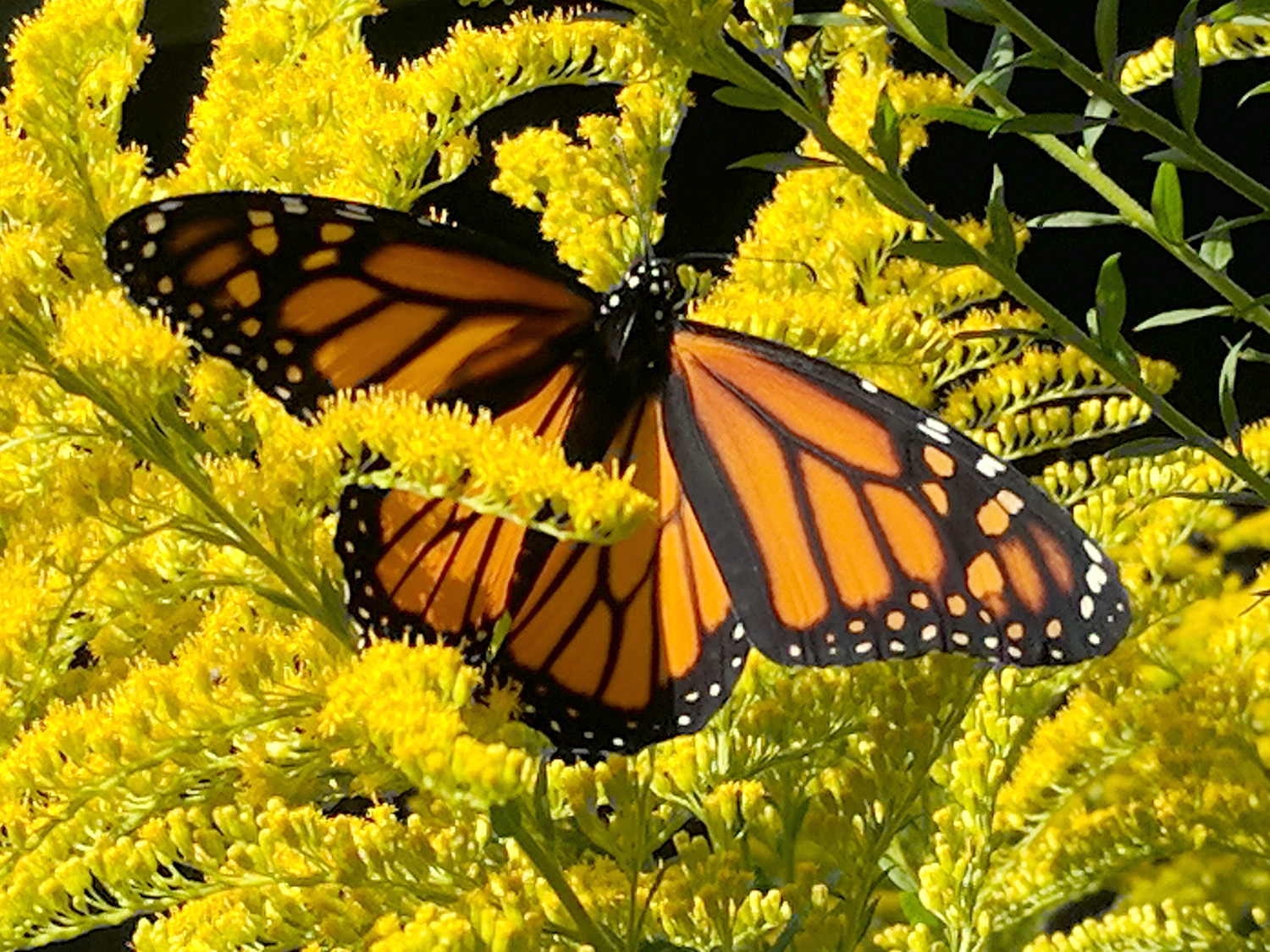
At 10 AM on August 27, we transported it to the goldenrod in the garden, where it immediately began tanking operations:
Monarch on Milkweed – left
A few minutes later, it began sun-warming operations:
Monarch on Milkweed – dorsal
Mary watched it while she was tending the garden and, an hour or so later, saw it take off and fly over the house in a generally southwest direction. It will cross half the continent under a geas prohibiting any other action, eventually overwinter in Mexico with far too few of its compadres, then die after producing the eggs for a generation beginning the northward journey next year.
Godspeed, little butterfly, godspeed …
In the spirit of “video or it didn’t happen”, there’s a 15 fps movie of the emergence taken at 5 s/image.


 The Smell of Molten Projects in the Morning