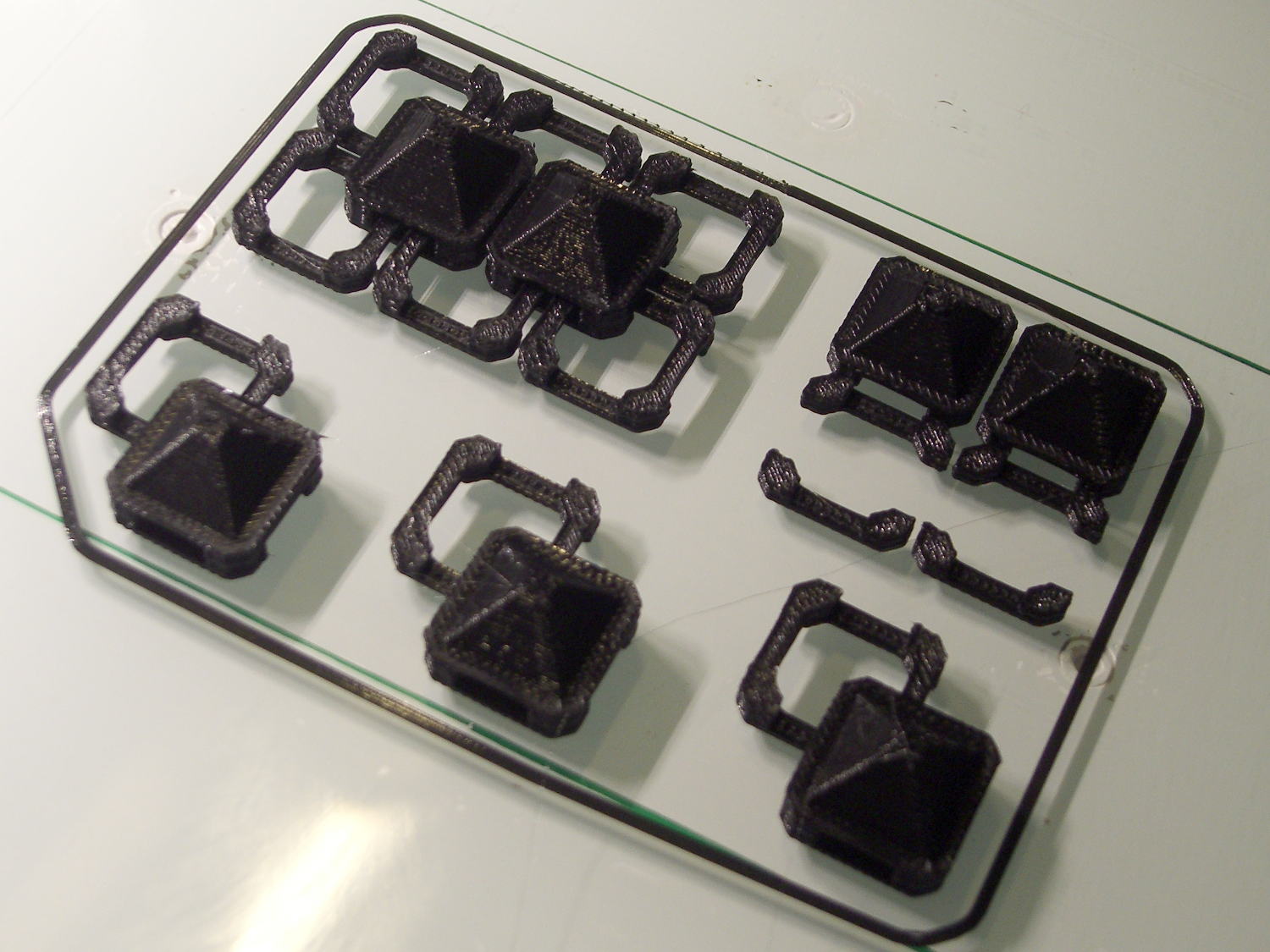
With about two meters of black PLA left on the spool, a pair of spare joiner links and a few tchotckes seemed in order:
The underside of the samples shows the bridges between the pillars and the cap layer between the sides:
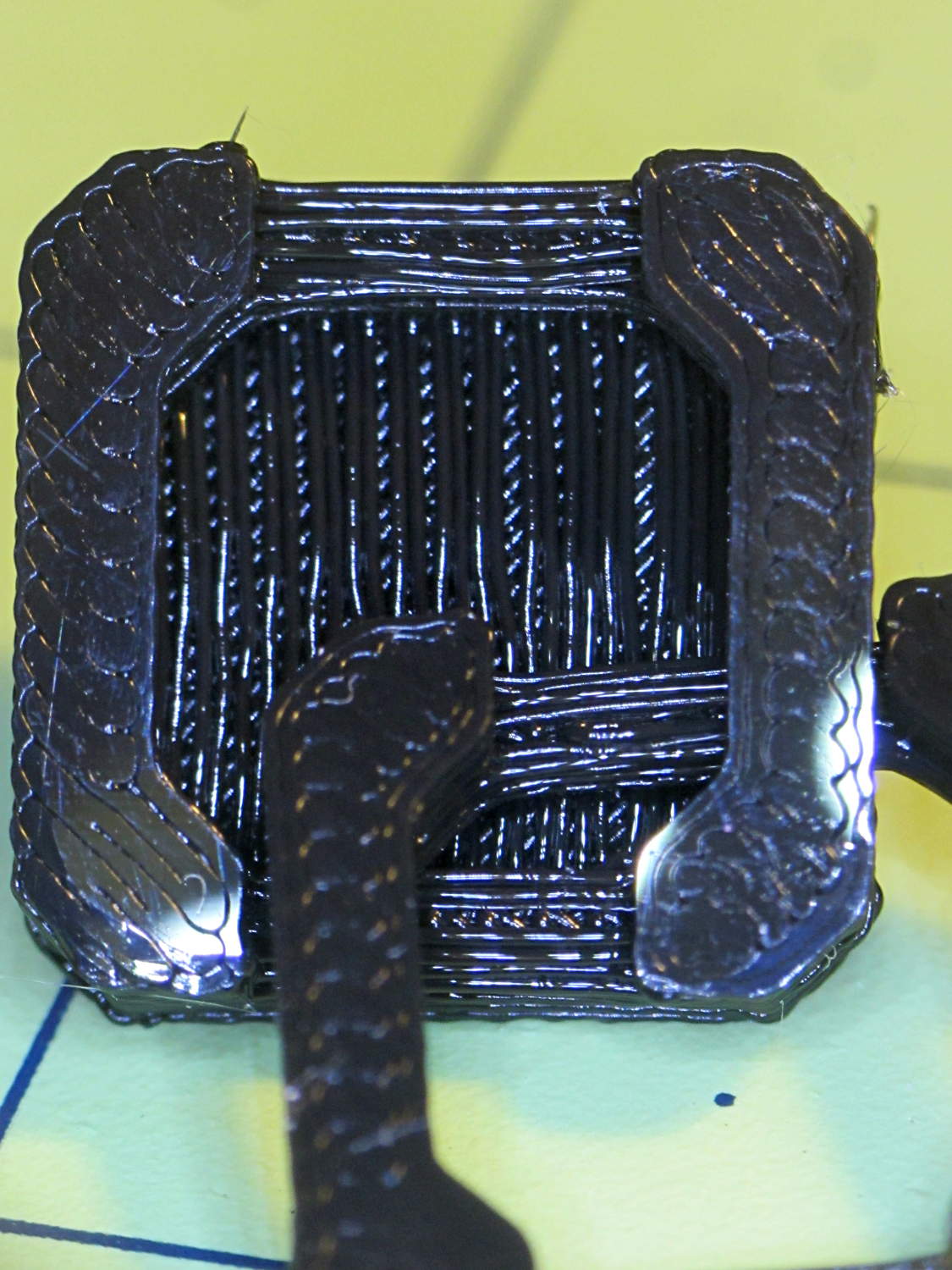
The bridge strands start out droopy, then pull into a more-or-less straight thread as the plastic cools and shrinks. The next layer up looks much, much better.
I can spend a long time watching the nozzle stretch threads across the chasms, putting me in a definite Channel Zero state of mind…
 The Smell of Molten Projects in the Morning
Comments
2 responses to “3D Printed Chain Mail Armor: Bridging”
Chain mail generally requires sections that narrow and get larger. Do you think it would be possible to parameterize the file to create trapezoids? Also, maybe, a method to join sections of differing pitch.
The bars contain 6×4 threads and live right on the hairy edge of what’s possible; smaller bars don’t build solidly. A trapezoid would be possible, but the link sides can only become larger than the current 15.6 mm, in units of (at least) one thread width. I think these flat plates could fit under arms and inside elbows, so maybe larger links would work elsewhere.
It should be possible to create a much larger “fabric” layout, then chop it into printer-sized patches. That would surely work better with a front-end C / Python / whatever program to handle the geometry and fit the links, then spitting out OpenSCAD programs that create one STL file for each patch.
The Kinematics Bodice project shows that folks who understand the deep math behind 3D modeling can create and print form-fitting fabric with a laser-sintering printer, but … I ain’t them!