Back in the day, heatsinks like this sat atop Moah Powah Pentium CPUs:

I picked it because the hulking ET227 transistor fit neatly on its backside, it seemed capable of handling 30 to 50 W of power, and I have several of them in the Big Box o’ Heatsinks. No careful thermal analysis was involved…
Mounting it on the polycarbonate sheet inside the repurposed GX270 case involved drilling & tapping a pair of 6-32 holes in one side:
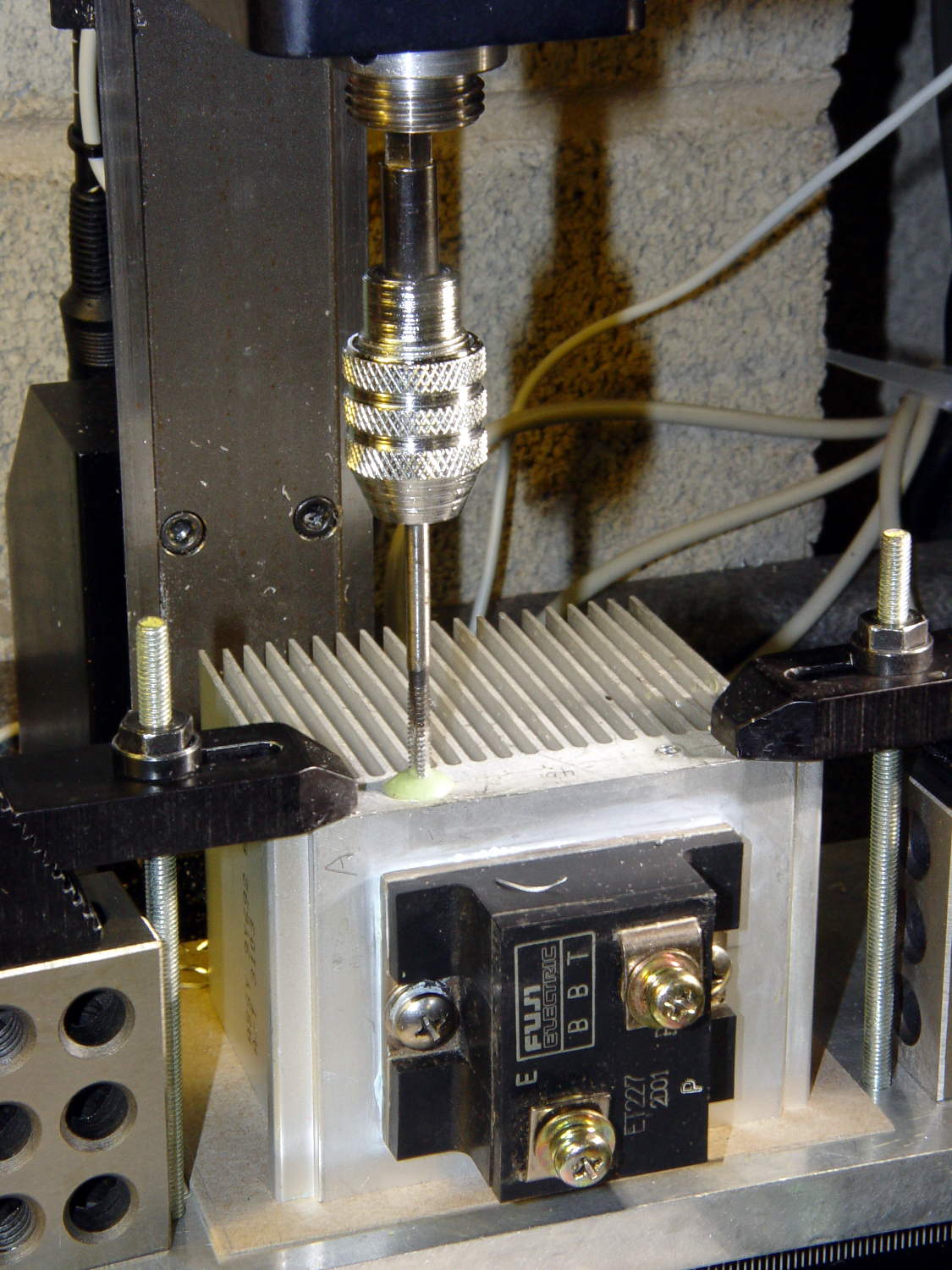
That’s not rigid tapping on a Sherline, it’s aligning a hand-turned tap in the spindle bore. Sorry.
And, yeah, you’re not supposed to leave the semiconductors mounted when you’re drilling the heatsink. I figure there’s nothing I can possibly do without using a hammer that will bother that transistor in the slightest. What, me worry?
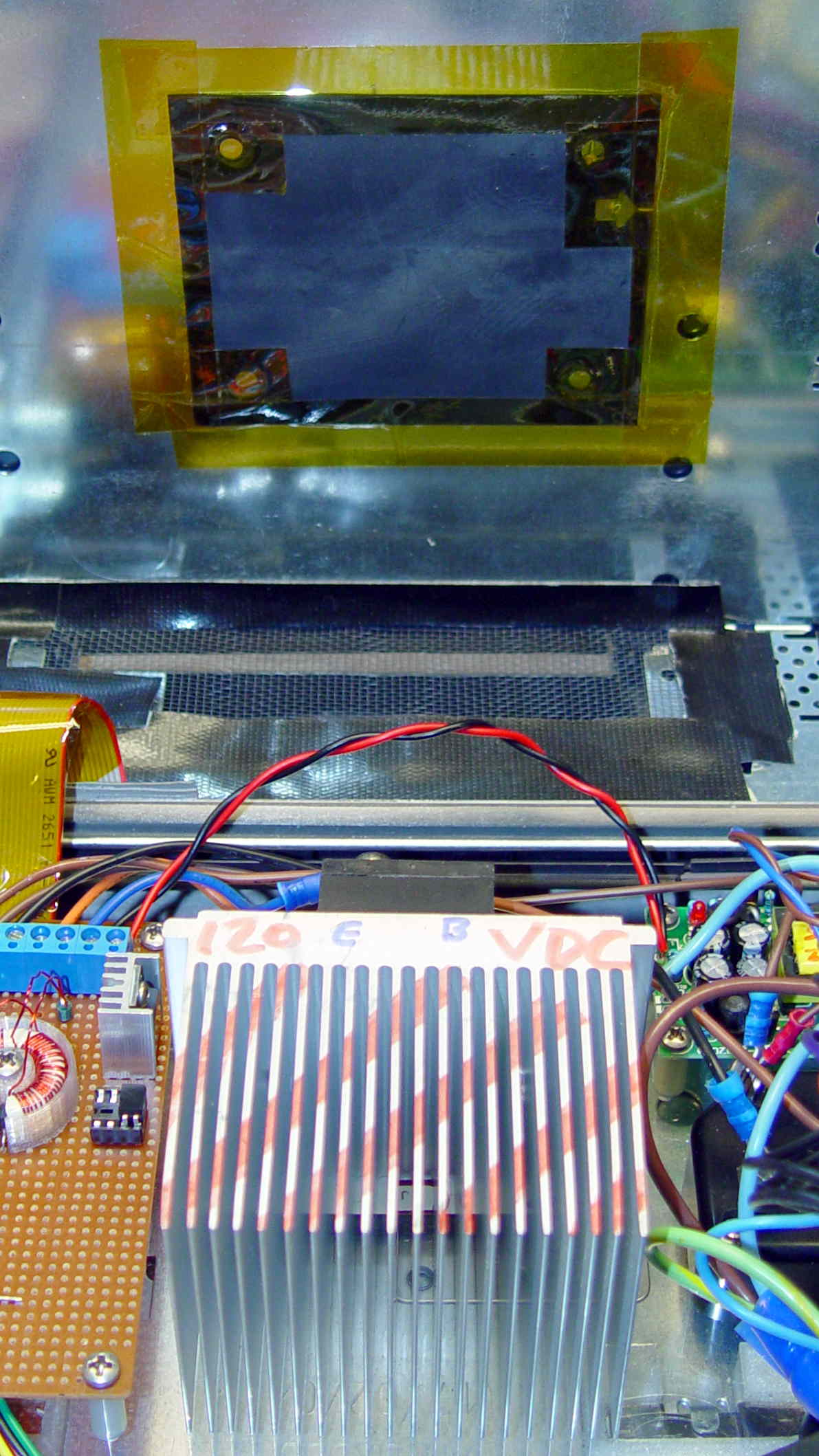
The transistor collector runs at line voltage, which means the entire heatsink will pose a lethal shock hazard. I thought about isolating the collector and failed to come up with anything I’d trust to be both thermally conductive and electrically insulating over the long term; the screw heads must be isolated from the collector plate, too.
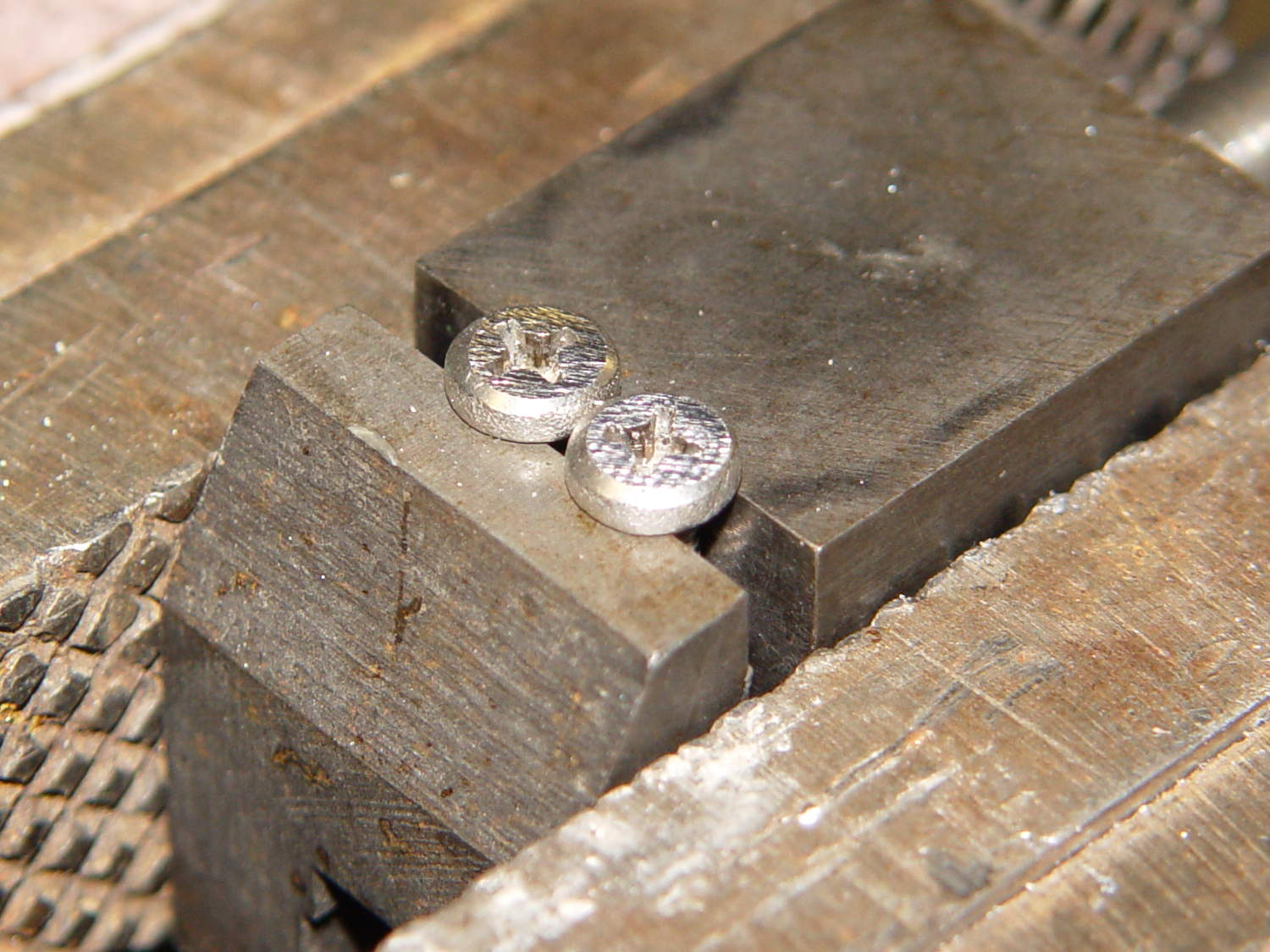
The screws stick out below the polycarbonate sheet, just above the grounded EMI shell lining the case, so I flattened them a bit:
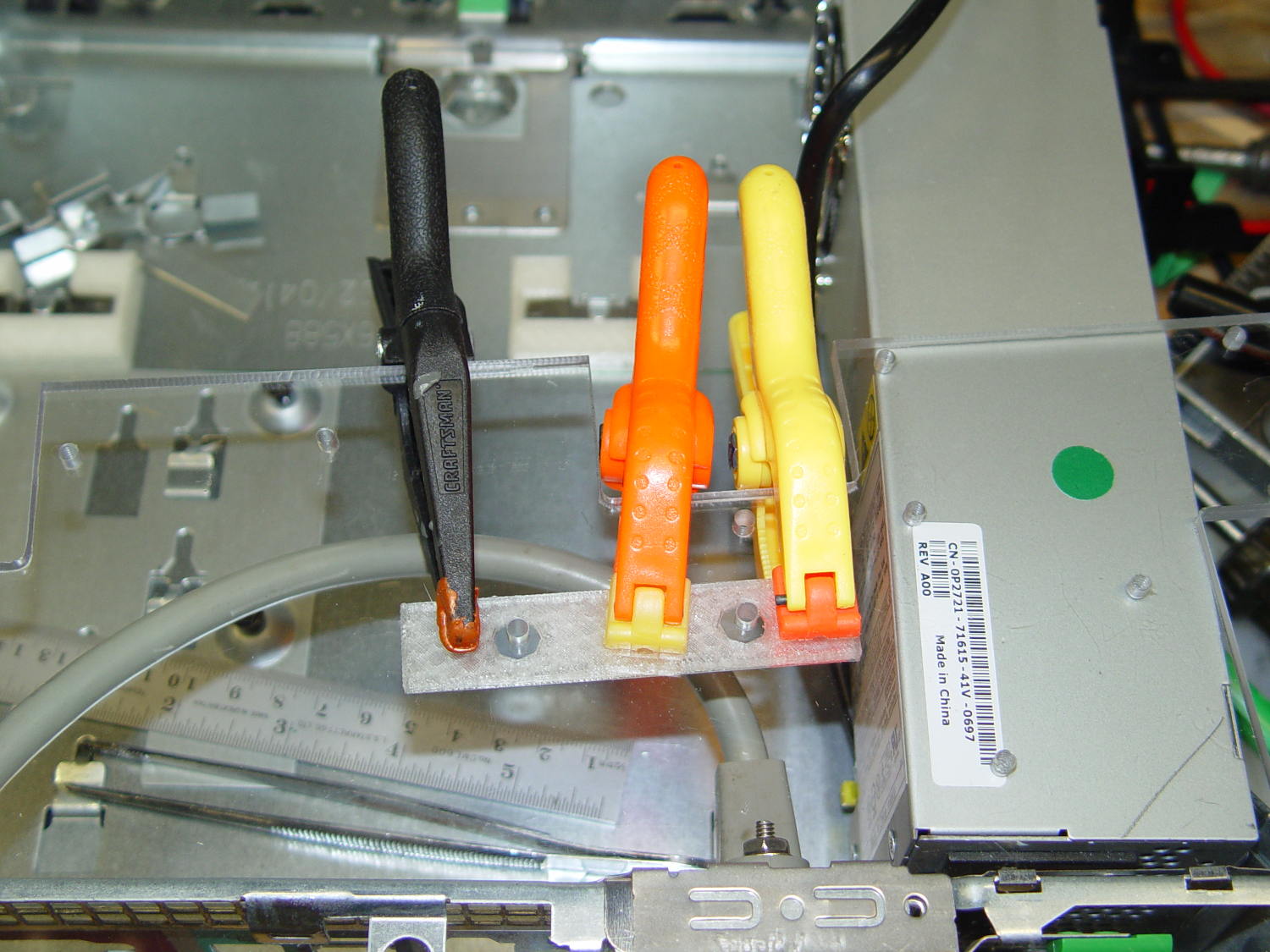
The simple rectangular strip to the rear of the chassis mounting clips is just slightly thicker than the screw heads, so they can’t possibly contact the case:

It gets glued to the underside of the nearly invisible sheet:
With Kapton tape over the heads, Just In Case:
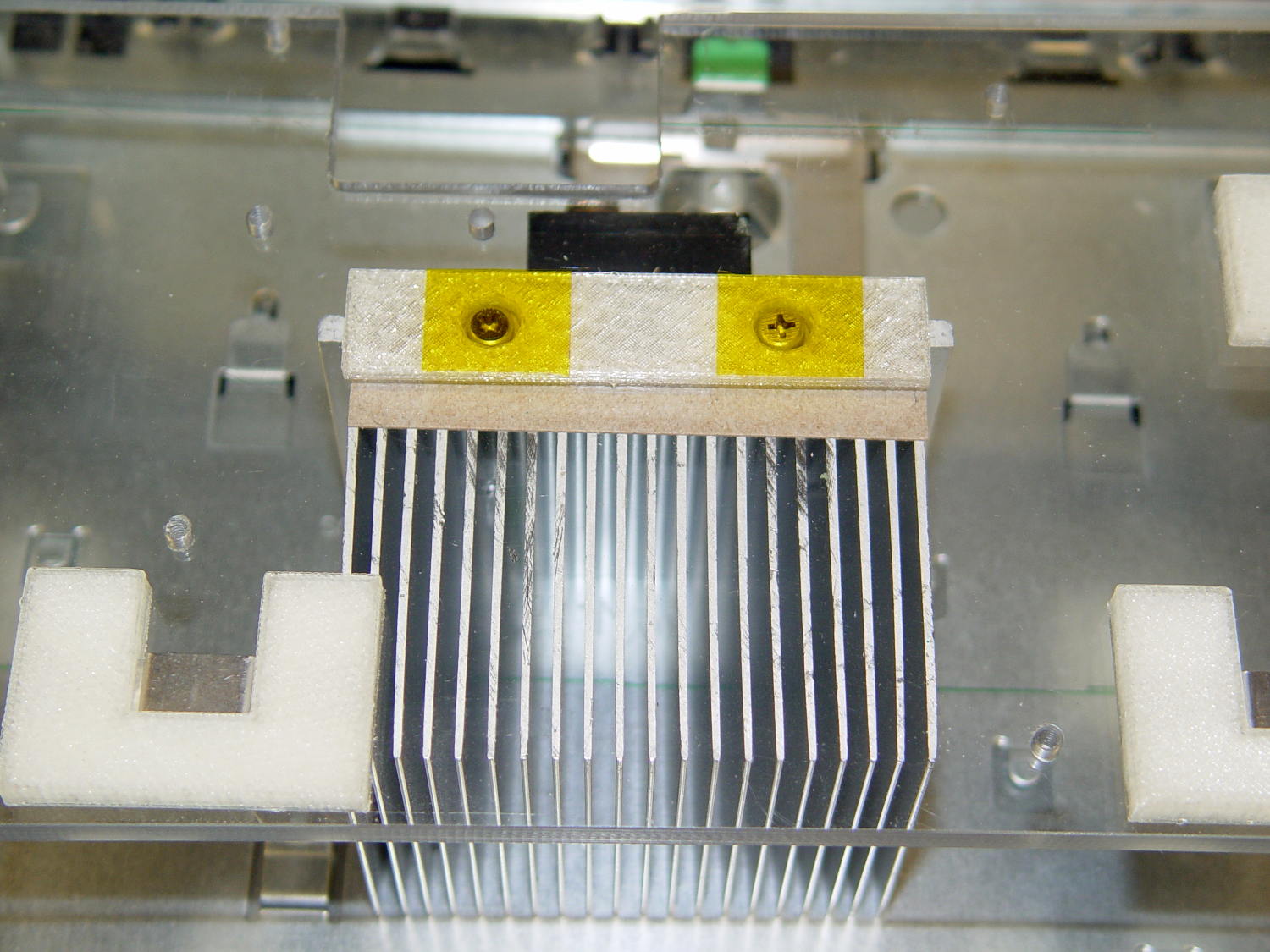
It makes a nice linear counterpoint to the jumble of AC interface wiring:

The insulating sheet on the case lid came from the bottom of the original GX270 system board, where I think it served much the same purpose. It’s surely not rated for AC line voltages, but the thought must count for something:
More of the parts are flying in formation…
 The Smell of Molten Projects in the Morning
Comments
10 responses to “ET227 Transistor: Monster Heatsink Mounting”
Beeuuutiful. I have several boxes of brand new heat sink stock similar to yours (~ 30 lbs or so) in profile and about a foot long each … probably never have a use for most of it, but I can never bring myself to get rid of things like this. Pretty easy to slice up and machine the ends to any size. Built 3-4 CD racks with them many years ago and then gave them away to a friend, odd but pretty cool looking. They are still in use by him today. Looks like you might be using Anchorlube for tapping? Don’t see it very often.
That must ring like a bell when you saw it!
Got it in one! It’s not quite a lifetime supply, but … I do as little tapping as possible these days.
Tapping a blind hole in aluminum: I must be crazy.
Thought so, pretty unique color.
I’m not sure why, I do it all the time either by hand or with a tapping head. I have tapped hundreds of blind holes in aluminum without a problem. Now it was going to be a deep hole that would be a different situation.
You’re a better man than I, Gunga Din.
When I learned that a “deep hole” is anything over three diameters, I realized that pretty nearly everything I do involves a kinda-sorta deep hole. I just twist-drill ’em and hope for the best…
For what it’s worth, I think forming taps and blind holes work well together, especially in aluminum. I did break one when I moved the table several thou, forgot I had, then engaged the tap head before engaging my brain. Oops.
Haven’t used them much, lately–I only have forming taps for 10-32 and smaller, and what little quality shop time has been more wood and biggish steel than aluminum. (Locally, I can get more lumps of steel than aluminum. Those usually have to wait for a trek over the Cascades.)
I did something very similar with a big SSR. A co-worker who claimed to know more about thermal than me said that unless you have a fan that kind of heat sink may be pretty ineffective. The fins are too close for good convection. It might keep things cooler to remove every other fin. Just a thought. Even if it was only as effective as a similarly sized chunk of solid aluminum, it will probably keep the transistor cool enough.
Tah-dum!
It runs at a silent & stately 800 RPM. The third lead doesn’t provide a tach signal and doesn’t respond to any PWM that I’ve tried, but maybe the default speed will suffice to blow heat out of those fins despite the cramped quarters.
I have used forming taps a few times before, they seem to work nicely enough … as long as you don’t forget they require a slightly larger hole. I’m sure they are less likely to break due to the lack of cutting flutes but I’m sure someone has done it. IIRC, it is 10-32 that is most likely and common to break due to some non-magical cross section proportions.
[…] ATX power supply that can power all the bits & pieces that don’t run directly from the AC power line. I torched the connector off the system board, but there’s no practical way to mount it […]
[…]Build one with a pair of ET227 transistors and some 100 W tungsten […]