There never seems to be a good time to drain your water heater and check the anode rod, but I finally found a Round Tuit…
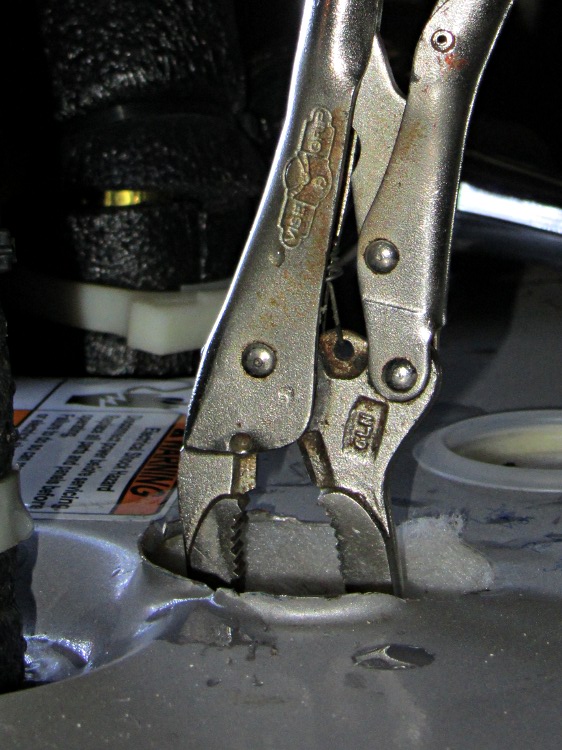
Pursuant to that comment, I drained a few gallons before applying the six-point 1-1/16 inch socket and loosening the anode rod without fuss or bother. I couldn’t get a good finger grip on the bolt head inside the enlarged hole, but a long-nose Vise-Grip pliers did the trick:
The first look showed a solid bar of corrosion:

You can see the 3/4 inch socket wrench in the background: I didn’t need the breaker bar this time!
The magnesium anode rod corroded down to the steel core wire just under the bolt head:
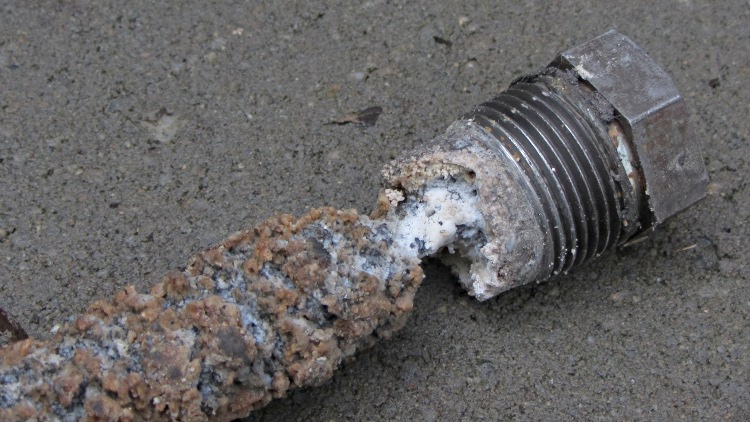
The entire rod was about half a foot shorter than the new one, but I cannot tell whether that much corroded away or rods have gotten longer (they’ve certainly gotten more expensive):

I sawed the rod to get it out of the heater, because I also wanted to see how much magnesium remained inside the corrosion. Quite a lot, as it turned out, so I suppose I could have reinstalled the rod and left it for another few years:
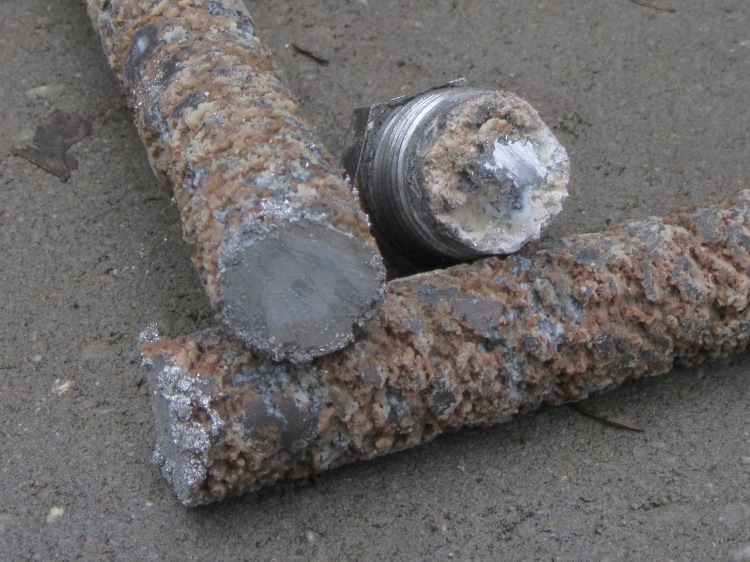
I don’t know where all the corrosion products went, because the water heater drained uneventfully, without clogging the valve or depositing a pile of crud at the end of the hose. There were a few particles, but nothing like the residue from the aluminum rod.
Then I cleaned off a new magnesium rod, tilted the water heater to get enough clearance, installed the rod with a wrap of PTFE tape, and reinstalled the water supply lines. I suspect the next owners of the place will be looking at it a decade down the calendar…
If I had more guts and less sense, I’d chuck the bar stubs in the lathe and turn off the corrosion to get some nice steel-core magnesium rods. The prospect of extinguishing a magnesium fire in the basement doesn’t entice me in the least.
 The Smell of Molten Projects in the Morning
Comments
8 responses to “Magnesium Water Heater Anode Rod: Seven Years Later”
I thought the same thing regarding what was left as raw stock. I don’t think you would have any problem like spontaneous combustion or the like. I think the real dangers are have lots of chips not cleaned up between jobs and aggressively turning steel near those magnesium chips. I have personally not turned magnesium but would if I had it. Should be about like aluminum I would guess. No doubt the corrosion would be the hardest part and most detrimental to inserts if you use them.
It’d be a lot like machining gravel for the first 100 mils or so; Eks recommends tucking a phone book down your shirt to soak up the shrapnel on a job like that. Plus a full face mask, dust respirator, and a shop vac.
Sounds like a lot of trouble to me…
Agreed. Not to mention that apparently some of these have a steel core and are not solid magnesium.
This one definitely does; it’s barely visible under the threaded section and down at the tip, buried under all the corrosion. Not obvious in the photo of the sawed section, though.
Several years ago I got a piece of sheet magnesium from a sail-boat building roommate. (Maybe an aborted attempt at anode making, dunno). Trimmed off a piece 6″ x 1/8″ and set it alight. Took a torch, but it was a nice little fire. I got rid of the rest of the metal very cautiously.
Have to take another look at our water heater. Last I looked, the anode was carefully buried in the top structure, maybe in a foam-filled access point. Access to the heater is poor, too. 13 years old, hmm.
And to think they used to use that stuff by the ton for aerial flares. Yeesh.
I added a foam plug atop the anode rod in that little recess; evidently Whirlpool didn’t think that finishing touch was worthwhile…
As I recall, two foam plugs, so it shouldn’t take more than 3-4 tries to get to the anode. It’s a manufactured home, and the heater cubby was designed to be inconspicuous, rather than actually accessible. Must start looking for nibblers, too…
[…] previous one was still working after seven years, although I had to wreck it to get it […]