Ed Nisley's Blog: Shop notes, electronics, firmware, machinery, 3D printing, laser cuttery, and curiosities. Contents: 100% human thinking, 0% AI slop.
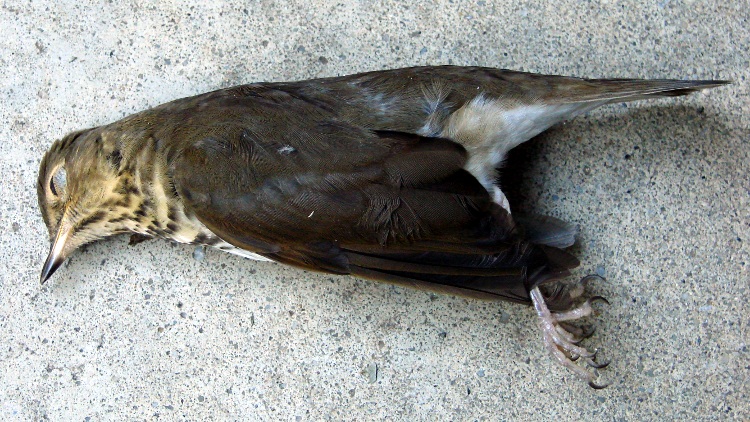
Birds flow through the Hudson River Valley during spring and fall migratory seasons, leading to tragedies such as this:
Dead Swainsons Thrush – ventral
We think it’s a Swainson’s Thrush that mistook our bedroom window for open sky:
Dead Swainsons Thrush – left side
We’ve tried several techniques to prevent birds from making that mistake, but to no avail.
It weighed 38 grams, a bit heavier than the typical 30-ish grams reported in our bird books. If I were flying to Mexico I’d want a little extra padding, too.
I put it out for recycling in the back yard; in Nature, nothing goes to waste…
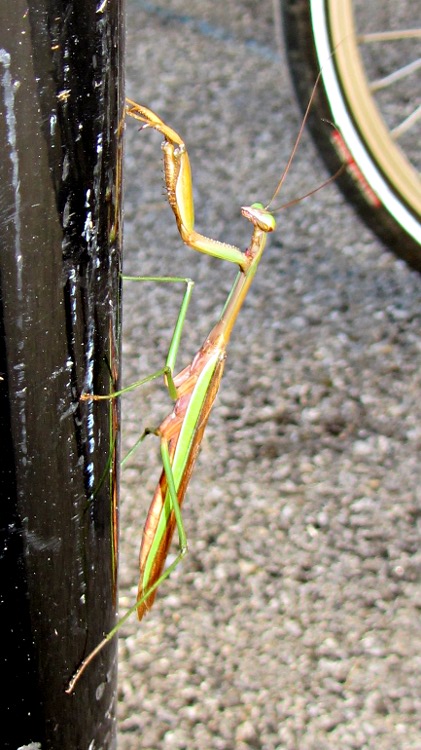
We met this Praying Mantis on the bike rack outside Skinner Hall at Vassar College. Even knowing they’re harmless, I’d have trouble picking it up; we parked on the other end of the rack.
If these things were any bigger, they’d be terrifying…
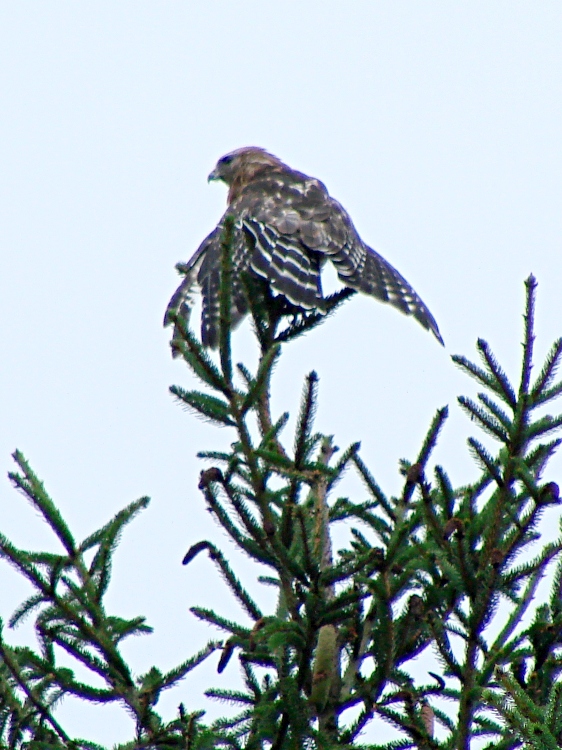
One of the Coopers Hawks that keep the rodents under control around here landed atop a pine tree and spread its wings to dry out:
Coopers Hawk drying in pine tree
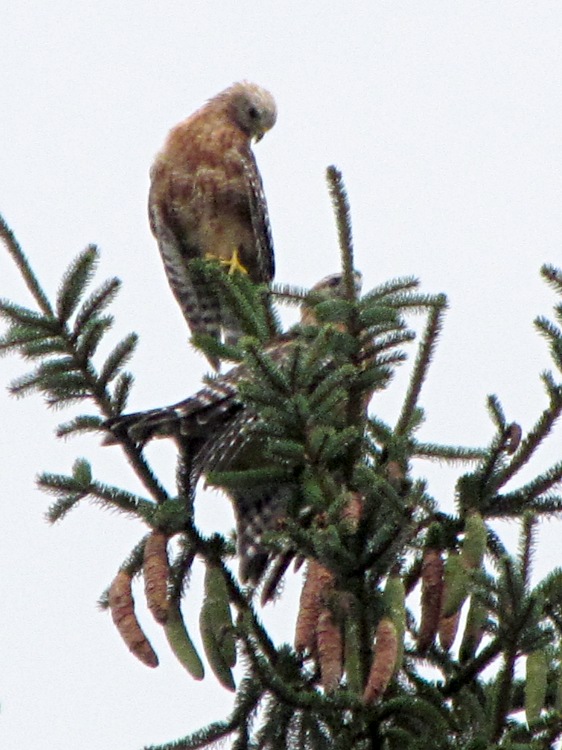
Shortly thereafter, the second hawk arrived and the pair shared some Quality Body Maintenance time:
Coopers Hawks in pine tree
The first image comes from the Sony DSC-H5 with the 1.7 tele adapter. The second is from the Canon DX230HS with the digital zoom set to 2x “digital tele adapter mode” and the optical zoom cranked all the way out; they’re both small crops from larger images. Not much to choose between the two, although the Canon wins hands-down for convenience.
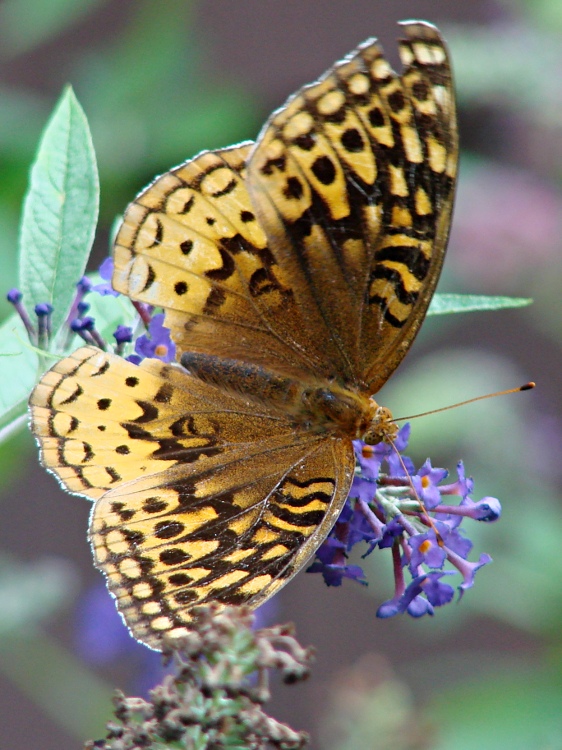
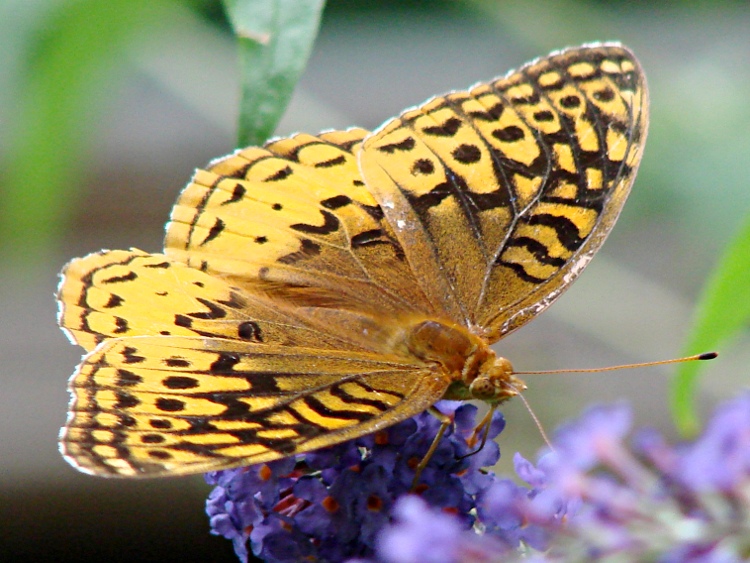
A pair of fritillary butterflies have been enjoying the butterfly bush at the living room window. The first one has a slightly tattered wing:
Fritillary butterfly – dorsal
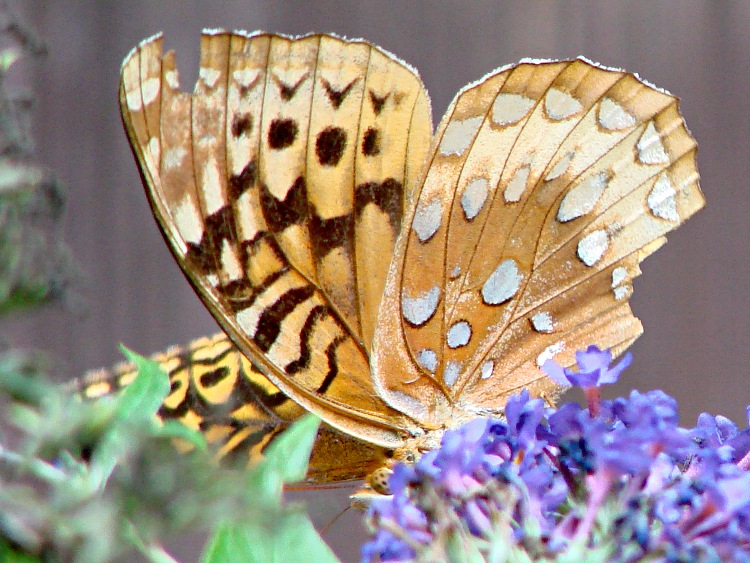
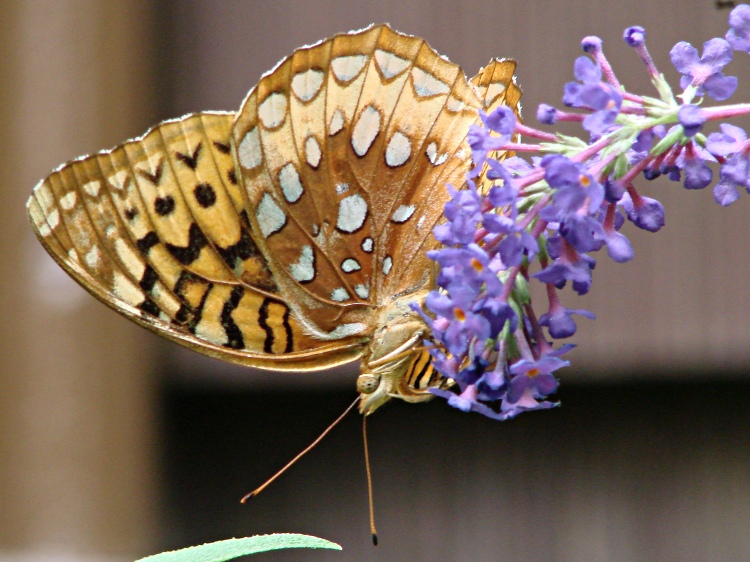
The camera can’t do justice to the silver patches on the bottom of the rear wing. They’re not reflective like a sheet of silver, but they shine like metal in the light:
These critters look like bumblebees, but they’re squash bees, native to the Americas, working over a squash blossom just inside the garden gate. Much smaller than carpenter bees that drill holes in nearby garden posts, a bit smaller than bumblebees, and good to have around when you’re raising squash!
Squash bees in flower
I noticed the third bee only after looking closely at the picture.
This is a handheld tight macro with the Canon SX230HS using the flash. Surprisingly, the autofocus target picked out the bees and tracked them quite well. A tripod would help, but not all that much.
Our neighbor’s back yard features an unkempt apple tree about 3 feet from the fence that must be 40 feet high by now. It grows Macintosh-style fruit and drops half of them into our yard. Most land in the garden, some land in the yard, a few bounce off his plastic storage shed with resounding bonks, and every critter out there loves them. Mary makes applesauce from the best of the harvest and tosses the rest far away to keep the wasps out of her veggies.
The chipmunks and groundhogs have a belly-busting good time:
Chipmunk with apple
The deer, of course, eat ’em like candy, another reason for clearing the garden.
The three pregnant does we’ve seen this season produced two pairs of twins and one set of triplets. That’s just for the does crossing our yard; we’ve seen many others around the area. The fawns are, of course, insufferably cute, but the deer have eaten everything growing on the forest floor, eaten all the tree leaves within reach, and are now working on vegetation that deer don’t normally eat.
Such as, for example, Mary’s long-suffering kiwi plants by the garden and various distasteful flowers in front of the house.
One doe maimed her starboard foreleg in an automobile collision; she was hobbling around for about a week before vanishing. Fawns, who don’t come out of the oven knowing that automobiles make fearsome predators, tend to die young; three of the seven have died on the road within walking distance of the house in the last two months.
Dead fawn at Deer Crossing sign
We recently heard a sharp bang! bang! out front, shortly followed by a police car accelerating along the road. It turns out the officer dispatched this fawn with two shots below the left ear; I think they carry a special .22 caliber gun for this very purpose. No, the fawn wasn’t standing around waiting to be shot; it had just starred in Yet Another car-on-deer collision.
This, according to the local deer huggers, is a much more desirable outcome than harvesting surplus deer and eating them. I haven’t noticed any deer huggers volunteering to pay for damages; that seems to be an externality to them.
A billboard up the road demonstrates their total lack of comprehension: a pastoral scene showing a buck (with a full rack) nuzzling a fawn. Pop quiz: who wrote that book? Bonus: how much interest do actual bucks display in their offspring at any time?



 The Smell of Molten Projects in the Morning