
This wonderful texture lives at the top of Cochran Hill Road, where I spotted it on a recent walk. That tiny hole on the right trunk suggests more trouble than meets the human eye…
It’s now a background for the portrait monitor.
The Smell of Molten Projects in the Morning
Ed Nisley's Blog: Shop notes, electronics, firmware, machinery, 3D printing, laser cuttery, and curiosities. Contents: 100% human thinking, 0% AI slop.
Other creatures in our world
This wonderful texture lives at the top of Cochran Hill Road, where I spotted it on a recent walk. That tiny hole on the right trunk suggests more trouble than meets the human eye…
It’s now a background for the portrait monitor.
Known to be true: chipmunks love drain pipes!
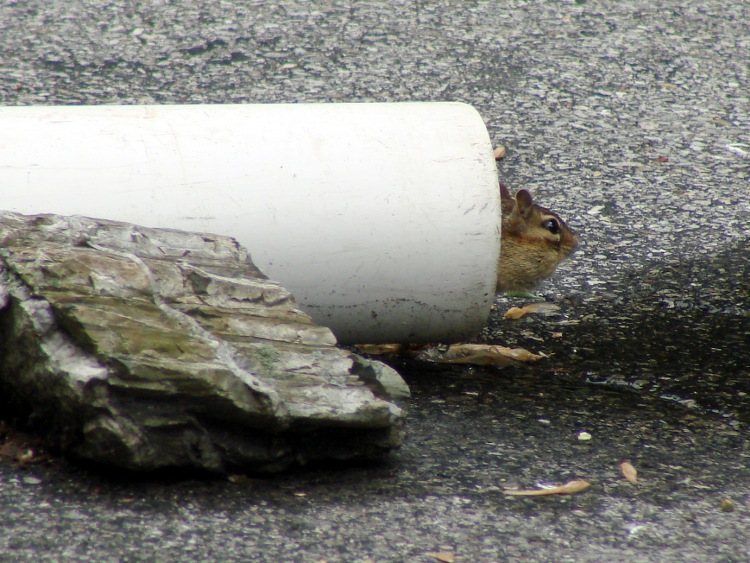
Obviously, an open pipe attracts rodents.
That didn’t matter with a three-foot pipe attached directly to the downspouts, but, as part of the driveway project, I routed the house storm drains and wall footing drain pipes about 20 feet down from the new retaining wall, with the two joining into a single outlet. There’s a cleanout plug on the storm drain line, but the footing drain consists of about 50 feet of corrugated and perforated tubing that would be just about the finest possible chipmunk habitat.
In principle, one would simply glue a grate into the final fitting and be done with it, but leaves from the gutter will pack behind the grate, so it must be removable. Leaving the grate loose means it’ll pop out at the slightest provocation and, most likely, roll another hundred feet down the driveway into the street.
Rather than coping with that, I drilled a clearance hole in the elbow and tapped a matching hole in the grate:
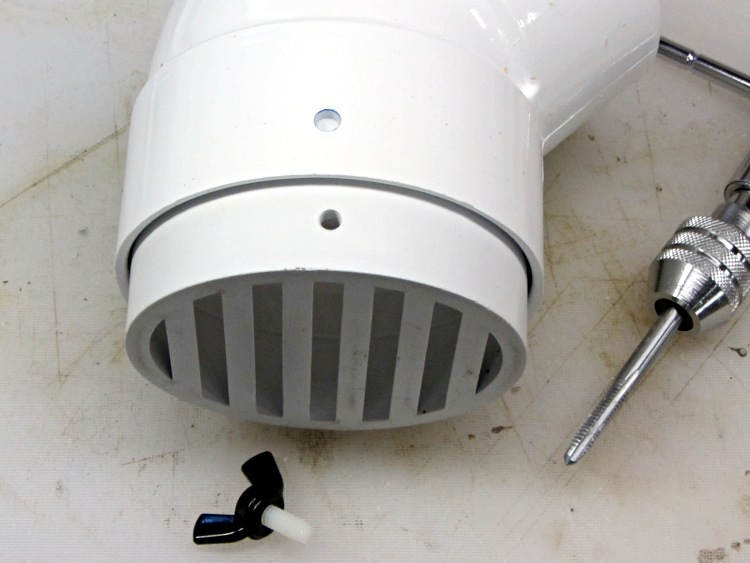
I have a few white nylon 1/4-20 cutoffs from the bike fairing clamps, so I wrecked the threads on one and jammed it into a black nylon thumbscrew:
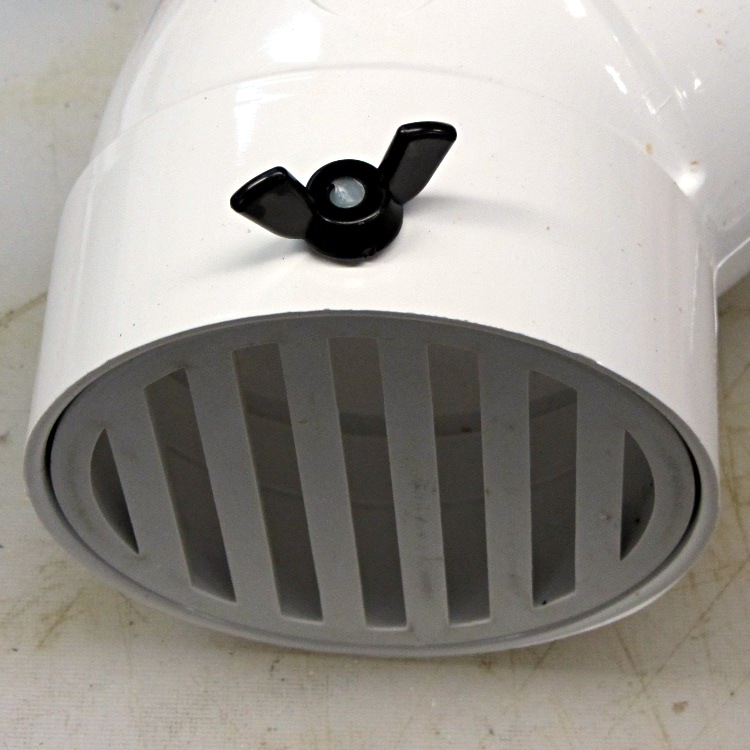
Now, of course, the critters can still climb down the drainpipes from the gutters and set up housekeeping in the plumbing, but I’m not putting grates where I must climb onto the roof to clear them. A chipmunk dropped from two stories will scamper away; I’d never walk again.
We shall see how this works out…
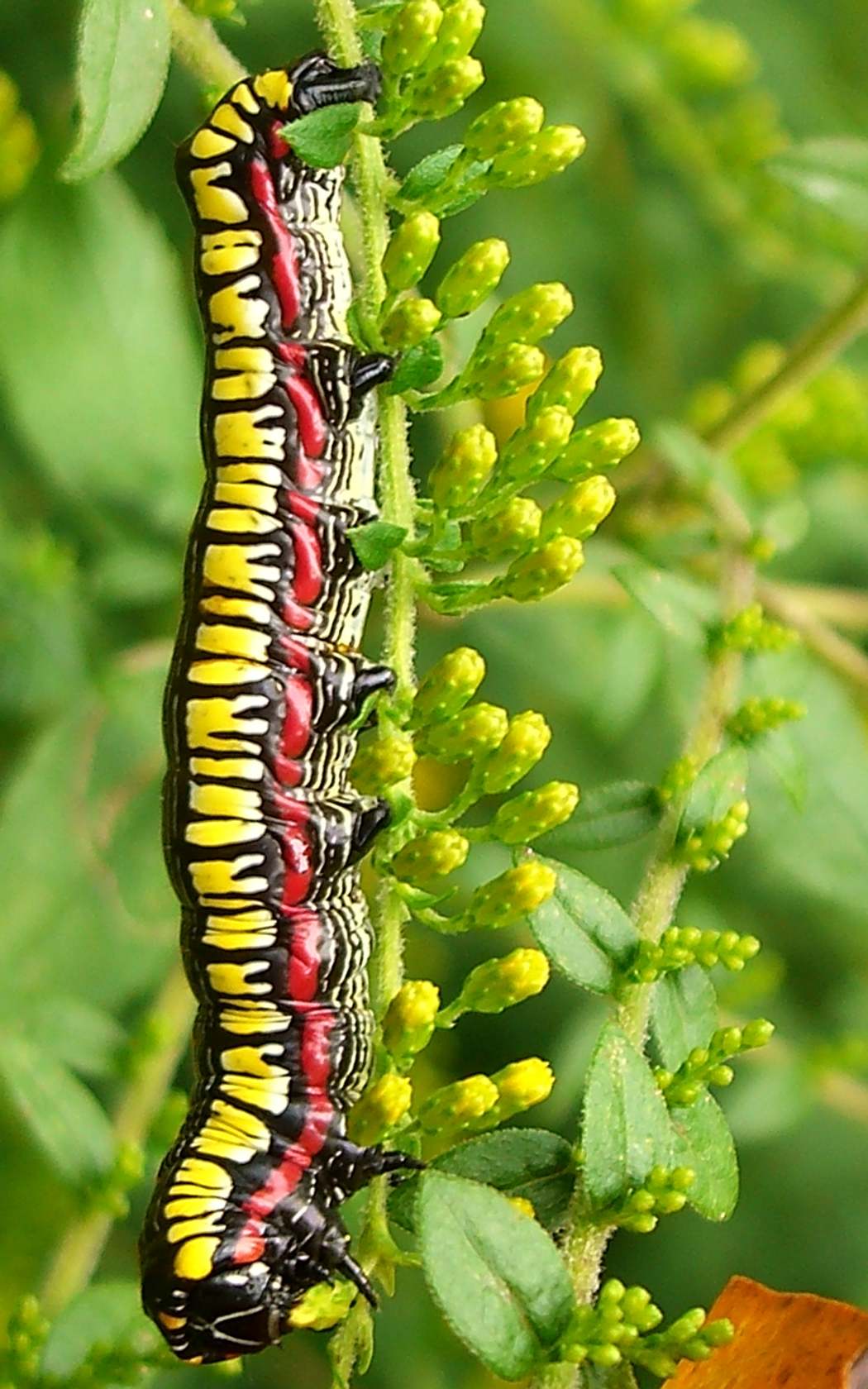
This critter lived at the Cary Institute for Ecosystems Studies in Millbrook, back in 2006. I have no idea what it grew up to be, but the picture is one of my all-time favorite portrait-mode monitor backgrounds.
Hand-held with the little Casio EX-Z850 camera (which is now with our Larval Engineer), ruthlessly cropped from a much larger image, and resized to fit the monitor…
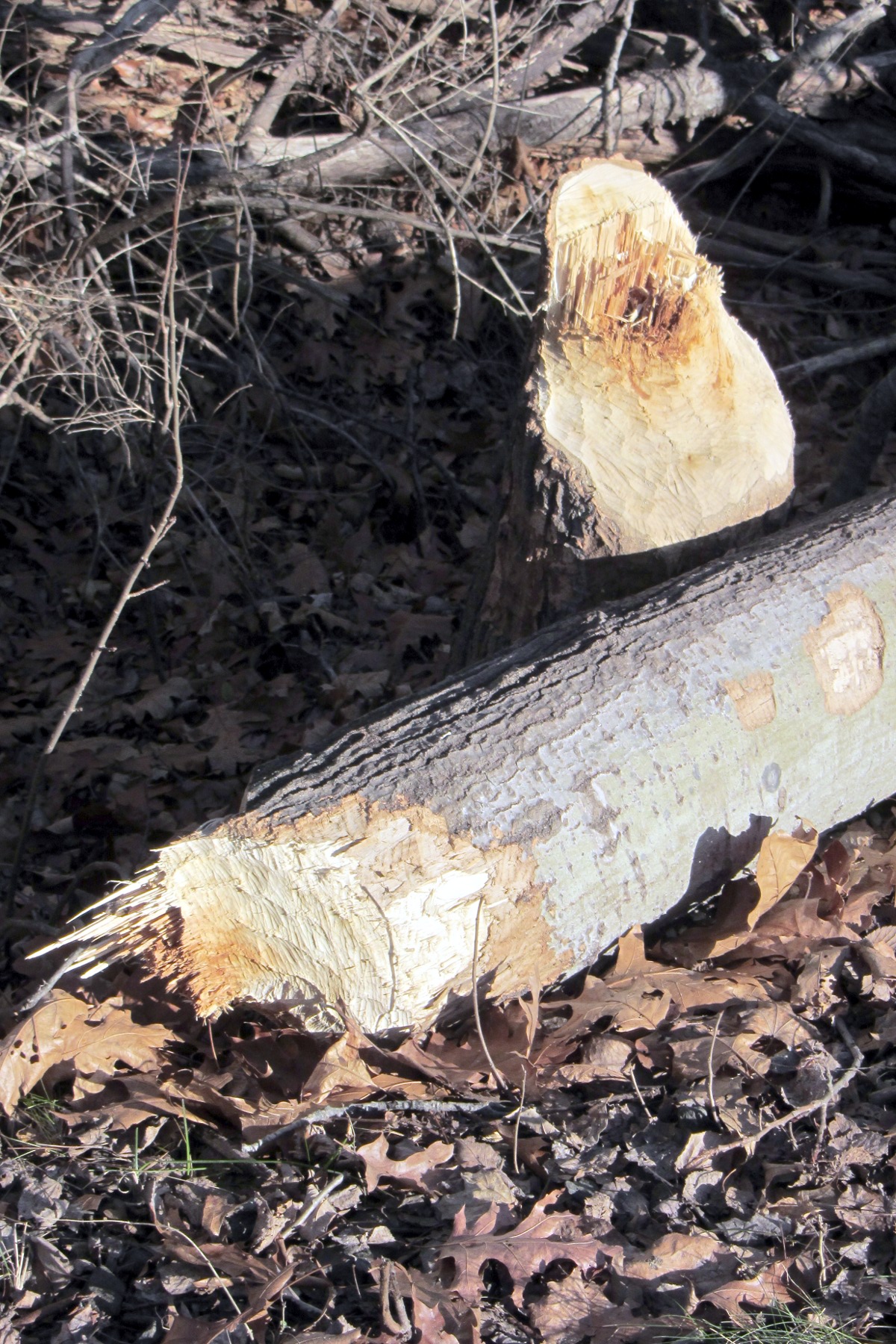
I spotted this bit of engineering while riding on the Dutchess Rail Trail at Lake Walton:
Evidently, the beaver stopped just before the tree toppled, because the last cut looks very much like a chainsaw.
I didn’t spot their lodge out in the lake; they may have tucked it under the bank below the railroad bed.
If they keep this up, they’re sure to get trapped and moved somewhere they can’t interfere with our enjoyment of the natural landscape along the rail trail. [wince]
Our back yard serves as a wildlife thoroughfare, but only after a snowfall can we see who’s been afoot overnight.
Gray squirrels hop across the driveway:
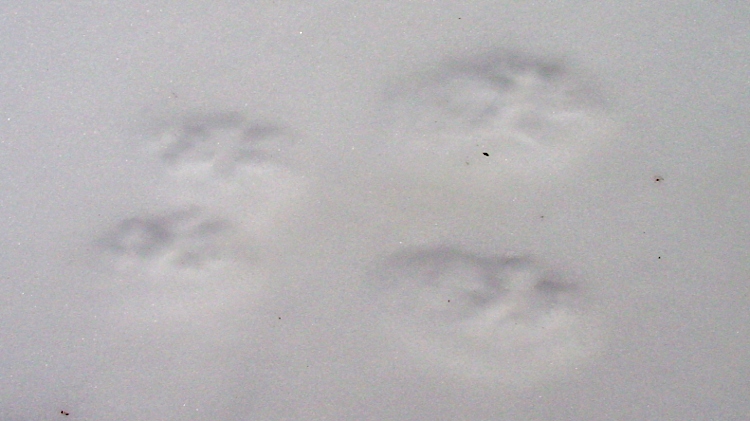
When they’re not busy raiding the bird feeder, that is:

Red foxes leave widely spaced tracks:

Even quadrupeds have trouble maintaining their footing on an icy driveway:

Turkeys travel in flocks:

And sometimes monsters stride the Earth:

Seeing as how it wouldn’t be a suitable blog post without some numbers, here’s a 1 foot / 30 cm scale with fox and turkey tracks:

Those are scary-big birds!
Merry Christmas to all!
My father obviously devoted considerable time to drawing the gills on this critter in his Sophomore Biology Notebook:
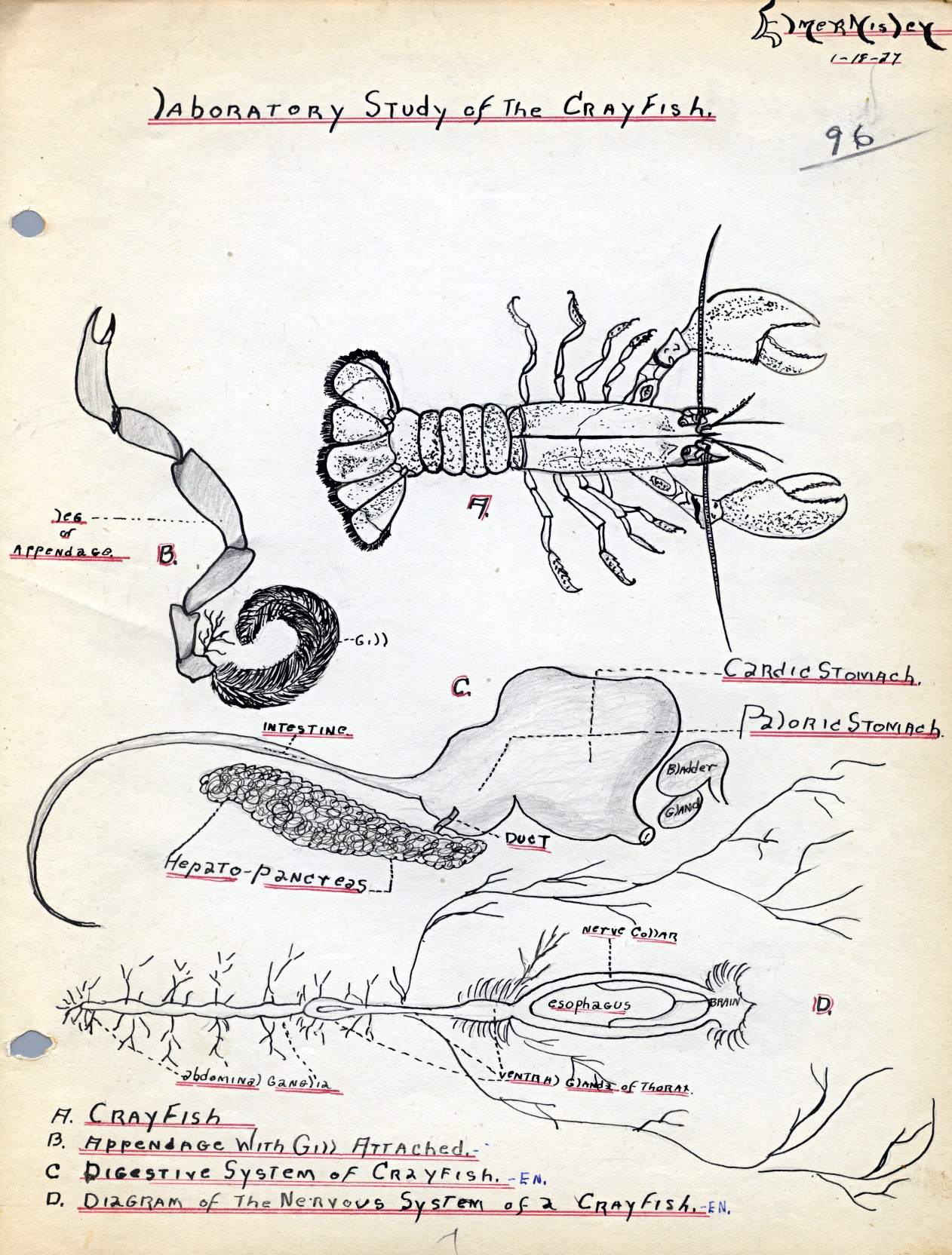
The stomach and nervous system seem sufficiently stylized that they’re not drawn from a specimen; I’m pretty sure a real crayfish doesn’t come apart quite so neatly.
Our Larval Engineer reports that the lab sessions for her second quarter of Anatomy and Physiology will involve dissecting sheep hearts and eyeballs (which arrive in plastic buckets festooned with hazmat stickers for the preservative). She regards this as more than making up for having to sit through A&P lectures and memorizing all those bones & muscles. Must be another generation-skipping trait, is all I can say…
Another page from my father’s Sophomore Biology Laboratory Notebook:
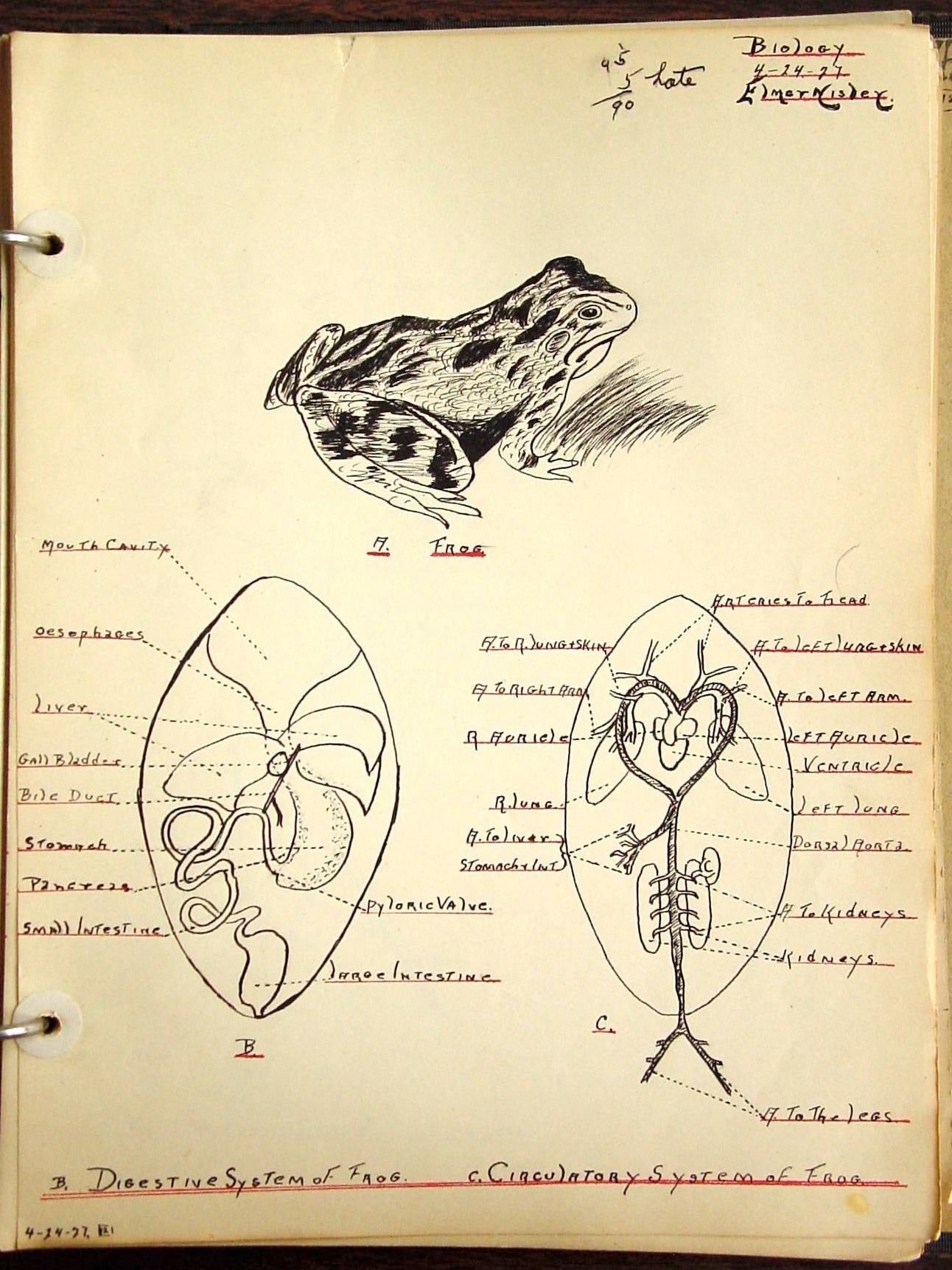
This time he got dinged five points for being late, so that’s not anything new with kids these days…
A detailed look at the frog (clicky for more dots):

They really don’t do labs like they used to…

