The Smell of Molten Projects in the Morning

Ed Nisley's Blog: Shop notes, electronics, firmware, machinery, 3D printing, laser cuttery, and curiosities. Contents: 100% human thinking, 0% AI slop.

Tag: Wildlife

Other creatures in our world

  • Shagbark Hickory Nut Season

    Mary managed to outcompete the local squirrels to the tune of 10 pounds of Shagbark Hickory nuts, which we’ve been enjoying after supper. The thickly armored nuts shrug off ordinary nutcrackers, so we deploy heavy weaponry: good old 10WR Vise-Grip pliers:
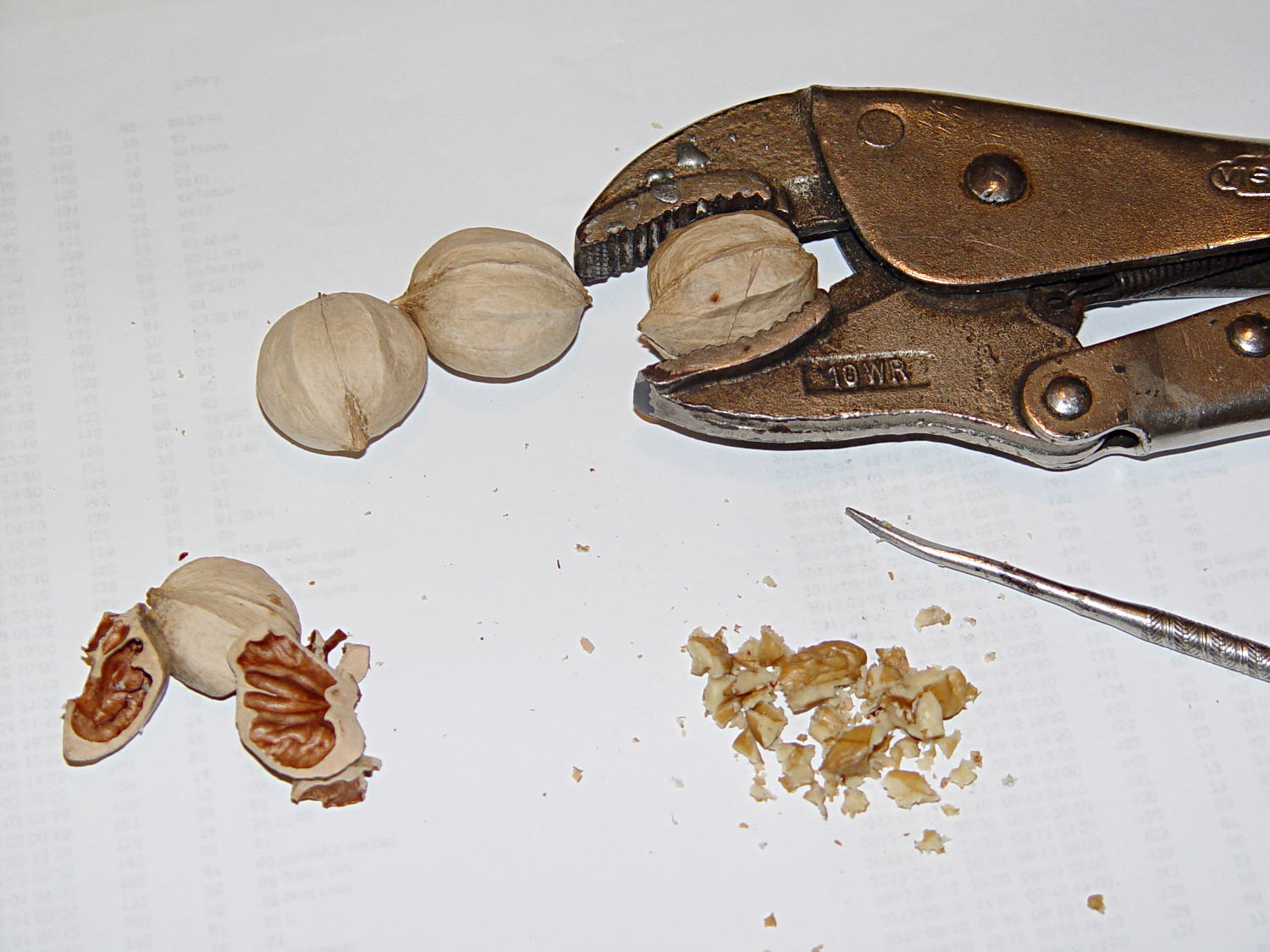
    Cracking nickory nuts with a Vise-Grip
    Cracking nickory nuts with a Vise-Grip

    She describes the process better than I; for what it’s worth, I work on one nut at a time. We both celebrate when a shell releases its nut with minimal damage; most often, we extract fragments into a pile like the one shown. I can process half a dozen nuts before deciding I’ve had enough.

    I’d be in favor of a genetic modification producing a fluorescent green shell, because overlooking a minute piece of shell in that pile of nutmeat is a Very Bad Thing…

    Some Vise-Grip history may be of interest.
  • Monthly Image: Bees in Squash Flower

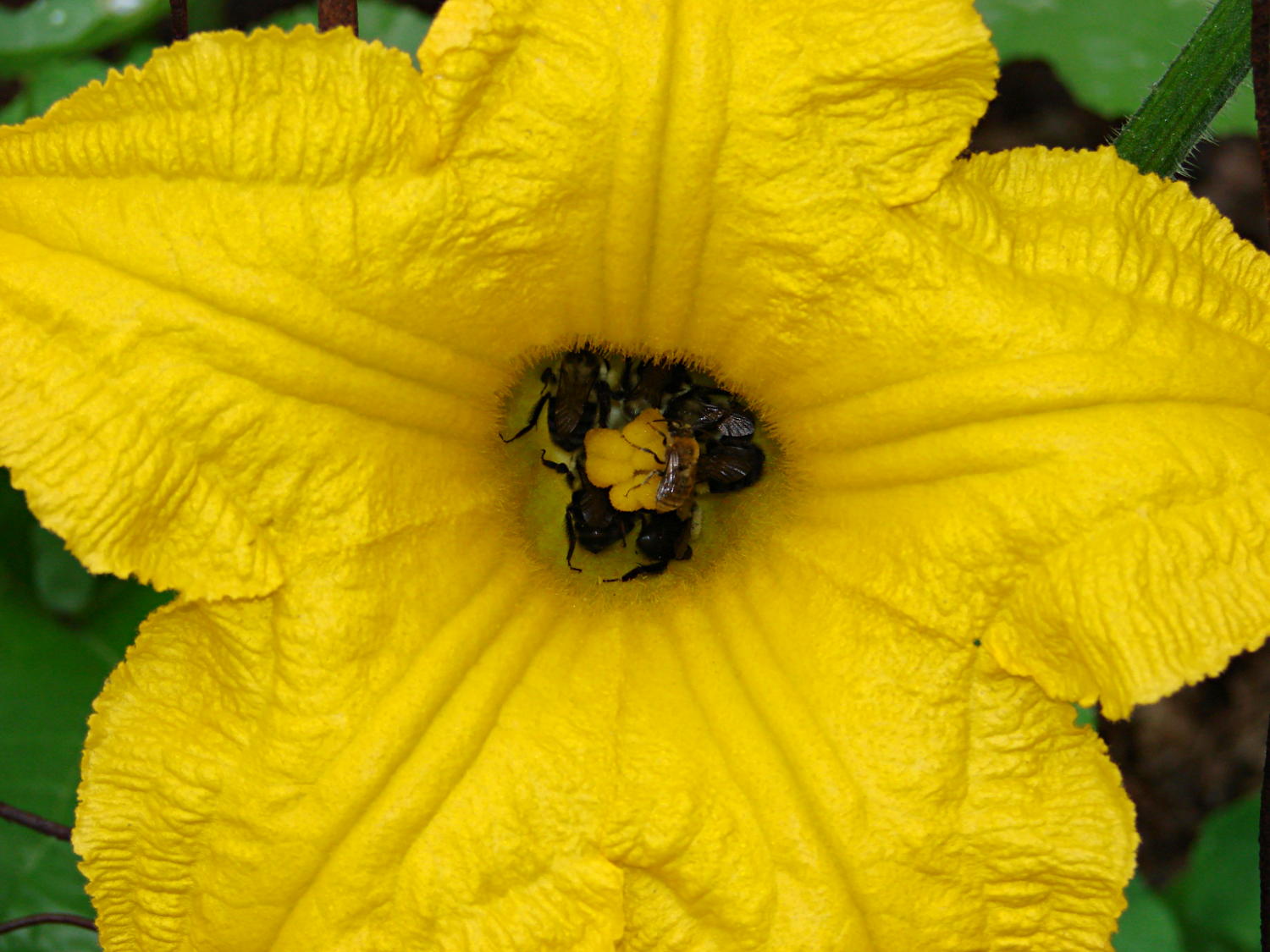
    Back in August, the squash vines were in full flower:

    Bees in Squash Flower - overview
    Bees in Squash Flower – overview

    Here’s a closer look:

    Bees in Squash Flower - detail
    Bees in Squash Flower – detail

    Pop quiz: how many bees do you count?

    With the benefit of watching them move, I counted nine bees in that blossom!

    Winter squash vines bear large flowers (that blossom is the size of my outstretched hand) that attract large bees: bumblebees and their cousins, carpenter bees. Quite often, bumblebees spend the night huddled inside the blossom and emerge early the next day when they reach flying temperature. Honeybees, being more social, return to their hives overnight; we’re pleased to see that there’s at least one feral hive in the neighborhood.

  • LED Bug

    Our Larval Engineer has a bug report that blows away anything I’ve ever seen:

    Check out her post for the rest of the story…

    Forgot to mention this when she first told me about it; the discussion of LED and CFL lifetime brings it to mind.

  • Cooper’s Hawks

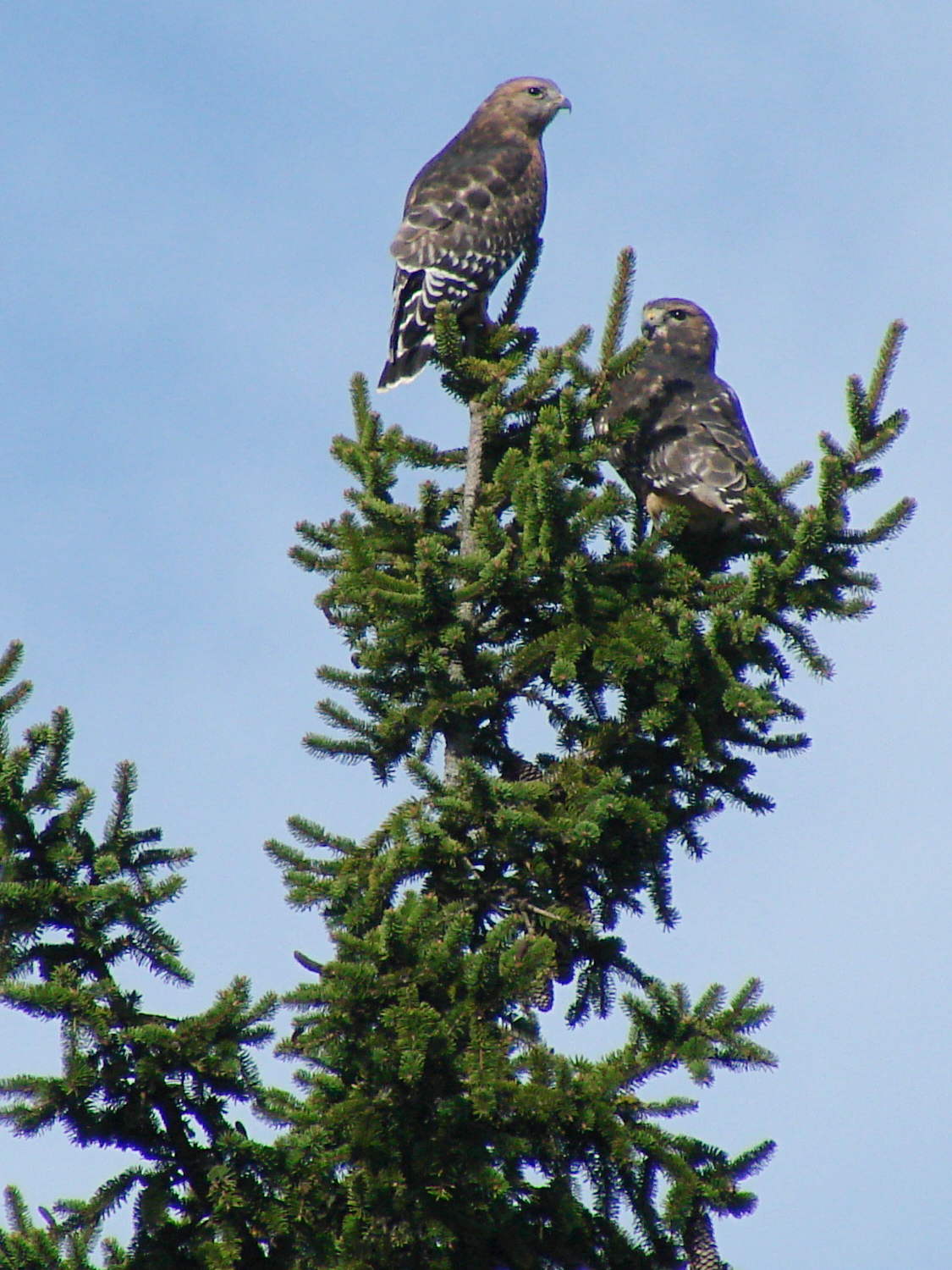
    High atop that tree again:

    Coopers Hawks in evergreen treetop
    Coopers Hawks in evergreen treetop

    The bird on the right seems larger and may be the female of a mated pair, but it’s hard to tell at this distance. They could be siblings from the most recent nest in the area, but hawks aren’t chummy birds.

    Search for hawk and you’ll find many more pix; I think they’re photogenic.

    Go, hawks, go!

    It’s taken at the usual 12x zoom with the 1.7 teleadapter on the Sony DSC-H5. I can’t justify the kilobucks required for a large-sensor SLR with nice long glass, but it’d definitely improve the picture quality around here. [sigh]


  • Monthly Image: Cormorants at Vassar Farm Pond

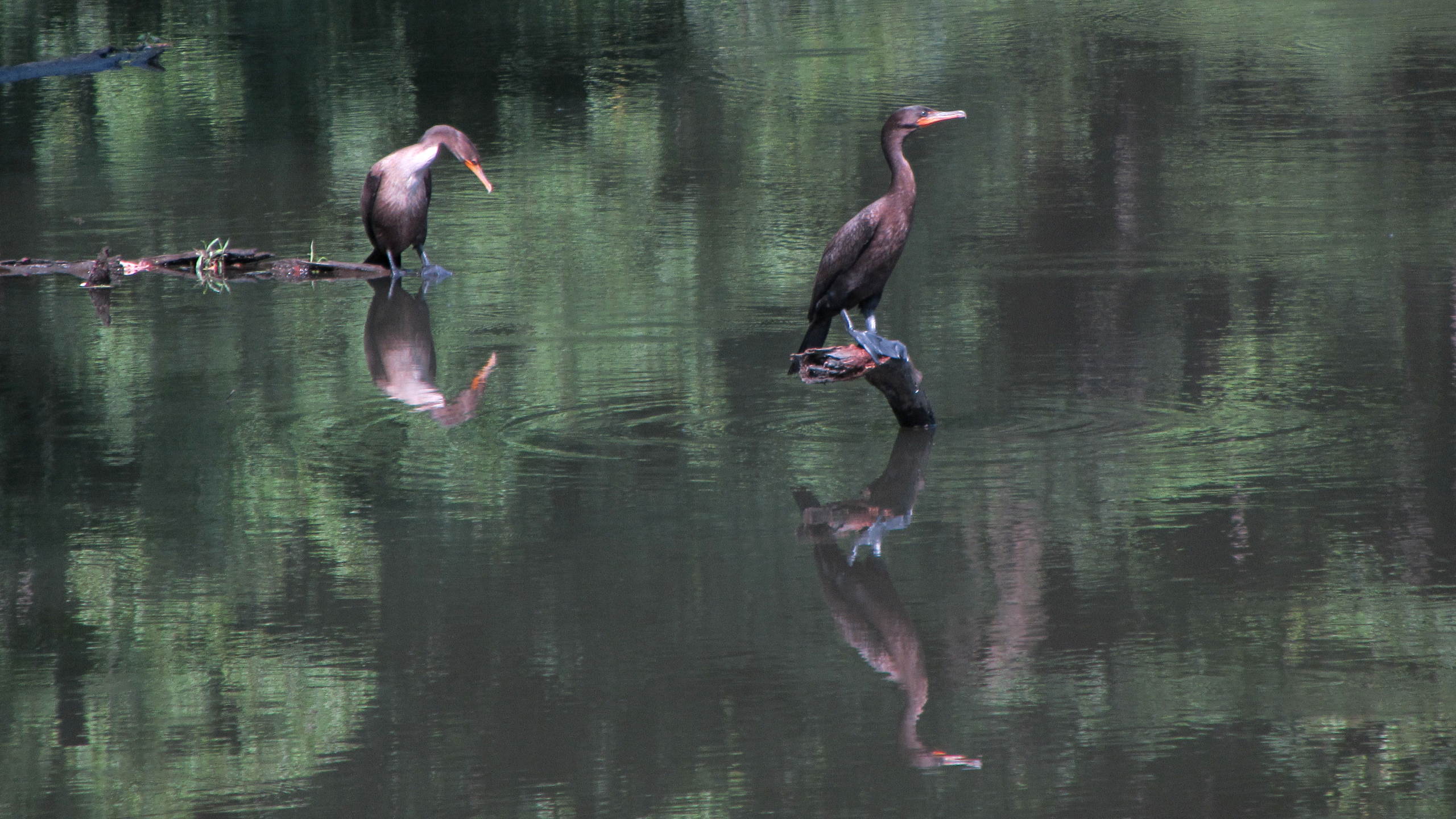
    This pair of Double-crested Cormorants took up residence for a few weeks on the pond at Vassar Farm:

    Cormorants at Vassar Farm pond
    Cormorants at Vassar Farm pond

    The rubbery blue feet should be diagnostic, but don’t appear in any of our references. They’re definitely not Blue-footed Boobies, that much we know.

    They’re XORed with turtles on the same snags.

    Hand-held with the Canon SX230HS at full zoom across the pond.

  • Hunting Spider

    Back in the early 1950s, Anderson’s state-of-the-art awning windows had screens on the inside: you must open the screen to open or close the window. This surely seemed like a good idea at the time, but in practice we don’t open the screen very much, very often, during peak insect season, as insects tend to collect on the outer surface.

    We’ve learned to live with the smaller bugs, but this critter gave me pause one evening:

    Hunting Spider on Window Screen
    Hunting Spider on Window Screen

    It’s a Hunting Spider (or, more exactly, a Wolf Spider), perched on the outside of the screen, inside the (opened) window. The (hard inch) screen grid is about 70×55 mils, so those legs span about 2-1/8 inch, call it 55 mm.

    We’re big fans of spiders, but this portends a bit more intimacy than I’m comfortable with. I blew through the screen to tickle its tummy until it moved outside the window frame, then opened the screen and closed the window without pause.

    Wake up with one of those on your pillow and tell me how it works for you.

  • Grasshopper

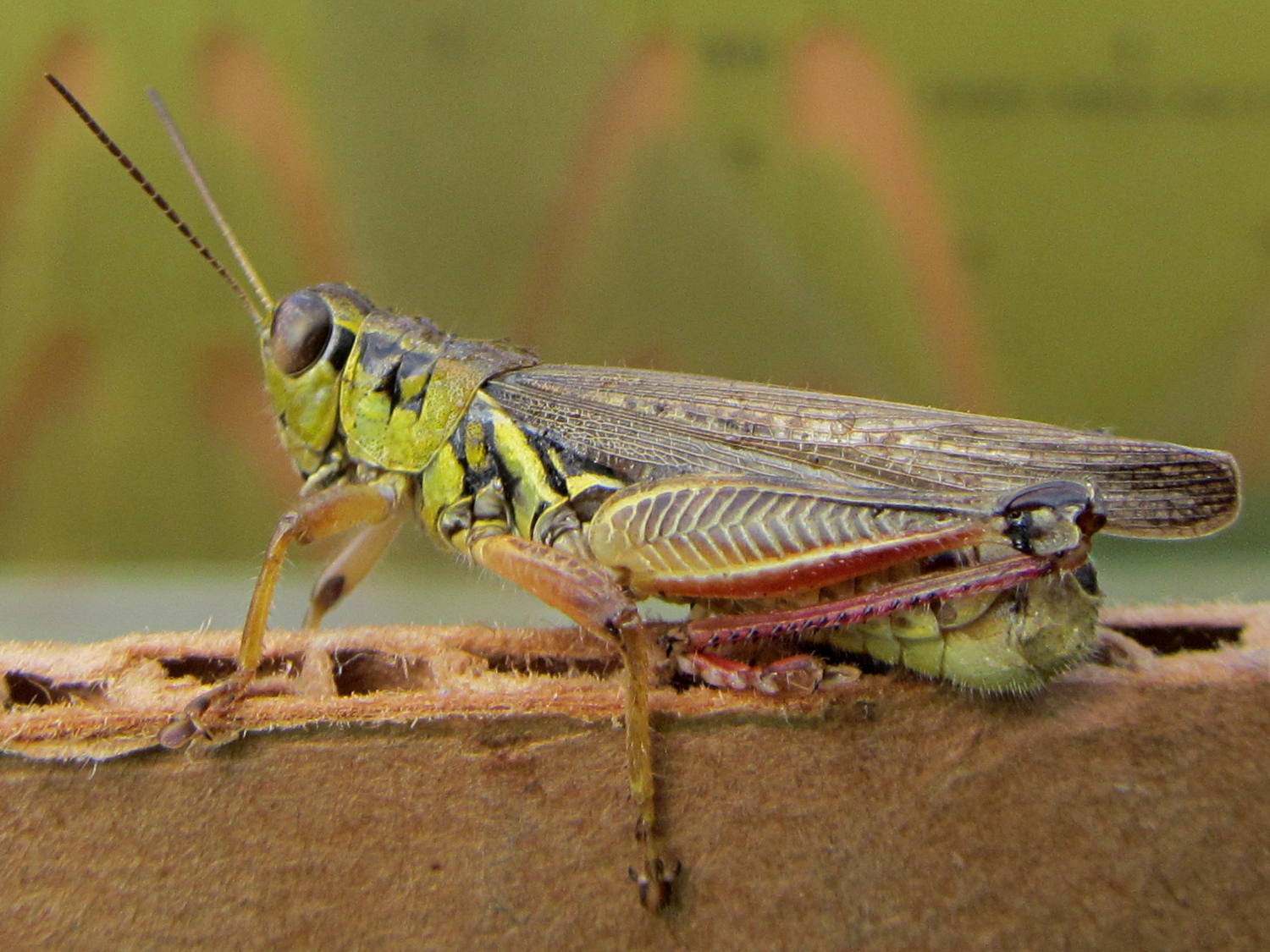
    I donated the last of Mad Phil’s stuff to a local nonprofit’s tag sale, where it helped bulk up the bottom line a bit. While I unpacked the van, a grasshopper stopped by to supervise:

    Grasshopper on corrugated cardboard
    Grasshopper on corrugated cardboard

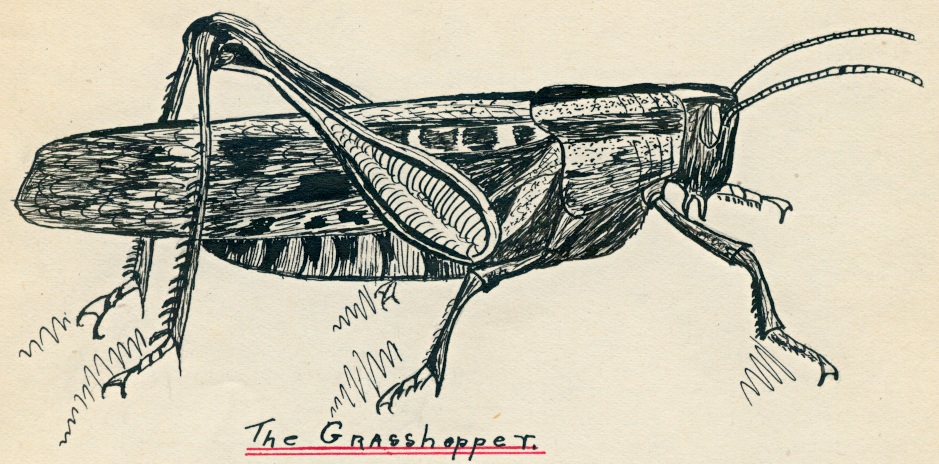
    I’m sure Dad worked from a model while he did this drawing:

    The Grasshopper
    The Grasshopper

    You couldn’t imagine something like that if you’d never seen one…

    The green background in the top picture is a sine-curve drafting template. Remember drafting templates?