Ed Nisley's Blog: Shop notes, electronics, firmware, machinery, 3D printing, laser cuttery, and curiosities. Contents: 100% human thinking, 0% AI slop.
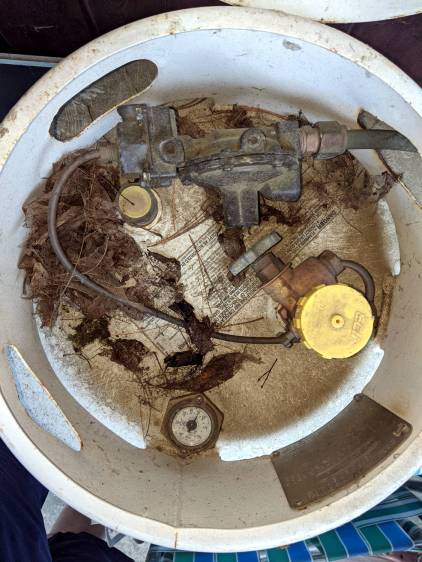
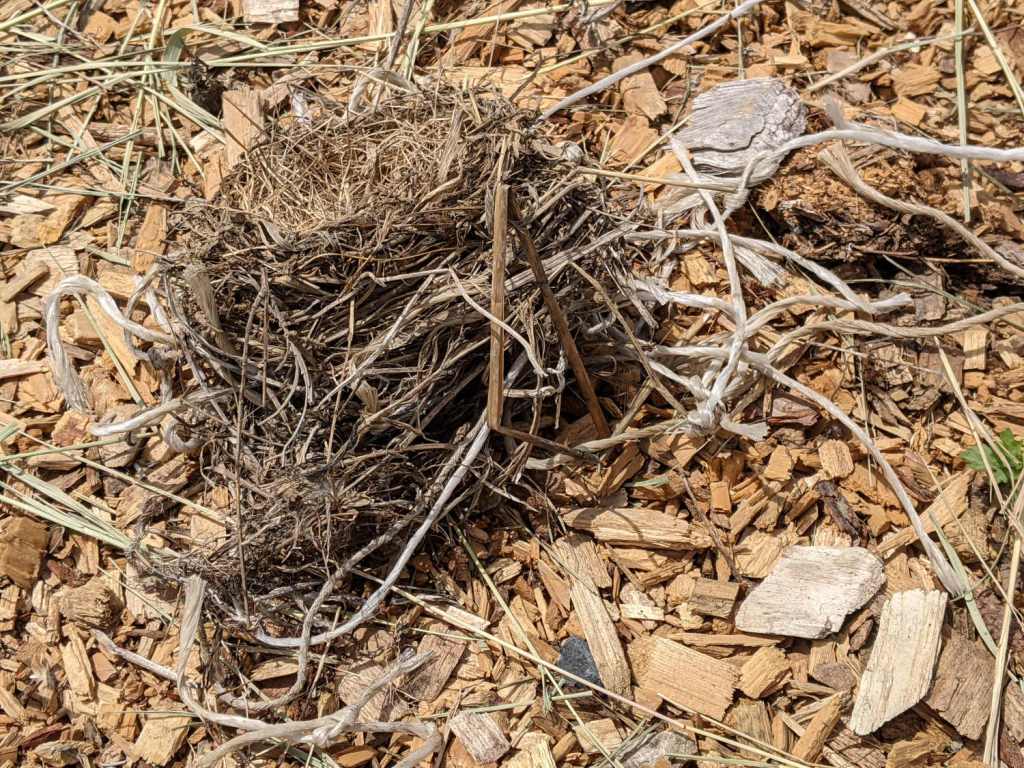
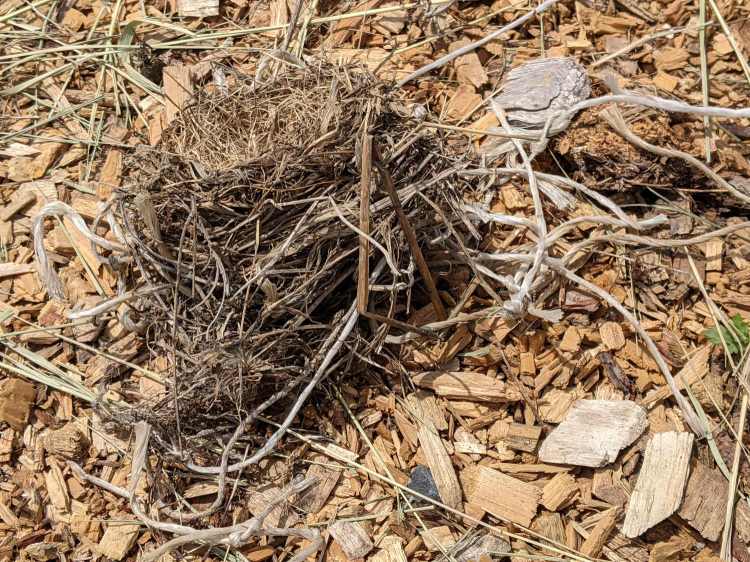
A great musical interlude on the patio announced an airlift of construction materials eventually producing this pile inside the top cover of the propane tank:
Carolina Wren – nest started atop propane tank
The male Carolina Wren switched from the Tweedle of Great Nestbuilding to the less musical Mighty Chirr of Disapproval, presumably because he noticed a mouse (or, perhaps, chipmunk) occupying the lower ring of the tank. Rodents and birds do not coexist well at all; I have no doubt a mouse would climb right up the tank for a supply of breakfast eggs.
I must blow the crud off the tank before the next fill.
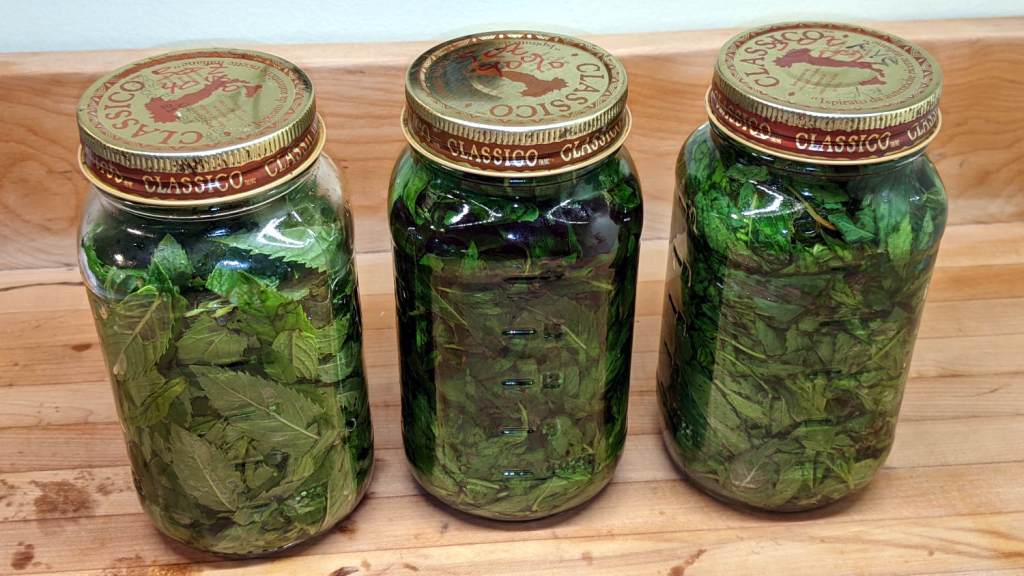
I clearcut a stand of spearmint and turned it into three jars of what should become mint extract:
Homebrew mint extract – start 2021-06-17
The left jar has 3 ounces of mint mostly covered with 80 proof vodka and the other two jars each have 5 ounces submerged in 180 proof grain alcohol.
Nine days later:
Homebrew mint extract – 2021-06-26
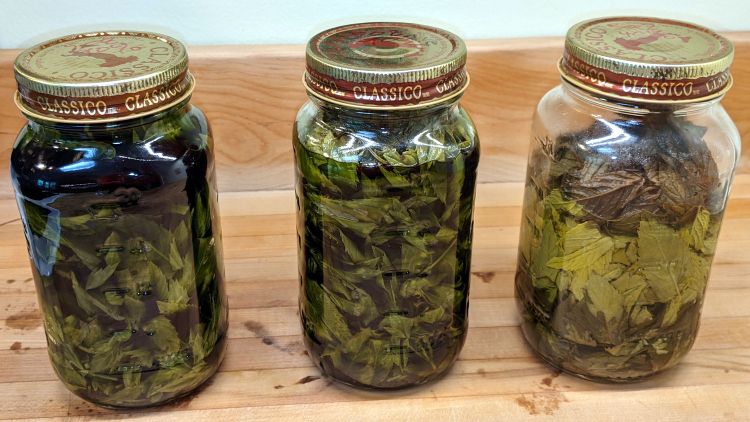
The vodka is now on the right and shows a weird layering caused by the leaves extending above the light yellow liquid; I’ve been inverting the jars every few days. The grain alcohol looks more like the previous iteration, with uniformly decolored leaves in dark green liquid.
A closer look:
Homebrew mint extract – vodka vs grain alcohol – 2021-06-26
What’s happening in the vodka jar does not look like a nominal outcome …
The underside of a spinach leaf makes a fine place for a spider to guard her egg sac, right up until the leaf arrives on the kitchen cutting board just before breakfast:
Spider guarding egg sac
We deported her (and her incipient family) to the flower garden just outside, wished her well, and continued with breakfast.
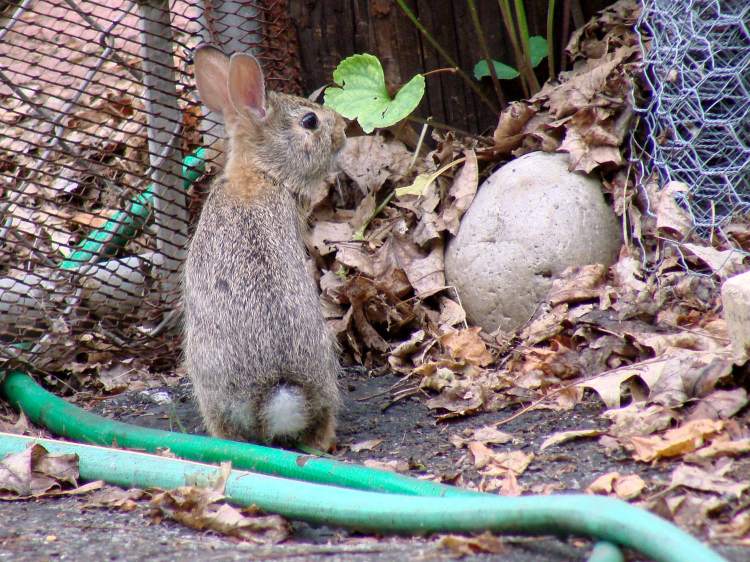
Mary chased a small rabbit out of her garden a few days ago, whereupon we up-armored a few vulnerable parts of the fence. The culprit turns out to be insufferably cute:
Young Rabbit – at the gate
You cannot be annoyed with something like this:
Young Rabbit – alert
Oh, yes, you can. Rabbits are basically eating machines:
Young Rabbit – grazing
They’re welcome to all the greenery in the yard, just nothing in the garden:
Young Rabbit – overcompressed A
It’s known as a 2×2 Bunny, because it can fit through that size opening in a chain link fence while traveling at a dead run.
This one has yet to learn about being wary around the Big People:
Young Rabbit – overcompressed B
The alert reader will have noted the crappy quality of the last three pictures, at least in comparison with the first two. It’s the difference between digital zoom on my Pixel 3a phone applied to a zoomed-all-the-way image and optical zoom on a “real” camera (admittedly, an old Sony DSC-H5). On the other paw, I had the phone in my pocket when Mary spotted the bunny on the driveway, which counts for everything in similar situations.
JPG compression doesn’t handle hair particularly well, so the low-res bunny wears a rather artistic brush-stroke coat; it’s OK if you like that sort of thing.
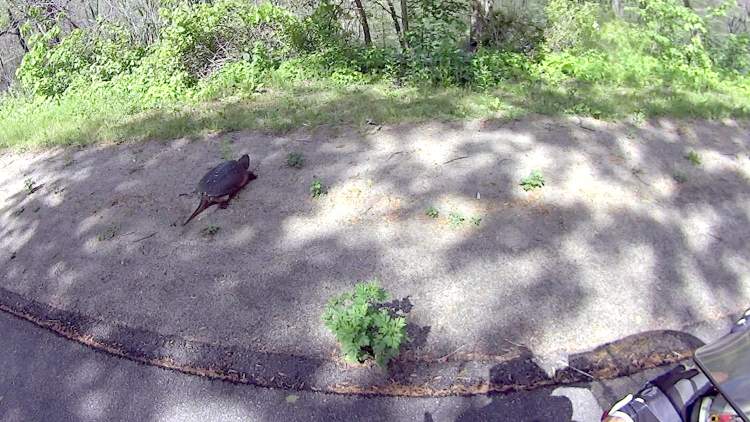
A snapping turtle headed toward the beaver pond on the Dutchess County Rail Trail:
Snapping Turtle – DCRT – 2021-05-26
At this time of year and phase of the moon, she is most likely in search of a good spot for a nest and her clutch of eggs. Being an aquatic creature, she and her progeny surely benefit from Team Beaver’s engineering.
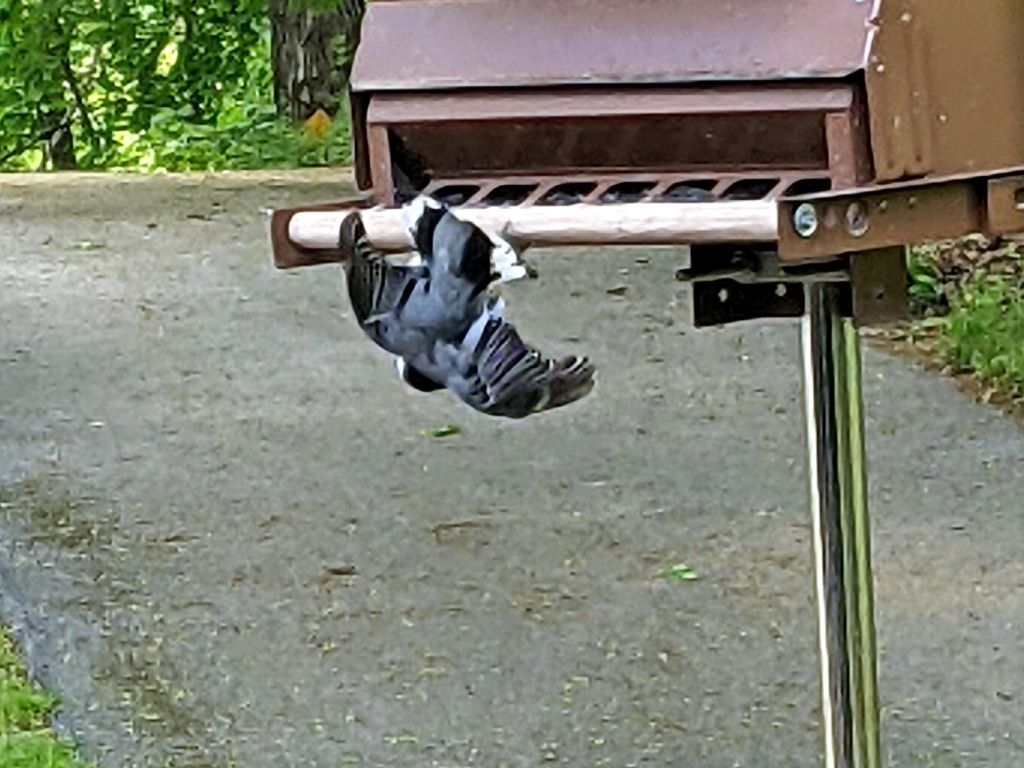
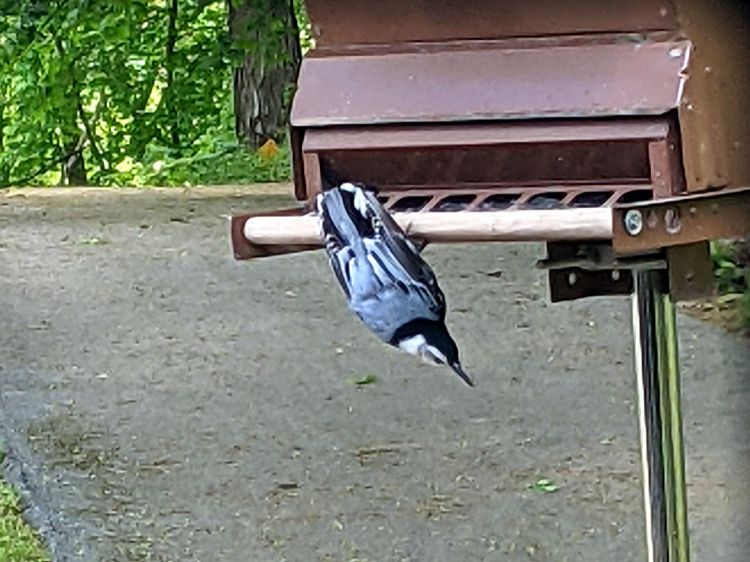
Mary spotted a White-breasted Nuthatch facing off against a red squirrel on the patio near the birdfeeder, wherein the nuthatch spread its wings to look as fearsome as possible. The squirrel seemed unfazed, perhaps because a bird the size of my thumb simply doesn’t pose much of a threat.
A few minutes later, the nuthatch repeated the display from the feeder, starting with a hostile side-eye:
Nuthatches are perfectly happy hanging upside-down from any convenient perch, so it’s not quite as ungainly as it may seem. However, the threat bounced off the squirrel, which continued stuffing itself from seeds scattered by none other than the nuthatch.
The nuthatch threat display seems identical to the nuthatch courtship display, so we may have been witnessing an offer for rishathra.
Ya never know!
Taken through two layers of 1955 window glass with the Pixel 3a zoomed all the way, then ruthlessly cropped.