Ed Nisley's Blog: Shop notes, electronics, firmware, machinery, 3D printing, laser cuttery, and curiosities. Contents: 100% human thinking, 0% AI slop.
Of late, the magnetic stirrer mixing my morning cocoa occasionally doesn’t start spinning when I turn it on, which calls for some investigation.
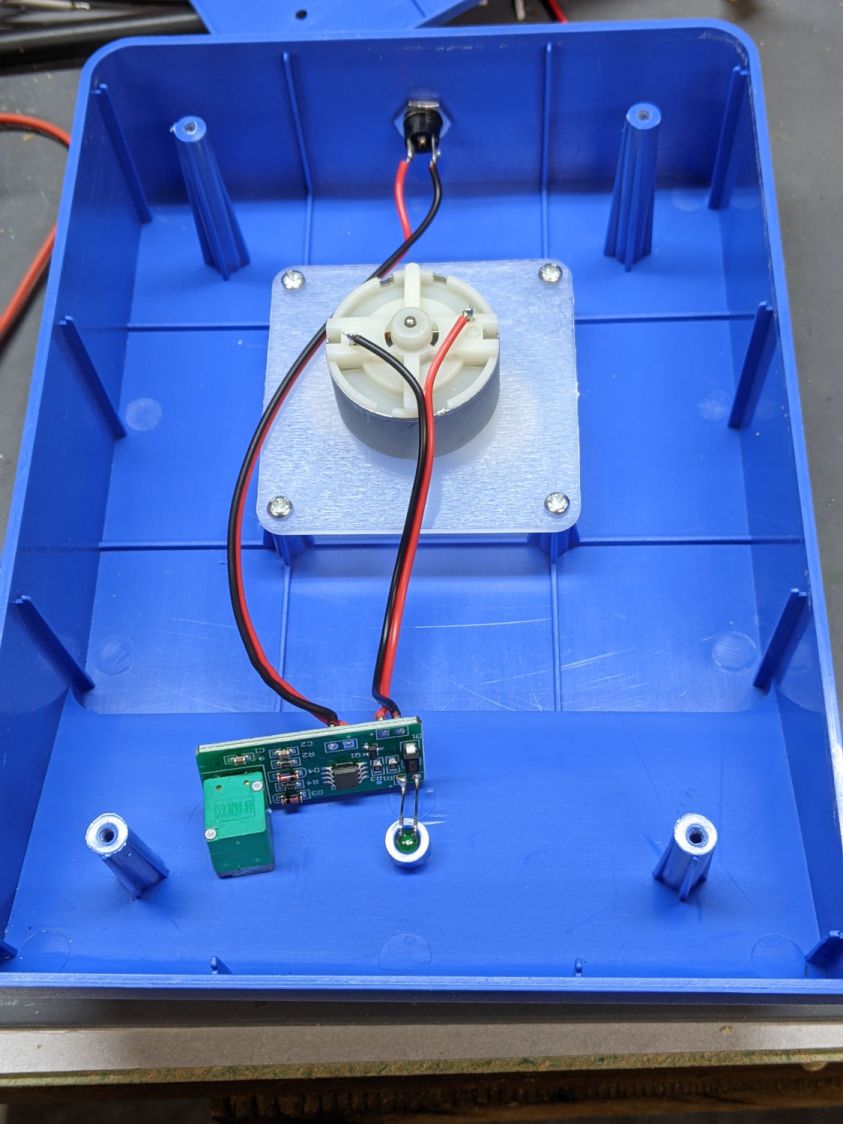
Removing the four obvious screws concealed under the rubber feet and prying off bottom cover reveals the trivial innards:
Magnetic stirrer – interior
The speed adjustment pot holds the little circuit board in place, with the green LED setting its jaunty angle.
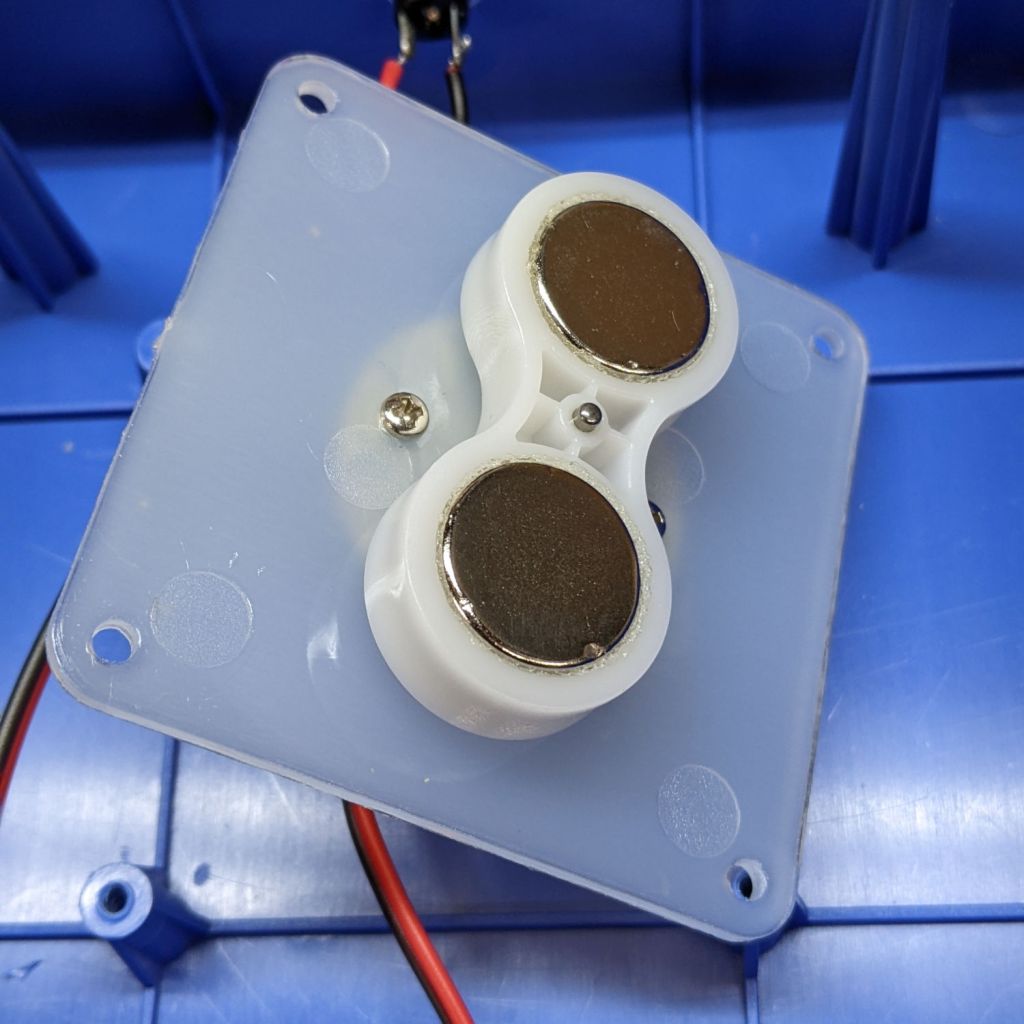
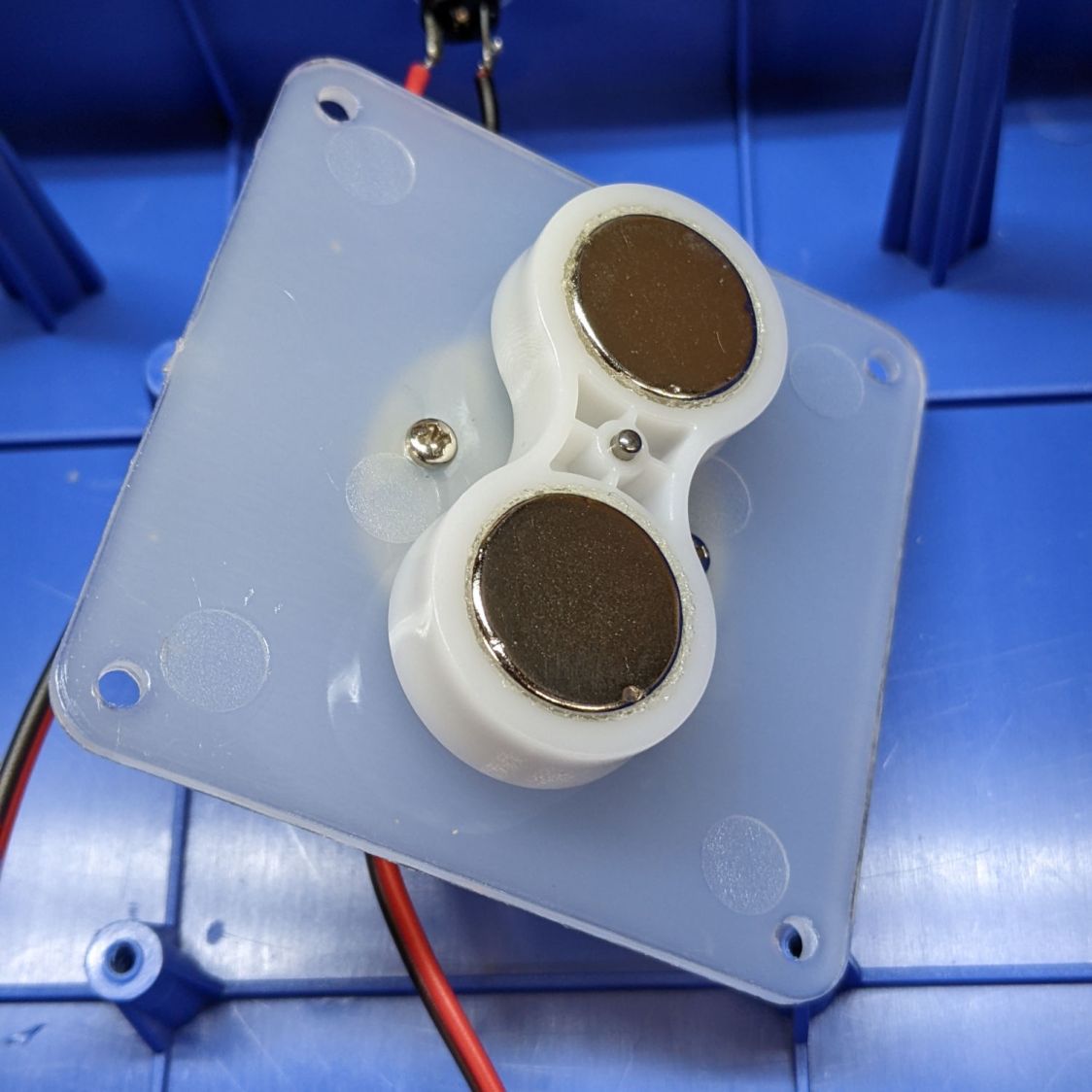
The motor spins a pair of neodymium magnets:
Magnetic stirrer – magnet holder
I expected a gearbox instead of the direct drive setup.
Perhaps those whirling neodymium magnets have been slowly demagnetizing the motor’s internal (alnico?) magnets.
The motor brushes seem to be a pair of stiff wires, rather than carbon blocks, contacting the commutator, the wear from which may account for motor’s decreasing startup enthusiasm. Even though I didn’t expect a BLDC motor, this one may have been overly cheapnified.
Perhaps kickstarting the motor with the steel fork I use to fish the stirrer magnet out of the mug will get the thing going.
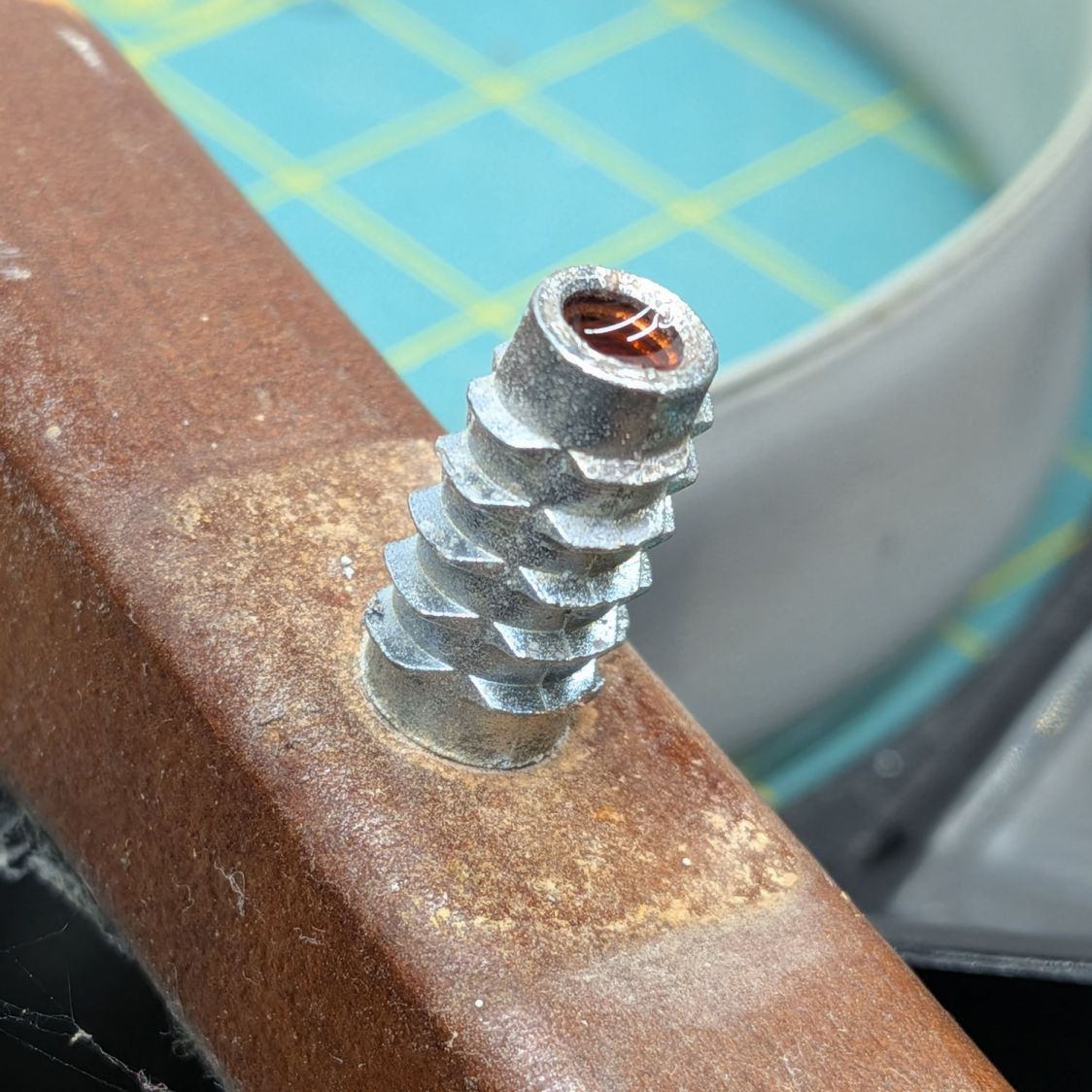
A clothes rack Mary intended use with some work-in-progress quilts seemed entirely too wobbly for the purpose, so I tried tightening its screws. This did not go well, as some of the threaded inserts sunk into the vertical bars spun freely and, with a bit of persuasion, pulled straight out of their sockets:
The reddish fluid is Kroil penetrating oil I hoped would free the screws from the corrosion locking them into the inserts. After an overnight soak, they still required force majeure:
Clothes rack screws – threaded insert in vise
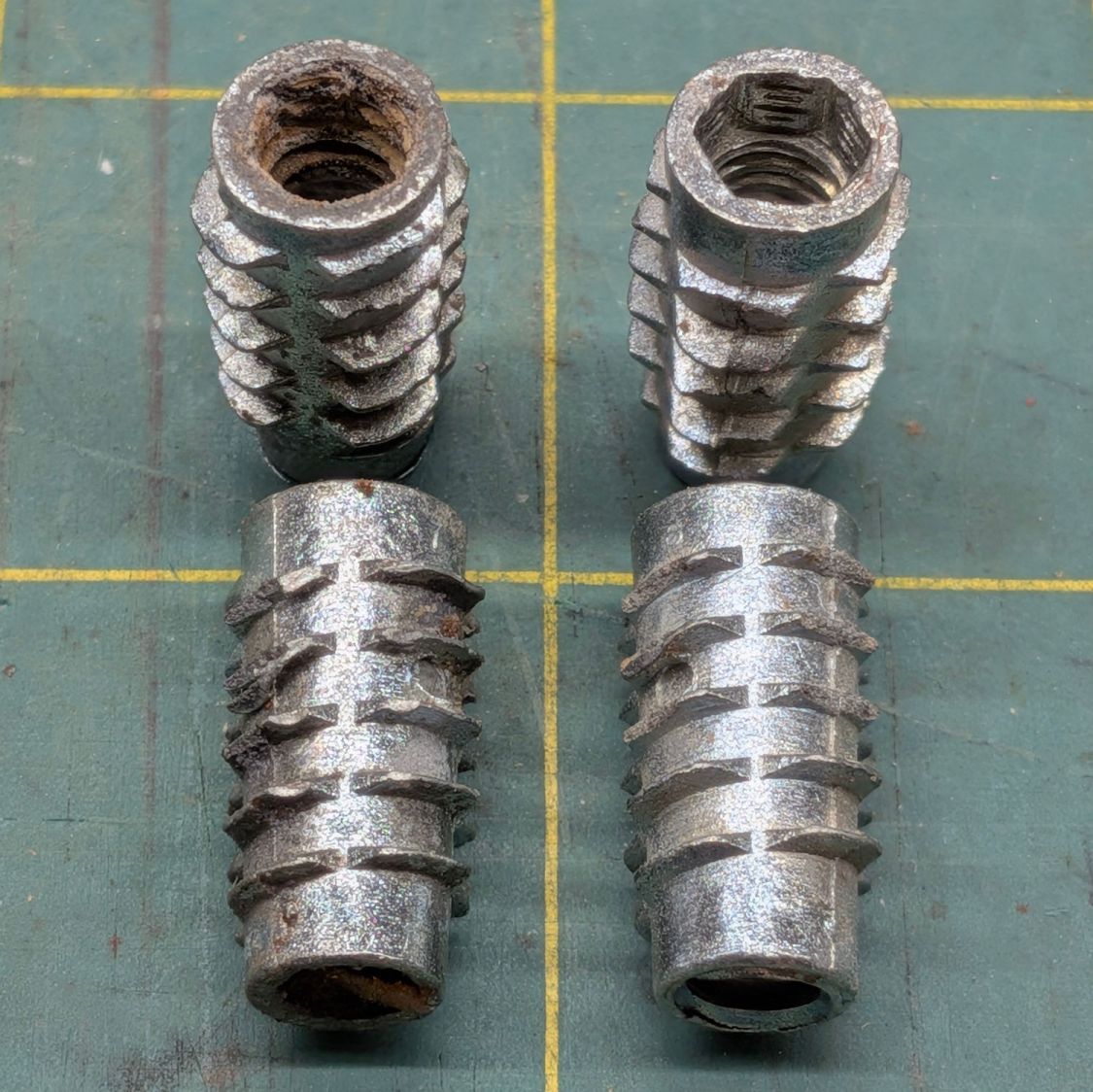
The two inserts on the left came from the top of the rack and the other two from the bottom:
Clothes rack screws – threaded insert corrosion
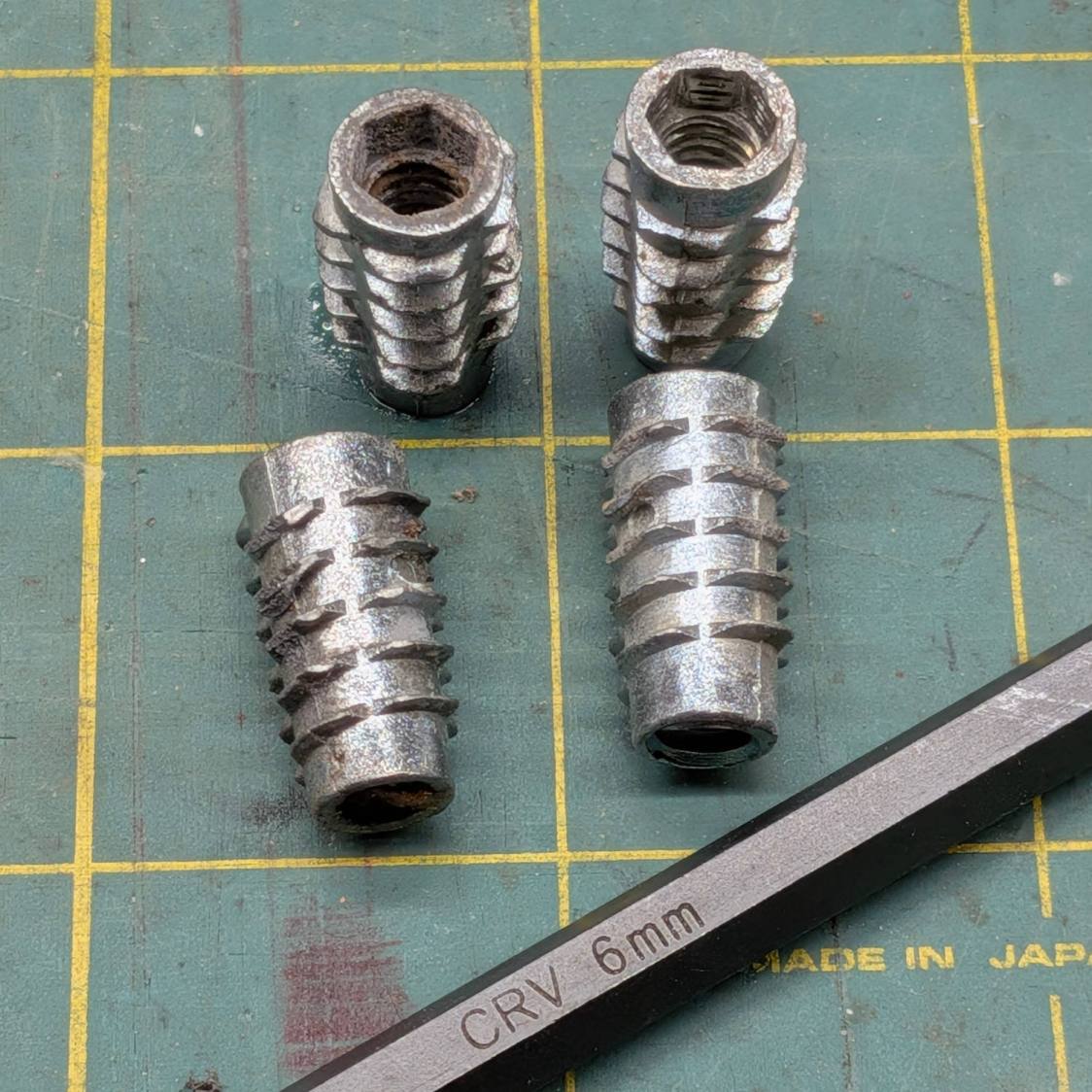
Similar inserts have a hex drive recess and, because these are for 1/4-20 screws, I expected an inch size hex key. Nope, they want a hard metric 6 mm:
Clothes rack screws – threaded insert reformed
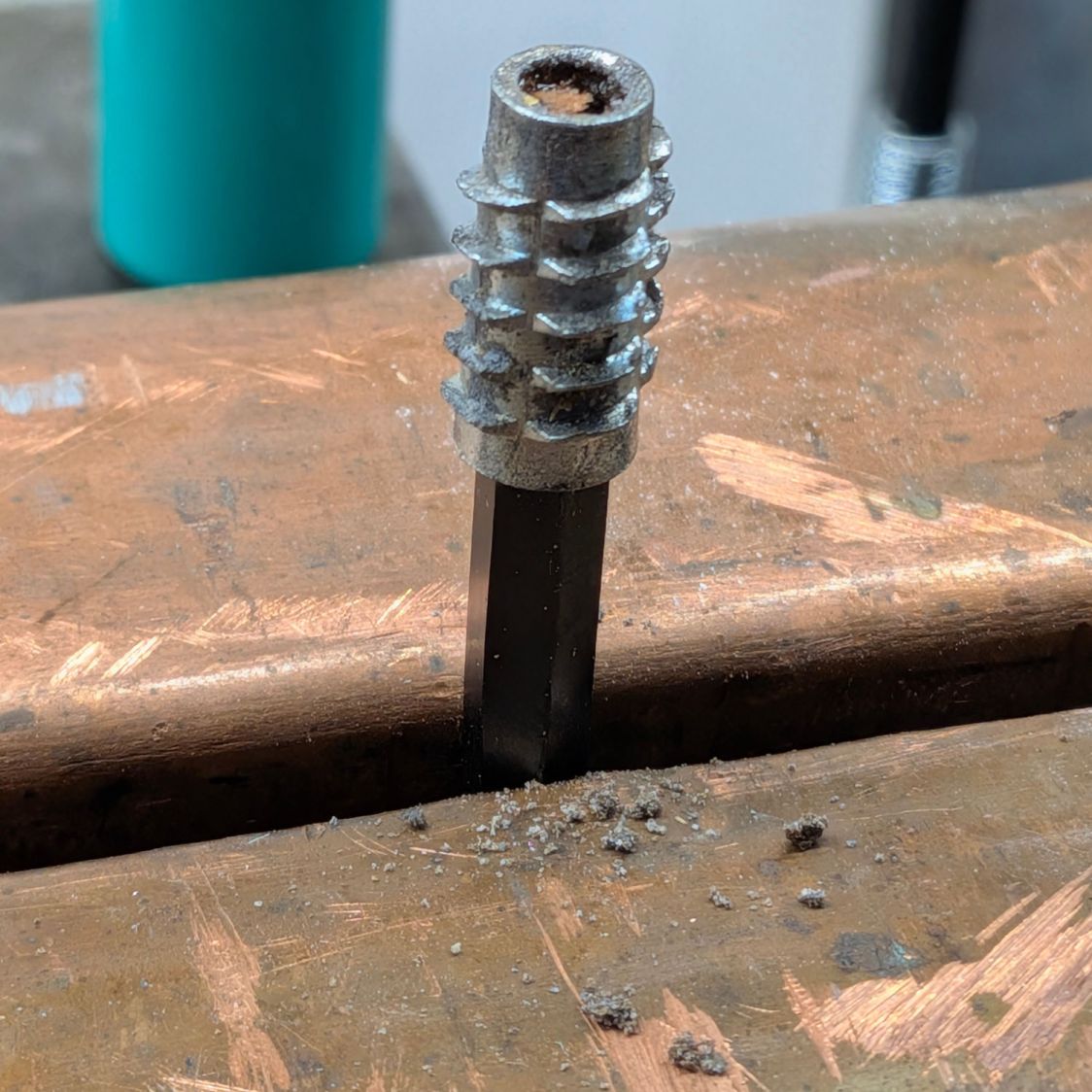
I cleaned up the corroded inserts by the simple expedient of tapping them firmly onto the 6 mm wrench held in the vise:
The crud around the bottom fell out of previous contestants during their reformation.
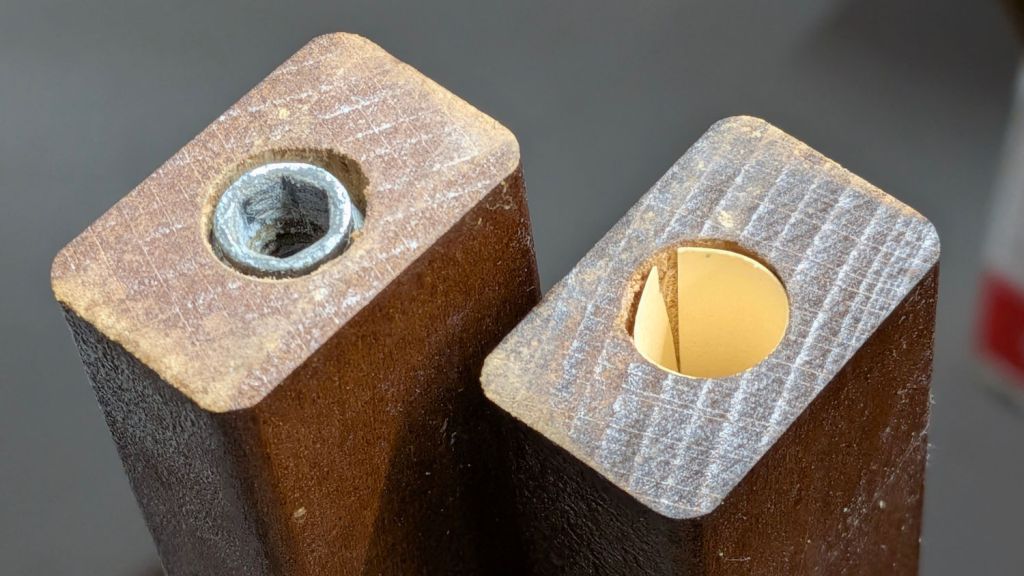
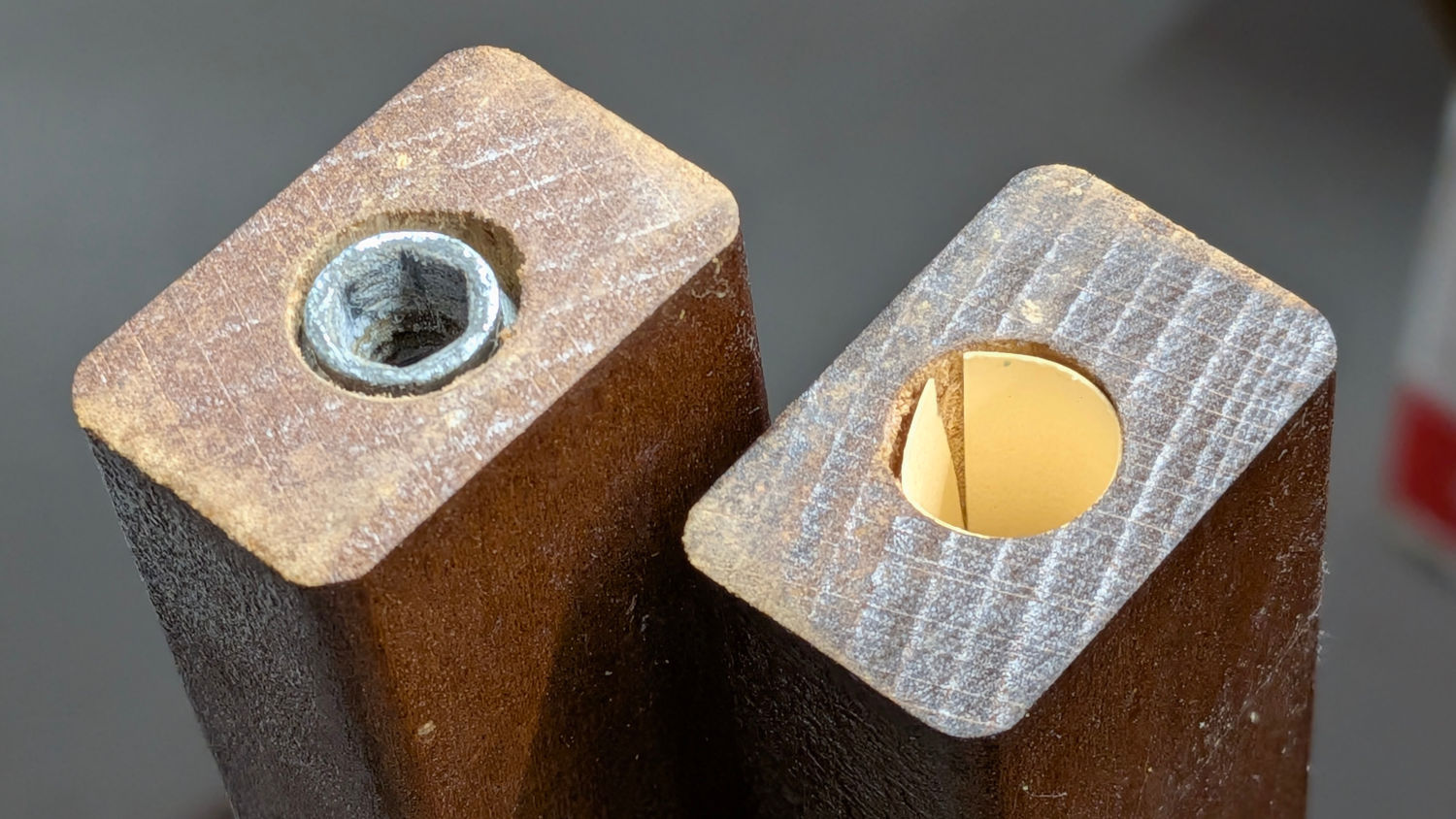
I considered epoxying the inserts in place, but settled for tucking a thick paper shim into each hole:
Clothes rack screws – threaded insert shim
They’re entirely snug right now and, should they work loose, I’ll coat the hole with epoxy, roll up another shim, screw the insert in place, await curing, then declare victory and hope nobody must ever remove them.
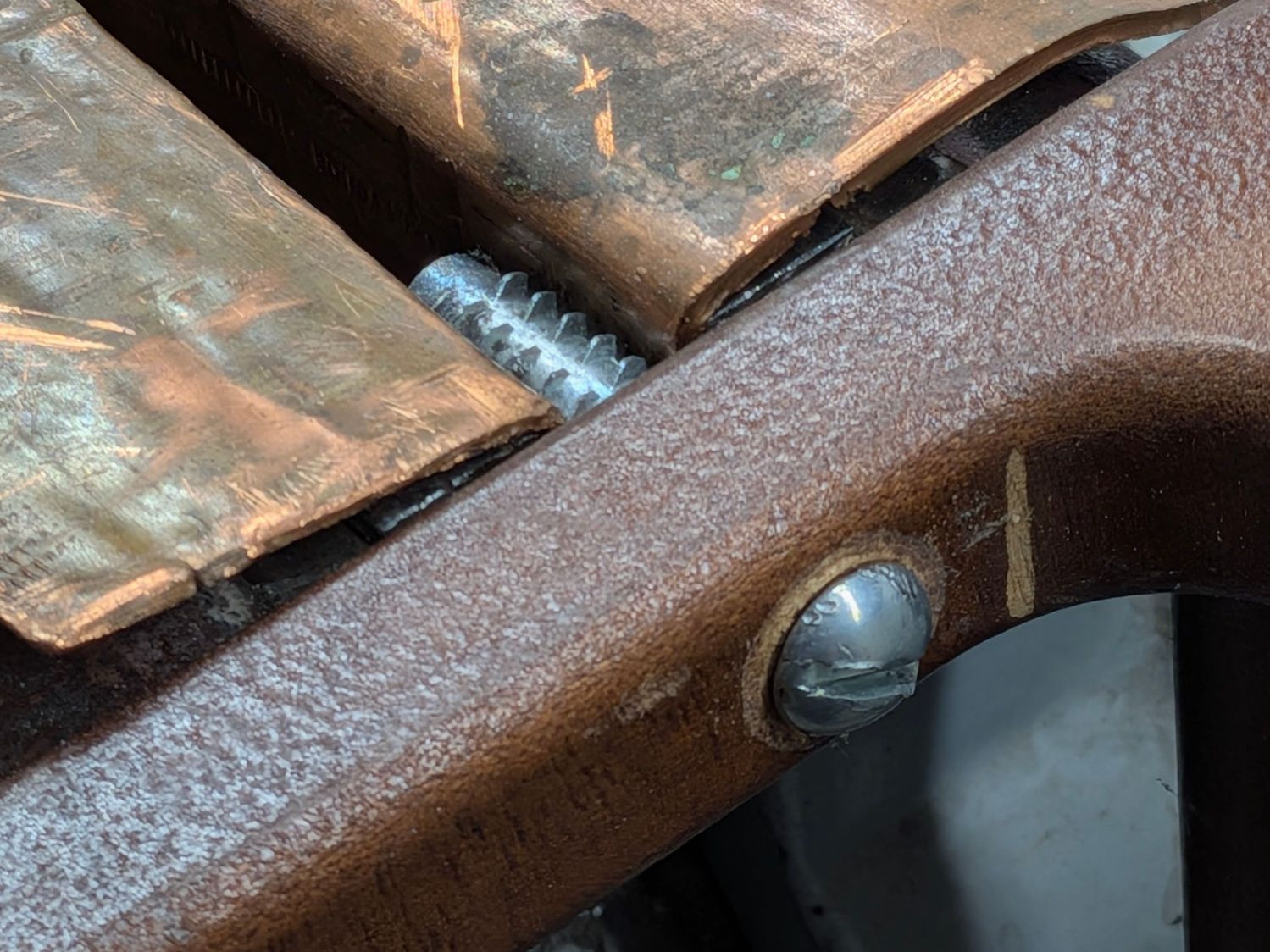
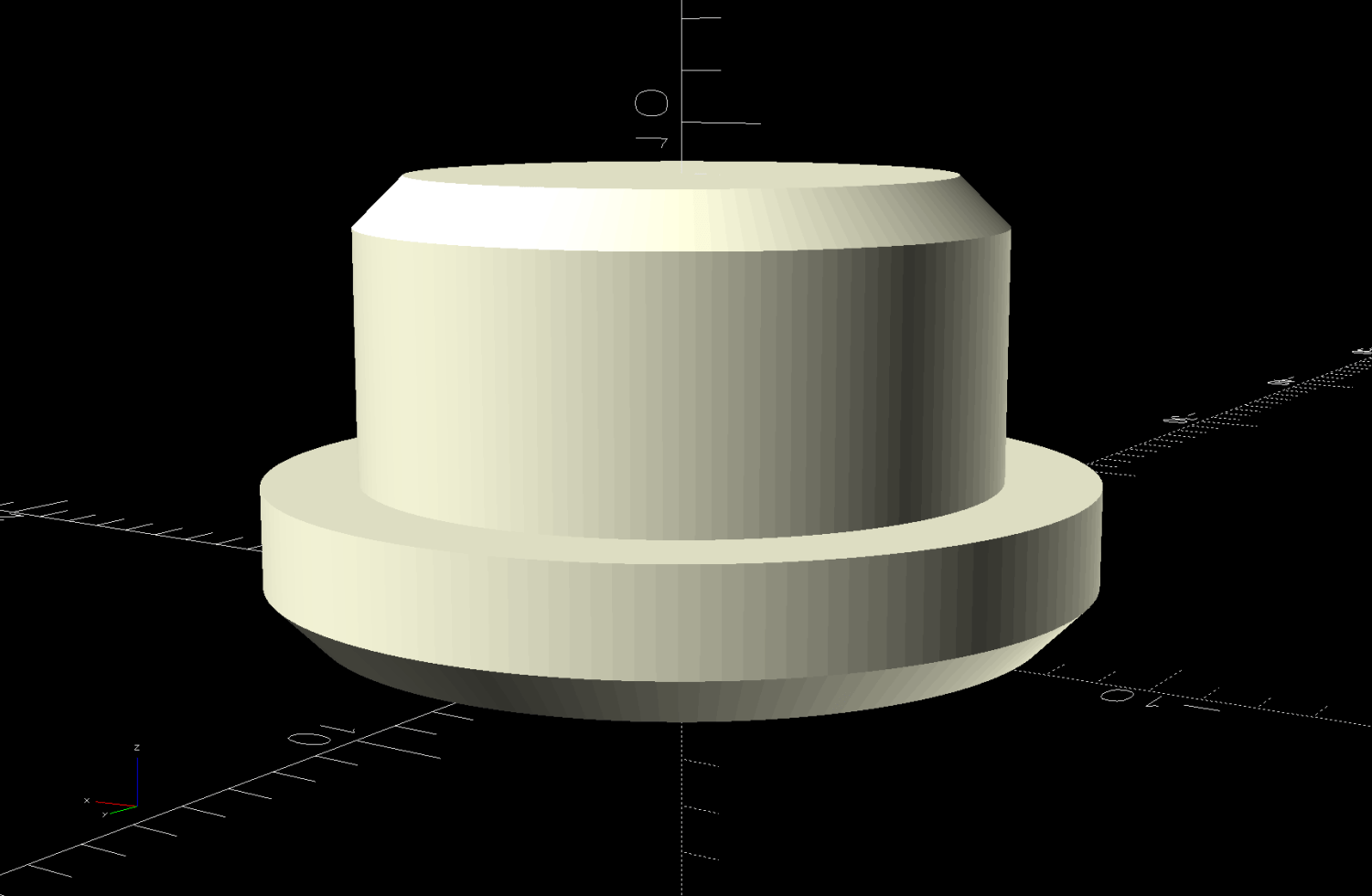
The 1/4-20 screws in the top member sit deep in recesses that surely had decorative wood plugs when the rack left the factory. Alas, they’re long gone, which may have let water / moisture corrode the screws + inserts . I’m not much good for “decorative” items, so this must suffice:
Clothes Rack Screw Covers – solid model
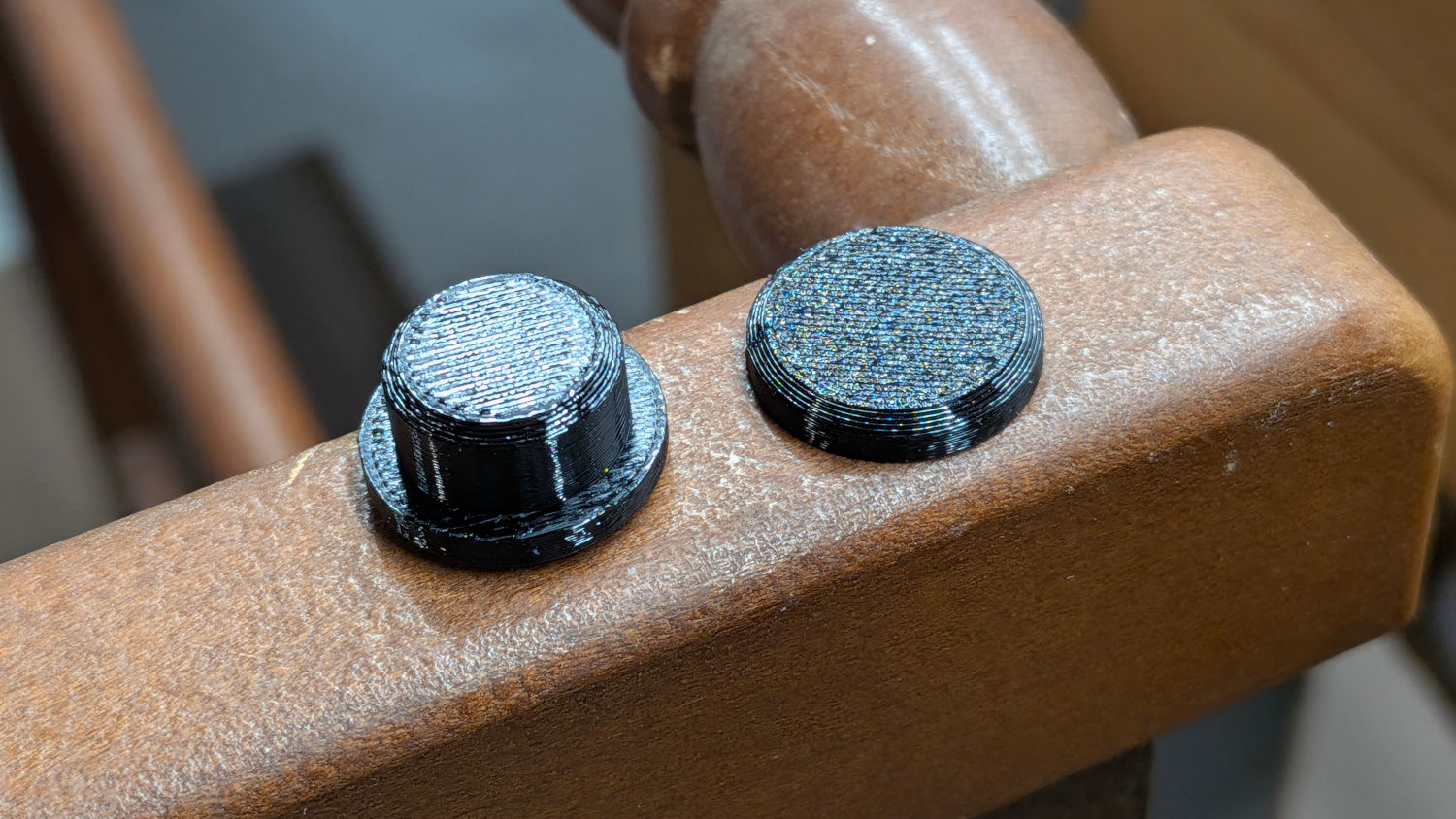
A snippet of double-sided tape on one side of the hole keeps them in place:
Clothes rack screws – cover installed
They look better in person …
The trivial OpenSCAD source code:
// Clothes rack screw cover
// Ed Nisley - KE4ZNU
// 2026-03-13

include <BOSL2/std.scad>

/* [Hidden] */

NumSides = 4*3*3*4;
$fn=NumSides;

//----------
// Build it
//  … with magic numbers from the rack

cyl(3.0,d=16.7,chamfer1=1.0,anchor=BOTTOM) position(TOP)
  cyl(6.0,d=12.9,chamfer2=1.0,anchor=BOTTOM);
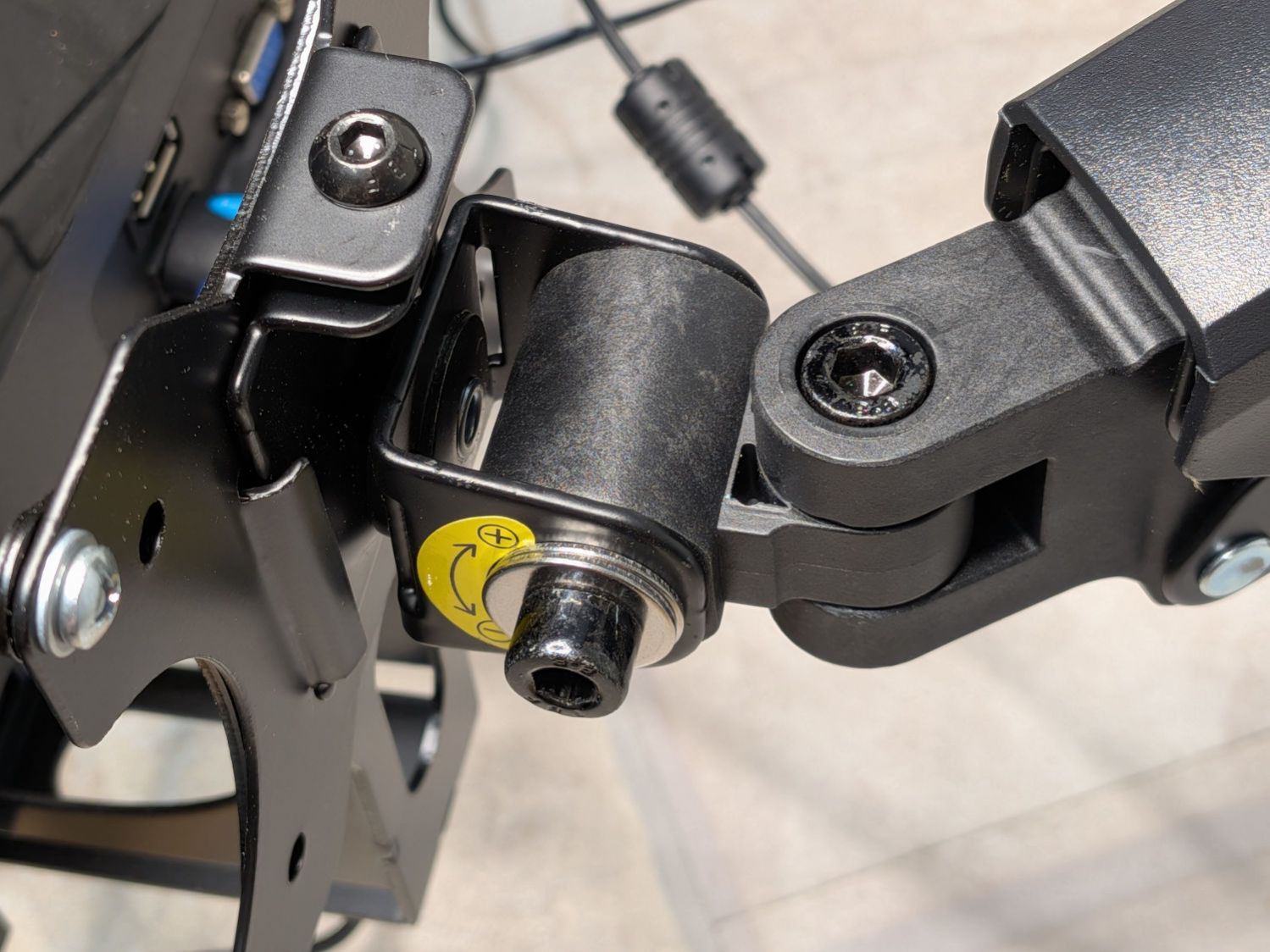
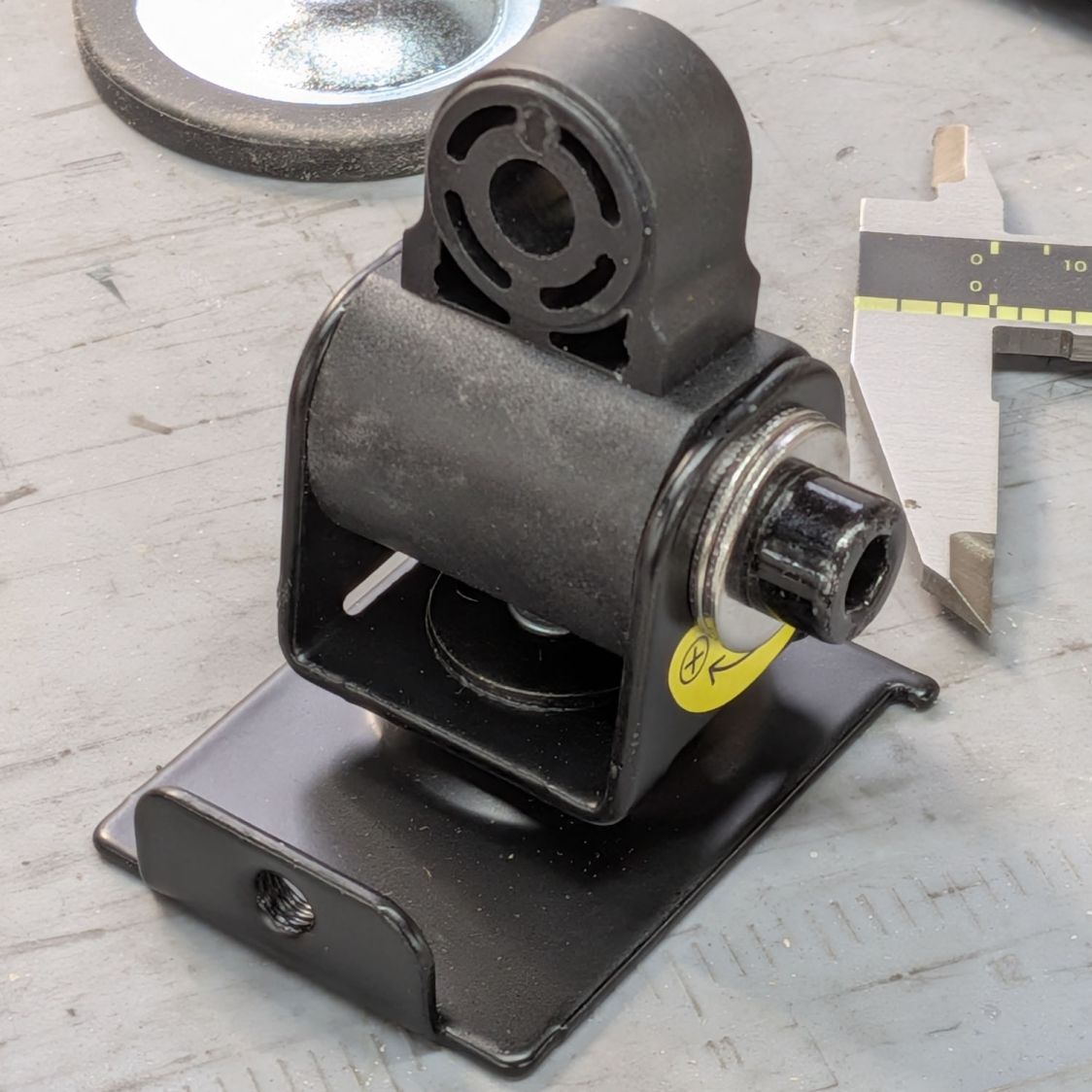
The tilt (it’s really “pitch”, but I can’t make a case for being that pedantic) adjustment on a recently arrived monitor stand / arm was nonfunctional, because the metal clamp had been bent about a millimeter too narrow to fit the plastic core. This is how it should look:
Monitor tilt adjustment – installed
As delivered, the plastic core was 32-ish mm wide and the gap at the base of the metal clamp was 31 mm, so the clamp arms stuck out at an angle on both ends of the core .
Because the cap screw bottomed out on the threads in the far side of the clamp, it couldn’t be tightened enough to force the clamp arms against the core.
Well, if the core is a millimeter too large for the clamp, shortening it should solve the problem; I can always shorten the screw if it comes to that.
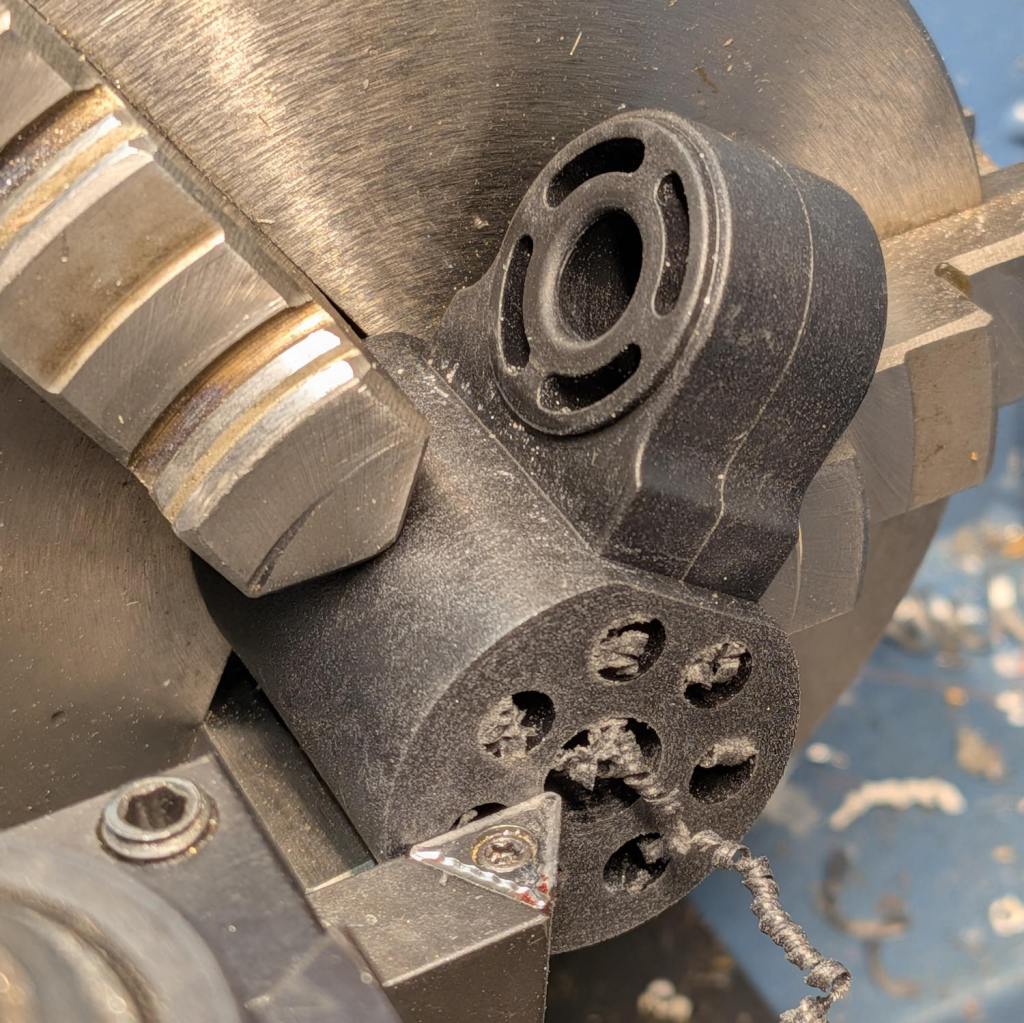
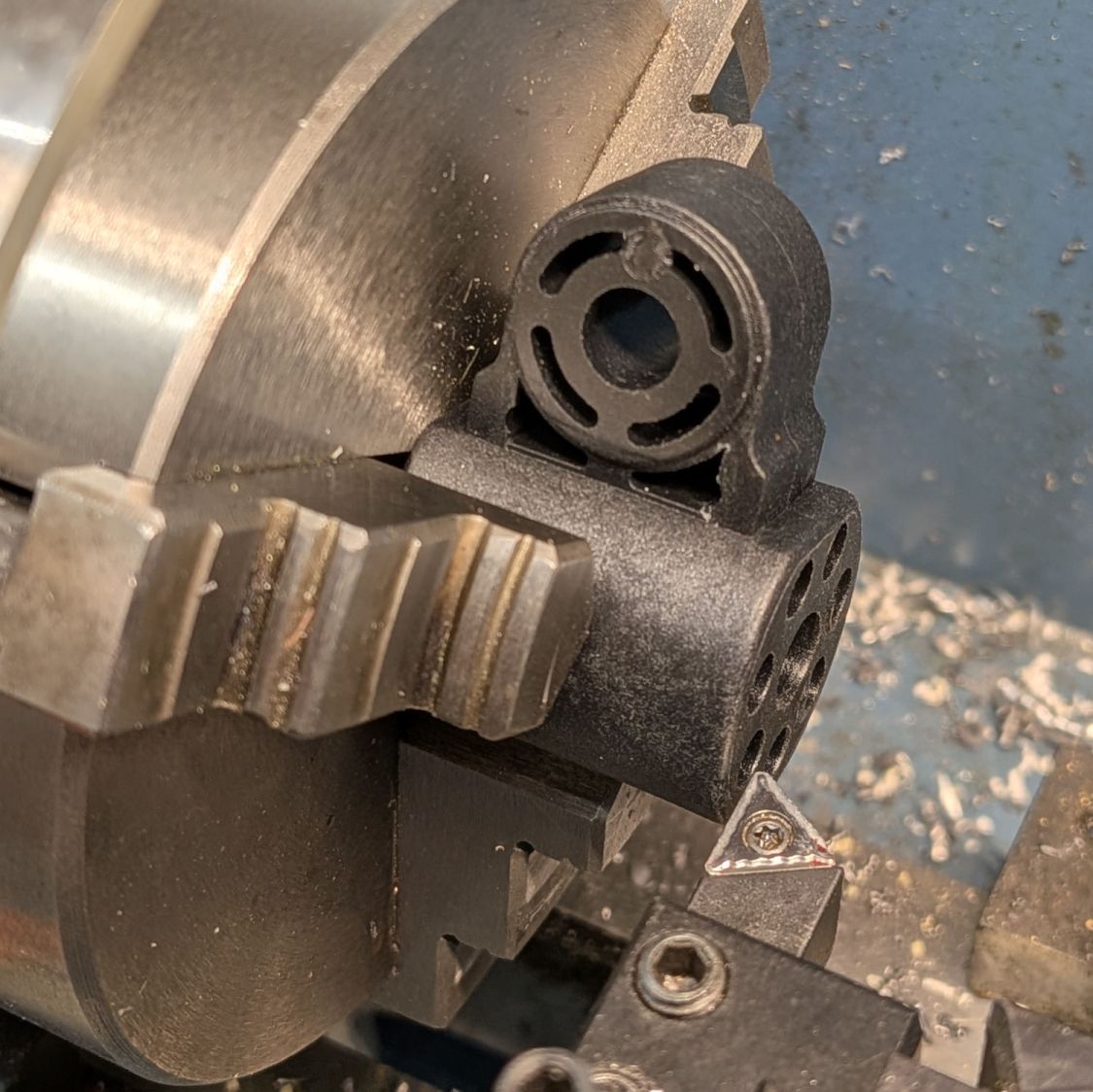
Quick! To the mini-lathe:
Monitor tilt adjustment – lathe setup
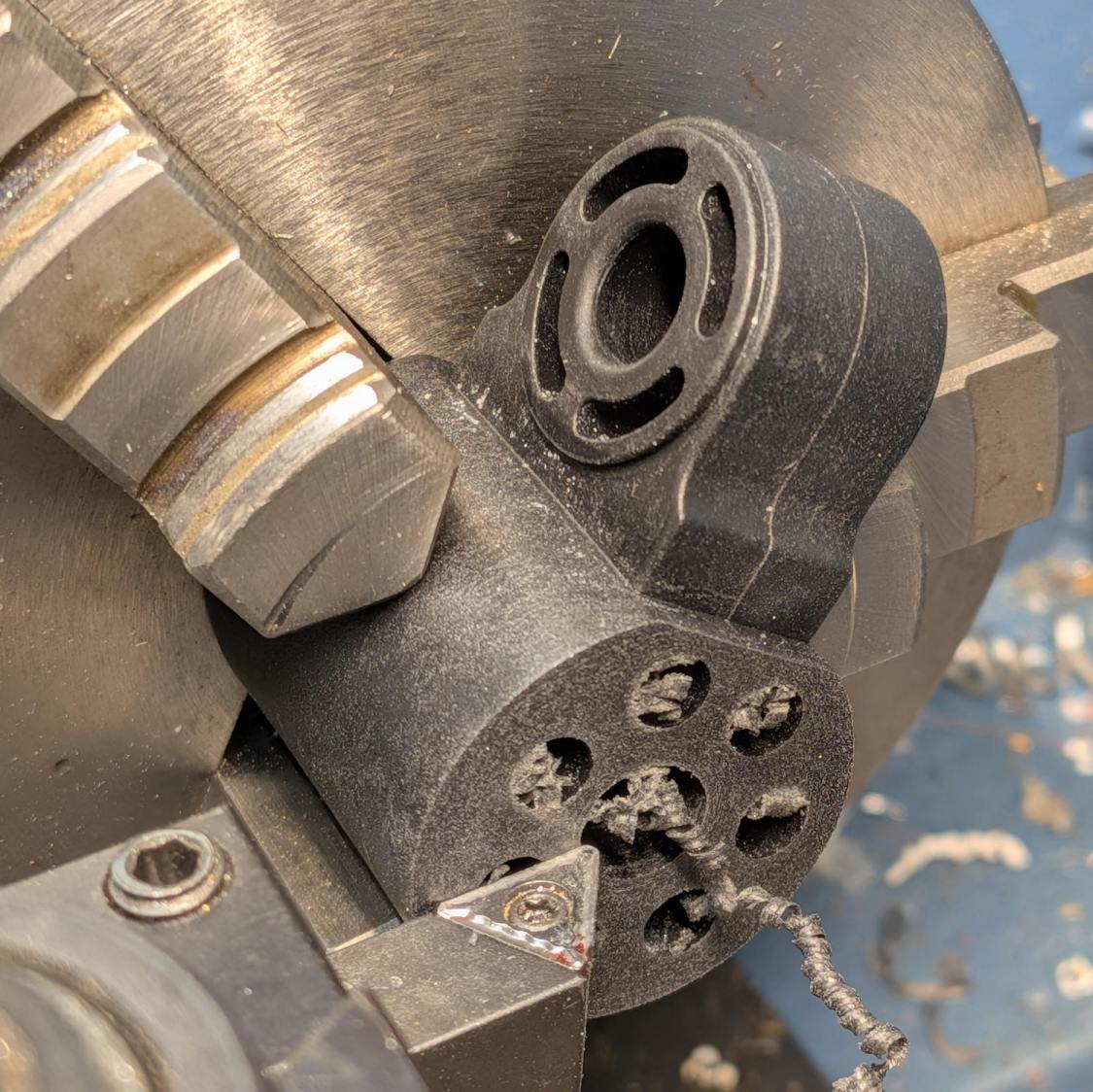
Shaving half a millimeter from each side:
Monitor tilt adjustment – shaved
Twirling a deburring bit in each hole got rid of the swarf.
Rather than trimming the cap screw, a pair of fender washers keep it from bottoming out. With the core fitting into the clamp, the arms grip the core firmly on both sides with plenty of friction:
Monitor tilt adjustment – tweaked
I’ve bought this brand of arm before and the most recent pair have definitely been cheapnified from earlier ones. Because only one had a bad tilt clamp, the OEM may be in the middle of a changeover and shipped it with mismatched parts.
I wonder how many stands / arms get returned because they just don’t work?
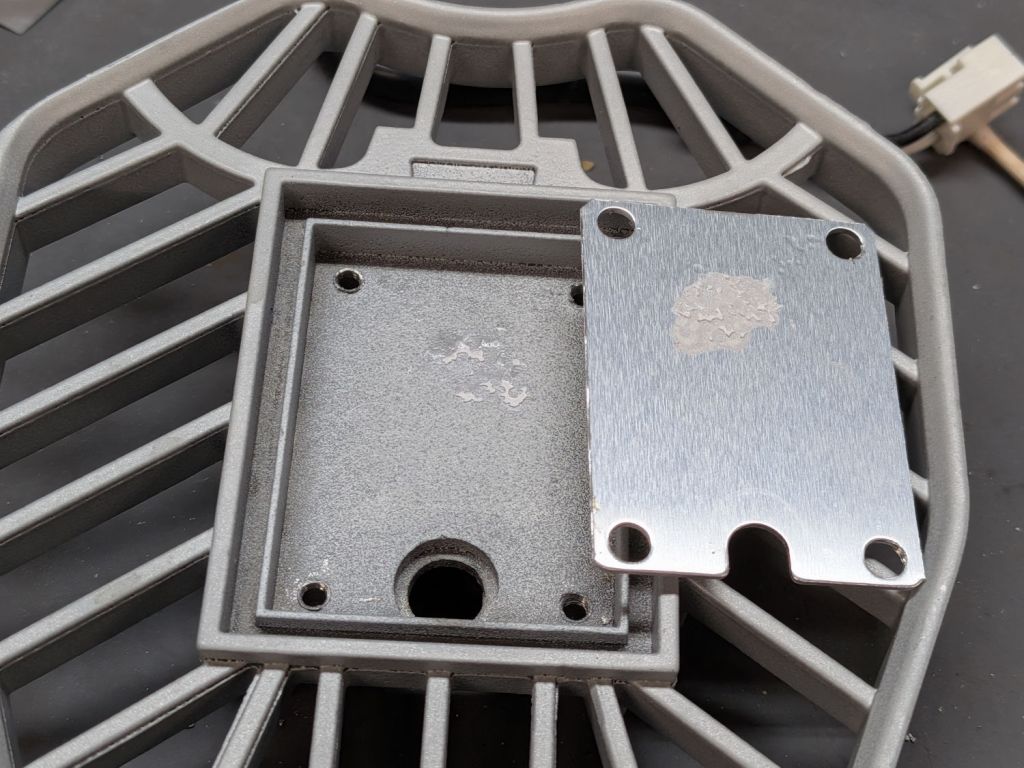
The hidden part of all three LED arrays in the dead garage light looked like this:
LED Garage Light – inadequate heatsink compound
Although the compound was still gooey, there wasn’t nearly enough of it. The few tendrils on the heatsink suggest the LED array had bowed upward, pulled away from the cast aluminum, and eliminated any direct conduction.
A bit of probing showed each LED array had 16 series groups of 4 parallel LEDS, with one group in each array failed open. That group was toward the end away from the inadequate heatsink compound: the LEDs died from heatstroke brought on by neglect.
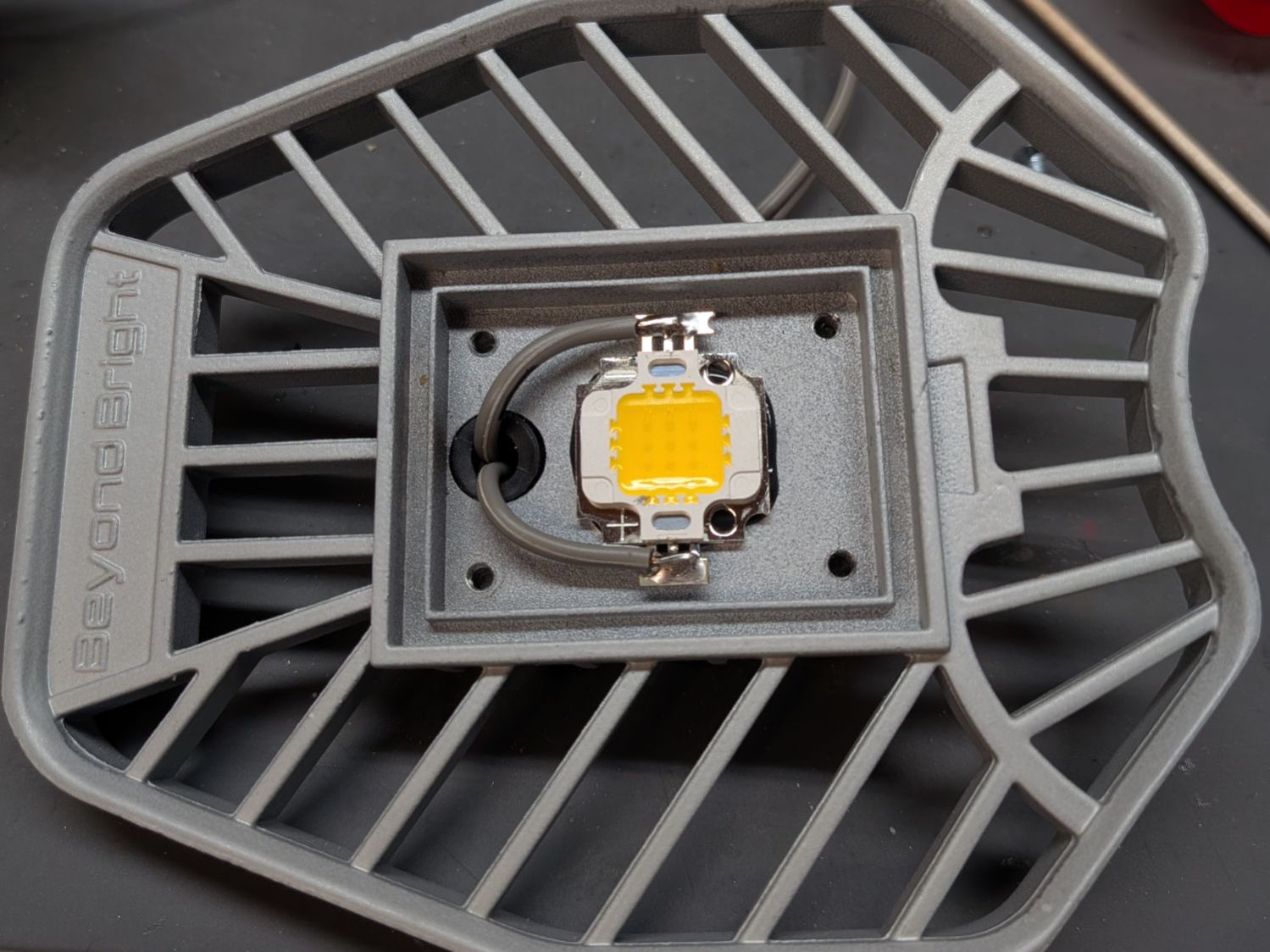
The Drawer o’ LED Arrays disgorged a bag of surplus LEDs labeled “10 W 9-12 V 750 mA”:
LED Garage Light – epoxy replacement
It’s sitting on a generous blob of steel-filled JB Kwik epoxy that should do a great job of conducting heat. A bag of cheap constant-current supplies is on order.
Amazon has similar “10 W 9-12 V 350-450 mA” arrays.
Try as I might, I can’t get 10 W from those numbers, but I’ve never understood advertising math.
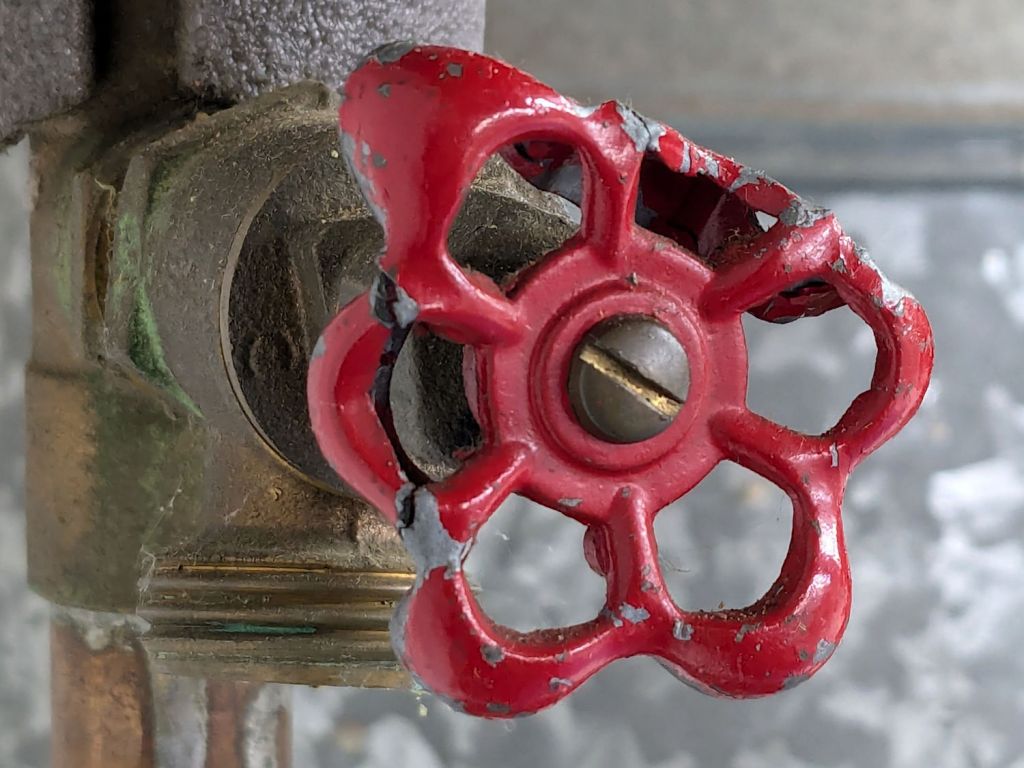
For reasons long lost in our house’s history, two of the zone drain valves on the furnace apparently had something heavy fall on them from a great height:
Furnace zone drain valve – bashed knob
I was certain those knobs were made of brittle pot metal and would snap when I tried to un-bend them.
My weight bench being next to the furnace, I had plenty of opportunities to contemplate conjuring a 3D printed knob similar to the dumbbell nuts, but with the undamaged central part of the metal knob engaging the valve stem to avoid thermoplastic shapes around hot metal.
One can, of course, buy replacement knobs, but where’s the fun in that?
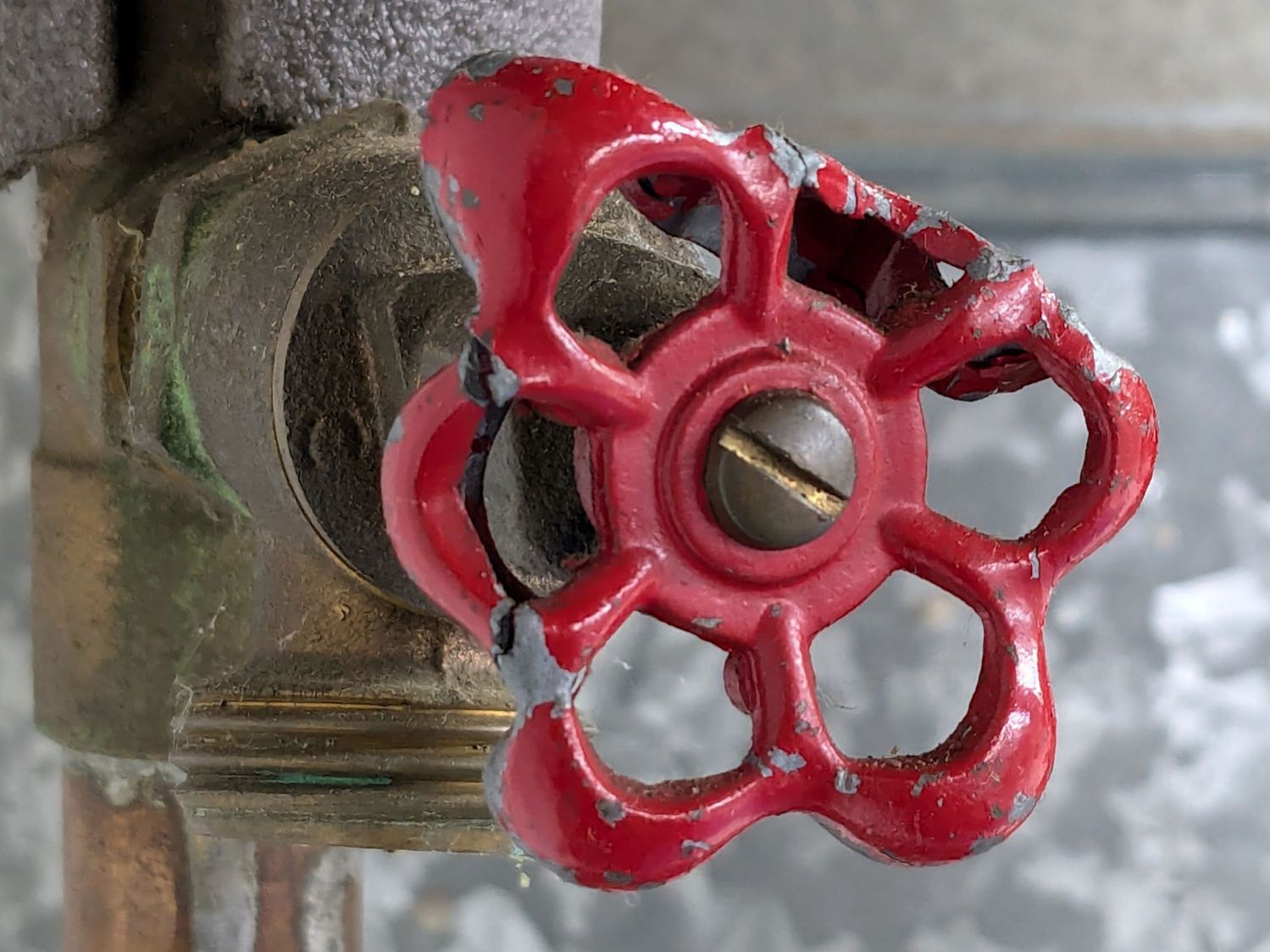
Expecting to cut most of the knob away, I applied needle-nose pliers to the rim and, mirabile dictu, not only did it not immediately snap, I managed to un-bend it into a reasonable facsimile of its original shape.
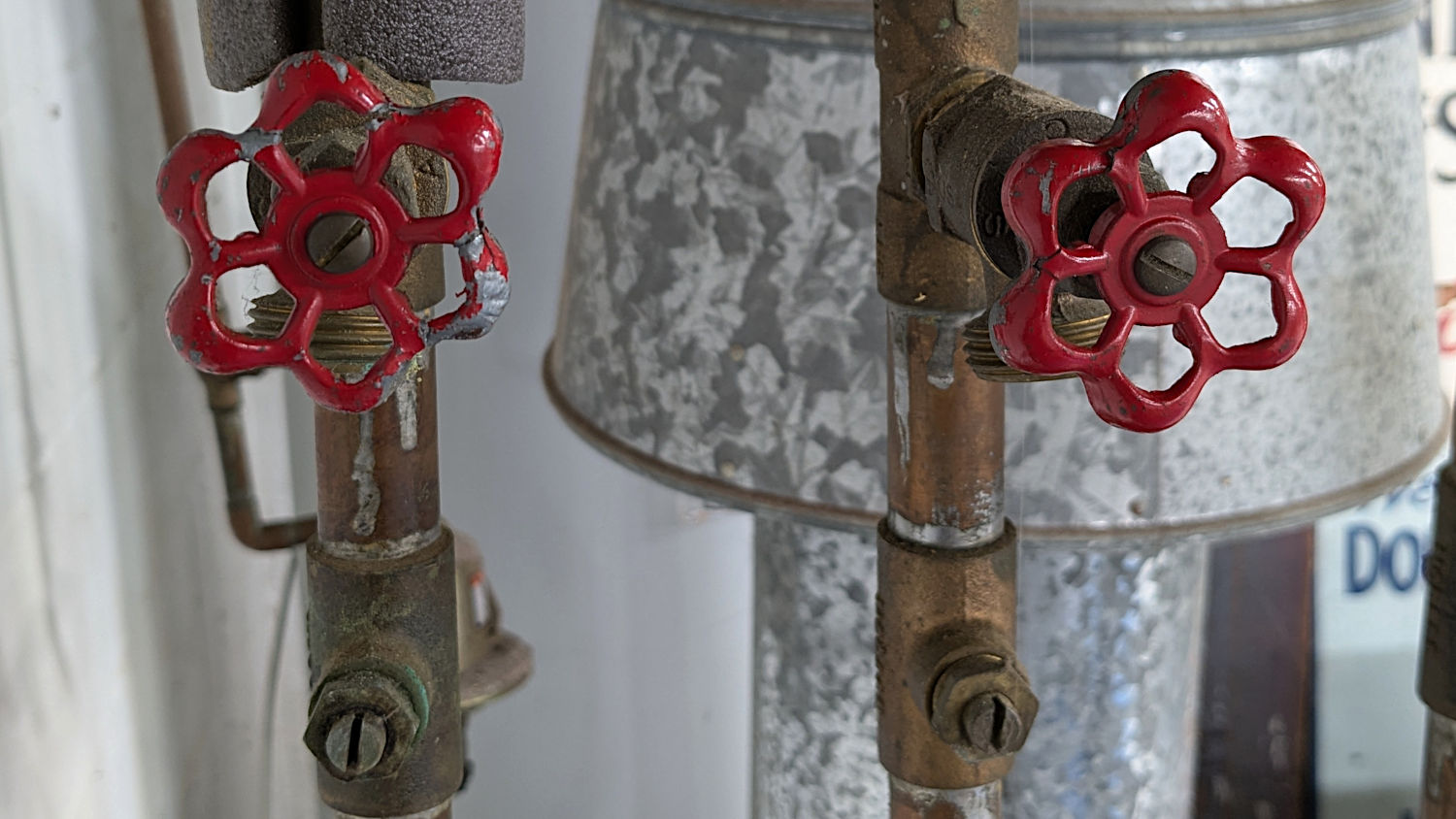
It wasn’t just beginner’s luck, because I did it again:
Furnace zone drain valve – unbent knobs
Both of those knobs have obvious fractures and aren’t the prettiest things you’ll ever see, but they don’t get a lot of use. I can say, without fear of contradiction, they’re in fine shape.
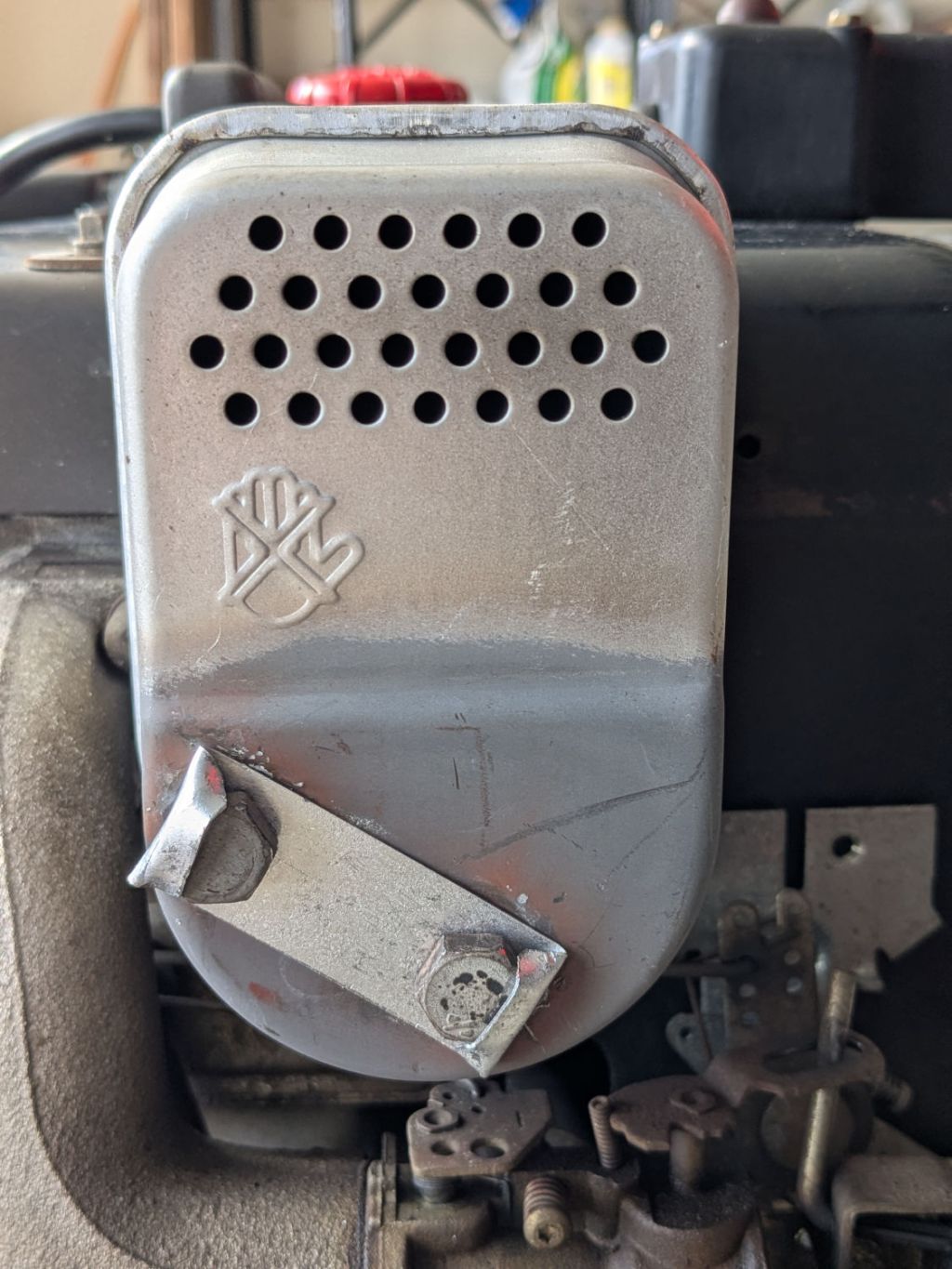
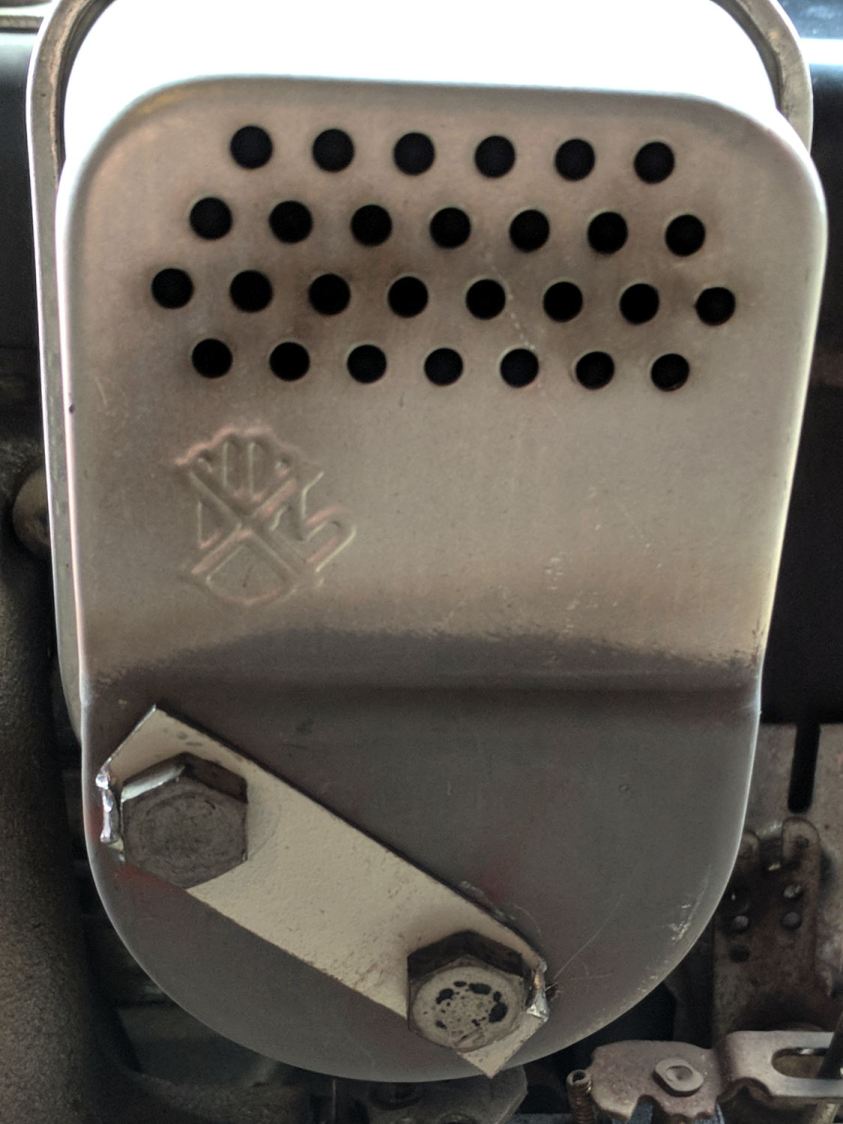
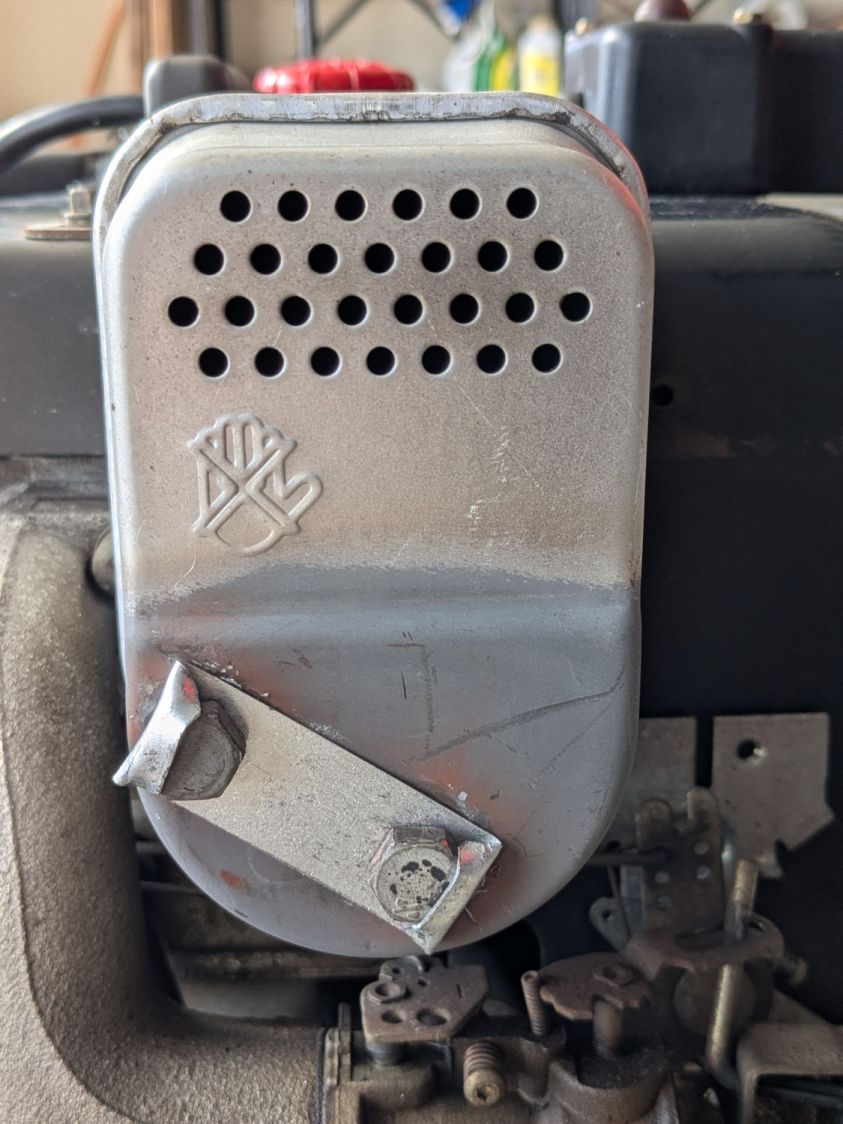
Well, it happened again, with the top bolt working its way out, so those little crimps weren’t enough. As before, I watched it happen and saw the bolt fall sizzling into the snow.
Verily it is written: When brute force isn’t working, you’re not using enough of it:
MTD Snowblower muffler
I renewed the Never-Seez on both bolts and, for good measure, dabbed some on the third bolt securing the muffler bracket atop the engine block.
Some weeks ago Mary heard a loud bang just as the lights went out. Central Hudson crews arrived shortly thereafter and began examining the transformer serving the group of houses around us. I wandered over to ask questions and learned the bang came from a high-voltage fuse atop a pole 800 feet from our house.
With all the power cables underground, the crews were locating the transformer just upstream of the problem, with the intent of disconnecting it and restoring power to everybody else. That took a few hours for our service, but folks up the hill remained in the dark maybe six more hours.
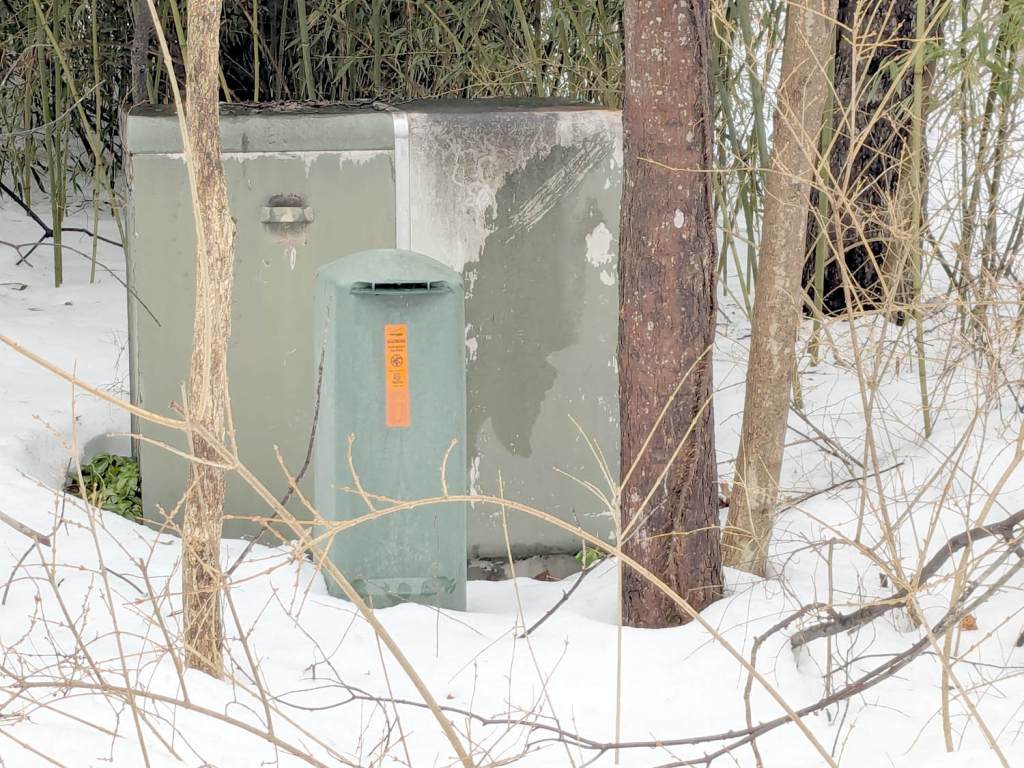
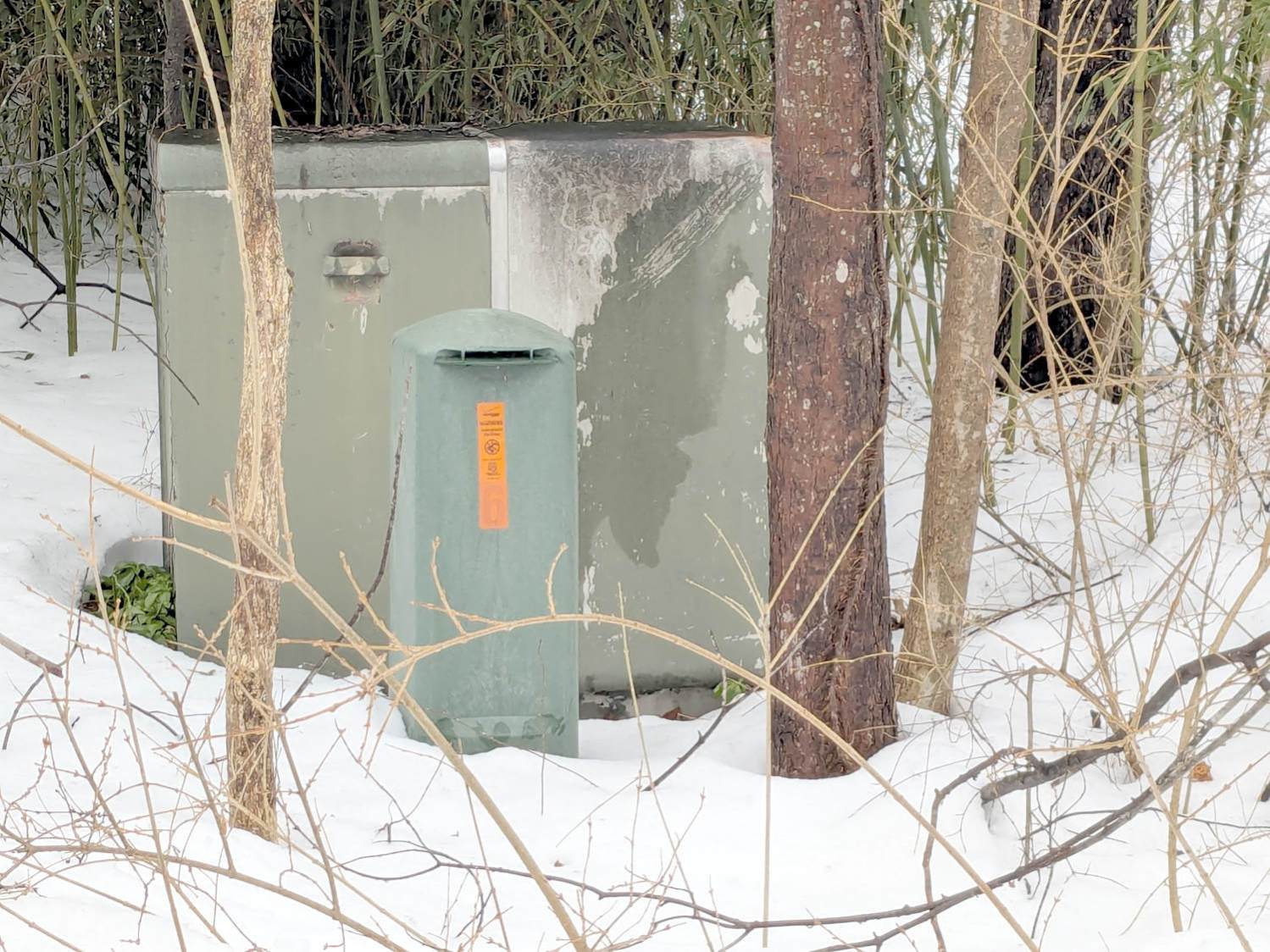
The paint on the transformer enclosures has been weathering for many decades, but I spotted this one up the hill that looks different from all the rest:
Scorched utility transformer housing
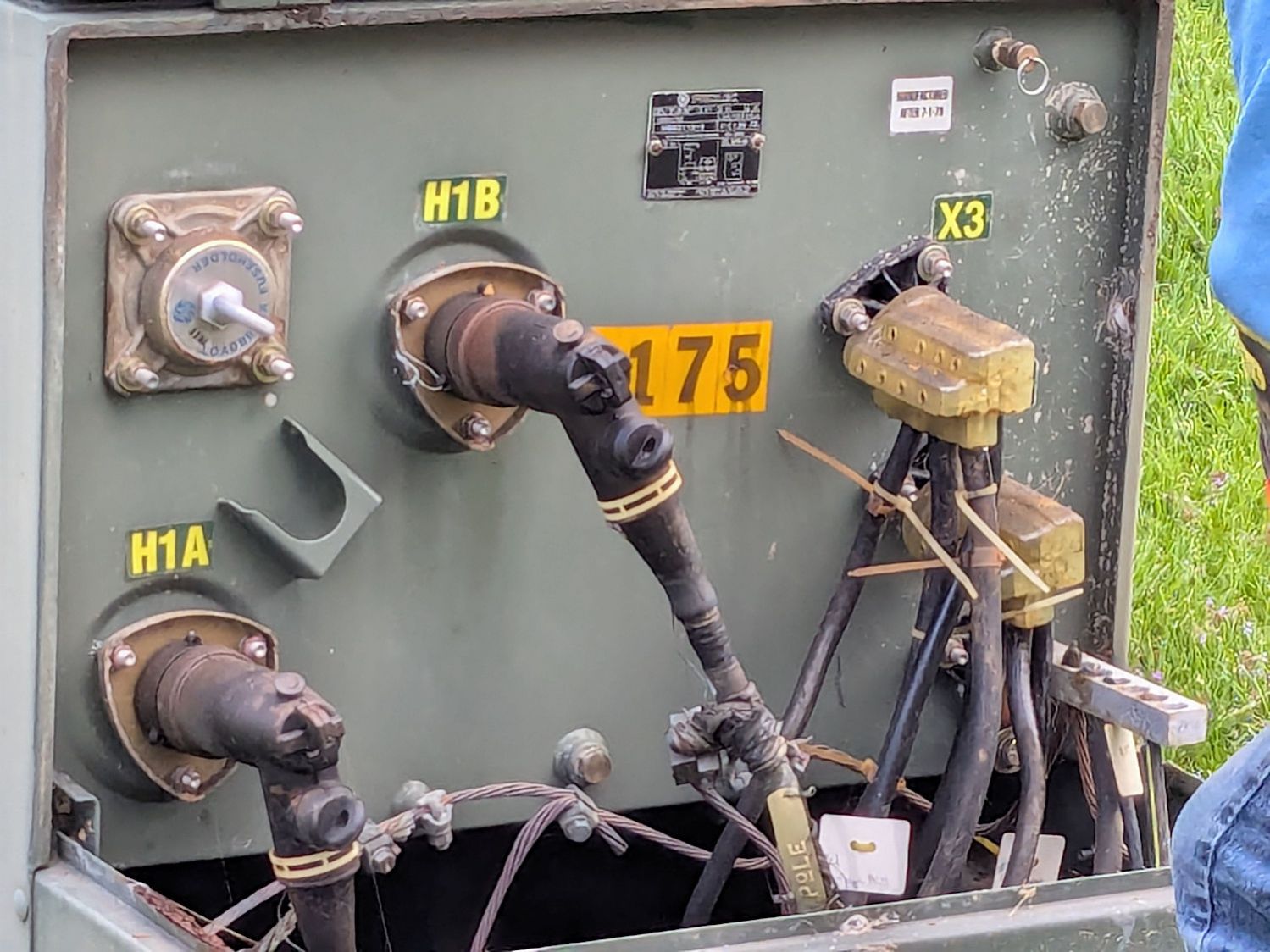
The scorched half of the enclosure pivots upward to reveal the high-voltage disconnect switch, fuses, and low-voltage connections. This one is across the street from our house:
Neighborhood distribution transformer
I think something went badly wrong in there and the transformer overheated to the point of insulation failure, whereupon the short circuit blew the HV fuse half a mile away down the hill.