Ed Nisley's Blog: Shop notes, electronics, firmware, machinery, 3D printing, laser cuttery, and curiosities. Contents: 100% human thinking, 0% AI slop.
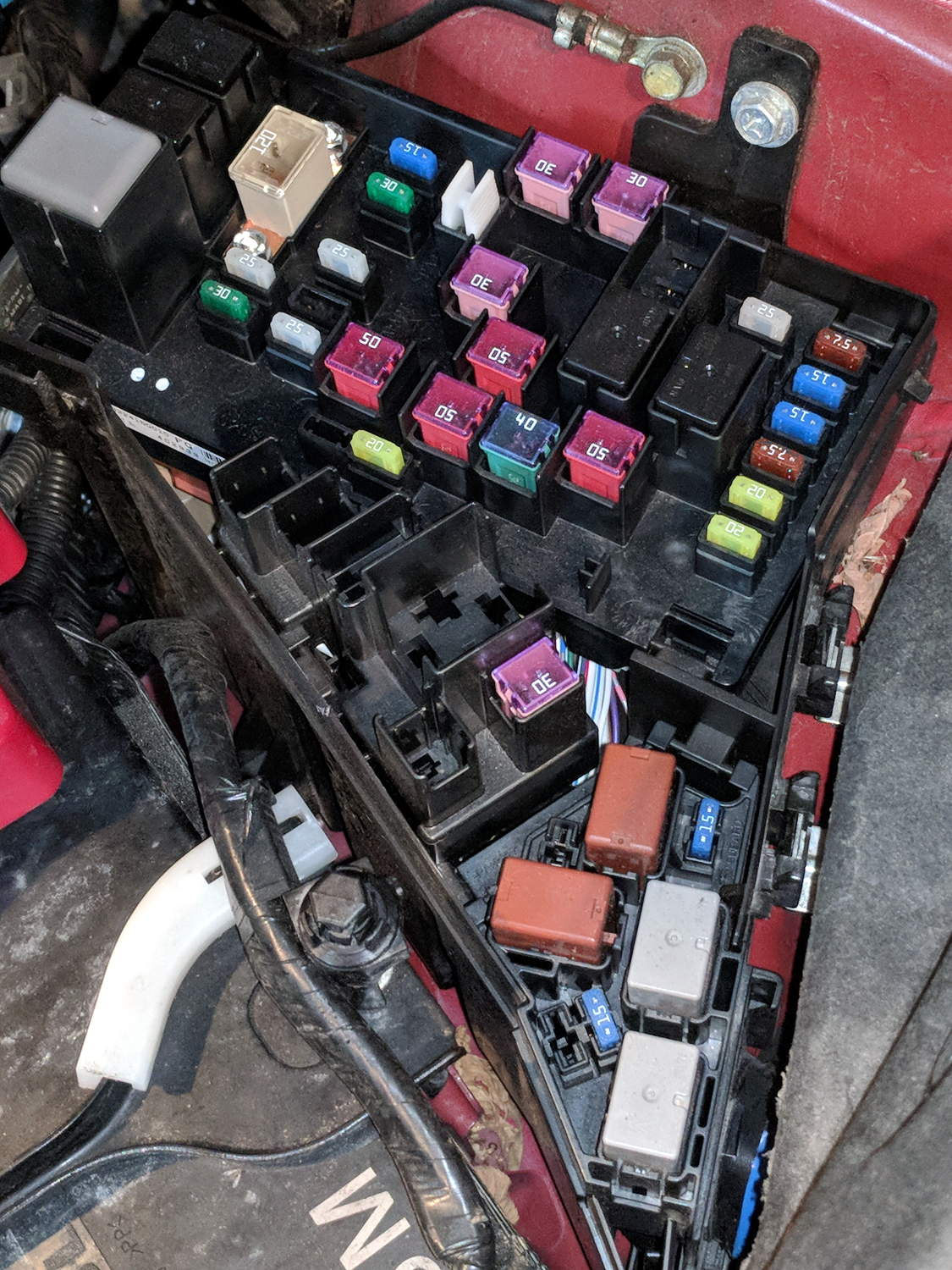
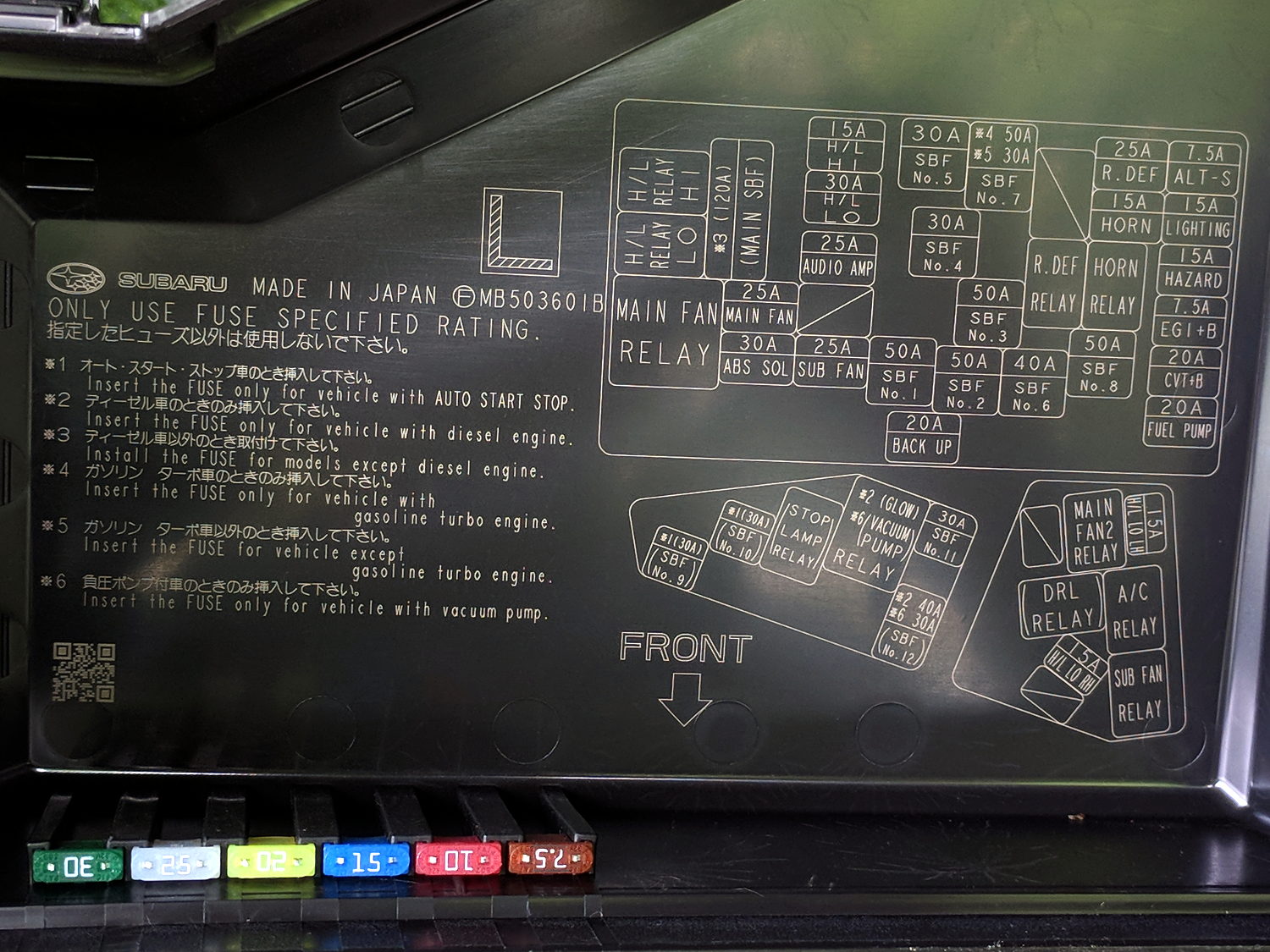
The layout chart doesn’t say what “SBF” might be (per the comment: Slow Blow Fuse), but we have a lot of whatever it is:
2015 Subaru Forester – engine compartment fuse ID
The spare fuses line up along the lower edge of the cover.
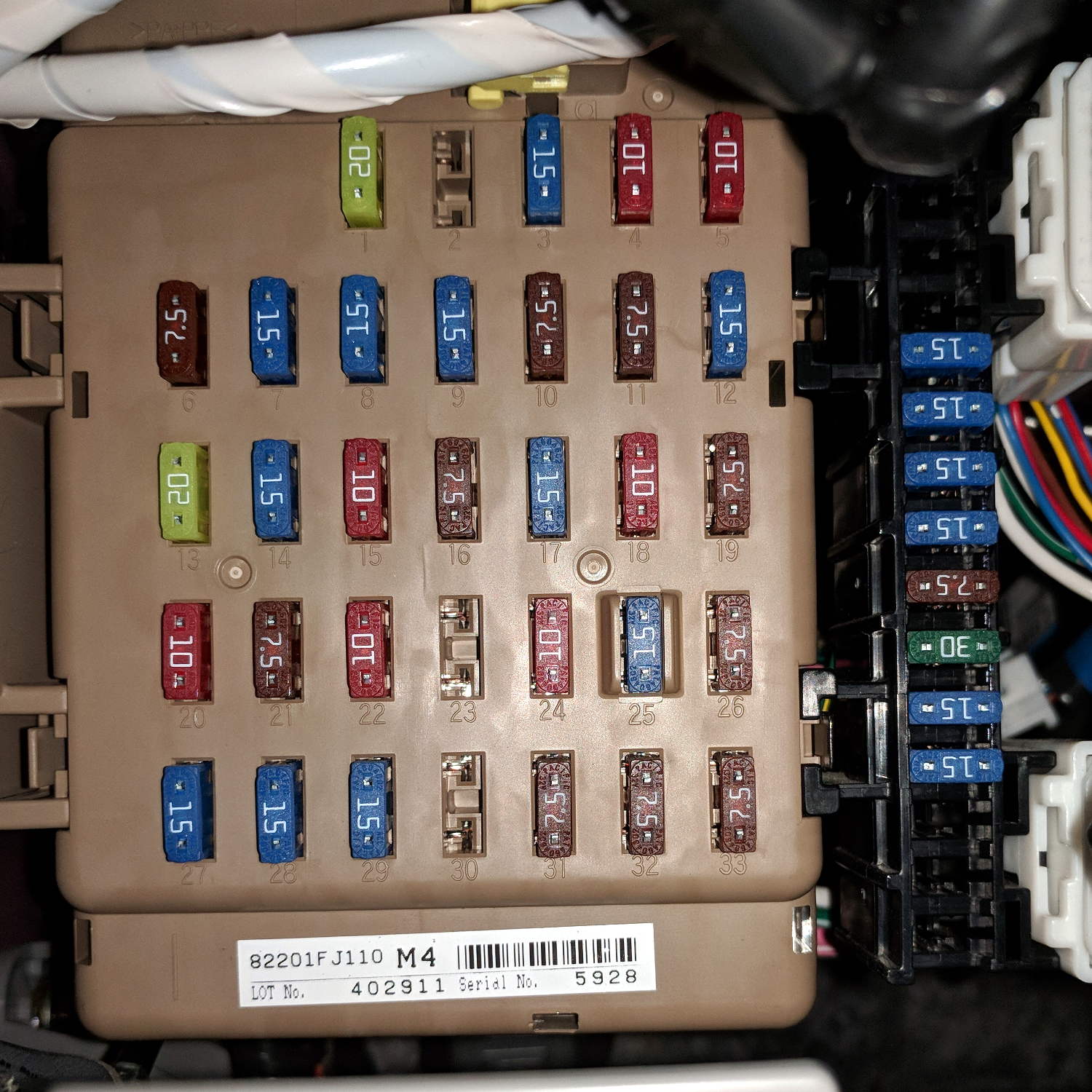
Another under the dashboard:
2015 Subaru Forester – dashboard fuse box
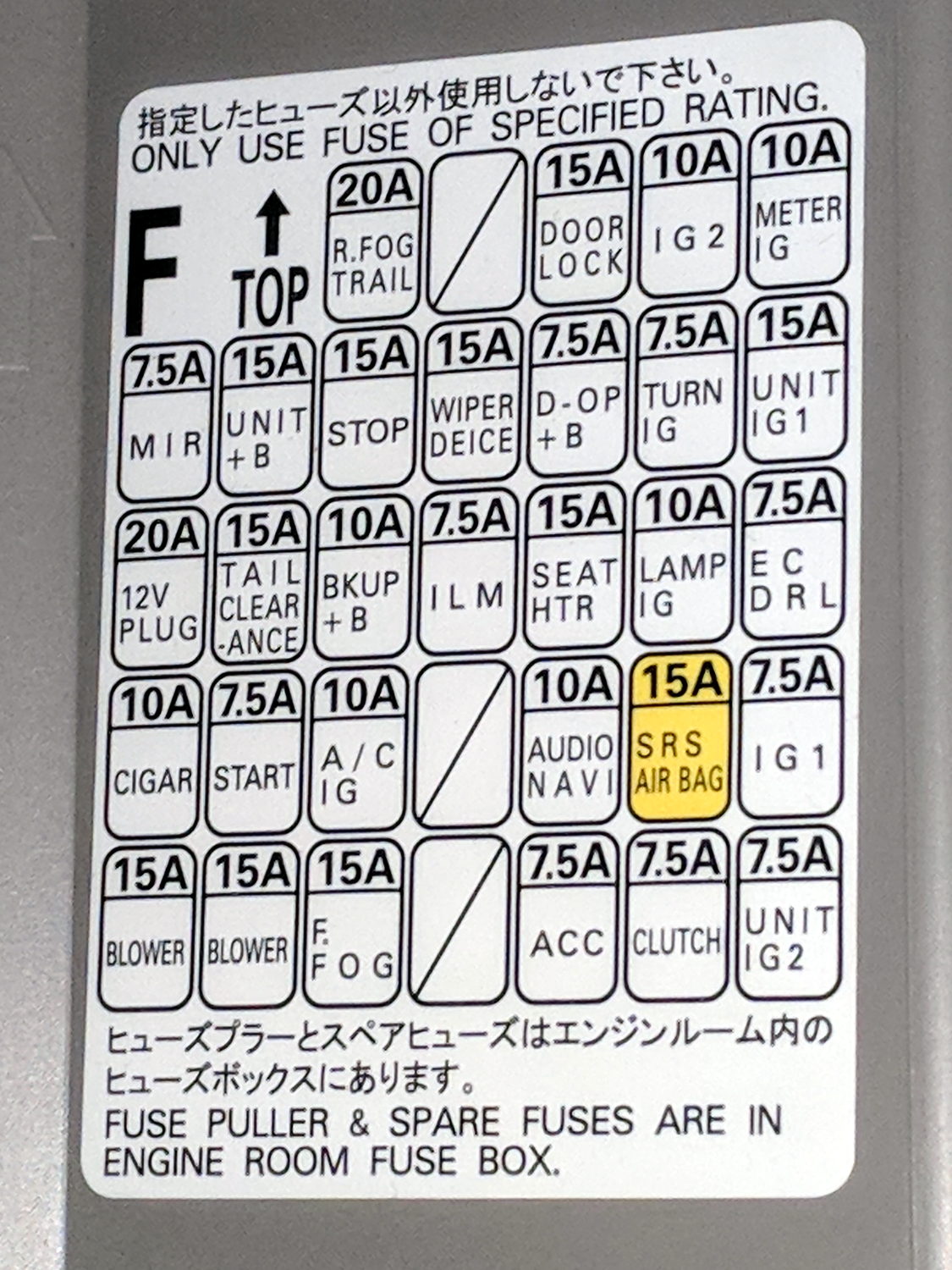
And their functions:
2015 Subaru Forester – dashboard fuse ID
The string of fuses down the right side of the main block looks like a line of spares, but they’re not. What they might be isn’t documented anywhere, which seems to be very deliberate.
Memo to Self: Having never replaced an automotive fuse, I shouldn’t start worrying now.
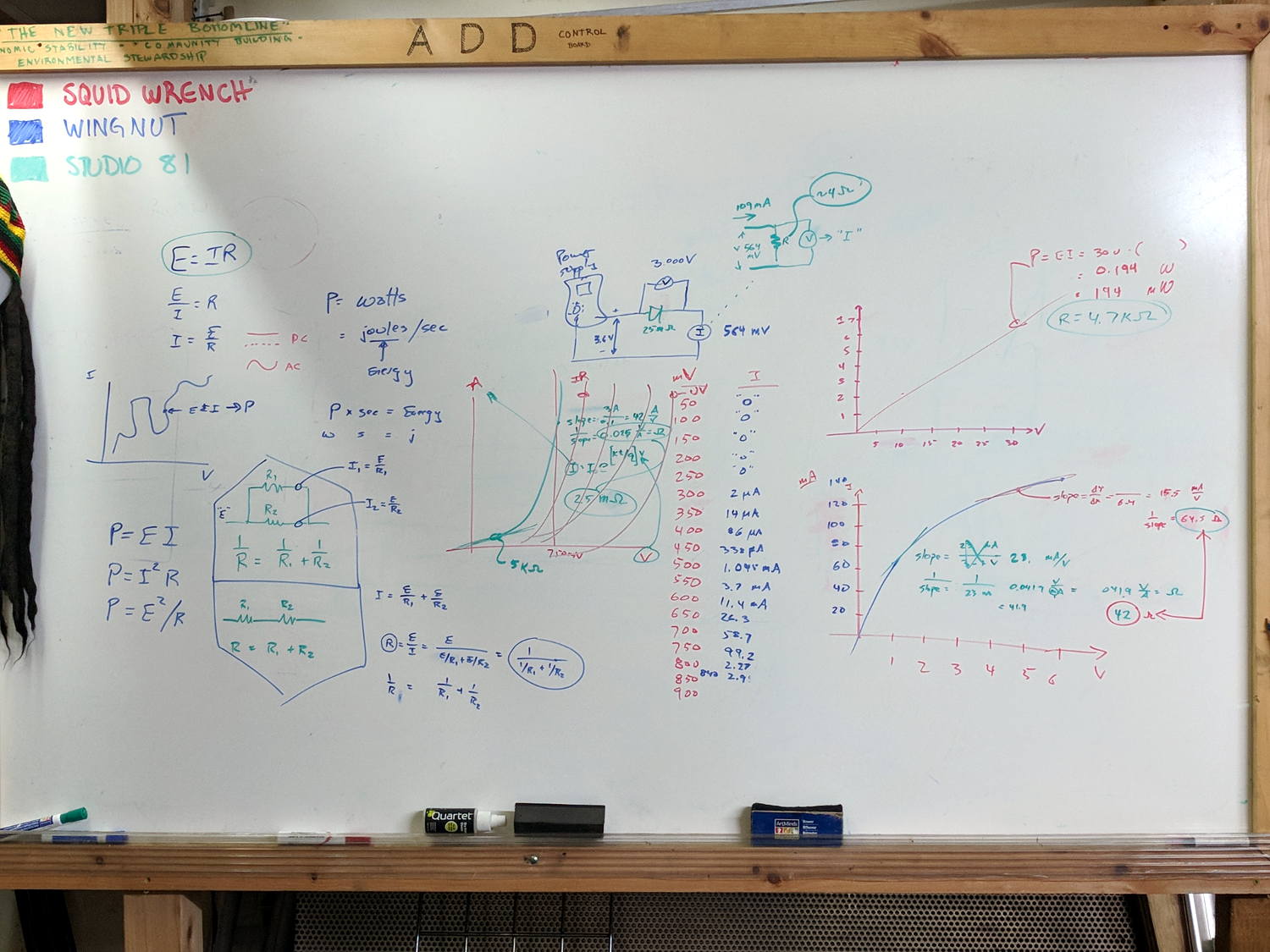
Some ex post facto notes from the second SquidWrench Electronics Workshop. This turned out much more intense than the first session, with plenty of hands-on measurement and extemporized explanations.
Measure voltage across and current through 4.7 kΩ 5 W resistor from 0.5 V to 30 V. Note importance of writing down what you intend to measure, voltage values, units. Plot data, find slope, calculate 1/slope.
Introduce power equation (P = E I) and variations (P = I² R, P = E²/R)
Measure voltage across and current through incandescent bulb (6 V flashlight) at 0.1 through 6 V, note difference between voltage at power supply and voltage across bulb. Plot data, find slopes at 1 V and 5 V, calculate 1/slopes.
Measure voltage across ammeter with bulb at 6 V, compute meter internal resistance, measure meter resistance. Note on ammeter resistance trimming.
Measure voltage across and current through hulking power diode from 50 mV – 850 mV. Note large difference between power supply voltage and diode voltage above 750-ish mV. Note power supply current limit at 3 A. Plot, find slopes at 100 mV and 800 mV, calculate 1/slopes. Compare diode resistance with ammeter resistance.
Some ex post facto notes from the first SquidWrench Electronics Workshop, in the expectation we’ll run the series from the start in a while. I should have taken pictures of my scribbles on the whiteboard.
Define:
Voltage – symbol E (Electromotive Force or some French phrase), unit V = volt
Current – symbol I (French “intensity” or some such), unit A = ampere
Resistance – symbol R (“resistance”), unit Ω (capital Greek Omega) = ohm
Introduce Ohm’s Law & permutations, postpone calculations.
Measure the actual voltage of assorted cells & batteries. Identify chemistry, internal wiring:
1.2 = nickel-cadmium or nickel-metal-hydride
1.5 = carbon-zinc or alkaline
2 V = lead-acid
3.0 = primary lithium
3.6 – 3.7 = rechargeable lithium, several variations
4.8 = 4 x 1.2 V
7.2 = 6 x 1.2 V
7.4 = 2 x 3.6 V
9.6 = 8 x 1.2 V
10.8 = 3 x 3.6 V
12 = 6 x 2 V
Measure various resistors, favoring hulking finger-friendly sandstone blocks.
Introduce metric prefixes:
Engineering notation uses only multiple-of-three exponents
This 2 GB flash drive arrived with datasheets & sample files for a (computerized) sewing machine Mary eventually decided she wasn’t going to get (because computerized):
Fake Flash drive
Being of sound mind, we reformatted it and dropped it in the bag o’ random drives. She eventually used it for one of her gardening presentations, whereupon the library’s (Windows) laptop said it needed formatting; she pulled out a backup drive and continued the mission.
Lather, rinse, verify a good format, verify presentation files on the Token Windows Box, and repeat, right down to having another library’s laptop kvetch about the drive.
Soooo, I did what I should have done in the first place:
sudo f3probe -t /dev/sdc
F3 probe 6.0
Copyright (C) 2010 Digirati Internet LTDA.
This is free software; see the source for copying conditions.

WARNING: Probing normally takes from a few seconds to 15 minutes, but
         it can take longer. Please be patient.

Probe finished, recovering blocks... Done

Bad news: The device `/dev/sdc' is a counterfeit of type limbo

You can "fix" this device using the following command:
f3fix --last-sec=25154 /dev/sdc

Device geometry:
	         *Usable* size: 12.28 MB (25155 blocks)
	        Announced size: 1.86 GB (3893248 blocks)
	                Module: 2.00 GB (2^31 Bytes)
	Approximate cache size: 511.00 MB (1046528 blocks), need-reset=no
	   Physical block size: 512.00 Byte (2^9 Bytes)

Probe time: 55'18"
 Operation: total time / count = avg time
      Read: 8'35" / 3145715 = 163us
     Write: 46'37" / 18838872 = 148us
     Reset: 350.7ms / 2 = 175.3ms
Huh.
As long as you don’t write more than a few megabytes, it’s all good, which was apparently enough for its original use.
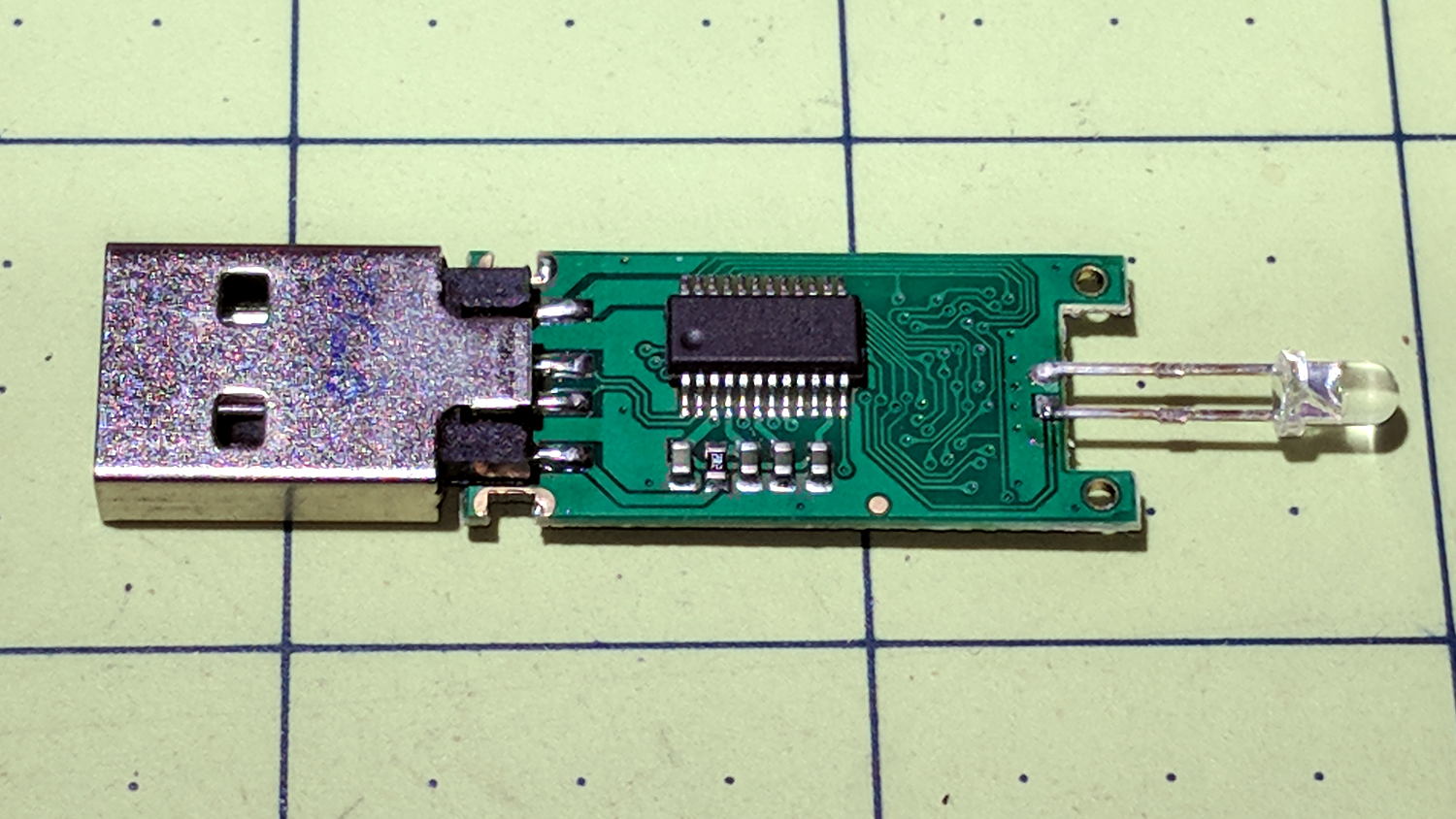
The front of the PCB looks normal:
Fake Flash – controller
But it seems they really didn’t want you to see the flash chip:
Fake Flash – covered chip
Given the two rows of unused pads, it must be a really small chip!
Memo to Self: Always examine the dentition of any Equus ferus received as a gift.
Separately charging all four cells from the Baofeng BL-5 packs covered the Electronics Bench with wires:
Baofeng BL-5 cell charging
The cell sits on a ceramic tile as a nod to fire safety, although I doubt it makes any difference.
The discharge tests showed two nearly identical pairs:
Baofeng BL-5 Cells – Separate Charge – 2018-02-24
Surprisingly, cells A and B (upper traces) were deaders in the original packs. Cells C and D (lower traces) were more-or-less fully charged, but now have a lower terminal voltage and slightly lower capacity. I have no explanation for that, nor for the voltage undulations.
The rebuilt packs pair up A+B and C+D.
Reassembling pairs into the pack shell and resoldering all the leads produces a good pack:
Baofeng BL-5 battery rebuild
I later added a snippet of heavy manila paper under the nickel tape bent around the edge of the pack as a third level of insulation, in the interest of having the nickel tape not produce a dead short between the isolated – terminal and the + cell case.
Memo to Self: tape the long wiggly leads from the protection PCB to the radio contacts (at the left side) before soldering the PCB to the cell terminals, because an inadvertent short will convert the 8205A battery protection IC into a Light-Emitting IC, at least for a moment, and subsequently release the Acrid Smell of Electrical Death. A handful of charge PCBs are en route halfway around the planet, from which I intend to liberate one IC for this board; with luck, I didn’t incinerate anything else.
The pack works fine in the radio, as does the APRS interface:
APRS Coverage in Poughkeepsie – 2018-03-01
Unfortunately, two APRS iGates vanished in the last year, leaving poor coverage south of Poughkeepsie.
From what I can find on eBay, all pins have 6 mm travel with typically 75 / 100 / 180 g spring force.
A picture ripped from the reference to forestall link rot:
P75 Spring Test Probes
Memo to Self: US-based eBay sellers charge three times more than Chinese sellers, but deliver in one-third the time.
[Update: Simon sends a link to Everett Charles Technologies, a pogo-pin manufacturer providing “Probably much more information than anyone should ever want”. Of course, eBay / Amazon junk may not meet any particular specs, so scale your expectations accordingly.]
Earlier this year, I finally hauled a pile o’ scrap metal to the recycler. For future reference, here’s what clattered down on the scale:
Scrap Metal Prices – 2017-04
I think the IRONY tag means ferrous bits & pieces in the mix. There’s a powerful motivation to hand them clean copper scrap, although I stop just after cutting off soldered pipe fittings and before stripping insulation.
Memo to Self: Next time, ask about PCBs and gold-plated connectors.



 The Smell of Molten Projects in the Morning