Ed Nisley's Blog: Shop notes, electronics, firmware, machinery, 3D printing, laser cuttery, and curiosities. Contents: 100% human thinking, 0% AI slop.
We deployed low-effort vole trap boxes a few weeks ago, only to discover no voles checked in, most likely due to wintertime gardens consisting of bare earth. I had weighted the boxes with convenient rocks that pretty much crushed them flat during rainstorms.
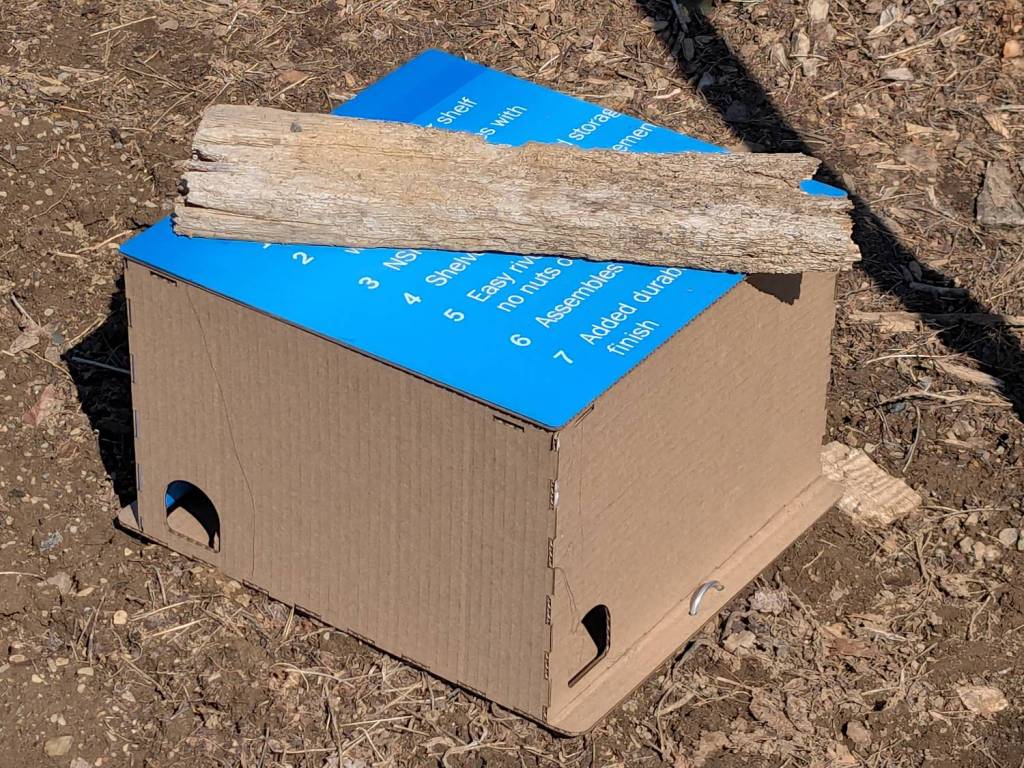
So I converted a few dozen square feet of cardboard into better-looking boxes and transferred the traps:
Vole Finger Box – large
That one has a rat trap inside.
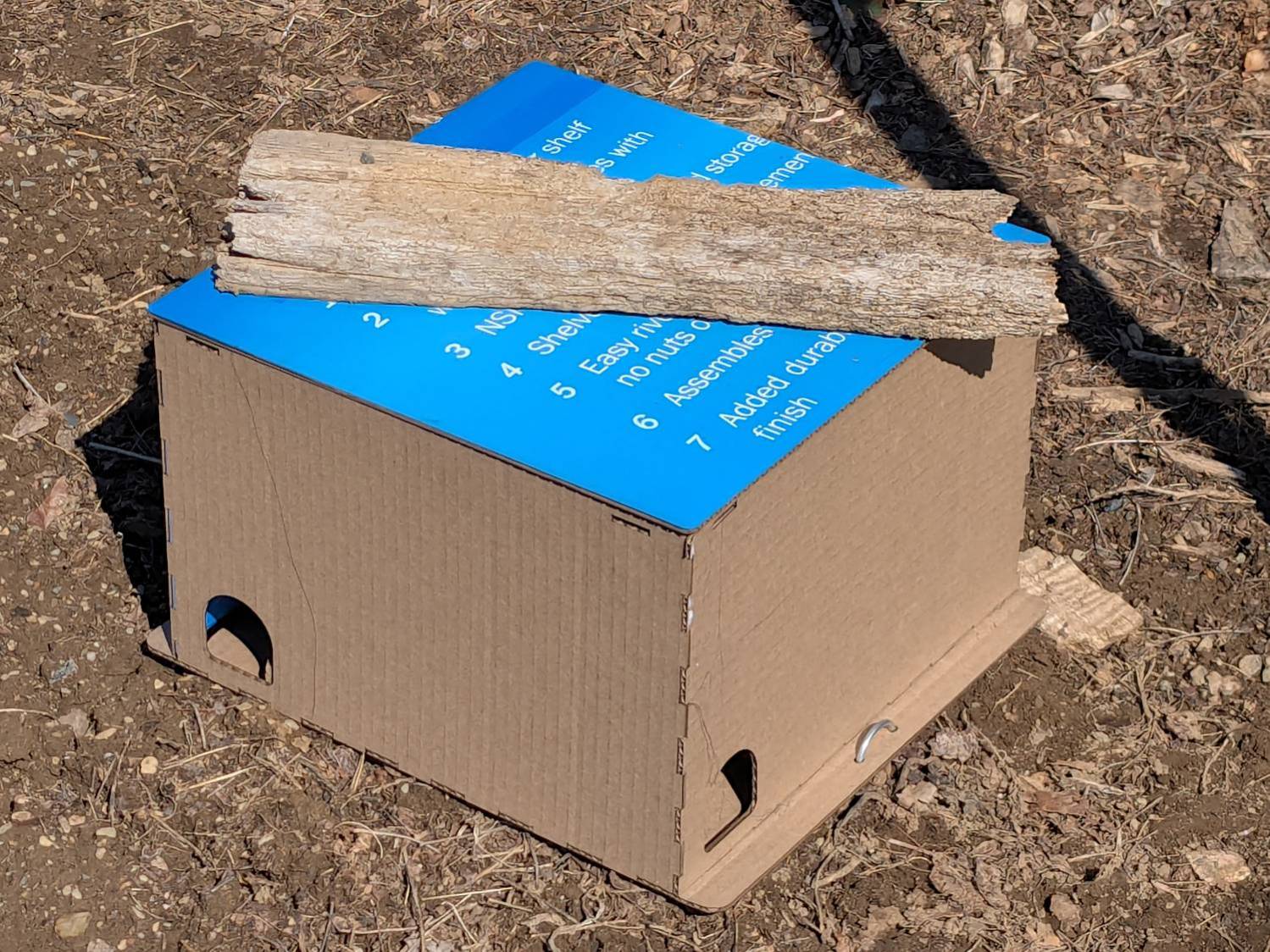
Smaller boxes hold mouse traps:
Vole Finger Box – small
Two pairs of 4 mm holes on the bottom flanges fit some spare irrigation pipe holddowns to, yes, hold them down, with those rotten planks keeping their lids in place.
They’re lightly customized “Electronics Boxes” held together by hot-melt glue. The jawbreaker URLs will get you started:
Although we had considerable success trapping voles during the last half of the 2024 gardening season, Mary found a description of what might be a better technique: a box with small entrance holes taking advantage of rodent thigmotaxis: their tendency to follow walls. The writeup shows nicely made wood boxes, but I no longer have machinery capable of cutting arbitrarily large wood slabs into pieces.
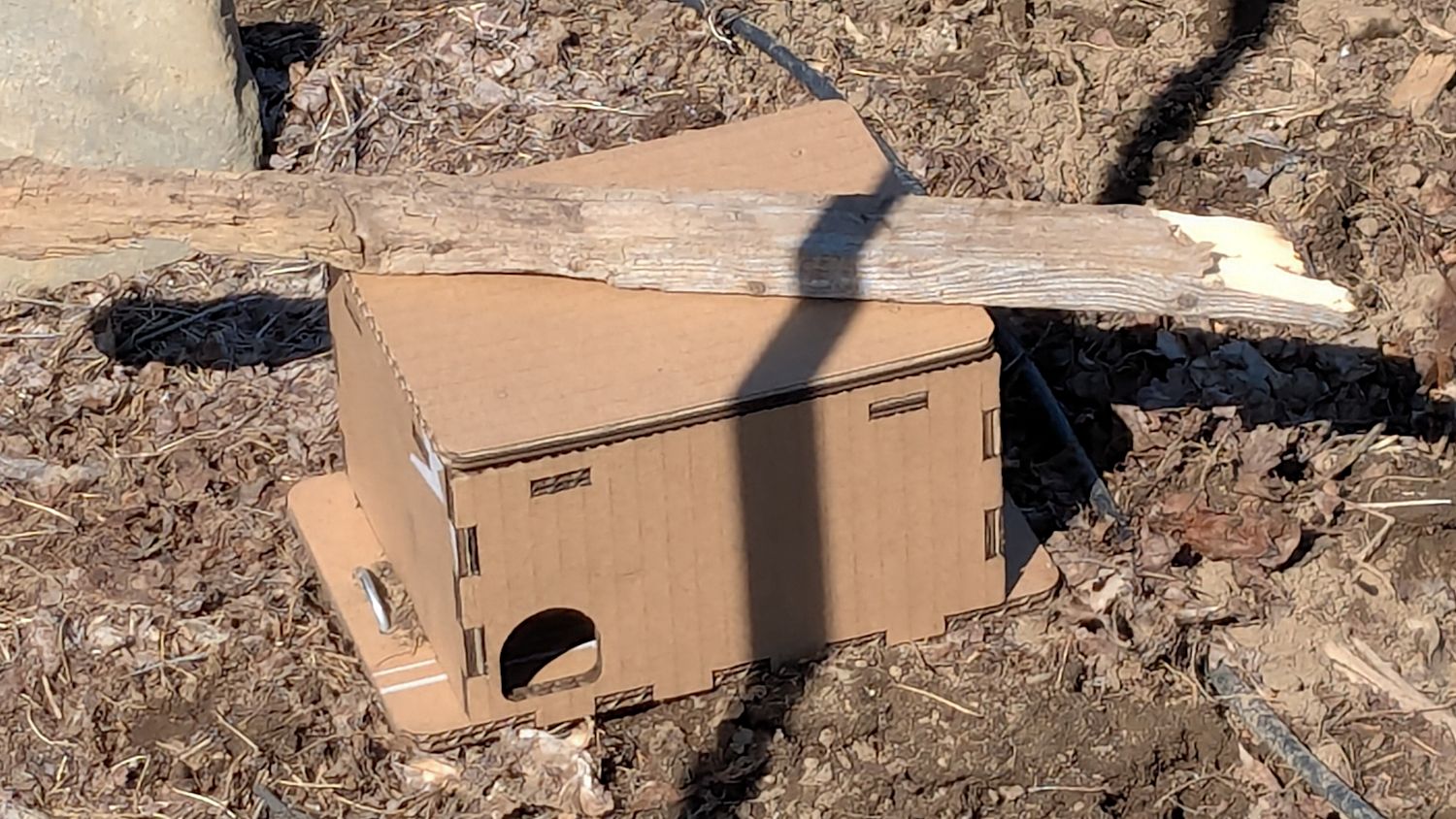
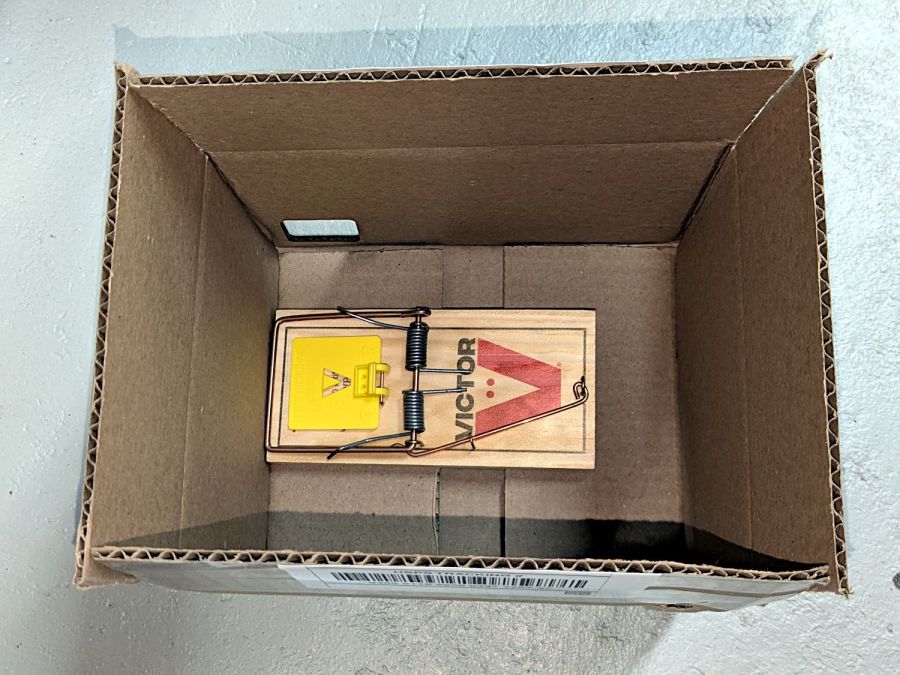
I do, however, have a vast pile of cardboard boxes:
Vole Box – large
That’s a rat-size trap.
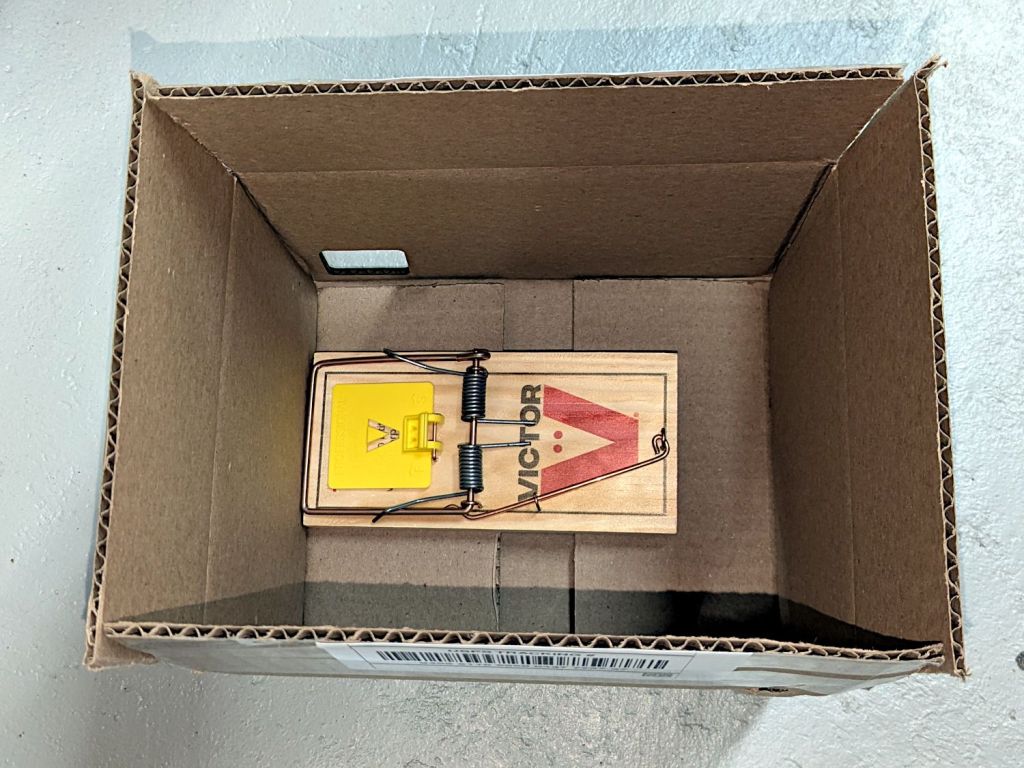
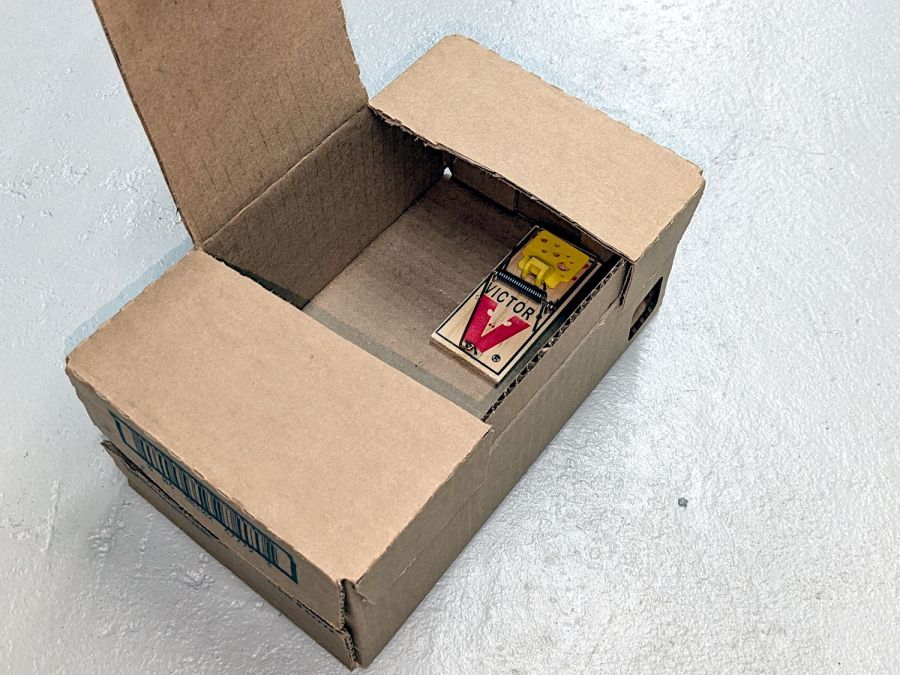
A smaller box has room for two mouse-size traps (one hidden on the left):
Vole Box – small
The general idea: plunk the box in a garden plot, arm the trap(s), close the lid, and eventually a vole will venture inside, whereupon wall-following leads to disaster. Apparently bait is optional, as wall-following inevitably takes them over the trap pedal. I won’t begrudge them a walnut or two, should bait become necessary.
Cardboard is obviously the wrong material for a box in an outdoor garden, but I figure they’ll survive long enough to show feasibility and I can deploy a lot of small boxes before having to conjure something more durable.
Yes, those are laser-cut rounded-rectangle holes: 30 mm and 40 mm, assuming voles care about such things.
PrusaSlicer can recognize “things that look like logos” and process them with two different materials, so I tried it out with some plant signs:
Plant Signs – 50pct scale
They came out surprisingly well, particularly for characters with two adjacent filament threads:
Plant Signs – 50pct scale – 2-stroke
Smaller characters with single threads show more stringing, a characteristic of PETG, but it brushes off easily enough:
Plant Signs – 50pct scale – 1-stroke
While the existing text isn’t nearly as informative as real plant tags, they’re surely more durable and a chunkier font would improve both printability and readability.
I suggested Mary hand them out to any of her gardening cronies in need of a chuckle …
A highly effective way to bait a rat trap for garden voles:
Rat trap – still baited
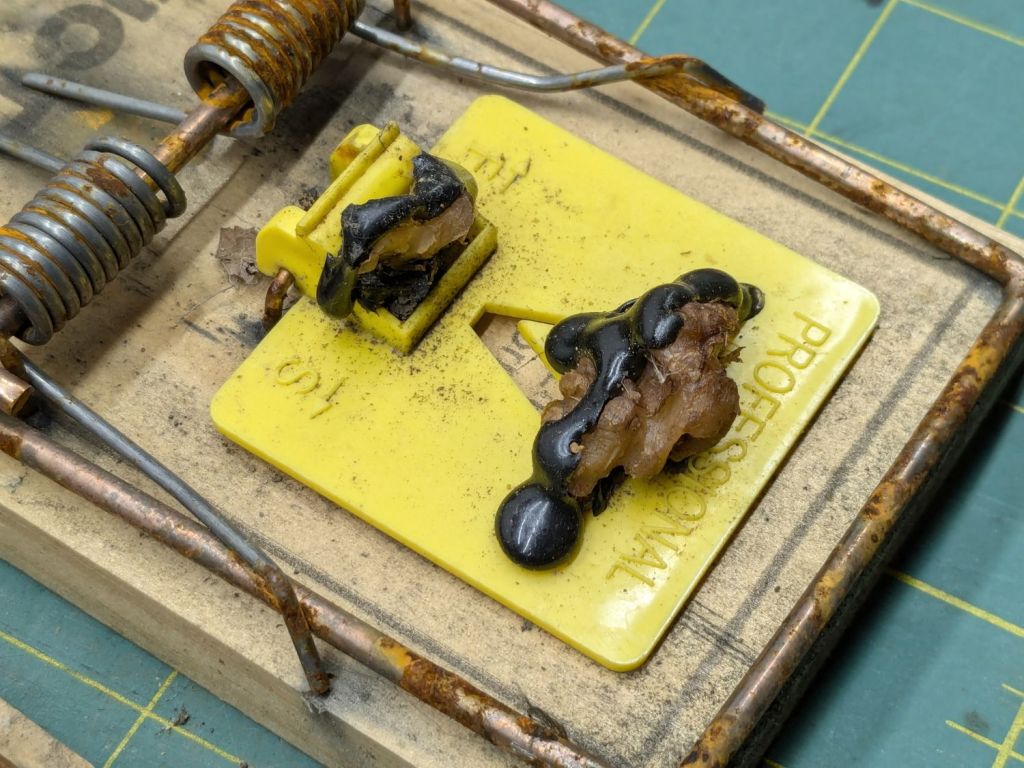
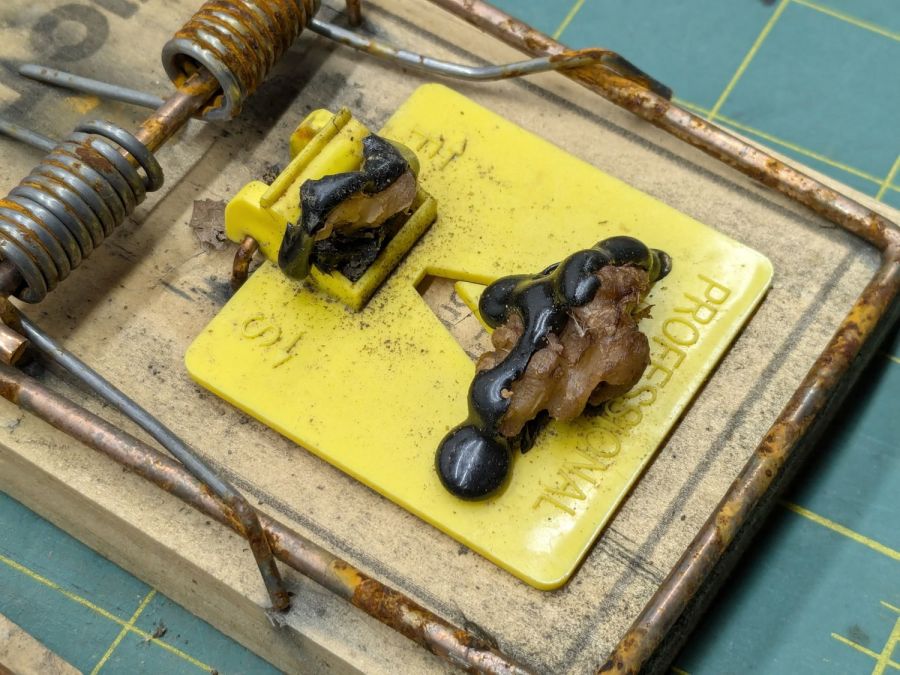
The trap is a Victor M205 (in a 12-pack as M326) with a big yellow plastic bait pedal. The bait is pieces of walnut, secured to the pedal with generous strands of hot melt glue. The trick involves mechanically capturing the walnut by slobbering glue over & around it, forcing the vole to pull & tug while gnawing the last bit of goodness.
Which generally ends badly:
Rat trap – gnawed bait
I do not begrudge the critters a fancy last meal; it’s gotta be better than their usual diet of carrots / radishes / turnips.
Voles have no qualms about eating the bait from a sprung trap with a dead compadre a few millimeters away:
Rat trap – empty bait
They will sometimes eat the walnuts and their dead compadre.
The plastic pedals work much better than the old-style metal pedals at holding the steel arm wire. The wire slides freely on the plastic, in contrast to the previous high-friction metal-on-metal latch.
Some of the traps were entirely too sensitive and required slightly bending the tip of the arm wire upward to increase the friction on the plastic plate. Always always always handle armed traps by the wooden edges beside the kill bar, so when it accidentally snaps your fingers are nowhere near the business end.
After I figured out how to properly bait the traps and we set out half a dozen traps in the most attractive crops, Mary’s garden produced 54 dead voles over the course of 90 days, sometimes in groups of three or four at a time. While this did not prevent all the crop damage, it definitely reduced the problem.
Next year we’ll start early and probably reach triple digits by midsummer.
The same technique with Victor M035 mouse traps (in 12-packs as M035-12) is brutally effective on house mice.
An entry from The New Garden Encylopedia, copyright 1936 through 1946, gives recommendations for using arsenical poisons in your garden:
Arsenical poisons
My father always said anybody who talks fondly of The Good Old Days wasn’t alive back then. He was and thought things had definitely improved since then.
Three months of outdoor exposure suggest that laser test paper can survive use as a plant tag for one growing season, at least when it remains flat:
Laser test paper – small plant labels – 3 month exposure
The two upper tags demonstrated the paper has no flexibility worth mentioning, so it cannot become a tag wrapped around a stem.
The two lower labels spent their time tucked into a window frame where they got plenty of sun & rain without the benefit of a backing plate. Looks good to me!
Contrary to my expectation, the craft adhesive sheet behind this label survived intact, although the label itself took some damage, perhaps from the more direct sunlight out on the deck:
Laser test paper – plant marker – 3 month exposure
In any event, they look Good Enough™ for our simple needs and next year’s plants will be properly labeled.
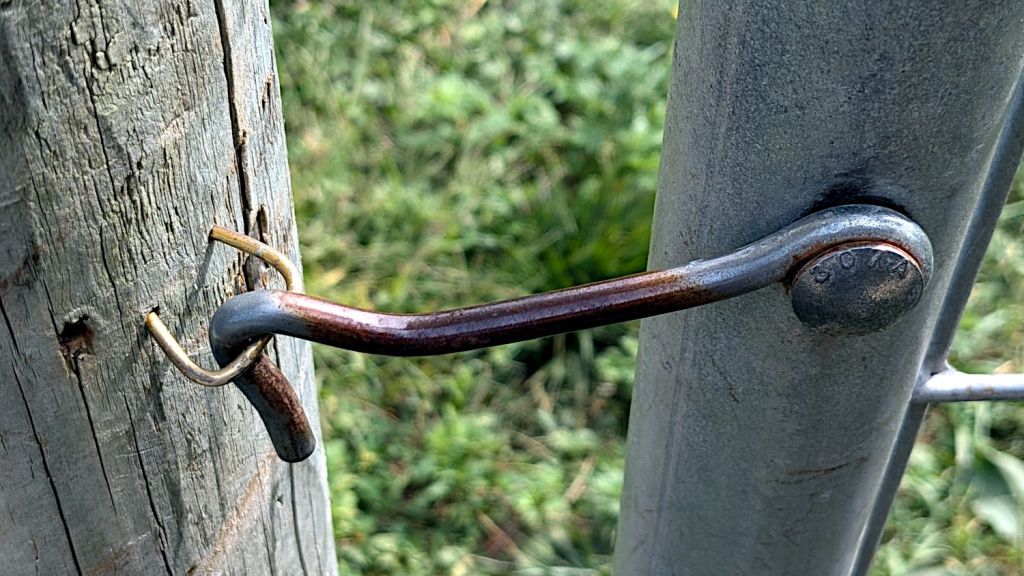
For reasons not relevant here, I ended up making a field-expedient repair to a garden gate latch:
Improvised gate latch staple – installed
The hole in the post just to the left of the obviously improvised staple shows where the Original Staple had vanished, never to be seen again. It looks like the gate has shifted an inch or so to the right (or the post to the left), which would explain why the staple gradually worked loose.
The improvised staple is a length of coat hanger wire bent into a square U, with the ends snipped off at an acute angle:
Improvised gate latch staple – cut wire
Those points do look scary, don’t they?
Then I gently tapped it into place, driving maybe ¾ inch of wire in the wood, flattening the loop a little more than I wanted, but not enough to make me try again.
Not our gate, not Mary’s garden, but deer pose a threat to all veggies within, without regard to ownership.
I have *a lot* of coat hanger wire for repairs like this …






 The Smell of Molten Projects in the Morning