The Smell of Molten Projects in the Morning

Ed Nisley's Blog: Shop notes, electronics, firmware, machinery, 3D printing, laser cuttery, and curiosities. Contents: 100% human thinking, 0% AI slop.

Tag: Gardening

Growing and sometimes fixing

  • Garden Rake Cross Bolt

    Garden Rake Cross Bolt

    Mary’s long-suffering garden rake pulled apart while we were flattening a section of what will become something like a lawn next to the garden:

    Garden rake - shank and ferrule
    Garden rake – shank and ferrule

    For whatever reason, there’s no cross bolt holding the shank into the ferrule, like there should be on any tool subject to pulling force.

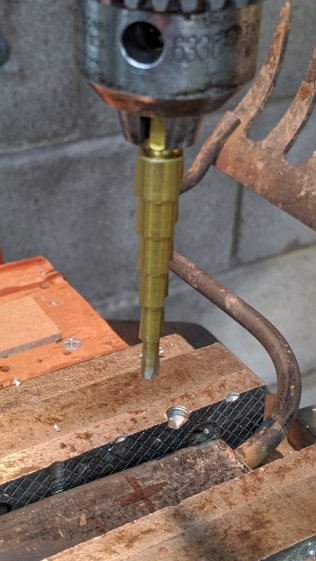
    After marking the wide spot on the shank, a couple of good shots with a two pound hammer flattened the ferrule around it well enough to start a hole with a 3/16 step drill:

    Garden rake - cross drilling
    Garden rake – cross drilling

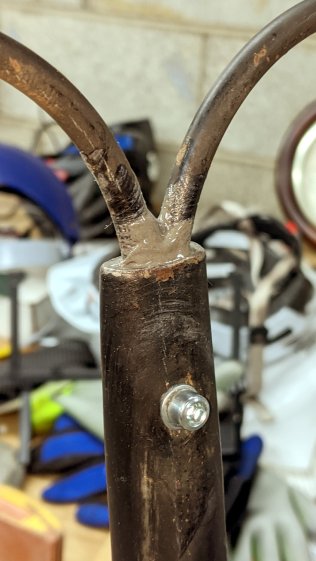
    Go through the far side with a 13/16 inch drill for a generous 5 mm fit, drop a bolt into the hole while it can’t get away, tighten the nyloc nut, and it’s all good:

    Garden rake - cross bolt
    Garden rake – cross bolt

    In fact, it’s better than it ever was, because now the shank can’t pull out until the ferrule falls off the handle. Which could happen, but I’m not averse to another bolt.

    Admittedly, it’s not a stainless steel socket head cap screw, because that’d just about double the value of the rake. The handle is in such bad shape that the bolt will probably outlast the wood …

    Done!

    Update: The consensus says I totally missed the Ritual Invocation of the Epoxy, so:

    Garden rake - epoxy fill
    Garden rake – epoxy fill

    Now all is right with the world …

  • Monthly Science: Organ Pipe Mud Dauber Wasp Nest Disassembly

    Monthly Science: Organ Pipe Mud Dauber Wasp Nest Disassembly

    The empty Organ Pipe Mud Dauber Wasp nest popped off the wall with relatively little damage:

    Organ Pipe Wasp Nest - overview
    Organ Pipe Wasp Nest – overview

    The open cells on the back side show the wasps don’t waste any effort on putting mud where it’s not needed:

    Organ Pipe Wasp Nest - wall side
    Organ Pipe Wasp Nest – wall side

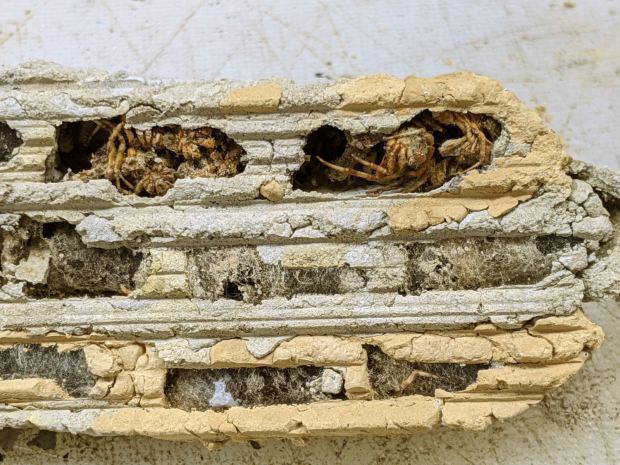
    Cracking it in half shows the rugged walls between the cell columns:

    Organ Pipe Wasp Nest - cross section
    Organ Pipe Wasp Nest – cross section

    Several cells contained three or four (thoroughly dead!) spiders apiece, evidently the result of un-hatched eggs:

    Organ Pipe Wasp Nest - failed egg - spiders
    Organ Pipe Wasp Nest – failed egg – spiders

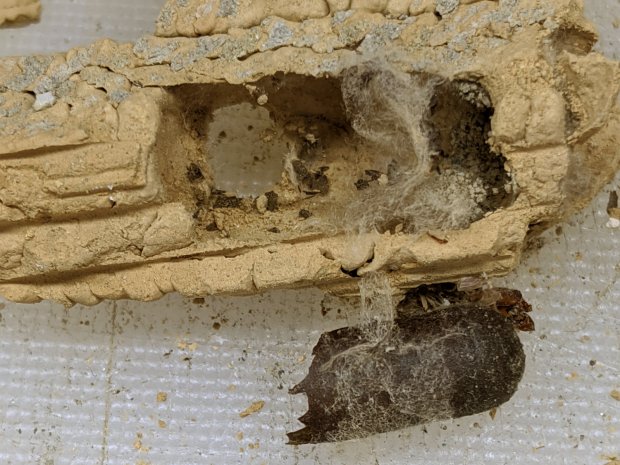
    Each successful cell contained a brittle capsule wrapped in a thin cocoon, surrounded by fragments of what used to be spiders, with an exit hole chewed in the side:

    Organ Pipe Wasp Nest - capsule detail
    Organ Pipe Wasp Nest – capsule detail

    I regret not weighing the whole affair, as all that mud represents an astonishing amount of heavy hauling and careful work by one or two little wasps!

  • Pileated Woodpecker vs. Stump

    Pileated Woodpecker vs. Stump

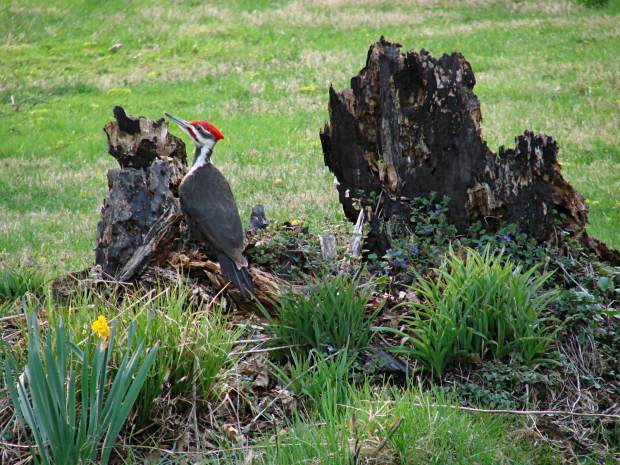
    A pileated woodpecker devoted considerable attention to debugging the remains of a stump in our front yard:

    Pileated Woodpecker - front yard stump
    Pileated Woodpecker – front yard stump

    It’s surely a descendant of this one, eleven years ago:

    Pileated Woodpecker
    Pileated woodpecker

    If you’re willing to wait a decade or so, a stump pretty much falls apart on its own, meanwhile providing habitat for critters both great and small.

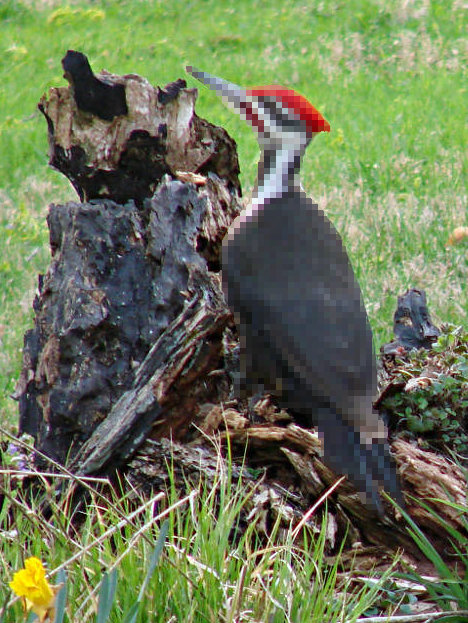
    Update: By popular demand, a slightly pixelated pileated woodpecker:

    Pileated Woodpecker - front yard stump - pixelated
    Pileated Woodpecker – front yard stump – pixelated
  • Hose Fitting vs. Lawn Mower

    Hose Fitting vs. Lawn Mower

    This appeared while we uprooted a row of forsythia along the north border:

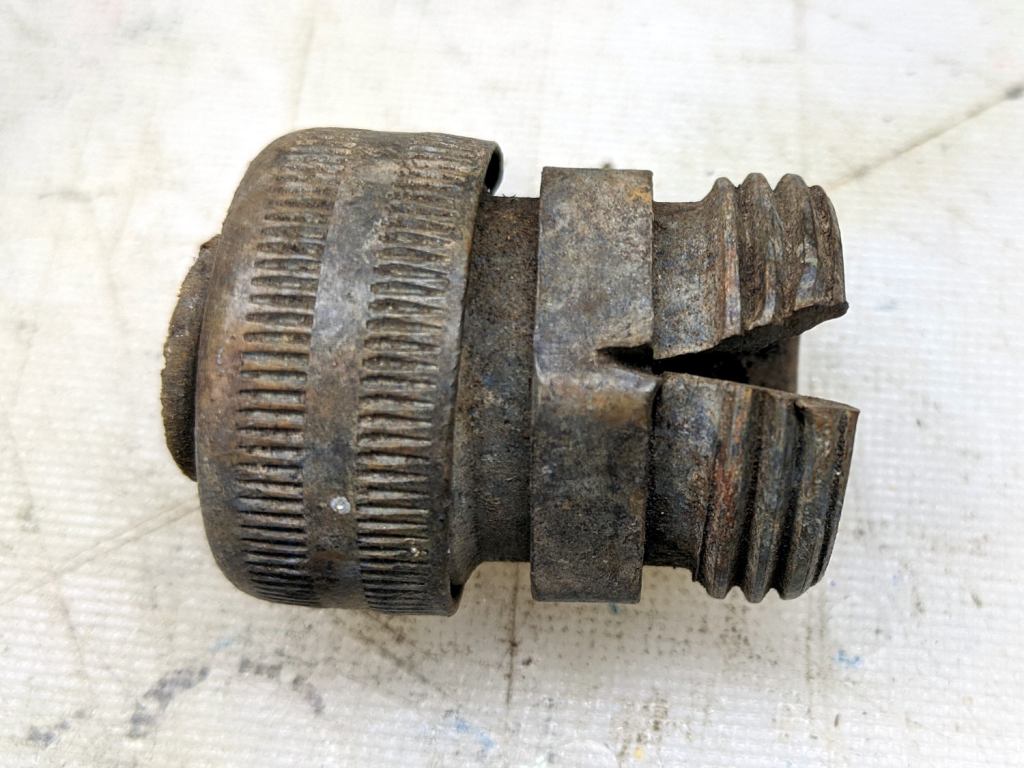
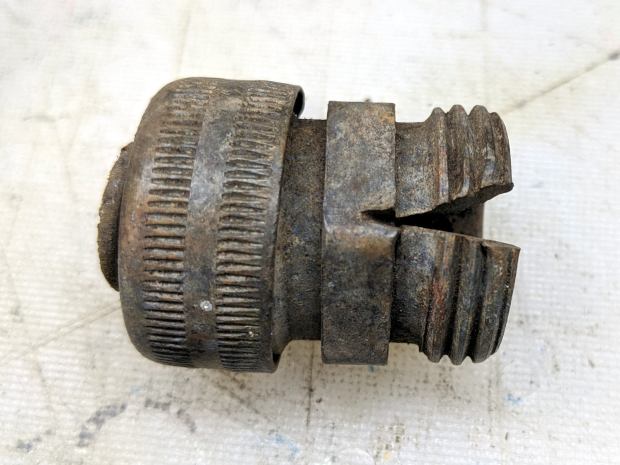
    Brass hose fitting vs lawnmower
    Brass hose fitting vs lawnmower

    Although FOD has killed a good share of my lawn mowers and blades over the decades, this happened long before my administration and I can’t take credit for the precision targeting.

  • Round Soaker Hose Splint

    Round Soaker Hose Splint

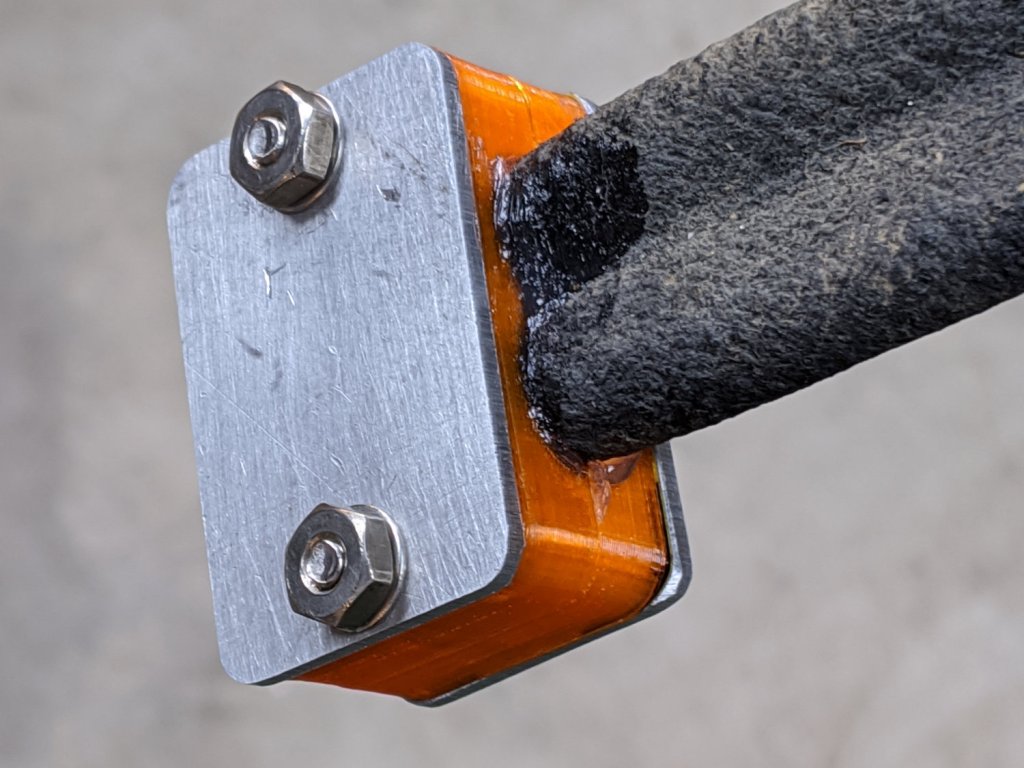
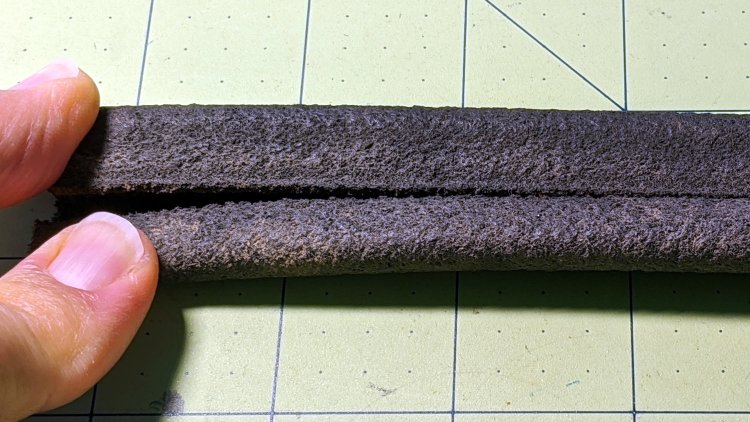
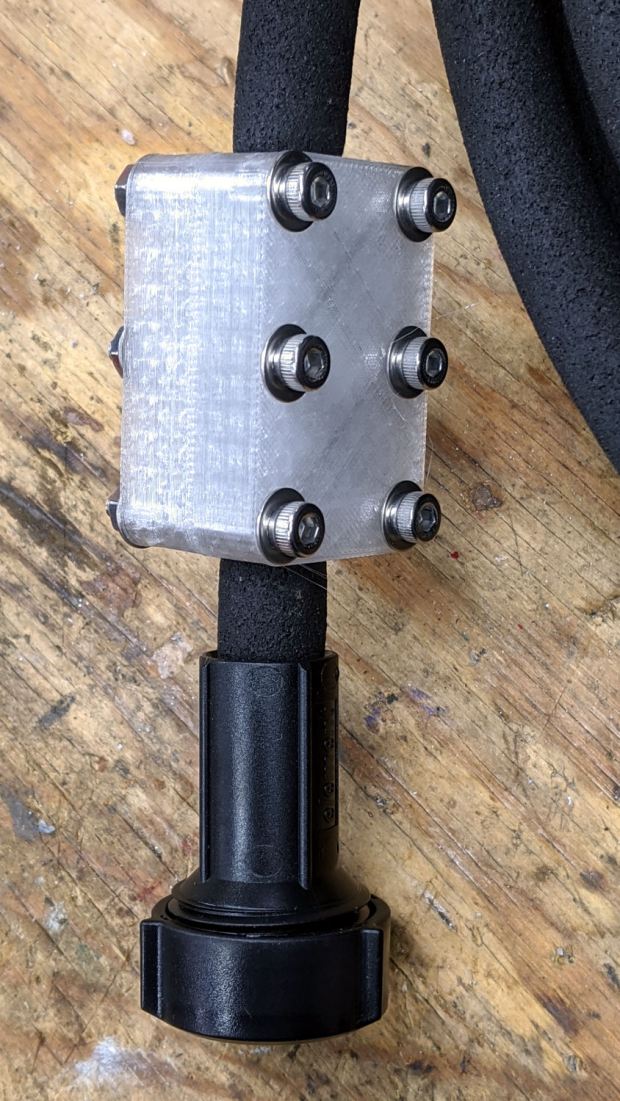
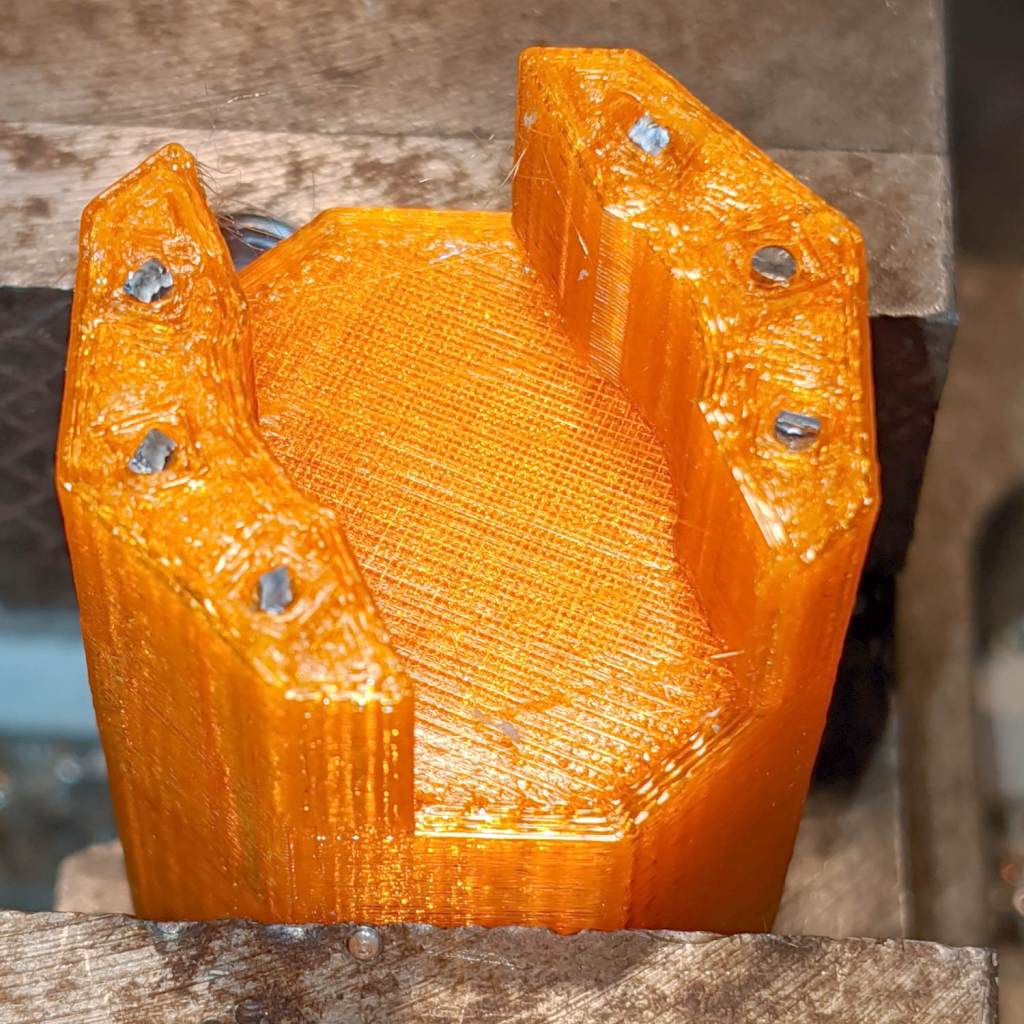
    One of two new round rubber soaker hoses arrived with a slight crimp, enough to suggest it would crumble at an inopportune moment. Rather than return the hose for something that’s not an obvious failure, I clamped the crimp:

    Round Soaker Hose Splice - top
    Round Soaker Hose Splice – top

    Unlike the clamps for the punctured flat soaker hoses, this one doesn’t need to withstand much pressure and hold back a major leak, so I made the pieces a bit thicker and dispensed with the aluminum backing plates:

    Round Soaker Hose Splice - bottom
    Round Soaker Hose Splice – bottom

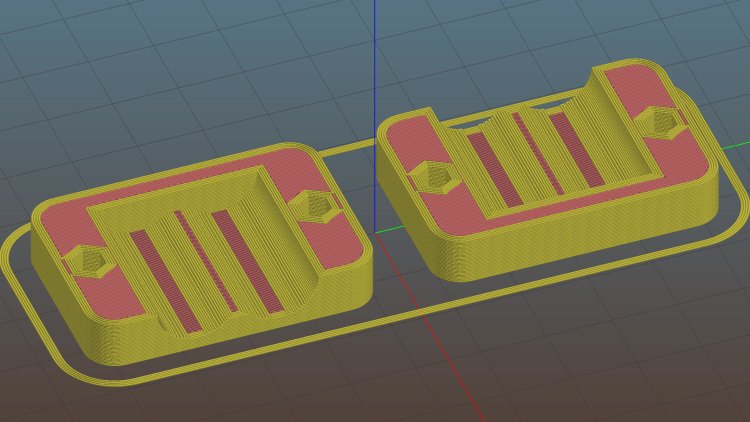
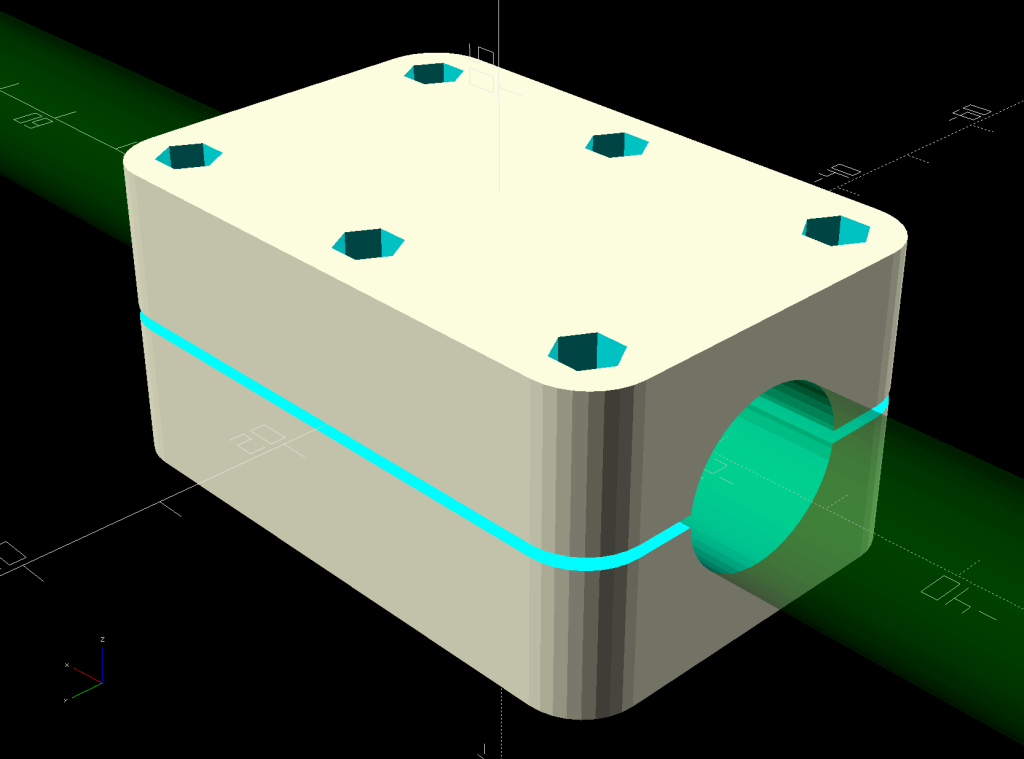
    The solid model is basically the same as for the flat hoses, with a slightly oval cylinder replacing the three channels:

    Round Soaker Hose Splice - OpenSCAD model
    Round Soaker Hose Splice – OpenSCAD model

    The OpenSCAD source code as a GitHub Gist:

    // Rubber Soaker Hose Splice
    // Ed Nisley KE4ZNU 2020-03
    Layout = "Build"; // [Hose,Block,Show,Build]
    TestFit = false; // true to build test fit slice from center
    //- Extrusion parameters must match reality!
    /* [Hidden] */
    ThreadThick = 0.25;
    ThreadWidth = 0.40;
    HoleWindage = 0.2;
    Protrusion = 0.1; // make holes end cleanly
    inch = 25.4;
    function IntegerMultiple(Size,Unit) = Unit * ceil(Size / Unit);
    ID = 0;
    OD = 1;
    LENGTH = 2;
    //———-
    // Dimensions
    // Hose lies along X axis
    Hose = [200,14.5,13.6]; // X = longer than anything else
    // 8-32 stainless screws
    Screw = [4.1,8.0,3.0]; // OD = head LENGTH = head thickness
    Washer = [4.4,9.5,1.0];
    Nut = [4.1,9.7,6.0];
    Block = [50.0,Hose.y + 2*Washer[OD],4.0 + 1.5*Hose.z]; // overall splice block size
    echo(str("Block: ",Block));
    Kerf = 1.0; // cut through middle to apply compression
    CornerRadius = Washer[OD]/2;
    NumScrews = 3; // screws along each side of cable
    ScrewOC = [(Block.x – 2*CornerRadius) / (NumScrews – 1),
    Block.y – 2*CornerRadius,
    2*Block.z // ensure complete holes
    ];
    echo(str("Screw OC: x=",ScrewOC.x," y=",ScrewOC.y));
    //———————-
    // Useful routines
    module PolyCyl(Dia,Height,ForceSides=0) { // based on nophead's polyholes
    Sides = (ForceSides != 0) ? ForceSides : (ceil(Dia) + 2);
    FixDia = Dia / cos(180/Sides);
    cylinder(d=(FixDia + HoleWindage),h=Height,$fn=Sides);
    }
    // Hose shape
    // This includes magic numbers measured from reality
    module HoseProfile() {
    NumSides = 12*4;
    rotate([0,-90,0])
    translate([0,0,-Hose.x/2])
    resize([Hose.z,Hose.y,0])
    cylinder(d=Hose.z,h=Hose.x,$fn=NumSides);
    }
    // Outside shape of splice Block
    // Z centered on hose rim circles, not overall thickness through center ridge
    module SpliceBlock() {
    difference() {
    hull()
    for (i=[-1,1], j=[-1,1]) // rounded block
    translate([i*(Block.x/2 – CornerRadius),j*(Block.y/2 – CornerRadius),-Block.z/2])
    cylinder(r=CornerRadius,h=Block.z,$fn=4*8);
    for (i = [0:NumScrews – 1], j=[-1,1]) // screw holes
    translate([-(Block.x/2 – CornerRadius) + i*ScrewOC.x,
    j*ScrewOC.y/2,
    -(Block.z/2 + Protrusion)])
    PolyCyl(Screw[ID],Block.z + 2*Protrusion,6);
    cube([2*Block.x,2*Block.y,Kerf],center=true); // slice through center
    }
    }
    // Splice block less hose
    module ShapedBlock() {
    difference() {
    SpliceBlock();
    HoseProfile();
    }
    }
    //———-
    // Build them
    if (Layout == "Hose")
    HoseProfile();
    if (Layout == "Block")
    SpliceBlock();
    if (Layout == "Show") {
    difference() {
    SpliceBlock();
    HoseProfile();
    }
    color("Green",0.25)
    HoseProfile();
    }
    if (Layout == "Build") {
    SliceOffset = TestFit && !NumScrews%2 ? ScrewOC.x/2 : 0;
    intersection() {
    translate([SliceOffset,0,Block.z/4])
    if (TestFit)
    cube([ScrewOC.x/2,4*Block.y,Block.z/2],center=true);
    else
    cube([4*Block.x,4*Block.y,Block.z/2],center=true);
    union() {
    translate([0,0.6*Block.y,Block.z/2])
    ShapedBlock();
    translate([0,-0.6*Block.y,Block.z/2])
    rotate([0,180,0])
    ShapedBlock();
    }
    }
    }
  • Garden Mole: End of Life

    Garden Mole: End of Life

    One of the moles aerating the ground around here ran out of steam beside the garden:

    Mole - dorsal
    Mole – dorsal

    It has wonderfully soft velvety fur!

    Flipping it over:

    Mole - ventral
    Mole – ventral

    A closeup of its digging paws and gnawing teeth:

    Mole - ventral paws - teeth
    Mole – ventral paws – teeth

    Those choppers seem overqualified for a diet of earthworms, but I suppose they know what they’re doing.

    We left it in as-found condition, ready for recycling …

    [Update: The consensus seems to be it’s a vole or shrew, not a mole. It’d be the biggest vole I’ve ever seen and “large shrew” seems oxymoronic, but the teeth are diagnostic. ]

  • Monthly Science: Vegetable Ice Crystals

    Mary made a batch of veggies in tomato sauce and froze meal-size portions as winter treats. The moist air inside the containers froze into delicate ice blades on the zucchini slices:

    Veggie ice crystals - overview
    Veggie ice crystals – overview

    A closer look:

    Veggie ice crystals - detail
    Veggie ice crystals – detail

    The blade cross-sections might be oblong hexagons, but it’s hard to tell with crystals melting almost instantly after the lid comes off. Some of the smaller hair-like blades reminded me of tin whiskers.

    Yummy!