Ed Nisley's Blog: Shop notes, electronics, firmware, machinery, 3D printing, laser cuttery, and curiosities. Contents: 100% human thinking, 0% AI slop.
Category: Science
If you measure something often enough, it becomes science
Having used desiccant in tea bags inside the PolyDryer boxes with some success, I wanted to see what happens with more exposed surface area:
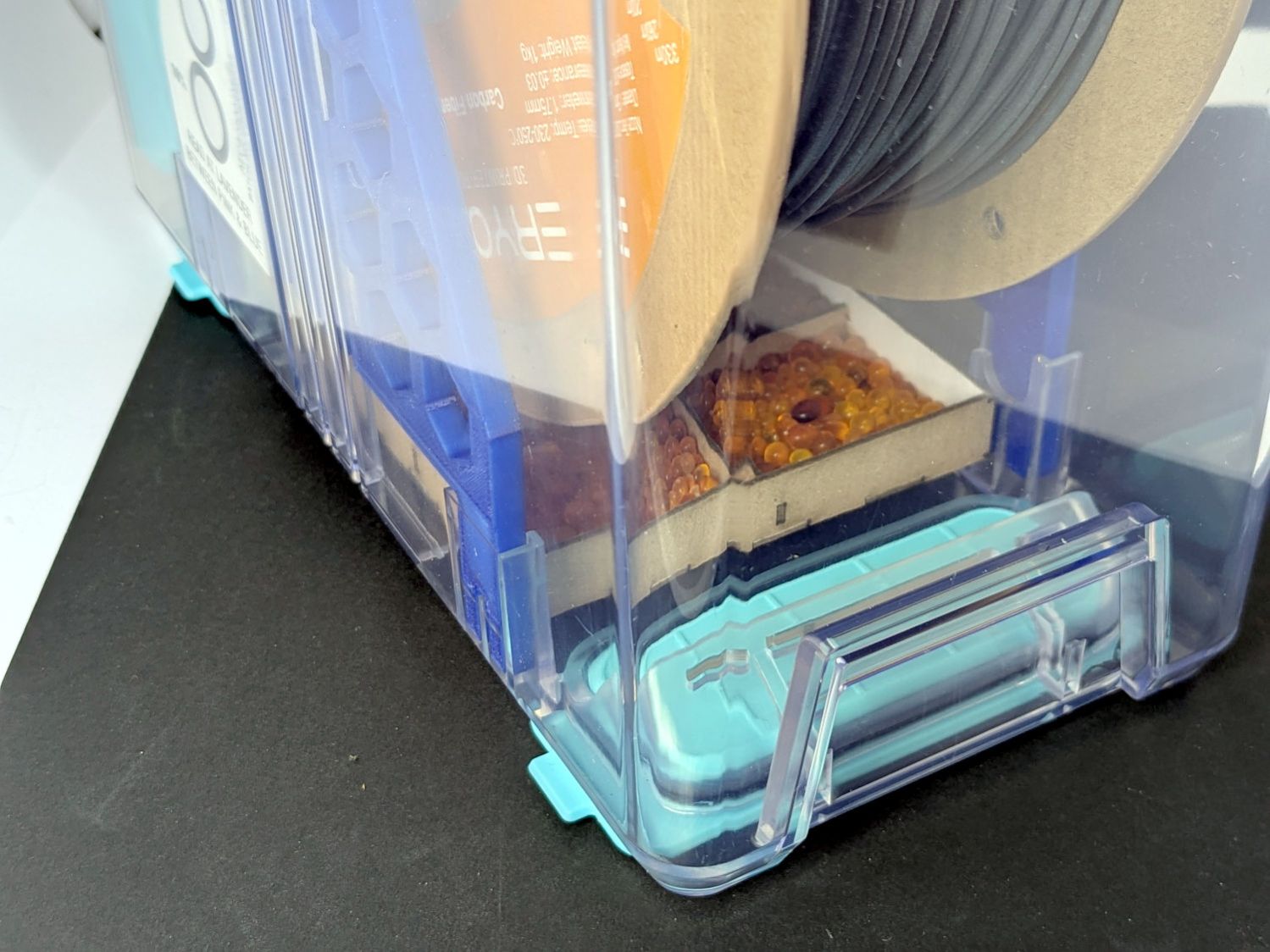
Polydryer Box desiccant tray – installed
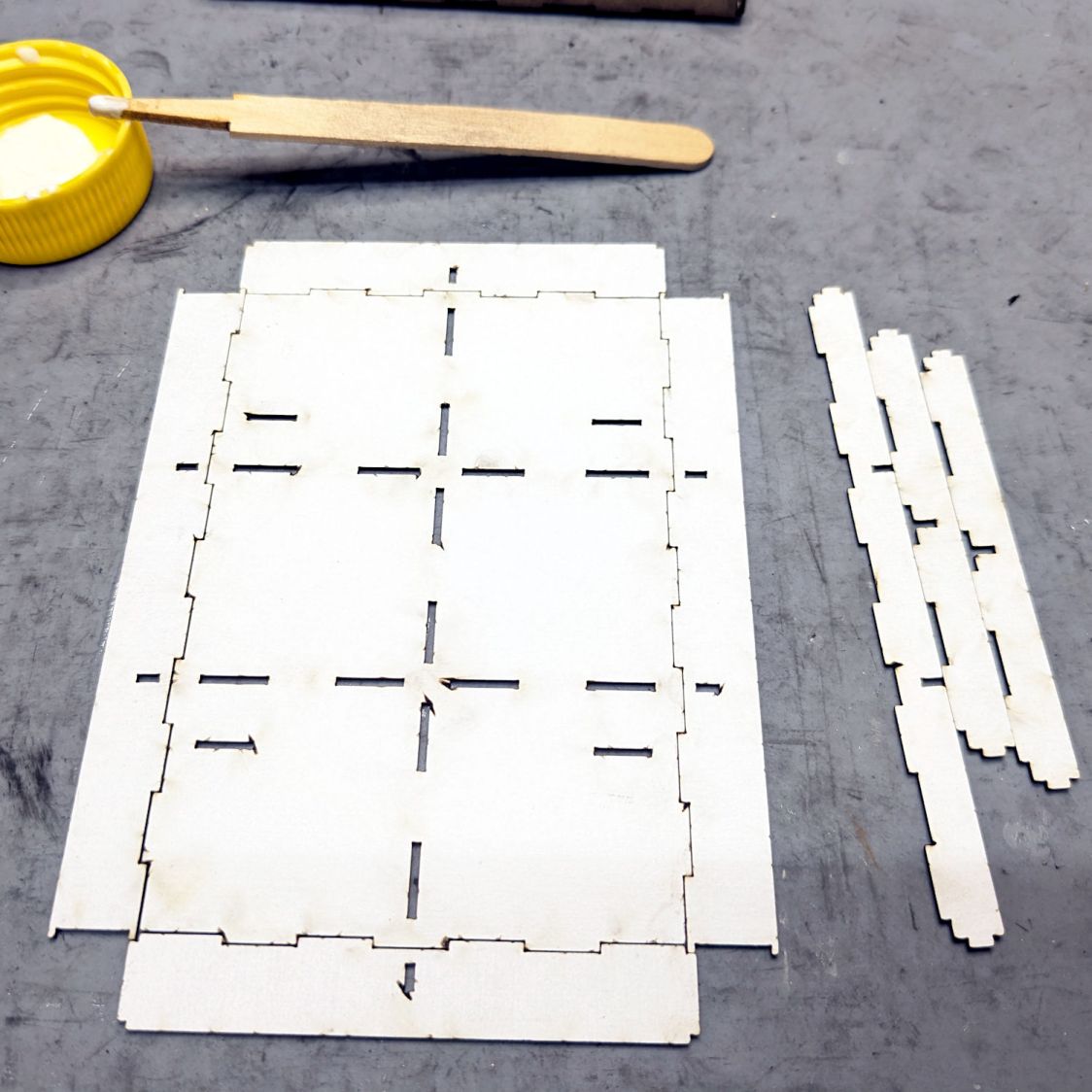
The tray (jawbreaker boxes.py URL) is 2 mm chipboard with a quartet of additional notches fitting the protrusions in the bottom of the Polydryer box:
Polydryer Box desiccant tray – assembly
Although you’ll find plenty of printed trays, many with ingenious perforated lids, this was quick & easy:
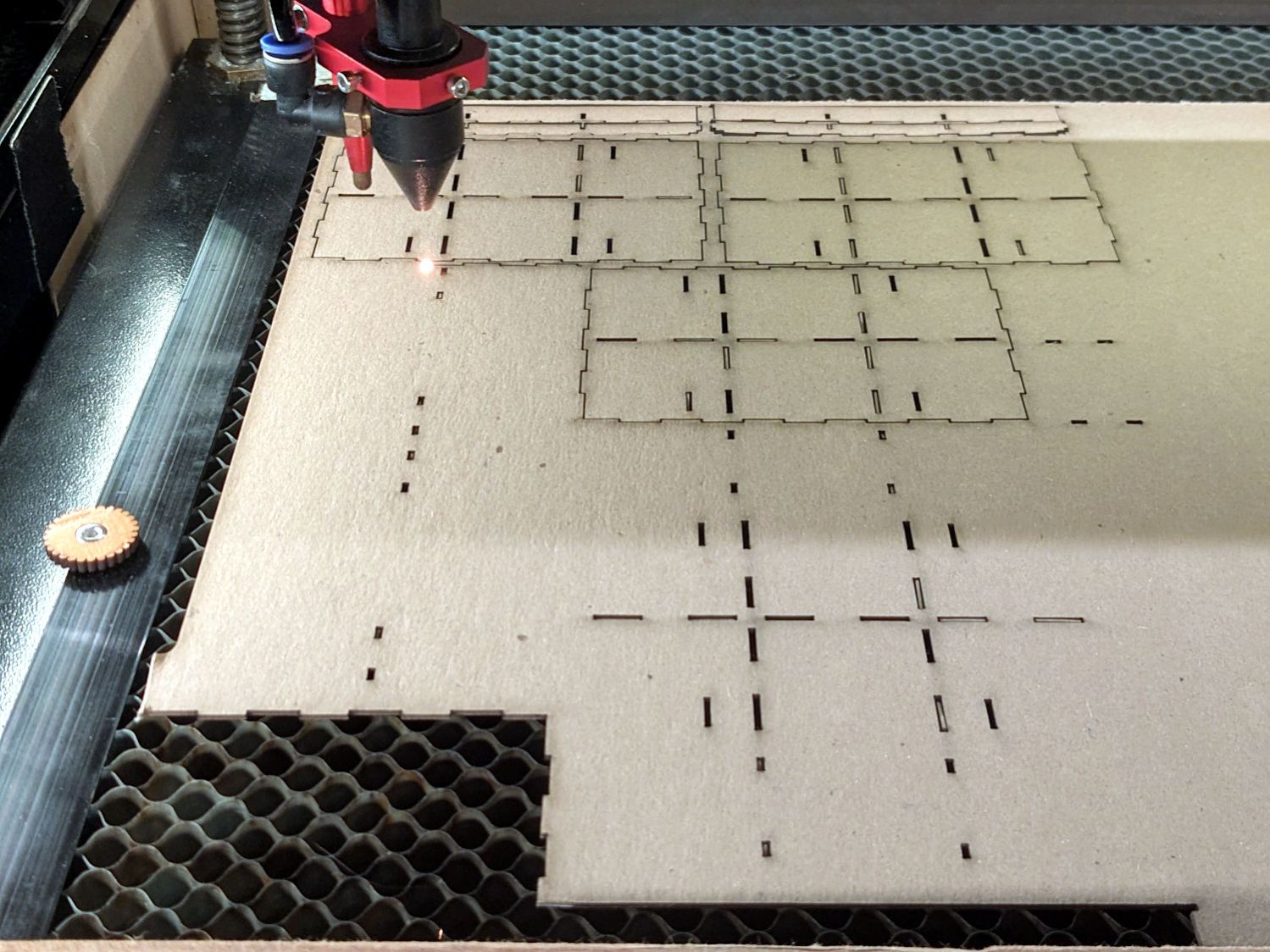
Polydryer Box desiccant tray – cutting
They’re painfully prone to dumping their contents, despite the dividers which are intended to dissuade the beads from taking collective action and surging over the slightly higher outer walls. Fortunately, the dump occurs inside a sealed box and is entirely survivable.
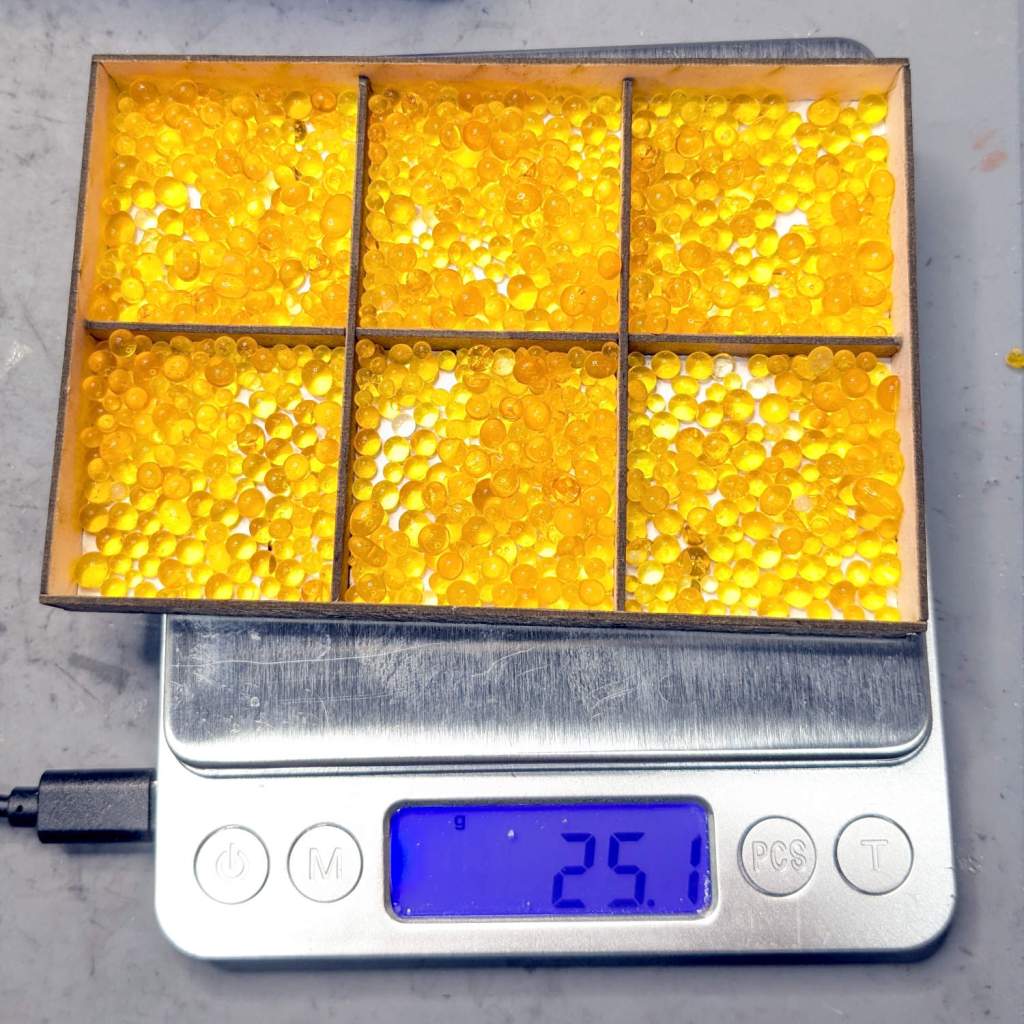
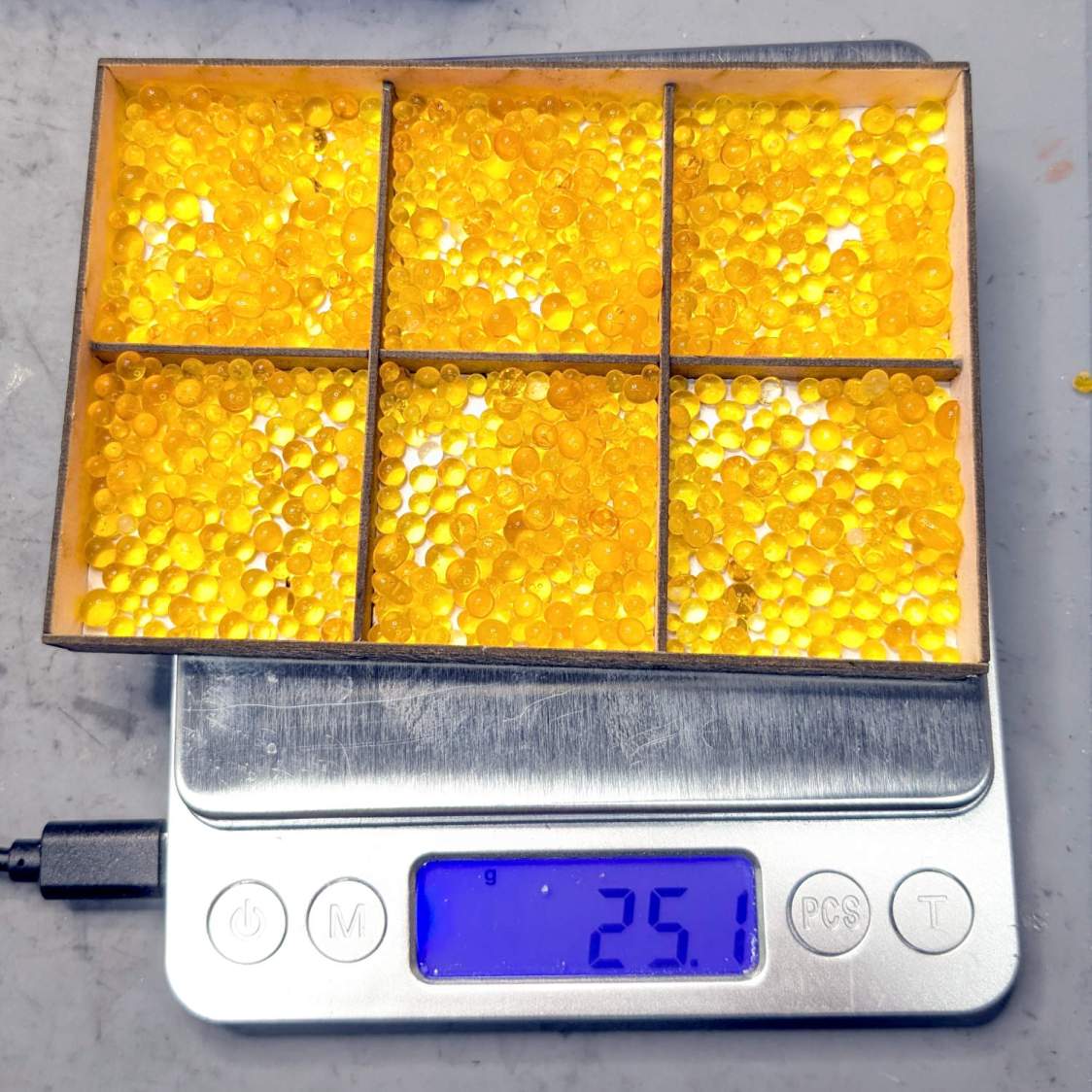
Distributing 25 g of silica gel neatly fills the sections:
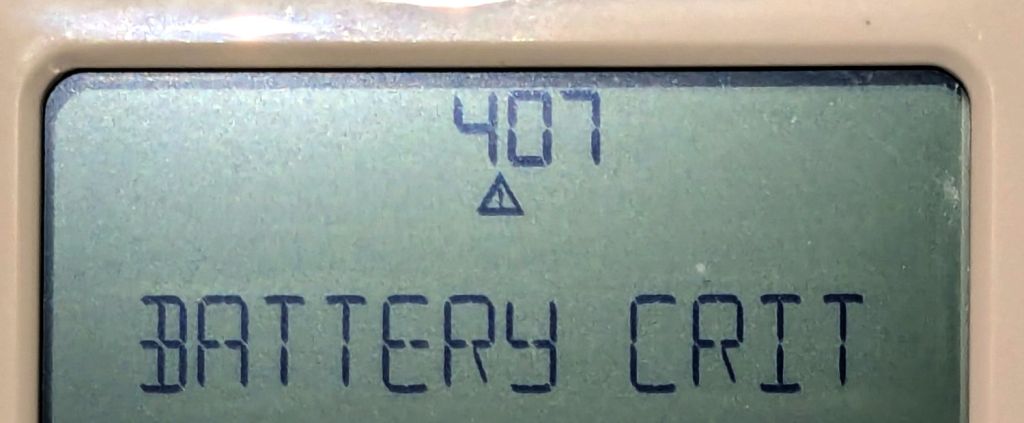
A few weeks ago, the house seemed unusually warm when I crawled out of bed. Checking the heat pump thermostat woke me right up:
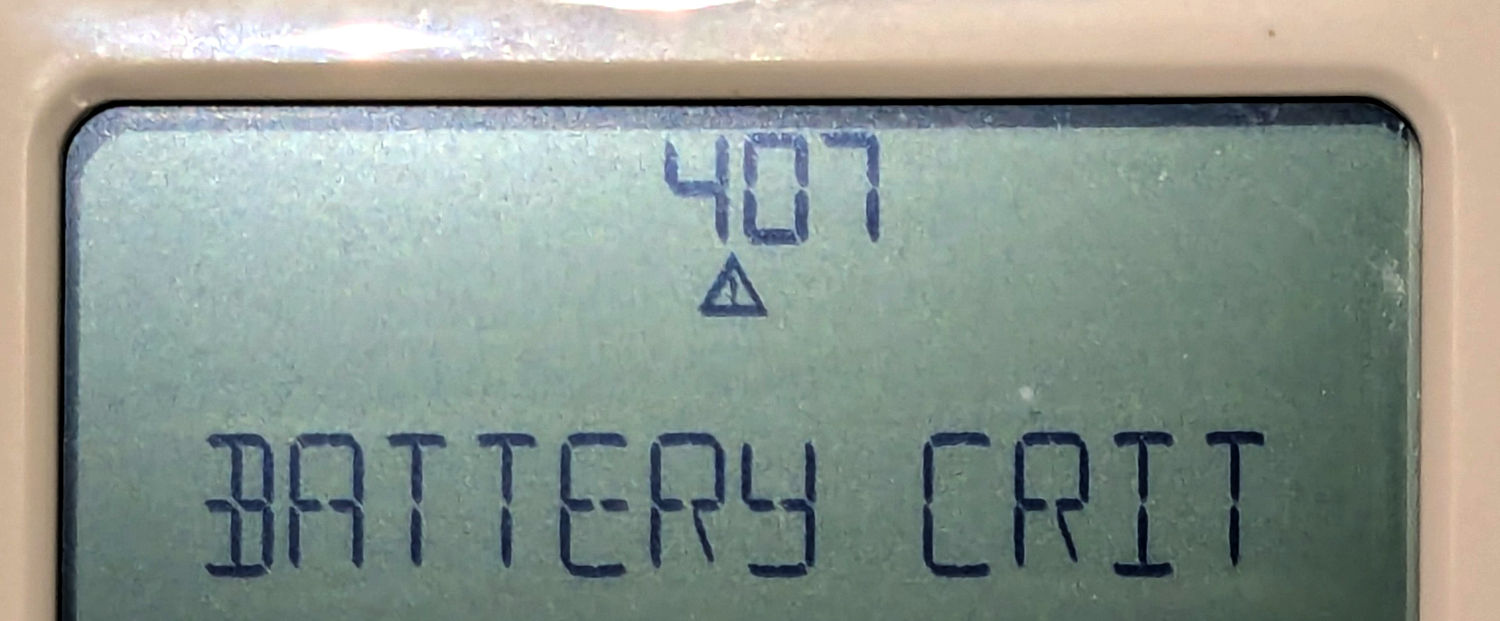
Heat pump – battery critical
This, as they say, is not a nominal outcome.
A pair of AA alkaline cells powers the thermostat and, due to its wireless communication link to the heat pump’s air handler in the attic, it chews through two pairs a year. As you’d expect, it displays a “Battery Low” message for at least few days at the end of their lifetime, which was not the case for this failure.
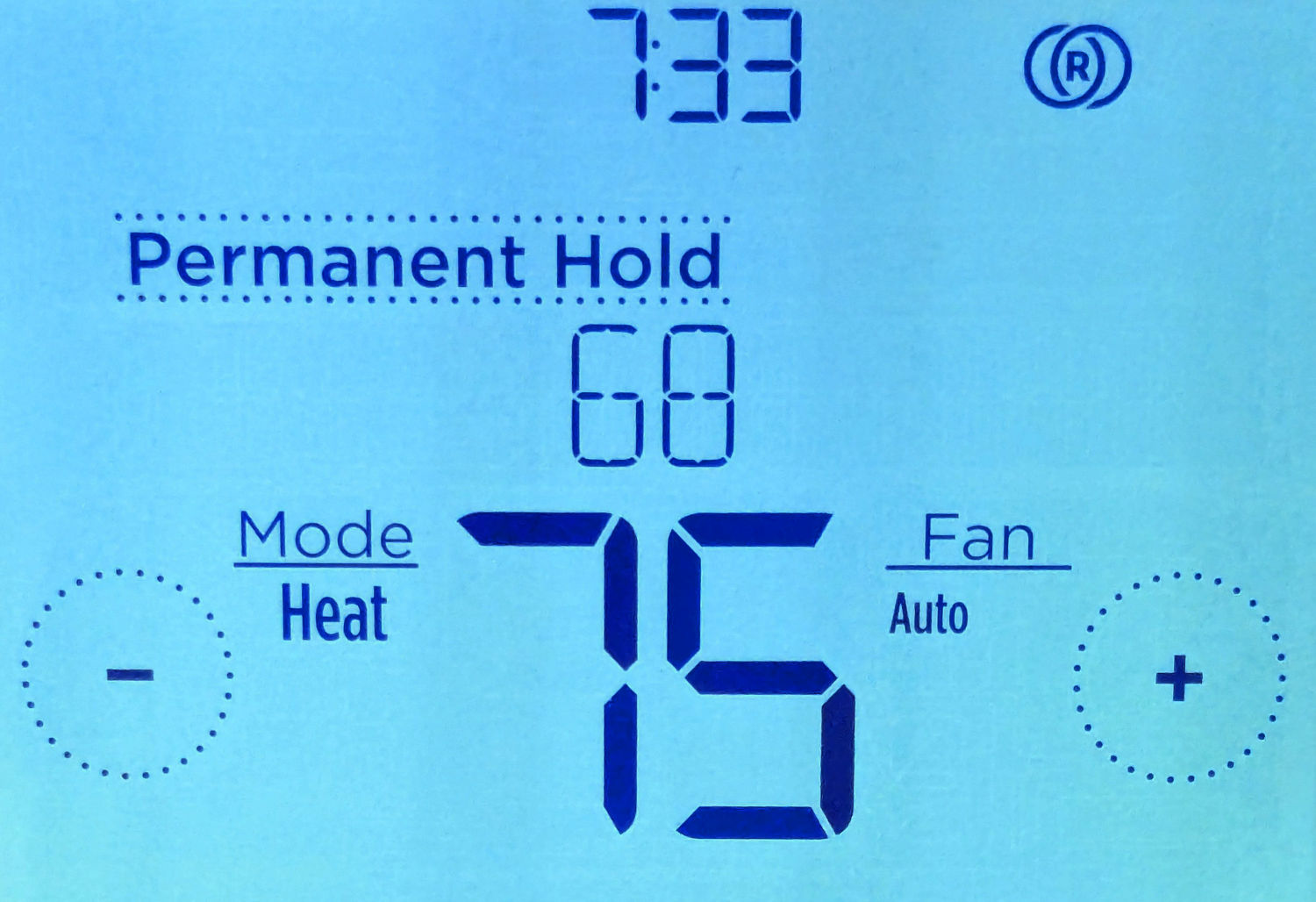
After replacing the cells, the thermostat reported that, yes indeed, the house was much warmer than usual:
Heat pump – high temperature
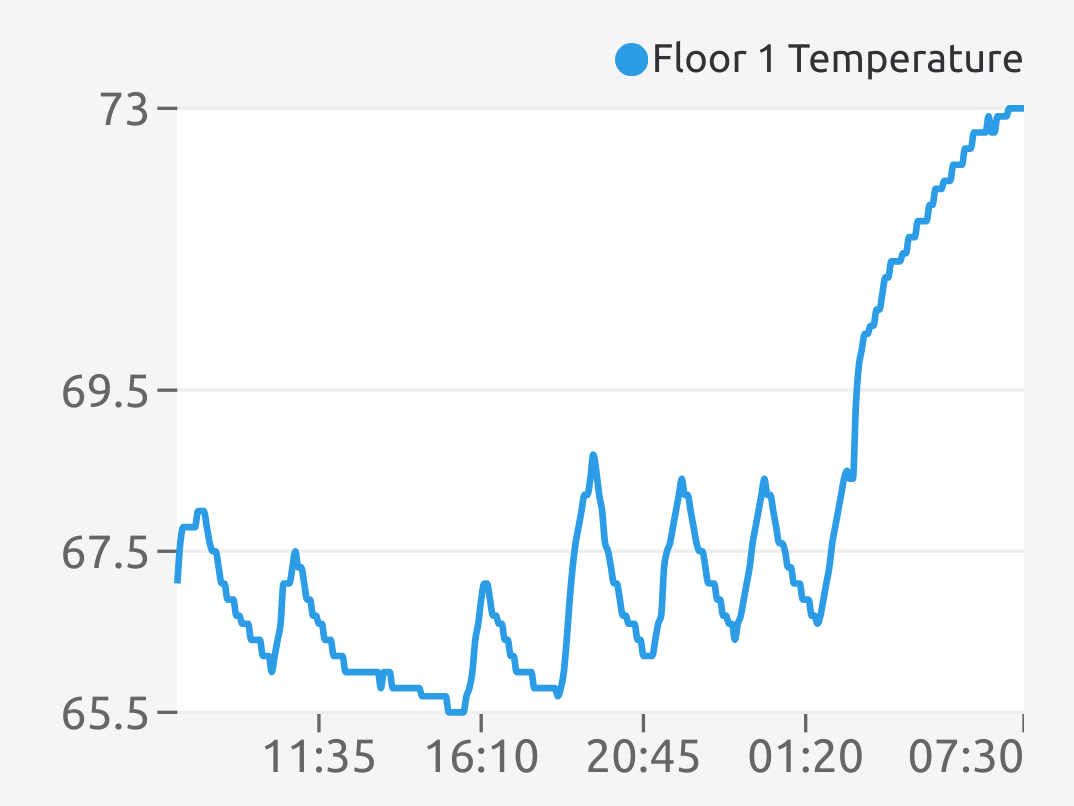
A temperature monitor showed the heat had jammed on in the deep of the night:
Heat pump – runaway temperature
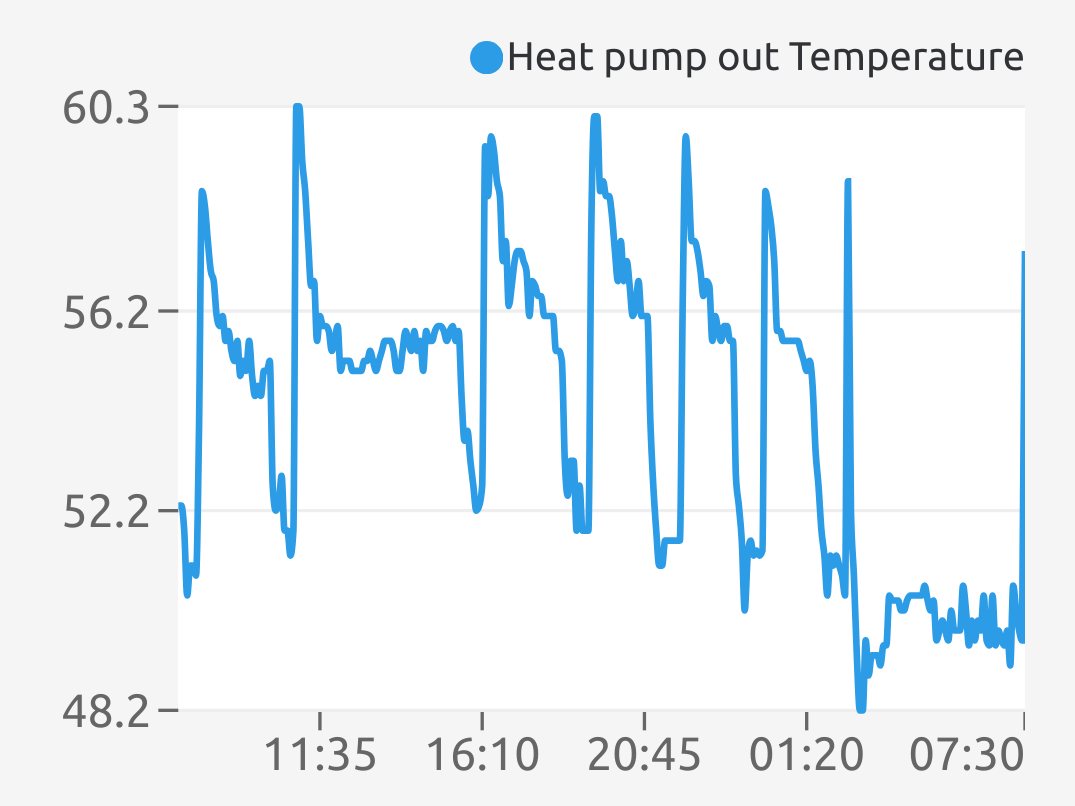
The heat pump exhaust temperature showed a similar event:
Heat pump – exhaust temperature
One of the AA cells showed about 1.3 V, but the other was around 0.25 V, suggesting an abrupt failure, rather than the normal gradual voltage decrease with plenty of time to replace the cells.
It’s reasonable to jam the heat on when the thermostat isn’t communicating, rather than let the house gradually freeze, but it did come as a surprise. I don’t know how the heat pump reacts to a battery failure during the cooling season; not refrigerating the house would be perfectly fine in most circumstances.
The Amazon Basics AA cells I’ve been using have worked as well as the Name Brand ones, so I was willing to write one off as happenstance.
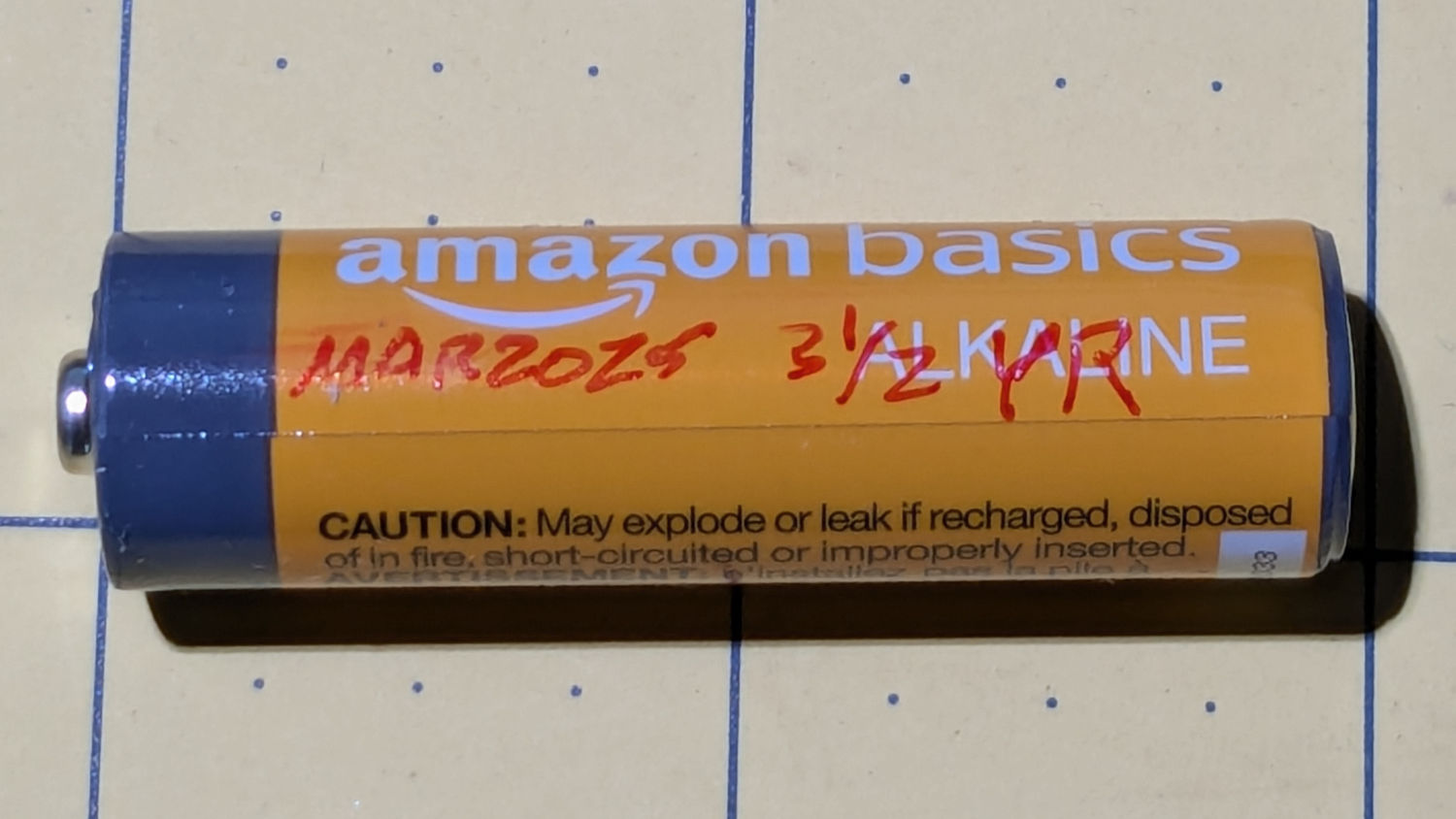
However, during the recent Daylight Saving Time dance, I discovered the clock in Mary’s Long Arm Sewing Room had stopped, with an Amazon Basics AA alkaline cell from the same lot inside:
Failed clock AA cell
The date shows I’d replaced it in March, with the previous cell lasting an amazing 3-½ years. This one was completely dead, reading barely 0.1 V, after seven months. Mary hasn’t had a quilting project at the long-arm stage in recent months, so the clock may have been stopped for quite a while.
Perhaps something has gone badly wrong with Amazon’s battery supplier QC.
As the saying goes: Once is happenstance. Twice is coincidence. Three times is enemy action.
The “PETG White” spool in the top line is nearly empty, so I loaded a new spool into the “Empty 1” box.
The “Empty 1” 35% value on 7 Oct matches the other empty box, the desiccant having pulled the humidity down from the 51% basement level. The weight of the water pulled out seems low compared to “Empty 2”, as they both started with a fresh batch of basement air while changing the desiccant in September.
They’re again filled with 25 g of alumina beads, although I’m beginning to think silica gel does a better job.
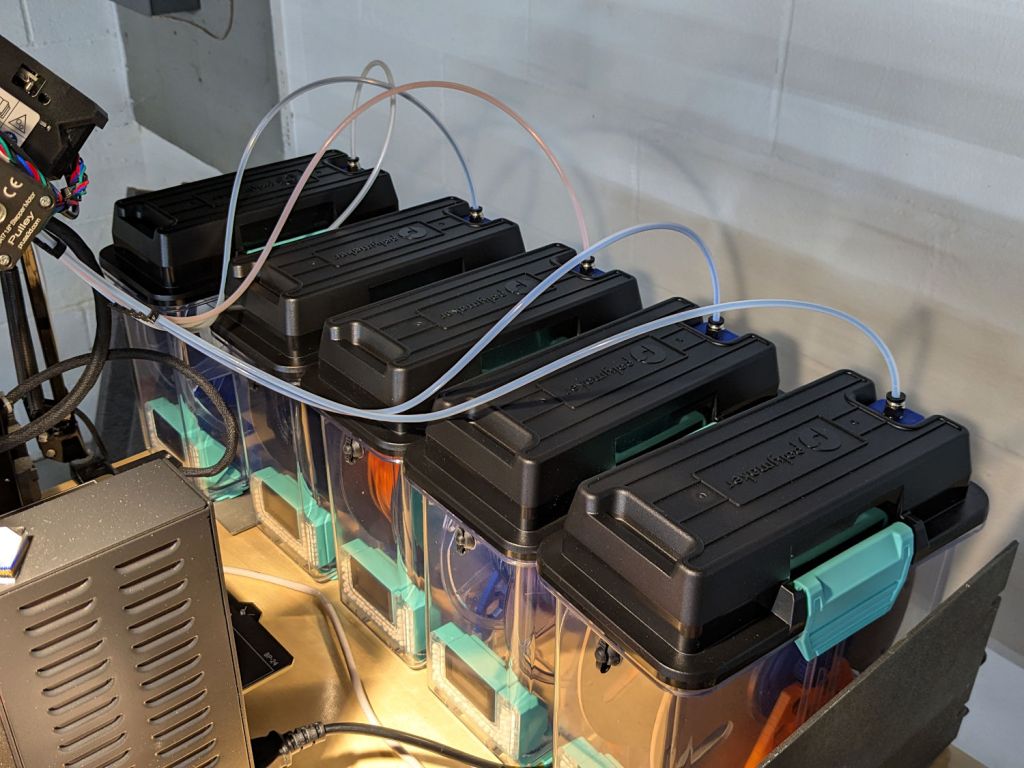
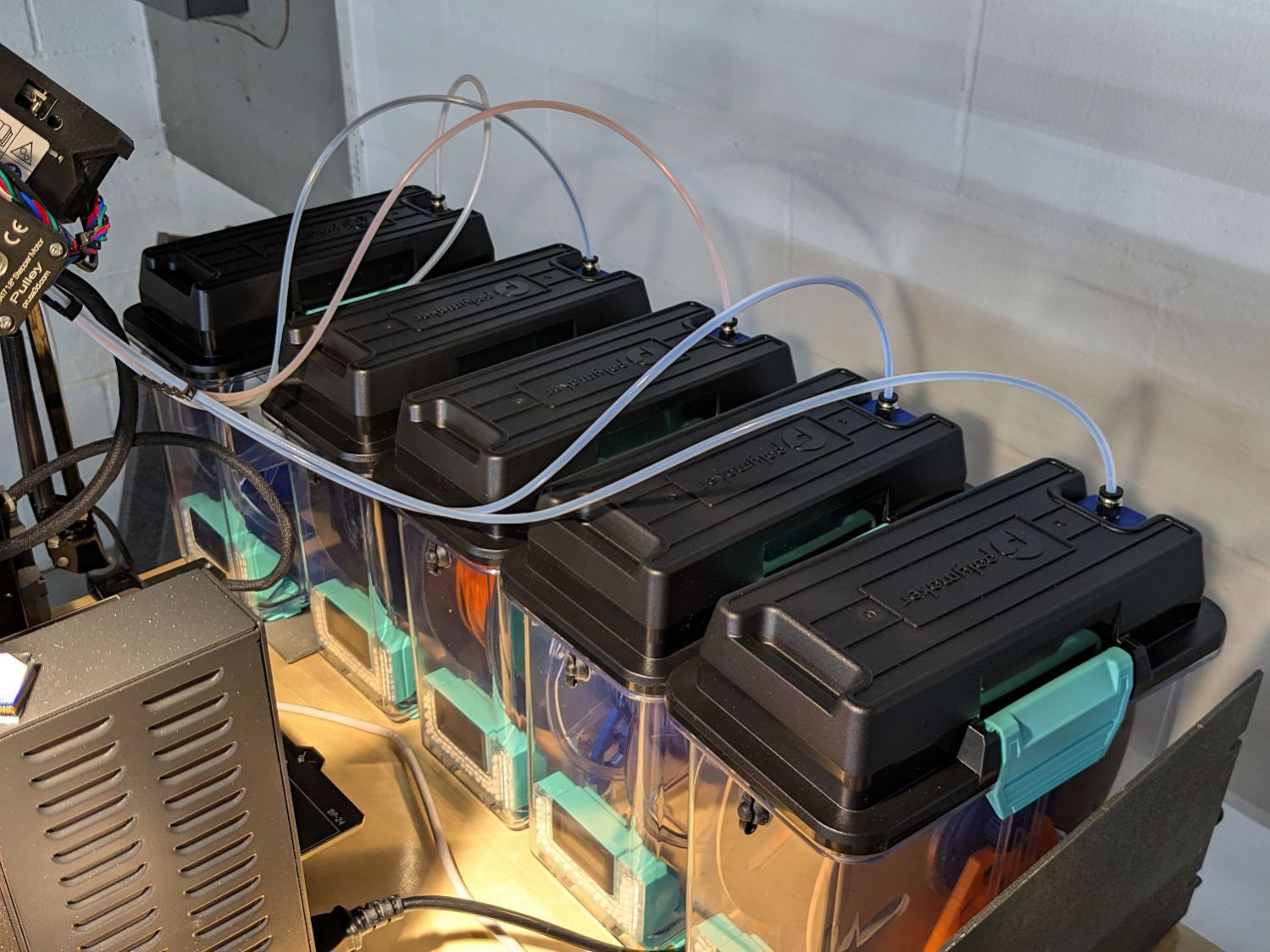
A picture of the boxes, thus avoiding WordPress reminding me pictures improve SEO:
After about four years, the two well-aged 12 V 9 A·hr batteries in the Belkin F6C1500 UPS gave up after a few minutes without line power, whereupon I swapped the UPS out for a new one.
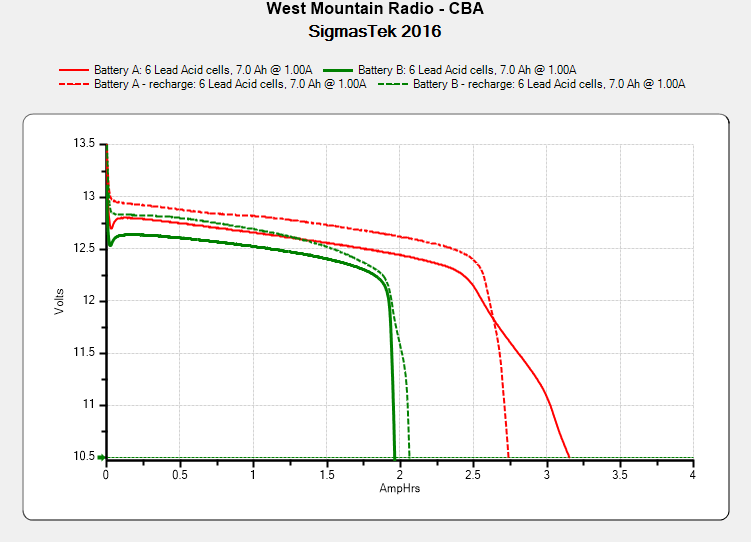
The old batteries don’t have much life left in them (the date in the title should be 2021):
SigmasTek 12V SLA -2025-09-30
That’s with a 1 A load, rather than the 2 A I used earlier, as they’ll never be used for heavy loads again.
The new 7 A·hr batteries can power a 300 W incandescent bulb for 10 minutes before sounding the Low Battery alert, then another three minutes before shutting down. That’s about 12 A at 24 V, call it 2.6 A·hr from grossly overstressed batteries.
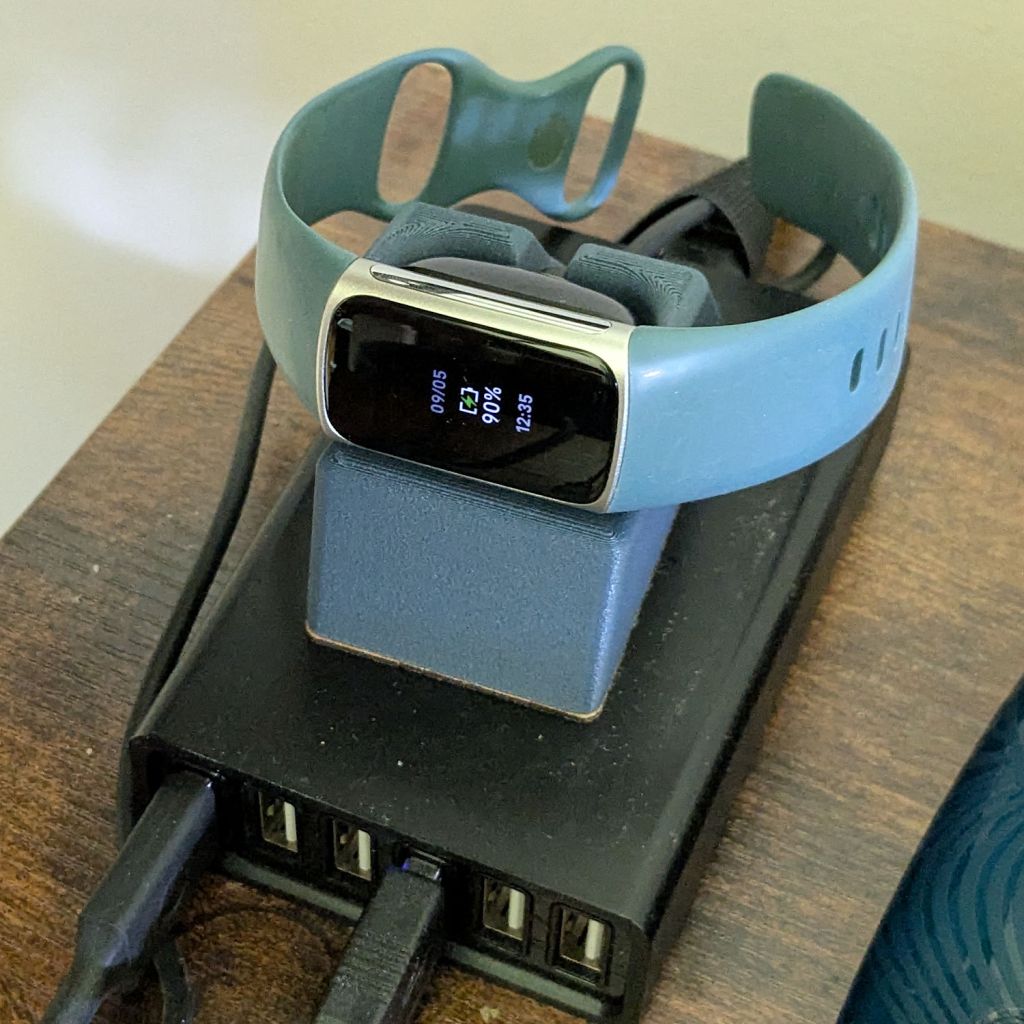
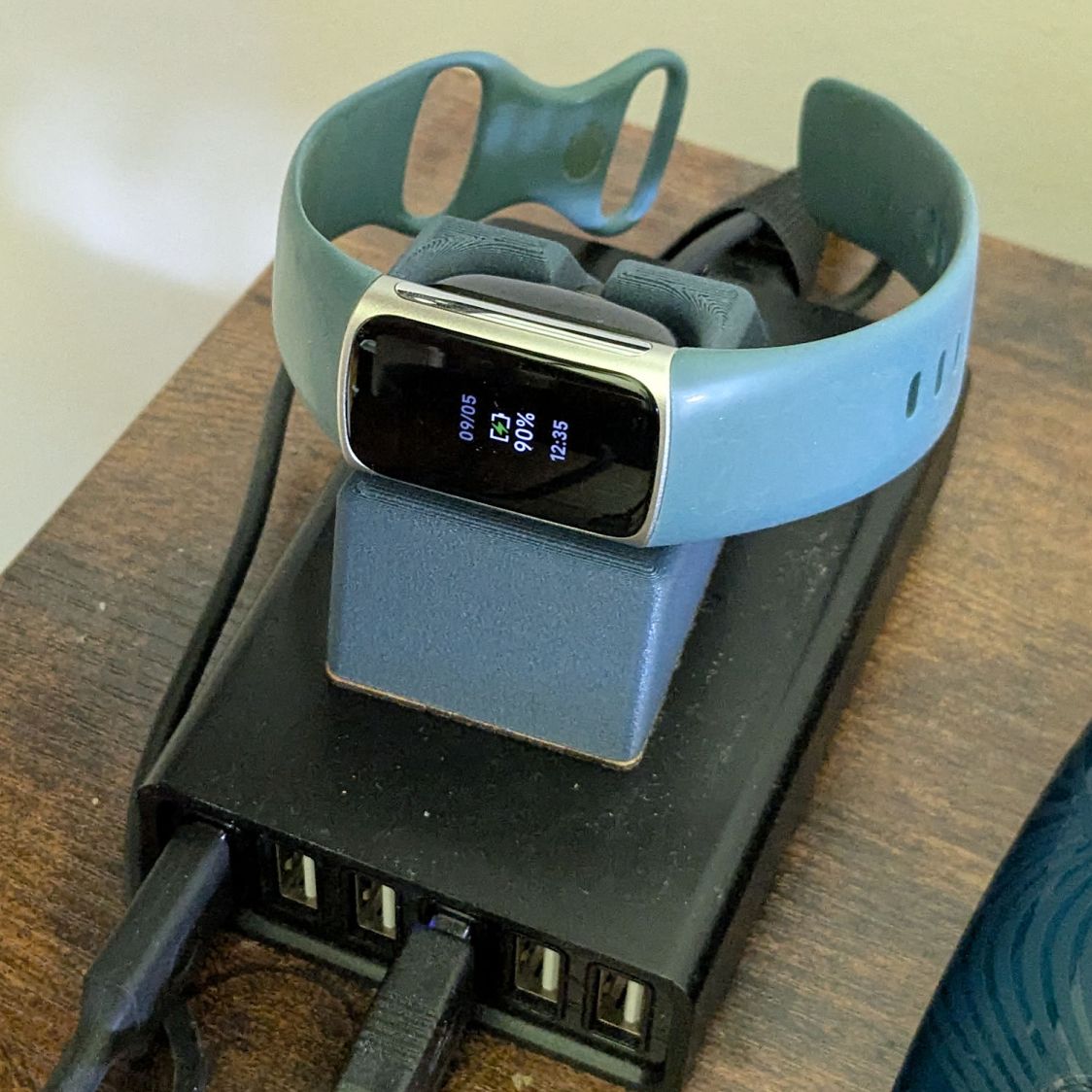
My Fitbit Charge 5 exercise tracker estimates my VO2Max as somewhere between 51 and 55. That seems absurd for a guy of my age, where “Excellent” is a bit under 40. I am most certainly not a highly trained athlete at the top of my form, so I wondered what the real value might be.
It also computes my maximum heart rate from my age as 220 – 72 = 148, much lower than the values I routinely see while biking around the area. Reviewing a few months of data suggests an actual value around 170, although I did see 185 on one occasion.
Forcing a maximum heart rate of 170 changed the VO2Max estimate to 50-54, which still seemed absurdly high. At least that change made the Fitbit’s “heart rate zones” a little more reasonable, as ordinary bike rides no longer have me in the Peak zone nearly as often.
The Rockport walking test calculates VO2Max from a timed walk over a one mile “track” course, so I laid out a half-mile out-and-back route on Zack’s Way, which is a quarter mile from home.
Maintaining a brisk pace covered the mile in 15:49 and left me with a 110 pulse; it’s obvious I’m not a trained athete. Feeding those numbers and a few other vital details into the Rockport formula gives me a much more realistic VO2Max of 28.5, putting me somewhere between the 50th and 75th percentile.
The 25 g of silica gel in each Polydryer box produced these results after a month:
8 Sept 2025
11 Sept
23 Sept
Filament
%RH
Wt – g
Wt gain – g
%RH
%RH
PETG White
25
27.6
2.6
15
21
PETG Black
22
27.3
2.3
15
20
PETG Orange
21
27.2
2.2
21
23
PETG Blue
19
27.3
2.3
14
15
PETG-CF Blue
24
27.4
2.4
21
22
PETG-CF Black
21
27.3
2.3
15
19
PETG-CF Gray
27
27.1
2.1
24
26
TPU
25
27.4
2.4
22
24
Empty 1
51
no gel
n/a
27
30
Empty 2
35
27.9
2.9
19
28
The humidity levels seem higher than before, with a bit under 10% weight gain.
The two “Empty” boxes show the difference between ambient basement humidity and letting 25 g of silica gel work on the box for a month. Comparing the latter’s weight gain with the other boxes shows occupying (much of) the interior with (relatively) dry filament reduces the desiccant’s workload.
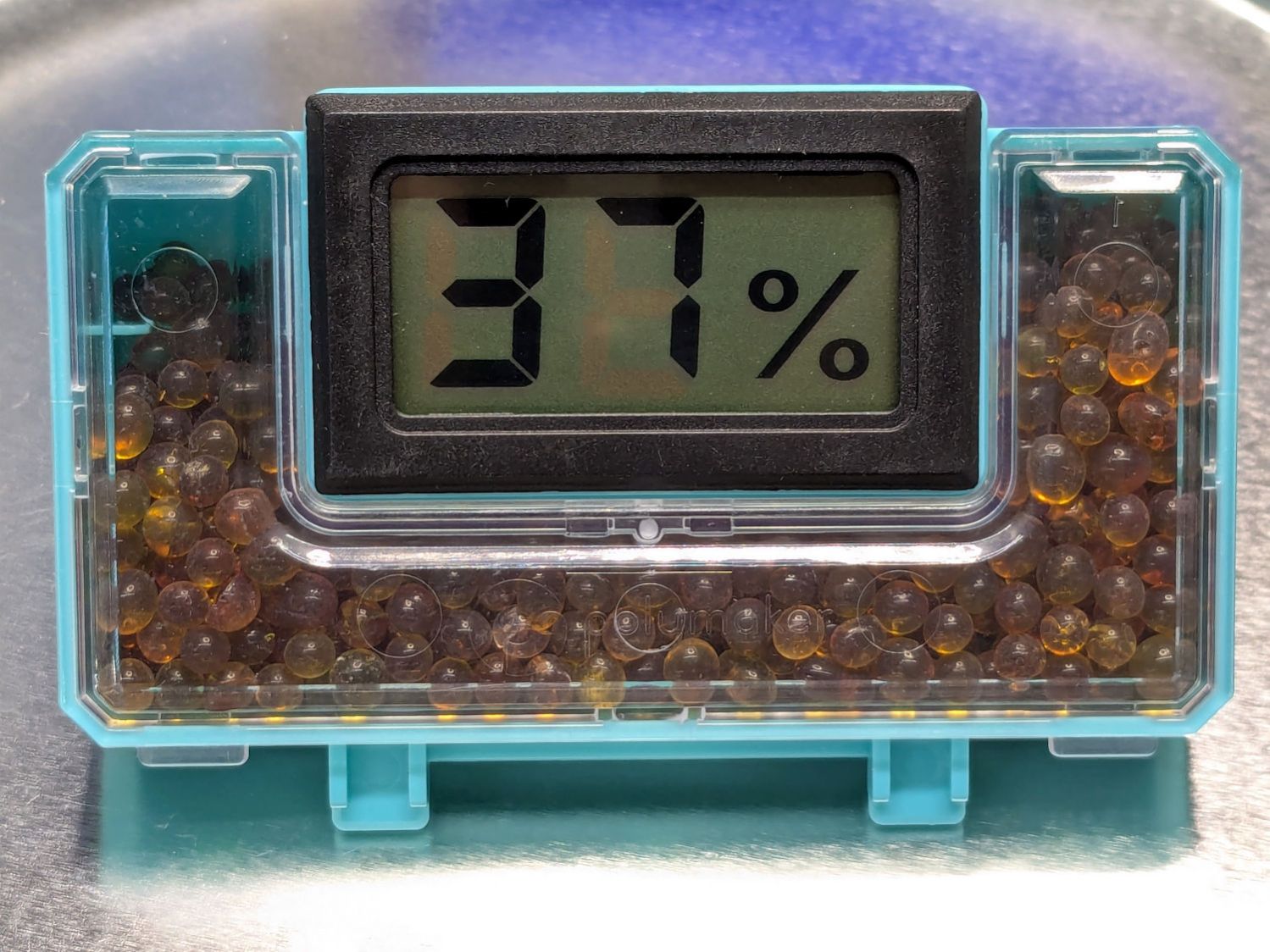
The beads in the “Empty 2” box were definitely darker after soaking up an entire box full of 50 %RH air:
Polydryer – 37%RH meter – empty
The meter reads 37%, rather than 35%, due to being out of the box for a few minutes.
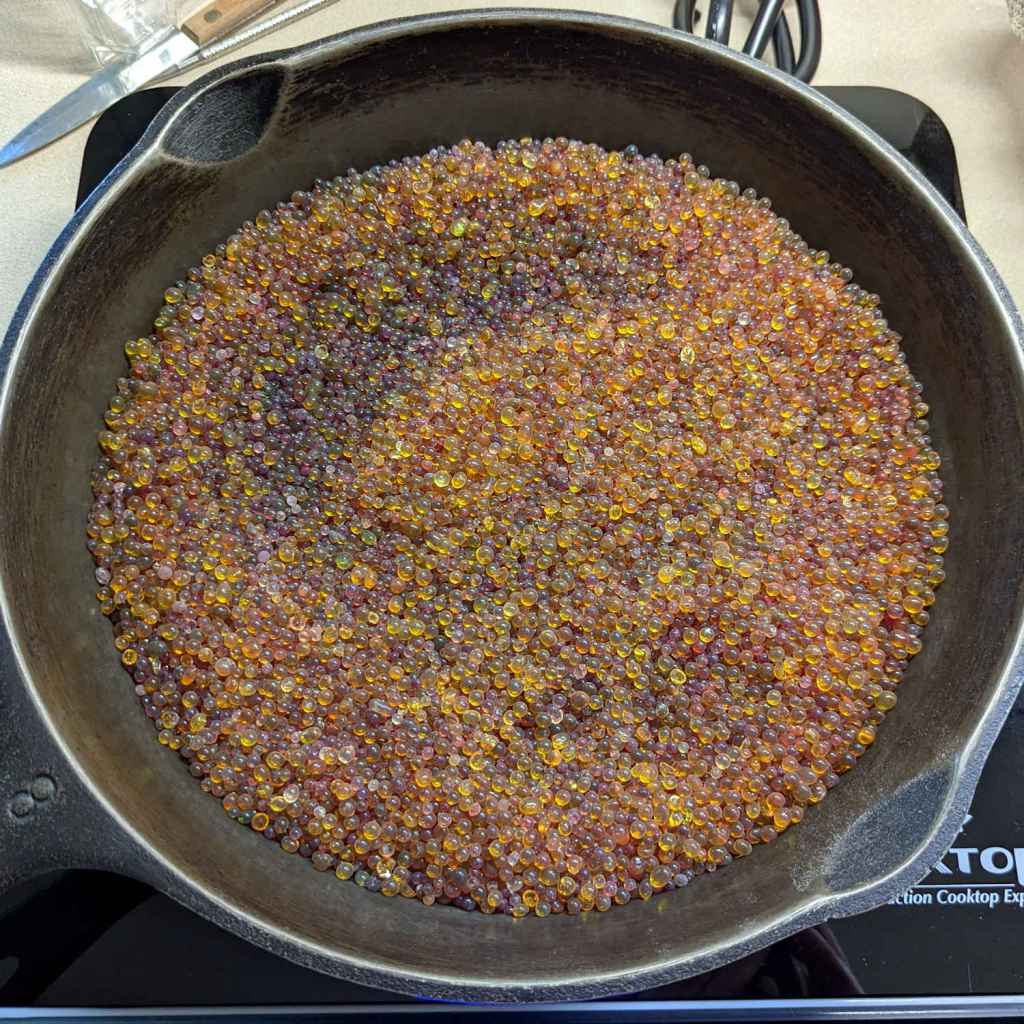
They’re the darker swirl in the pan of beads:
Silica Gel regeneration – starting bead colors
That’s an accumulation of beads from a few months, not just what you see in the table.
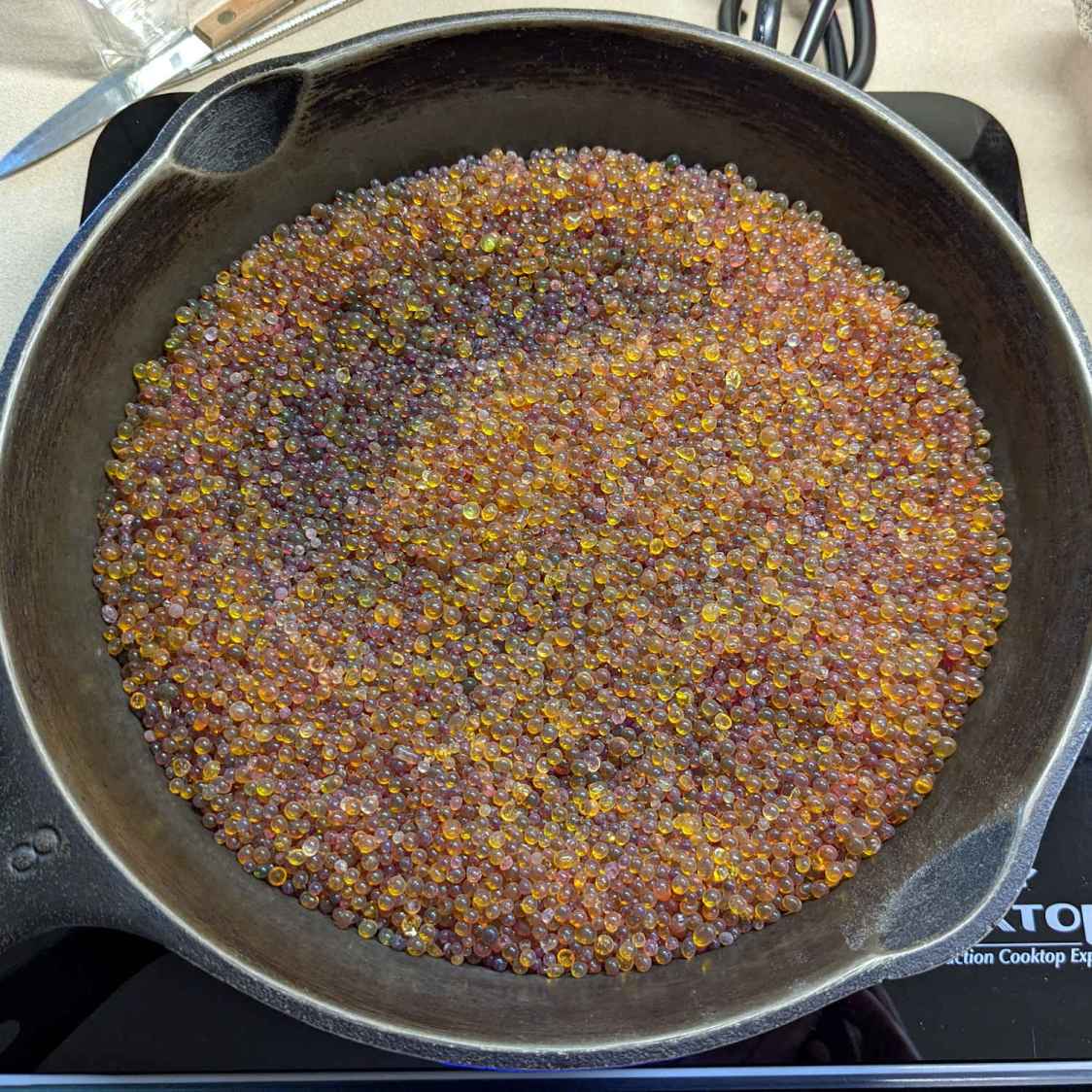
I used an induction cooktop to heat the cast-iron pan. Some fiddling with the cooktop’s constant-temperature mode got the beads to 200 °F with a 460 °F setting in about an hour. Setting the cooktop to 50% in constant-power mode worked better, as the beads reached 220 °F in an hour and 230 °F after another hour.
The bead weights at various stages:
Start = 531 g
+1 hr at constant temperature = 491 g
+ 1 hr at 50% constant power = 483 g
+ 1 hr ditto = 480 g
The 41 g weight loss is 8.5% of the dry weight, roughly what you’d expect from the humidity readings.
After reloading the meters with 25 g of alumina beads, the 11 Sept humidity readings are slightly lower and the 23 Sept readings are roughly comparable.
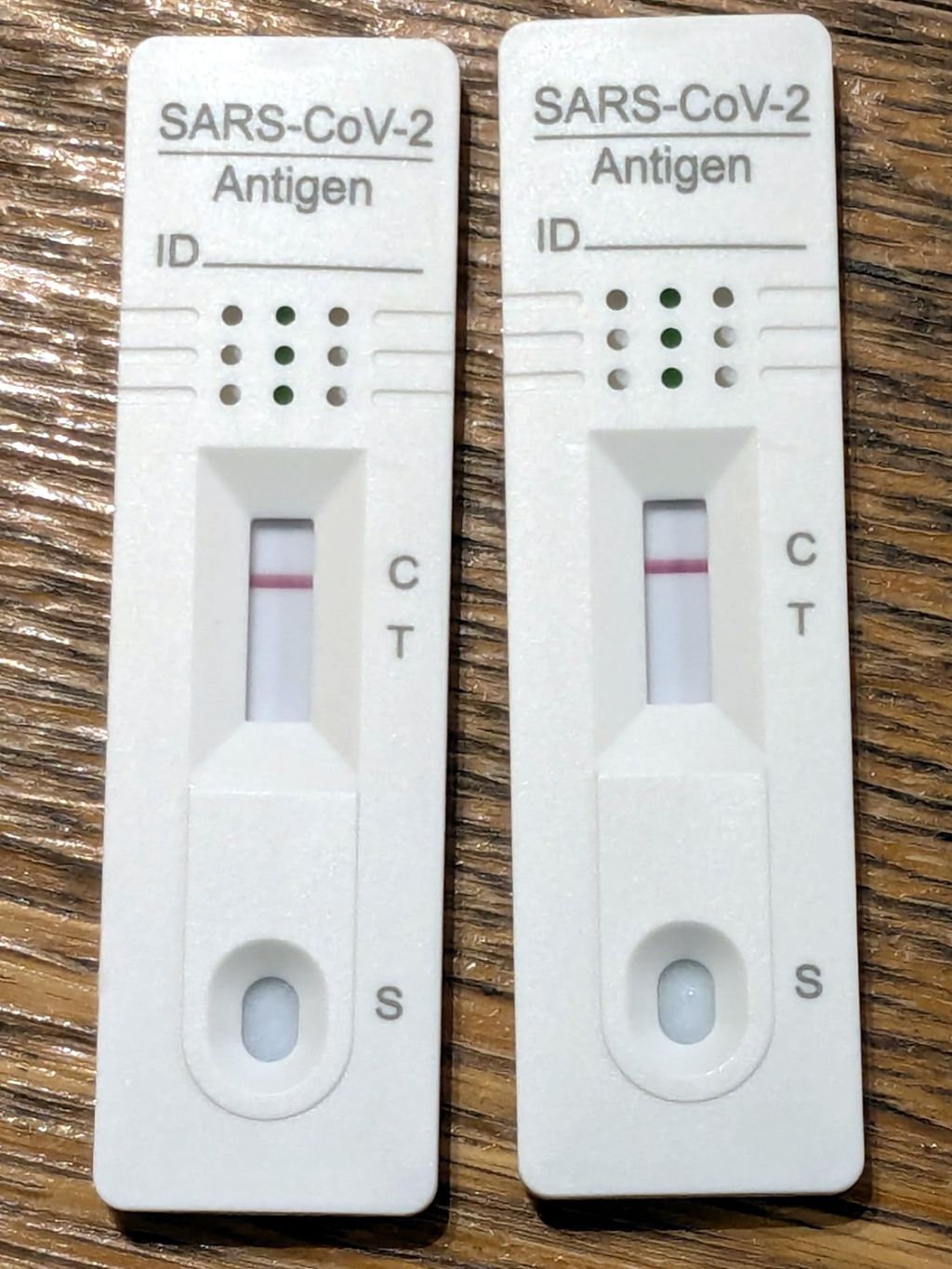
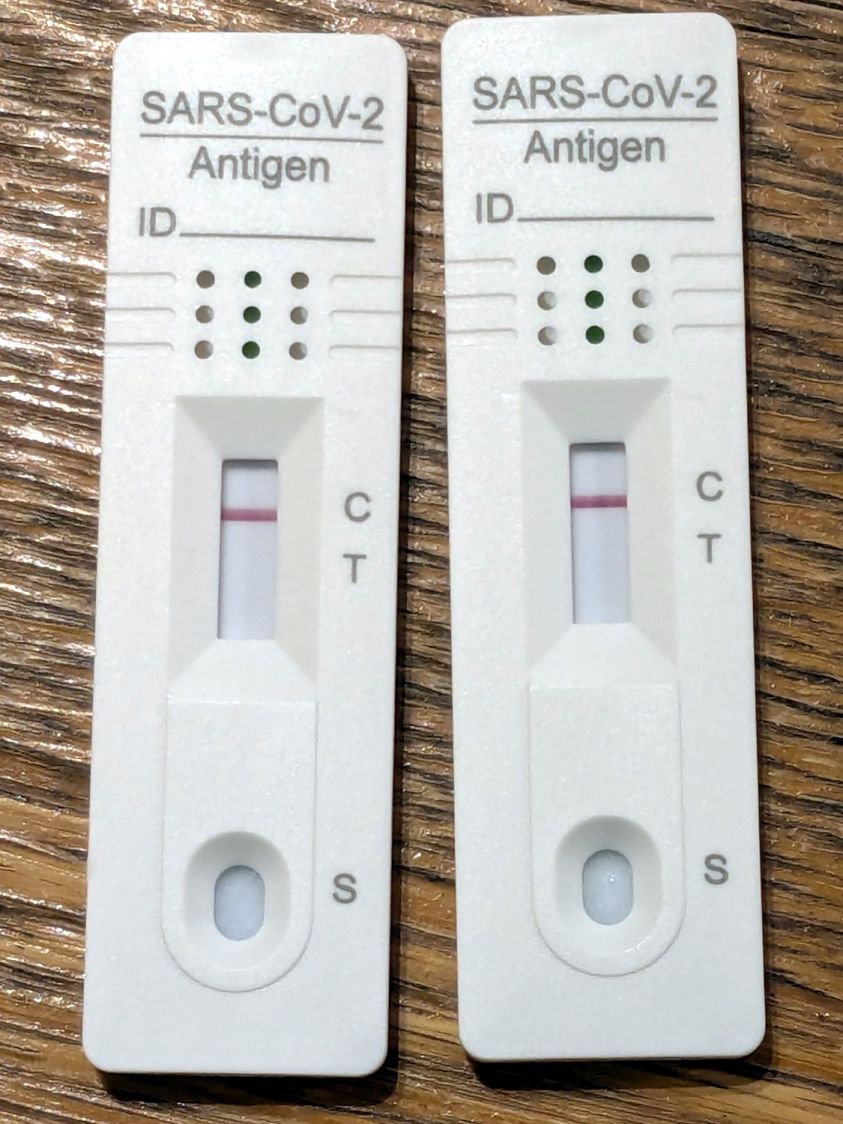
Three weeks, more or less, from my exposure to clearing the hurdle. Mary, being tougher than I, got it done in two.
For the better part of the first two weeks I was in bed ten hours every night, plus an hour or two of afternoon nap (no milk & cookies, drat), plus dragging around the house getting nothing done.
No major health problems, good blood oxygen levels throughout, no loss of smell apart from what you’d expect during three days of complete nasal blockage, and we’re both feeling OK-ish now.
However, we are making more than the usual number of stupid mistakes, which is one way we know we’re not really OK yet.
Back to the Basement Shop, with considerable caution …
Memo to Self: That was the first time in four years you didn’t wear a mask in close quarters. Don’t ever do that again.