Ed Nisley's Blog: Shop notes, electronics, firmware, machinery, 3D printing, laser cuttery, and curiosities. Contents: 100% human thinking, 0% AI slop.
Category: Science
If you measure something often enough, it becomes science
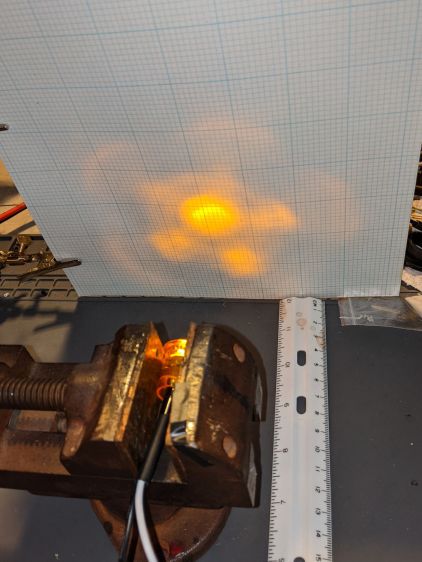
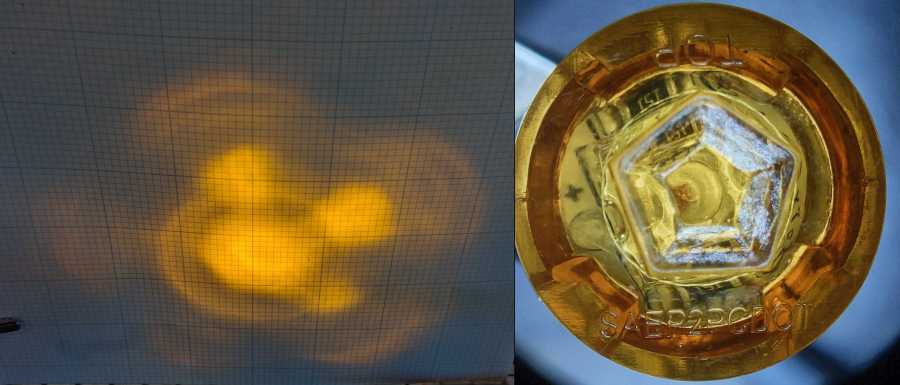
The truck side marker lights I’m thinking of using as daytime running lights have a pentagonal lens, so they should have a pattern with a bright central beam surrounded by five lobes. The one on Mary’s Tour Easy produced an oddly shaped blotch on the garage wall, so I ran the others though a simple test setup:
Side Marker – beam test setup
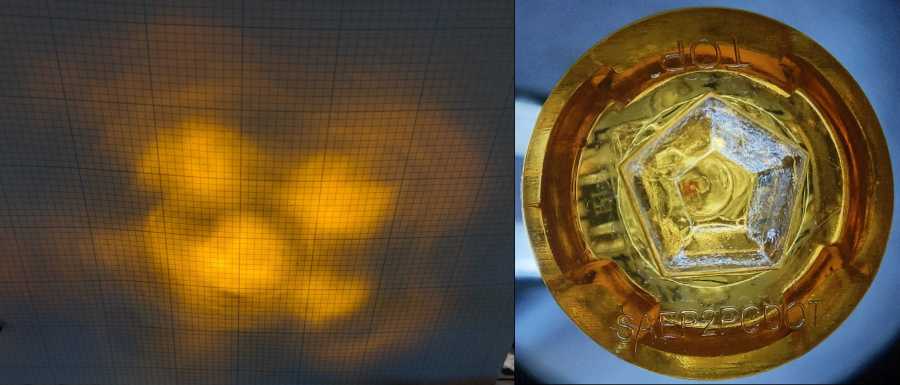
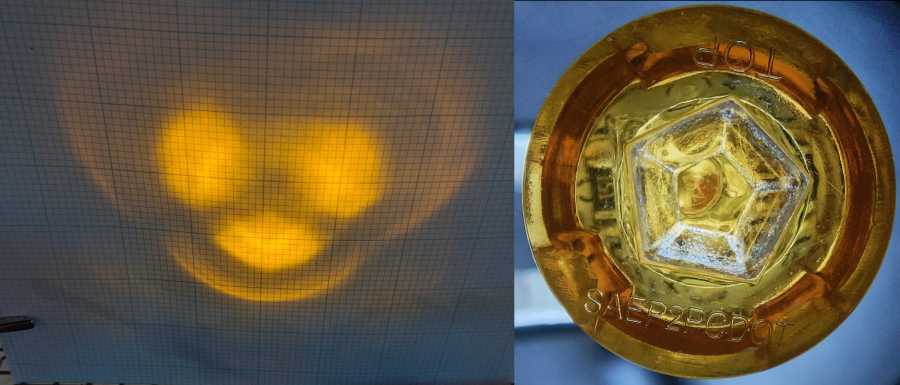
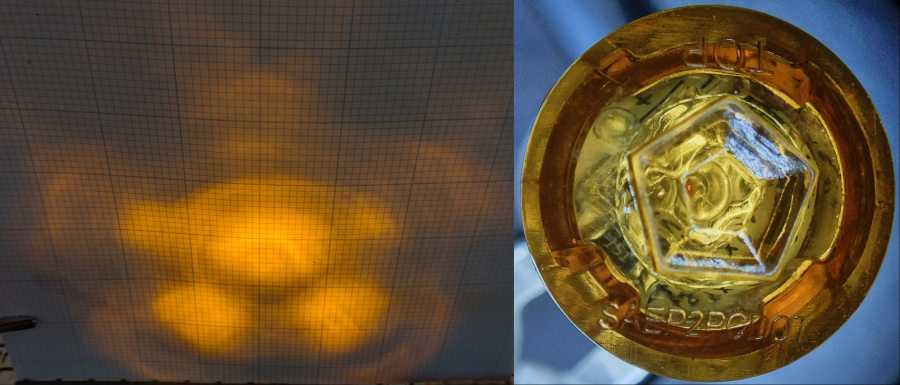
The lights sit horizontally in a small vise to keep them level and in the same position, although in no particular rotational orientation, and 100 mm from the graph paper. It’s running at 6 v to keep the brightness down enough to avoid blowing out the image. All of the images were exposed based on the central spot, so the surrounding paper gives some idea of the relative brightness: darker paper = brighter LED spot.
The front view of the lights comes from the stereo zoom microscope, with the wires gripped in a Third Hand and rotated to put the (inverted) TOP label where you’d expect it. They’re all roughly at the same position and pretty nearly lined up with the lens axis. The bubble-looking thing behind the central pentagon is the lens on the Piranha LED package, which should be centered but rarely is. You can see the dark orange square of the amber LED chip in some of the pictures.
Without further ado, the nine truck side marker lights that aren’t on her bike:
Side Marker – beam test – A
Side Marker – beam test – B
Side Marker – beam test – C
Side Marker – beam test – D
Side Marker – beam test – E
Side Marker – beam test – F
Side Marker – beam test – G
Side Marker – beam test – H
Side Marker – beam test – I
Side Marker Light – Beam tests
Side Marker E has a blob that looks like a cataract atop the LED lens, but it might be a mold imperfection.
Obviously, paying a buck a light doesn’t get you much in the way of build quality these days.
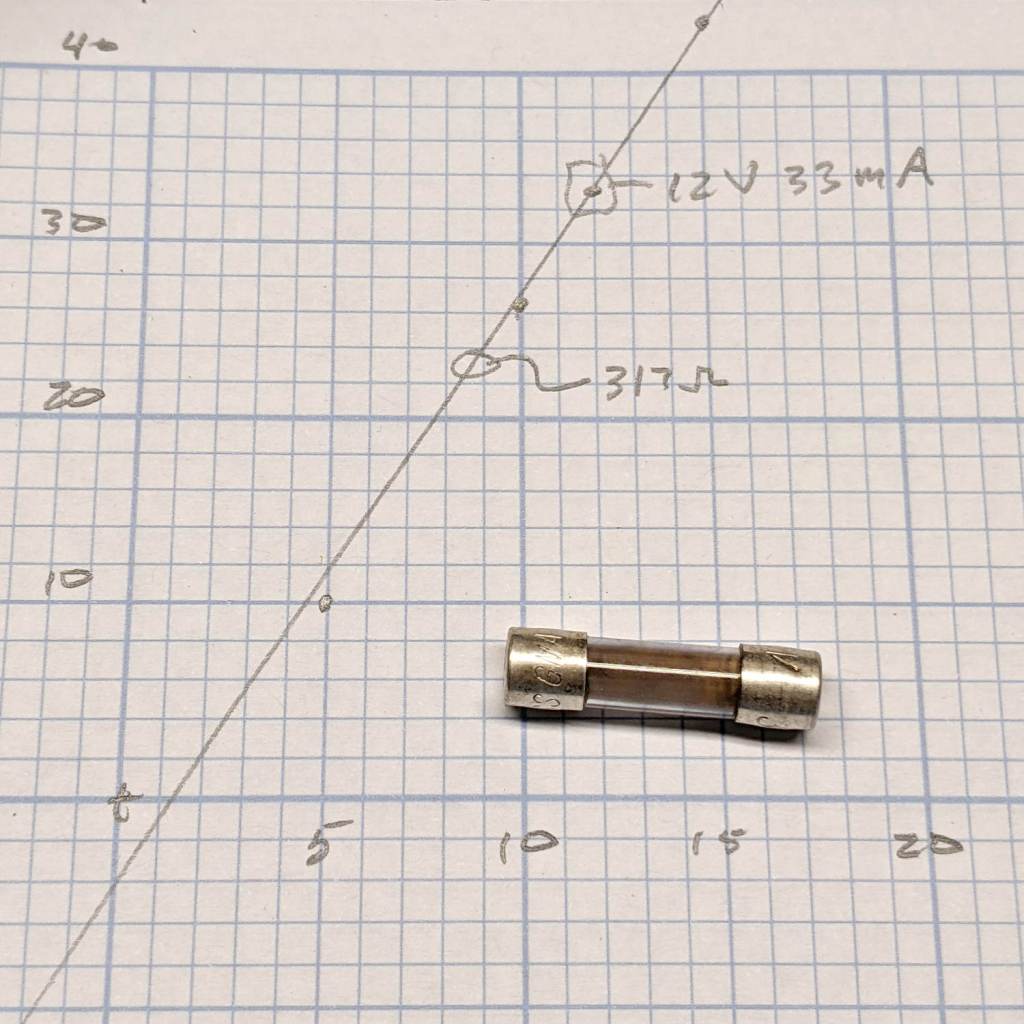
The slope suggests a 330 Ω resistor, but the internal PCB sports a pair of 150 Ω SMD resistors.
I don’t believe the X-axis intercept for a moment, but 1.5 V seems about right for an amber LED.
Oh, and the DMM fuse doesn’t have a ceramic body. You’re seeing the vaporized remains of a 315 mA fuse neatly deposited over the inside of the glass tube after being shorted across a 3 A bench supply.
I hate it when that happens. Replacing it emptied the little bag of those meter fuses; next time it’ll get a half amp fuse.
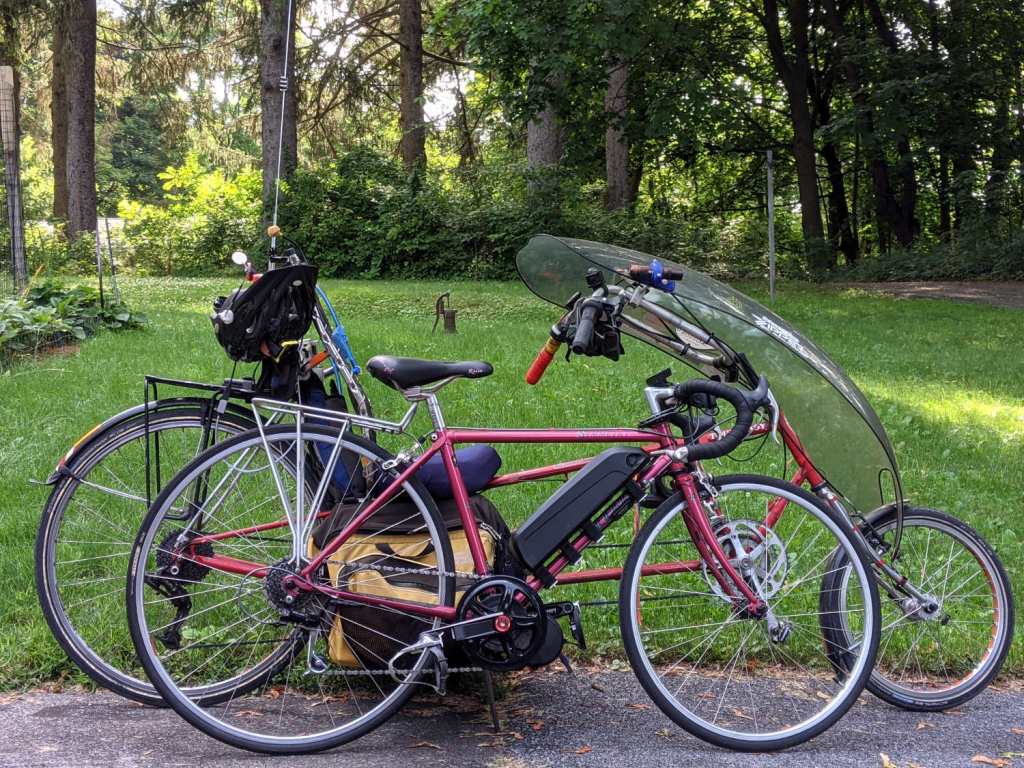
Although Gee’s Terry Symmetry is sized for female bodies, I managed to ride it up and down the driveway while watching the power display:
Voltage
52.5
Rated Current
24
Max current
18
Power
Power
PAS
Assist
Amp
Calc
Observed
Ratio
0
0%
0.0
0
0
~
1
4%
0.7
38
26
69%
2
6%
1.1
57
52
92%
3
9%
1.6
85
78
92%
4
13%
2.3
123
104
85%
5
20%
3.6
189
182
96%
6
30%
5.4
284
258
91%
7
50%
9.0
473
453
96%
8
85%
15.3
803
675
84%
9
100%
18.0
945
900
95%
Bafang BBS02 on Terry Symmetry – actual voltage
The variations in the last column suggest my data-taking is … wobbly, at best.
I think the displayed power does not come from actual current and voltage measurements, because recalculating the power using the nominal 48 V battery value produces an unnatural agreement:
Voltage
48
Rated Current
24
Max current
18
Power
Power
PAS
Assist
Amp
Calc
Observed
Ratio
0
0%
0.0
0
0
~
1
4%
0.7
35
26
75%
2
6%
1.1
52
52
100%
3
9%
1.6
78
78
100%
4
13%
2.3
112
104
93%
5
20%
3.6
173
182
105%
6
30%
5.4
259
258
100%
7
50%
9.0
432
453
105%
8
85%
15.3
734
675
92%
9
100%
18.0
864
900
104%
Bafang BBS02 on Terry Symmetry – nominal voltage
The motor controller may measure the actual winding currents while generating the BLDC waveforms, but the values may not be available to the display at the end of the cable. If Bafang documented the commands & responses, we’d know for sure, but they don’t.
Those assist values come from Mary’s Tour Easy, a much heavier bike than the Symmetry, but the first few levels work well in my limited tests. The highest levels may be too peppy for Gee’s normal routes, but having some serious boost in reserve can defang (hah) the worst hills.
Terry Symmetry – Tour Easy
IMO, the bike would burn rubber at the motor’s full 24 A current …
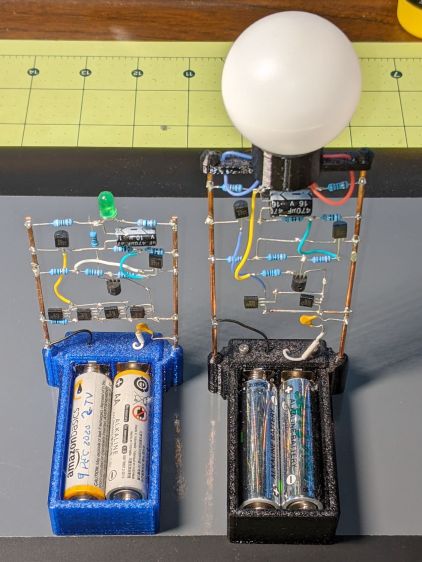
These two discrete LM3909 circuits recently stopped blinking:
LM3909 AA alkaline – Green and Blue
The green LED (on the left) took six months to wear its pair of not-dead-yet AA alkalines from 2.7 V down to nearly zero.
The blue LED in the radome took two months to go from 1.0 V (!) to nearly zero. It didn’t start very bright and went decidedly dim along the way, but the LM3909 circuitry still managed to jam a few microamps through the LED.
In both cases, one of the cells was reverse-charged by a few hundred millivolts, although neither leaked.
Both got another set of not-quite-dead AA cells and they’re back in action.
The underside of a spinach leaf makes a fine place for a spider to guard her egg sac, right up until the leaf arrives on the kitchen cutting board just before breakfast:
Spider guarding egg sac
We deported her (and her incipient family) to the flower garden just outside, wished her well, and continued with breakfast.














 The Smell of Molten Projects in the Morning