The Smell of Molten Projects in the Morning

Ed Nisley's Blog: Shop notes, electronics, firmware, machinery, 3D printing, laser cuttery, and curiosities. Contents: 100% human thinking, 0% AI slop.

Category: Photography & Images

Taking & making images.

  • Sharing the Road on NYS Bike Route 9: Right Hook

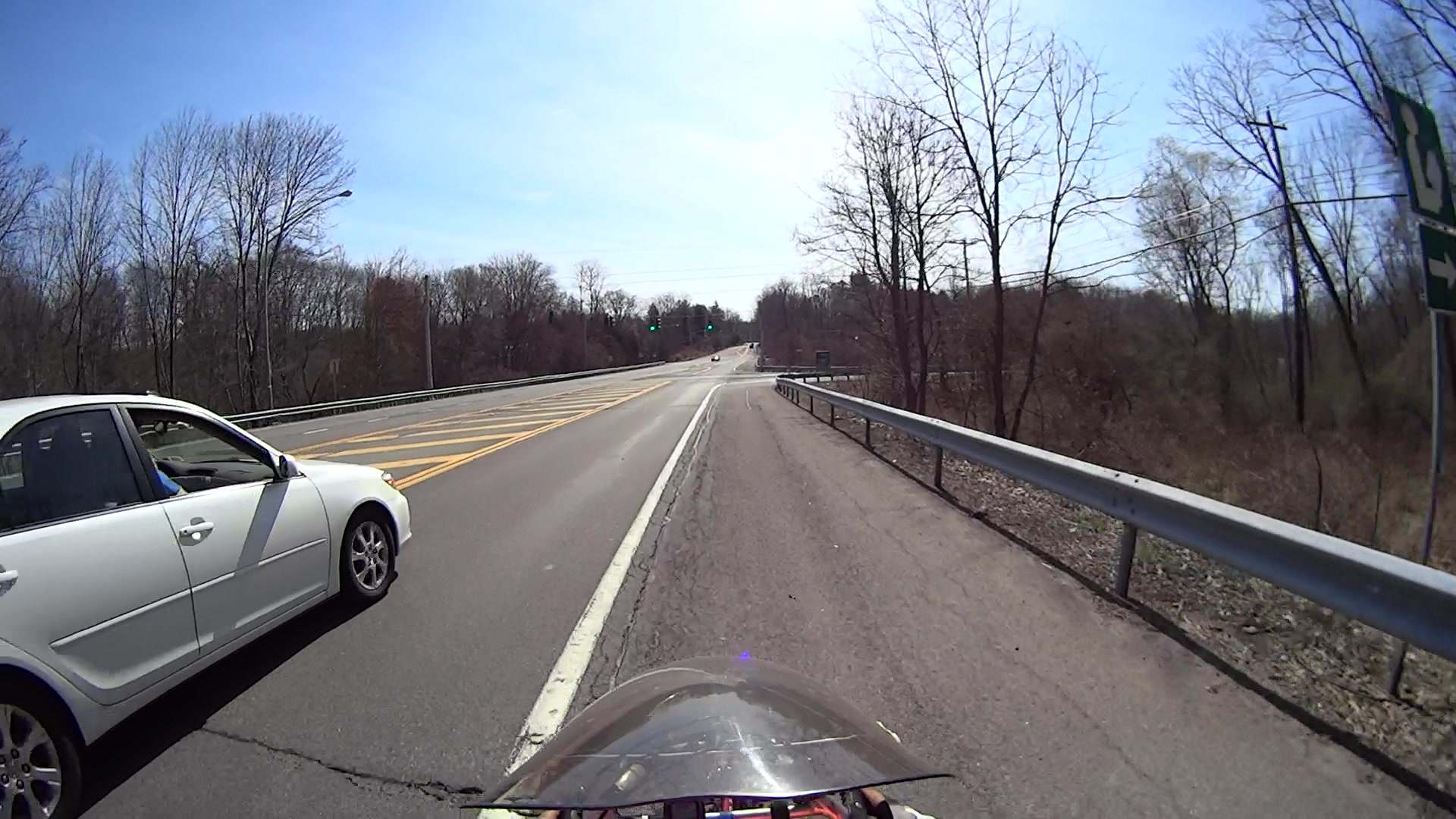
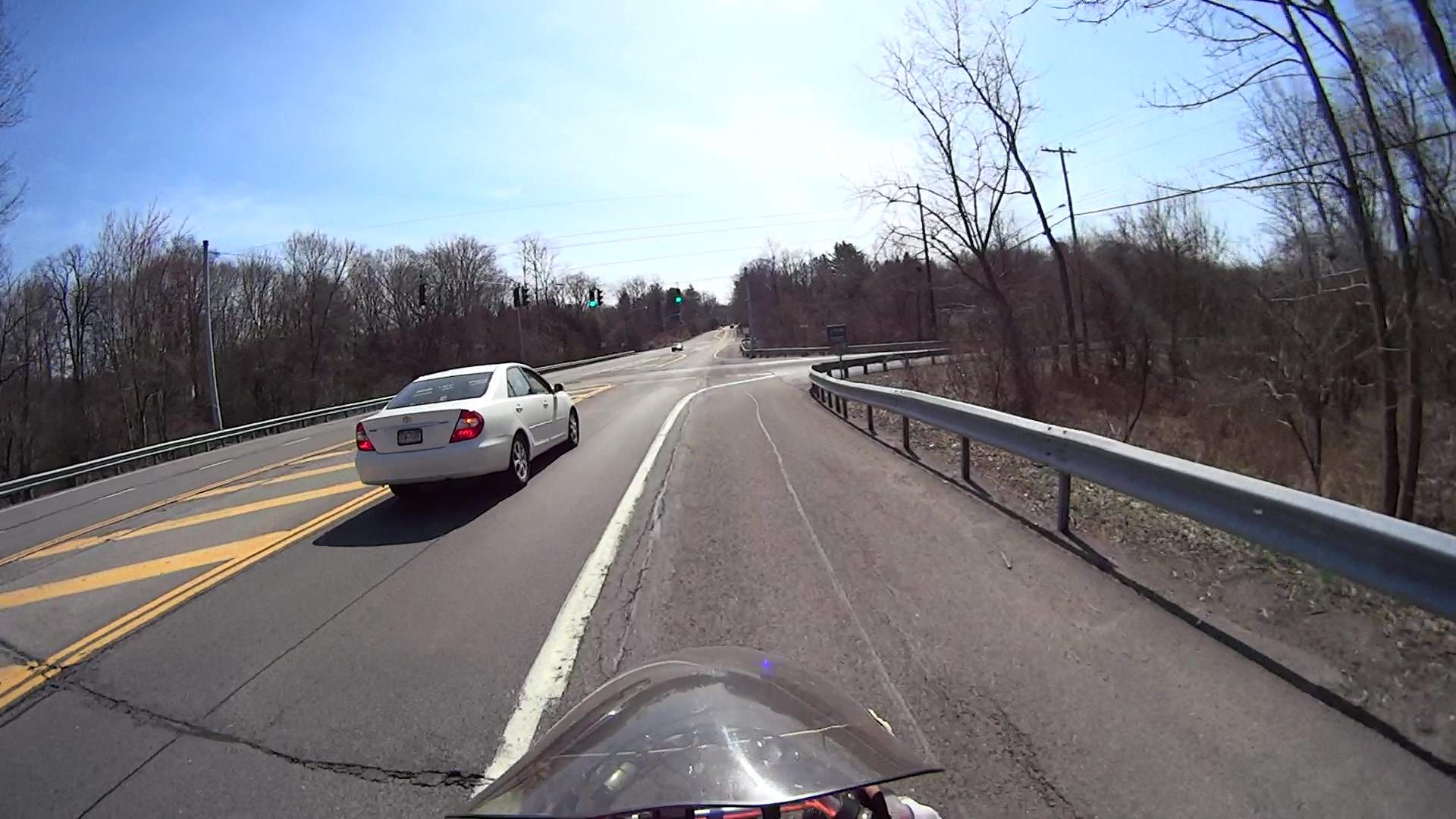
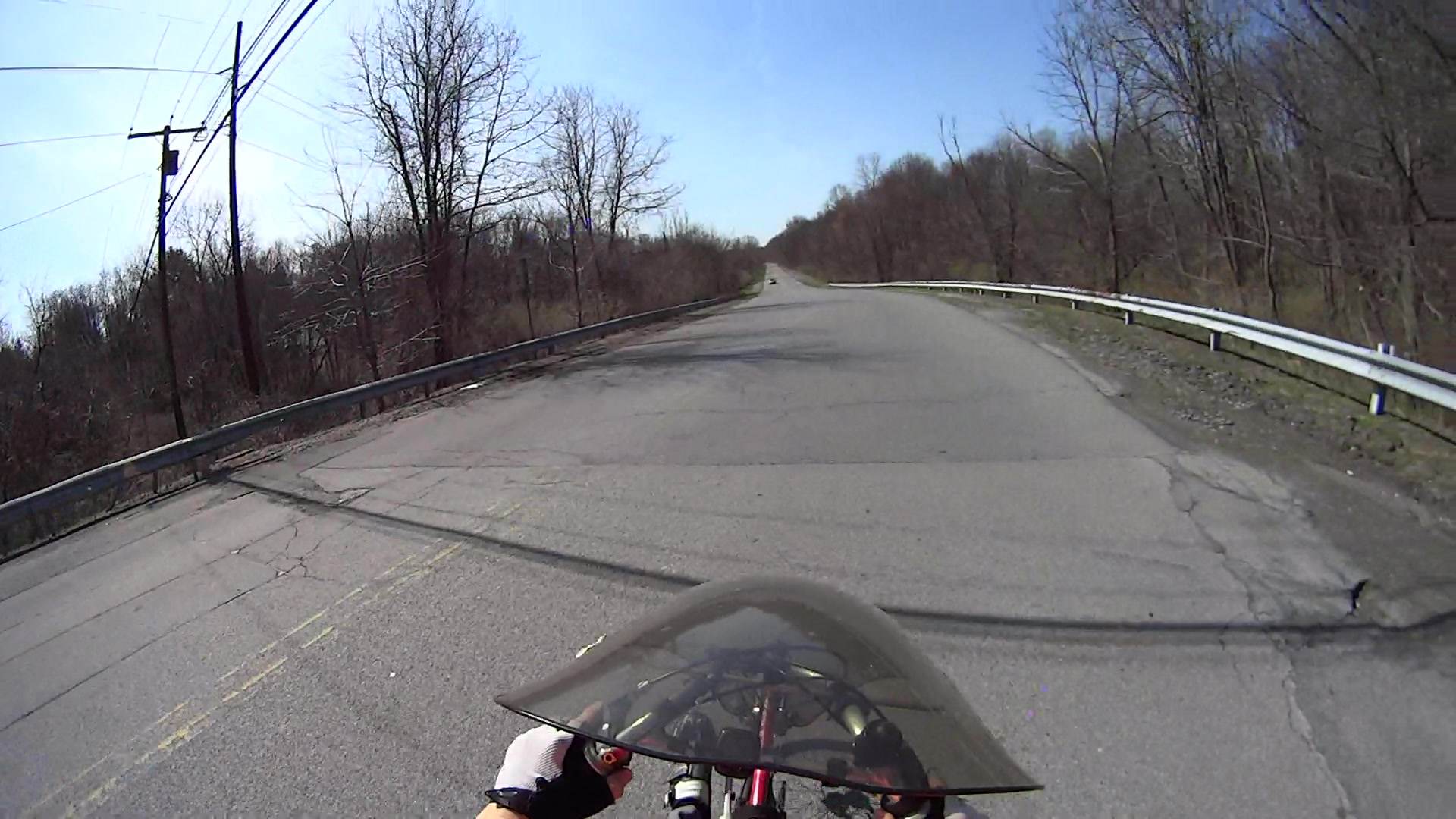
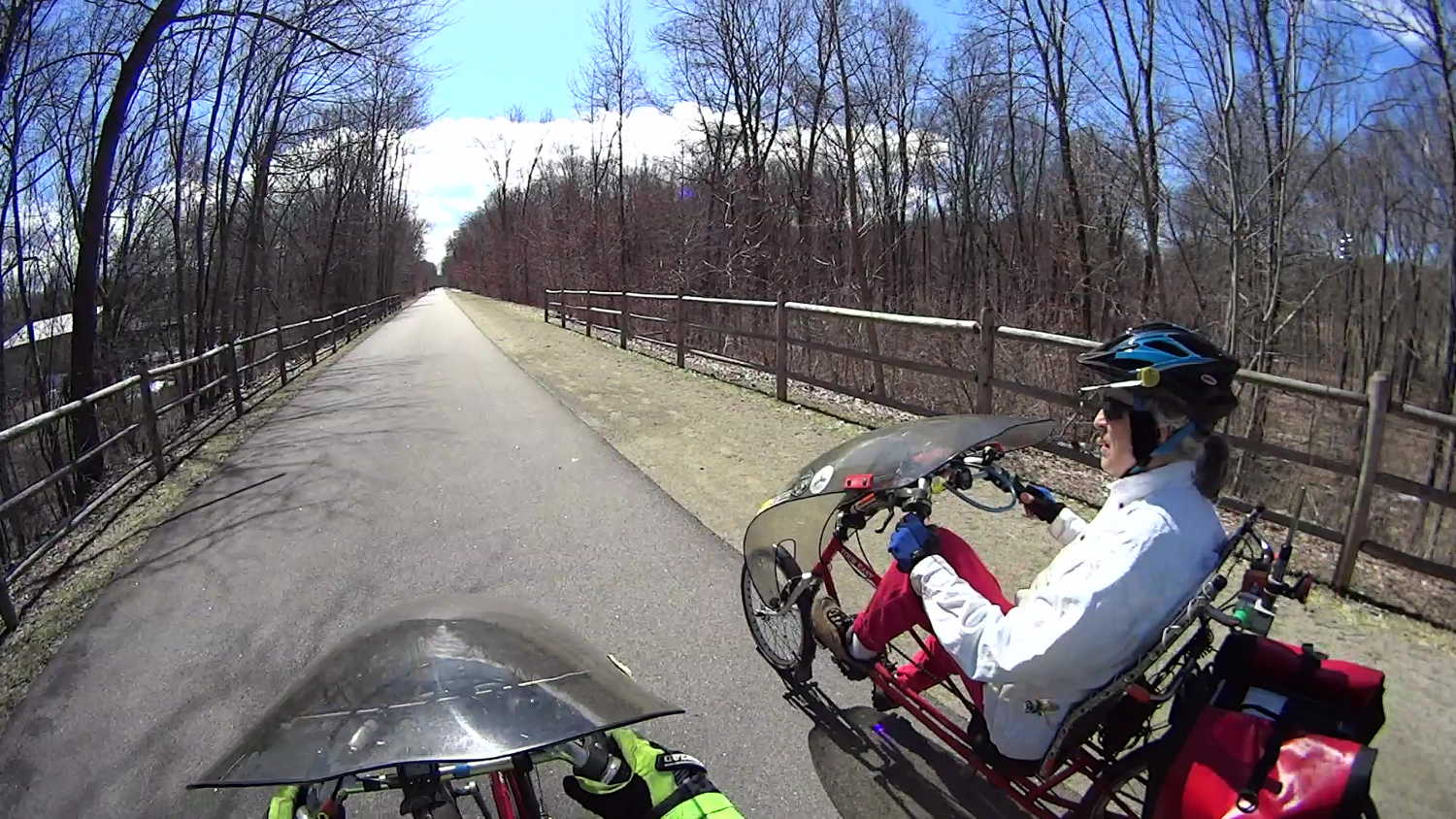
    I’m towing a trailer of groceries southbound on Rt 376 (a.k.a. Hooker Avenue in this section), intending to turn right onto Zack’s Way for a library stop.

    T=0.00 s, car @ 26.4 mph, me @ 19.8 mph

    The transverse cracks through the asphalt are a convenient 60 ft apart, with the last one 20 ft from the stop line, and the frame numbers tick along at 60 frame/sec, so you can easily compute distances, times, and speeds.

    I’ll be turning right at the intersection. The light is green.

    Zacks Way - Right Hook 2017-04-11 - 0624
    Zacks Way – Right Hook 2017-04-11 – 0624

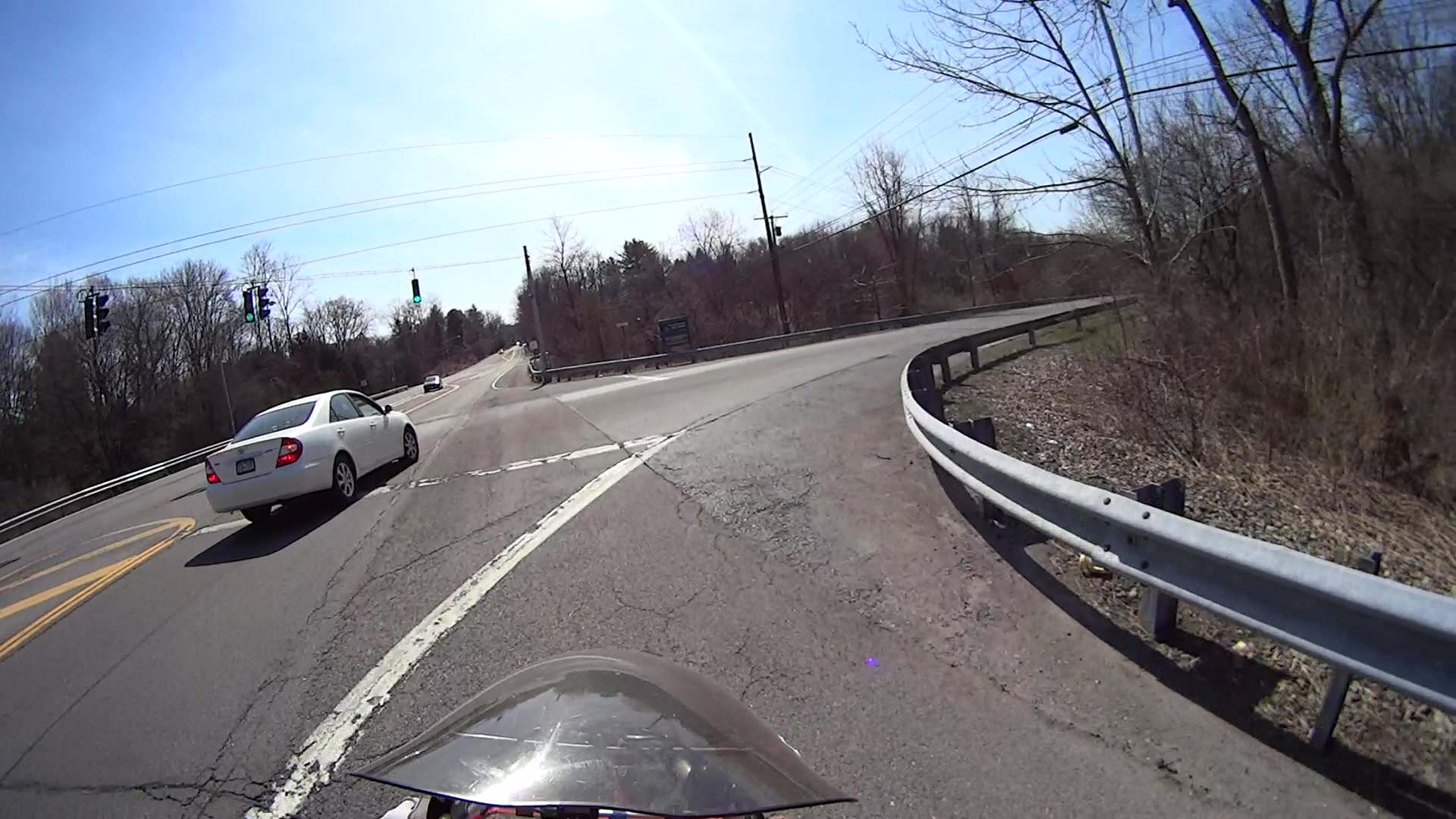
    T= 2.07 s, car @ 26.7 mph, me @ 19.7 mph

    Now I can see the car’s right turn signal, so this might not end well. I can’t jam on the brakes and avoid a collision by dumping the bike at speed; I’ll slide under the car in the middle of the turn.

    Zacks Way - Right Hook 2017-04-11 - 0748
    Zacks Way – Right Hook 2017-04-11 – 0748

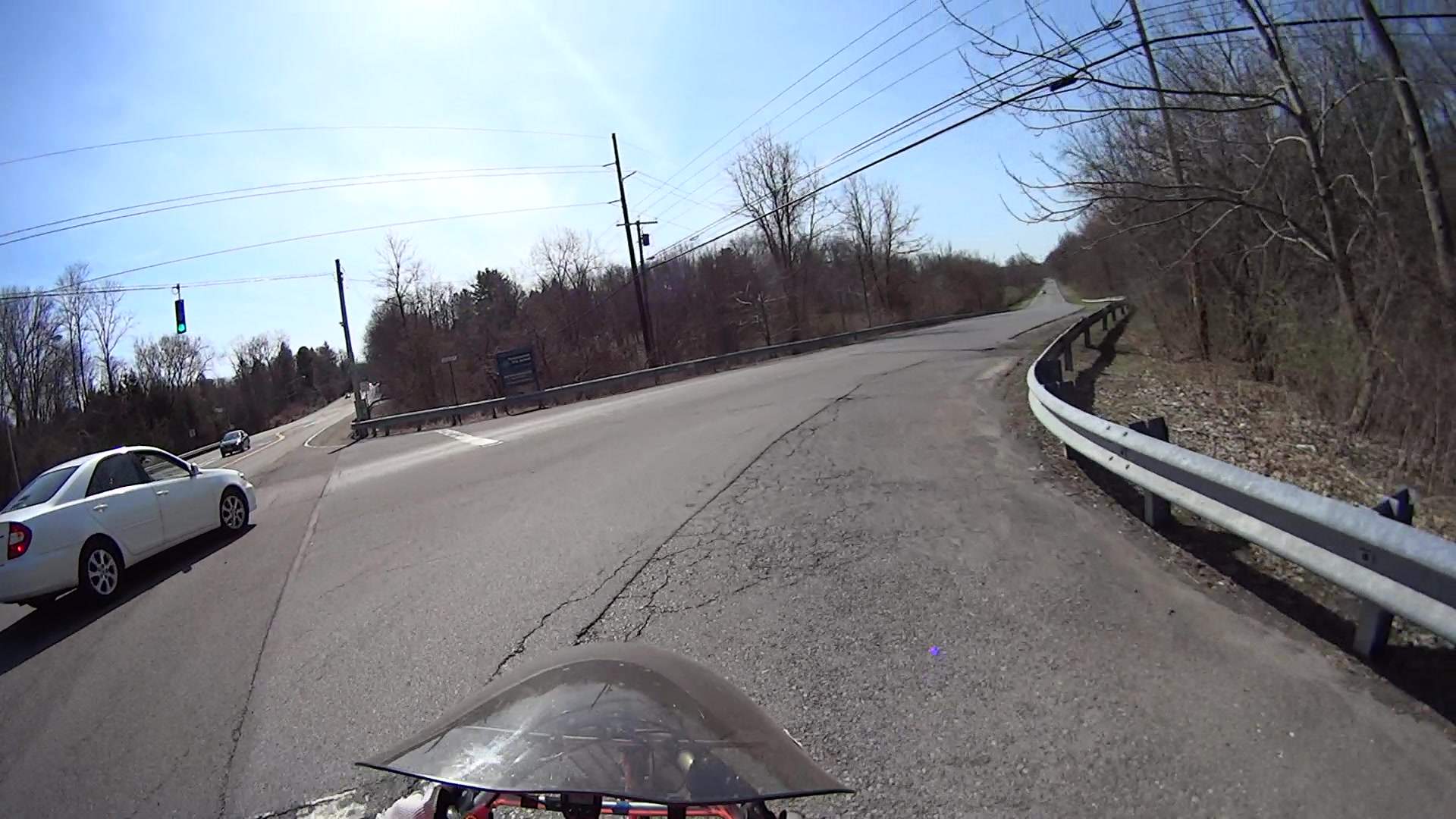
    T=4.15 s, 15.2 mph

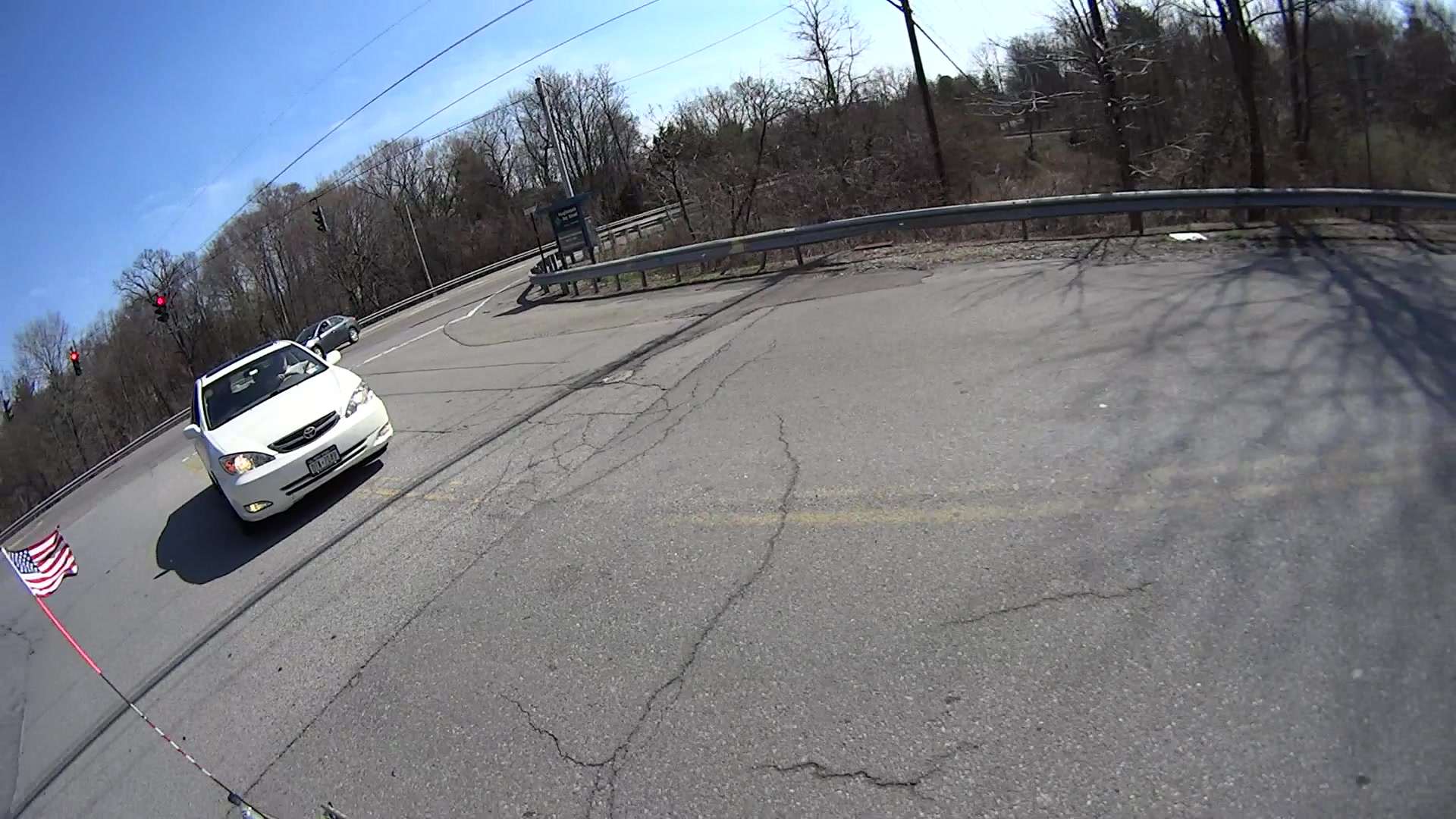
    I’m 20 feet from the stop line and, suddenly, the driver also realizes this might not end well.

    What he doesn’t know is that my trajectory must use the traffic lane: the shoulder around the corner is deteriorated, with several potholes, and vanishes completely where the intersection paving ends.

    Zacks Way - Right Hook 2017-04-11 - 0873
    Zacks Way – Right Hook 2017-04-11 – 0873

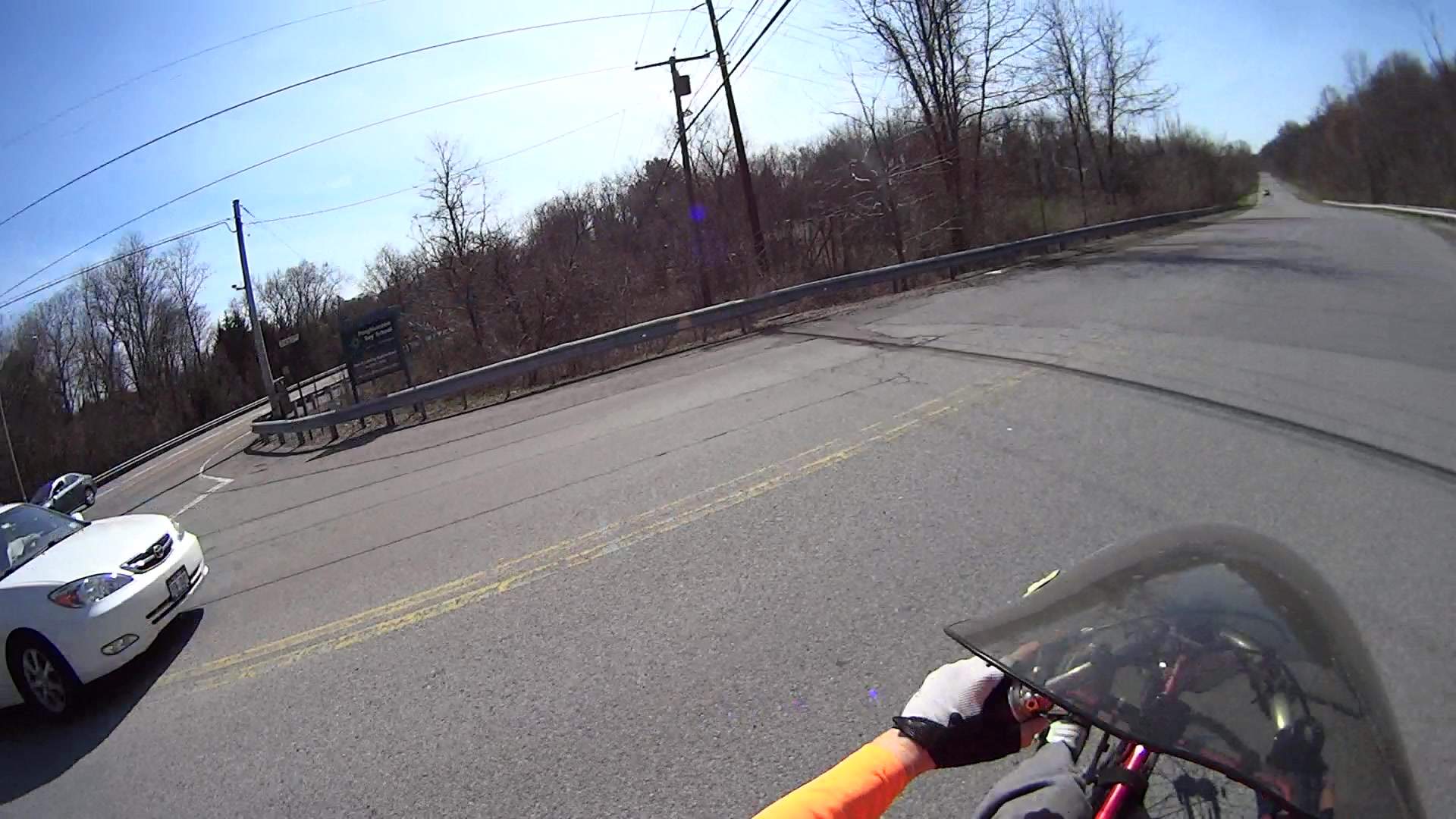
    T=5.05 s

    The driver is turning wide, into the opposing traffic lane, but if I weren’t lining up for the turn, we’d be on a collision course. My line will take me just to the left of the seemingly tiny, but very deep, pothole just ahead.

    Zacks Way - Right Hook 2017-04-11 - 0927
    Zacks Way – Right Hook 2017-04-11 – 0927

    T=7.15 s

    Leaning hard into the turn, but our paths won’t cross.

    Zacks Way - Right Hook 2017-04-11 - 1053
    Zacks Way – Right Hook 2017-04-11 – 1053

    T=7.37 s

    I’m back upright in the middle of the lane, with the shoulder ending in a pothole to my right.

    Zacks Way - Right Hook 2017-04-11 - 1066
    Zacks Way – Right Hook 2017-04-11 – 1066

    T=8.31 s

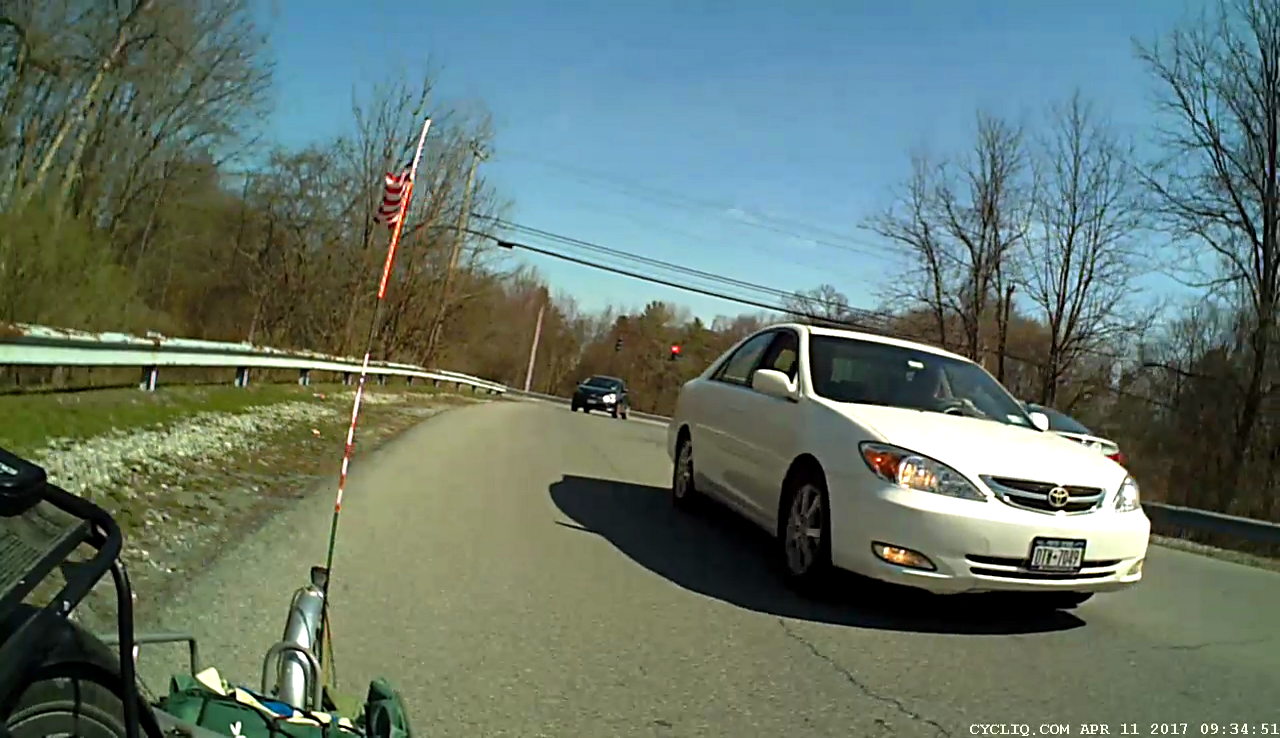
    Remember, I’m wearing a fluorescent (“safety”) orange shirt, running a blinky light (which is also the rear camera), and towing a trailer with a fluttering flag: I am not inconspicuous!

    Zacks Way - Right Hook 2017-04-11 - 1123
    Zacks Way – Right Hook 2017-04-11 – 1123

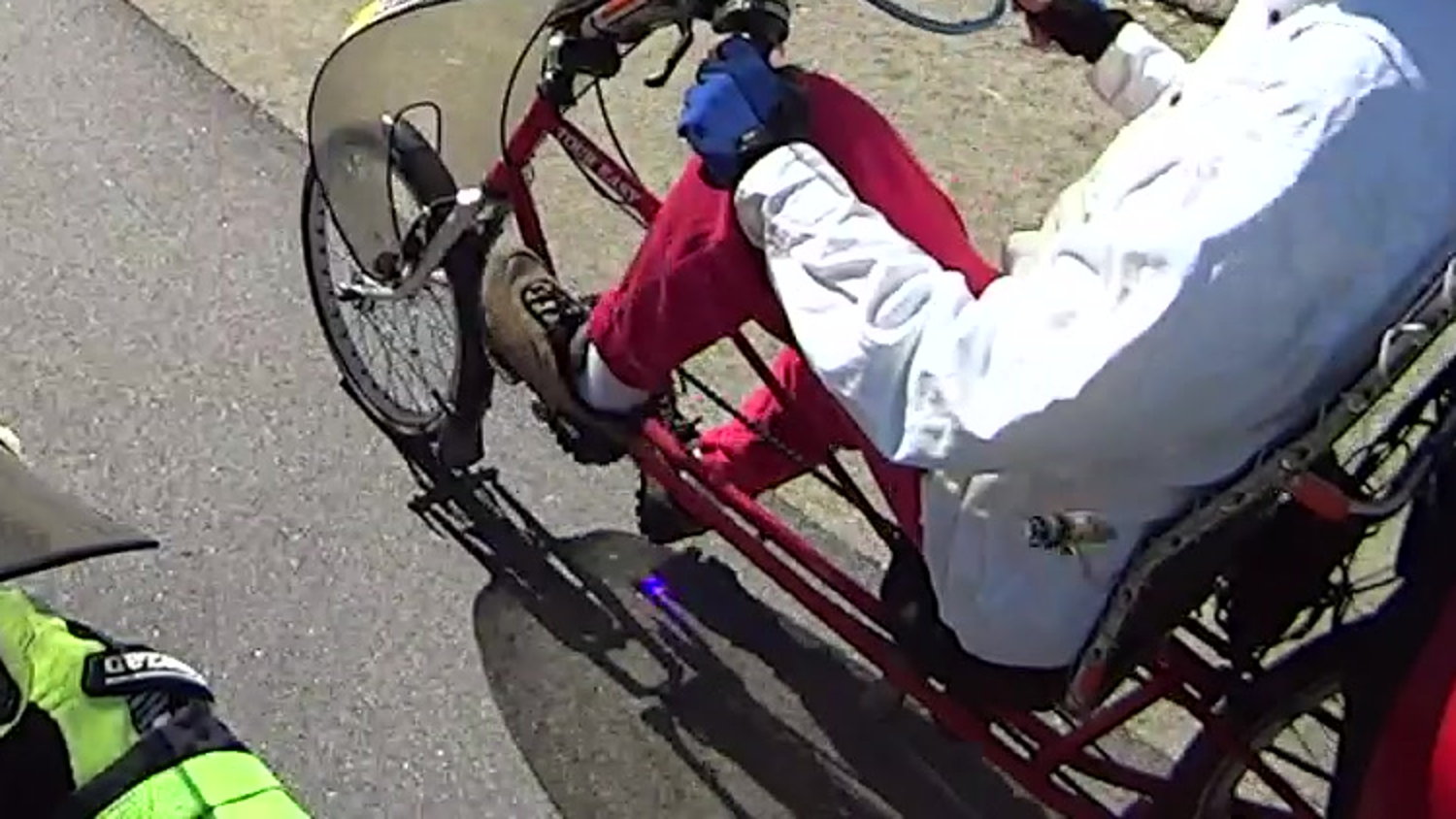
    In case there’s any question:

    Zacks Way - Right Hook 2017-04-11 - rear
    Zacks Way – Right Hook 2017-04-11 – rear

    The rest of the ride proceeded without incident …

  • Monthly Image: Turkey Mating

    Early spring brings out large turkey flocks and provides a window into their otherwise rather private lives.

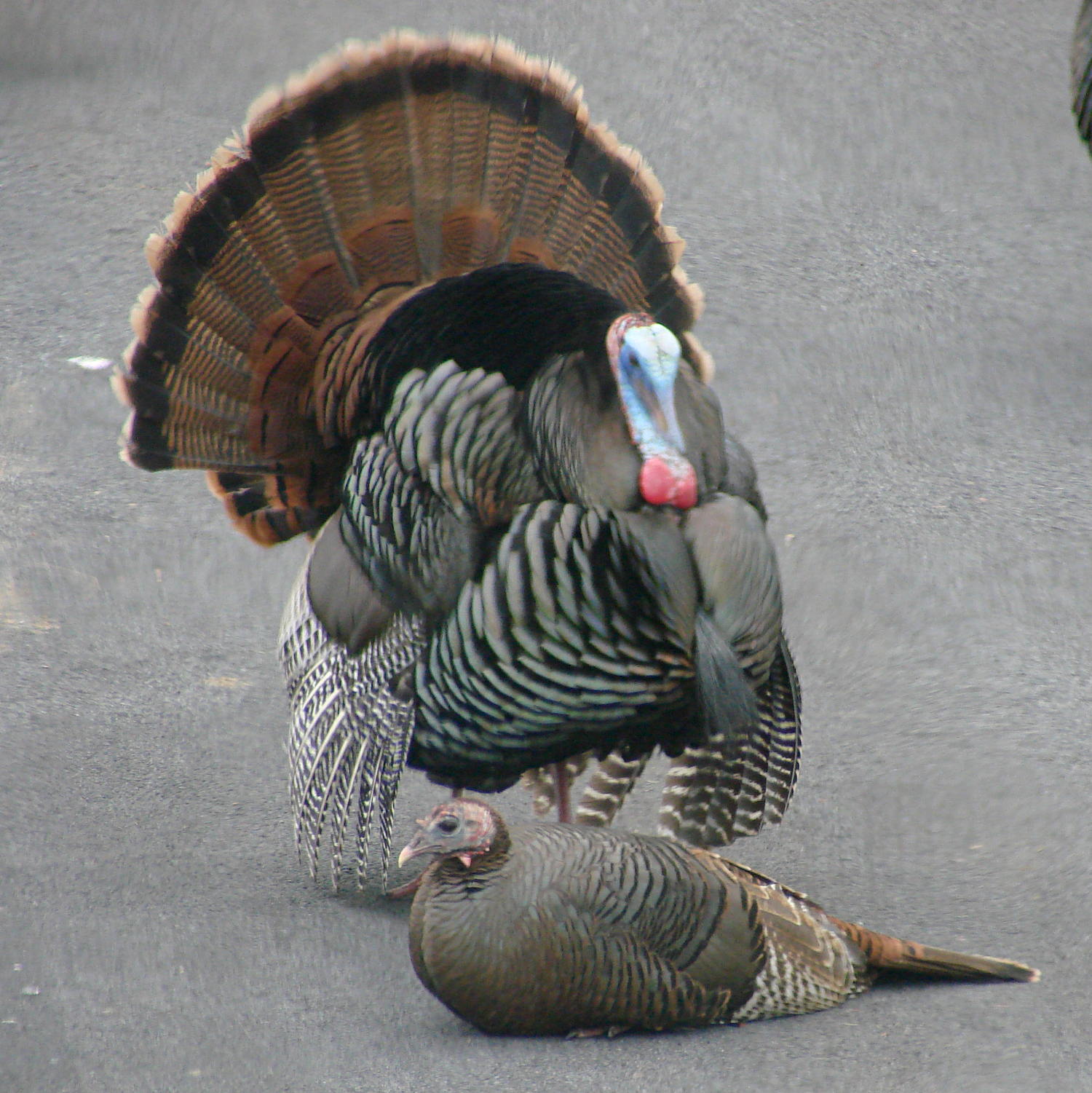
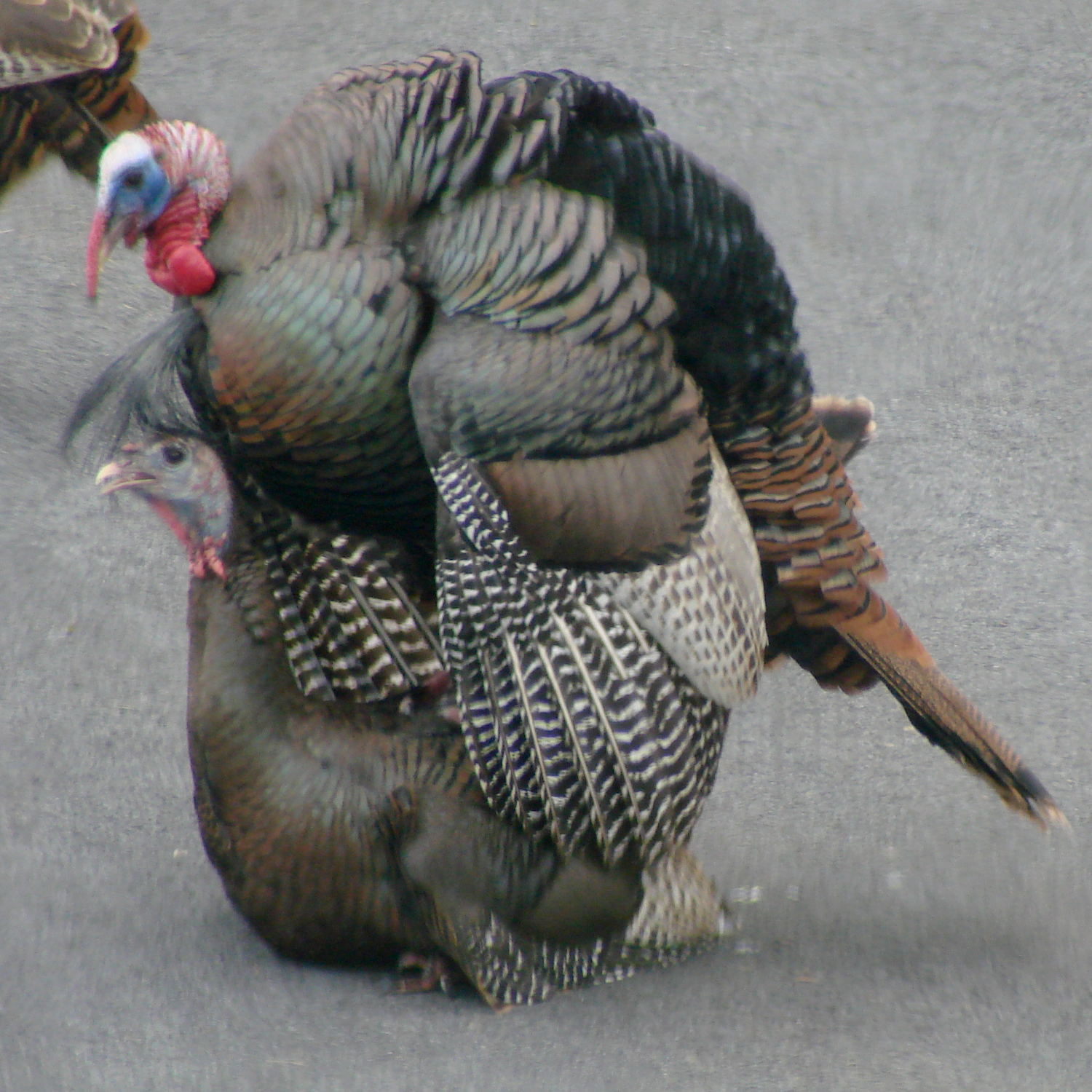
    Despite all the strutting and posturing by the males, the ladies call the shots. When we see a hen go hull-down like this, we know what’s about to happen:

     Turkey mating - invitation
    Turkey mating – invitation

    Getting into the right position seems remarkably awkward and requires some cooperation:

    Turkey mating - mounting
    Turkey mating – mounting

    When her head and tail pop up, you know the thing is going right:

    Turkey mating - the moment
    Turkey mating – the moment

    And a back massage always feels so fine:

    Turkey mating - massage
    Turkey mating – massage

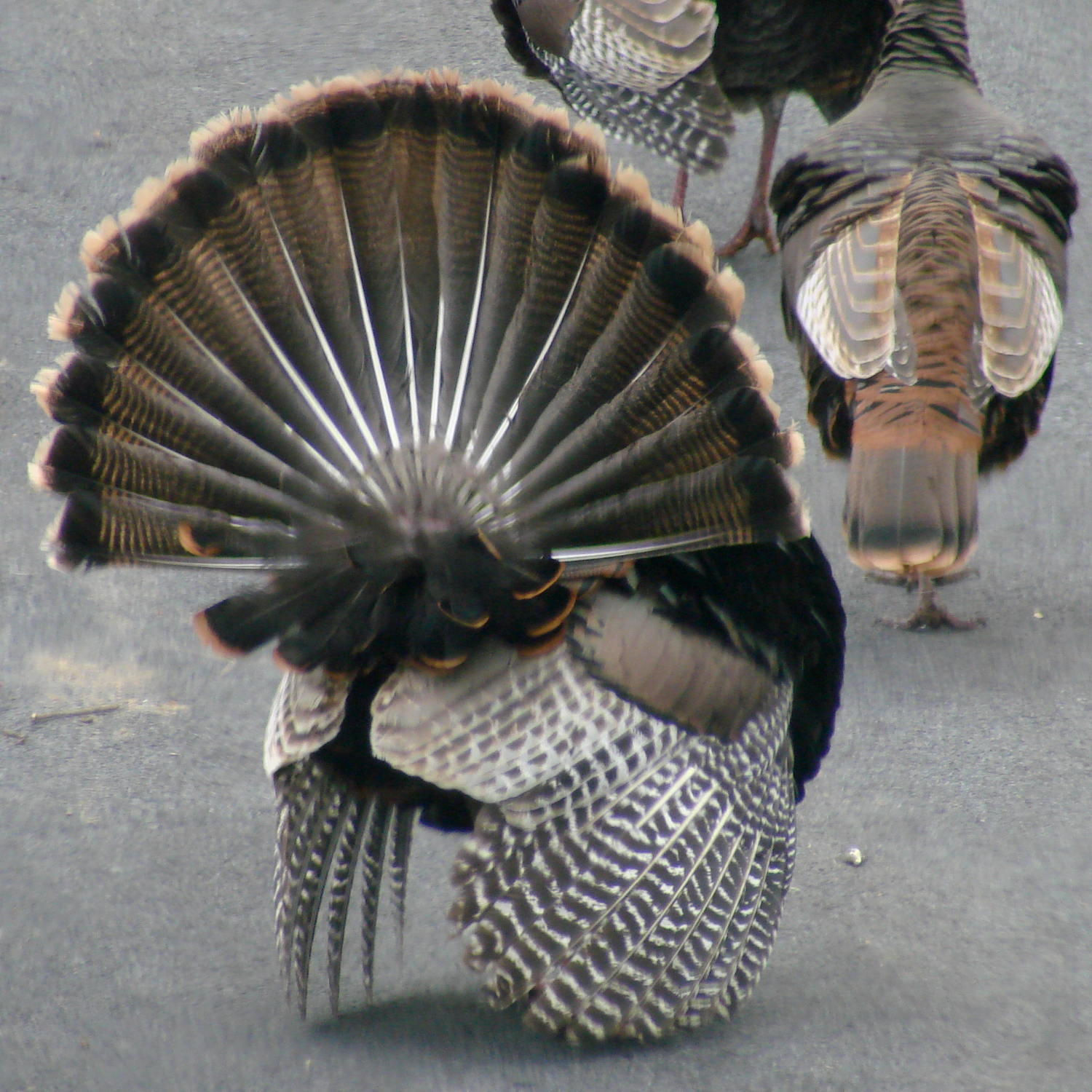
    Then he’s back to strutting & posturing:

    Turkey mating - aftermath
    Turkey mating – aftermath

    We hope they’ll show us their chicks

    Taken with the DSC-H5, hand-held through two panes of 1955-era window glass: ya get what ya get.

  • Honeybee Escort

    The first pleasant day after a long string of snow and rain got us outside again:

    Honeybee escort - 2017-03-29
    Honeybee escort – 2017-03-29

    The honeybee at Mary’s elbow escorted us for a bit, then flew between us and continued on her mission.

    Despite appearances, she passed a few inches from my helmet:

    Honeybee escort - detail 2x - 2017-03-29
    Honeybee escort – detail 2x – 2017-03-29

    We all agreed: it was a fine day for a ride and a flight!

  • Turkey on the Rail

    We’ve often seen turkeys perched on horizontal tree branches and split-rail fences, but this is new:

    Turkey on patio rail
    Turkey on patio rail

    Apparently she wanted to use the bird feeder atop the post festooned with plastic squirrel deterrence. Not being Elastigirl, she couldn’t quite stretch from rail to feeder, eventually gave up trying, and flapped to the driveway.

    We’ve been turkey-watching for nearly two decades, it’s been eight years since we saw a turkey on the patio, and a few days after I set up the yard camerashazam, this bird shows off for my friend in Raleigh while I’m in the Basement Laboratory. I’m insane with jealousy.

    In point of fact, turkeys seem perfectly aware of people inside the house, so it’s not surprising they avoid the patio. When we move close to a window, the flock decides it has business elsewhere and, generally without haste or confusion, flows over the hill and away.

    Obviously, I must set up motion detection and capture some images …

  • Quartz Tuning Fork Resonator Teardown

    Thinking of a 60 kHz crystal filter front end for the WWVB receiver brought a little bag of 32.768 kHz crystals to the surface; I figured I could use them as crash test dummies while a bag of 60 kHz crystals travels around the planet. Come to find out they don’t behave quite like crystals and a bit of investigation shows the little cans contain tuning fork resonators, not crystal slabs.

    I had to see that, so I grabbed the base of one in a pin vise:

    Quartz resonator - pin vise
    Quartz resonator – pin vise

    I don’t know the part number for those resonators, but it’s something like AT26, where the “26” means a cylindrical can 2 mm OD and 6 mm long, more or less.

    Notching the can at the chuck with a triangular file, then wiggling the can with needle-nose pliers, eventually broke it off:

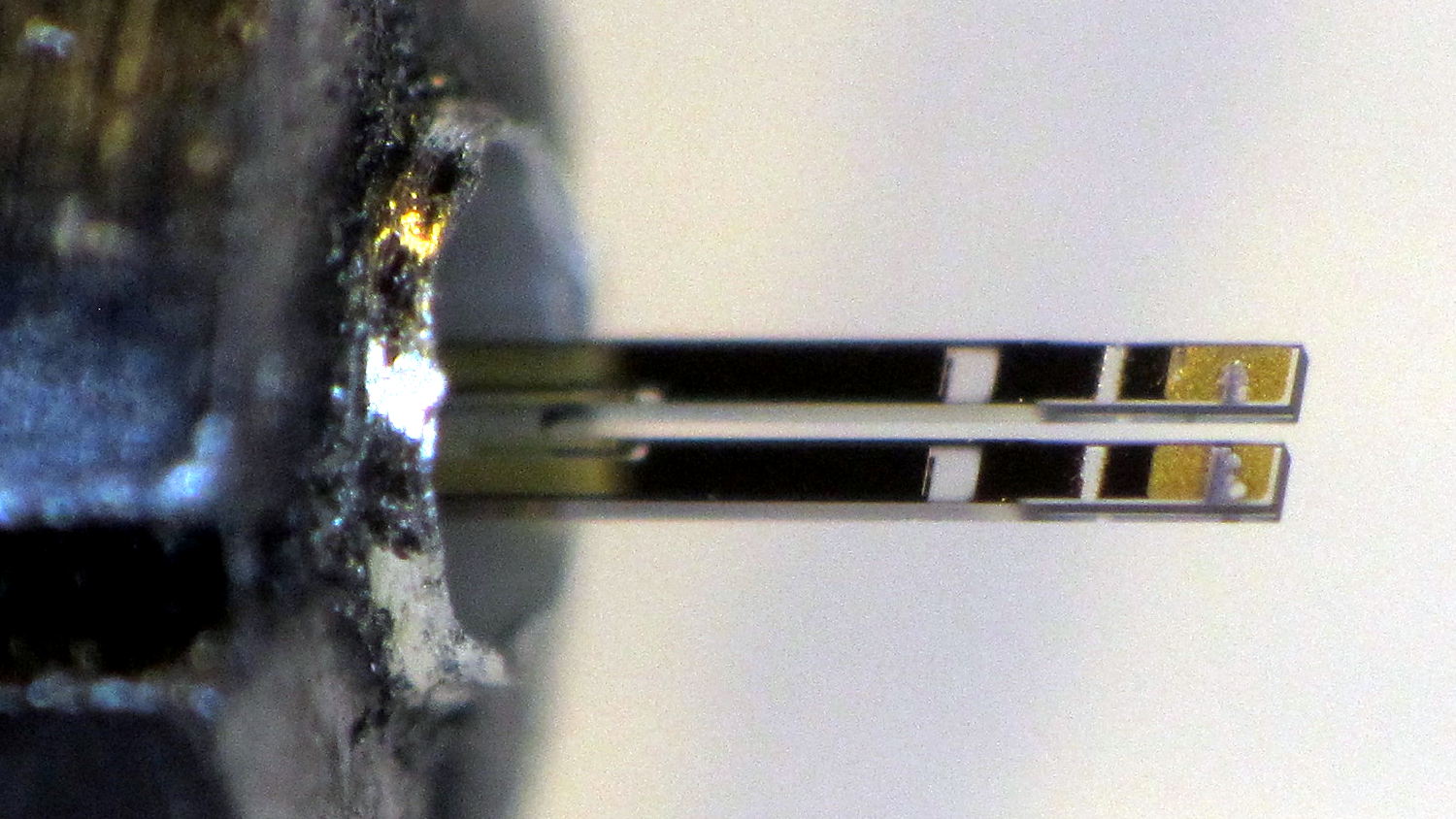
    Quartz resonator - A side
    Quartz resonator – A side

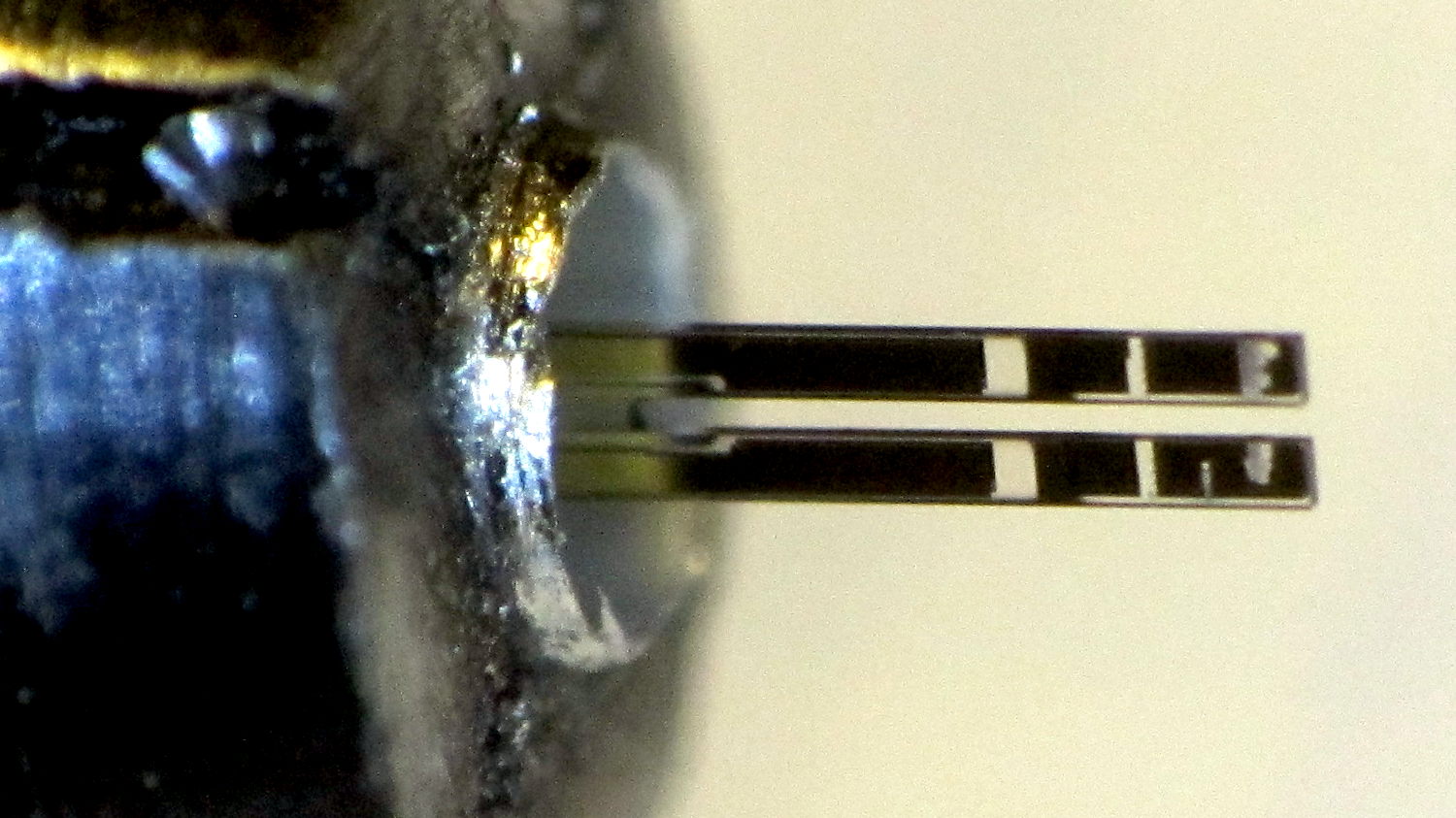
    The other side:

    Quartz resonator - B side
    Quartz resonator – B side

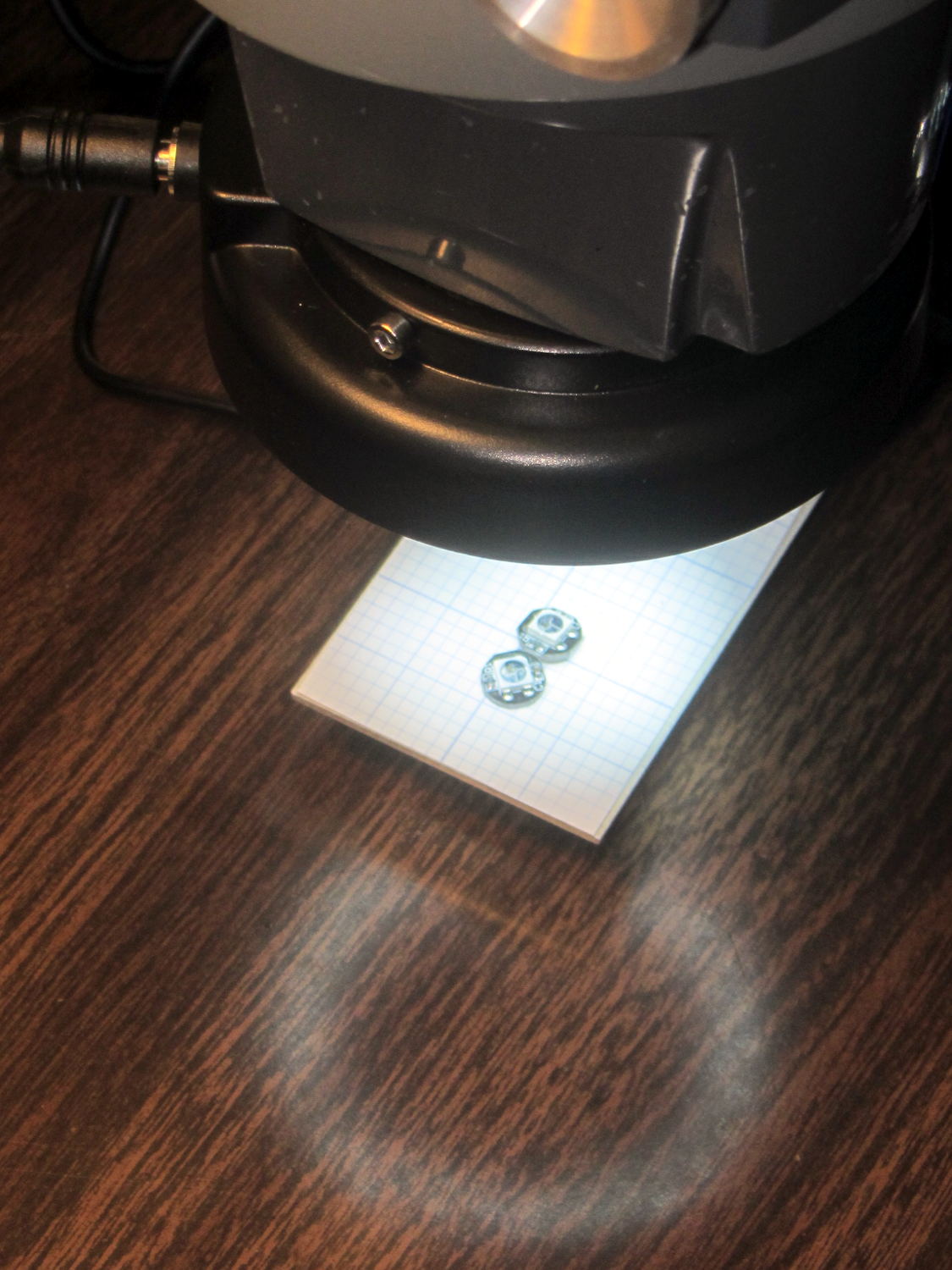
    A look through the microscope show they’re transparent, with laser trim scars on the ends:

    Quartz resonator - detail
    Quartz resonator – detail

    The “holes” are unplated quartz areas, clear as the finest glass.

    Not what I was expecting to see, at all!

  • Raspberry Pi Slowdown

    At first, the yard camera worked fine, but a few days later the stream of JPEG images would unpredictably stall. I connect to it through a public-key SSH session and, sometimes, the login would stall for tens of seconds and, with a session set up, various exciting operation like, say, htop would unpredictably stall; if I waited long enough, they’d complete normally.

    This seemed familiar:

    Samsung 16 GB Evo MicroSD card
    Samsung 16 GB Evo MicroSD card

    It’s a known-good card from a reputable supplier, not that that means much these days. The camera flash highlights the gritty silkscreen (?) texture of the orange overlay, but the production value seems high enough to pass muster.

    Popping the card in my desktop PC showed:

    • It remains functional, at least to the extent of being mount-able and write-able
    • 3probe --time-ops /dev/sdb showed it still held 16 GB
    • fsck -fv /dev/sdb[12] shows no problems
    • Both partitions looked good

    So I shrank the main partition to 7.5 GB, copied the image to the desktop PC’s SSD, fired up the Token Windows Laptop, ran the Official SD Card Formatter, and discovered that it thought the card had only 63 MB (yes, MB) available. That’s the size of the FAT boot partition, so I returned the card to the desktop PC, unleashed gparted on it, blew away the partitions, reformatted the whole thing to one 16 GB FAT32 partition, and stuck it back in the laptop, whereupon the Official Formatter agreed it had every byte it should.

    A format-with-overwrite then proceeded apace; the card doesn’t support format-with-erase.

    Back in the desktop, I copied the saved image back onto the card which, en passant, blew away the just-created FAT format and restored the Raspbian partition structure. The 8 GB of that copy proceeded at an average 12.1 MB/s. I did not watch the transfer closely enough to notice any protracted delays.

    Back in the Pi, the card booted and ran perfectly, sending an image every second to the laptop (now running its usual Mint Linux) on the guest network:

    Turkey flock in driveway - 2017-03-21
    Turkey flock in driveway – 2017-03-21

    SSH sessions now work perfectly, too, and commands no longer jam.

    So it seems a good-quality MicroSD card can experience protracted delays while writing data, to the extent of tens of seconds, stalling the Pi in mid-operation without producing data errors or any other symptoms.

    It’s not clear the Official Formatter does anything that simply copying the image back to the card wouldn’t also accomplish, although overwriting the entire 16 GB extent of the card exercises all the cells and forces the card controller to re/de/un/allocate bad blocks. If, indeed, the blocks are bad, rather than just achingly slow.

    Moral of the story: Don’t use MicroSD cards as mass storage devices, at least not for industrial applications that require consistent performance.

  • Raspberry Pi Yard Camera

    The yard camera I mentioned a few days ago consists of a Raspberry Pi 3 with an Official V2 Pi Camera peering through two layers of 1955-era window glass into our back yard:

    Back Yard Camera setup - 2017-03-13
    Back Yard Camera setup – 2017-03-13

    Yes, that’s black duct tape holding it to the window pane. The extension cord draped across the floor gotta go, too.

    This being a made-in-haste lashup, I used the streamEye MJPEG HTTP streamer, started from /etc/rc.local in the usual way:

    logger -s Starting camera streamer
    sudo -u pi sh -c '/home/pi/yardcam.sh' &
    logger -s Camera running
    

    The yardcam.sh script feeds one moderate-quality frame to the streamer every second:

    /home/pi/streameye/extras/raspimjpeg.py -w 1280 -h 720 -r 1 -q 80 | streameye
    

    MJPEG has a lot to dislike as a streaming video format. In particular, without any hint of inter-frame compression, the network usage gets way too high for any reasonable frame rate.

    But it got the camera up & running in time for the March snowfall:

    Fun in Snow - 2017-03-15
    Fun in Snow – 2017-03-15

    In a nod to IoT security, the Raspberry Pi’s wireless interface sits behind the router’s firewall on our guest network, with no access to the devices on our main network. The router passes a one-port peephole from the Internet to the Pi, which protects all the other services from unwarranted attention.

    The router maintains a dynamic DNS record with a (not particularly) mnemonic URL, which seems better than an ever-changing dotted-quad IP address.

    Because the router doesn’t support hairpin connections from the main network to the guest network, I can’t monitor the video from my desktop through the outwardly visible URL. Instead, I must fire up a laptop, connect to the guest network, then connect directly to the camera at camera.local.

    You do not have a Need To Know for the URL; I’m sure it’ll appear on Shodan. I plan to take it down when the snow melts.