Spotted in a parking lot:

At least they caught it before the end of the row.
Verily, it is written that Computer Science has only two hard problems:
- Cache invalidation
- Naming things
- Off-by-one errors
I hate it when that happens on my projects …
The Smell of Molten Projects in the Morning
Ed Nisley's Blog: Shop notes, electronics, firmware, machinery, 3D printing, laser cuttery, and curiosities. Contents: 100% human thinking, 0% AI slop.
Who’d’a thunk it?

Spotted in a parking lot:
At least they caught it before the end of the row.
Verily, it is written that Computer Science has only two hard problems:
I hate it when that happens on my projects …
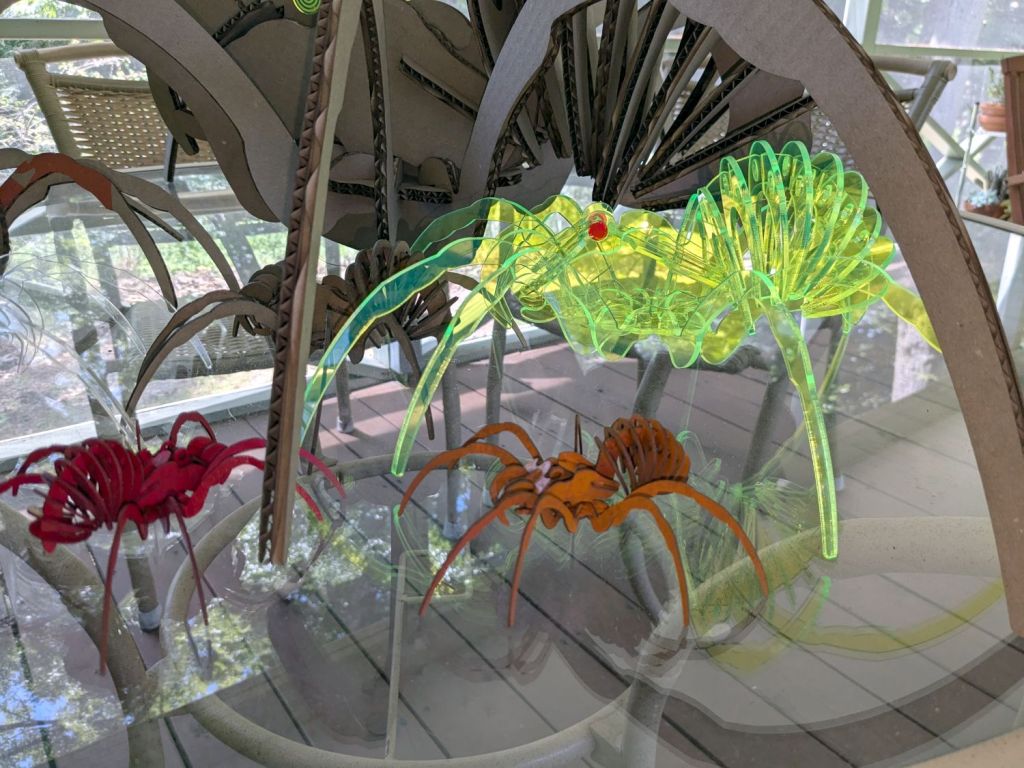
Starting from an SVG file set up for 3 mm material, apply the usual optimizations & tweaks to get a usable LightBurn file, then go nuts:
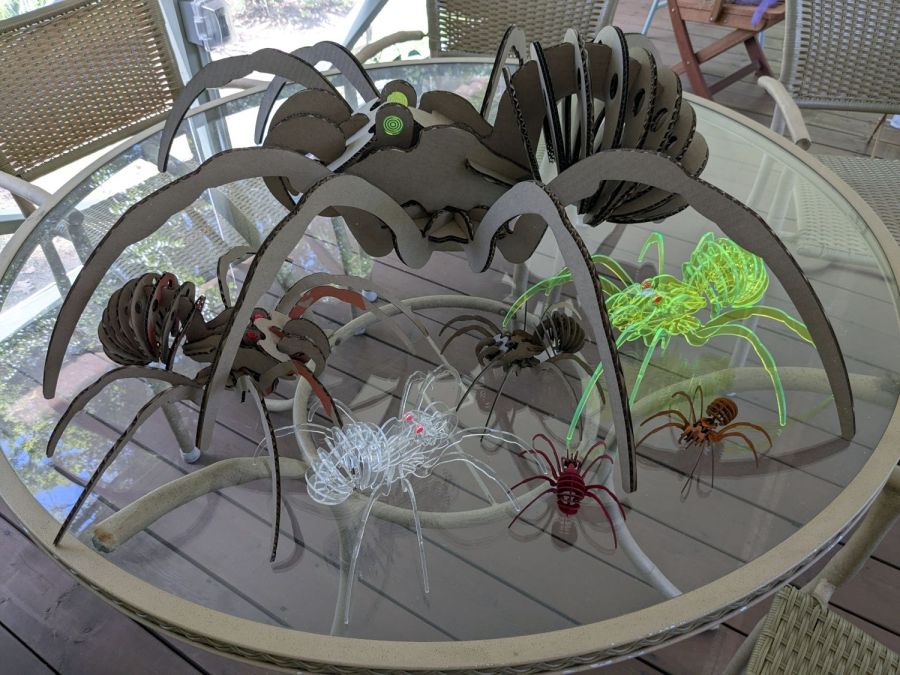
The big one is two cross-laid layers of corrugated cardboard using up the better part of three Home Depot Large moving boxes:

That little bitty grid is the 700×500 mm laser cutter platform, so I just slap a sheet of cardboard in place, update the workspace from the camera, select the next layout, drag it over the cardboard, and Fire The Laser.
The smaller cardboard spider over on the left is built with a single cardboard layer and succumbed to the square-cube law: the legs are entirely too bendy for the weight of the body. Although it’s not obvious from the pictures, both cardboard spiders have a keel plate I added under the body to support most of their weight.
The brightly colored little spiders got a coat of rattlecan paint without any underlying primer and definitely look like that happened:

The edge-lit fluorescent green spider is sized around 2.9 mm material, the clear spider uses 2.3 mm acrylic, and the chipboard one in the background is at 1.8 mm:

The eyes are fluorescent red or green acrylic with concentric circles engraved to catch the light. They’re more effective than I expected, although they won’t look like much after dark.
We now live in a neighborhood with youngsters and Halloween this year will be so much fun …
The WordPress AI image generator caught the general idea of “cardboard spiders”:
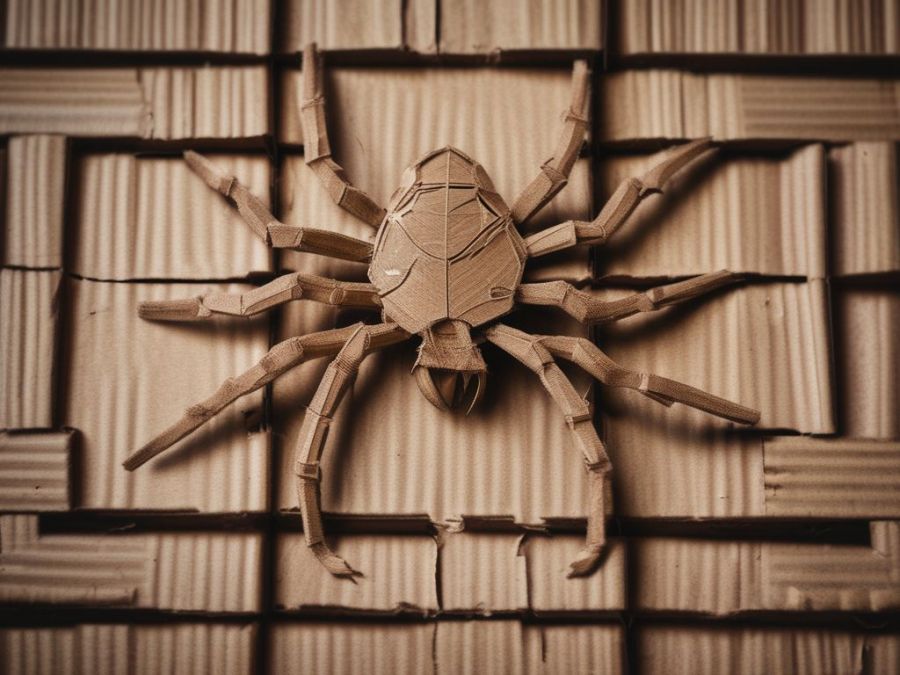
So. Many. Legs.

The most recent Tide HE Laundry Detergent bottles seemed smaller than the one we were about to empty and, indeed, they were:

Call it 9% smaller, based on the volume in liters. I suspect the price was also 9% higher, but that would require more digging in the file cabinet than seems justified.
Note that both bottles claim “64 loads”, each with an asterisk (well, a lozenge ◊ symbol) explained on the label:

That’s the new chart. The old chart was more explanatory:
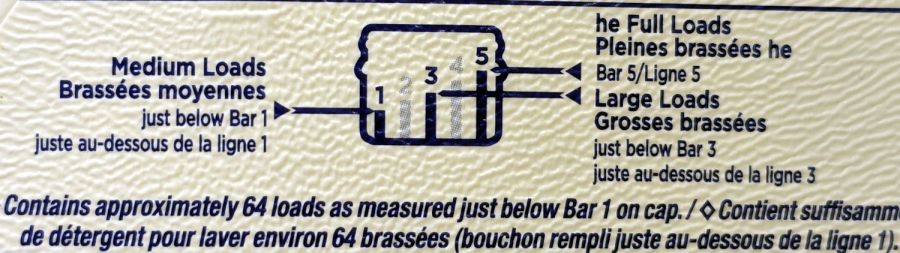
Note the “just below Bar 1 on cap” weasel wording. The term “meniscus” enters the chat, although laundry detergent doesn’t have much in the way of surface tension.
One might reasonably assume the bars on the new cap have gotten shorter, so that the volume of detergent used for each load would be smaller.
One would be wrong:
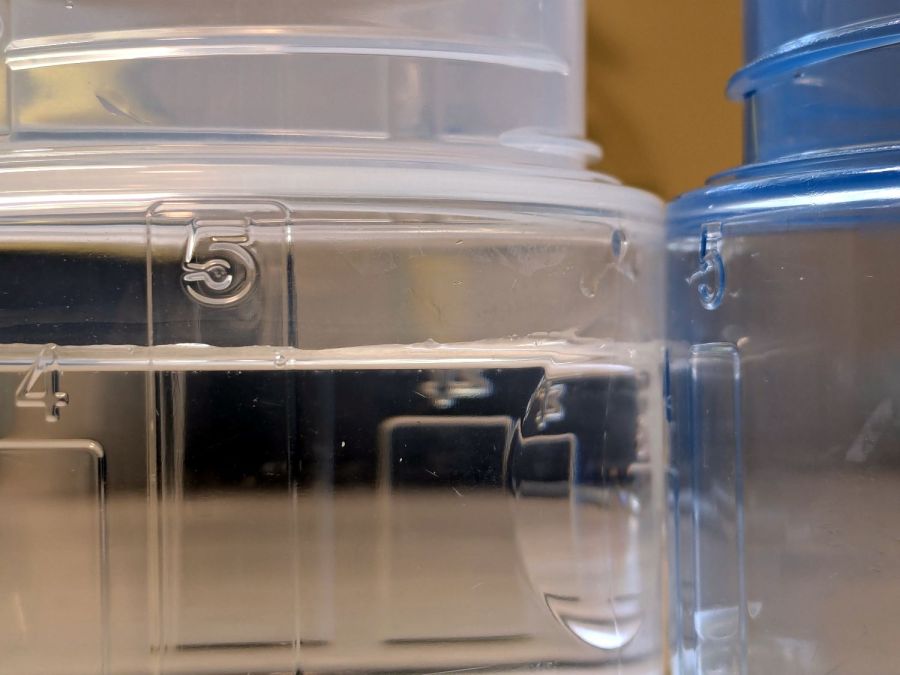
The blue cap on the right is one we’ve been using for the last few years, because I put black tape at the level of the first bar to match our “Medium” loads. I cannot imagine how much dirt would require filling the cap to Bar 5.
The clear cap on the left is the new cap. I filled the blue tap to the top of Bar 5 with water and poured it into the clear cap, where it comes about 3/4 of the way to the top of the new Bar 5. Evidently, the amount of detergent required to get grubby clothes clean has increased by 33%.
The old cap holds just shy of 4 fluid ounces to the top of Bar 5:
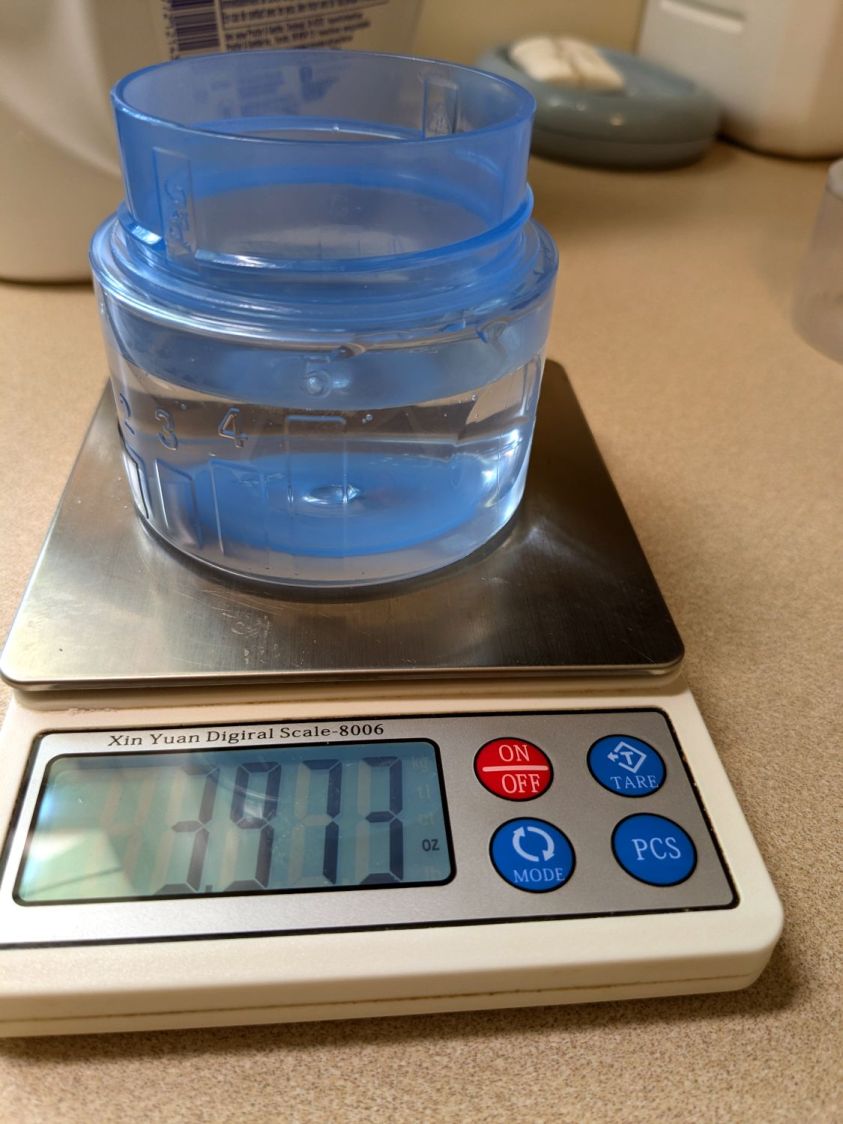
The new cap holds 5.5 fluid ounces to the top of its Bar 5:

If you have really crusty clothing, you’re now using 36% more detergent per load.
The obvious arithmetic shows the old bottle holds 23 “Bar 5” loads and the new bottle holds 15.
To the limit of my measuring ability, both caps hold 1.3 fluid ounces to the top their respective Bar 1 levels. I cannot vouch for the “just below” level, but I suspect more accurate measurements would show the new caps have slightly lower volume at that level, juuust enough to make the “64 loads” weasel wording come out right.
As with all too many such claims, they lie.

Earlier this year, a pair of House Finches chose the a pine cone wreath hanging outside our front door for their nest.
One day a Starling attacked:
There’s a Youtube video of the action following those pictures:
Ms. Finch suffered a peck to the head raising a few feathers into a small topknot, but seemed otherwise undamaged. The eggs survived unscathed and a month later they fledged a quartet of new finches:
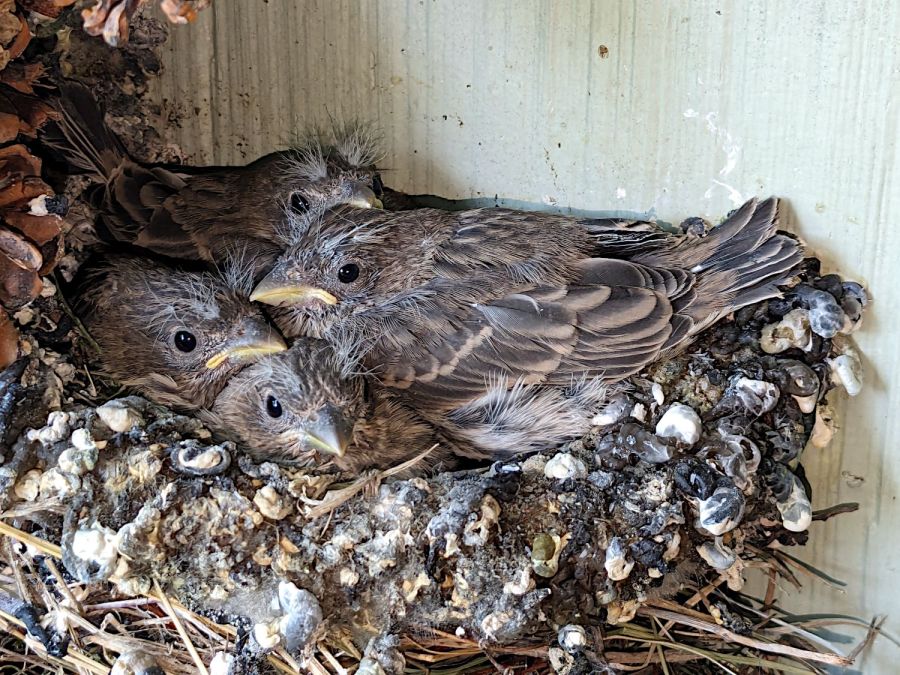
Yes, they’re surrounded by a ring of bird crap: finch chicks can aim and fire overboard, but they don’t have much range.
The same finch pair abandoned their second nest after a Brown-headed Cowbird added an egg and punctured both Finch eggs:

Their third attempt failed after four eggs when a Cowbird added a fifth:

A few days after that picture, something tore that nest apart and destroyed all the eggs:

The scattered feathers suggest a major battle with severe injuries.
Three nesting attempts produced only four fledglings: a bad year for those two finches.
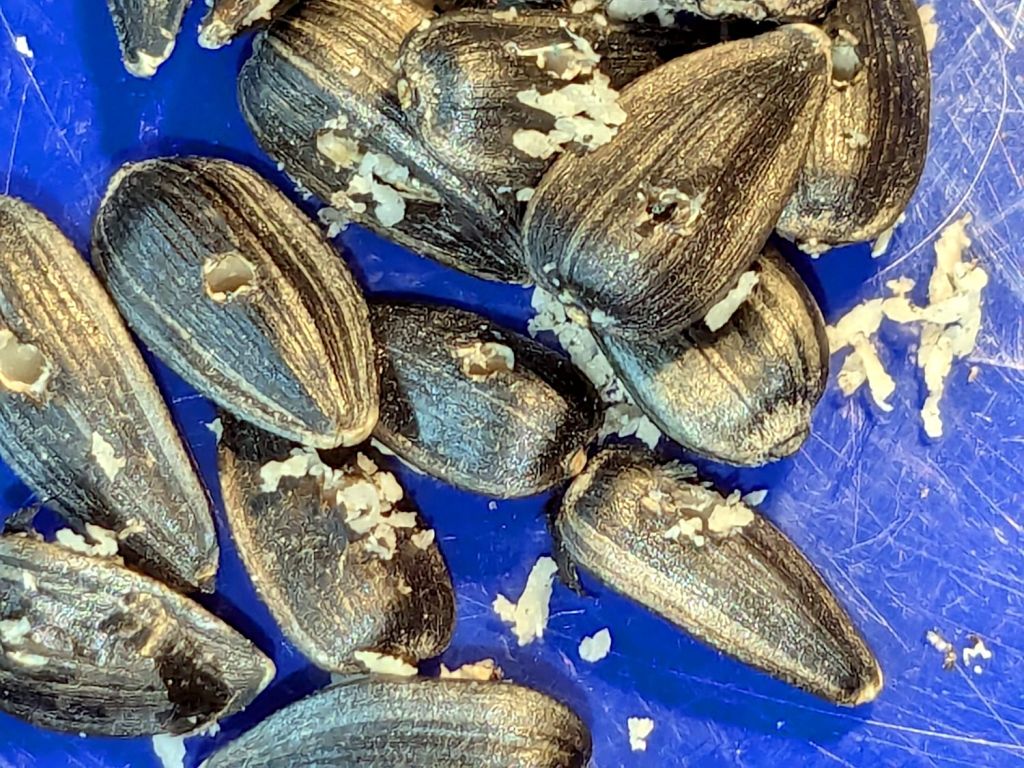
It seems the best bait for voles is to tie sunflower seeds to the trap trigger, but poking a needle through the seeds tends to split them.
Well, I can fix that:
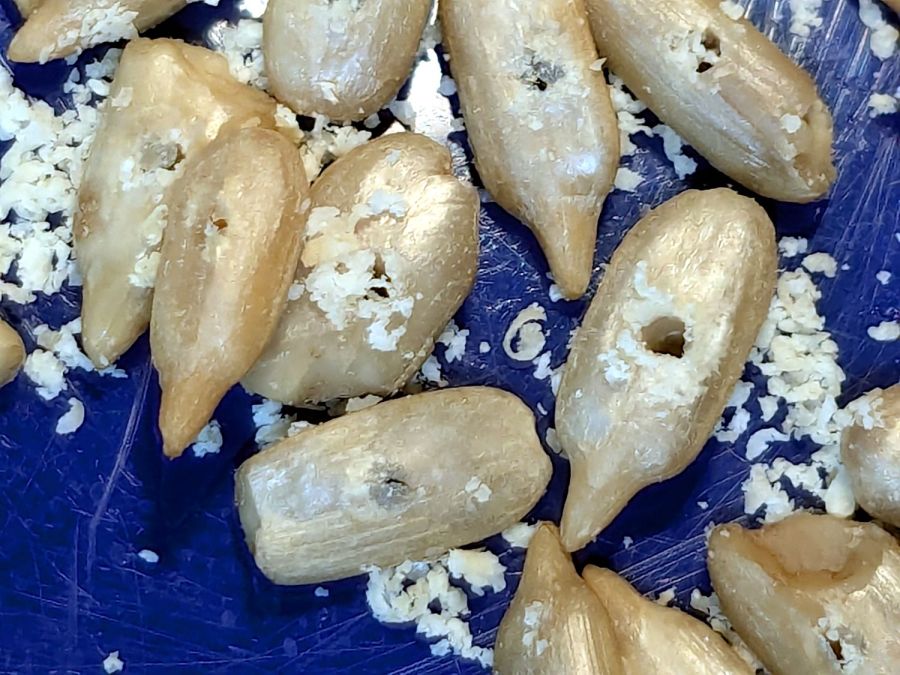
This is “shell drilling” of a kind I had not previously encountered:

Those are #52 drill holes, 63-ish mils in diameter, and pass a standard sewing needle with ease.
The traps have been baited and deployed amid a plague of voles and I await customer feedback …
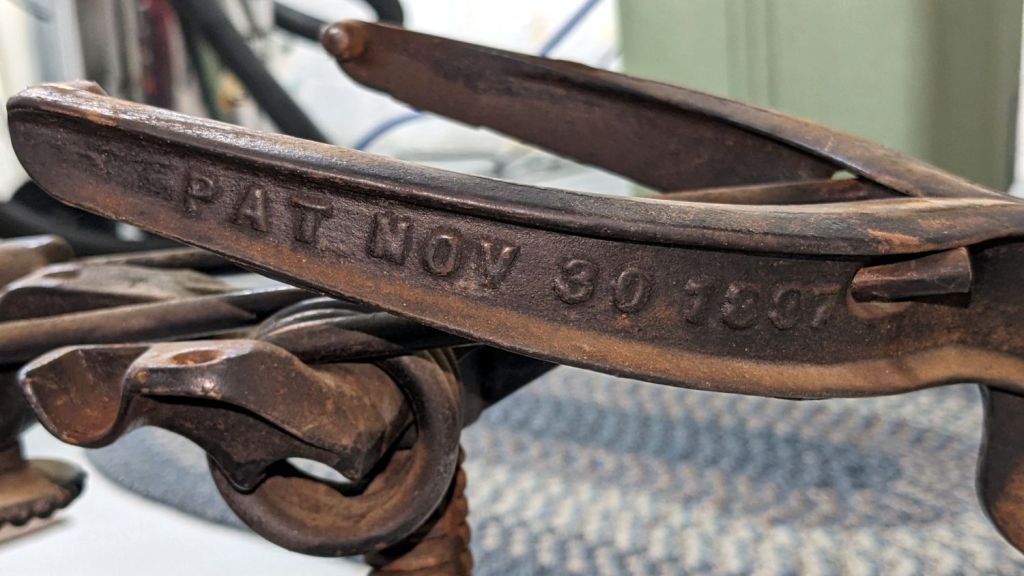
A wood desk chair that I’ve known since I was a pup finally got some much-needed attention, although not a restoration. By and large, I’m finally sorting out that corner of the basement and needed to put the chair’s parts back together so I can work on something else.
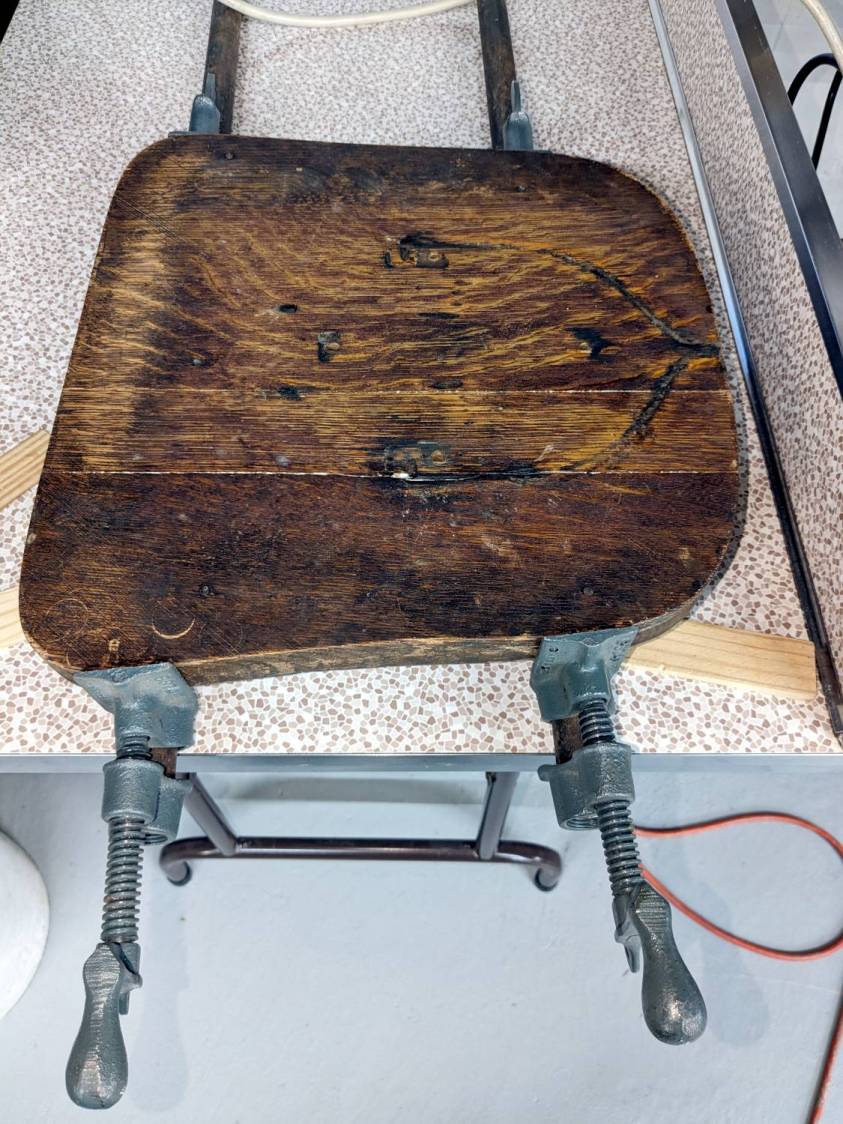
The wood seat consists of several slabs glued along keyed joints, one of which had fractured into a rough mess. Amazingly, the two sides fit perfectly together, albeit with the bottom no longer a planar surface, and glued up just like they should:
The chair isn’t up to contemporary office standards, but it has a seat elevation screw, a backrest with adjustable angle & elevation, and even a backrest tension setting:

It was the cutting edge of desk chair technology:

I vaguely recall it rolled on long-vanished steel-wheeled casters. Somewhat less long ago, one of the legs broke enough to lose its caster socket (about which, more later), so I set about yanking the three remaining sockets:
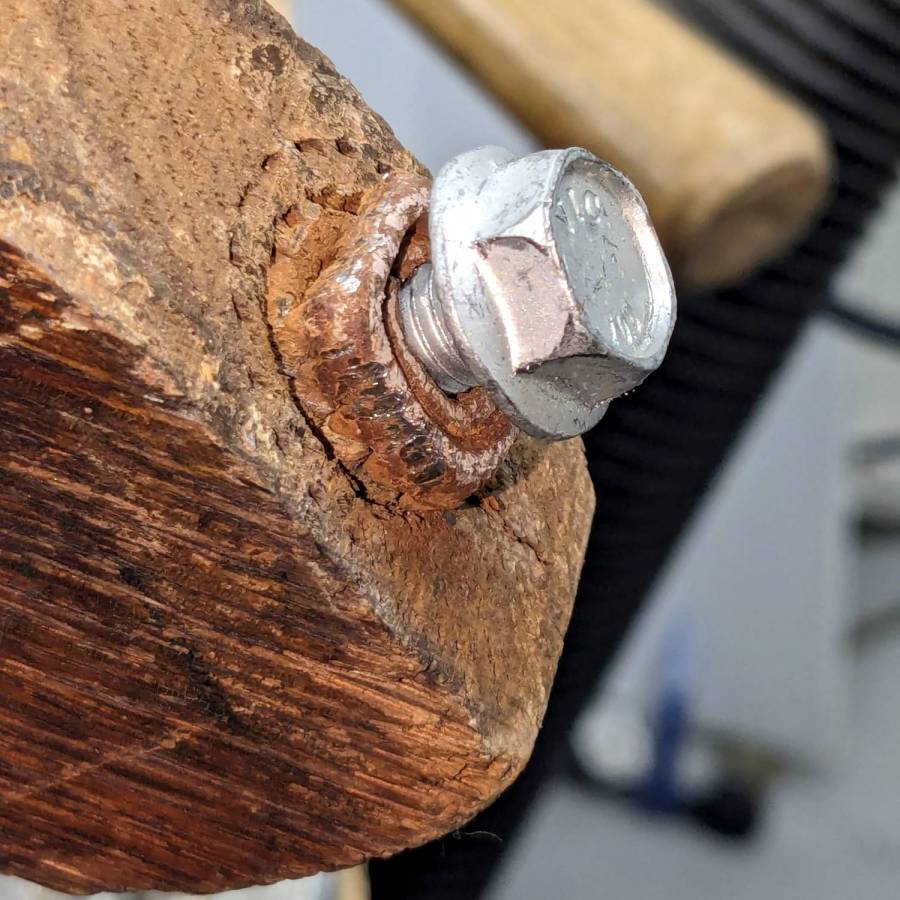
During that struggle, another leg revealed a neat woodwork joint:
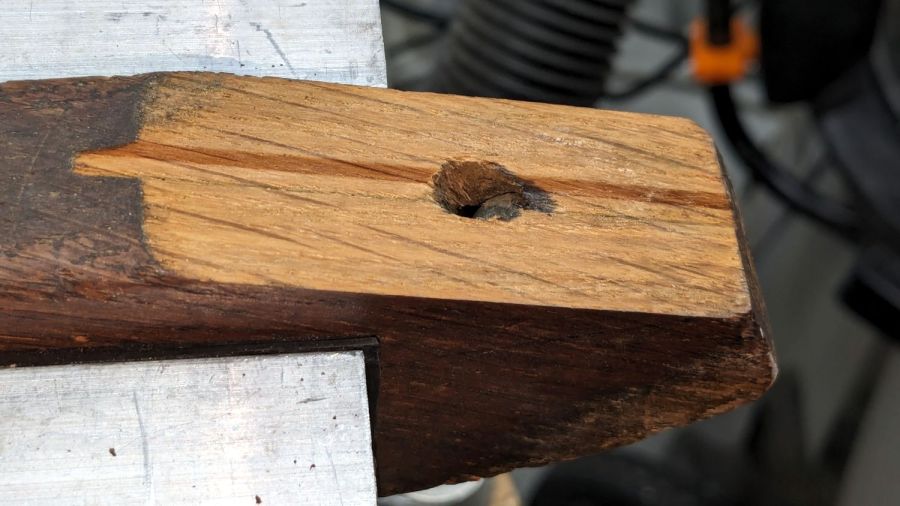
It’s easy to remove a caster socket when you can bash it from the top!
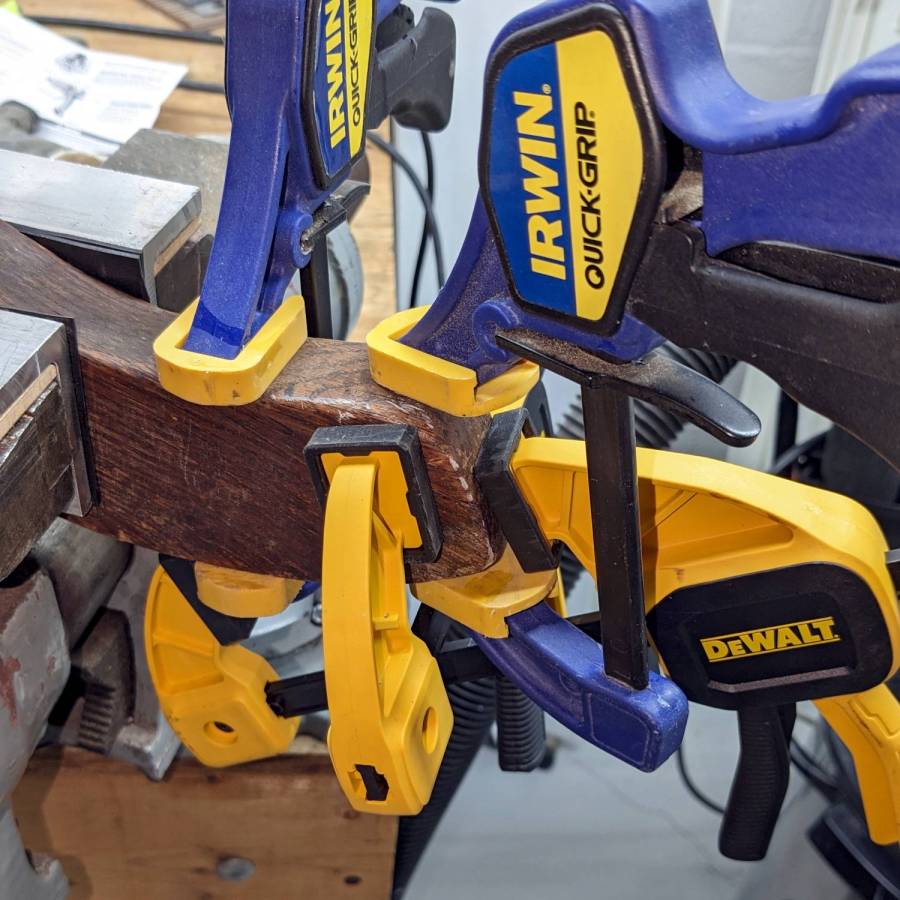
Gluing that piece back in place required Too Many Clamps™ aligning it with the leg:
But the end result looks pretty good:
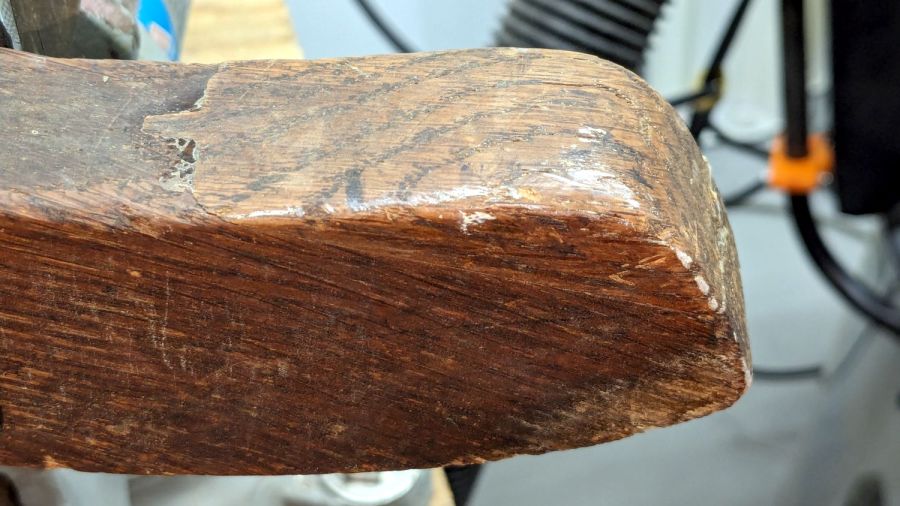
They did a nice job of matching the wood grain; I hadn’t noticed that joint while attacking the socket.
Pending restoring the broken leg’s socket, the soon-to-arrive new casters will clash horribly with the chair’s woodwork. At least it’ll roll again and its new plastic wheels won’t scar the floors.

Spotted outside a window:

The one on the right stayed in that pose, with eyes getting heavier and heavier, until it nodded off. The other squirrel wasn’t quite that far gone and, after a minute, turned around to see what was(n’t) happening.
Those two squirrels have been chasing each other around the yard for several weeks, so they’re either siblings or a mated pair.
I’ve never seen a squirrel take a nap before and it seemed like a good idea for the afternoon …


