The Smell of Molten Projects in the Morning

Ed Nisley's Blog: Shop notes, electronics, firmware, machinery, 3D printing, laser cuttery, and curiosities. Contents: 100% human thinking, 0% AI slop.

Category: Machine Shop

Mechanical widgetry

  • Curtain Rod Spring Pusher Block

    Curtain Rod Spring Pusher Block

    Spotted during Autumn Window Cleaning:

    Curtain rod pusher block - spring contortion
    Curtain rod pusher block – spring contortion

    That’s the compression spring inside the curtain rod over the kitchen sink, intended to push the ends against the cabinets on either side. The screw slides along the outer rod and when tightened, backstops the spring against the inner rod.

    The end of the spring is apparently intended to twist and jam inside the inner half of the rod, but that seemed so … unesthetic.

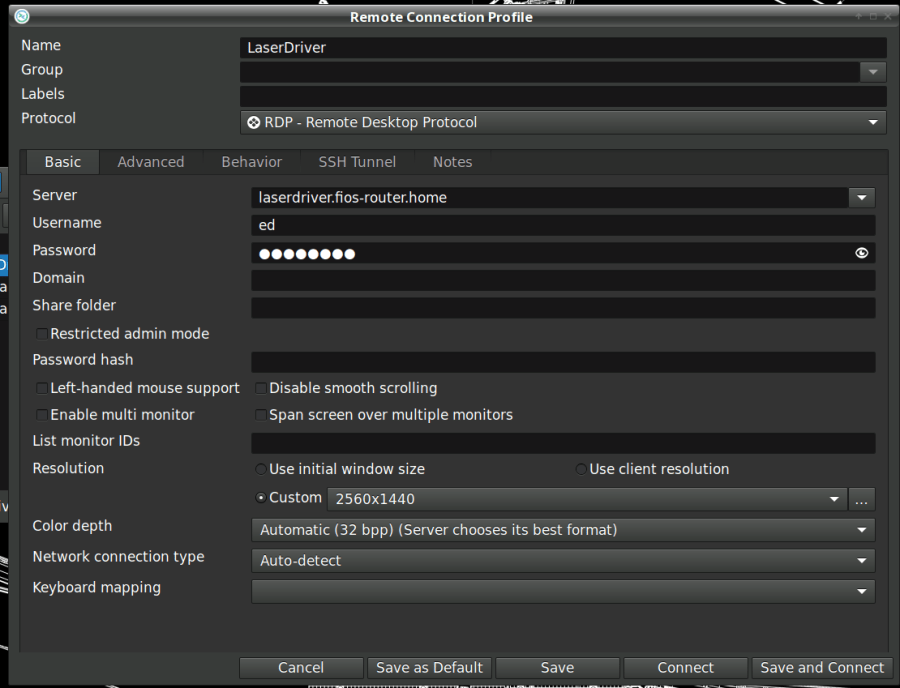
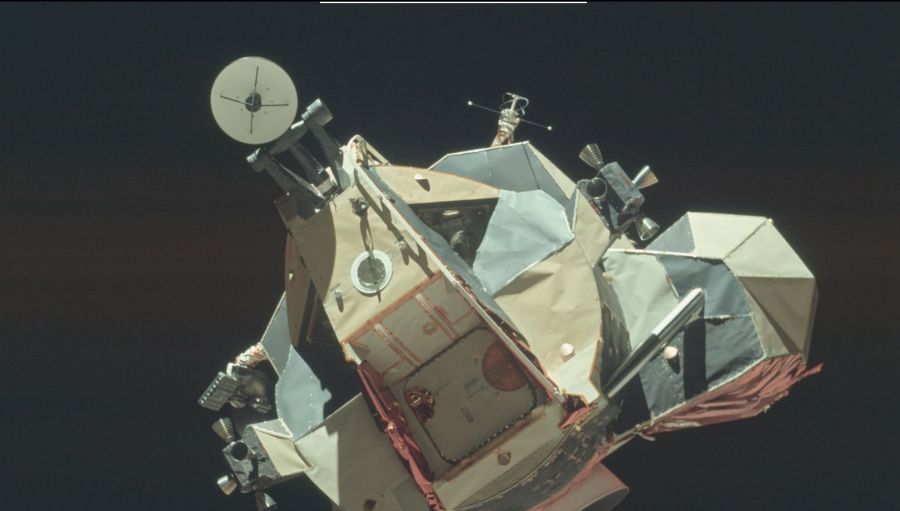
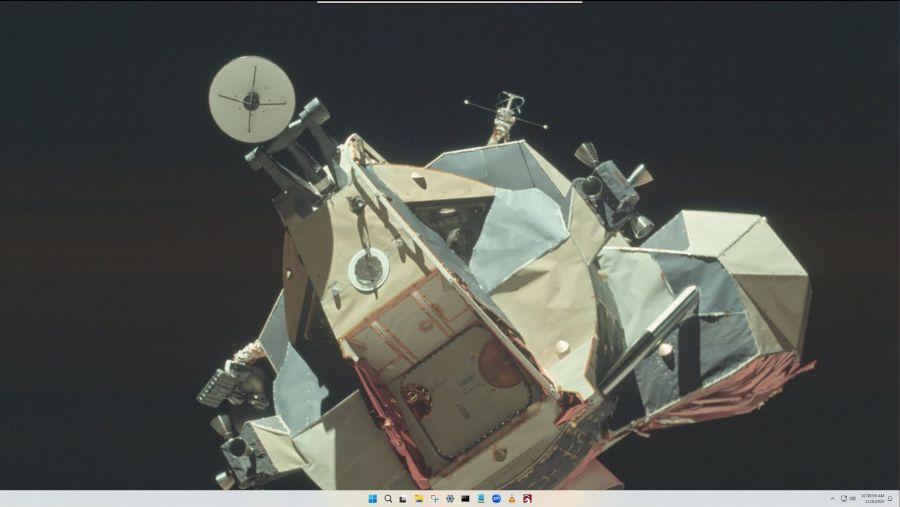
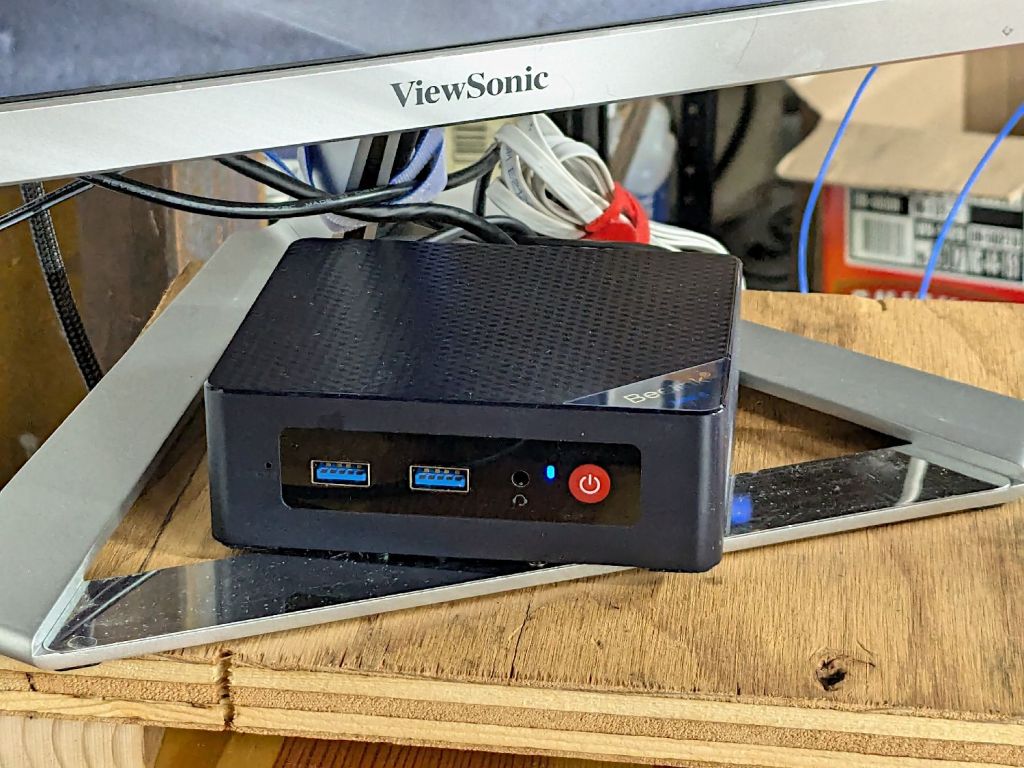
    Being in the midst of setting up a Windows 11 box for the laser cutter, I used it as an excuse to fiddle with the RDP configuration to get LightBurn running in full screen mode on the monitor atop my desk; more about all that later.

    The little pusher block is a hull around a pair of circles the same diameter as the smaller dimension of the inner rod, spaced apart enough to match its width, then laser-cut from a scrap of 1/4 inch acrylic:

    Curtain rod pusher block - overview
    Curtain rod pusher block – overview

    Which assembles as you’d expect:

    Curtain rod pusher block - installed
    Curtain rod pusher block – installed

    The spring seems much happier pushing against the block, doesn’t it?

    Admittedly, this was completely unnecessary, but if you think of it as a side effect of the Win 11 thing, it makes at least a little sense.

  • Sears Humidifier: Bottle Patching

    Sears Humidifier: Bottle Patching

    Although the Sears humidifier (Model 758.154200 if you’re keeping score) that Came With The House™ works fine with its lid hinges broken, Mary heard an odd hissing sound somewhere inside. The sound continued with the thing unplugged and, after a protracted struggle in the kitchen sink, we tracked the sound to a crack in one of the dimples joining the front and back faces of the right-side water bottle:

    Sears Humidifier bottle - overview
    Sears Humidifier bottle – overview

    The vertical shaded bars come from the camera’s electronic shutter vs. unfiltered 60 Hz AC powering the shop LED lights.

    Unsurprisingly, replacement bottles are no longer available, although you can get fill caps and valves, plus wicking filters.

    A water drop squeezed in the crack:

    Sears Humidifier bottle - crack
    Sears Humidifier bottle – crack

    The bottles are polyethylene that sneers at any normal sealant, but I have a few square inches of tape intended for repairs exposed to weather. I didn’t get the snippet aligned just as I wanted, but its gooey adhesive definitely covered the crack:

    Sears Humidifier bottle - patched
    Sears Humidifier bottle – patched

    The bottles normally operate with a slight vacuum, thus the air hissing through the crack, so the tape need not withstand any continuous pressure and the adhesive layer should flow into the crack if it goes anywhere at all.

    Protip: the gooey adhesive bonds instantly and irrevocably to whatever it touches, so do a trial fit before you peel off the backing tape.

    If the “Serial” is a date code, it’s been around for while:

    Sears Humidifier - data plate
    Sears Humidifier – data plate

    It should be good for a few more decades …

  • Laser Test Paper: Weathering

    Laser Test Paper: Weathering

    Three months of outdoor exposure suggest that laser test paper can survive use as a plant tag for one growing season, at least when it remains flat:

    Laser test paper - small plant labels - 3 month exposure
    Laser test paper – small plant labels – 3 month exposure

    The two upper tags demonstrated the paper has no flexibility worth mentioning, so it cannot become a tag wrapped around a stem.

    The two lower labels spent their time tucked into a window frame where they got plenty of sun & rain without the benefit of a backing plate. Looks good to me!

    Contrary to my expectation, the craft adhesive sheet behind this label survived intact, although the label itself took some damage, perhaps from the more direct sunlight out on the deck:

    Laser test paper - plant marker - 3 month exposure
    Laser test paper – plant marker – 3 month exposure

    In any event, they look Good Enough™ for our simple needs and next year’s plants will be properly labeled.

  • Leaf Engraving

    Leaf Engraving

    A discussion about engraving leaves on the LightBurn forum prompted an experiment with a seasonally appropriate motif:

    Engraved leaves
    Engraved leaves

    Those ran at 500 mm/s with 8 to 10% power, respectively the fastest speed & lowest power for my 60 W CO₂ laser.

    The mmmm material has obvious irregularities and doesn’t lie flat:

    Engraved leaf
    Engraved leaf

    A closer look:

    Engraved leaf - detail
    Engraved leaf – detail

    The line interval is an absurdly large 0.5 mm to keep the leaf from falling apart, as the laser burns almost completely through despite the low power.

    I thought about scattering a bunch of these along the driveway, but came to my senses just in time …

  • Doorbell Button Skulls

    Doorbell Button Skulls

    With only days to spare, I decorated the doorbell button:

    Doorbell button skulls - installed
    Doorbell button skulls – installed

    Yeah, I jammed Sharpies in the eye sockets, but they look exactly the way they should. The middle skull is in the middle of the actuator in the hope that’s where it’ll get pushed.

    The solid model comes directly from the seasonally appropriate teapot lid handle with a rectangle to suit the doorbell button actuator:

    Doorbell Button Skulls - solid model
    Doorbell Button Skulls – solid model

    Perforce, the OpenSCAD code has eyeballometric magic numbers:

    // Doorbell Button Enhancement
    // Ed Nisley - KE4ZNU
    // 2024-10-28
    
    Button = [5.0,13.0,40.0];    // button width, boss depth, button height
    
    union() {
        rotate([0,0,65])
        translate([-121,-105])      // totally eyeballometric
            import("stackofskulls - 50mm.obj",convexity=10);
    
            translate([0,Button.y/2,Button.z/2])
                cube(Button,center=true);
    }
    

    The rectangular slab goes all the way down to the platform because I couldn’t be bothered with support or a little wedge.

    I’m sure it will survive exactly as long as it must.

    Dunno how many little ones will venture up the driveway, though:

    Halloween mailbox decorations
    Halloween mailbox decorations
  • Gizo Spider Footpads

    Gizo Spider Footpads

    Given a 3% failure rate for the tiny footprint of Gizo spider legs, I added 5 mm pads to each foot:

    Gizo Spider - footpads
    Gizo Spider – footpads

    A few rounds of successive approximation and one copypasta hit the right spots:

    // Gizo spider footpads
    // Ed Nisley - KE4ZNU
    // 2024-10-26
    
    pts = [
    [24,-23],[28.5,-7],[29.5,14.5],[20,28],
    [-24,-23],[-28.5,-7],[-29.5,14.5],[-20,28]
    ];
    
    translate([14,0,2.8])
      import("/mnt/bulkdata/Project Files/Prusa Mk4/Models/Gizo Spider/GizoSpider.stl");
    
    linear_extrude(height=0.2)
      for (pt = pts)
        translate(pt)
          circle(d=5,$fn=2*3*4);
    

    Which was enough to stick the legs firmly to the build platform:

    Gizo spider - white leg towers
    Gizo spider – white leg towers

    Talk about blank looks:

    Gizo spider - black on platform
    Gizo spider – black on platform

    White filament is particularly susceptible to charred globbing:

    Gizo spider - white char inclusion
    Gizo spider – white char inclusion

    Which was, fortunately, completely hidden inside the shell.

    Extensive testing showed the pads pushed the error rate below 1.5%:

    Gizo spider pile
    Gizo spider pile

    As before, dots of hot melt glue hold the eyes in place.

    All’s well that ends well: just in time, too.

  • Cart Coin Handle vs. Reality

    Cart Coin Handle vs. Reality

    This failed pretty much the way I expected:

    Cart Coin - broken handle
    Cart Coin – broken handle

    The “carbon fiber” part of PETG-CF consists of very very short fibers, unlike the longer fibers in real carbon fiber materials, so the strength is nowhere near what you might expect from the marketing. I knew this going in and the break wasn’t surprising.

    Round cart coins continue to work exactly like US quarters.